
Cookie Kush is commonly described as a 70% indica-dominant hybrid bred from Girl Scout Cookies and OG Kush, with reported THC commonly ranging from 18% to 24%. Those figures describe a cultivar pattern, not a guaranteed experience, so the batch-specific certificate of analysis, or COA, matters more than the strain name.
That distinction challenges the most popular advice about the Cookie Kush strain. A label such as “indica” can suggest a direction, but it can't tell you exactly how a particular flower will feel, smell, or perform. The grower, phenotype, harvest timing, curing, storage, and laboratory results all shape the product in the package.
Think of Cookie Kush as a family name, not a personal biography. The genetics explain where the plant came from, while the COA shows what this batch contains.
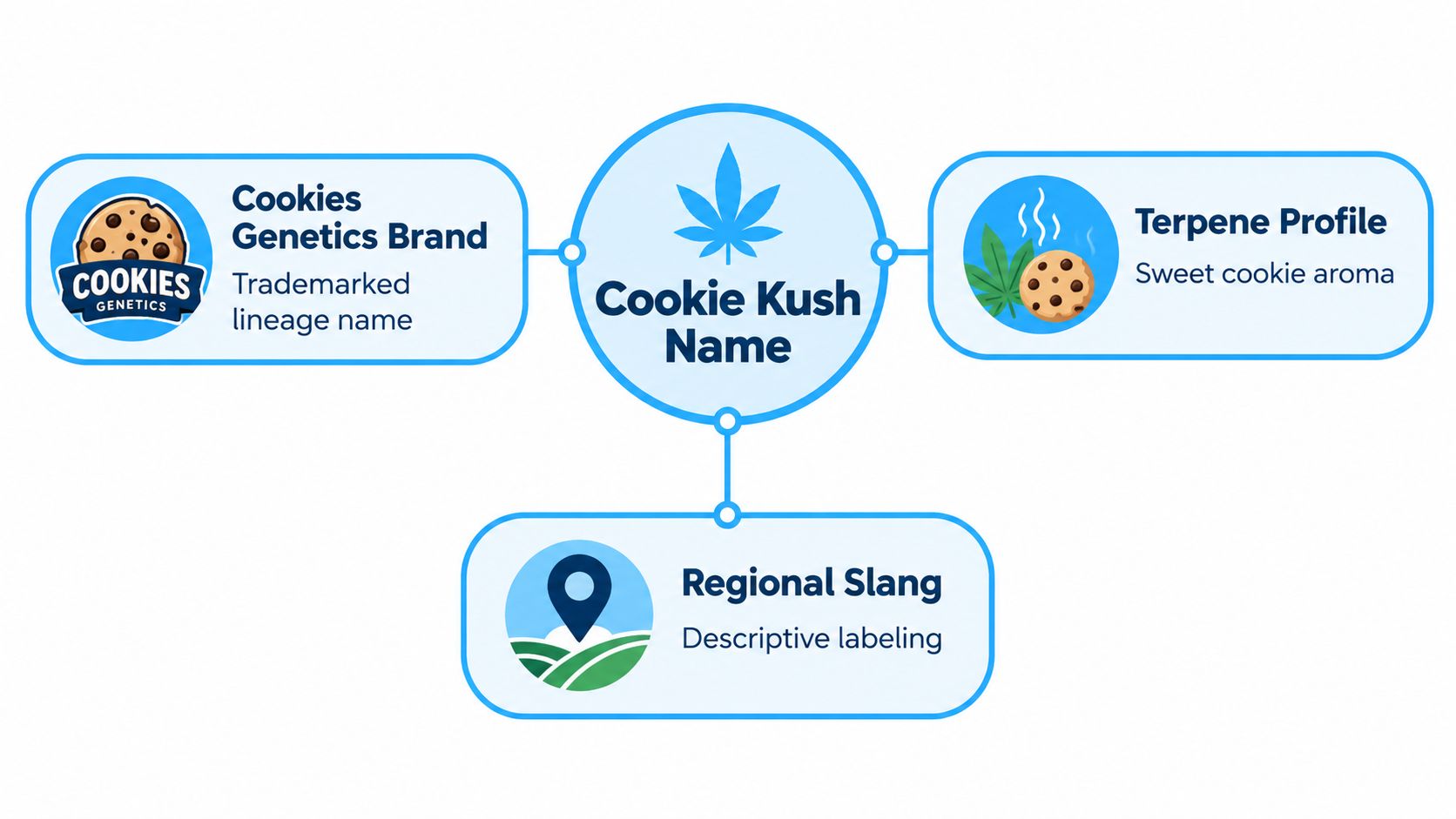
Why the Name Cookie Kush Is Less Reliable Than You Think
Cookie Kush is better treated as a starting question than a fixed promise. Dispensary menus often present strain names as if they guarantee relaxation, sleepiness, euphoria, or a specific flavor. In practice, the name can point toward a recognized genetic line while leaving important details unresolved.
Research summarized by Dalhousie University's cannabis-label analysis found that indica and sativa labels often fail to correspond consistently with a product's genetic or chemical profile. Strain names may not reliably identify either genetics or chemistry. That doesn't make the name useless, but it does mean you shouldn't use it as your final buying decision.
What the name can tell you
The name can suggest a connection to the Girl Scout Cookies and OG Kush family, especially when the producer identifies the genetics clearly. It can also help you search for familiar sensory traits, such as dessert sweetness, earthiness, peppery spice, or citrus.
What it can't guarantee is the chemistry inside a specific package. Two products carrying the same cultivar name can differ because of:
- Growing conditions: Light, nutrients, climate, and harvest decisions affect the finished flower.
- Phenotype: Related plants can express different cannabinoid and terpene profiles.
- Curing and storage: Post-harvest handling changes aroma, texture, and freshness.
- Testing laboratory: Results depend on the tested sample and the laboratory method.
Practical rule: Treat the strain name as a label for the conversation. Treat the COA as the evidence.
A useful shopping sequence is simple. First, use “Cookie Kush” to identify the product family. Next, confirm the producer and package information. Then read total THC, CBD, minor cannabinoids, dominant terpenes, terpene percentage, and harvest or packaging date. If those details don't support the effect you want, choose another batch or another product.
That approach also prevents a common mistake. A consumer may buy an “indica” product expecting guaranteed sedation, then blame the strain when the actual batch has a different terpene balance or potency. The name gives you context. The COA gives you a more credible prediction.
The Lineage Behind Cookie Kush and Why It Matters
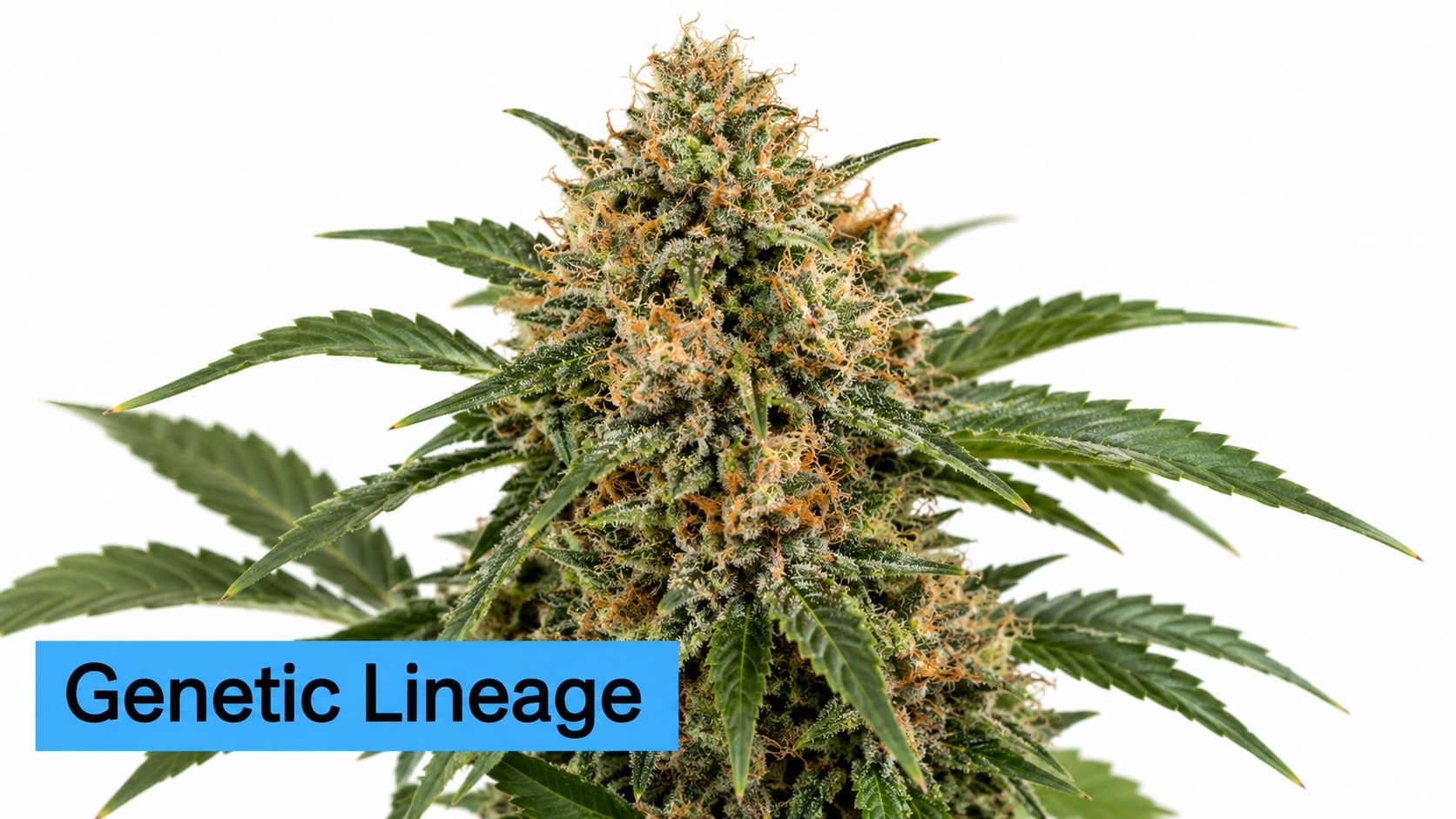
Cookie Kush is generally described as a cross between Girl Scout Cookies and an OG Kush phenotype associated with Barney's Farm. Breeder and strain references may name that OG parent Rolex OG Kush or Rollex OG Kush, while the Girl Scout Cookies side can refer to a particular cut. Those labels identify the reported family tree, not a guaranteed chemical profile.
The wider lineage explains the appeal. Girl Scout Cookies is commonly described as a cross of OG Kush and Durban Poison, placing OG Kush genetics on both sides of Cookie Kush's broader ancestry. The result connects two influential breeding themes: the Kush family and the dessert-style strains that became prominent during the 2010s. That history helps explain the name, but it does not make every batch chemically identical.
Reading the family tree without overreading it
Breeder descriptions commonly place Cookie Kush at approximately 70% indica and 30% sativa, as reported by Grow Good Bud's Cookie Kush profile. Use that ratio as a directional description of the breeding line. It is not a biological switch that determines how a specific package will feel.
A useful analogy is a family recipe. Knowing the ingredients suggests a style, while the finished dish still depends on the batch. For Cookie Kush, phenotype, cultivation, curing, storage, and testing can change the chemistry that reaches the customer. The product's certificate of analysis, or COA, therefore deserves more weight than the indica label alone.
Cookie Kush also earned recognition in Amsterdam, winning first place in the Best Coffeeshop Strain category at the 2014 High Times Cannabis Cup. The award history is documented by High Times' Cookie Kush award record, while the documented award history from Amsterdam Seed Center provides additional cultivar context. That recognition gives the name historical weight, but it cannot certify the contents of a current package.
The practical conclusion is straightforward: use lineage to form a starting hypothesis, then compare the batch COA. Check the reported cannabinoids and dominant terpenes against the aroma and effect you want. Cookie Kush names a breeding story. The COA identifies the product in front of you.
Typical Potency and Why the Numbers Vary So Much
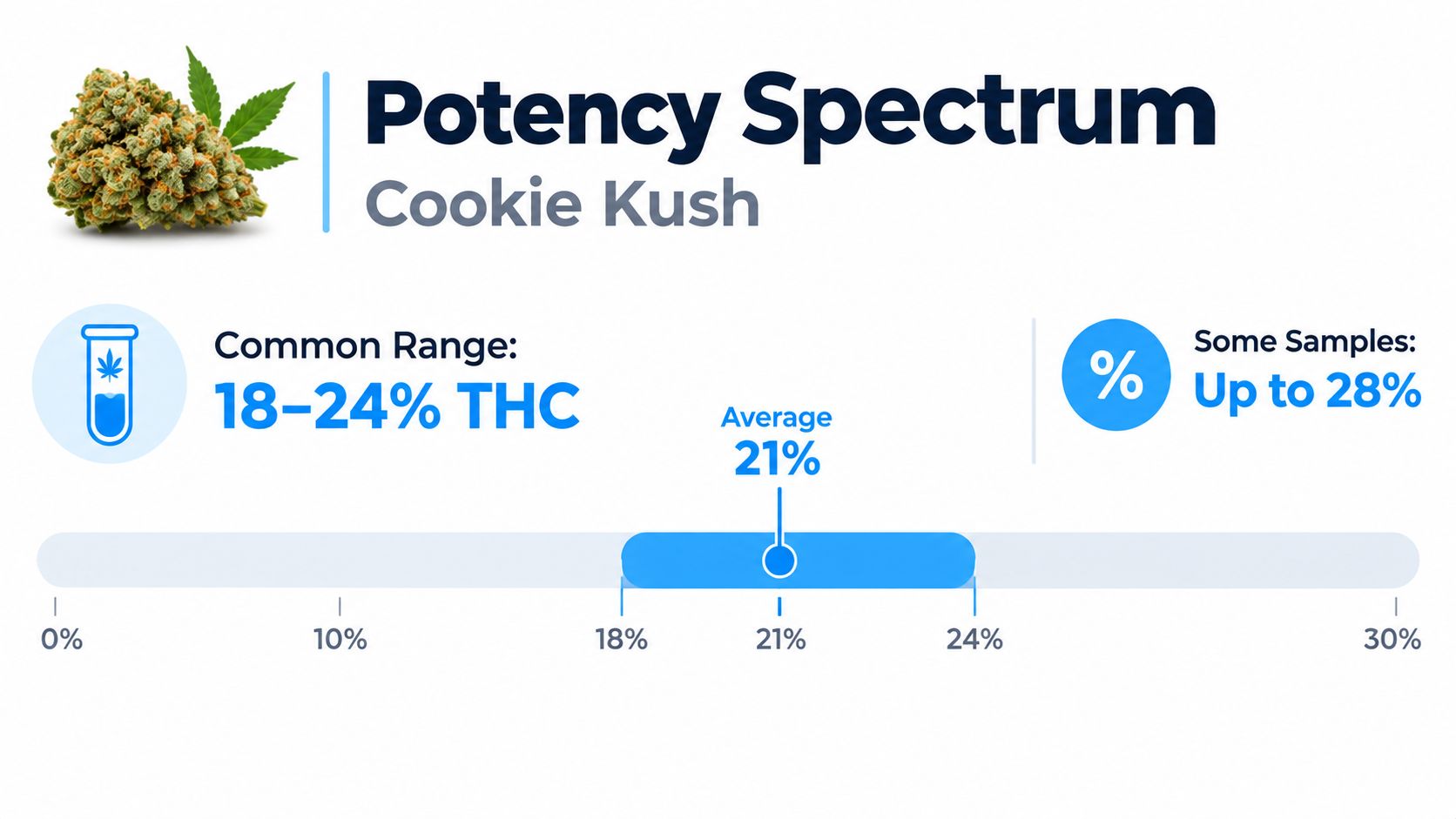
Cookie Kush is better understood as a batch-identification problem than as a fixed THC promise. Breeder catalogs and strain databases commonly place it around 18% to 24% THC, but a specific flower product can test outside that range. Strainpedia's Cookie Kush profile records one laboratory-style result of 17.0% total THC, calculated from 18.49% THCa and 0.78% delta-9 THC.
That same profile lists 0.08% CBD, 0.57% CBG, 0.18% CBC, and 0.09% CBN. A separate Michigan product listing reported a 2024 harvest with 24.01% THC and 0.06% CBD. The two results do not erase the Cookie Kush identity. They show why the name describes a cultivar background, while the COA identifies the batch in your hand.
Why THCa and THC can look confusing
Fresh cannabis flower primarily contains THCa, which changes when heated. A COA may list THCa, delta-9 THC, and calculated total THC separately. Those figures can look inconsistent even though they describe related parts of the same tested material.
A breeder target and a retail COA answer different questions. The catalog suggests what the cultivar may produce under expected conditions. The product certificate reports what the laboratory found in that tested batch. Use the retail result to guide both your purchase and your serving decision.
Check these COA fields:
- Total THC: A practical headline figure for comparing finished products.
- THCa and delta-9 THC: The components behind the reported total and the laboratory's reporting method.
- CBD: Useful when comparing cannabinoid balance, although Cookie Kush is generally described as low in CBD.
- Minor cannabinoids: CBG, CBC, and CBN provide additional context.
- Test date and product identity: Confirm that the certificate matches the package you are considering.
Phenotype, cultivation, harvest timing, curing, storage, and laboratory method can all affect the result. Compare COAs from different Cookie Kush batches, then check whether their dominant terpenes fit the aroma and experience you want. Ignore the universal strain number when a current COA is available. The batch result deserves more weight, especially for a first-time buyer or a product near the upper end of reported THC.
Terpenes and the Sensory Signature of Cookie Kush
Cannabinoids tell you about potency, but terpenes help explain the sensory character. Cookie Kush profiles commonly include myrcene, caryophyllene, limonene, and sometimes linalool or pinene. Their presence can help you anticipate whether the flower leans earthy, peppery, citrusy, floral, or pine-like.
One reported sample measured approximately 0.75% myrcene, 0.55% caryophyllene, 0.41% linalool, and 2.00% total terpenes, according to Royal King Seeds' Cookie Kush profile. Another profile identifies limonene as dominant, which shows why terpene hierarchy can shift between phenotypes and test results.
The main aroma clues
| Terpene | Common aroma | Reported role |
|---|---|---|
| Myrcene | Earthy and herbal | Often associated with a deep, grounded aroma |
| Caryophyllene | Peppery and spicy | Adds warmth and a sharper spice note |
| Limonene | Citrus and bright | Brings lemon-like freshness to the profile |
| Linalool | Floral and soft | Can add a gentle floral layer |
| Pinene | Pine-like and fresh | May contribute a crisp, forest-like note |
The table is a shopping aid, not a medical chart. Terpenes can influence aroma and the subjective character of a session, but their presence doesn't guarantee sleep, pain relief, anxiety reduction, or any other medical outcome.
How to read the terpene panel
Start with the dominant terpene, then look at the supporting compounds. If caryophyllene leads, you may notice more peppery spice. If limonene leads, citrus may stand out. Myrcene can contribute earthy or herbal depth, while linalool and pinene may change the edges of the profile.
Total terpene percentage is useful for comparing aroma intensity, but it shouldn't become another universal promise. A batch with a familiar name can smell different from another batch carrying the same name. For more ideas on comparing aromatic flower, see this guide to high-terpene cannabis strains.
The best method is to combine the COA with your own sensory preferences. If you enjoyed a peppery, earthy product before, search for caryophyllene and myrcene. If you prefer bright and citrusy flower, look for limonene. You're building a personal record of chemistry and response, not trying to memorize a fixed strain personality.
What Effects to Actually Expect from a Cookie Kush Session
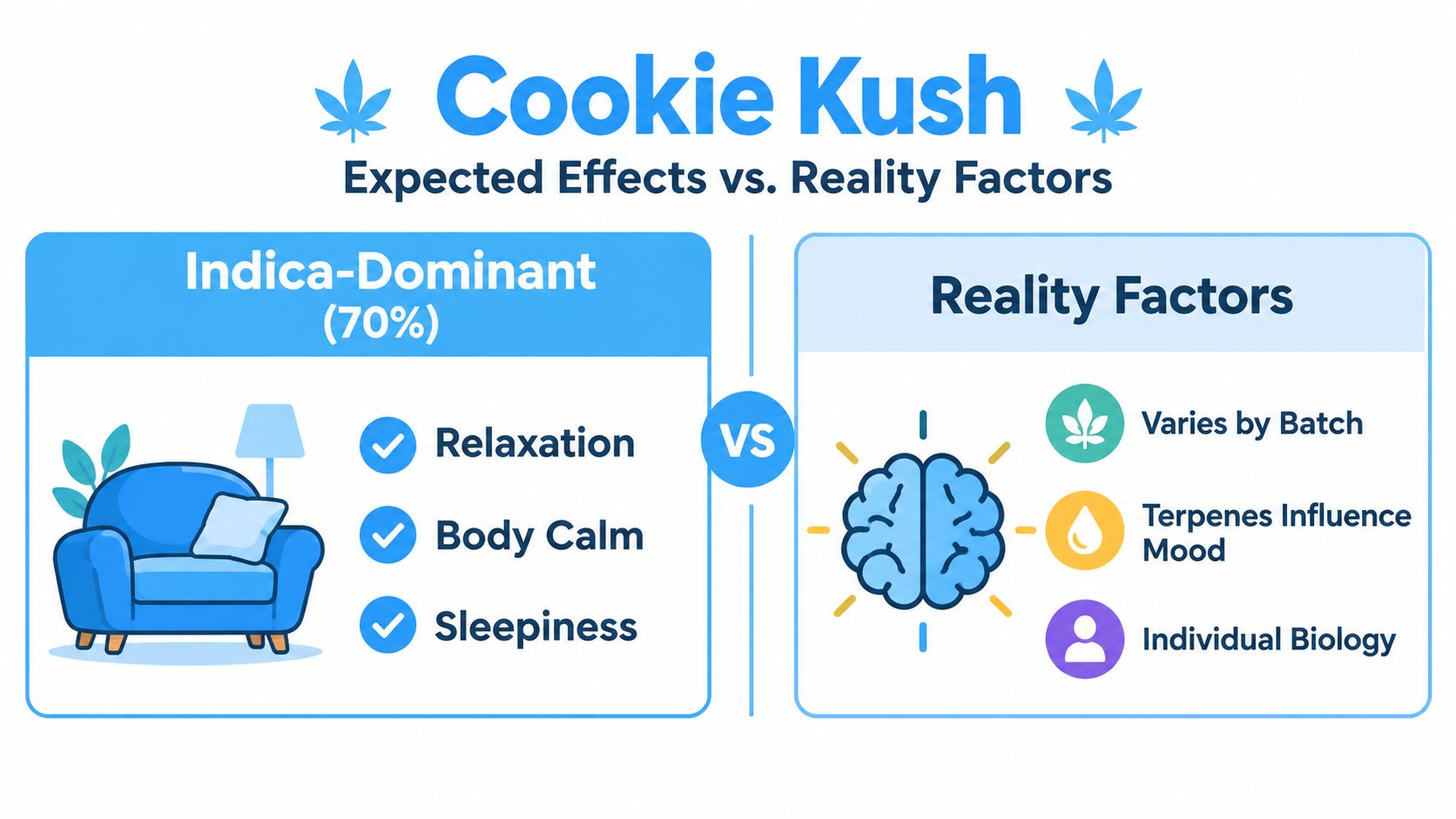
The 70% indica-dominant label points toward a relaxing profile, but it doesn't settle the question. Reported descriptions vary by phenotype and source. Some describe relaxing or sleepy effects, while others describe an early period of euphoria or focus followed by deeper physical relaxation, as noted in DSS Genetics' Cookie Kush profile.
That range makes sense when you consider the variables. Your tolerance, the batch's total THC, the terpene balance, the setting, and your mood all influence the experience. A product that feels manageable to an experienced consumer may feel intense to someone with little recent cannabis experience.
A practical way to estimate intensity
Use the COA and your own history together:
- Lower reported THC batch: The session may feel easier to control, although personal sensitivity still matters.
- Middle-of-range batch: You may notice the cultivar's broader balance of mental lift and physical calm.
- Upper reported range: The effects may feel more forceful, particularly for a newer or infrequent consumer.
These are decision categories, not guarantees. Even products with similar THC results can feel different when their terpene panels diverge. A person who wants an evening wind-down may prefer a profile with relaxing personal associations, while someone planning a social or creative activity should avoid assuming that “indica-dominant” automatically means they'll be unable to function.
The most responsible expectation is a possible progression from initial euphoria or focus toward physical relaxation, not a promise of sedation. Start with a small amount in a comfortable setting, and don't schedule driving, work that requires sharp attention, or other safety-sensitive activity afterward.
The label can suggest the direction. Your tolerance and the batch chemistry determine the route.
Cookie Kush may suit experienced consumers looking for an evening-leaning hybrid, but that description should remain flexible. If the COA shows a stronger result than you expected, choose a smaller starting amount or select a different product with a potency and terpene profile you already understand.
Dosing, Formats, and Safety Tips for New and Returning Buyers
The format changes the experience as much as the label does. Flower, pre-rolls, and vapes deliver inhaled cannabis, while edibles and other oral products arrive through a slower digestive process. The same stated THC amount can feel different across those formats because onset, duration, and absorption aren't identical.
For inhaled Cookie Kush, use a start-low approach. Take a small inhaled amount, wait for the effect to develop, and avoid stacking more before you know how the first amount feels. New or infrequent consumers should be especially cautious when the COA places the batch near the upper end of the reported potency range.
Match the product to your experience
A pre-roll can be convenient, but you don't have to finish it to assess the flower. A vape may offer a different ritual and a more concentrated product experience. Edibles require extra patience because their effects can take longer to appear and can last longer than expected.
Use this cannabis dosage chart as an educational reference, then follow the package directions and local regulations. Don't treat a chart as a substitute for individual caution, especially if you're returning to cannabis after a long break.
New York's testing framework gives shoppers useful questions to ask. Cannabis lots require potency testing, with results required to fall within plus or minus 15% of the label, and final products must be screened for specified microbial pathogens, according to the New York-focused information summarized in the provided research. If a label and COA appear inconsistent, ask the dispensary team to clarify which result applies to the package.
Keep the basic safety rules simple
- Don't combine cannabis with alcohol: Combining the two can make impairment harder to predict.
- Never drive after using cannabis: Arrange transportation before consuming.
- Read the entire label: Check total THC, serving information, ingredients, and warnings.
- Store products securely: Keep cannabis away from children, pets, and anyone who shouldn't access it.
- Record what worked: Note the product, batch, terpene profile, amount, and setting for future decisions.
If you experience an uncomfortable reaction, stop consuming, move to a calm environment, and seek appropriate medical help if symptoms are severe or concerning. Responsible use starts before the first inhalation, with a product choice that matches your experience and plans.
A Buyer's Checklist for Choosing Cookie Kush at a Long Island Dispensary
The name is the starting point. The COA is the truth you can check. Before buying Cookie Kush, use this short checklist:
- Confirm the producer: Make sure the product name and producer match the package and menu.
- Read the cannabinoid panel: Check total THC, CBD, and minor cannabinoids on the current COA.
- Scan the terpene profile: Note the dominant terpene and total terpene result, then compare it with aromas you enjoy.
- Check freshness: Review the harvest or packaging date and inspect the flower when possible.
- Ask a budtender: Request information about the current batch, not just the strain's general reputation.
- Match the product to your plan: An evening wind-down and a daytime creative project may call for different choices.
If the numbers look inconsistent, ask how the result relates to New York's plus-or-minus 15% potency tolerance. You can also review this guide to cannabis lab testing before visiting a dispensary such as Strong Strains Cannabis Dispensary in East Setauket. The store offers lab-tested flower, vapes, pre-rolls, edibles, concentrates, tinctures, topicals, and accessories, with in-store pickup and local delivery across the North Shore.
Visit Strong Strains Cannabis Dispensary to compare Cookie Kush batches by COA, terpene profile, format, and potency instead of relying on the name alone. Ask the budtending team for help choosing a product that fits your tolerance and plans, then use in-store pickup or local delivery across the North Shore.