
Cotton Candy Kush is a sativa-leaning hybrid, often listed around 75% sativa, with a sweet, candy-like aroma and effects that may feel uplifting at first, calming later, or noticeably different from one batch to another. Its THC commonly falls between 18% and 23%, although individual samples can test lower or higher.
You're standing at a Long Island dispensary, comparing flower jars that all promise something different. One label suggests energy and creativity, another customer review mentions deep relaxation, and the phrase “cotton candy” makes you wonder whether the experience will be light and playful or surprisingly potent. Cotton Candy Kush earns its name through its sugary, floral character, but the effect isn't as simple as the flavor suggests.
That uncertainty is exactly why this strain deserves a closer look. Genetics, terpene balance, cultivation, tolerance, and the specific batch can all influence the experience. If you're deciding whether Cotton Candy Kush belongs in your daytime rotation, evening lineup, or shopping cart, the most useful answer isn't a rigid indica-versus-sativa label. It's a practical understanding of what the strain tends to do and why your experience may differ from someone else's.
Finding Your Sweet Spot with Cotton Candy Kush
A customer browsing a Long Island dispensary might pick up Cotton Candy Kush expecting a straightforward dessert strain. The name brings to mind spun sugar, floral sweetness, and an easygoing high. The menu description may reinforce that expectation with words such as uplifting, relaxing, euphoric, or balanced. None of those descriptions is necessarily wrong, but each captures only part of the experience.
The first phase can feel mentally bright and mood-lifting for some consumers. That makes the flower appealing before a social activity, a creative hobby, or a relaxed afternoon. Other people notice the body-calming side more strongly, especially as the initial lift settles. Some reviewers describe enough energy for daytime use before a calmer feeling takes over, while others report jitteriness, insomnia, anxiety, or paranoia instead of sleepiness, as reflected in the Leafly strain profile for Cotton Candy Kush.
Why the label doesn't settle the question
“Sativa-leaning” describes ancestry and general structure, not a guaranteed emotional result. A sativa-leaning hybrid can still feel physically soothing, particularly when its terpene profile is myrcene-forward. Likewise, a person who expects relaxation may experience mental stimulation if the batch, dose, or personal sensitivity pushes the brighter side of the profile forward.
The practical takeaway is to treat Cotton Candy Kush as a variable hybrid, not as a fixed daytime or nighttime product. A lower-intake session may emphasize the strain's cheerful, social character. A larger amount may bring more body heaviness, mental fog, or unwanted stimulation, depending on your tolerance.
Practical rule: Choose Cotton Candy Kush for its range, not for a promise that it will always make you productive or sleepy.
That range is part of the appeal. The strain combines nostalgic flavor with a potency level that can be significant for newer consumers. If you're shopping in Long Island, ask the budtender to show you the package's current cannabinoid and terpene information rather than relying only on the strain name. Two products carrying the same name may not produce an identical experience.
Genetics and Appearance of the Strain
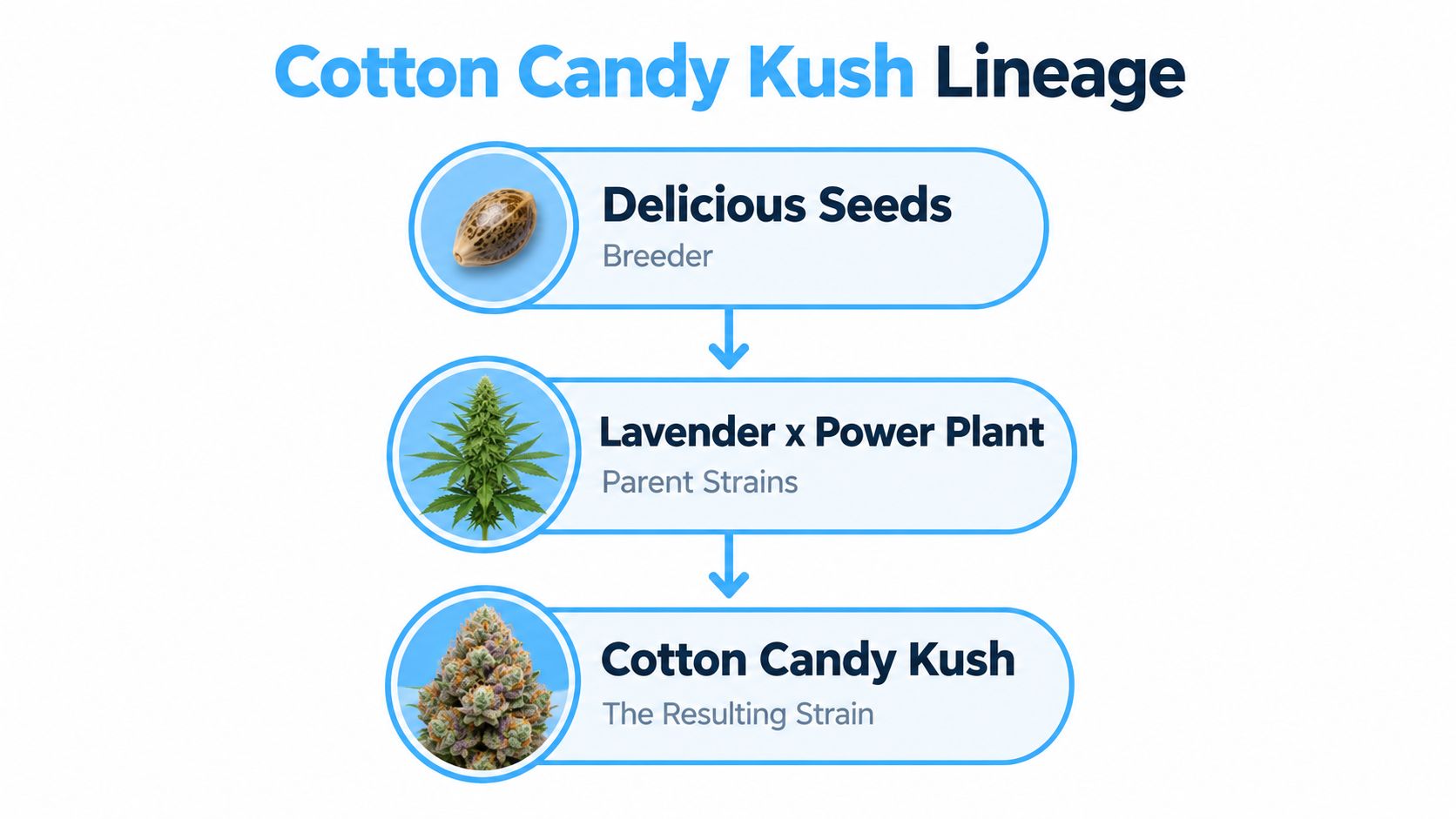
A jar of Cotton Candy Kush may promise a sweet, floral experience, yet the plant's background offers a more useful clue than its name. The strain is generally traced to a cross of Lavender and Power Plant, a pairing credited to Delicious Seeds and repeated across strain references and reviews. One neutral strain reference describes it as a sativa-leaning hybrid, while another lists it at around 75% sativa. That ancestry helps explain why one batch or dose may begin with lively mental energy before settling into a calmer physical feeling, while another may feel more stimulating throughout.
Lavender contributes much of the floral character. Power Plant is associated with the cross's vigorous, energetic side. Their combination belongs to the modern European breeding era rather than an old landrace preserved unchanged over generations. The result became known as a dessert-leaning cultivar with commercial appeal. Its reported lineage appears in the image below.
What to look for in the flower
Appearance helps you judge handling and freshness, but it cannot establish potency. Look for visible resin coverage, intact trichomes, and a texture that is neither wet and compressed nor brittle and dusty. The aroma adds another practical check. A fresh, distinct scent supports the candy-floral profile shoppers expect. A muted, overly grassy, or musty smell can point to poor storage, incomplete curing, or a product that has lost some character.
Cotton Candy Kush is often described as a high-output flower. Indoor cultivation reports commonly sit around 450 to 550 grams per square meter, and reported yields can reach about 600 grams per square meter indoors, according to the Weedmaps Cotton Candy Kush reference. These figures describe cultivation potential, not the strength, freshness, or quality of a retail batch.
Don't confuse visual appeal with a lab result
Frosty buds can be aromatic and enjoyable, but appearance cannot show whether a product falls at the higher or lower end of its reported potency range. Check the package date, testing information, cannabinoid results, and terpene details when available. Clean aroma, proper curing, and resilient texture should support what the label reports.
The name itself can create another point of confusion. Some menus use Cotton Candy, while others use Cotton Candy Kush. The labels may describe closely related expressions, but they do not prove that every product comes from the same cut. Ask about the producer and batch. That information gives you a better basis for judging why one jar might feel bright and energetic while another feels more settled.
Terpenes, Cannabinoids, and the Flavor Profile
Cotton Candy Kush gets its candy-like aroma from several aromatic compounds working together. One terpene does not make the flower taste like spun sugar on its own. This strain is usually described as myrcene-forward, with caryophyllene and linalool playing major supporting roles. Limonene often shows up as a secondary terpene, and it can brighten the softer floral base.
One reported profile lists 0.77% myrcene, 0.49% limonene, 0.33% caryophyllene, and 1.78% total terpenes, according to the Cotton Candy Kush terpene profile from Royal King Seeds. Those numbers describe one specific sample, not every jar carrying the same name.
Reading the aroma in plain language
The main terpenes work like layers in a recipe.
- Myrcene gives the aroma much of its soft, earthy, herbal body, which keeps the scent rounded instead of sharp.
- Limonene adds a citrus lift that prevents the sweetness from feeling flat.
- Caryophyllene brings warm spice and pepper.
- Linalool supports the floral, lavender-like note often tied to the strain's lineage.
Put together, these notes can smell like candy and flowers first, then open into spice, citrus, or earth once the bud is broken up and ground. A batch with more limonene may come across as brighter. One with stronger myrcene and linalool may feel softer and more muted on the nose.
THC is only one part of the decision
Cotton Candy Kush is commonly listed in a broad THC range, and that spread matters because a strain name is not a potency promise. Higher THC does not automatically mean better flower or a more enjoyable session.
Freshness, terpene retention, your tolerance, and how much you use all shape the result. That is why shoppers comparing aromatic flower often do better by looking at terpene balance, not THC alone. A strong terpene profile can make a batch feel more distinct, even when the cannabinoid numbers look ordinary. For a wider look at similar products, the guide to high-terpene strains helps explain why aroma often tracks with a more noticeable experience.
Navigating the Variable Effects of Cotton Candy Kush
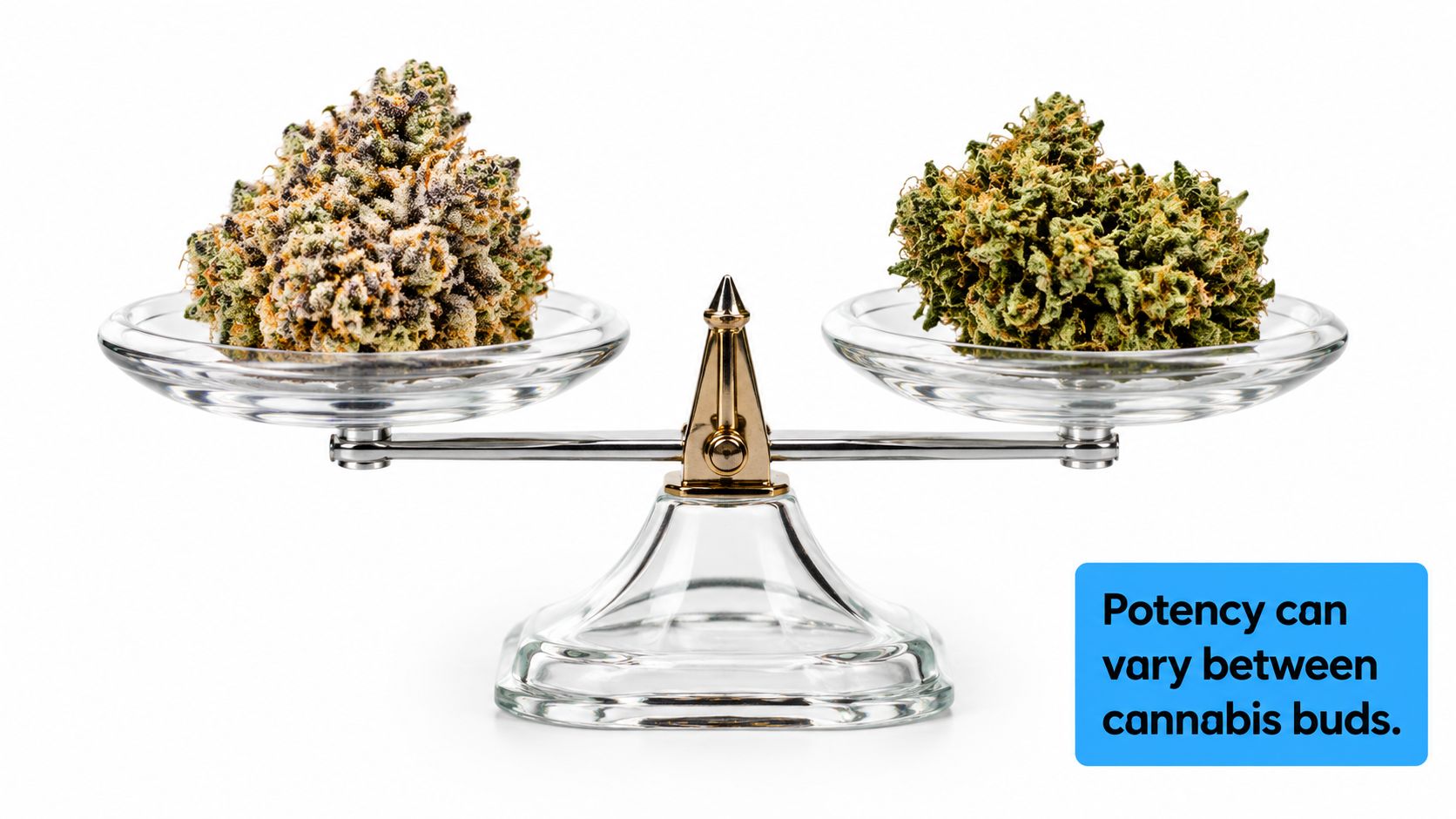
A customer can buy two jars with the same strain name and get two different sessions. Cotton Candy Kush is a good example of that. Some people describe an uplifting, euphoric start that feels better suited to daytime use, while others notice a slower, calmer body feel later on. A smaller group reports jitteriness, restlessness, insomnia, or paranoia.
That spread in reactions does not mean the reviews are unreliable. It means the name points to a range of real flower, not one fixed outcome. User reviews consistently note this variability, and the difference often comes down to the batch, the dose, and the person using it.
Four reasons the experience can shift
Batch chemistry matters. A strain name does not lock in the same balance of myrcene, limonene, caryophyllene, linalool, or minor cannabinoids every time. Small shifts in that profile can change whether the flower feels brighter, heavier, more floral, or more physically settling.
Dose changes the direction. A small amount may keep the headspace clearer and more social. A larger amount can make the same flower feel stronger, with relaxation, distraction, or anxiety showing up more clearly. That pattern is not unique to Cotton Candy Kush, but it matters here because the strain has a mixed reputation.
Your baseline matters. Sleep, stress, tolerance, setting, and prior experience all shape the outcome. Someone using cannabis after a long day may welcome the body ease. Someone already tense may find the early lift uncomfortable. For a broader explanation of how hybrid products can feel different from person to person, this guide to hybrid strain effects is a useful reference.
The product's condition matters. Well-cured flower usually keeps the aroma and texture that make the strain recognizable. Old, dry, or poorly stored bud can taste harsher and feel less representative of what the strain is supposed to deliver.
A practical way to choose
Start with the batch in front of you, not the name on the label. A fresh, clear aroma is a better sign than a promise of one fixed effect. If you want a more functional session, begin with a modest amount in a familiar setting and see how the first phase feels before using more.
If evening calm is the goal, do not assume the strain will go straight to sleepiness. Treat it like a hybrid with moving parts. One batch may feel more upbeat, another more grounding, and a third may land in between. Reading the label gives you the starting point. Your own response gives you the rest.
Medical Uses, Recreational Benefits, and Growing Insights
Cotton Candy Kush has recreational appeal because it can offer more than one kind of enjoyment. The candy-floral aroma gives the session a distinctive sensory identity, while the reported effect range can suit conversation, music, creative activities, or a quieter evening. Consumers seeking relief from everyday stress may appreciate the euphoric and stress-relieving qualities reported for some expressions, but the strain shouldn't be treated as a guaranteed medical treatment.
People managing pain, appetite, sleep, anxiety, or other health concerns should speak with a qualified healthcare professional. Cannabis can affect people differently, and a product with a meaningful THC level may worsen anxiety or interfere with medications for some users. The most responsible approach is to treat personal reports as context, not clinical proof.
Why the strain became commercially attractive
Cotton Candy Kush appears in the 2010s wave of dessert-leaning cannabis genetics, alongside broader interest in sweeter terpene profiles and higher cannabinoid potency. Commentary on the strain identifies Delicious Seeds as operating since 2010 and repeats the Lavender by Power Plant lineage, placing the cultivar within modern European seed-bank breeding rather than older North American landrace circulation. These historical details are summarized in Strainpedia's Cotton Candy Kush overview.
The production profile helped reinforce that appeal. Indoor flowering is often reported at about 50 days, and some outdoor-heavy versions claim roughly 1.5 kilograms per plant, according to the same reference. Those figures vary by phenotype and growing conditions, so they're best understood as reported potential rather than a promise for every garden.
What growers should take from the reports
The important combination is aroma, finishing speed, and output. A cultivar that develops a recognizable sweet profile while finishing relatively quickly can fit the seed-bank model that shaped much of modern cannabis retail. That makes Cotton Candy Kush interesting to growers, but cultivation claims shouldn't lead shoppers to overlook post-harvest handling.
For consumers, curing may be just as important as genetics. Drying and storage influence whether the jar delivers floral sweetness, citrus brightness, and the deeper herbal or spicy notes suggested by its terpene profile. A high-yield crop can still become disappointing flower if the producer mishandles it after harvest.
Buying and Storing Premium Cotton Candy Kush on Long Island
A shopper comparing two jars labeled Cotton Candy Kush may notice different aromas, textures, and effects. The name offers a starting point, not a guarantee. Begin with the current product and ask to see its package information, recent test results, terpene profile, and product date. These details help you judge freshness and understand why one batch may feel more uplifting while another feels calmer.
If you can inspect the flower, smell for an expressive sweet and floral aroma rather than a flat or stale one. The buds should hold together without feeling damp, and they should not crumble into dust. Texture can reveal poor curing or overly dry storage before you buy.
A budtender can help compare formats. Flower gives you the clearest view of aroma and structure. A pre-roll is convenient, though it may reveal less about the individual buds inside. Vapes, edibles, tinctures, and concentrates can produce different onset patterns, so choose the format that fits your experience level and plans. For a buyer's guide to cannabis product formats, review our product guides.
A simple shelf-side checklist
- Read the test panel: Compare THC with terpene information instead of selecting only by the highest cannabinoid number.
- Check the aroma: Look for sweet and floral notes, with possible citrus, pepper, or herbal depth.
- Inspect the texture: Properly cured flower should not feel wet, brittle, or unusually compressed.
- Ask about the batch: The producer, harvest or package information, and storage conditions can explain differences between products with the same strain name.
- Match the format to your plan: Newer consumers may prefer a form that makes measured use easier. Experienced shoppers may prioritize terpene-rich flower.
Strong Strains Cannabis Dispensary in East Setauket is one local option for lab-tested cannabis products, including flower, vapes, pre-rolls, edibles, concentrates, tinctures, topicals, and accessories. Its team offers product guidance, with in-store pickup and local delivery available for Long Island customers.
Protect the flavor after you buy
Store flower in an airtight container away from heat, light, excess air, and changing humidity. A stable, cool location is better than a hot car, sunny windowsill, or frequently opened kitchen cabinet. Keep the buds whole until you plan to use them. Grinding exposes more surface area to air, which can reduce aroma over time.
Use a clean container, and avoid mixing Cotton Candy Kush with older flower that has a stronger odor. That can make it harder to tell whether the sweet profile remains intact. If the flower becomes unusually dry, do not add household materials that could introduce contamination or unwanted moisture. Ask the dispensary for storage advice suited to the specific product.
The right purchase matches your desired experience, tolerance, and timing. Cotton Candy Kush may suit someone seeking candy-floral flavor with either uplift or body ease, but batch differences matter. Check the product details and start cautiously rather than relying on a simple strain stereotype.
Strong Strains Cannabis Dispensary offers lab-tested flower, vapes, pre-rolls, edibles, concentrates, tinctures, topicals, and accessories. Visit Strong Strains Cannabis Dispensary in East Setauket for in-store pickup or local delivery, and ask the team about a current batch that fits your preferred energy, relaxation, flavor, and potency.