
Heavy indica flower isn't automatically the best choice for meditation. A powerful dose may relax your body, but it can also blur attention, intensify internal chatter, or leave you too sedated to notice what's happening in the moment. The best strains for meditation are usually the ones that create relaxed awareness, not the strongest intoxication.
That means looking past the indica and sativa label. A more useful approach considers THC and CBD balance, terpene profile, meditation style, product format, and dose. Whether you're practicing a body scan, breathwork, walking meditation, or quiet reflection, the right cannabis profile should support your intention without taking over the session.
Rethinking Cannabis and Mindfulness
The popular advice is simple: choose a heavy indica, take enough to feel fully relaxed, and let the meditation unfold. That approach confuses sedation with mindfulness. Meditation asks you to notice breath, sensation, emotion, and thought. If a product makes you sleepy or mentally scattered, it may feel intense, but intensity isn't the same as presence.
Research on cannabis, sleep, and affective symptoms helps explain why relaxing products appeal to many adults. A large 2026 study found that adults with clinically significant anxiety and depression commonly used medical cannabis for anxiety, insomnia, and depression. Among people using cannabis for those reasons, the clearest evidence of benefit was connected to improved subjective sleep outcomes, and adults using medical cannabis had significantly lower past-month PSQI global scores than non-users. The study also notes that 60–70% of people with generalized anxiety disorder report sleep disruption. Read the study on cannabis, sleep, and affective symptoms
Those findings don't prove that cannabis improves meditation, and they don't mean a sedating product suits every practice. They do show why many shoppers gravitate toward calming, indica-leaning, terpene-rich profiles for evening routines. The better question is, what state do you want to cultivate?
Clarity before intensity
A meditation-friendly session should leave room for observation. You want to notice the breath without forcing it, feel the body without becoming overwhelmed by sensation, and recognize thoughts without following every one. High THC can work against those aims for some people, particularly when the dose rises.
A lower-intoxication product may be more appropriate for sustained attention. Balanced THC and CBD formulations can offer a gentler starting point, while calming terpenes may help shape the experience toward physical ease or emotional steadiness. Individual responses still vary, so a strain name is never a guarantee.
Mindful rule: Choose the smallest amount that supports your intention, then evaluate the quality of your attention rather than the strength of the high.
Cannabis also shouldn't become a requirement for stillness. Alternate cannabis-assisted sessions with sober practice so you can build skills that remain available in either state. If journaling helps you reflect afterward, you might pair your session with tarot journaling prompts for insight, using the writing period to notice patterns without treating every thought as a conclusion.
The Science of Terpenes and Cannabinoids
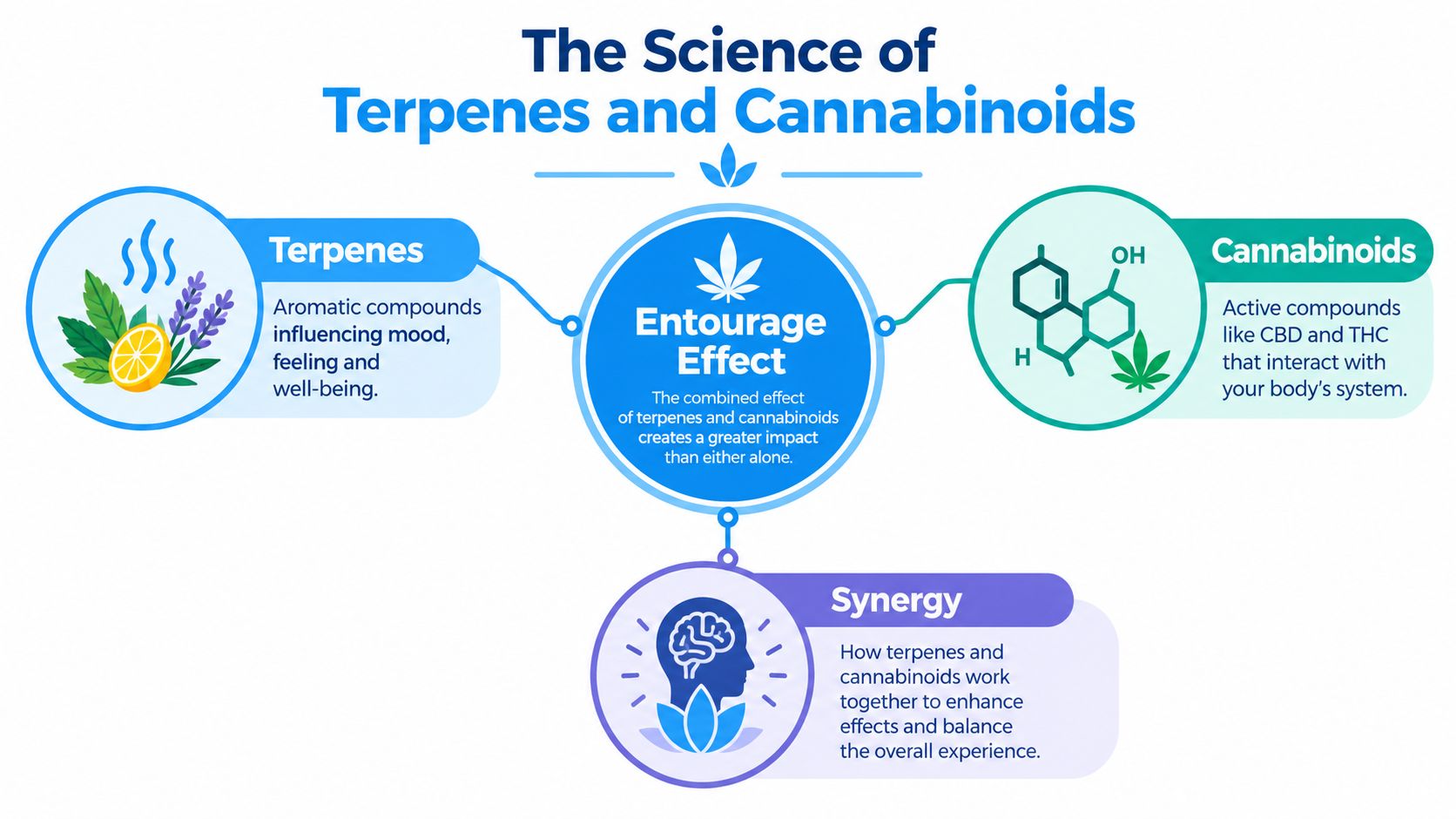
A strain's name tells you less than its chemical profile. Modern cannabis selection works better when you read the cannabinoid and terpene information together. THC and CBD influence the overall experience, while terpenes contribute aroma and may help shape the subjective character of that experience.
The term entourage effect describes the idea that cannabinoids and other cannabis compounds may work together rather than acting as isolated ingredients. It doesn't mean every combination produces a predictable result. It means the same THC content can feel different depending on the surrounding formulation, the person's sensitivity, and the product's terpene balance.
THC and CBD set the basic direction
THC is the cannabinoid most associated with intoxication. A small amount may feel sensory, reflective, or relaxing, while a larger amount is more likely to interfere with concentration or increase unease in sensitive users. Human and review data summarized by Drexel University indicate that THC is more likely to worsen anxiety as the dose increases, while CBD has shown anxiety-reducing effects across the dose ranges tested. Review the cannabis and anxiety fact sheet from Drexel University
That makes a low-THC, CBD-forward formulation a sensible starting profile for people who want calm focus with less intoxication. A balanced THC to CBD product may suit someone who wants more noticeable sensory awareness but still wants a steadier experience. Neither option is universally right.
Terpenes help refine the experience
- Myrcene is commonly associated with physical grounding and a heavier, more restorative feel. It can suit a lying-down body scan when the aim is to release tension.
- Linalool has a floral, lavender-like character and is often selected for calm, quiet evening practices. An independent registry study reported improved sleep scores at every measured time point after medical cannabis treatment, with differences of 1.8 points at one month, 1.9 points at three months, and 1.5 points at six months, all with p < 0.001. Read the UK Medical Cannabis Registry cohort study
- Limonene offers a brighter citrus profile. In a controlled human study involving 20 healthy adults, vaporized d-limonene combined with THC significantly reduced self-reported anxiety, nervousness, and paranoia compared with THC alone, without changing THC pharmacokinetics. See the Johns Hopkins report on d-limonene and THC
- Beta-caryophyllene brings a peppery, spicy character that can fit movement-based mindfulness or a grounded but alert practice.
- Terpinolene is often considered when someone wants a lighter, more mentally active profile for breathwork or focused attention.
Read the certificate of analysis when it's available. Look for the total THC and CBD, then check which terpenes appear near the top of the profile. A label that only advertises a strain name or a high THC figure doesn't tell you enough about whether the product will support your specific practice.
For a deeper look at the floral terpene most often associated with calming profiles, explore this guide to linalool terpene effects.
A short visual explanation can make the chemistry easier to remember.
Matching Strain Profiles to Meditation Styles
The best strain for meditation depends on what your body and attention need to do. A restorative body scan asks you to soften into sensation. Breathwork requires enough alertness to count, observe, and regulate breathing. Walking meditation needs an even more functional profile because balance and environmental awareness matter.
Instead of choosing a strain because it is labeled indica or sativa, match the cannabinoid ratio and terpene emphasis to the practice.
A practical comparison
| Meditation Style | Ideal Cannabinoid Ratio | Key Terpenes | Primary Benefit |
|---|---|---|---|
| Restorative body scan | CBD-forward or low-THC balanced profile | Myrcene, linalool | Physical grounding and release |
| Breathwork and focused attention | Low-THC balanced profile | Limonene, terpinolene | Calm alertness and sustained attention |
| Loving-kindness meditation | CBD-forward profile | Linalool, limonene | Emotional steadiness and a gentle mood |
| Walking meditation | Balanced THC to CBD profile | Beta-caryophyllene, humulene | Grounded awareness without heavy sedation |
| Yoga or movement-based meditation | Low-dose balanced profile | Beta-caryophyllene, limonene | Body awareness with functional focus |
| Evening visualization | Low-THC, calming profile | Linalool, myrcene | Quiet reflection and physical ease |
A myrcene-dominant profile can make sense when you're lying down and trying to feel the weight of your body, the contact between your back and the floor, or the movement of tension as you exhale. Keep the dose conservative, because too much physical heaviness can turn a body scan into an unintended nap.
For breath counting, mantra repetition, or open-monitoring practice, choose a profile that leaves your mind responsive. A low-THC product with CBD, limonene, or a lighter terpene balance may be a better fit than a high-THC flower designed for powerful effects. The goal is to notice distraction and return to the object of attention, not to create an overwhelming stream of sensations.
Let the session decide
Movement practices need special care. A product that feels comfortable on a meditation cushion may feel too impairing during yoga, stretching, or a walk. If you're using cannabis before movement, keep the dose especially modest and avoid any activity that demands rapid reactions, complex balance, or interaction with traffic.
The same person may reasonably choose different profiles on different days. Someone dealing with physical tension after work might prefer myrcene and linalool for a restorative session. The next morning, that person might choose a CBD-forward product with limonene for a clearer, more upright practice.
Selection question: Do you want to soften the body, steady the mind, open your awareness, or stay mobile? Start with that answer, not with a strain name.
How to Prepare for a Mindful Session
Product selection matters, but your setting and method shape the session just as much. A carefully chosen flower can still feel distracting in a noisy room, and a precise product can become overwhelming if you keep consuming before the first effects have settled.
Start with a clear intention
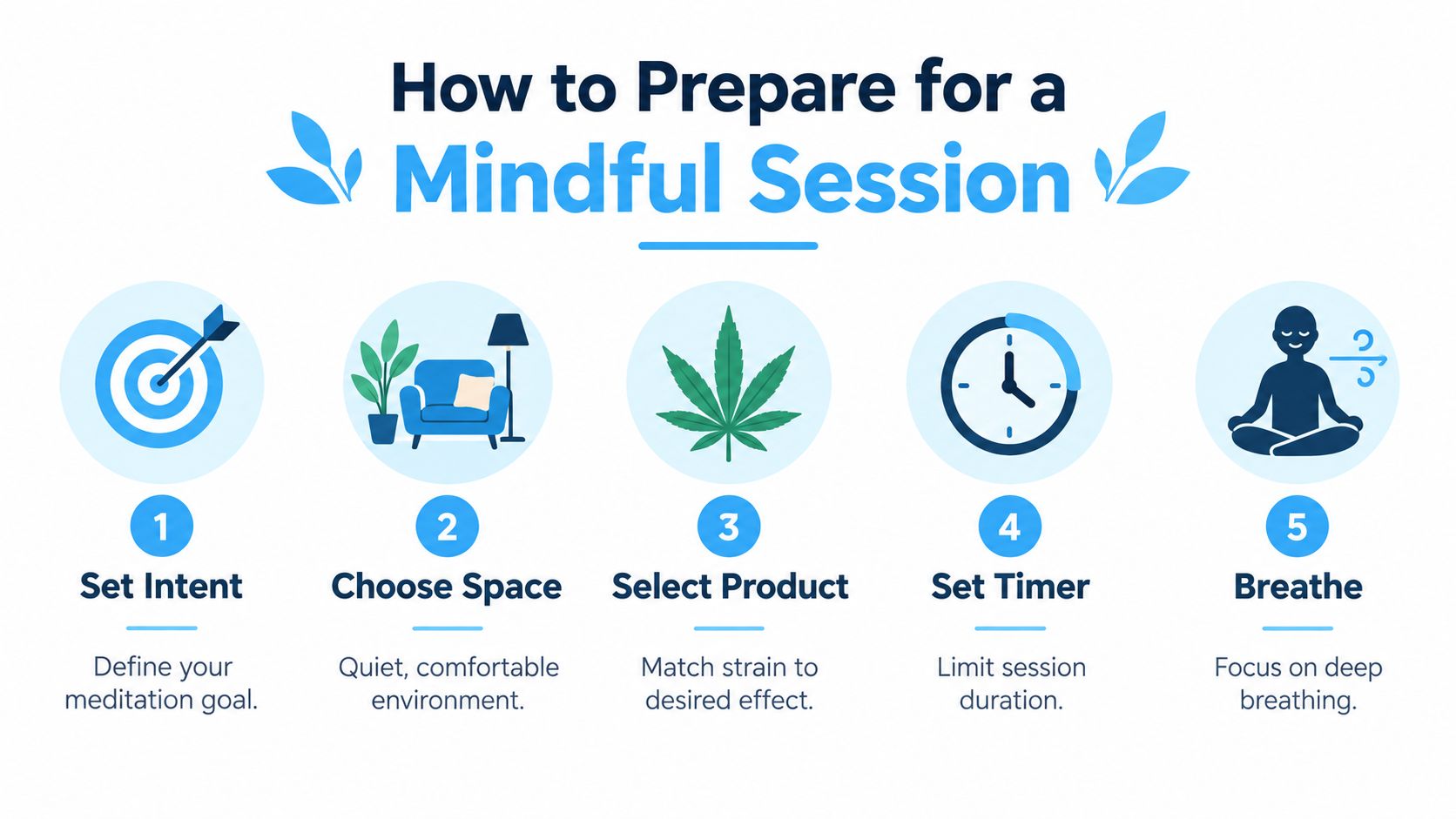
Write one sentence before you begin. “I want to notice physical tension” is more useful than “I want to get high.” Other intentions might include observing the breath, practicing self-compassion, or sitting with an emotion without immediately solving it.
Then choose a quiet, comfortable space. Cushions, blankets, soft lighting, and ventilation can help, and you can find additional tips for setting up a meditation space if you want to make the environment more deliberate. Keep water nearby and remove notifications before consuming.
Use a measured method
Inhaled products can be easier to adjust gradually because you can pause and observe before deciding whether you need more. A precisely labeled edible or tincture may offer consistency, but its onset and duration can be less convenient for an unfamiliar session. Read the package directions and use a cannabis dosage chart as a reference point, not as a promise about how you'll feel.
A practical sequence looks like this:
- Prepare the room: Put your phone away, choose your seat, and make sure you won't need to drive or handle responsibilities.
- Set the intention: Decide whether the session is for body awareness, breath, compassion, movement, or reflection.
- Begin conservatively: Take a very small amount of the selected product. A lower dose is easier to work with than an intense effect that you can't reverse.
- Wait and observe: Give the product time to develop before adding more. Notice your breathing, heart rate, thought speed, and ability to follow instructions.
- Start the practice: Use a timer and begin with a familiar technique. Counting breaths or scanning from head to toe gives your attention a clear home.
- Stop if the session turns uncomfortable: Move to a quiet place, sip water, slow your breathing, and remind yourself that the sensation will pass. Don't add more to try to fix an unwanted effect.
Edibles require extra caution because their onset can be delayed. Don't assume a lack of early sensation means you need another serving. Inhaled cannabis can also impair attention and coordination, so don't drive after using it.
Practical rule: The right dose is the lowest amount that lets you remain curious, oriented, and able to return to your chosen focus.
Afterward, record the product format, approximate amount, time, terpene profile, meditation style, and how your attention felt. Note whether you felt calm, sleepy, anxious, distracted, or physically grounded. That personal record is more useful than copying a generic strain ranking.
Premium Formats and Brands for Mindful Use
A premium cannabis purchase for meditation should solve a practical problem: how can you create a repeatable, adjustable experience? Flower offers aroma and a broad plant profile, but its effects can be harder to standardize from session to session. Precisely labeled edibles and tinctures can be easier to track, while a vape may offer a portable format with a quick onset.
Choose the format that fits your routine
A low-dose edible can suit someone who meditates at home and wants a consistent ritual, provided they understand that effects may take time to appear. Tinctures offer another measured option, especially for shoppers seeking CBD-forward formulations. Live resin vapes can preserve a pronounced terpene character, but inhalation still requires restraint because a small amount can feel stronger than expected.
For flower, inspect the package for cannabinoid content, harvest and testing information, and the terpene profile. A myrcene and linalool combination may fit evening body awareness, while a product with limonene or caryophyllene may better support an alert practice. Product names can be helpful for recognition, but the label data should make the final decision.
What a budtender can do
A shopper might walk in asking for “the strongest indica for meditation.” A useful conversation would refine that request. Do they meditate before bed or in the morning? Do they want physical relaxation or mental clarity? Have they found THC uncomfortable before? Are they looking for flower, a tincture, an edible, or a vape?
Brands such as Papa & Barkley, Wana, and Airo can give shoppers recognizable starting points across tincture, edible, and vape categories, while other options such as Camino, Kiva, Pax, and Wyld may suit different format preferences. Availability and exact formulations change, so verify the current label rather than assuming every product from a brand has the same cannabinoid or terpene profile.
At Strong Strains Cannabis Dispensary, budtenders can help compare lab-tested products by format, potency, and stated profile. That conversation is especially useful when a shopper wants to avoid heavy intoxication, identify a CBD-forward option, or find a product suited to a particular meditation style.
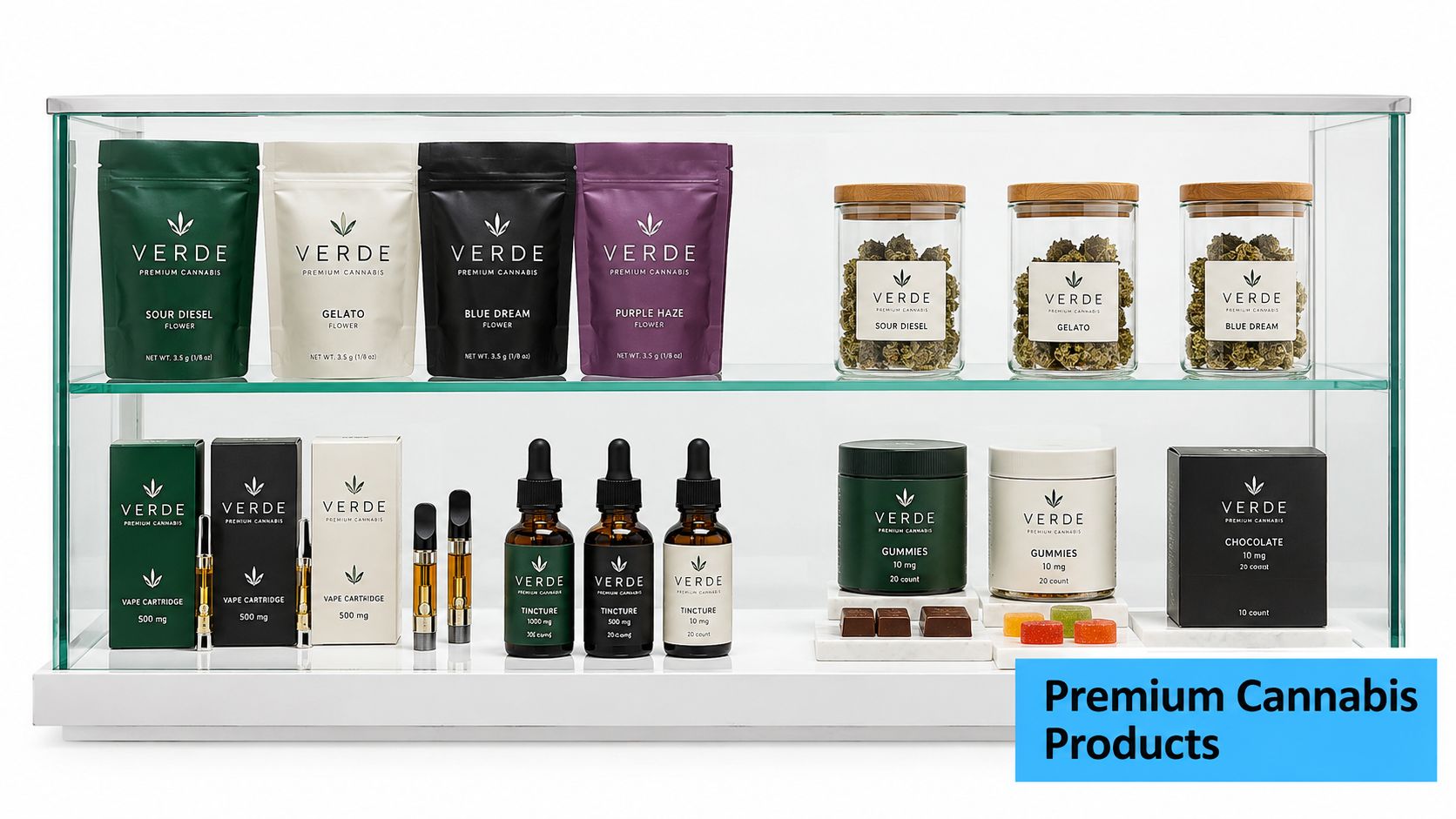
Premium doesn't mean most potent. It means the product information is clear, the format suits your routine, and the purchase supports informed decisions rather than guesswork.
Navigating New York Cannabis Regulations
Mindful use includes knowing where and how cannabis is legal. In New York, only adults 21 and older may buy, possess, or consume adult-use cannabis. Adults may legally possess up to 3 ounces of cannabis flower and 24 grams of cannabis concentrate. Review New York's adult-use cannabis information
Public consumption is limited to places where tobacco use is allowed, with stated exceptions that include motor vehicles, private businesses, hookah and cigar bars, and federal property. A meditation session should happen in a lawful private setting or another location where consumption is permitted. Never consume in a vehicle, and don't drive after using cannabis.
Frequency matters too
New York's Behavioral Risk Factor Surveillance System brief reports that 14.7% of adults aged 18 and older used cannabis in the past 30 days. It also reports that 8.0% used cannabis on fewer than 20 days per month, while 6.7% used it daily or near-daily. Read the New York State BRFSS cannabis use brief
Those figures don't define healthy use for any individual, but they underline the value of paying attention to frequency. A cannabis-assisted meditation session should remain an intentional choice, not an automatic requirement for relaxation. If you notice tolerance, cravings, difficulty practicing without cannabis, or unwanted effects, pause and seek appropriate professional guidance.
Adults in New York may also cultivate cannabis at home under the state's rules. In New York City guidance, adults 21 and older may grow up to six plants per person, with a maximum of 12 plants per household. The limits are divided between mature and immature plants, with three mature and three immature plants per adult, and six mature plus six immature plants per household overall. Check the NYC home cultivation guidance
Legal access doesn't remove the need for secure storage, responsible dosing, and consideration for others in the home. Keep products away from children and pets, follow package instructions, and treat cannabis as an impairing substance even when the product is marketed for wellness.
Elevate Your Practice at Strong Strains
The best meditation cannabis isn't a universal strain. It's a repeatable match between your practice, your sensitivity, and the product profile. A body scan may call for a low-intoxication formulation with myrcene or linalool. Breathwork may benefit from a lighter, balanced profile. Walking meditation requires extra caution because awareness of your surroundings matters.
Start with a simple experiment. Choose one meditation style, select a low-dose product with a clearly stated cannabinoid and terpene profile, and write down how you feel before, during, and after the session. Try the same practice without cannabis on another day. That comparison helps you determine whether the product is supporting attention or merely changing the sensation of the experience.
Small rituals can also make the practice feel intentional. After meditation, you might prepare herbal tea, including a calming presentation inspired by tea with edible flowers, and spend a few quiet minutes journaling. The point isn't to stack more products onto the session. It's to create a transition that helps you reflect rather than immediately return to distraction.
For Long Island shoppers, the Strong Strains Cannabis Dispensary welcome guide offers a starting point for understanding the local dispensary experience. Ask focused questions about THC, CBD, terpenes, product format, and intended use. A knowledgeable staff member can help you compare options without pushing you toward the highest potency.
Visit the East Setauket dispensary at 19 Technology Drive, East Setauket, NY 11733 to discuss lab-tested flower, vapes, pre-rolls, edibles, concentrates, tinctures, topicals, and accessories. In-store pickup and local delivery are available, and members can receive updates about new releases and exclusive deals. The most useful consultation is the one that leaves you with a clear plan, a realistic dose, and a product that fits your actual meditation routine.
Strong Strains Cannabis Dispensary offers lab-tested flower, vapes, edibles, tinctures, concentrates, topicals, and accessories for adults seeking a more intentional cannabis routine. Visit Strong Strains Cannabis Dispensary in East Setauket for practical guidance on terpene profiles, cannabinoid balance, and low-dose formats that can complement your meditation practice.