
You're standing in a Long Island dispensary with a shelf full of flower, vapes, gummies, pre-rolls, tinctures, and concentrates. One package promises a relaxing evening, another highlights a high THC percentage, and a third lists terpene names that sound familiar but don't tell you how the product may feel. A quick glance rarely answers the questions that matter most: How fast will it work, how long might it last, how strong is it really, and does it fit tonight's plan?
A useful product guide should feel less like a catalog and more like a conversation with a knowledgeable budtender. Whether you're visiting Strong Strains in East Setauket, comparing dispensary Long Island options, or checking weed delivery Suffolk County menus, the right process starts with your intended experience, then moves through format, potency, testing, and practical use.

Finding Your Next Favorite Cannabis Product
A first-time shopper often begins with a brand name. An experienced shopper may begin with a strain name or a familiar format. Both approaches can miss the central question: what do you want the product to do in your real life?
Suppose you're heading home after a long day in Port Jefferson and want something discreet that won't require smoking. A vape or tincture may deserve a closer look. If you're planning a weekend gathering near Smithtown and want a familiar ritual with visible flower, you might compare loose flower with pre-rolls. If you want a measured experience and don't mind waiting, an edible could make more sense. The product format changes the timing, control, flavor, and convenience of the session.
Start with the occasion
Use the setting to narrow the shelf before you compare brands. Flower from Cookies, Connected, Alien Labs, or Preferred Gardens may appeal to someone who enjoys aroma and hands-on preparation. A pre-roll from Jeeter, Dogwalker, Rove, or Stone Road offers a simpler route. Vapes from Airo, Pax, Plug Play, or Stiiizy can suit shoppers who prioritize portability, while products from Wana, Kiva, Lost Farm, or Camino may fit an edible-focused plan.
That doesn't mean a brand guarantees a particular effect. The label, batch information, cannabinoid balance, terpene profile, and your own tolerance matter more than the logo alone.
Look beyond the front panel
Strong product guides should help you compare the details that packaging often compresses into a few bold words:
- Format: Decide whether you want flower, a vape, a pre-roll, an edible, a concentrate, a tincture, or a topical.
- Timing: Consider whether you want effects that arrive quickly or a longer, slower experience.
- Control: Think about how easily you can stop, adjust, or measure your intake.
- Purpose: Separate relaxation, creativity, sleep, relief, and social use instead of treating every purchase as interchangeable.
- Verification: Check the Certificate of Analysis, batch number, testing date, and cannabinoid values before relying on a claim.
New York's regulated adult-use products must pass laboratory testing before sale, and the state requires the Universal Symbol plus a QR code or link to a Certificate of Analysis on every regulated adult-use cannabis product. You can review the state's consumer guidance on required cannabis product labeling and lab testing.
A good local shopping experience should leave you with a clear reason for your choice. You may still choose a familiar name such as Rythm, MFNY, 40 Tons, Ayrloom, or Wyld, but you'll know whether the product matches your evening rather than just looking attractive on the shelf.
Reading Lab Tests and Spotting Quality
Packaging is a starting point, not the final word. A Certificate of Analysis, commonly called a CoA, connects the product in your hand to a laboratory record for a specific batch. If a label makes a potency or terpene claim, the CoA gives you a way to check whether the claim matches the tested product.
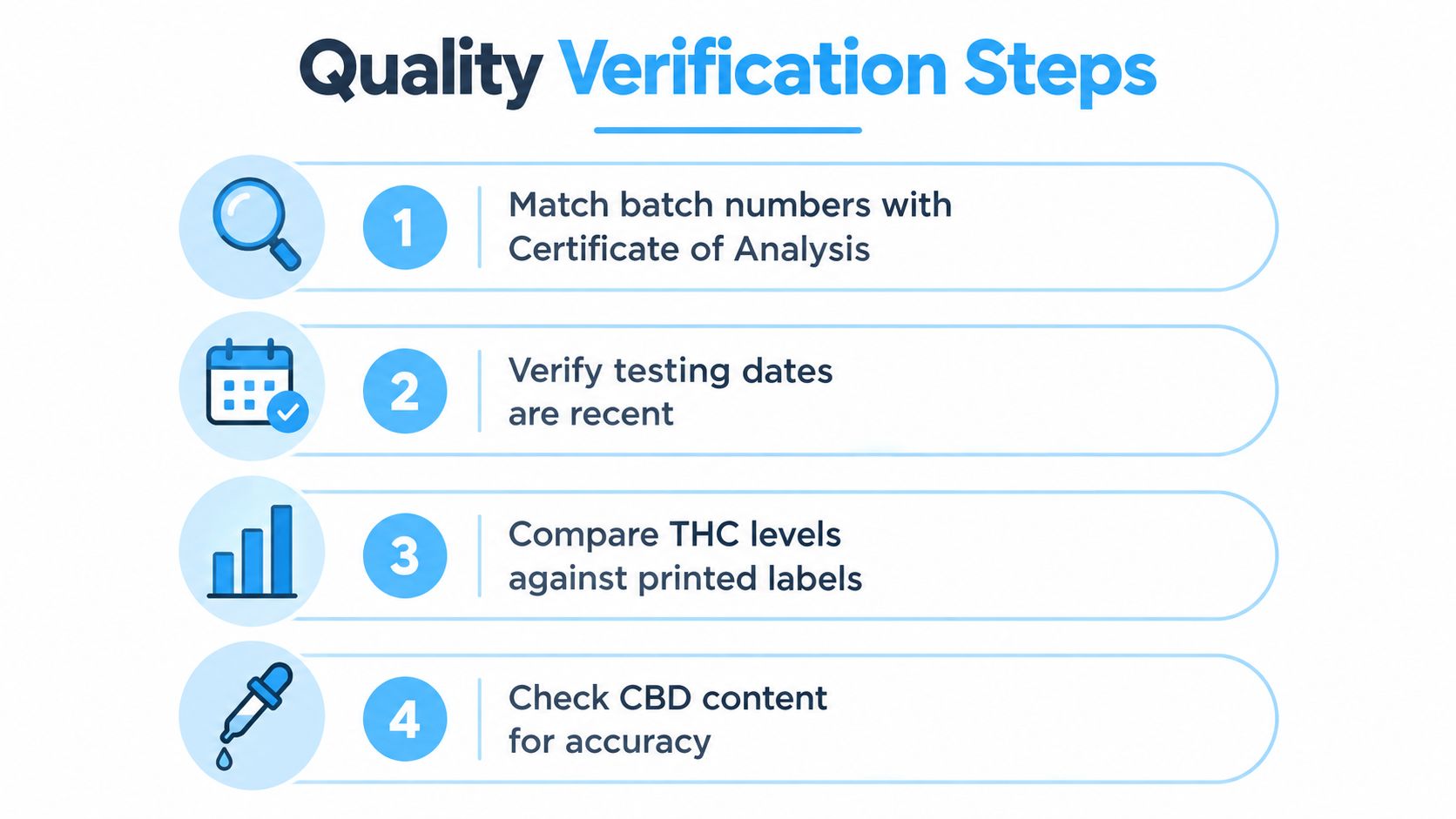
Four checks before purchase
- Match the batch number. Find the batch or lot number on the package and compare it with the CoA. A report for a different batch doesn't verify the product you're holding.
- Check the testing date. Testing information helps you understand when the sample was evaluated. Packaging dates and lab dates should make sense together.
- Compare THC values. Read the THC result on the CoA beside the printed label. Don't assume a large number automatically means a better experience.
- Check CBD and other cannabinoids. If a product emphasizes CBD, confirm that the reported value appears in the laboratory results rather than relying only on front-of-package language.
Why “as received” matters
Potency can look different depending on how a lab reports the sample. New York ties cannabinoid and terpene reporting to the product as sold, while Ohio guidance says potency should be reported “as received,” rather than moisture-corrected. Moisture adjustments can distort the consumer-facing potency and terpene picture, so a shopper benefits from understanding which number reflects the item as it reaches the dispensary shelf. The New York cannabis lab testing guide offers additional context for reading these records.
Terpenes deserve attention, too. They influence aroma and may contribute to whether an experience feels more relaxing, energizing, or nuanced, even when two products have similar THC or CBD levels. New York limits total terpenes in inhaled products to 10% with a +15% variance, a rule that treats terpene concentration as a regulated formulation detail rather than a decorative tasting note. That doesn't mean a higher terpene result is always preferable. It means the claim should be supported by testing, and the shopper should consider whether the aroma and intensity suit the intended use.
When comparing Alien Labs, Rove, Wana, Kiva, or Airo, use the same checklist for each. A trustworthy product guide teaches you to verify the batch, not to treat any brand as a substitute for verification.
New York processors must have a sample from each lot tested by an independent laboratory permitted by the Board before sale, and processors must keep the CoA for tested batches for five years from the expiration date, as stated in the state processor compliance materials.
Comparing Cannabis Formats and How They Work
The easiest way to choose a cannabis product is to compare the experience created by the format, not just the contents of the package. Flower and vapes usually make effects easier to notice sooner. Edibles can take longer to appear and may be harder to adjust once consumed. Tinctures sit between convenience and control, while topicals serve a different purpose because they're applied to the skin.
| Format | Best For | Typical Onset | Duration |
|---|---|---|---|
| Flower | Aroma, ritual, and adjustable inhalation | Fast | Shorter than many oral formats |
| Vape | Discretion and portability | Fast | Often shorter than edibles |
| Pre-roll | Convenience with a familiar smoking experience | Fast | Shorter than many oral formats |
| Edible | A smoke-free, longer-lasting experience | Delayed | Longer-lasting |
| Concentrate | Experienced consumers seeking concentrated vapor or dabbing products | Fast | Variable |
| Tincture | Measured use and flexible administration | Variable | Variable |
| Topical | Localized application to the skin | Variable | Variable |
| Accessories | Preparation, storage, and consumption support | Not applicable | Not applicable |
The practical differences
Flower gives you direct control over the amount you use, but it requires a grinder, lighter, pipe, or rolling supplies. Brands such as Good Green, Botanist, Nanticoke, Hudson Cannabis, and Royal Genetics may appear in different formats or profiles, so read the current label rather than relying on a strain name alone.
Vapes and pre-rolls reduce setup. A vape from Jetty, Heavy Hitters, Rove, or Airo may suit a shopper who wants a compact option. A pre-roll from Jeeter, Sluggers, or Dogwalker can be convenient for a planned session, but convenience doesn't remove the need to check potency and batch information.
Edibles require patience. Gummies from Wana, Wyld, Kiva, or Lost Farm move through digestion, so the experience can take longer to develop and may last longer than inhaled cannabis. Don't treat a delayed onset as proof that the product isn't working.
Concentrates such as hash, rosin, or other extracts can deliver a more concentrated experience and generally suit people who already understand their response to cannabis. Products associated with American Hash Makers, Moonlit Hash Co., DTF Hash Co., or MFNY should still be evaluated through the same questions about testing, format, and intended use.
Tinctures can offer a measured alternative, especially for shoppers who want a more deliberate routine. This guide to cannabis oil uses can help clarify how oil-based products differ from inhaled and edible options. Accessories, including PUFFCO devices, Grinders, Raw Paper, Blazy Susan, Glass Pipes, Hand Pipe, Brass Screens, and Bic Lighter products, support the session but don't determine the product's cannabinoid profile.
Matching Desired Effects to Strain Type and Potency
Start with the feeling and the schedule, then use strain language as a clue. Indica-dominant products are often associated with relaxation, sativa-dominant products with energy or creativity, and hybrids with a middle ground, but those categories shouldn't replace the actual label or your personal response.
A shopper looking for a quiet night might compare a relaxing flower or edible with a balanced tincture. Someone planning to write, cook, or socialize may prefer a product described as uplifting, but “uplifting” doesn't guarantee a specific result. Your tolerance, the dose, the cannabinoid ratio, and the terpene profile all shape the experience.
Use the label as a decision map
THC tells you about the product's primary intoxicating cannabinoid, but it isn't the entire experience. CBD may change the balance for some shoppers, while minor cannabinoids and terpene composition add more context. A product with a high THC result may feel too intense for one person and manageable for another.
Terpenes provide another useful filter. Profiles featuring myrcene, limonene, pinene, or linalool may suggest different aromatic and experiential directions, but names alone don't predict your response. Compare the full profile and consider whether you want something calming, bright, focused, or familiar.
Practical rule: Choose the smallest set of variables that answers your question. Start with purpose, format, THC and CBD balance, then use terpenes and brand history to refine the choice.
Brand examples can make comparison easier without turning them into promises. Cookies, Jeeter, Grind House, Greenline Apothecary, Runtz, Goodlyfe, and The Ladies may attract different shoppers, but the right choice depends on the specific product and batch. The same brand can offer flower, vapes, pre-rolls, edibles, or concentrates with very different timing and potency.
Use this overview of cannabis strain types for the vocabulary, then bring the vocabulary back to your use case. If you want sleep, ask about a late-evening format and a tolerable potency. If you want creativity, ask about a profile that feels clear rather than choosing the strongest package. If you want relief, discuss tinctures or topicals with a budtender and explain what kind of routine you're trying to build.
The best product guides replace stereotypes with questions. What time will you use it? How much control do you want? How quickly do you need to feel it? What would make the experience too strong?
Safe Dosing and Starting Smart
A sensible cannabis routine begins with restraint, especially when you're new to edibles, concentrates, or high-potency products. “Start low and go slow” isn't a slogan for nervous shoppers. It's a way to preserve control when your body's response is still uncertain.
A calmer way to test a product
Read the package serving information before opening it. With an edible, begin with the smallest practical serving described on the label, then give the product time to develop before considering more. Inhaled products usually let you assess an effect sooner, but you should still take a small amount, pause, and notice how you feel rather than taking repeated hits automatically.
Keep a simple note on your phone with the product name, format, approximate amount, time of use, and effect. This makes your next purchase more informed than guessing from memory. It also helps you distinguish a product that felt too strong from one that needed more time.
- Avoid stacking formats quickly: Combining a vape, edible, tincture, and concentrate before you understand each one can make the experience difficult to interpret.
- Store products securely: Keep cannabis away from children, pets, and anyone who shouldn't access it, particularly when using gummies or other foods.
- Plan your surroundings: Use cannabis where you can sit comfortably, keep water nearby, and avoid driving or operating equipment.
- Respond to discomfort: If the experience feels too strong, stop consuming, move to a calm setting, hydrate, and ask a trusted person to stay nearby. Seek medical help for severe or alarming symptoms.
New York adult-use rules apply to every purchase. Retail staff must verify that a buyer is at least 21 years old, and dispensaries may not sell, deliver, or give cannabis to anyone under 21 or to anyone visibly intoxicated, according to the New York adult-use regulations. State guidance also says adults 21 and over may legally possess up to 3 ounces of cannabis and 24 grams of cannabis concentrate, while anyone under 21 may not buy, possess, or use adult-use cannabis. Check the New York adult-use possession guidance before planning a purchase.
Shopping Locally with Pickup, Delivery, and Memberships
A Long Island shopping trip can be simple when you decide what you need before opening the menu. A customer near East Setauket might reserve a flower or vape order for in-store pickup, while someone in nearby Suffolk County may plan a delivery window around work, traffic, and being available to receive the order.
Strong Strains Cannabis Dispensary operates from 19 Technology Drive, East Setauket, NY 11733, with in-store pickup and local delivery options. A membership or newsletter can also help shoppers follow new drops, top sellers, and available deals without checking every product page from scratch.
Make the handoff easy
Have identification ready, confirm the order details, and check that the product and batch information match what you selected. For curbside or delivery service, clear instructions and a realistic pickup window reduce confusion. Retail teams can also explain product formats, serving information, terpene notes, and CoA access before you leave.
Businesses refining pickup workflows may find curbside operations best practices useful for organizing handoffs and reducing unnecessary waiting. The same principle helps customers: choose a clear location, keep your phone available, and confirm any delivery requirements before the driver arrives.

A local dispensary can add value by helping you compare the actual products on the menu, not just repeating broad strain categories. Ask for guidance when you're deciding between a vape and pre-roll, choosing an edible serving, or checking whether a terpene profile fits your plans. Responsible use, secure storage, and patience remain part of the purchase, whether you pick up in East Setauket or arrange delivery across Suffolk County.
Strong Strains Cannabis Dispensary offers lab-tested flower, vapes, pre-rolls, edibles, concentrates, tinctures, topicals, and accessories, with in-store pickup in East Setauket and local delivery options. Use these product-guide questions to narrow your choices, then visit Strong Strains Cannabis Dispensary for practical help choosing a format, potency, and profile that fit your next session.