
The most popular dispensary advice about hybrids is also the least reliable: choose “indica” for relaxation, “sativa” for energy, and “hybrid” for something in the middle. That shortcut can help start a conversation, but it can't predict your experience on its own. Two products carrying the same hybrid label may feel noticeably different because their THC and CBD balance, terpene profile, dose, format, tolerance, and setting aren't the same.
A better Long Island dispensary conversation sounds more specific. Are you looking for a clear afternoon lift, an easy social session, creative energy, physical relaxation, or a quiet evening? Once you answer that question, the label becomes a clue rather than a promise.
Why Hybrid Strain Effects Are More Than a Label
“Hybrid” identifies mixed breeding, not a guaranteed mood or body sensation. Modern hybrids grew from breeders crossing cannabis lines to combine traits. From the 1970s through the 1990s, crosses between Afghan indica plants and tropical sativas helped shorten flowering time, increase resin production, and produce more balanced profiles, as documented in Cannagenie's cultivar history. That history explains the category's popularity. It cannot predict how a finished product will affect you.
White Widow and Skunk #1 show how those breeding efforts shaped cannabis culture. White Widow was first bred in the Netherlands in the early 1990s and later won the 1995 High Times Cannabis Cup. Skunk #1, first cultivated in the late 1970s, became widely described as a true 50/50 hybrid, combining an uplifting cerebral character with body relaxation. Their reputations made hybrid genetics familiar to shoppers, yet neither name replaces a batch-specific lab report.
Why the same label can lead to different sessions
The useful question on a dispensary floor is not “Is it hybrid?” It is “What does this batch contain, and how much will you use?” A product with high THC and very little CBD may feel intense even if its menu description says balanced, smooth, or mellow. Another hybrid with a more moderate cannabinoid profile and a different terpene mix may feel easier to manage.
A 140-sample GC-MS analysis found no statistically significant correlation between sativa, indica, or hybrid labels and terpene profiles. The samples instead grouped into six terpene-based clusters (GC-MS analysis of cannabis labels and terpene profiles). The practical takeaway is simple: read the cannabinoid and terpene panel, then compare it with your own session notes. The menu category is only a starting clue.
What real-world users report
A 2024 NIH/PMC study of medicinal cannabis users recorded both comfortable and inconvenient responses. Dry mouth appeared in 19.5% of users, increased appetite in 17.1%, tiredness in 13.0%, red eyes in 12.4%, and sleepiness in 7.5%. Participants reported an average of 2.1 side effects per person, while 29% reported no side effects (2024 NIH/PMC study of medicinal cannabis effects).
Those results do not define every hybrid. They show why one effect word is too narrow. A hybrid may feel mentally bright and physically loose, or calming and unexpectedly tiring, depending on its chemistry, dose, tolerance, and the person using it.
Practical rule: Treat “hybrid” as an invitation to inspect the product, not as a guarantee about the ride.
The Chemistry Behind Hybrid Strain Effects
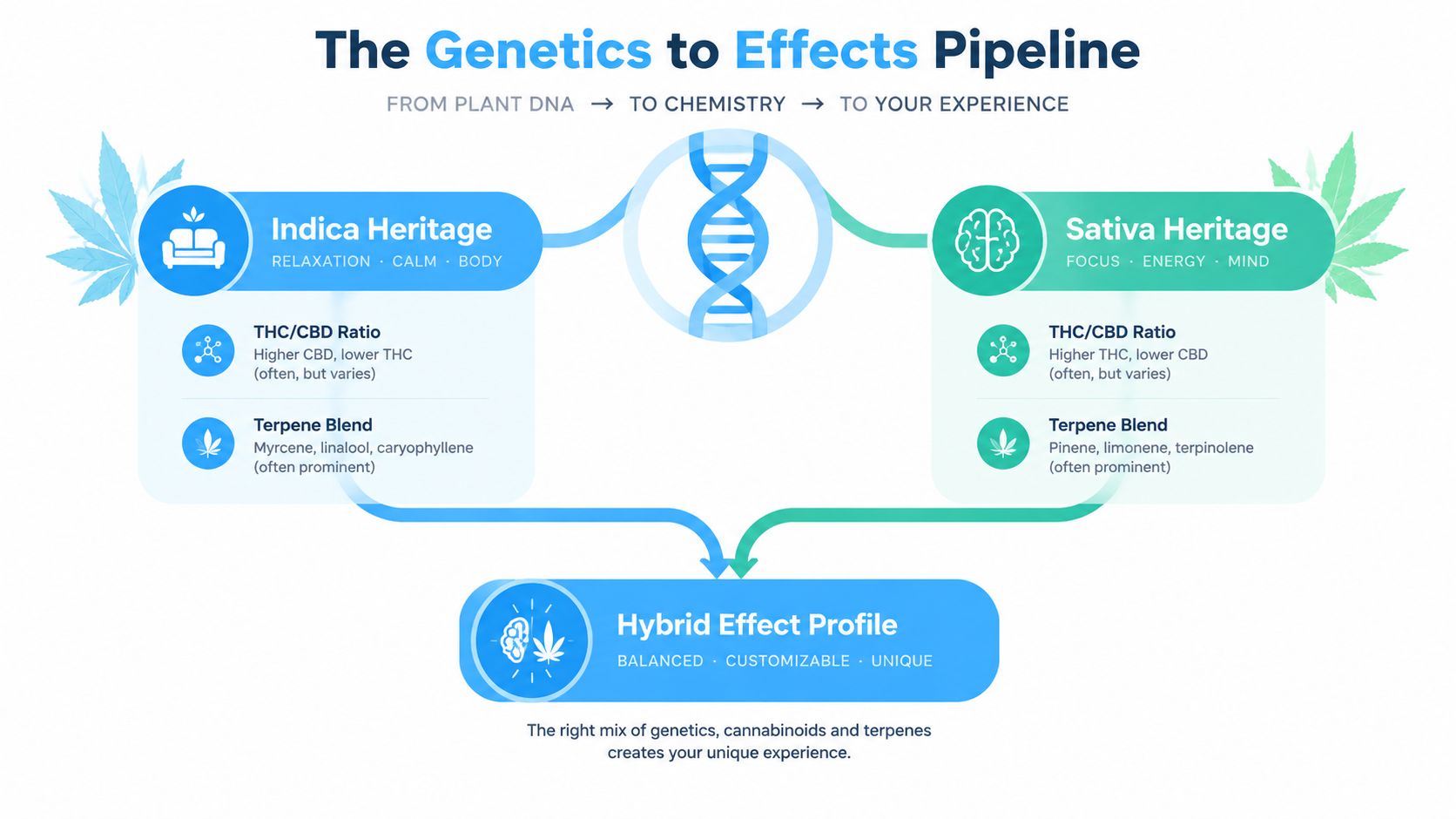
The word “hybrid” tells you about breeding, not the exact experience. A cannabis product works much like a recipe: genetics provide the blueprint, cannabinoids set the volume, and terpenes shape the direction and character. The analogy has limits, but it helps shoppers read a package without relying on strain mythology.
Start with the genetic blueprint
Breeding influences a plant's growth pattern, flowering behavior, resin production, and potential cannabinoid and terpene combinations. A breeder may call a cultivar indica-dominant, sativa-dominant, or balanced. Those labels describe lineage or expected character, rather than guaranteeing how the finished product will feel.
The hybrid label still offers a useful starting clue. It indicates mixed genetic influences, while the batch-specific lab report shows which traits appeared in the flower, vape, edible, or concentrate.
Read cannabinoids as the intensity controls
THC is the primary intoxicating cannabinoid in most adult-use cannabis products. Greater THC exposure generally produces a stronger intoxicating experience, although tolerance, consumption method, and personal sensitivity change the result. CBD does not create the same intoxication as THC. A product containing both can feel different from a THC-dominant product, even when the strain name matches.
Read the THC amount, CBD amount, and ratio between them, rather than focusing only on the largest number on the front label. A hybrid with meaningful CBD may fit someone looking for a less forceful experience. A high-THC option may suit an experienced consumer who already understands how that intensity affects them.
Let terpenes explain the direction
Terpenes are aromatic compounds that contribute to scent and may influence the character of an experience. Myrcene commonly appears in earthy or herbal profiles, limonene in citrus-forward profiles, β-caryophyllene in peppery or spicy profiles, and α-pinene in sharper, pine-like profiles.
A peer-reviewed cannabis analysis detected 26 terpenes and found wide concentration ranges for key compounds, including myrcene, limonene, β-caryophyllene, and α-humulene (peer-reviewed analysis of cannabis terpenes). The finding matters at the dispensary counter because a terpene name alone does not describe the product's full profile.
Dominance, concentration, supporting terpenes, cannabinoids, dose, and consumption method all shape the result. Research has also reported that three cannabis terpenes significantly boosted THC signaling at the CB1 receptor at concentrations similar to those found in cannabis plants (research on terpenes and THC signaling).
For a fuller explanation, read this guide to the entourage effect and cannabis chemistry. A lab report cannot predict your session perfectly, but it gives you better evidence than the hybrid label alone.
Common Hybrid Effect Archetypes and Use Cases
Hybrid archetypes are useful for describing a planned session, not for predicting it from the label alone. At the dispensary counter, start with the outcome you want, then check the product's THC, CBD, terpene profile, and serving information on the lab report.
Balanced hybrids for social and creative sessions
A balanced hybrid can fit a relaxed gathering, music, conversation, or a creative project when you want mental lift without a sharply speedy character. The label does not guarantee moderation. For example, a THC-dominant product with little or no CBD may feel much stronger than a product with a similar aroma but a more moderate cannabinoid profile.
Use the terpene list to refine the choice. Citrus, pine, and floral notes may support a brighter sensory direction, while earthy or peppery notes can accompany more physical depth. A mixed profile is only a starting point, so compare the listed THC amount and your usual dose before choosing.
Indica-dominant hybrids for evening use
An indica-dominant hybrid may suit post-work decompression, physical relaxation, or a quiet night at home. Myrcene, linalool, and β-caryophyllene can point toward a more grounding profile, but THC strength determines how forcefully that direction may arrive.
A customer who wants to relax without becoming immediately sleepy should say so clearly. Ask the budtender to compare a manageable-THC option with a heavier nighttime product, rather than selecting the strongest item carrying an indica label. A CBD-including formula may also deserve comparison if reducing intoxication is part of the goal.
Sativa-dominant hybrids for daytime activity
A sativa-dominant hybrid may fit daytime socializing, light creative work, or an outdoor activity when you prefer an alert character. Limonene, α-pinene, α-ocimene, and α-terpinolene appeared more often in samples traditionally described as sativa, while mostly indica samples tended to show more β-myrcene and limonene in prior strain-comparison work. That pattern helps with comparison, but it does not determine an individual session.
Check the cannabinoid panel before treating a product as daytime-friendly. A high-THC option can still bring anxiety or mental fog when the dose exceeds your comfort zone. A lower-THC product, or one with measurable CBD, may offer a more manageable starting point.
| Hybrid Archetype | Best For | Label and Lab Clues |
|---|---|---|
| Balanced hybrid | Social gatherings, music, creative hobbies | Mixed terpene profile; compare THC strength and any CBD |
| Indica-dominant hybrid | Evening relaxation, post-work decompression | Myrcene, linalool, β-caryophyllene; check whether THC is manageable |
| Sativa-dominant hybrid | Daytime activity, conversation, creative focus | Limonene, α-pinene, α-ocimene, α-terpinolene; avoid assuming low intensity |
| CBD-including hybrid | A gentler, less intoxicating direction | Confirm the actual THC and CBD amounts on the lab panel |
Make the request concrete: “I want a hybrid for a beach afternoon that feels social and clear,” or “I want evening body relaxation without an overpowering head effect.” That gives the budtender a usable target, while the lab report helps separate a promising profile from a familiar-sounding strain name.
How Consumption Method Changes Hybrid Strain Effects
The label does not control the whole experience. The same hybrid can feel noticeably different as smoked flower, a vape, an edible, or a measured tincture because each format changes onset, duration, and dose control.
Fast formats for short sessions
Flower in a hand pipe, joint, or pre-roll usually produces feedback quickly. That makes it easier to pause after a small amount and assess the hybrid's actual effect. A vape acts quickly too, but concentrated oil and repeated inhalations can make the dose feel stronger than expected.
Concentrates call for a separate level of caution. Their preparation is highly concentrated, so a familiar strain name does not make the session equivalent to smoking flower. Read the cannabinoid panel and treat the format, not the label, as the starting point for your decision.
Longer formats for planned evenings
Edibles take longer to reveal their full character and may remain noticeable longer than inhaled products. The main mistake is adding more before the first serving has fully developed. Use a measured serving, read the package, and give that serving time before deciding whether to continue.
Tinctures can suit a planned routine because you can measure the amount and record when you took it. This guide to cannabis tincture benefits offers a useful comparison between tinctures and other consumption formats.
Match format to the schedule
For a short afternoon session, inhaled flower or a vape may be easier to adjust because the effects become apparent sooner. An edible or tincture may fit a quiet evening at home, where you have time to observe the experience without rushing.
Set matters alongside chemistry. A calm room, no driving, and no demanding obligations reduce outside pressure while you assess the hybrid's response. If you are making small changes across sessions, improve your microdosing with MicroTrack by recording the product, format, amount, timing, and setting. Those notes can show whether a change came from the terpene and cannabinoid profile or from the way you consumed it.
Dosing and Safety for Predictable Hybrid Experiences
A hybrid label cannot predict whether a session will feel comfortable. The more useful questions are how much THC the product delivers, whether CBD is present, which terpenes lead the batch, and how the dose fits your tolerance, format, and setting. A product described as uplifting, calming, or balanced can still feel overwhelming when the THC exposure exceeds what your body handles well.
High-potency products require careful reading rather than automatic avoidance. Coverage of potency and high-THC tradeoffs connects stronger THC products with acute concerns including anxiety, paranoia, impaired coordination, and dependence risk. The label describes a product's intended profile, not a safety rating. On the dispensary floor, the practical move is to treat potency as one variable in the lab report, then set the serving around your own response.
Use a measured starting point
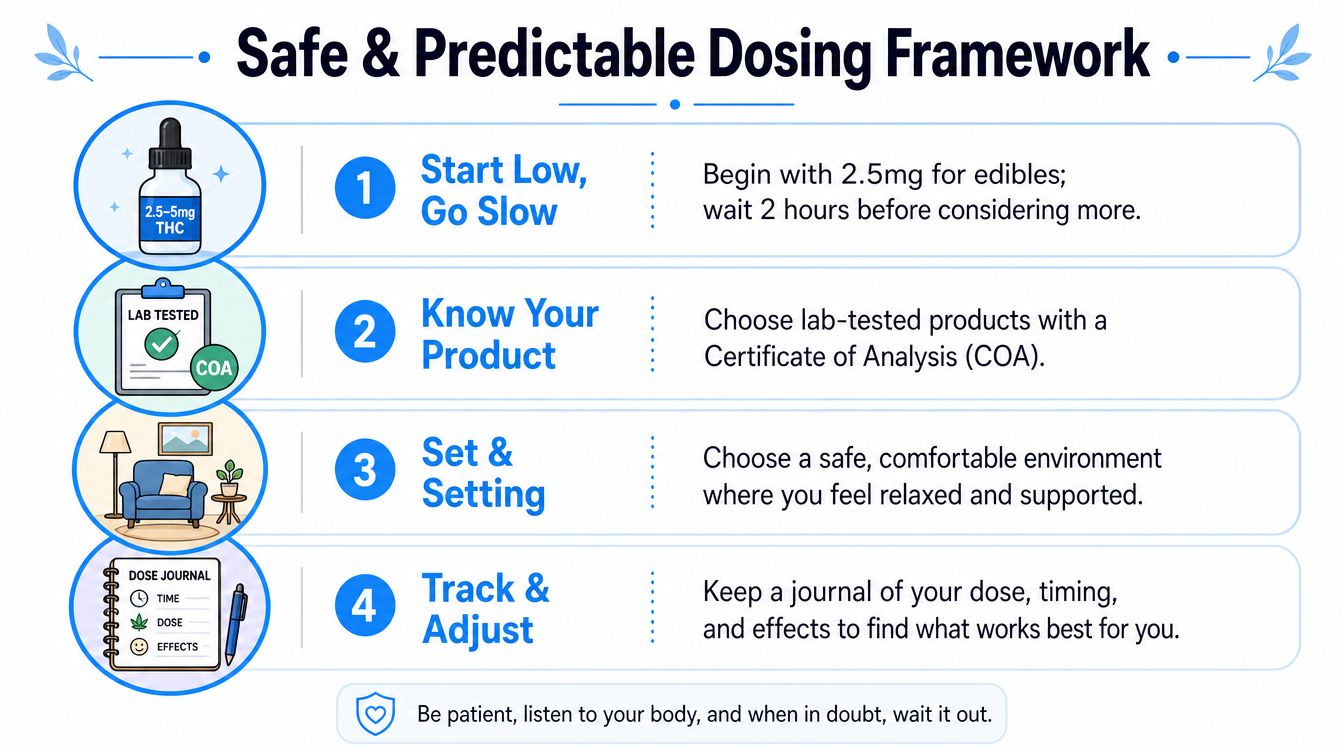
For an edible, choose the smallest clearly measured serving available, particularly if you are new to cannabis, returning after a break, or uncertain about your tolerance. The dosing visual presents 2.5 to 5 mg of THC as a cautious starting range and recommends waiting before taking more. Follow the package directions and local regulations. Do not combine cannabis with alcohol.
With flower or a vape, take a small inhalation and pause. Chasing an effect with repeated draws can turn a manageable profile into an uncomfortable one before you have assessed the first dose. Concentrates call for even more restraint because their strength can make a familiar hybrid feel substantially more intense.
Track the variables that change your response
Keep a short session record: product name, batch or harvest details when available, format, amount, timing, setting, and effects. Note unwanted effects too, including dry mouth, tiredness, red eyes, increased appetite, or sleepiness. The same 2024 NIH/PMC study noted an average of 2.1 side effects per person, so recording several effects from one session can reveal a pattern rather than a single impression.
Stop and reassess: If you feel panicked, severely uncomfortable, confused, or uncoordinated, move somewhere quiet and consume no more. Seek medical help if symptoms are severe or do not improve.
Never drive or operate equipment after consuming cannabis. Store products securely away from children and pets. Speak with a qualified healthcare professional before use if you are pregnant, nursing, taking medications, or managing a health condition. For a concrete example of cannabinoid amounts on a package, review Wana hybrid gummies before comparing similar products.
Choosing the Right Hybrid at the Dispensary
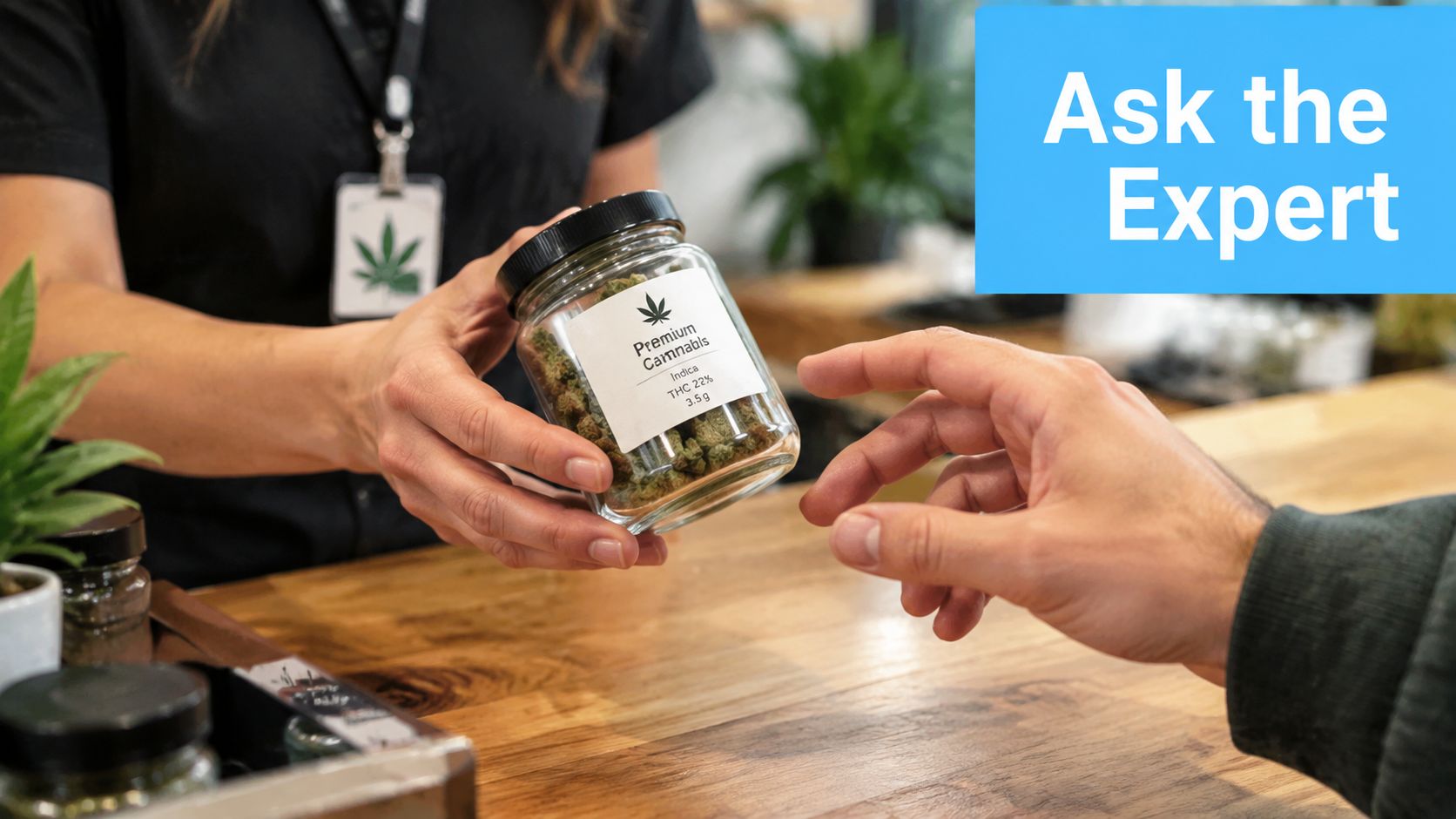
A good dispensary decision starts with your session, not the product name. Tell the budtender when you'll use it, what you want to feel, how experienced you are, and which format you prefer. “I want something for a quiet evening, but I don't want a heavy next-day feeling” gives the conversation useful boundaries.
Read beyond the THC headline
Check the cannabinoid panel for THC and CBD, then inspect the terpene section. Note the dominant terpenes, their relative order, and whether the package includes batch details. A product with a familiar name can vary from another batch, so the current label is more useful than a memory of how a strain once felt.
Ask these practical questions:
- Which terpenes lead this batch? Ask what aroma and effect direction the team associates with that profile.
- How does the THC compare with the CBD? A CBD-inclusive product may feel different from a THC-dominant one.
- What format fits my schedule? Flower, vapes, edibles, tinctures, and concentrates create different timing and control considerations.
- What should I avoid mixing with it? Mention alcohol, medications, or other substances so the guidance stays responsible.
- What product has a similar chemical profile? This question helps you build a personal record instead of chasing strain names.
At Strong Strains Cannabis Dispensary, shoppers can compare lab-tested flower, vapes, pre-rolls, edibles, concentrates, tinctures, topicals, and accessories with staff guidance. The same process works at any licensed dispensary: define the session, inspect the chemistry, choose a manageable format, and record the result.
A premium shopping experience isn't about choosing the strongest product on the menu. It's about finding a product whose chemistry and dose match the experience you want.
Real Scenarios and Frequently Asked Questions
A first-time shopper might choose a balanced hybrid in a measured format, ask to see THC, CBD, and terpene information, and use it at home without driving. Someone planning a social afternoon may request an uplifting profile with a manageable THC level, while a customer whose last session felt too strong should reduce exposure and avoid repeating the same format.
How long do hybrid effects last? Timing varies by format, dose, tolerance, and personal response. Inhaled products usually give feedback sooner than edibles, while tinctures and edibles require more patience.
Are hybrids suitable for wellness routines? They may fit some adults' routines, but cannabis isn't a substitute for medical care. Discuss ongoing or symptom-focused use with a qualified healthcare professional.
What should a beginner tell a budtender? Say that you're new, describe the setting and desired mood, and ask for a clearly labeled, measured option rather than relying on “hybrid” alone.
Strong Strains Cannabis Dispensary offers lab-tested flower, vapes, pre-rolls, edibles, concentrates, tinctures, topicals, and accessories with in-store pickup and local delivery options. Visit Strong Strains Cannabis Dispensary to compare hybrid products by format, cannabinoid information, and session goal, then ask the team for guidance that fits your experience level.