
Walking into a dispensary for the first time can feel a lot like ordering wine when you don't know the list. You know what you don't want. Too strong, too confusing, too much pressure. Most new cannabis shoppers on Long Island aren't looking for the highest THC jar in the room. They want something steady, mild, and easy to understand.
That's the right instinct.
The best cannabis strains for beginners usually aren't the loudest names on the menu. They're the products that give you more control, a gentler intensity, and a better chance of learning what your body likes. For a first try, predictability matters more than bragging rights.
A Calmer First Time Starts Here
You walk into the dispensary after a long week, glance at the menu, and hit the same question a lot of first-time shoppers ask: “How do I pick something relaxing without getting in over my head?”
Start there.
A calm first experience usually has less to do with chasing a famous strain name and more to do with choosing the right balance, the right format, and the right setting. For beginners, lower-THC options and balanced THC:CBD products are often easier to read and easier to dose. That matters more than old shorthand like indica or sativa, especially if your goal is to stay comfortable while you learn how cannabis feels in your body.
What beginners usually miss
New shoppers often assume the highest THC number must be the best value. For a first session, that number can create more noise than clarity.
A better first purchase lets you notice the effect in steps. You want enough lift to learn from it, not so much that the experience runs the show. That is why measured formats and balanced profiles tend to feel more manageable for beginners than high-THC products with little CBD.
One more point causes confusion. The strain name on the jar is only part of the story. The more useful clues are the cannabinoid ratio, the terpene profile, and how you plan to use it.
A first session should feel readable, not unpredictable.
A simpler way to choose
Beginner cannabis works a lot like learning your drink order. You start with something smooth, in a setting you know, at an amount you can handle, then adjust once you know your baseline.
That same approach helps you shop with more confidence. If you want a plain-English explanation of how aroma compounds can shape the mood of a product, this beginner's guide to terpenes is a helpful starting point.
Before you choose anything, pause on three questions:
- Do you want a light effect, or are you comfortable with moderate intensity?
- Do you want something fast-acting, or something easier to portion out slowly?
- Are you using it at home to unwind, or in a more social setting where you want to stay clear and steady?
That little decision matrix will get a beginner farther than strain labels alone. It also makes a dispensary menu, including a lab-tested one like Strong Strains, much easier to sort through without second-guessing every option.
What Makes a Strain Beginner Friendly
A beginner-friendly strain is easier to read while it's happening. You can tell whether it's light, moderate, or more than you wanted without feeling like the product jumped ahead of you.
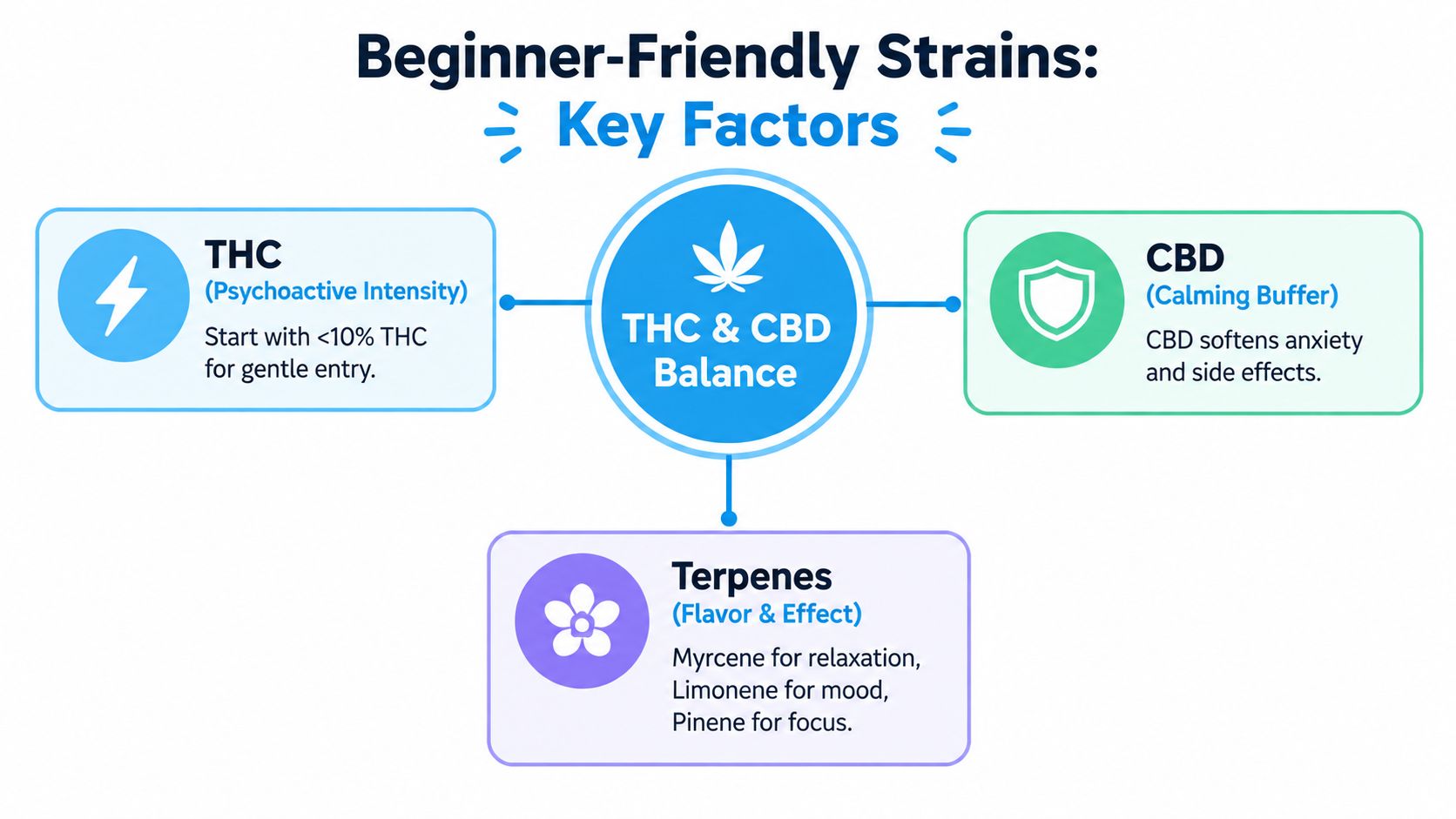
That usually comes down to three things. Moderate THC, some CBD or a balanced ratio, and lab results that tell you more than the strain name does. This is why old label shortcuts like indica and sativa often leave beginners more confused than informed.
THC, CBD, and terpenes in plain English
THC largely drives psychoactive intensity. Higher THC often means a stronger mental and body effect, which can be fine later on but is not always the easiest place to start.
CBD plays a different role. It does not cancel THC out, but it can soften some of THC's sharper edges. That is one reason balanced products are often suggested for first-timers, as explained in this beginner dosing guide covering low-THC and 1:1 options.
Terpenes add another layer. They are the aroma compounds that can shape the tone of a product, a bit like seasoning changes the feel of the same basic meal. For a beginner, the more useful question is often, “How much THC is here, how much CBD is with it, and what terpenes show up on the lab panel?” That gives you a clearer starting point than broad genetics alone.
A few terpene patterns can help you sort options with less guesswork. Products with myrcene or linalool are often chosen by people who want a calmer, quieter session. Products with pinene may feel a little more clear or alert for some people. The science-backed overview of balanced strains and terpene roles walks through why beginners and anxiety-prone users are often pointed toward 1:1 THC:CBD or CBD-forward chemotypes such as Harlequin, ACDC, and Cannatonic.
Why labels beat strain stereotypes
A strain name can sound familiar and still tell you very little. Two jars with the same name may come from different growers, test at different potency levels, and carry a different terpene mix. For a new shopper, that is the difference between guessing and choosing with a plan.
If you have ever wondered why “hybrid” still feels vague, this guide to hybrid strain effects explains why mixed genetics do not predict your experience as clearly as cannabinoids and terpenes do.
Here is a beginner-friendly way to read the label:
- Start with THC. Lower percentages are usually easier to manage on a first try.
- Check whether CBD is present. A 1:1 or CBD-forward option often gives beginners a steadier start.
- Look at the top terpenes. Myrcene and linalool may fit a quiet night in. Pinene may make more sense if you want to stay clear and social.
- Treat hype words lightly. Terms like “exotic” or “top shelf” tell you less than a real lab panel.
A simple decision matrix helps here. If your tolerance is low, your setting is unfamiliar, or your goal is to stay clear and comfortable, lean toward lower THC, some CBD, and a terpene profile that matches the mood you want. On a lab-tested menu like Strong Strains, that approach gives you a much better filter than chasing a name you saw online.
Practical rule: Trust the cannabinoid ratio and terpene panel more than the strain name on the front of the jar.
Choosing Your Format Before Your Strain
Many beginner guides miss the issue. The first big decision often isn't strain. It's format.
A balanced flower and a balanced edible can feel very different because onset and duration are different. Cannabis effects vary a lot by method. Edibles may take 30 minutes to 2 hours to feel and can last 4 to 8 hours, while tinctures are often felt in 15 to 45 minutes and last 2 to 4 hours, according to this consumption-method guide from Weedmaps.
Match the format to the kind of experience you want
If you want quick feedback, inhaled products usually make more sense than edibles. If you want to avoid inhaling and prefer measured servings, tinctures or low-dose edibles may feel easier to manage.
Here's a simple comparison.
| Beginner Format Comparison for Predictable Effects | Onset and Duration | Beginner Control Tip |
|---|---|---|
| Flower | Faster feedback than edibles. Better for shorter sessions. | Take one small puff, then pause before deciding if you need more. |
| Vape | Fast feedback, similar pacing logic to flower. | Choose balanced or lower-intensity products and keep the first session very small. |
| Edible | Slower onset. Longer-lasting experience. | Start with the smallest labeled serving you can comfortably manage. Don't stack doses quickly. |
| Tincture | Often lands between inhalation and edibles for timing. | Pick products with clear measurement marks so you can repeat the same dose. |
| Topical | Used for localized application rather than a typical “high.” | Beginners who don't want intoxication often start here for body-focused use. |
A simple beginner decision matrix
Use this if you're stuck between formats.
You want the fastest feedback
Choose flower or a vape, because you can take a very small amount and stop.You want precise measurement
Tinctures and clearly labeled edibles usually make dosing easier to repeat.You want the least guesswork for a short evening
Flower often works well because it doesn't lock you into the longer runway that edibles can bring.You don't want inhalation
Start with a low-dose edible or a measured tincture.
If you're nervous, choose the format that lets you adjust in small steps. That usually matters more than the strain name.
A beginner might enjoy Harlequin flower for a quiet evening at home, then prefer a measured low-dose tincture on a different day when control matters more. Same person, different format, better fit.
Beginner Friendly Strains Worth Trying First
A first strain choice goes more smoothly when you treat the strain name like a clue, not the whole answer. For beginners, the better filter is usually cannabinoid balance, terpene direction, and the setting you plan to use it in.
A simple way to frame it is like choosing coffee. The bean name matters, but caffeine level, roast, and whether you want a small cup at 10 a.m. or a big one at 9 p.m. matter more. Cannabis works the same way. A famous strain can still feel too strong if the batch tests high in THC or comes in a format that is harder for you to pace.
Start with balanced reference strains
Harlequin is a useful beginner reference because it is commonly associated with a CBD-forward profile and a gentler overall feel. If you want a quieter head change and a better chance of staying clear, this is the kind of name worth asking about.
Cannatonic often comes up as a classic balanced option. New shoppers usually hear it mentioned for a reason. It helps explain why a more even THC:CBD ratio often feels easier to manage than flower that pushes THC much higher.
ACDC is another familiar CBD-leaning name. Cautious beginners often ask about it when they want very mild intoxication or they are unsure how sensitive they might be.
Those three names are best used as starting references. The exact batch still matters.
Famous strains need a second check
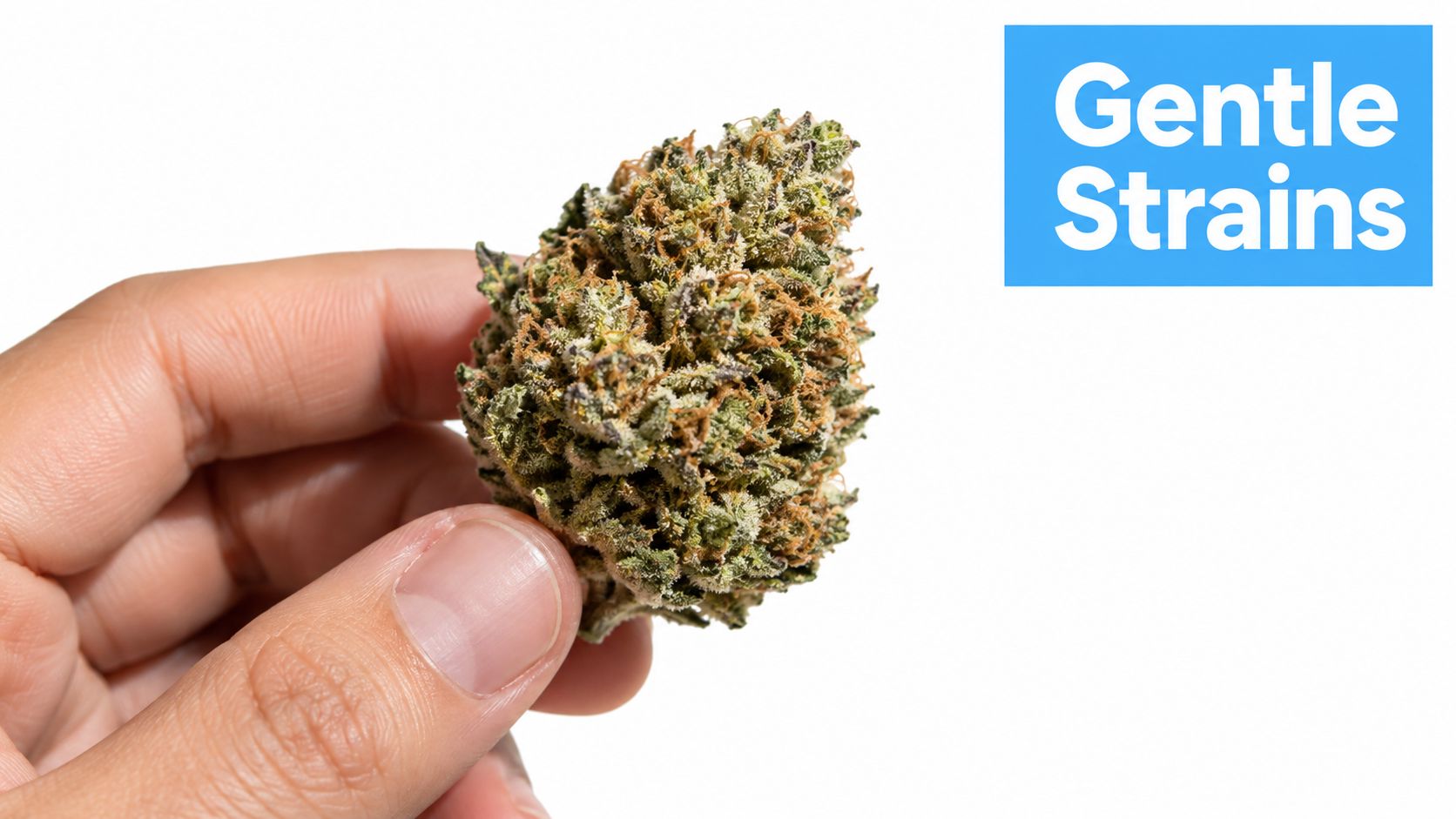
Names like Northern Lights, Blue Dream, and Granddaddy Purple get recommended often, but they are better treated as effect categories than automatic beginner picks.
- Northern Lights is often associated with a quieter evening profile.
- Blue Dream is commonly discussed as lighter and more daytime-leaning.
- Granddaddy Purple usually gets mentioned for nighttime wind-down.
Here is the part that trips beginners up. Two jars with the same strain name can feel pretty different if one batch tests much higher in THC, has little CBD, or leans on terpenes you personally find more stimulating.
Use a simple beginner matrix at the counter
If you are looking at a Strong Strains menu or talking with a budtender, match your choice to three things. Your tolerance, your setting, and your goal.
| If this sounds like you | Ask for this kind of product | Why it usually fits better |
|---|---|---|
| Very low tolerance, home for the night, want calm | CBD-forward or 1:1 THC:CBD flower, vape, or tincture | Balanced ratios usually feel less sharp and easier to read |
| Low tolerance, social setting, want to stay functional | Lower-THC flower or a balanced vape with gentle terpene notes | You can keep the experience lighter and easier to pace |
| Nervous about feeling too high | CBD-leaning strain or a measured tincture | Clear ratios make the experience more predictable |
| Looking for sleep support later in the evening | A calmer strain profile with modest THC, chosen by lab panel | The label tells you more than the famous name does |
Ask by outcome
A helpful dispensary question sounds like this:
“I'm new, my tolerance is low, I'll be at home, and I want something gentle that stays clear.”
That gives the budtender real decision points. It also keeps the conversation focused on effect, ratio, and format instead of getting stuck on indica and sativa labels.
You do not need a giant brand list to shop well. A few representative examples are enough. On any given legal menu, including products from brands such as Hudson Cannabis, Matter, Wyld, or Kiva, check the lab panel first, then the format, then the strain name. That order usually leads to a calmer first purchase.
Simple Dosing and Consumption Tips That Keep You Comfortable
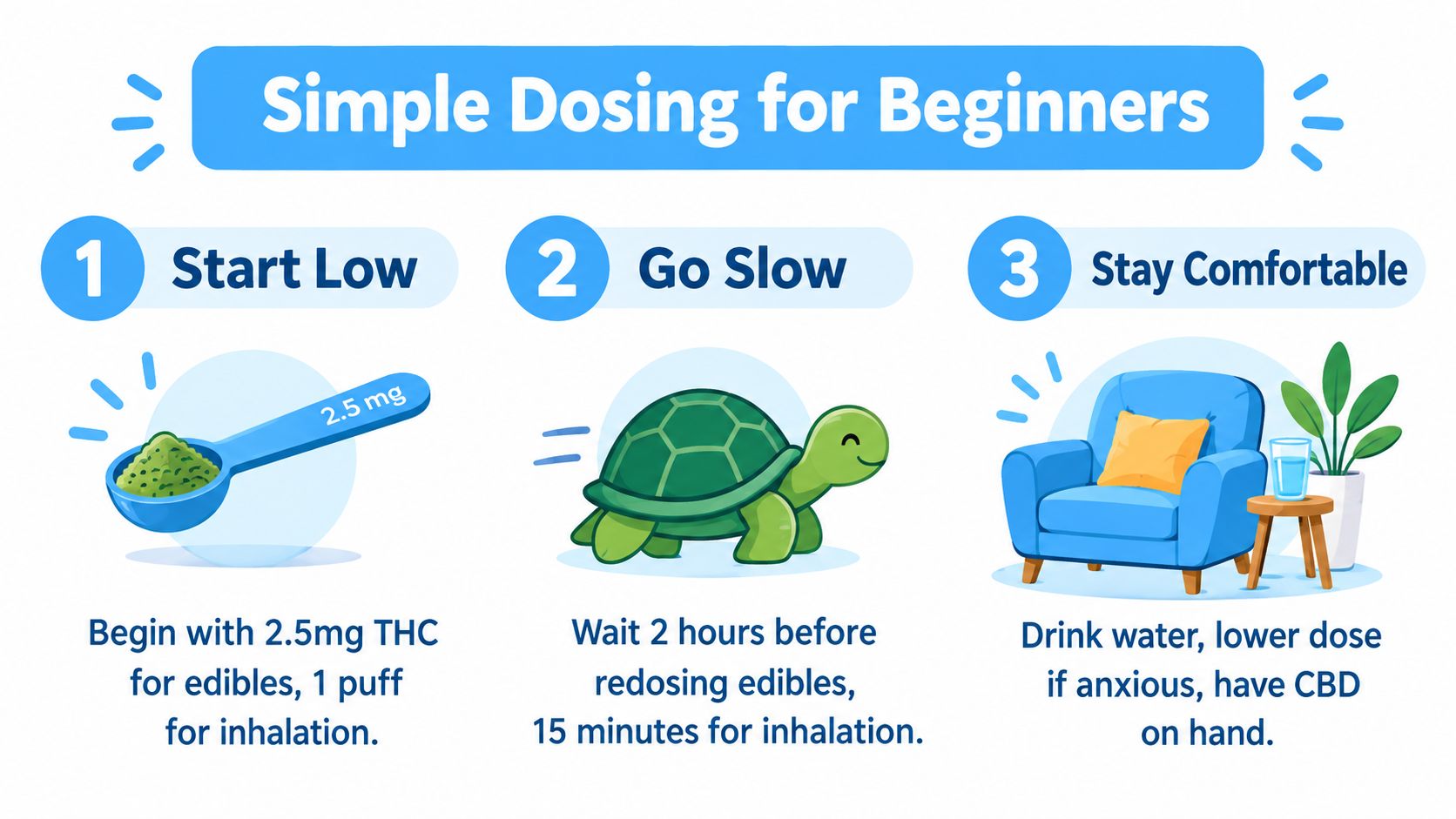
Dose is where a good strain can still go sideways if you rush it. The safest beginner mindset is simple. Start low, go slow.
For first-time users, a widely cited rule is to start with 2.5 mg THC for edibles and wait at least 2 hours before taking more, while inhaled products are commonly introduced as one small puff with about a 15-minute wait before increasing, based on this beginner edible and inhalation dosing guidance.
Use the right pace for the format
Flower hits faster. Edibles take longer. That changes how patient you need to be.
A practical flower guideline for beginners is often around 10 to 18% THC, and some beginner-oriented guides frame roughly 10% to 20% THC as a common sweet spot for noticeable effects without pushing straight into uncomfortable intensity, as covered in this beginner flower potency guide and this overview of lower-dose flower and edible starting ranges.
If you want a more visual reference, this cannabis dosage chart can help you compare formats and pace yourself.
A first-session routine that works
Pick a calm setting
Stay home or somewhere familiar. Don't make your first session part of a packed social schedule.Eat and hydrate first
Small basics matter. Water nearby helps. Using cannabis on an empty stomach can feel sharper for some people.Take the smallest useful starting amount
One small puff for inhalation. A low labeled edible serving if you're choosing an edible route.Wait the full window
Most beginners lose patience here. Let the first dose declare itself before you add more.
Here's a quick visual explainer:
Small comfort moves that make a big difference
- Skip alcohol if you're learning your tolerance.
- Keep the plan light so you're not juggling errands or obligations.
- Write down what you tried. Strain name, format, dose, and how it felt.
- Choose clear labels so you can repeat what worked.
Comfort check: If you think “I don't feel much yet,” that usually means wait longer, not take double.
Shopping Smart and Staying Compliant in New York
New York shopping gets easier when you know what to look for before you reach the counter. Adult-use purchases are for 21+, and legal-market labels give beginners a real advantage over the old guesswork model.
Canada's nationwide adult-use legalization took effect on October 17, 2018, and standardized labels, THC/CBD percentages, and product categories became central to consumer education. Health Canada also summarizes research showing that women, medical-only users, and cannabis novices were less likely to smoke or vaporize and instead preferred edibles, tinctures, and topicals with low-THC to high-CBD ratios in this health professional overview of cannabis and cannabinoids. That same shift matters in New York because clear labels help beginners compare products by cannabinoid content, not just branding.

What to say to a budtender
You don't need fancy terminology. A simple, honest description works better.
Tell them your experience level
“I'm brand new” is useful information, not an awkward confession.Describe the setting
Quiet night at home, social hang, daytime errand, sleep prep. The setting matters.Describe the effect you want
Calm, light uplift, body relaxation, clearer head, low intoxication.
For shoppers who want to understand labels better, this guide to cannabis lab testing helps explain what THC, CBD, and terpene data can tell you.
What to look for on the package
A beginner-friendly package should make your decision easier, not murkier.
- Cannabinoid content helps you judge intensity.
- Per-serving information matters for edibles and tinctures.
- Terpene details, when available, can help you aim for calm or alertness.
- Tested legal-market packaging gives you a cleaner baseline than guessing from strain name alone.
For adults shopping in East Setauket, Strong Strains Cannabis Dispensary at 19 Technology Drive carries lab-tested flower, vapes, pre-rolls, edibles, tinctures, topicals, and accessories, with pickup and Suffolk County delivery available.
Your Next Step to a Confident First Purchase
The best cannabis strains for beginners aren't really about chasing one perfect name. They're about matching a gentle product to your tolerance, your setting, and the kind of experience you want.
If you're new, start with balance. A lower-intensity flower, a 1:1 option, or a clearly measured edible or tincture usually gives you a much better learning curve than diving straight into high-THC territory. Small doses teach you more than big swings ever will.
There's no prize for taking too much your first time. There is real value in finding a product you'd want to use again because it felt comfortable, predictable, and easy to repeat.
When you shop, keep your checklist short. Look at the ratio. Look at the format. Think about the setting. Ask for something gentle and lab-tested. That's how beginners stop feeling overwhelmed and start making smart choices.
If you want a low-pressure place to compare balanced flower, measured edibles, tinctures, vapes, and beginner-friendly accessories, Strong Strains Cannabis Dispensary makes that process a lot easier. Browse online or stop in with your goal, whether that's calm, sleep, lighter social ease, or just a very gentle first try, and the team can help you narrow it down without the guesswork.