
Maya is curious about cannabis edibles, but she's also cautious. A friend suggested one for sleep, yet she remembers how uncomfortable her college roommate became after taking too much THC. The menu doesn't make the decision easier when many gummies are sold in familiar higher-dose servings.
A 1mg THC edible offers a different starting point. It's a precision-dose option for adults who want to observe a subtle response, avoid guessing, and learn how their body handles oral THC before considering more. The experience may be noticeable, barely perceptible, or absent, depending on sensitivity, tolerance, food, and setting.
Why a 1mg THC Edible Is Worth a Closer Look
The appeal of a 1mg edible isn't intensity. It's control.
Public-health guidance commonly places 2.5mg THC at the upper edge of a beginner or microdose range, while 1mg to 2.5mg is described as a very low starting amount for new consumers (clinical guidance on edible THC dosing). That makes 1mg especially relevant to people who are nervous about impairment, returning after a break, or sensitive to cannabis.
Maya might begin with a single 1mg mint on an evening when she has no responsibilities afterward. She can note the time, stay somewhere familiar, and pay attention to small changes rather than waiting for a dramatic high. If she feels nothing, that's useful information, not a failure.
Practical rule: The first session should answer “How does my body respond?” before it answers “How much more should I take?”
Low-dose cannabis has helped shift the conversation away from chasing maximum potency and toward measured, functional use. A 1mg serving can be a cautious way to explore relaxation, sleep routines, or a calmer mood, although it can't guarantee any particular result and shouldn't replace medical care.
This guide focuses on the questions buyers usually have at the shelf: what 1mg means, when effects may appear, how it compares with other servings, how to titrate carefully, and how to read a product label. For some adults, 1mg will be the right precision tool. For others, it'll be too subtle to justify buying a dedicated low-dose product.
What a 1mg THC Edible Contains
A 1mg THC edible provides one milligram of delta-9-tetrahydrocannabinol in a serving. THC is the intoxicating cannabinoid identified on regulated cannabis packaging. Labels separate milligrams per serving from the total amount in the package, and New Mexico edible label guidance explains how serving amounts appear on edible labels.
A 10-piece package labeled 10mg total contains 1mg per piece, so one piece is a full serving even though the package number looks large. The reverse can also happen: one piece may contain several servings. Check both the serving amount and package amount before eating anything.
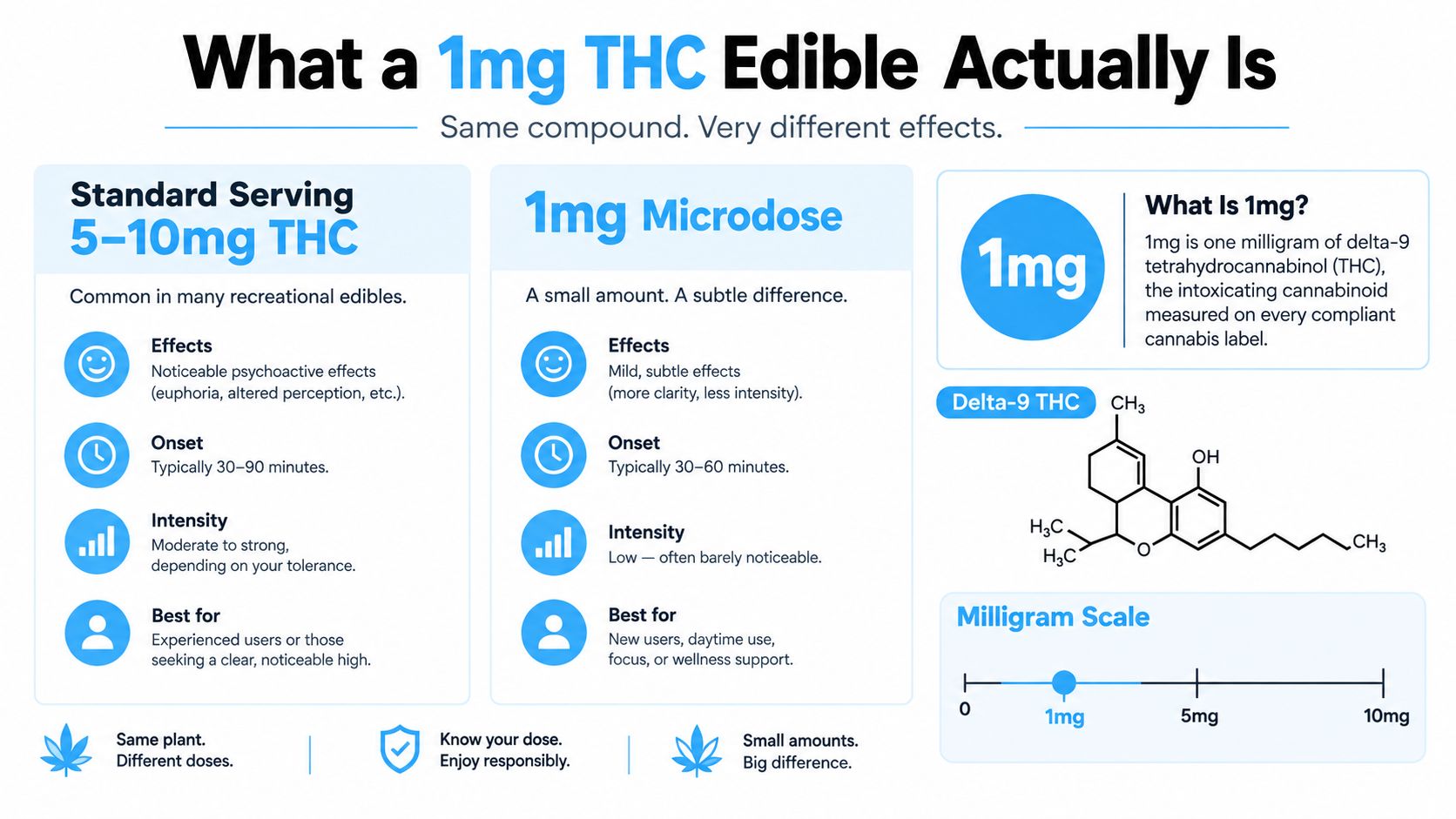
How the label becomes a serving
Licensed laboratories test cannabinoid content, and manufacturers use those results to create the package label. For a buyer, four details deserve attention:
- Serving amount: The THC in one gummy, mint, tablet, strip, or measured dropper.
- Package amount: The combined THC in the full container.
- Serving marks: Scoring or measurement lines can guide division, but they do not guarantee that every portion contains an exact amount.
- Product format: A low-dose gummy and a marked tincture may carry the same THC amount while producing different experiences because absorption varies by route.
The label is a measurement, not a promise about intensity. Body size, tolerance, food, and individual sensitivity can all affect how 1mg feels. Someone familiar with 5mg or 10mg products may find 1mg too subtle, while a new or sensitive consumer may prefer this smaller, more precise tier. For readers comparing THC with non-intoxicating cannabinoids, understanding CBD legality clarifies the difference between CBD and THC.
How 1mg Edibles Feel and Why Onset Feels Delayed
You take a 1mg gummy before a quiet evening, feel nothing after twenty minutes, and wonder whether the dose is too small. That pause is normal for an edible. Swallowed THC must pass through digestion before the liver converts part of it into 11-hydroxy-THC, a metabolite that binds more strongly to CB1 receptors and crosses the blood-brain barrier more readily (oral THC pharmacology review).
Because first-pass metabolism changes much of the swallowed dose, the body receives only a fraction of the labeled amount. Oral THC therefore has low and variable bioavailability, roughly 4% to 12% in clinical reviews and about 6% ± 3% in one food product, yet the resulting 11-hydroxy-THC can still produce a meaningful experience (oral THC pharmacology review).
What the first few hours may feel like
Public-health guidance commonly places initial edible onset at 30 to 90 minutes, with peak effects around 2 to 4 hours (clinical guidance on edible THC dosing). Food may increase overall exposure and delay peak concentration, so the same 1mg product can feel different after a meal than on an emptier stomach.
A new consumer might notice less tension, gentle body relaxation, or a quieter mental pace. Another person may notice no clear change, especially if they already use THC regularly. A sensitive user could experience mild lightheadedness or anxiety, which makes 1mg a low dose rather than a guaranteed unnoticeable dose.
For a broader guide to how long edibles last, remember the practical rule: wait through the expected onset window before judging the serving. Delayed effects do not mean the edible has failed, and taking more too soon can make the final experience stronger than intended.
Comparing 1mg to 2.5mg, 5mg, and 10mg Edibles
Dose tiers help shoppers choose a starting point, but they aren't promises. A person with no THC experience may notice 1mg more than a regular consumer does, and doubling the milligrams doesn't produce a perfectly predictable doubling of effects.
| Dose | Intensity (1–10) | Best For | Typical Onset |
|---|---|---|---|
| 1mg | Subtle, often at the low end | Highly cautious or sensitive adults, careful titration | 30 to 90 minutes |
| 2.5mg | Low and more noticeable for many beginners | New users who want a cautious starting range | 30 to 90 minutes |
| 5mg | Clearly noticeable for some consumers | Adults with prior experience seeking a stronger effect | 30 to 90 minutes |
| 10mg | Potentially intense for a new user | Consumers with established tolerance, where legal and appropriate | 30 to 90 minutes |
The 1mg tier works well as a learning dose. It may be enough for someone who is unusually sensitive, but too little for a daily consumer. The 2.5mg tier sits near the commonly cited beginner ceiling, while 5mg and 10mg require more caution because a stronger effect can take time to arrive.
Dose comparison: Choose the smallest serving that lets you evaluate your response. You can increase on a different day, but you can't remove an edible once you've swallowed it.
Meal timing, metabolism, sleep quality, tolerance, and product composition all influence the outcome. A person comparing products should also review this cannabis dosage chart as a supplementary reference, then follow the label and local rules.
Safe Dosing Steps for First-Time and Returning Users
A careful first session should feel boring in the best possible way. Pick an evening or another period without driving, work, childcare, or time-sensitive obligations, and stay somewhere familiar.
A cautious 1mg protocol
- Choose a calm setting. Keep water, a comfortable place to sit, and activities you already enjoy nearby.
- Eat a light meal 30 to 60 minutes beforehand. Food can change absorption, so consistency helps you compare future sessions.
- Take 1mg and write down the time. Record the product, serving size, meal, and your starting mood.
- Wait at least two hours before taking more. Effects can arrive gradually, and early redosing is a common way to overshoot.
- Adjust only on a new day. If 1mg feels absent, increase conservatively by 1mg to 2.5mg during a separate session, not by stacking servings close together.
- Keep a short journal. Note onset, peak, unwanted effects, sleep, and how you felt the next morning.
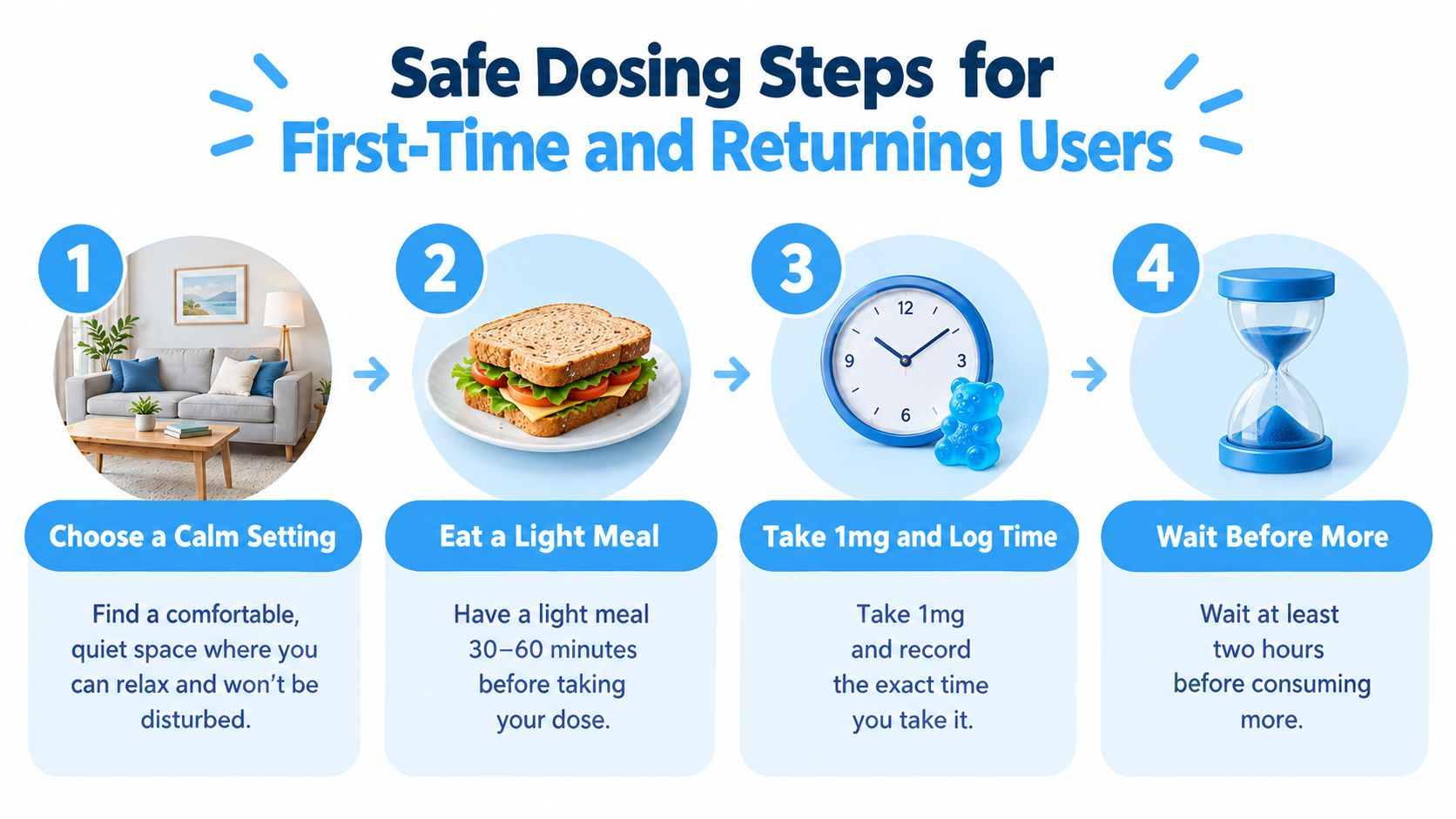
Rules that protect the session
Don't combine THC with alcohol or other sedatives. Don't drive or operate machinery, even if you believe the effect is mild. Stop increasing the dose if anxiety appears, your heart rate feels uncomfortably high, or you become confused or distressed. Seek medical help for severe or persistent symptoms.
Anyone returning after 30 or more days without cannabis should restart at 1mg, regardless of a previous tolerance. Tolerance can change, and an old routine isn't a dependable measure of today's response.
Watch this short educational video before your first session, then keep the practical rule visible while you wait.
Benefits of Microdosing with 1mg THC Edibles
Microdosing is less about feeling intoxicated and more about finding a dose that fits around ordinary life. Some adults describe a subtle mood lift, reduced social tension, easier sleep onset, a more open creative state, or relief from mild aches. Those are personal reports, not guaranteed medical outcomes.
A 1mg serving can make experimentation more deliberate. Instead of jumping from no THC to a strong edible, a consumer can observe a small response and adjust later. That approach may suit someone who wants to remain clear-headed, but “clear-headed” doesn't mean unimpaired for everyone.
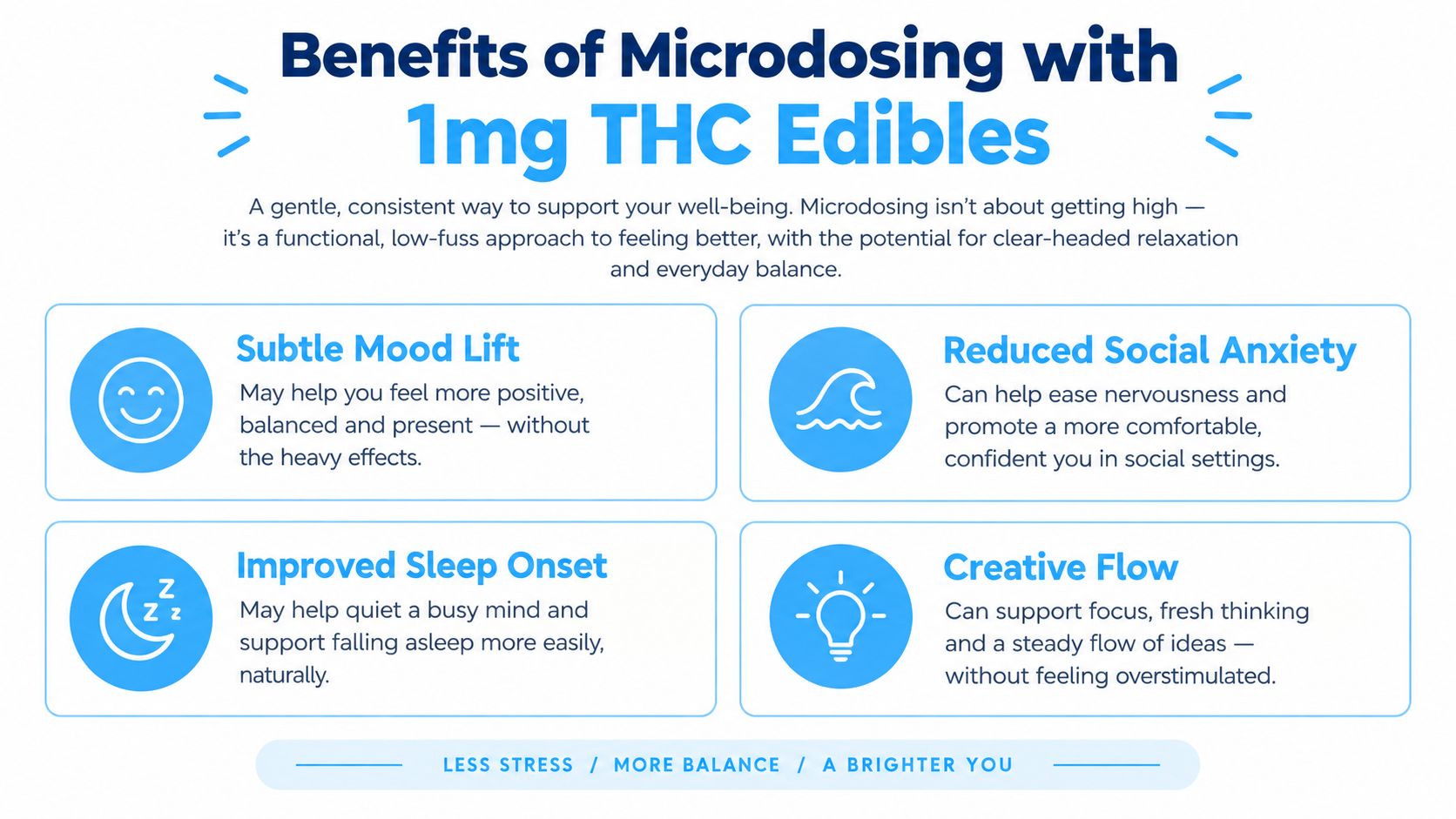
Where the approach has limits
A daily cannabis consumer may feel nothing from 1mg. A new or sensitive consumer may feel a distinct change. The same person may respond differently after poor sleep, a large meal, stress, or a long break.
Microdosing also isn't a replacement for therapy, prescribed medication, or an evaluation of persistent pain, anxiety, or insomnia. If you take prescription medicines, manage a health condition, or are pregnant or nursing, speak with a qualified healthcare professional before using THC.
The strongest case for 1mg is precision, not promises. Track the serving, setting, timing, and response. If the effect is absent across separate sessions, a carefully planned adjustment may make more sense than repeatedly taking an unmeasured amount.
Choosing the Right 1mg Product at Strong Strains
Product selection starts with the label, not the flavor name. Confirm the THC per serving, the total THC per package, and whether one piece is labeled as 1mg or whether a larger serving has been divided into smaller sections.
A marked tincture dropper can offer fine control, while a low-dose gummy, mint, microtablet, or dissolvable strip may provide a ready-measured serving. The best format depends on whether you value portability, repeatability, flavor, or the ability to make small adjustments.
Three questions for the budtender
- Where did the cannabis come from? Ask about the licensed source and the product's cannabinoid profile.
- What testing is available? Request potency and contaminant information rather than relying only on a package claim.
- What should I expect from this format? A budtender can explain how a gummy, tincture, or dissolvable product is intended to be used, while you still need to allow enough time for your own response.
Strong Strains Cannabis Dispensary lists cannabis products with THC amounts and per-piece servings, and its menu includes formats such as gummies, infused edibles, and drops. For example, shoppers can compare products such as Florist Farms Strawberry Lemonade 10mg 10-pack or 1906 Bliss Drops labeled with 5mg THC and 5mg CBD per drop, then ask whether a lower-dose option better matches their starting plan.
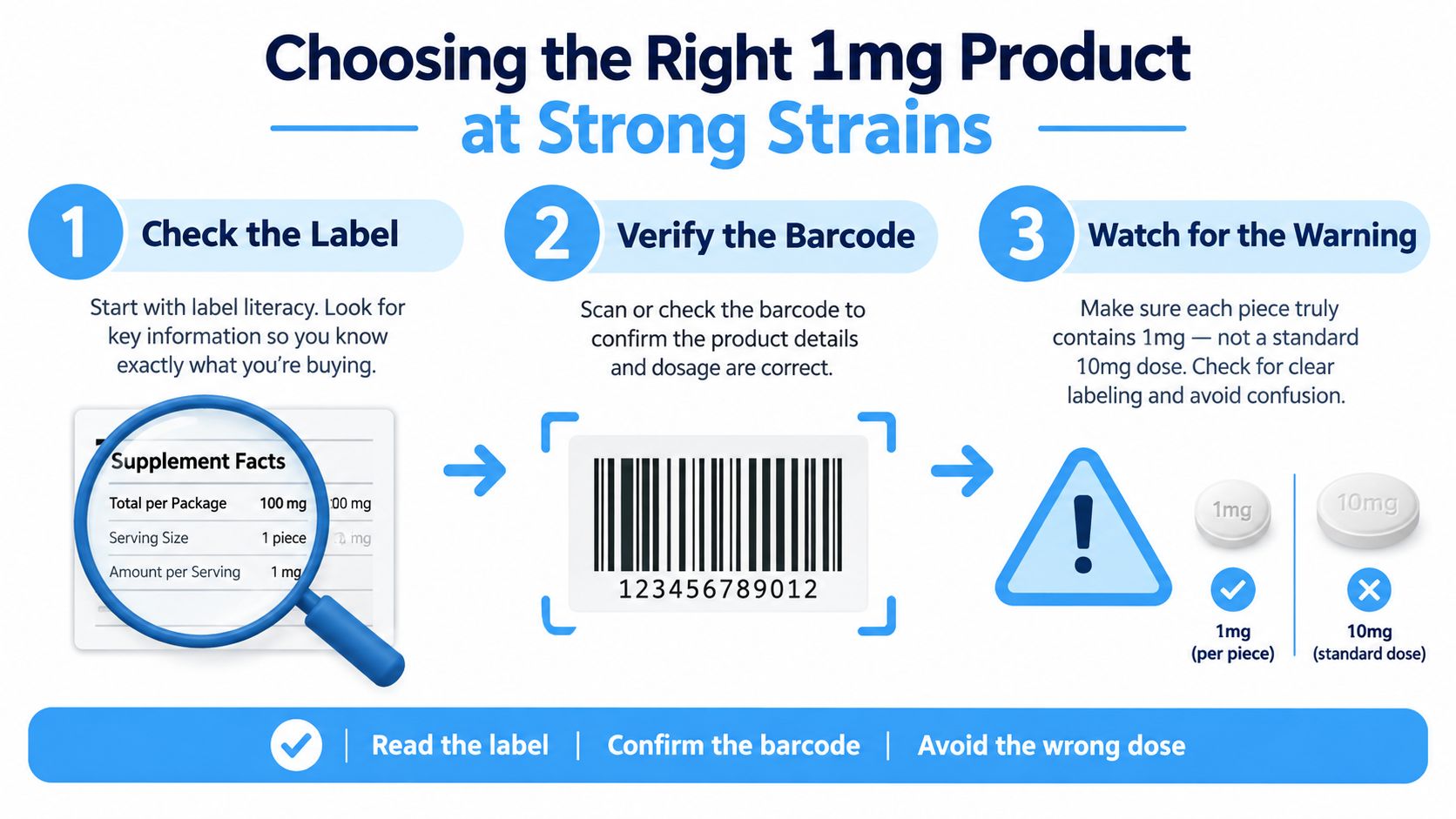
A single-serving pack is often easier to evaluate than a large multipack. If you're considering a fast-acting product, review the Wana fast-acting gummies guide and still follow the package directions, local regulations, and your own wait time.
Legal Notes and Responsible Use for Adult Consumers
Cannabis rules vary by state and country. A 1mg edible is lawful only where the applicable adult-use or medical program permits it, and age requirements differ by jurisdiction. In New York, adult-use cannabis is restricted to people 21 and older, while some medical programs allow registered patients who are younger when they meet local requirements.
Legal access doesn't remove the need for careful storage. Keep edibles in their original child-resistant packaging, away from children and pets, and don't leave gummies or mints where they can be mistaken for ordinary candy. A clear label protects everyone in the household.
Keep the routine responsible
- Protect your time: Don't drive, cycle in traffic, or operate machinery after consuming THC.
- Avoid combinations: Alcohol and sedating substances can make impairment harder to judge.
- Respect the delay: Don't redose just because the first serving hasn't appeared yet.
- Check the serving line: Confirm whether the label describes one piece, one dropper, or the whole package.
- Ask for medical guidance: Discuss THC with a healthcare professional if you take medication or have a condition that could affect your response.
A low dose is a starting point, not a safety guarantee. The most reliable routine remains simple: start with 1mg, wait, record what happened, and make any change on another day. Once you understand how that serving fits your schedule and local rules, you can decide whether to continue, change format, or stop.
Visit Strong Strains Cannabis Dispensary to compare clearly labeled edibles, tinctures, and other lab-tested cannabis products with guidance from knowledgeable budtenders. Ask the team about low-dose formats, pickup, or local delivery, and choose a measured starting point that matches your experience level.