
Edibles typically last 4–8 hours, although effects can linger for up to 12 hours. The timeline varies greatly, and this guide will show you why, how food and formulation change the experience, and how to make your next edible session more predictable.
You may be looking at the clock after taking a gummy, wondering whether you should feel something by now. Maybe a friend told you edibles hit quickly, while your experience has been quiet so far. Or perhaps the first wave has arrived and you're trying to plan the rest of your evening without guessing.
That uncertainty is normal. Edibles move slowly because your body has to digest them and process THC through the liver before the effects fully develop. The most comfortable experiences usually come from treating timing as part of the dose, not as an afterthought.
Your Guide to a Predictable Edible Experience
A first-time consumer may eat a gummy after dinner, feel nothing for an hour, and decide it failed. They take another serving, start a movie, and then feel the first dose building. Once both servings are active, the evening can become far stronger and last longer than planned.
The answer to how long do edibles last depends on the person, the product, and the setting. Main effects commonly occupy a 4–8 hour window, while residual effects may continue for up to 12 hours, particularly after a higher dose. These ranges help with planning, but they cannot predict every individual response.
Several variables shape the experience: metabolism, tolerance, stomach contents, product potency, and edible format. A standard gummy and a fast-onset beverage may contain THC yet follow different timing curves. Previous cannabis experience matters as well. Someone who rarely uses THC may experience a longer or more intense response than a regular consumer taking the same labeled serving.
Practical rule: Plan several uninterrupted hours for a swallowed edible, and avoid redosing because the first effects are taking their time.
Strong Strains offers Long Island adults product education alongside their purchase. A knowledgeable budtender can compare a gummy, chocolate, beverage, or tincture according to the timing and type of experience you want, rather than focusing on potency alone. That guidance can be useful when you are new to edibles, returning after a break, or testing a different formulation. Asking about lab-tested products also helps connect the label to a more predictable choice.
The goal is a manageable experience, not a complicated one. Read the label, choose a reasonable setting, and focus on the variables within your control. Give your body enough time to show what the first serving is doing before you decide whether anything needs to change.
The Standard Edible Experience Timeline
A swallowed edible follows a slower route than smoking or vaping. Inhaled cannabinoids reach the bloodstream through the lungs, while an edible must pass through digestion and first-pass liver metabolism. That process creates a gradual rise and a longer comedown. A peer-reviewed review describes initial psychoactive effects commonly appearing after 30–90 minutes, with peak effects around 2–4 hours after ingestion.
The experience unfolds like a rollercoaster with a long climb. The quiet beginning does not mean the edible failed. Your body may already be processing it before you notice a clear change.
The first phase is the waiting period
Effects usually begin in about 30–120 minutes. Early signs may be subtle, including relaxation, heaviness, or a shift in attention. Some people notice nothing at first, so avoid judging the serving by the first few minutes.
Food can affect the schedule. An edible may take longer to move through digestion after a meal, while the meal's composition can also influence absorption. Let the first serving develop fully before deciding whether anything should change.
A useful way to manage this phase is to treat the clock as part of your plan. Choose a comfortable setting, keep your evening open, and give the product enough time to show its direction.
The peak arrives later
The most noticeable effects commonly develop and peak around 2–4 hours after ingestion. Early sensations may feel mild, yet intensity can continue building well after those first signals appear. This delayed rise is why taking more too soon can turn a manageable experience into an unexpectedly strong one.
Fast-onset products can shorten the wait without making the entire experience brief. For example, Wana fast-acting gummies may begin sooner than a conventional swallowed gummy, but you should still follow the label. An earlier onset does not mean the effects will end quickly.
The main window gradually softens
The main psychoactive window commonly lasts 4–8 hours, followed by a gradual reduction in intensity. You may feel a gentle afterglow, tiredness, mental fog, or readiness for sleep. At higher doses, residual effects can persist for up to 12 hours or longer.
| Experience phase | Typical timing | What to remember |
|---|---|---|
| Initial onset | 30–120 minutes | Don't judge the dose too early |
| Peak effects | 2–4 hours | Intensity may continue building |
| Main psychoactive window | 4–8 hours | Plan your evening around this range |
| Residual effects | Up to 12 hours or longer at higher doses | Avoid driving or important tasks if you still feel impaired |
Use this timeline as a planning map, not a promise. Product labeling, your previous experience, and guidance from a qualified professional still matter. Lab-tested products and clear timing guidance can make the move from uncertainty to enjoyment more predictable.
Why Your Edible Experience Is Unique
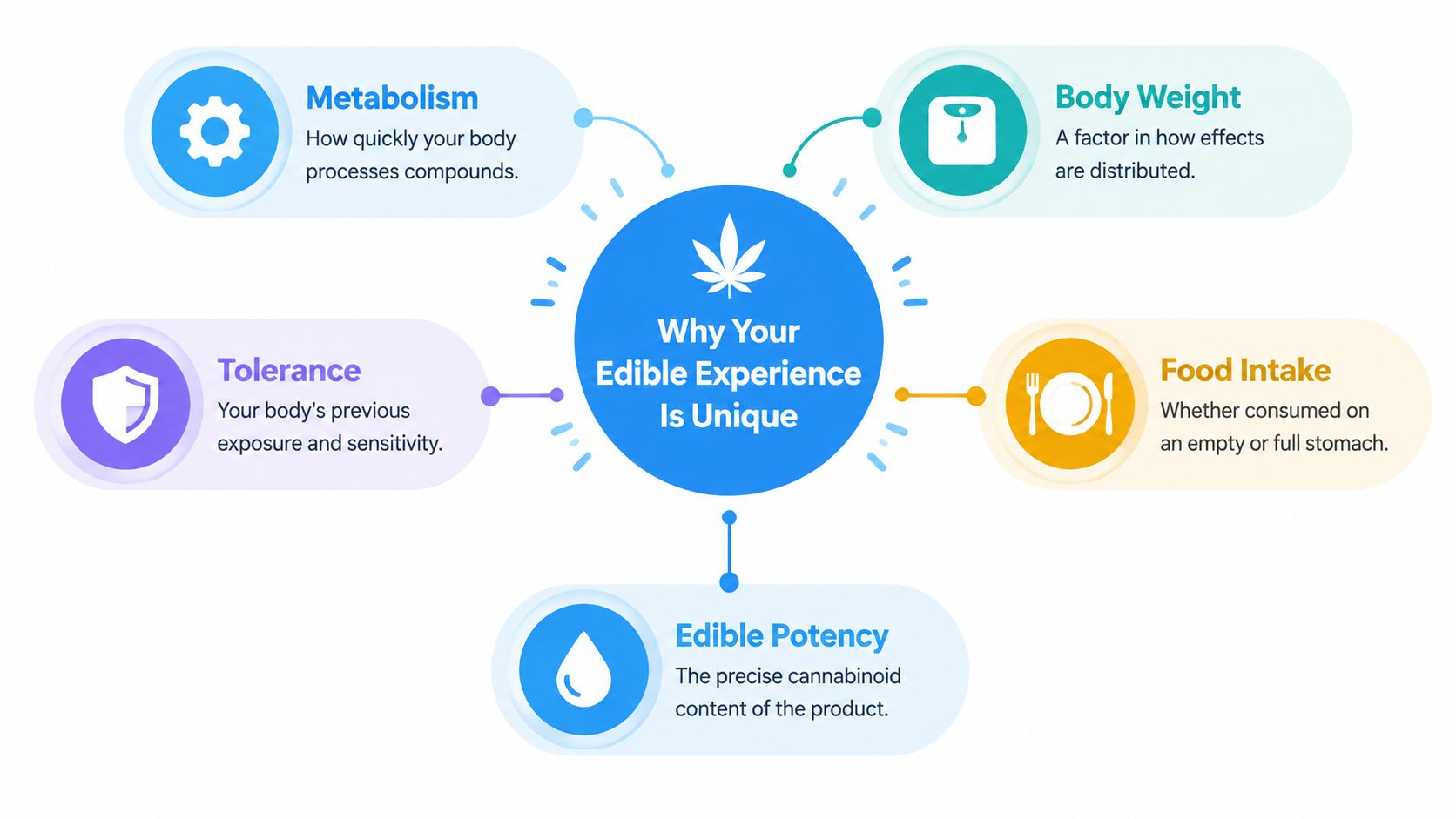
You and a friend can take the same labeled serving, at the same time, and describe two different experiences. The label can still be accurate. Your body, the meal, the product, and your surroundings all influence how THC enters the bloodstream, takes effect, and wears off.
These variables fit into two groups. Biological factors affect how your body responds. Product and setting factors affect how much THC becomes available, how quickly effects develop, and how you interpret them.
Biological factors shape the response
Metabolism is difficult to predict until you have personal experience with a product. Each body processes and clears cannabinoids at its own pace. One person may notice effects build quickly and fade sooner, while another may experience a slower rise and a longer-lasting tail.
Tolerance usually changes intensity more consistently than it changes the basic timeline. A frequent consumer may notice less from a serving that feels strong to someone who rarely uses THC. If you have taken a break, approach your next edible cautiously instead of assuming your previous tolerance still applies.
Body weight and body composition may also affect distribution and metabolism. They do not provide a reliable formula for selecting a dose. The product label and a conservative, repeatable approach are more useful than trying to calculate an experience from body size alone.
Food can change the curve
Food co-administration is one variable you can manage. Some data indicate that taking an edible with a high-fat meal can increase oral THC bioavailability by up to roughly 25%, which may intensify or extend effects, as explained in this technical explanation of food and edible duration.
You do not need to pair every edible with a high-fat meal. Consistency matters more while you are learning a product. For instance, if you typically take an edible after a light dinner, follow that pattern when testing a new product instead of trying it on an empty stomach for the first time. Changing the meal, serving, and product together makes the result harder to understand.
Product format matters
Standard gummies, chocolates, and baked goods are digested products, so their onset is generally slower. A nano-emulsified beverage or fast-onset edible may begin working sooner because its formulation can make THC available for absorption more quickly. The effects may still last for several hours. Faster onset does not mean a shorter commitment.
Recipe and formulation also matter. Chocolate or baked goods may contain fat, while beverages can have a different absorption profile. Compare the serving size, cannabinoid profile, and product directions before comparing experiences. Brand names such as Tune, Camino, Wana, Kiva, and Lost Farm can identify a format, but the individual label determines the serving information.
Potency and expectations work together
A higher-potency product may feel longer because the experience is stronger and more persistent, but no universal formula predicts duration. Dose, tolerance, metabolism, food, and formulation interact. The most useful testing method is to change one variable at a time.
A useful experiment: Keep your serving size, meal pattern, and setting similar when trying a new edible. Change the product only after you understand your baseline.
The controllable pieces are practical: choose a clearly labeled, lab-tested product, take it in a familiar eating context, avoid combining it with other intoxicants, and leave enough time for the peak. You cannot control every biological detail, but a consistent routine helps reduce avoidable uncertainty and makes the path from uncertainty to enjoyment easier to manage.
Safe Dosing and Avoiding Overconsumption
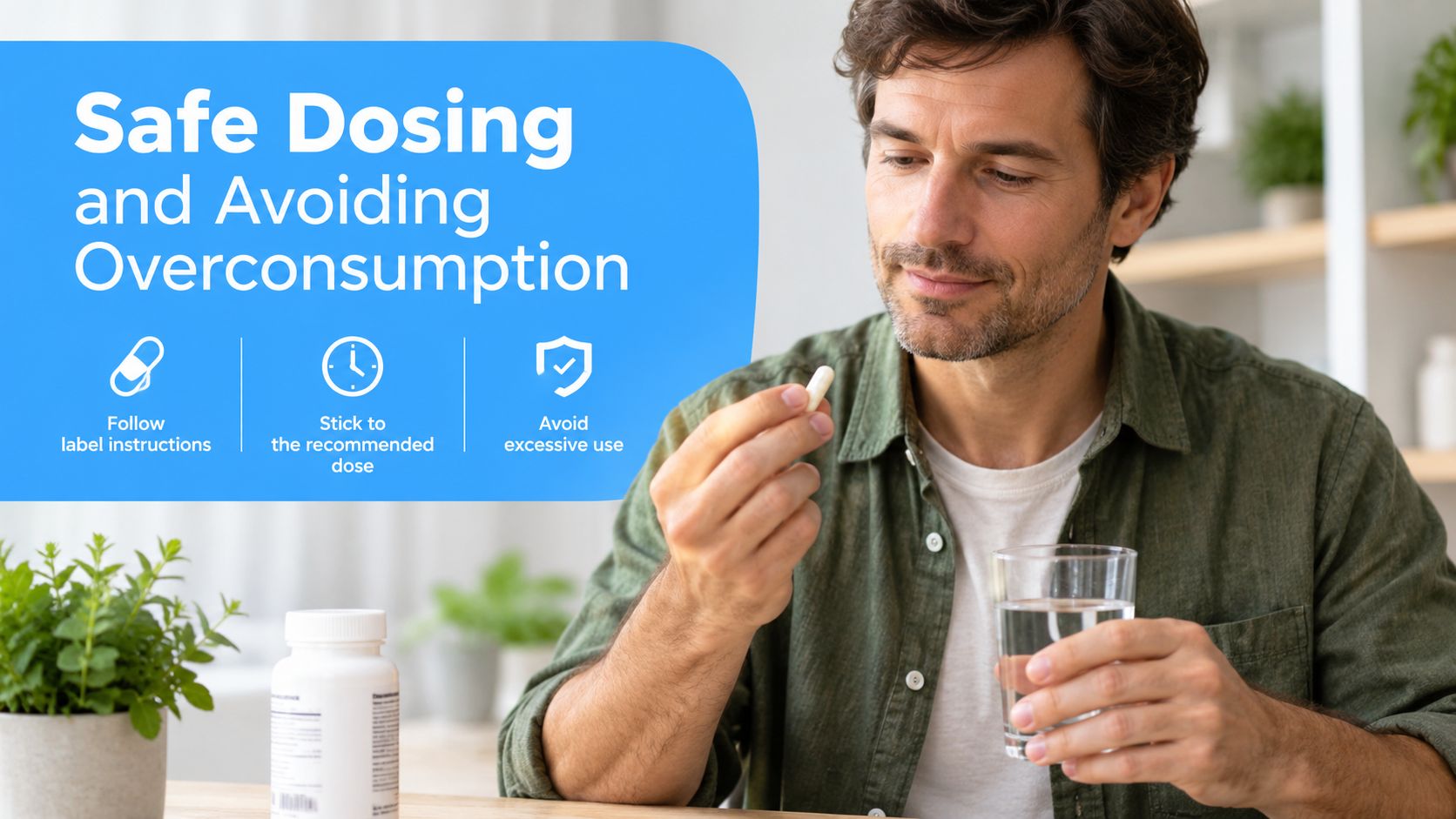
A predictable edible experience starts with start low and go slow. Choose a conservative labeled serving, then give your body time to show you how it responds. If the first hour feels quiet, taking more can remove the margin that keeps the experience manageable.
Edibles may continue building well after the initial effects appear. They can reach their strongest point around 3 hours, last up to 12 hours, and leave residual effects for up to 24 hours, according to Knowable Magazine's explanation of edible timing. Redosing during the quiet period can stack servings before the first one reaches full intensity.
Use a patient decision rule
Take the labeled serving and record the time. Wait at least 2 hours before considering more, and wait longer if you ate a substantial meal or chose a higher-potency formulation. If effects have already started, the peak may still be ahead.
Use a simple safety plan:
- Read the serving information: Confirm the THC amount in one piece, serving, or measured portion. Total package potency does not equal the amount in each serving.
- Choose a calm setting: Stay somewhere familiar with water, food, and a comfortable place to rest.
- Record the time: A phone note prevents guesswork when the experience develops slowly.
- Avoid stacking substances: Combining cannabis with alcohol can make impairment harder to predict. For evidence-based alcohol information, review Empire Medical Wellness's resources.
- Do not drive: If you feel high, tired, dizzy, or mentally slowed, arrange a sober ride and postpone tasks requiring judgment or coordination.
Product quality and labeling also affect how confidently you can dose. Lab-tested edibles from brands such as Wyld or Wana can provide clearer serving information, but a high labeled amount may still be unsuitable for an individual consumer. Testing supports better decisions. It cannot remove differences in tolerance, metabolism, or sensitivity.
Even with careful planning, an experience can feel stronger than expected. If that happens, use the following steps to handle it calmly.
If the experience feels too strong
Stop taking more THC and move to a quiet, familiar place. Sip water, eat a light snack if comfortable, and remind yourself that the effects are temporary. Slow breathing and reduced stimulation may make the experience easier to manage.
Seek urgent medical help for severe or unusual symptoms, including chest pain, trouble breathing, loss of consciousness, or another medical emergency. Do not drive yourself. Keep cannabis products away from children and pets, and contact emergency services or poison control after accidental ingestion.
High-potency products require extra care. The Strong Strains guide to 100 mg THC explains why package potency and serving size must be read separately. A large package number is not a suggested personal dose.
Choosing the Right Edible at Strong Strains
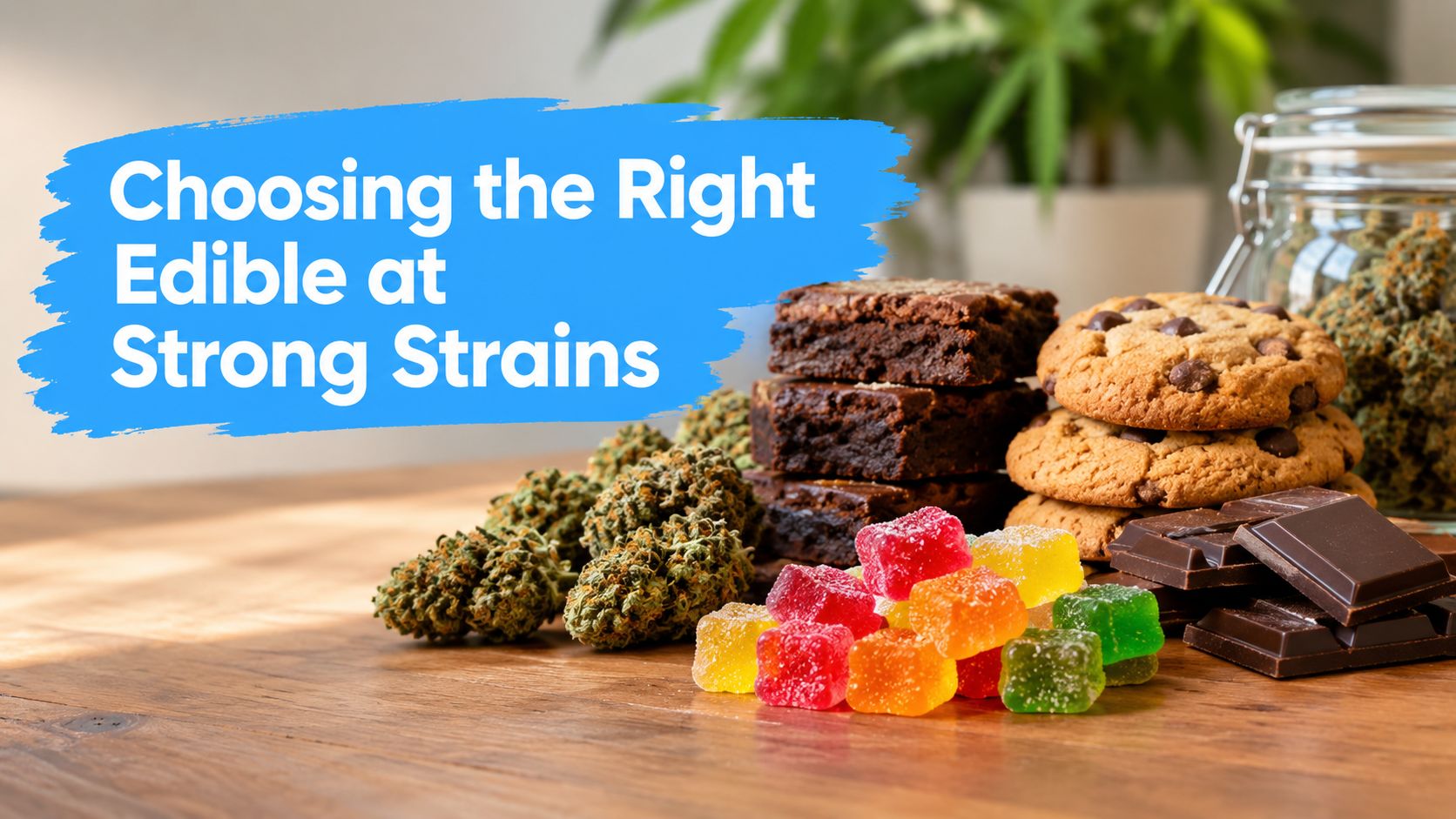
The best edible choice starts with the experience you want to schedule. A long, gradual evening may suit a conventional gummy or chocolate. A faster, more controllable option may be a beverage or a product designed for quicker onset. None of these formats is automatically right for everyone.
At Strong Strains Cannabis Dispensary, shoppers can compare products such as Kiva and Lost Farm chocolates or gummies, Camino gummies, Incredibles chocolates, and beverage options including Tune | Infused Seltzers. Availability can change, so check the current menu and ask a budtender about the label, serving size, cannabinoid profile, and formulation.
Match the format to your schedule
Gummies are easy to portion when each piece has clear serving information. They're a practical choice for consumers who want a familiar, portable format and are comfortable allowing digestion time before the experience develops.
Chocolates and baked-style products can feel like a more traditional treat, but their ingredients and fat content may affect how the body absorbs THC. Read the serving directions carefully and don't assume that a small-looking piece represents one serving.
Infused beverages may suit a social setting or someone who prefers not to eat a candy or chocolate. Nano-emulsified formulations can offer a faster onset, while the experience can still continue for several hours. That faster beginning doesn't justify immediate redosing.
Tinctures give consumers a measured liquid format and may be used under the tongue, depending on the product directions. Ask the budtender whether the product is intended for sublingual use or swallowing, since those routes can produce different timing.
Ask better questions at the counter
A useful dispensary conversation includes more than “What's strongest?” Ask how much THC is in one serving, whether the product is fast-onset or conventional, and whether the label provides accessible testing information. Strong Strains also carries broader cannabis categories, including flower, vapes, pre-rolls, concentrates, tinctures, topicals, and accessories, so the team can help you compare edible timing with other formats.
The cannabis lab-testing guide can help you understand why testing and transparent labeling matter. For a predictable experience, choose a product you can identify, measure, and store correctly.
Frequently Asked Questions About Edible Duration
How long do CBD edibles last compared with THC edibles?
CBD edibles don't create the same intoxicating THC experience, so the question isn't answered by applying the THC timeline. Your response can still vary with the product, serving, digestion, and personal biology. Read the label for the cannabinoids present, and ask a budtender whether the product contains THC before using it.
If you're researching how cannabinoids may remain in the body after stopping use, that's separate from how long an edible feels active. Integrity Together LLC's resource on cannabis and the body after quitting offers additional context for that distinction.
What should I do if I took too much?
Stop consuming more, move somewhere calm, drink water, and rest. Avoid driving, alcohol, and other intoxicants. The most intense part will pass, but you should seek urgent help for severe symptoms or any situation that feels medically dangerous.
Don't try to counteract the experience with another substance. If you're worried, contact a trusted sober person and tell them what you took, how much, and when.
How long does an edible stay fresh?
This is a different question from how long the effects last. Intoxication commonly lasts 6–12 hours, while shelf life depends on the edible format and storage conditions (Medical News Today's explanation of edible duration and shelf life).
Baked goods may remain fresh for only days, while gummies can last for months when stored appropriately. Keep products sealed, away from heat and light, and in their original labeled packaging. Check the package date, appearance, smell, texture, and storage instructions. If a food product shows signs of spoilage, don't consume it, even if it still contains THC.
Strong Strains Cannabis Dispensary offers lab-tested edibles, gummies, chocolates, beverages, tinctures, and other cannabis products with knowledgeable guidance on serving size, format, and timing. Visit Strong Strains Cannabis Dispensary in East Setauket for in-store pickup or local delivery, and let the team help you choose an edible that fits your schedule and experience level.