
Full-melt bubble hash is the highest grade of ice-water-extracted cannabis resin, typically rated 5–6 stars, and it should vaporize almost completely with minimal residue when dabbed. Bubble hash is a modern solventless extraction method, but only its cleanest fractions qualify as true full melt.
Why do so many product descriptions use “bubble hash” and “full melt” as if they mean the same thing? The distinction matters at the moment of purchase, when a dab hits the banger, and when you decide whether a premium price matches the material's actual performance. A serious buyer should know how the resin was separated, what the star rating does and doesn't tell you, and what clean melting looks like in practice.
Understanding Bubble Hash and Full Melt Quality
Bubble hash is made by separating cannabis trichomes with ice water, agitation, and filtration. The method is solventless, meaning the process doesn't rely on hydrocarbons or other chemical solvents. The resin-rich trichome heads are collected from the filtered water, then dried and graded according to how cleanly they melt and how much plant material remains.
The technique emerged in the late 1980s and became widely known after published instructions appeared in High Times in November 1988. Later accounts credit Dutch breeder Nevil Schoenmakers and American extractor Sam the Skunkman, David Watson, with early development and dissemination. The history helps explain why bubble hash became a reference point for solventless craft, but the grade still depends on execution and the material selected.
What the star scale means
Bubble hash is commonly graded on a 1-to-6 star scale. The stars describe melt quality, not merely how strong the product feels or how attractive it looks.
Lower grades contain more plant material, broken trichome structures, or other residue. They may work well when mixed with flower, pressed into another concentrate, or used in applications where spotless vaporization isn't the priority. A high grade contains a greater concentration of intact trichome heads and behaves more cleanly under heat.
At the top are 5- and 6-star products, commonly called full melt because they bubble and liquefy almost completely, leaving little to no residue. Leafly's bubble hash glossary also identifies full melt as the highest grade in the six-star system.
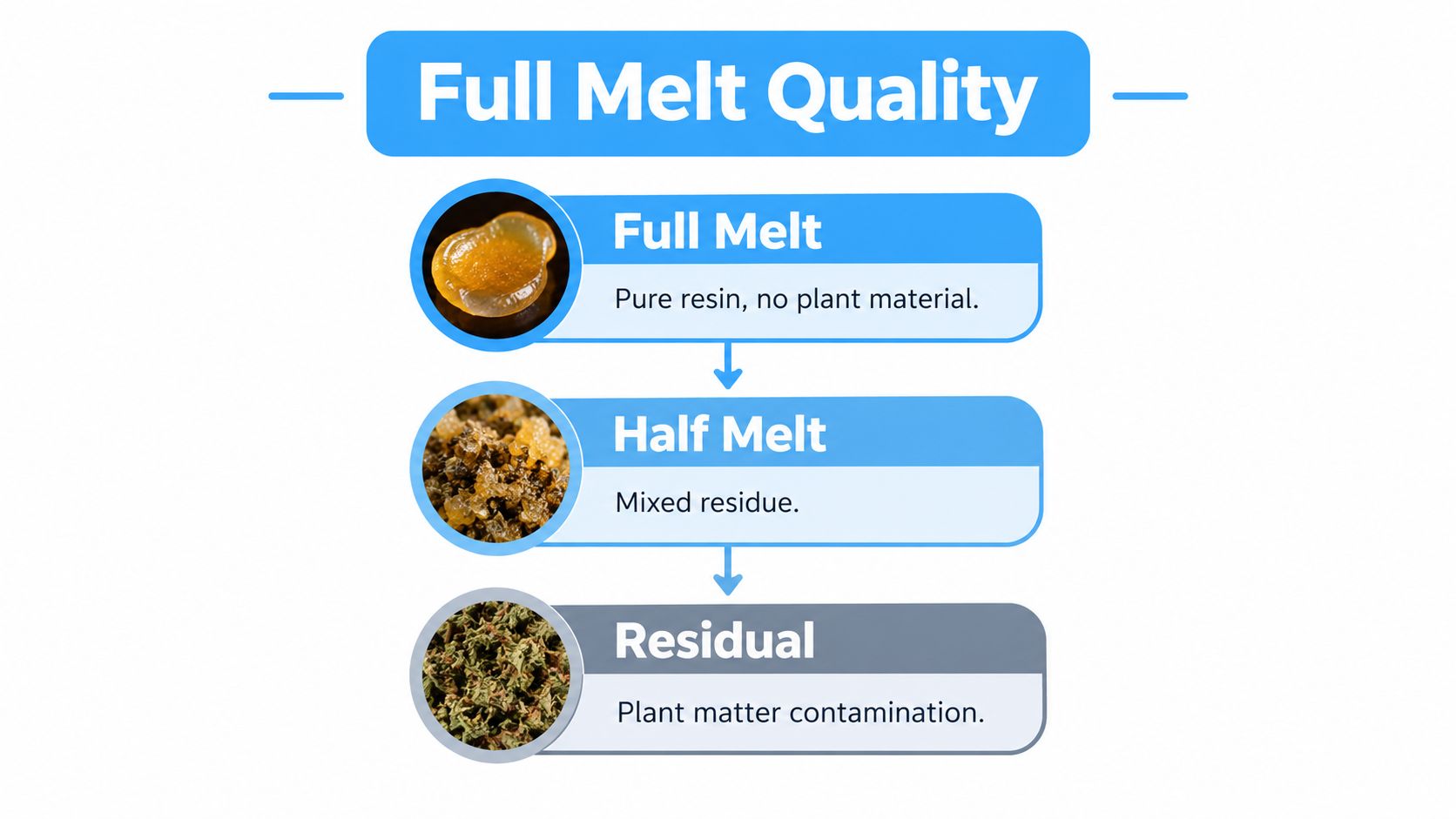
Buying rule: “Bubble hash” describes the extraction family. “Full melt” describes exceptional melt performance within that family.
The distinction is central to solventless concentrate education. Not every bubble hash product is ready for a clean dab, and a star label should support, not replace, your own quality checks.
The Science Behind Ice Water Extraction
Ice-water extraction works because cold conditions make trichome heads more brittle while water provides a medium for separating them from the plant. Agitation loosens the resin glands, and filtration bags sort the material according to particle size. The objective isn't to strip everything from the flower. It's to collect resin-rich fractions while limiting contamination from leaf material and damaged plant matter.
A typical filtration setup uses several mesh bags. Production guides describe ranges from about 220 μm down to 25 μm, with different screens catching different fractions. The exact outcome depends on the cultivar, the maturity and condition of the trichomes, agitation, water temperature, and how carefully the operator handles the wet material.
Why micron selection changes melt quality
A micron number refers to the size of the filtration openings. Wider screens allow larger particles through, while finer screens retain smaller material. Neither the widest nor the finest bag automatically produces the best dab-ready hash.
The most desirable full-melt fractions often collect in narrower, trichome-rich middle ranges such as 70–120 μm, according to the bubble hash production guide from MunchMakers. That range is useful as a quality clue, but it shouldn't be treated as a guarantee. Different cultivars produce different trichome populations, and the same micron range can perform differently across batches.
From wash water to finished resin
The process has four practical stages:
- Agitation loosens trichome heads from the plant material.
- Filtration separates collected resin through bubble bags.
- Drying removes moisture without damaging the resin.
- Collection preserves the cleanest fractions for final use.
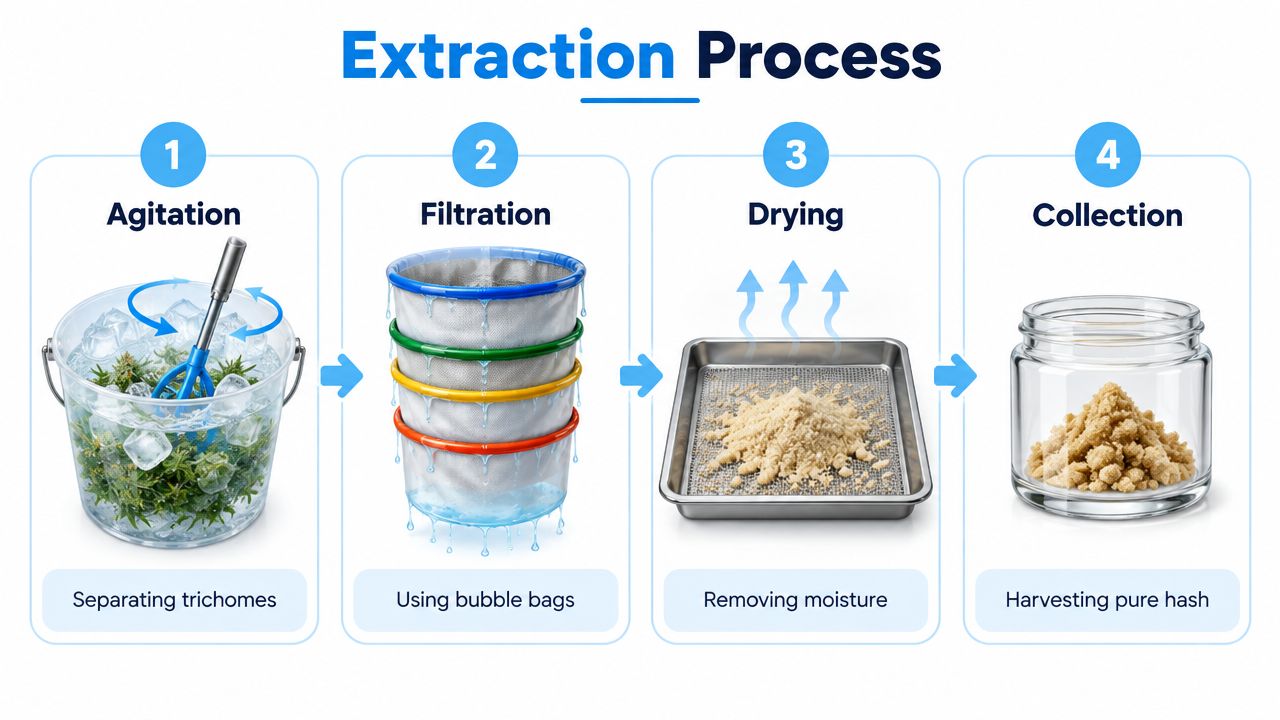
Drying is especially important. Residual moisture affects texture, handling, and behavior on a heated surface. Poor washing can introduce plant contamination, while rough agitation can damage trichomes and bring unwanted material into the collection. A clean melt therefore reflects a chain of decisions, not just the presence of ice and water.
The commercial meaning follows directly from the mechanics. Full melt is a premium category because it contains a highly refined resin fraction with low plant contamination. As Cannalabs Consulting explains in its ice-water extraction guide, the cleanest material liquefies with minimal char, while lower grades leave more particulate behind.
How to Identify True Full Melt Hash
A label can suggest quality, but the melt test tells you how the product actually performs. Start with the product information, then evaluate the material's appearance and texture, and finally observe a small amount under controlled heat when that option is legal and appropriate.
Cold full melt often appears light, clean, and resin-rich rather than visibly green or heavily fibrous. Texture can range from sandy granules to a softer, greasy consistency depending on drying and storage. Appearance alone won't prove grade, because color and texture can change with cultivar, handling, oxidation, and temperature.
Use the rating as a clue, not a verdict
A 5–6 star label indicates the seller is positioning the product as full melt, but the term is informal and isn't a substitute for performance. Starting material, micron selection, washing precision, and drying all affect the final result. A well-known cultivar can still produce disappointing melt if the wash carries too much plant matter or the post-wash handling damages the resin.
Ask practical questions before paying a premium:
- Is the micron range disclosed? Specific ranges provide more useful information than “premium hash” alone.
- Is the product intended for dabbing? Some bubble hash is better suited to flower, pressing, or mixing.
- Does the seller provide testing information? A transparent product record is more useful than a dramatic star claim.
- How was it stored? Heat, light, air, and moisture can change the finished texture and performance.
The heat test
True full melt should bubble, soften, and liquefy into a clean puddle or oily drop. The defining result is minimal char and little to no particulate residue. Weedmaps' explanation of full melt hash describes the key distinction clearly: full melt comes from trichome heads separated through ice water and melts cleanly rather than burning plant material.
A quartz surface that becomes heavily blackened, crusted, or filled with visible plant residue suggests lower-grade hash, contamination, or an overly aggressive temperature. A small amount of visible material doesn't automatically invalidate a product, but heavy residue is inconsistent with the clean full-melt standard.
Practical test: A product sold as full melt should bubble and liquefy, not burn into a dark crust.
The right comparison isn't “good hash versus bad hash.” Lower-grade material can still have value. Hash that bubbles but leaves residue may work better on flower, in a compatible vaporizer, or as a starting material for pressing. The buyer's mistake is paying for dab-ready full melt while receiving a different grade without clear disclosure.
Best Consumption Methods for Full Melt
Low-temperature dabbing gives full melt the cleanest opportunity to show its quality. A quartz banger, a compatible e-rig, or another concentrate device lets the resin liquefy directly rather than forcing it through flower or burning it alongside plant material.
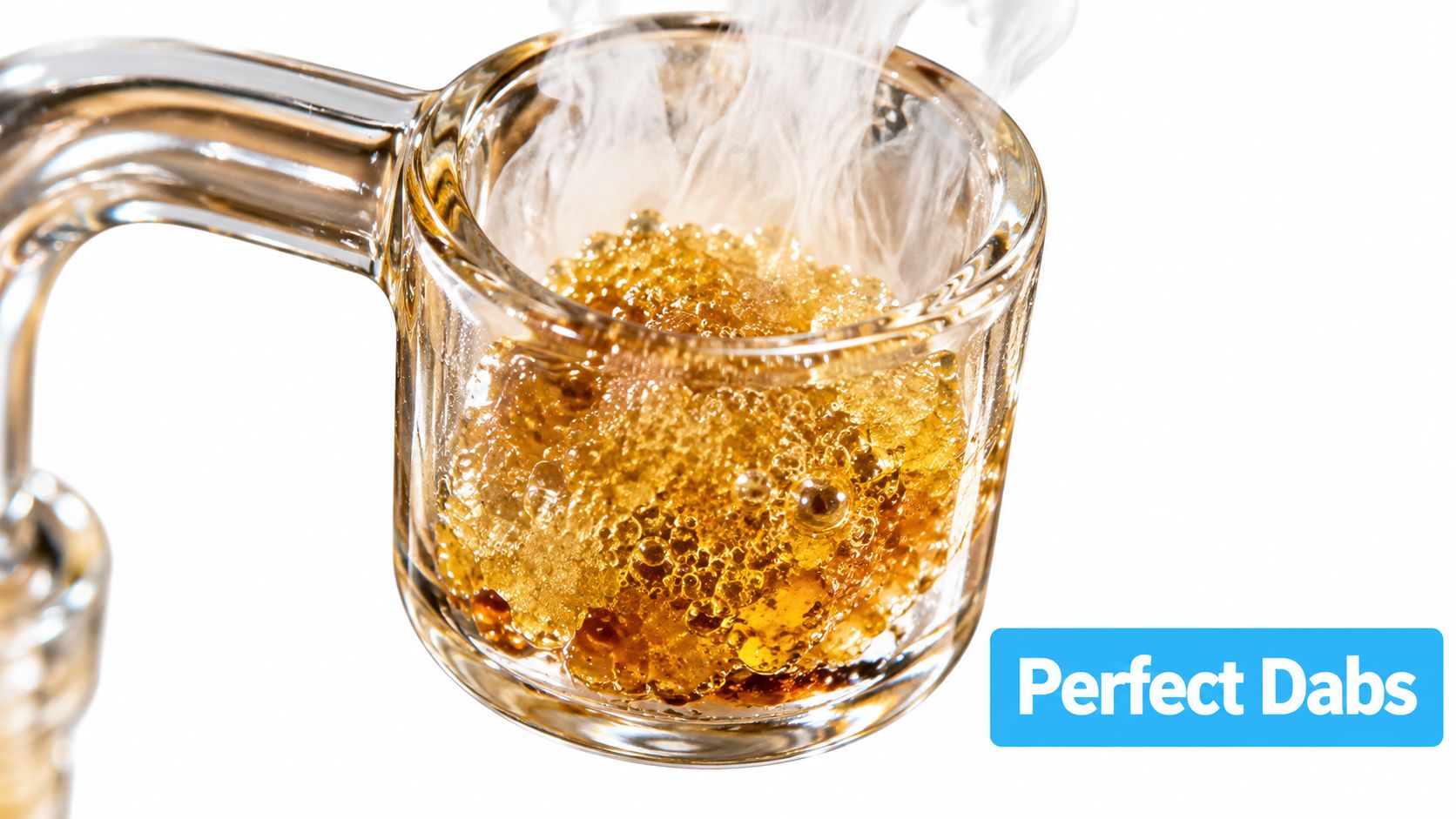
Begin with a small amount. Full melt is refined and can feel more intense than a comparable amount of flower, so starting conservatively gives you room to assess flavor, vapor density, and effects. Use a clean dab tool, load the resin carefully, and avoid touching the hot quartz.
Temperature is a trade-off
Lower heat generally favors flavor preservation and controlled vaporization. Higher heat moves faster but can mute delicate aromatic compounds and increase the chance of charring, especially if the product contains more plant material than advertised.
The most useful approach is to follow the device manufacturer's guidance, use temperature control when available, and adjust gradually. You don't need to chase the hottest setting to make full melt work. Clean liquefaction and comfortable vapor matter more than producing the largest visible cloud.
For a broader look at concentrate handling and device choices, see this guide to the best ways to smoke concentrates.
A compatible vaporizer can also work, particularly when it offers reliable temperature control and a chamber designed for concentrates. Keep the load modest and clean the chamber according to the manufacturer's instructions.
When flower makes more sense
Mixing hash with flower is practical when you want a familiar smoking format, don't have a concentrate device, or are working with a grade that leaves more residue. Pressing or sprinkling lower-grade bubble hash onto flower can make better use of the material than forcing it into a clean banger.
Smoking full melt with flower is possible, but combustion changes the experience and makes it harder to appreciate the resin's melt behavior. If you bought a very clean fraction, a controlled dab is the more direct way to evaluate what you paid for.
Clean the quartz or chamber after the session, while residue is still easier to remove. That small habit protects flavor and makes the next melt test more informative.
Storage and Safety Guidelines
Full melt is sensitive to heat, light, air, handling, and moisture. Store it in an airtight container in a cool, dark, low-humidity environment. A suitable concentrate container should limit air exchange and keep the material protected from unnecessary movement.
Temperature stability matters as much as temperature itself. Repeated warming and cooling can change texture and encourage condensation when a cold container is opened in a warmer room. If you move a sealed container from cold storage, let the container come to room temperature before opening it so moisture doesn't collect on the resin.
Protect texture and aroma
Use a clean container and minimize transfers. Each handling event exposes the product to air and can disturb delicate trichome structures. Keep the container away from direct sunlight, warm electronics, and areas with fluctuating humidity.
Don't use a wet tool or introduce flower fragments into the jar. Cross-contamination changes the product and makes it harder to judge whether residue came from the hash itself or from another material.
Handling rule: Keep the container sealed until it has reached room temperature after cold storage.
Basic safety
Cannabis concentrates are intended for adults of legal age. Keep full melt away from children and pets, store it in its original labeled packaging where applicable, and follow local regulations and product instructions.
Hot quartz, heated metal, and vapor can cause burns. Use a stable surface, keep tools away from the edge of a table, and don't handle the banger immediately after a session. Ventilate the room, avoid driving after use, and start with a small amount if the product or format is unfamiliar.
Storage preserves quality, but it doesn't correct poor production. A clean container can protect a well-made product. It can't turn contaminated hash into full melt.
Lab Testing and Sourcing at Strong Strains
Lab testing adds an important layer to the quality conversation. A product's melt behavior tells you about cleanliness and usability, while a certificate of analysis, or COA, can provide information about cannabinoid content and contaminant screening when the document is available and tied clearly to the product batch.
Read the COA as a product record, not as a marketing badge. Check that the product name or batch identifier matches the package, review the reported cannabinoid results, and look for applicable contaminant panels. The document should be legible, traceable, and current for the product being sold.
What transparent sourcing looks like
A responsible dispensary should be able to explain what the product is, how it is intended to be used, and where its testing information comes from. Staff should also distinguish between bubble hash generally and full melt specifically, rather than treating every solventless product as interchangeable.
For readers interested in the infrastructure behind compliant testing environments, Labs USA's overview of CBD laboratory furniture and lab setup offers useful context on how specialized spaces support laboratory workflows.
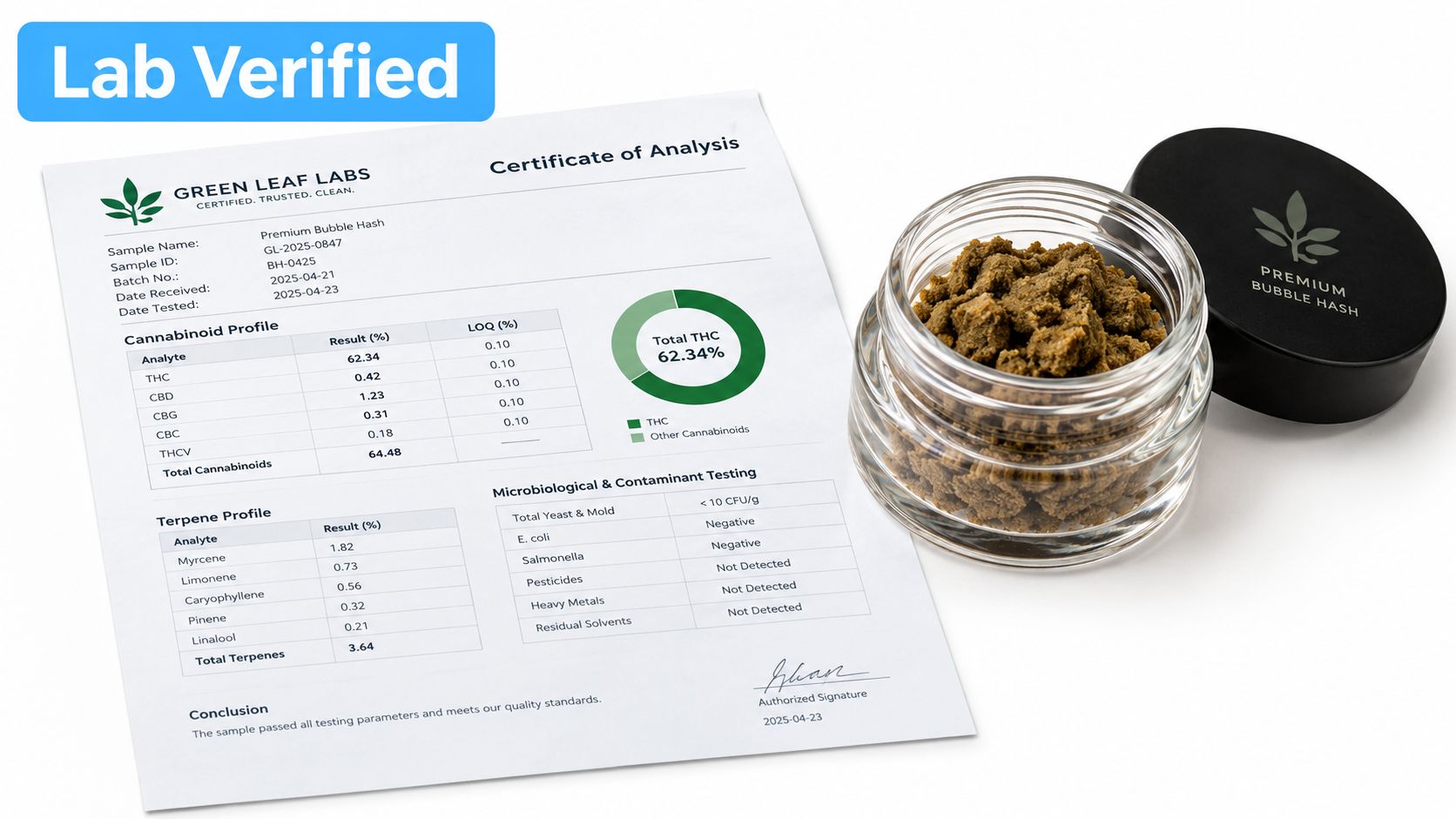
The strongest purchase decision combines several signals: a clear product description, an appropriate use case, disclosed testing, sensible storage, and a seller willing to answer direct questions. If the product is called full melt but the seller can't explain its grade, intended consumption method, or testing record, ask for clarification before treating it as a premium dab.
Strong Strains Cannabis Dispensary offers lab-tested, handpicked cannabis products and knowledgeable guidance for Long Island customers, including concentrates and accessories. Its cannabis lab testing guide provides additional education for shoppers who want to understand testing before they buy.
Visit Strong Strains Cannabis Dispensary in East Setauket for carefully selected concentrates, product education, and budtender guidance on choosing bubble hash that matches your device and experience level. Ask the team about current solventless options, testing information, and convenient in-store pickup or local delivery across Long Island.