
You're standing in a Long Island dispensary, comparing two jars that look almost identical. One label mentions a humulene-dominant terpene profile, and you pause because the phrase sounds technical, even though the aroma may already be familiar. It can remind you of hops in a bitter beer, damp wood, fresh herbs, or a light peppery note.
The natural question is simple: what do humulene terpene benefits mean for a cannabis shopper? Research has linked α-humulene with anti-inflammatory, antimicrobial, gastroprotective, antiproliferative, antiallergic, and appetite-related signals, but most of that evidence comes from cells and animals rather than human clinical trials. A 2024 scoping review mapped 340 studies across these biological categories, which gives humulene an unusually broad research footprint while still leaving important questions unanswered. Read the 2024 review of α-humulene research
The practical takeaway isn't that humulene is a cure or a guaranteed experience. It's that this earthy compound gives you another useful lens for reading a cannabis menu, checking a laboratory report, and choosing products based on more than THC percentage.
A Familiar Aroma With a Surprising Resume
A customer at a Long Island dispensary scans a menu and points to a flower listing. “It says humulene-dominant. What does that deliver?”
That question comes up because terpene names often sound like chemistry homework. Yet humulene itself can be easier to recognize with your nose than with a label. If you've smelled hops in an IPA, rubbed basil between your fingers, or opened a jar of dried sage, you've encountered a similar earthy, herbal character.
The aroma usually doesn't announce itself like a bright citrus terpene. It sits deeper in the profile, adding a woody, dry, hoppy layer beneath sweeter, sharper, or fruitier notes. A humulene-forward flower may smell like a walk through a damp forest, a handful of garden herbs, or the bitter edge of a hop cone.
A useful shopping translation: humulene describes part of the plant's chemical personality, not a guaranteed emotional or medical outcome.
The research is what makes the compound more interesting than a flavor note. Experimental work has found anti-inflammatory activity in several models, including changes in cytokine signaling and inflammatory enzymes. Other research has examined antimicrobial, antiallergic, gastroprotective, antiproliferative, and appetite-related effects. These findings explain why humulene appears in terpene education and strain discussions, but they don't mean a humulene-rich product will reproduce a laboratory result in your body.
That distinction matters when you're comparing humulene with other aromatic compounds. If you're curious about brighter citrus profiles and their reported effects, you can also explore this guide to limonene terpene effects. The point isn't to chase a single “magic” terpene. It's to understand how a full profile may help you choose a product that fits your preferences.
For the shopper in our opening scene, the answer is practical: humulene may contribute an earthy, hop-like aroma and represents a promising area of preclinical research, especially around inflammation. The label is a clue, not a promise.
What Humulene Actually Is
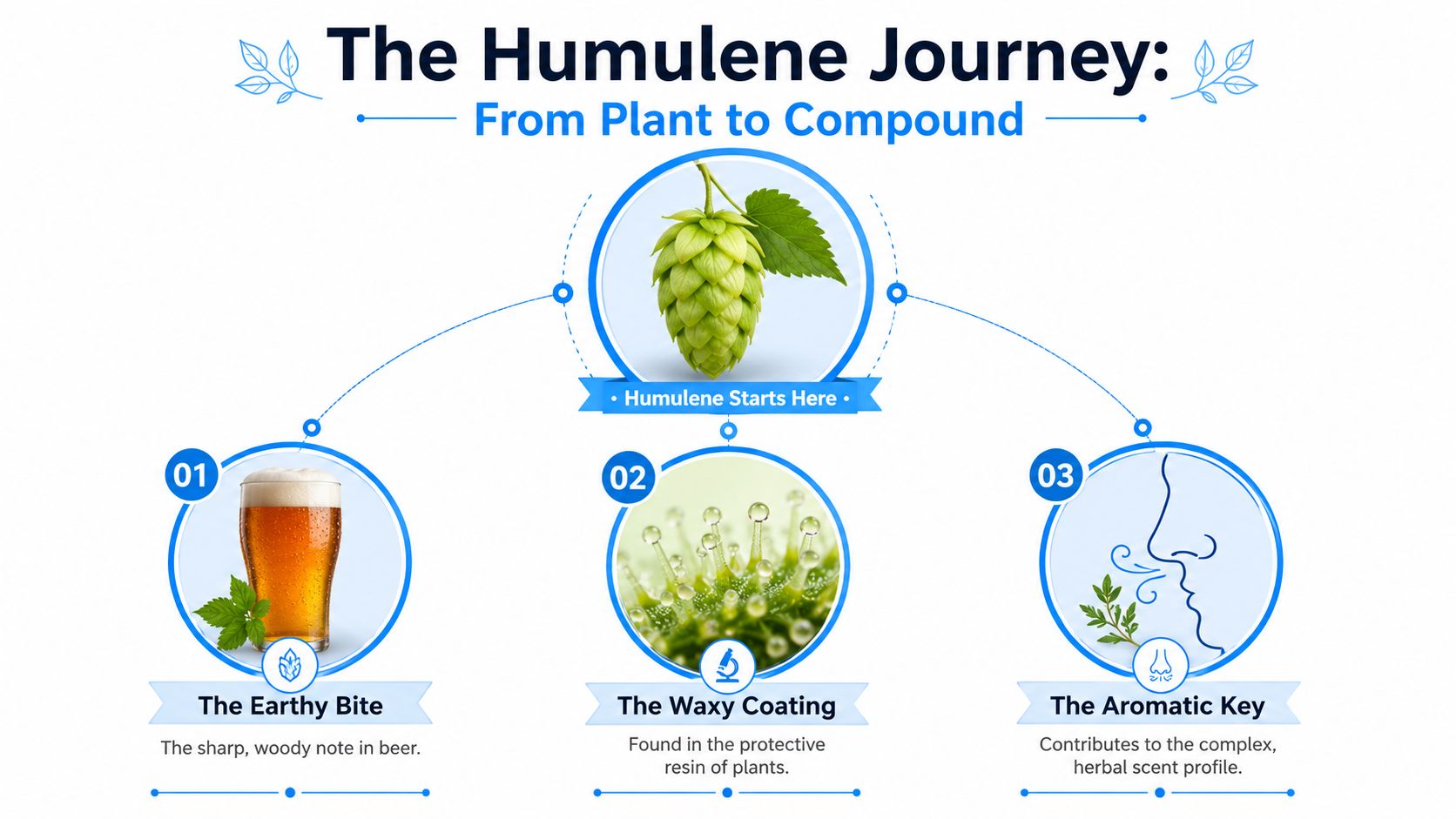
Start with the plant rather than the chemistry. Plants make aromatic compounds for many reasons, including communication, defense, and protection of delicate tissues. Cannabis stores many of these compounds in trichomes, the tiny resin-producing structures that also contain cannabinoids.
Humulene is one of those compounds. It's also present in hops, basil, cloves, and sage, which is why its scent can feel familiar outside a cannabis jar. In hops, it contributes to the sharp, woody, bitter character associated with beer. In cannabis, it becomes one part of a much larger aromatic mixture.
A larger aroma molecule
Chemists classify α-humulene as a monocyclic sesquiterpene with the molecular formula C15H24. That sentence sounds dense, but the useful part is straightforward. A sesquiterpene is a relatively large, heavier aroma molecule compared with familiar cannabis terpenes such as limonene and pinene.
The “monocyclic” label refers to one ring in the molecule's structure. You don't need to memorize the shape to shop intelligently. The classification mainly helps explain why humulene behaves differently from smaller, more volatile compounds.
Cannabis plants produce humulene through a pathway that begins with farnesyl diphosphate, a building block used to make several larger terpenes. Trichomes then store the finished compound alongside cannabinoids and other aromatic molecules. Genetics influence whether a cultivar can produce humulene, while cultivation, drying, curing, storage, and testing determine how much remains in the finished product.
Why storage can change the aroma
Terpenes are volatile, which means they can evaporate or degrade over time when exposed to heat, light, air, or rough handling. A flower batch may begin with a rich earthy profile and lose some aromatic depth if it isn't stored carefully.
Humulene doesn't produce intoxication on its own. The high from cannabis comes primarily from cannabinoids such as THC acting on the body's endocannabinoid system. Humulene contributes aroma and may interact with biological pathways, but it isn't a standalone intoxicant.
That's why a terpene label should be read more like a wine tasting note plus a research clue. It can tell you something meaningful about the product's chemistry, but it can't guarantee how you'll feel.
The Five Reported Benefits Worth Knowing
Humulene terpene benefits are easiest to understand when you separate what researchers observed from what consumers might hope to feel. The evidence is broad, but it remains mainly preclinical. The following categories describe research signals, not approved medical uses or guaranteed effects.
Anti-inflammatory activity
This is humulene's strongest technical area. In a 2024 cell study, α-humulene reduced the pro-inflammatory cytokine IL-6 in a dose-dependent manner at 0.5 and 100 µM, with maximum inhibition reaching 60% versus the LPS reference value at 100 µM. Review the cell-study findings on α-humulene
Animal research adds a broader picture. In a murine airway-allergy model, humulene reduced eosinophil recruitment when administered orally or by aerosol. Another animal study found reduced paw edema alongside lower levels of TNF-α and IL-1β. Research on carrageenan-injected rats also reported reduced production of those cytokines and lower expression of COX-2 and iNOS in the inflamed paw. Read the animal research on α-humulene and inflammatory pathways
Those markers matter because they show activity at several points in the inflammatory process, not just a vague soothing sensation.
Pain-related signals
Researchers have explored humulene in animal models involving inflammation and pain responses. The most defensible interpretation is that pain-related effects may partly follow from reduced inflammatory signaling, rather than proving that humulene acts as a human analgesic.
Humulene also commonly appears with beta-caryophyllene, which has encouraged interest in terpene combinations. Still, combination findings shouldn't be turned into a promise that every product containing both compounds will work the same way.
Appetite-related research
Appetite is where marketing often gets ahead of evidence. Experimental work has examined whether humulene may reduce food intake in mice, which is notable because THC-containing cannabis products are widely associated with increased hunger.
That finding is interesting, but one animal result doesn't establish appetite suppression in humans. A humulene-rich product may appeal to shoppers who want to explore profiles that aren't traditionally associated with strong “munchies,” but personal responses vary and the research doesn't support treating humulene as a weight-management ingredient.
Antimicrobial activity
Laboratory studies have examined humulene against microbes, including certain bacteria and fungi. These findings may help explain why plants produce terpene-rich resins as part of their protective chemistry.
A test-tube result isn't the same as an antimicrobial treatment in a person. Concentration, delivery method, tissue environment, and safety all matter, so consumers shouldn't use cannabis products to treat an infection.
Antiproliferative and anticancer signals
Cell and animal research has investigated humulene in relation to oxidative stress, inflammatory signaling, and cell-cycle pathways. Those mechanisms are scientifically interesting because uncontrolled cell growth involves several overlapping biological systems.
However, preclinical antiproliferative activity doesn't establish that humulene prevents or treats cancer. Human clinical evidence is needed before anyone can make that leap.
| Benefit | Strongest Evidence Model | Consumer Takeaway |
|---|---|---|
| Anti-inflammatory activity | Cell and animal models | The most developed research signal, but not a proven human treatment |
| Pain-related effects | Animal inflammation and pain models | May relate to inflammation pathways, with human effects still uncertain |
| Appetite-related activity | Animal feeding research | Interesting hypothesis, not clinical proof |
| Antimicrobial activity | Laboratory studies | Shows biological activity under test conditions, not infection treatment |
| Antiproliferative signals | Cell and preclinical models | Worth watching, but not evidence of cancer therapy |
For a separate look at cannabis products marketed around inflammation, compare the evidence carefully with this guide to topical cream for inflammation. A topical format, a flower profile, and an isolated compound are different things.
How Strong Is the Evidence Really
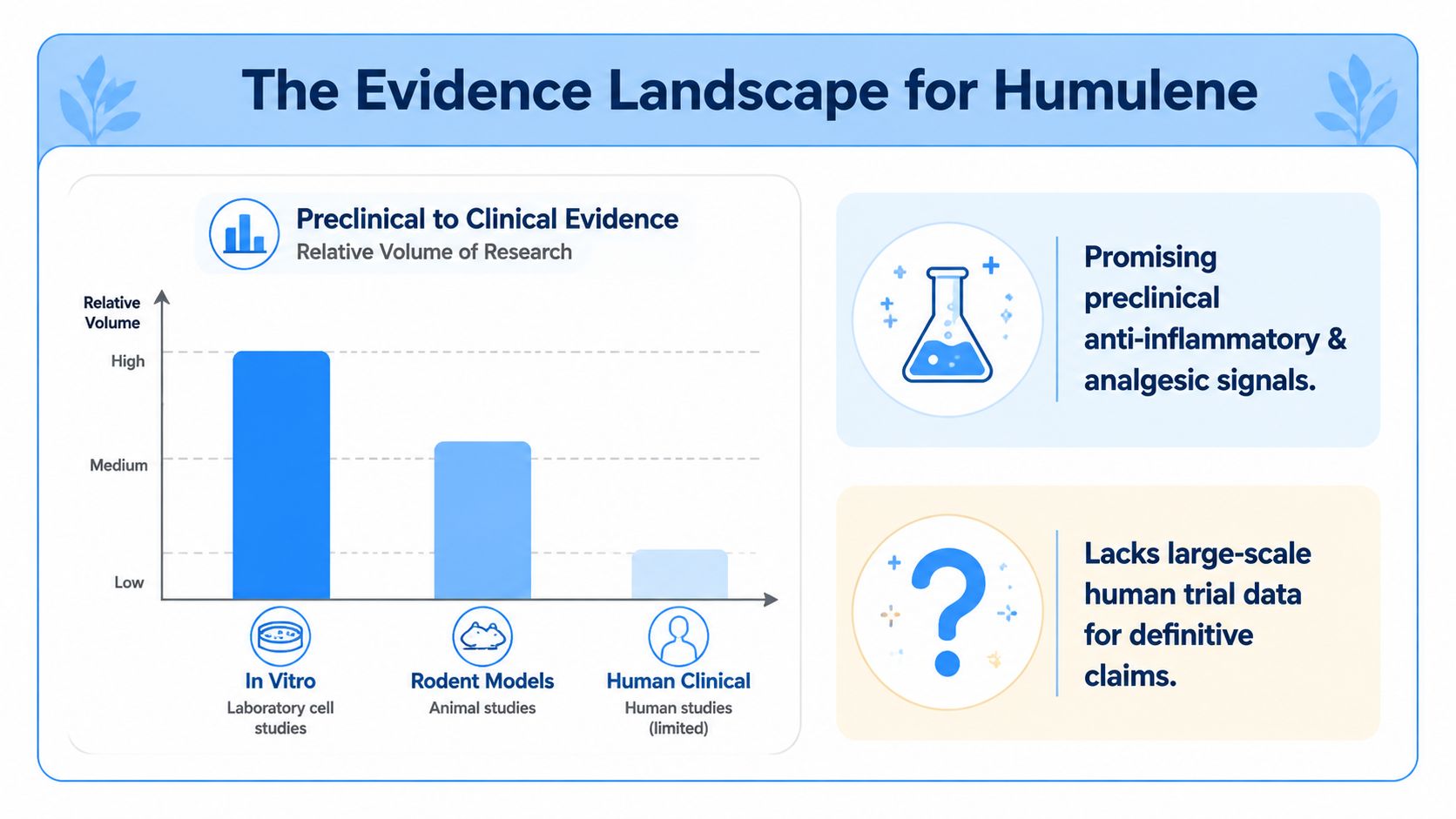
The honest verdict is promising, broad, and unfinished. Humulene has attracted research across several biological areas, yet a large collection of papers is not the same as strong evidence that a particular flower, cartridge, or edible will produce a predictable human result.
A 2024 scoping review identified 340 studies covering those areas. The evidence map cited earlier shows the spread of research models. That breadth means scientists have repeatedly found humulene worth investigating. It does not establish a guaranteed effect for shoppers.
A practical evidence ladder
Most encouraging: anti-inflammatory activity appears in cell studies and multiple animal models, including research involving airway allergy and paw edema. Repeated signals across different models make this the clearest area for further study, while still falling short of proof for treating inflammation in people.
Worth watching: pain-related effects, antimicrobial activity, and antiproliferative signaling have produced useful early clues. The findings remain closely tied to laboratory conditions or animal models, so they cannot support strong consumer promises about pain, infection, or cancer.
Still mainly a hypothesis: appetite effects beyond the limited animal evidence, along with broad claims about how humulene changes a person's cannabis experience. Anecdotes can suggest questions to investigate, but controlled clinical research must answer them.
Evidence rule: as a claim moves from a cell culture toward a human medical promise, it needs more caution and stronger supporting research.
This ranking also helps position humulene beside other cannabis terpenes. Myrcene and beta-caryophyllene receive more attention in consumer education, while humulene remains an emerging compound with credible preclinical support. Interest is reasonable. Hype is not.
The entourage effect explained provides useful context. Cannabis products contain mixtures of cannabinoids and terpenes, so combinations may influence what someone notices. That possibility also makes it difficult to assign one experience to humulene alone, especially when products differ in cannabinoid content, dose, and format.
For a Long Island shopper, the practical takeaway is simple. Use humulene as a profile marker when comparing products and discussing goals such as unwinding without a pronounced appetite cue or easing post-workout soreness. Treat it as one clue, not a diagnostic label or a guarantee of relief.
Where Humulene Shows Up in Cannabis
Humulene rarely gets the headline treatment that limonene or pinene receives. It often appears as one of the leading terpenes on a laboratory report rather than as the central identity of a product.
Classic cultivar examples associated with humulene-rich profiles include Original Glue, also called GG4, Skywalker OG, White Widow, and some heady sativa-leaning varieties. Names can help you form an initial expectation, but they aren't proof of a batch's chemistry. The same cultivar name can express a different terpene balance depending on genetics, growing conditions, harvest timing, curing, and storage.
From genetics to finished flower
A plant may have the genetic potential to produce humulene, but the finished flower still needs careful handling. Drying and curing influence how the aroma develops, while fresh-frozen processing aims to preserve volatile compounds before they disappear through extended drying.
That's why live resin, rosin, and other high-terpene full-spectrum extracts can smell especially vivid. These formats may retain a pronounced plant character, although the exact profile depends on the starting material and manufacturing process. Distillate cartridges are different. Their terpene content may be reintroduced after refinement, so the final profile depends on the brand's formulation rather than occurring naturally in the same way as whole flower.
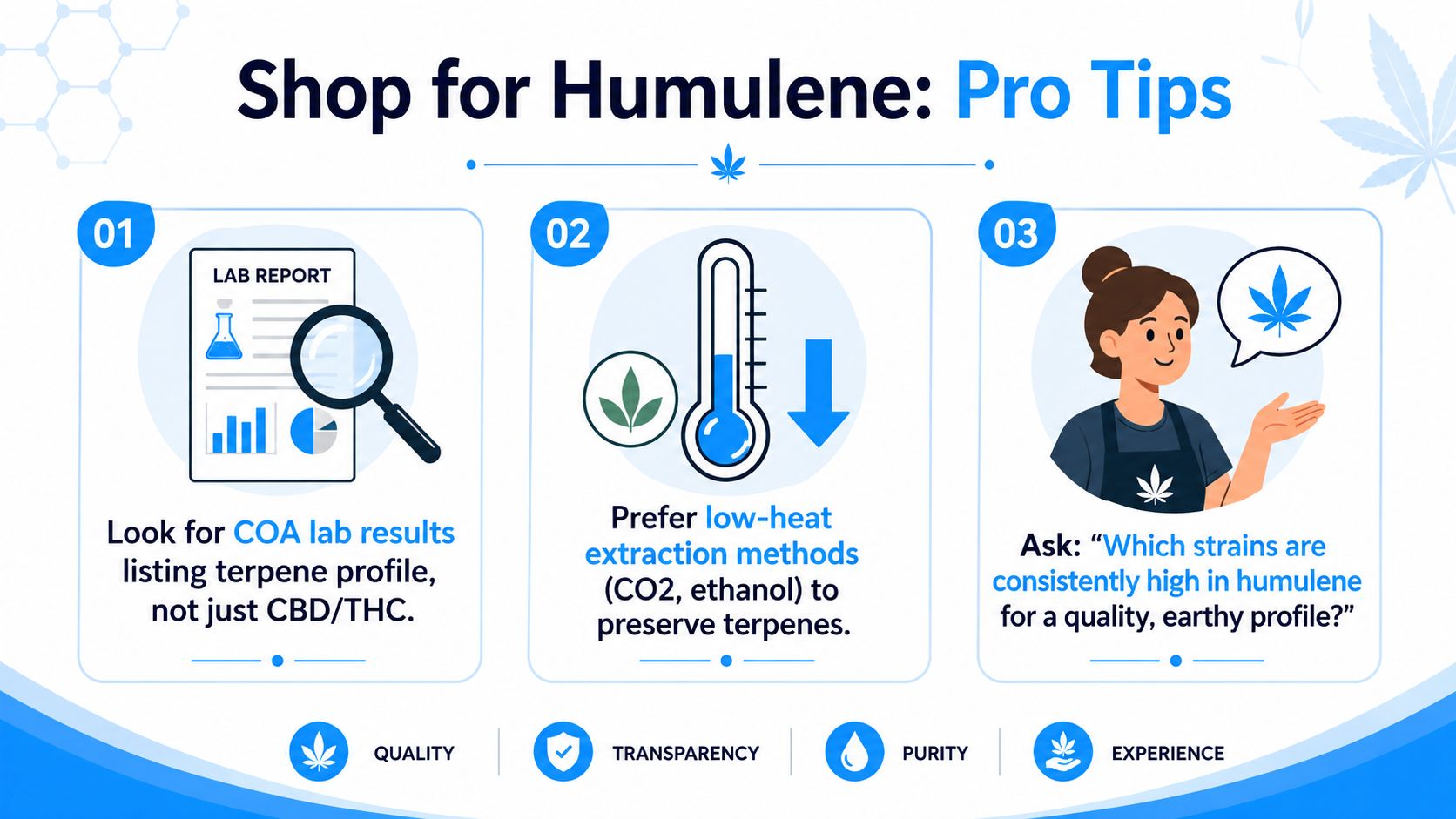
For a shopper in Long Island, the useful move is to connect your senses with the product page and the certificate of analysis. If a jar smells earthy, woody, and slightly hoppy, check whether humulene appears among the listed terpenes instead of relying on aroma alone.
| Format | Humulene presence | What to expect |
|---|---|---|
| Cured flower | Depends on cultivar and handling | Direct aroma from the plant, with batch-to-batch variation |
| Fresh-frozen material | May preserve more volatile character | Brighter, more immediate plant aroma when processed well |
| Live resin | Depends on source material and extraction | Strong terpene expression is possible |
| Rosin | Depends on flower or hash input | Solventless format with profile shaped by the starting material |
| Distillate cartridge | Brand-dependent | Terpenes may be reintroduced after refinement |
A menu listing for GMO, Green Crack, Pineapple Express, or Super Sour Diesel may include humulene in its terpene profile, but the current batch matters more than the name. Look at the report attached to the actual product you're considering.
How to Shop for Humulene Like a Pro
Shop for humulene as a quality signal, not as a promise tied to one consumption method. A terpene profile can help you choose between products, but heat, extraction, storage, and the rest of the cannabinoid formula all shape what reaches you.
Lower-heat use generally preserves more aromatic character than combustion. A dry-herb vaporizer set below 390°F may offer a more terpene-focused experience than smoking, while live resin cartridges and cold-cured concentrates can also retain a noticeable profile. Traditional flower remains useful because you can smell and inspect the material, but combustion sacrifices some volatile compounds. Distillate cartridges deserve a closer look because their humulene content depends on whether and how the manufacturer adds terpenes.
Questions worth asking at the counter
- Check the current COA: Ask for the most recent certificate of analysis for that specific batch.
- Find the top three terpenes: Confirm whether humulene appears near the top rather than assuming the cultivar name guarantees it.
- Ask about post-cure testing: A report taken after curing gives you a more relevant picture of the product you'll buy.
- Compare formats: Ask whether the same profile appears in flower, live resin, rosin, or another extract.
- Describe the aroma you want: “Earthy, woody, and hoppy” gives a budtender a useful sensory starting point.
Strong Strains Cannabis Dispensary lists terpene information on product pages and can help customers compare humulene-containing flower, vapes, concentrates, and other formats in store or through local ordering. Product availability and batch data can change, so ask to see the report connected to the item you're evaluating.
A simple personal test can make terpene shopping more useful. Record the product name, format, cannabinoid strength, terpene profile, amount used, and how the experience felt. Over time, your notes can show whether earthy humulene-forward profiles suit your preferences better than citrus, pine, or sweet profiles.
Here's a visual walkthrough for reading terpene information and thinking about product selection:
Safety, Dosing, and Smart Expectations
Humulene has a long association with food and aromatic plants, but that background doesn't eliminate the need for caution. Human clinical trials on isolated humulene are limited, so consumers shouldn't treat a terpene label as a medical prescription.
Dosing also works differently from taking an isolated capsule. You usually receive humulene as part of flower, vapor, concentrate, edible, tincture, or another cannabis product. The amount can vary by batch and format, which is why it makes more sense to titrate the product slowly than to chase a specific terpene dose.
Be especially careful when combining cannabis with alcohol, benzodiazepines, or other substances that can increase sedation. If you take medication that affects appetite, inflammation, or alertness, ask a qualified healthcare professional about possible interactions before experimenting with terpene-forward products.
Smart expectation: humulene can help you choose a sensory and chemical profile, but it can't predict your entire experience.
Start with a small amount, wait long enough to understand the format, and avoid driving or operating equipment after using intoxicating cannabis. Keep a brief journal with the cultivar, product type, amount, time, aroma, and effects. That record is more useful than assuming a strain name or terpene ranking will behave identically every time.
At Strong Strains Cannabis Dispensary, you can compare lab-tested flower, vapes, concentrates, edibles, tinctures, topicals, and accessories while checking terpene information tied to available products. Visit the East Setauket dispensary or order for convenient pickup or local delivery, and ask the team to help you find a humulene-forward profile that matches your aroma and experience preferences.