
You're standing at a Long Island dispensary counter, holding a jar labeled “lemon-forward.” The aroma is bright and zesty, but the label leaves a bigger question unanswered: does limonene change how cannabis feels, or is it a flavor description?
That question sits at the center of limonene terpene effects. Some shoppers expect a calm, alert experience. Others associate citrus profiles with energy, mood lift, or less THC-related uneasiness. The evidence is more focused than the marketing suggests. Limonene clearly shapes aroma, and controlled human research supports a specific interaction with THC-induced anxiety. Many broader claims, including anti-inflammatory, metabolic, and anticancer benefits, remain preclinical or depend on delivery methods that don't resemble smoking or vaping cannabis.
Why Shoppers Keep Asking About Limonene
A customer might pick up a jar of citrusy flower and ask three questions in one breath: “Is this going to make me sleepy? Will it give me energy? And does limonene really do anything?”
Those are sensible questions because cannabis menus often compress a complicated chemical profile into a few words. Limonene may appear beside a strain name, a terpene percentage, or an aroma note such as lemon peel, orange zest, or citrus candy. The label can tell you what compounds were detected, but it can't promise exactly how your experience will feel.
The confusion grew as limonene moved from familiar non-cannabis uses into cannabis shopping. Citrus peels, fragrances, cleaning products, candles, and essential-oil formulations all use or contain this recognizable aromatic compound. A cannabis menu adds another layer because limonene appears alongside THC, CBD, myrcene, pinene, linalool, and other constituents that may shape the overall experience.
Counter question: Is the shopper asking about flavor, intoxication, anxiety, or medical use? Those aren't interchangeable questions.
The most useful way to approach limonene is to separate five practical issues:
- Identity: What is limonene chemically, and why does it smell citrusy?
- Biology: How might it interact with receptors and signaling systems?
- Evidence: Which effects have been tested in humans, and which remain hypotheses?
- Safety: Does “natural” mean harmless, especially when exposure comes from inhalation?
- Shopping: How can you use a terpene panel and a budtender conversation to choose more intelligently?
By the end, you'll be able to distinguish a clean lemon-peel aroma from a medical promise, recognize the narrow THC-anxiety finding that has the strongest human support, and ask better questions at the counter. That's the point of terpene education: not to predict your experience perfectly, but to replace vague marketing with useful context.
What Limonene Actually Is
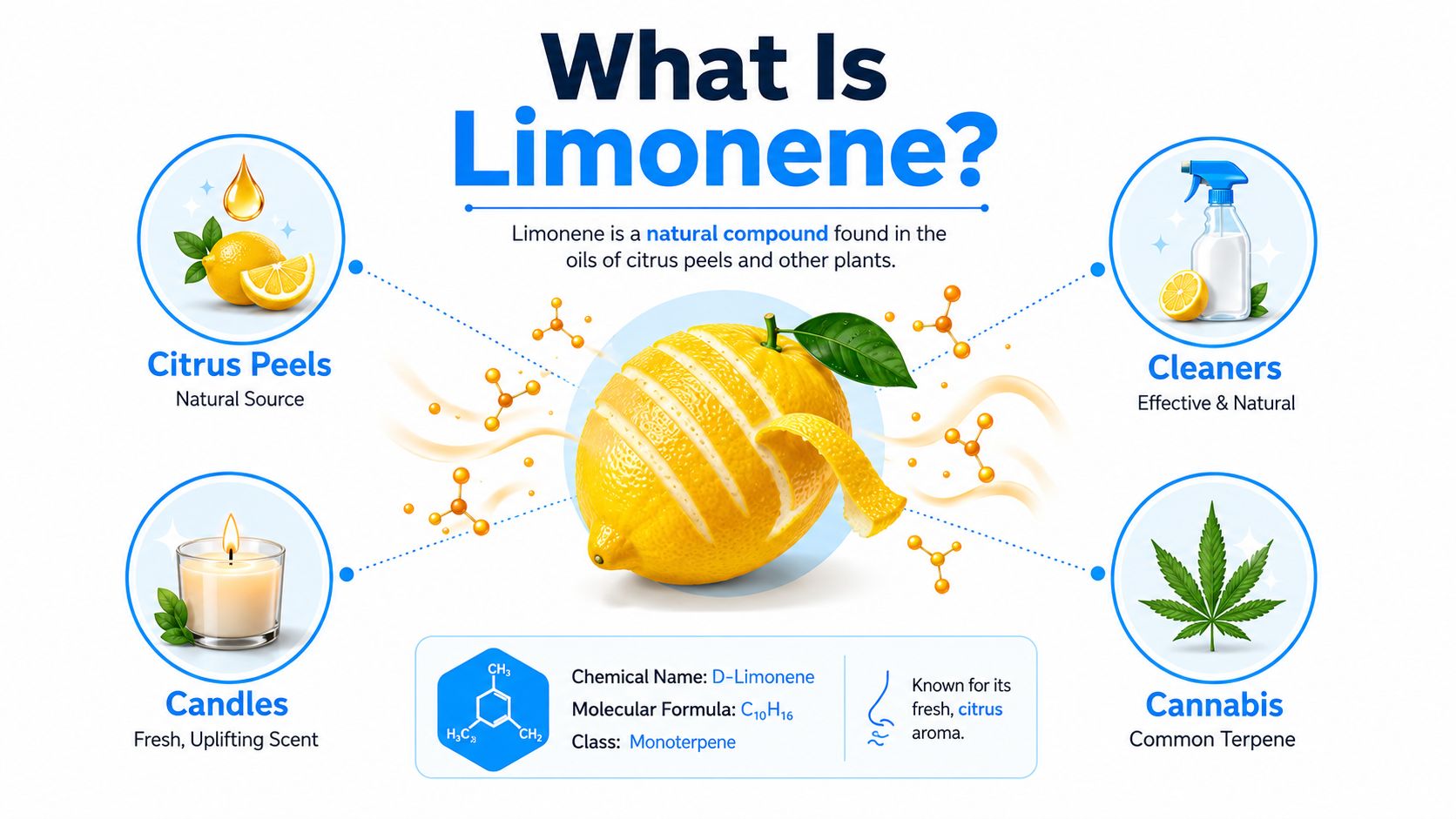
Run a fingernail across a lemon rind and tiny droplets reach the air. Their bright citrus scent comes partly from volatile compounds released by the peel, including limonene. That familiar aromatic identity also appears in orange-peel candles, citrus fragrances, and lemon-scented cleaners, although those products serve very different purposes.
Chemically, limonene is a monoterpene, a small volatile hydrocarbon built from two isoprene units. Monoterpenes are relatively light members of the broader terpene family, so they evaporate readily and often shape the first aroma you notice. Larger groups, including sesquiterpenes and diterpenes, tend to remain differently in plant material and can add deeper, longer-lasting notes.
Cannabis commonly contains d-limonene, the form associated with a citrus aroma. Its mirror-image counterpart, l-limonene, is linked with a piney, turpentine-like smell. The distinction matters because molecules with the same chemical formula can interact differently with smell receptors and create noticeably different sensory impressions.
Where it fits in a cannabis profile
A cannabis terpene profile functions as a layered system. Limonene supplies a high, bright citrus note, while myrcene may add earthy or herbal depth, pinene a sharper evergreen character, and linalool a softer floral tone. The finished aroma reflects the full profile, not one isolated molecule.
A lemon-forward cultivar can smell vivid without producing a specific emotional effect. A product with measurable limonene can also feel different depending on its THC, CBD, other terpenes, freshness, dose, and your own response. Aroma is useful information at a Long Island dispensary counter, but it is not a promise printed in scent.
Limonene also occurs outside cannabis, which makes it easy to encounter unknowingly. Shoppers comparing topical products can find broader context in this guide to essential oils good for skin. Those products do not establish what inhaled cannabis will do. For a wider view of how cannabis compounds coexist rather than act alone, read about full-spectrum cannabis. The citrus label may attract attention, but most limonene marketing goes further than the evidence can currently support.
How Limonene Works in the Body and Brain
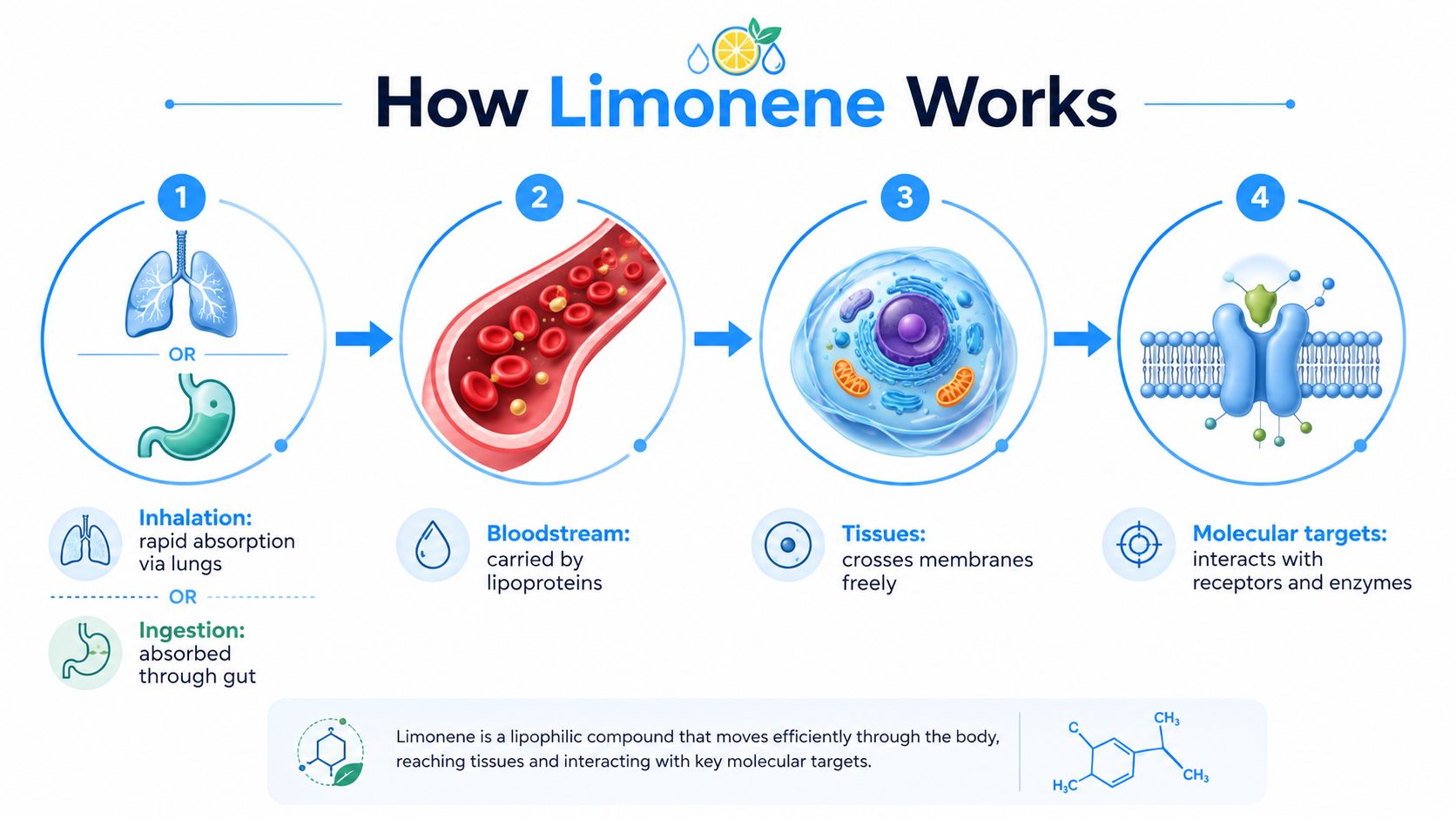
At a Long Island dispensary counter, a shopper may choose a citrus-scented product expecting a particular kind of calm. The biology is more conditional. Limonene's path through the body begins with the route of consumption. Inhalation carries volatile compounds through the lungs, while ingestion sends them through the digestive tract before absorption. After absorption, limonene can move into tissues because its chemical properties let it pass readily through lipid-rich cell membranes. Route, formulation, heat, dose, and metabolism all affect how much reaches a given tissue.
The calm-but-alert dial
Preclinical research has focused on adenosine A2A receptor pathways connected with dopaminergic and GABAergic signaling in the striatum. These systems help regulate communication between brain cells involved in movement, motivation, arousal, and inhibition. In mice, limonene increased tyrosine hydroxylase and GAD-67 protein expression, raised striatal dopamine levels, and enhanced depolarization-induced GABA release in PC-12 cells, according to the PubMed-indexed mechanistic study.
Together, these results suggest that limonene may influence the balance between excitation and inhibition. That mechanism does not establish limonene as a simple sedative. Someone could experience less mental friction or a calmer form of alertness, yet animal and cell studies cannot predict a consistent human sensation.
The clearest human clue concerns limonene used with THC. In the controlled laboratory study described by Johns Hopkins Medicine, participants reported fewer anxious, nervous, and paranoid feelings as the d-limonene dose increased alongside THC. The study did not show that limonene works as an independent intoxicant.
Why pathway language matters
Researchers have also examined signaling related to inflammation, oxidative stress, and pain. Experimental literature describes activity involving ROS production, NF-κB, TLR4, AP-1, and Nrf2. A 2025 study connected pain-relieving and anti-inflammatory activity with the l-arginine, nitric oxide, cGMP, ATP-sensitive potassium channel pathway, along with opioidergic and benzodiazepine receptors. These findings identify biological processes, not a proven cannabis treatment for pain or inflammation.
Metabolism adds another layer of uncertainty. Limonene is processed by enzyme systems that may overlap with medication metabolism, so concentrated exposure can raise interaction questions. People taking prescription drugs should discuss limonene products with a clinician rather than treating plant-derived compounds as automatically interaction-free.
What the Evidence Really Supports
The strongest human evidence is narrow and useful. In a 2024 controlled human laboratory study, vaporized d-limonene combined with THC reduced THC-induced anxiety in a dose-dependent way. The condition containing 30 mg THC and 15 mg d-limonene significantly lowered self-rated “anxious/nervous” and “paranoid” feelings compared with 30 mg THC alone. Limonene by itself produced no acute effects that differed from placebo and didn't meaningfully change other common THC effects, including cognition or physiology, in healthy adult cannabis users. Read the full study in the peer-reviewed report.
That result supports a specific interaction, not a universal promise that a limonene-rich product will prevent anxiety. It also doesn't show that limonene alone creates euphoria, focus, or a reliable mood lift. Anecdotal descriptions such as “happy” or “giggly” may be plausible personal experiences, but they aren't established as a direct, isolated limonene effect.
Sorting the claims
| Claimed Effect | Evidence Type | Human or Preclinical |
|---|---|---|
| Reduces some THC-induced anxious, nervous, and paranoid feelings | Controlled laboratory study | Human |
| Acts through adenosine, dopamine, and GABA-related pathways | Receptor, animal, and cell research | Preclinical |
| Modulates inflammatory signaling | Experimental and review literature | Mostly preclinical |
| Relieves pain through defined signaling pathways | Experimental study | Preclinical |
| Supports anticancer or metabolic outcomes | Experimental and formulation-dependent research | Mostly preclinical |
The broader anti-inflammatory story has biological detail behind it. Studies discuss lower ROS production, reduced NF-κB activity, altered immune-cell migration, and increased Nrf2 activation. Those findings can justify further research, but they don't establish that inhaling limonene-rich cannabis treats an inflammatory condition.
The same caution applies to metabolic and anticancer claims. A mouse study or an in-vitro paper can identify a hypothesis. It can't tell you that smoking flower or using a vape will reproduce the same exposure, concentration, tissue distribution, or outcome.
Evidence rule: If the support comes only from cells or animals, treat the result as a research lead, not a personal health benefit.
Safety reviews also place limonene among the better-characterized terpenes in citrus-derived essential oils. The WHO monograph on limonene discusses its long history of human study, while later safety assessment summarized a reference dose of 2.5 mg/kg/day, a no-observed-adverse-effect level of 250 mg/kg/day, and a margin of exposure of 169. It concluded that d-limonene generally poses no serious human risk, while warning that oxidation products can irritate skin.
For a useful comparison with another cannabis terpene, see this guide to linalool terpene effects. The takeaway isn't that one terpene wins. It's that each claim needs to be matched to the right evidence and route of exposure.
Safety, Exposure, and the Limits of Natural
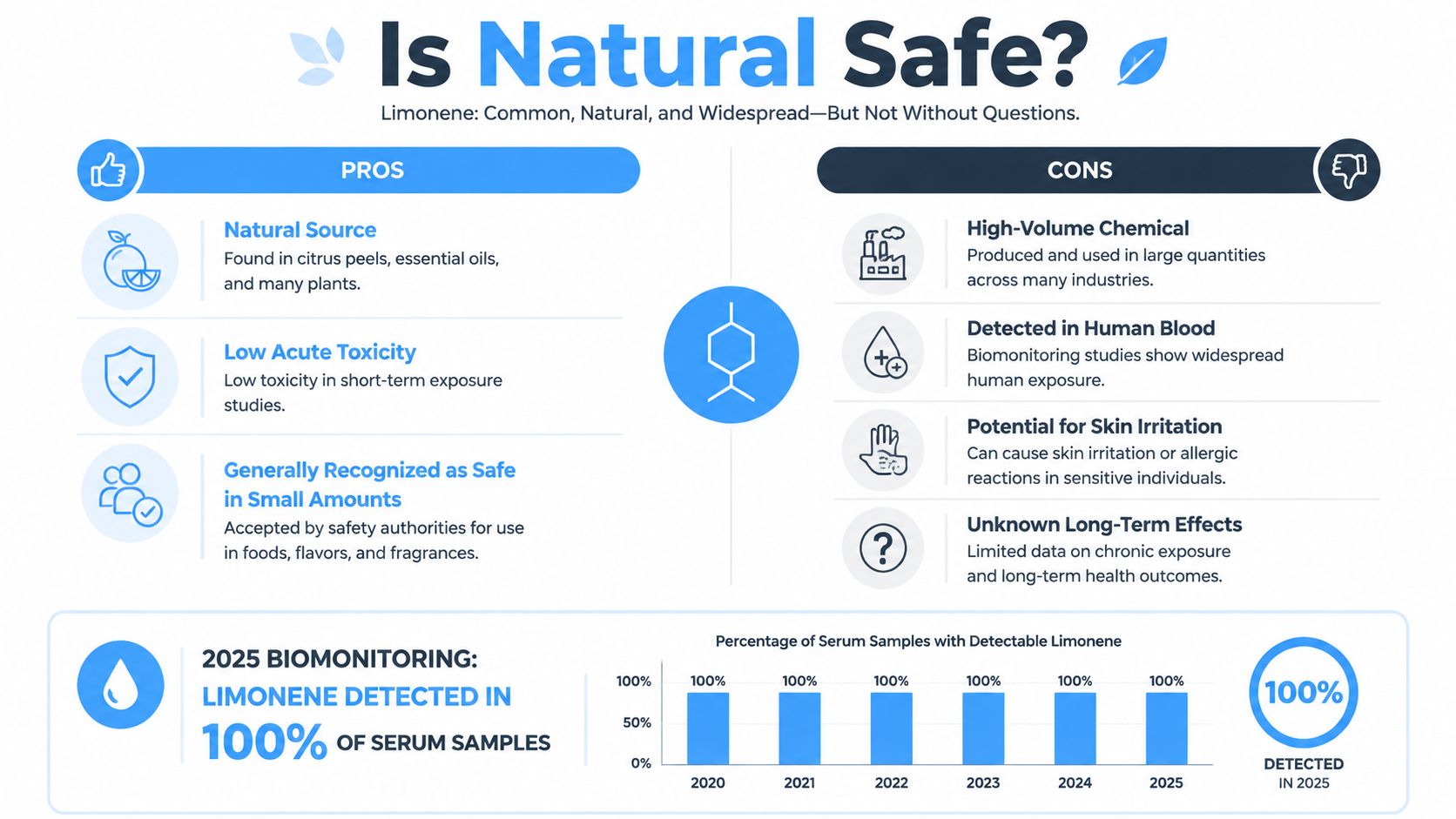
“Natural” describes an origin, not a complete safety profile. Limonene occurs in plants and everyday products, but exposure still depends on concentration, route, freshness, and what happens when heat or oxygen changes the molecule.
A 2025 U.S. population analysis found higher serum limonene among smokers. People smoking 10 to 19 cigarettes per day had 35.8% higher serum limonene, while those smoking more than 19 cigarettes per day had 44.9% higher serum limonene than nonsmokers, as reported in the PubMed-indexed population analysis. The finding broadens the conversation beyond cannabis. Serum limonene can reflect smoking and environmental contact, not a consumer's choice of a citrus-forward cultivar.
Freshness changes the question
Limonene's oxidation products can irritate skin and may behave differently from fresh limonene. That makes storage important for flower, concentrates, and vape products. A stale, poorly stored product isn't equivalent to a fresh one because both list the same terpene.
Use a few practical safeguards:
- Store carefully: Keep flower and vapes sealed, away from heat, light, and excess air.
- Pay attention to flavor: A burnt, harsh, or peppery taste is a reason to stop using a cartridge rather than push through it.
- Don't confuse routes: Food or topical exposure isn't automatically comparable to inhaling heated vapor.
- Ask about testing: A clear lab report can help you evaluate the product, even though it can't predict your individual response.
- Treat pregnancy differently: Pregnant shoppers should consider limonene-rich inhalables unstudied rather than assume they're harmless.
If you're considering essential oils for skin discomfort, a resource on how to soothe itchy skin with essential oils may help explain topical considerations, but essential oils shouldn't be applied undiluted or treated as interchangeable with cannabis products.
For cannabis-specific testing context, review this guide to cannabis lab testing. Safety is better framed as dose, route, freshness, and personal context, not as a simple natural-versus-chemical choice.
Finding Limonene at the Dispensary Counter
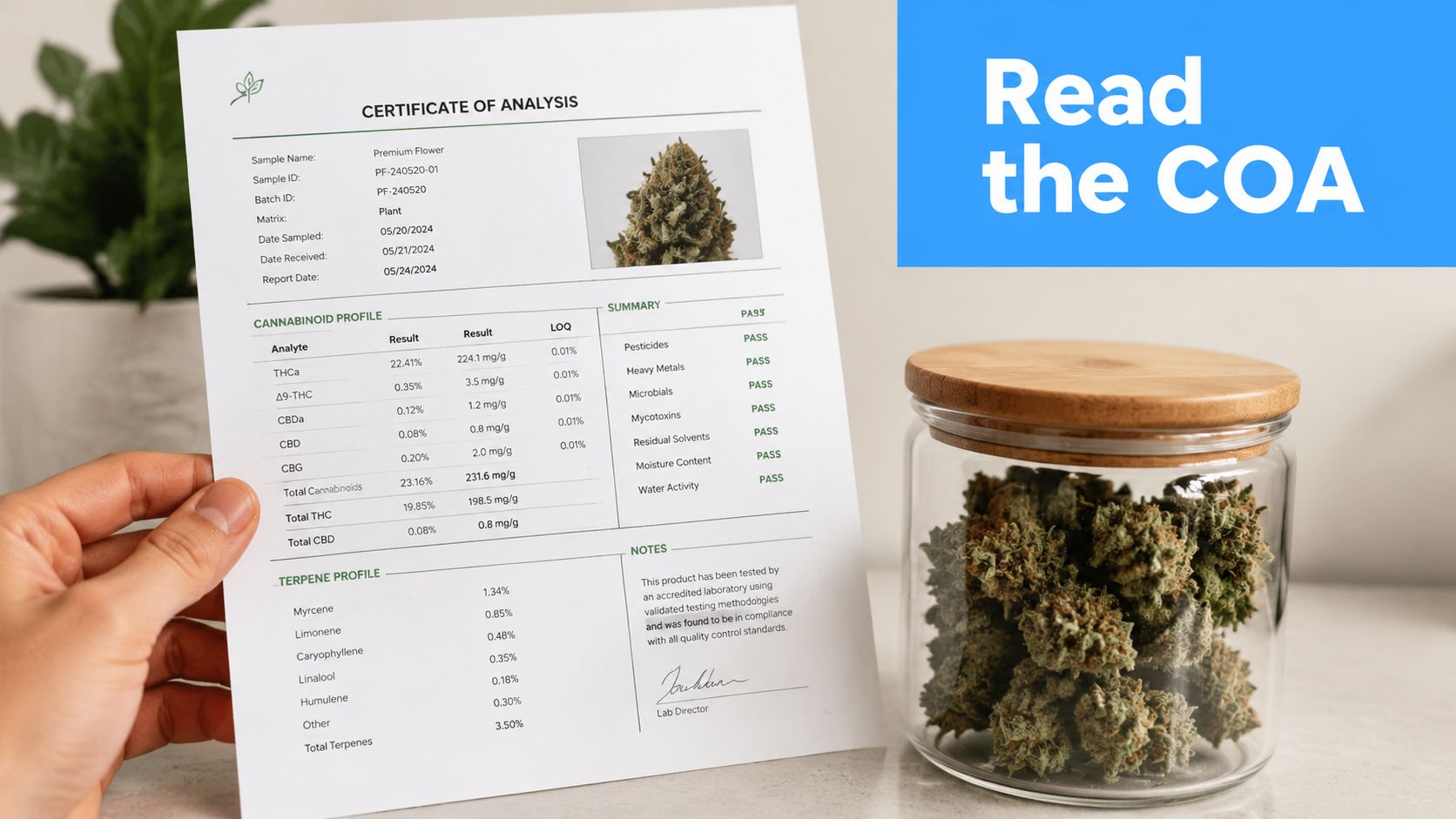
A terpene-forward shopping decision starts with the certificate of analysis, or COA. Find the terpene panel and look for limonene alongside the cannabinoid results. A limonene value above roughly 0.5% by weight is commonly treated as a limonene-forward profile in shopping guidance, but the number still needs context. Genetics set the plant's potential, while drying, curing, storage, and handling determine how much aroma remains in the package.
Read the profile, not just the headline
A product marketed as “citrus” may contain limonene, but the aroma description isn't a substitute for testing. Compare the terpene panel across batches, then check whether the listed cultivar matches the profile you want. Names such as Super Lemon Haze or Lemon Cherry Gelato may suggest a citrus direction, but only the current batch data tells you what was measured.
The product format matters too. Properly stored whole flower can preserve volatile aromas, while solventless rosin and carefully handled fresh-frozen products may retain a more expressive terpene character. Older pre-rolls and high-heat distillate pens can offer a flatter sensory profile, especially if storage or processing has reduced the volatile compounds.
At a Long Island dispensary such as Strong Strains, you can make the conversation more specific by asking:
- Dominant terpene: Which terpene leads this batch, and is limonene present in a meaningful amount?
- Package timing: When was this batch packaged, and how has it been stored?
- Freshness: Which cultivars were freshly cured this week?
- Format: Was the extract made from fresh-frozen material, and what temperature or handling information is available?
- Verification: Can I see the current COA rather than a general strain description?
Use your nose as a second check
A clean lemon-peel zest, orange rind, or bright citrus note can support what the label says. A flat, hay-like, dusty, or harsh aroma may signal that the product no longer matches the experience you expected, even if the printed terpene panel looks attractive.
Don't treat aroma as a dosage meter. Smell can guide preference, but it can't confirm a medical effect or tell you how strongly THC will affect you. The best shopping decision combines the current COA, batch freshness, format, THC level, and your own tolerance.
A Realistic Way to Try Limonene for Yourself
Start with a clear purpose. If you're curious about flavor, choose a fresh citrus-forward product and focus on the sensory experience. If you're wondering whether limonene changes THC-related uneasiness, remember that the human evidence concerns a combination of limonene and THC, not limonene in isolation and not every cannabis product labeled citrus.
A cautious trial can look like this:
- Choose a modest product: Select a lower-THC, limonene-forward cultivar with a current COA. Inexperienced users may start with one to two milligrams of THC equivalent, but that dosing guidance isn't a finding from the limonene study. It's a conservative practical approach, and new consumers should follow local guidance and ask a qualified professional.
- Pick a preservative format: Whole flower used in a suitable vaporizer or a properly handled fresh-frozen cartridge may preserve a more recognizable terpene profile than an old, heavily processed product. Avoid burnt hardware and products with harsh off-notes.
- Change one variable: Don't test a new terpene profile, a new cannabinoid ratio, and a much higher THC dose at the same time. If you do, you won't know what caused the result.
- Keep a short journal: Record mood, anxiety, sleep, THC intensity, flavor, and any throat or skin irritation. Write down the product batch and format.
- Reassess slowly: Give yourself more than one observation before deciding that limonene “works” or “doesn't work.” Individual responses vary, and the controlled human finding doesn't guarantee a repeatable result for every shopper.
At the counter, ask Strong Strains staff about the exact limonene percentage, the terpene-to-THC balance, fresh-frozen handling, package date, and current lab verification. Ask whether the product is intended to be citrus-forward in aroma or whether the terpene panel confirms that description.
Keep expectations grounded. Any mood lift may be modest, and the anxiety-buffering finding required meaningful THC exposure in a controlled setting. If you take blood-pressure medication, acid-reflux medication, or other prescriptions, raise concentrated limonene exposure with your prescriber before experimenting. A terpene label is a useful shopping clue, not a substitute for medical advice.
For a current limonene-forward option, visit Strong Strains Cannabis Dispensary to browse lab-tested flower, vapes, concentrates, edibles, and other formats with knowledgeable in-store guidance. Ask the team to compare terpene panels, freshness, and THC levels so you can choose a citrus profile based on evidence and your own goals.