
You've got a jar that looks, smells, and trims out like regular cannabis, but the label says hemp. That's where most first-time buyers get stuck. The flower can sit on a shelf as compliant hemp, then behave like potent weed the second you heat it, so learning how to use THCA flower starts with understanding what changes in the moment you light it, vape it, or bake it.
For a Long Island buyer, that matters twice. It affects both the experience and the legal comfort level, especially when state rules and federal hemp definitions don't always line up cleanly. If you want to use THCA flower without wasting it or overdoing it, the key is simple, match the method to the chemistry.
Understanding THCA Flower and Why Heating Changes Everything
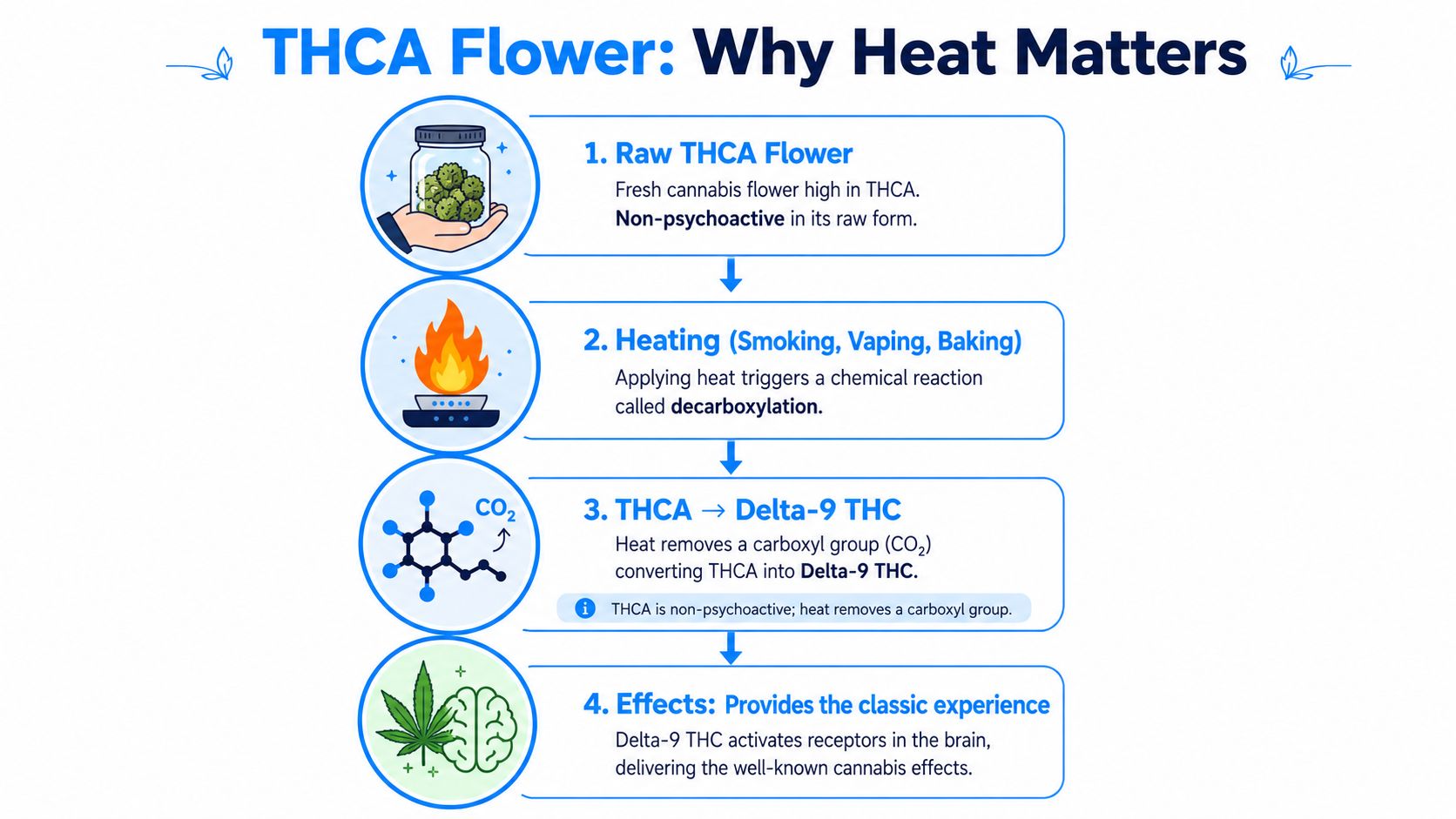
A fresh jar of THCA flower can fool people the first time they see it. It looks like cannabis because it is cannabis, just held in a raw state where the main compound is tetrahydrocannabinolic acid, or THCA, not active delta-9 THC. In that form, the flower doesn't deliver the classic high on its own.
Heat changes that. When you smoke, vape, or bake THCA flower, a decarboxylation reaction strips off the carboxyl group and converts THCA into psychoactive delta-9 THC. That's why a flower that reads as hemp on a lab report can still hit like conventional cannabis once it's heated. The same general chemistry is why smoking or vaping produces the effect, while raw flower stays non-intoxicating.
What the label really means
Lab results for THCA flower often show a high THCA number and a very low delta-9 THC number. A commonly cited conversion efficiency is about 87.7%, so a flower testing at 20% THCA would yield roughly 17.5% active THC after heating, based on the conversion math in the verified data. That's the part many new buyers miss, because they focus on the hemp label and ignore what happens after combustion or vaporization.
The legal distinction also comes from testing. Under U.S. hemp rules, hemp is cannabis containing 0.3% or less delta-9 THC by dry weight at the time of testing. That means a jar can test as hemp before use, then deliver THC effects after heat is applied.
THCA flower exists in the same basic family of cannabis products as other flower sold in dispensaries, and its terpene profile, aroma, and feel can be very familiar. If you want a broader explanation of how terpene combinations change the experience, the breakdown on the entourage effect helps connect that chemistry to real-world use.
Practical rule: raw THCA flower won't behave like a traditional high until you apply heat, so the label alone never tells the full story.
Raw Consumption Versus Decarboxylation
Some people want the raw plant material without intoxication. Others want the high. Those are different jobs, and THCA flower can serve both, depending on how you handle it.
Raw use is the gentle option. People juice it, blend it into smoothies, or toss small amounts into cold dishes when they want to keep the compound in its acidic form. The upside is clear, no intoxication. The trade-off is just as clear, the taste can be grassy and the experience stays mild.
Picking the right path for the goal
Decarboxylated use is the classic cannabis route. Smoking, vaping, baking, and infusing into fats all activate THC, which gives the familiar shift in mood, perception, and body feel. That's the mode most first-time buyers mean when they ask how to use THCA flower.
| Factor | Raw THCA Flower | Decarboxylated THCA Flower |
|---|---|---|
| Main result | Non-intoxicating use | THC effects after heating |
| Common methods | Juicing, smoothies, cold recipes | Smoking, vaping, baking, infusing |
| Onset | Minimal or no noticeable high | Fast with inhalation, slower with edibles |
| Discretion | More discreet, less odor | More smell and more obvious use |
| Equipment | Blender, knife, cold prep | Grinder, lighter, vaporizer, oven, or infuser |
| Best for | People avoiding intoxication | People who want the classic cannabis effect |
The biggest confusion comes from assuming the product name tells you the effect. It doesn't. The effect comes from the method, not the label on the jar.
Raw use keeps the chemistry close to the plant's natural state. Heat turns the same flower into something much closer to dispensary cannabis.
That's why the next choice is practical, not philosophical. If you want discretion and no high, keep it raw. If you want the usual cannabis effect, use a heat-based method and treat it like a potent flower product.
Smoking and Vaping THCA Flower
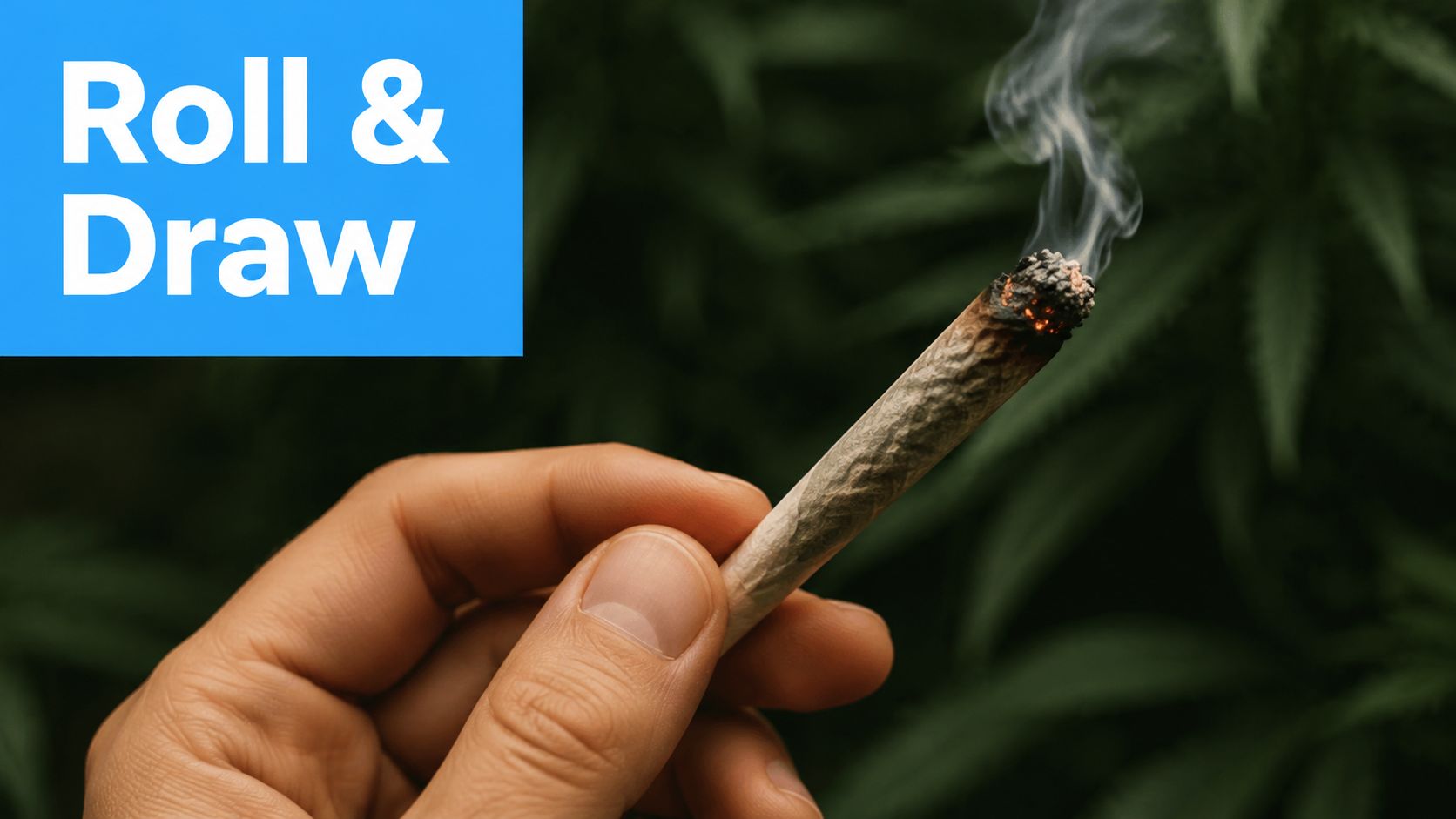
Smoking is the bluntest tool here, in the literal sense. Grind the flower evenly, don't pack it like concrete, and let the air move through the bowl or joint. If you overpack, the flame struggles to heat the material evenly and you waste flower on a hot outer layer and a cold core.
A water pipe cools the smoke, but it doesn't remove THC. That matters because some first-time users assume the water somehow lowers potency. It doesn't. It mainly changes the feel of the inhale, which can make it easier to take smaller sips and pace yourself.
A better way to pace a first session
Start with one or two small inhales, then wait. A lot of people rush the second puff because the first one feels too light, then the effect catches up all at once. That's how people overshoot their comfort zone with flower that seemed harmless at first glance.
A dry herb vaporizer is the more controlled route. Reliable units let you heat flower without burning it, and that matters for flavor as well as session control. Many users prefer a middle temperature range because lower heat preserves more terpene character, while higher heat pulls more activation out of the flower.
The key detail is accuracy. If the device can't hold temperature, you're guessing, and guessing with high-THCA flower is a bad habit. Cheap units that drift into combustion territory can make vaping feel harsher than it should, which defeats the point.
The right session mindset is simple, stop early if you feel the effect building. Leave the rest of the bowl for later, keep water nearby, and don't try to “win” the session by finishing every bit in one go.
Decarboxylation for Tinctures and Edibles
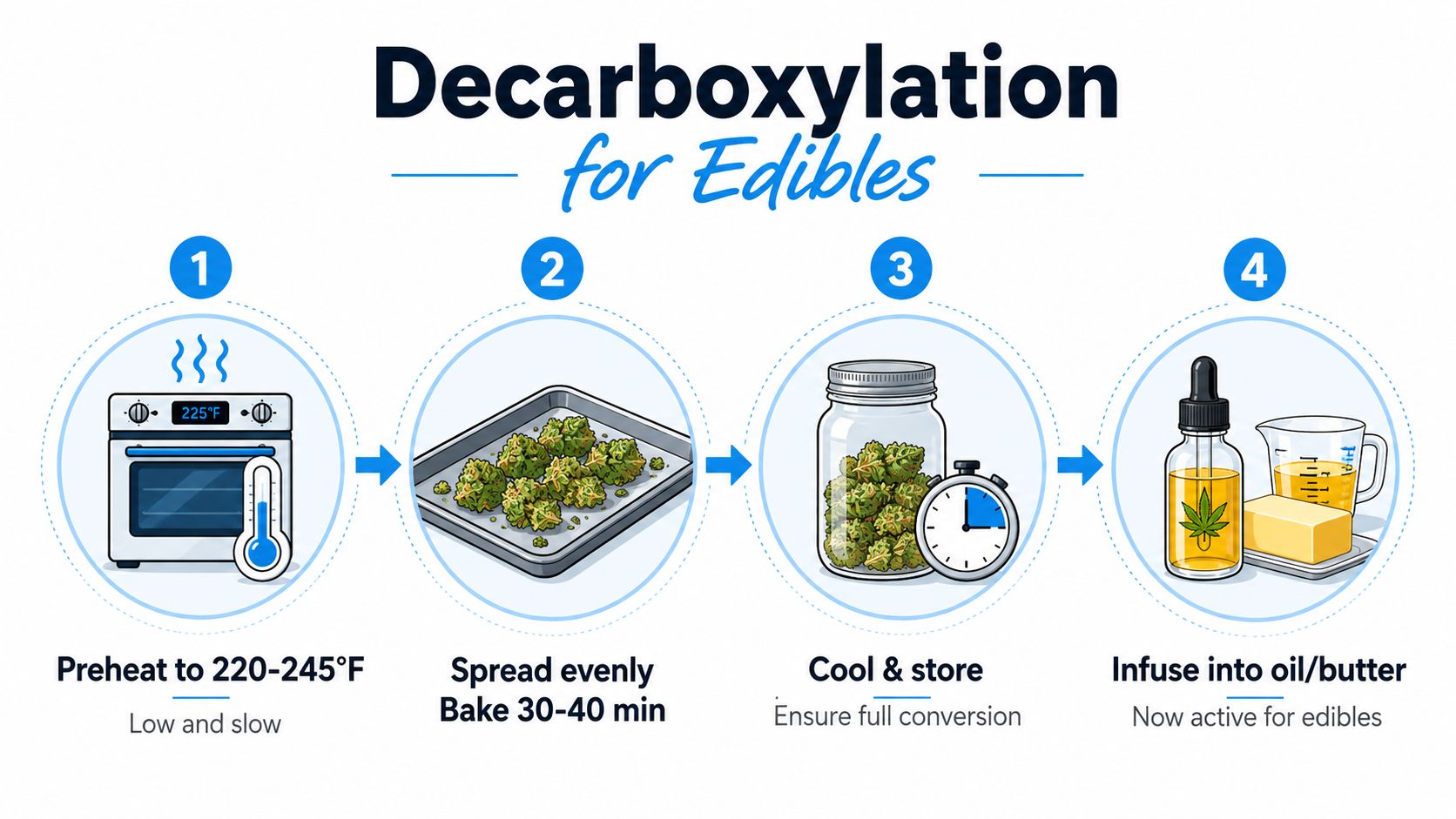
If you want butter, oil, or a tincture with actual THC activity, the flower has to be heated first. Skipping that step leaves a lot of the potency stranded in THCA form, which means the infusion won't deliver the effect many users expect.
Oven decarboxylation is the plainest route. Break the flower into small pieces, spread it on a parchment-lined tray, cover it lightly, and keep the heat in a controlled low range. The verified data supports a practical window around 220–245°F, with common single-point guidance near 230°F for about 60–75 minutes, depending on your setup and how much material you're working with.
Why control matters
If you go too hot, you can damage cannabinoids and lose terpenes. If you go too cool, the THCA doesn't fully convert and your edible ends up weaker than expected. That trade-off is why careful decarb is more about patience than power.
A tincture or butter infusion works after that activation step. Some people use high-proof alcohol and shake the mixture over time, while others use butter or oil on low heat so the active compounds can bind into fat. The exact method depends on how you plan to use the final product, not on the flower itself.
For a deeper look at infusion formats, the cannabis tincture benefits discussion is useful because it shows why some people prefer a measured liquid dose over a baked edible.
Common mistake: opening the oven repeatedly drops the temperature and makes the conversion less predictable.
Edibles also hit differently from inhaled flower. They tend to come on slower and last longer, so the same flower can feel much stronger in a brownie than in a bowl. That's why small portions make sense, especially the first time you test a homemade infusion.
Dosing and Potency for First-Time Users
A lot of THCA flower looks innocent until you read the lab sheet. A jar testing in the 20% to 28% THCA range can translate into a seriously potent smoking experience after heating, which is why the hemp label can give people a false sense of safety. The flower may have entered the room as hemp, but once it's lit, it behaves like strong cannabis.
That's also why one big joint is rarely a beginner move. If a one-gram joint contains about 250 mg of THCA, the heated result can represent a lot of active THC compared with a standard serving size, so there's no reason to treat it casually. The math is what changes the conversation from “it's hemp” to “this is a real potency product.”
Start with a small trial, not a full session
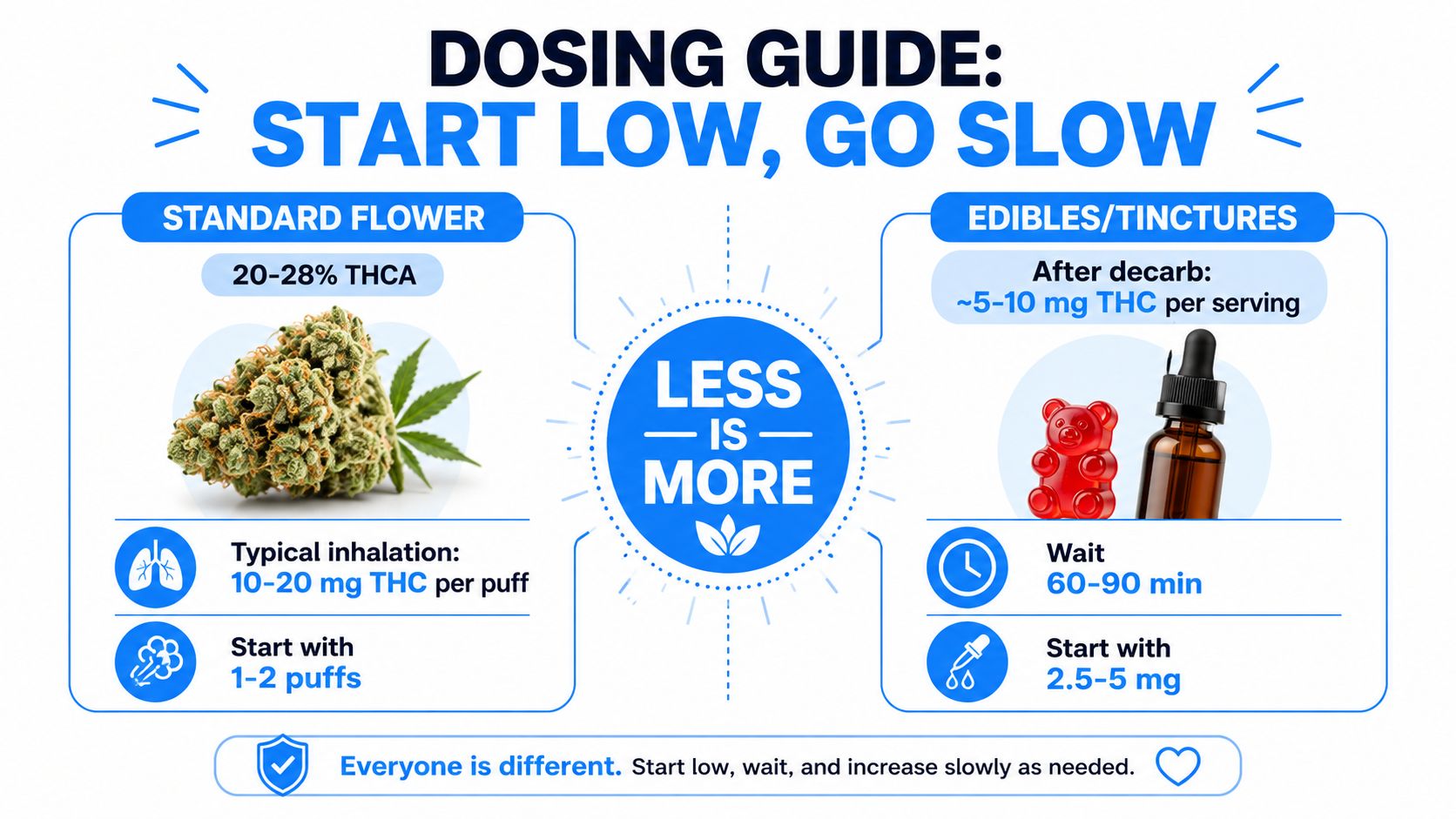
For inhalation, one or two small puffs is enough to learn how a flower feels. Wait a bit before adding more, because the effect can build faster than you expect once the heat has done its work. If you're already sensitive to cannabis, that pause matters even more.
For edibles and tinctures, a small serving of THC equivalent is the smarter entry point, and homemade infusions can vary a lot without lab testing. That means the same recipe can feel mild one day and much stronger the next if the decarb or infusion changed even slightly.
Body chemistry also changes the result. Empty stomach, low tolerance, fatigue, and mixing with other substances can all make the same flower feel stronger. That's why “start low and slow” isn't a slogan here, it's the only sensible way to stay in control.
One more thing matters for new buyers, the hemp label is not a shield once heat is involved. If you smoke it or vape it, you're not using a hemp-like product anymore in any meaningful experiential sense. You're using activated THC flower.
Practical rule: if you can always add more later, don't start with more now.
Legal and Safety Considerations for Long Island Buyers
Federal hemp rules and state cannabis rules don't always speak the same language. Under the 2018 Farm Bill framework, hemp is defined by the 0.3% delta-9 THC dry-weight threshold at testing, and that's why THCA flower can be sold as hemp even when it's obviously capable of producing a high after heating. The legal classification is about the sample before use, not the effect after use.
That creates the gray area Long Island shoppers keep running into. A product may sit on a shelf as compliant hemp, then convert into delta-9 THC once lit, vaporized, or baked. Practical guidance in the market has long relied on that distinction, which is why THCA flower spread quickly in hemp retail channels after legalization.
What to watch in New York and nearby states
State rules have tightened in different ways, and that matters for travel, possession, and what a retailer can sell. Independent regulatory tracking shows changes tied to retailer registration, total-THC testing, and serving caps in some jurisdictions, while other states have moved toward restricting smokable THCA flower. The safest assumption is that rules can shift faster than product packaging does.
For Long Island buyers, that means reading the label isn't enough. You need to know the local rule set, the county context, and whether the product was tested and sold under the right channel. The cannabis lab testing discussion is helpful here because the lab report is the part that tells you what the flower is, not just what the branding says.
A few safety habits are worth keeping no matter where you buy it.
- Keep packaging intact: The original label and lab info help you track what you bought.
- Store it securely: Children and pets should never have access to flower, infused oil, or edibles.
- Avoid state-line travel: Laws can change once you cross a border, so don't assume consistency outside New York.
- Skip public use where it's restricted: Even legal products can create problems if you use them in the wrong place.
- Don't drive after using: If you've heated THCA flower, treat it like any other THC product.
The bottom line is plain. If you want to stay out of trouble, treat heated THCA flower with the same caution you'd use for standard cannabis.
Storing THCA Flower and Bringing It All Together
Good storage keeps THCA flower closer to what you bought. Airtight glass is the safest home for it, not a flimsy plastic bag that lets in air and holds odor poorly. A cool, dark space helps preserve both potency and aroma, and humidity control around the 58% to 62% range is widely used to reduce drying and mold risk.
What ruins flower faster than people expect
Heat is the biggest problem. Guides warn that temperatures above roughly 70°F can accelerate premature decarboxylation, which means the flower can start converting before you ever use it. Light, oxygen, and frequent temperature swings also chip away at quality, which is why a sealed jar in a stable place beats a cabinet you open all day.
If the flower sits too long or gets stored badly, the experience softens. The aroma fades first, then the flavor gets flatter, and over time some of the material can drift toward a more tired, less lively profile. That doesn't mean the jar is unusable, but it usually means the session feels less clean.
A simple buyer checklist keeps things practical.
- Verify the lab report: Check that the product was tested and that the numbers make sense.
- Confirm local legality: Don't assume one county's rules match another's.
- Choose the right method: Smoke or vape for a fast effect, decarb for edibles, stay raw if you want no intoxication.
- Measure the first session: Start with one inhalation or a small edible amount, then wait.
- Store it properly: Use airtight glass, keep it dark, and avoid heat.
- Keep it away from kids and pets: That part never gets optional.
Strong Strains Cannabis Dispensary carries lab-tested flower, vapes, edibles, tinctures, and accessories for Long Island adults who want clear guidance, consistent quality, and responsible dosing. If you're comparing THCA-style products with regulated cannabis options, visit Strong Strains Cannabis Dispensary for in-store pickup or local delivery and talk with a budtender who can help you choose the right format for your tolerance and your day.