
If a cannabis menu says linalool means instant calm, treat that as a starting point, not a promise. Linalool has a strong reputation because of its floral, lavender-like aroma and a substantial body of laboratory research, but the most persuasive findings still come from preclinical models. Your experience can change with the dose, product format, cannabinoid mix, terpene profile, and your own sensitivity.
That distinction matters at the dispensary counter. A linalool-rich flower may feel soft and relaxing to one customer, while another notices mostly its scent or a gentler edge around a strong cannabinoid profile. The useful question isn't “Will linalool sedate me?” It's “What does the evidence support, and how can I choose a product without confusing a terpene label with a medical guarantee?”
The Truth About Linalool Terpene Effects
Linalool isn't a switch marked calm. It's a naturally occurring compound that has shown anxiolytic, sedative, analgesic, anti-inflammatory, antimicrobial, and neuroprotective signals across experimental research, but those signals don't establish a predictable clinical outcome for every cannabis user. A 2021 review described linalool as psychoactive in the broad scientific sense, yet non-intoxicating, with relevance to insomnia, anxiety, depression, cognitive impairment, and pain primarily supported by preclinical work (review of pinene and linalool research).
One frequently cited animal benchmark involved acute linalool at 100 mg/kg administered intraperitoneally, which reduced anxiety-like behavior in mice in a plus maze and restored social interaction in socially stressed mice compared with saline controls (2021 review). That result helps researchers compare experiments. It doesn't translate directly into a dispensary dose, a flower percentage, or a guaranteed human response.
The same caution applies to pain and inflammation. Historical reviews describe multiple possible targets, including opioidergic, cholinergic M2, dopaminergic D2, adenosine A1 and A2A receptors, potassium channels, and nitric oxide pathways (pharmacology review). A broad mechanism can explain why researchers remain interested, but it also means the final experience depends on context rather than one simple receptor story.
Counter rule: Read linalool as a profile clue, not a promise of sedation.
This guide separates what the science supports from common dispensary shorthand. It covers linalool's identity, reported effects, mechanisms, product selection, safety, and the limits of current evidence. The practical takeaway is straightforward: use lab data and your own response, not a strain name alone.
What Is Linalool and Where Does It Come From
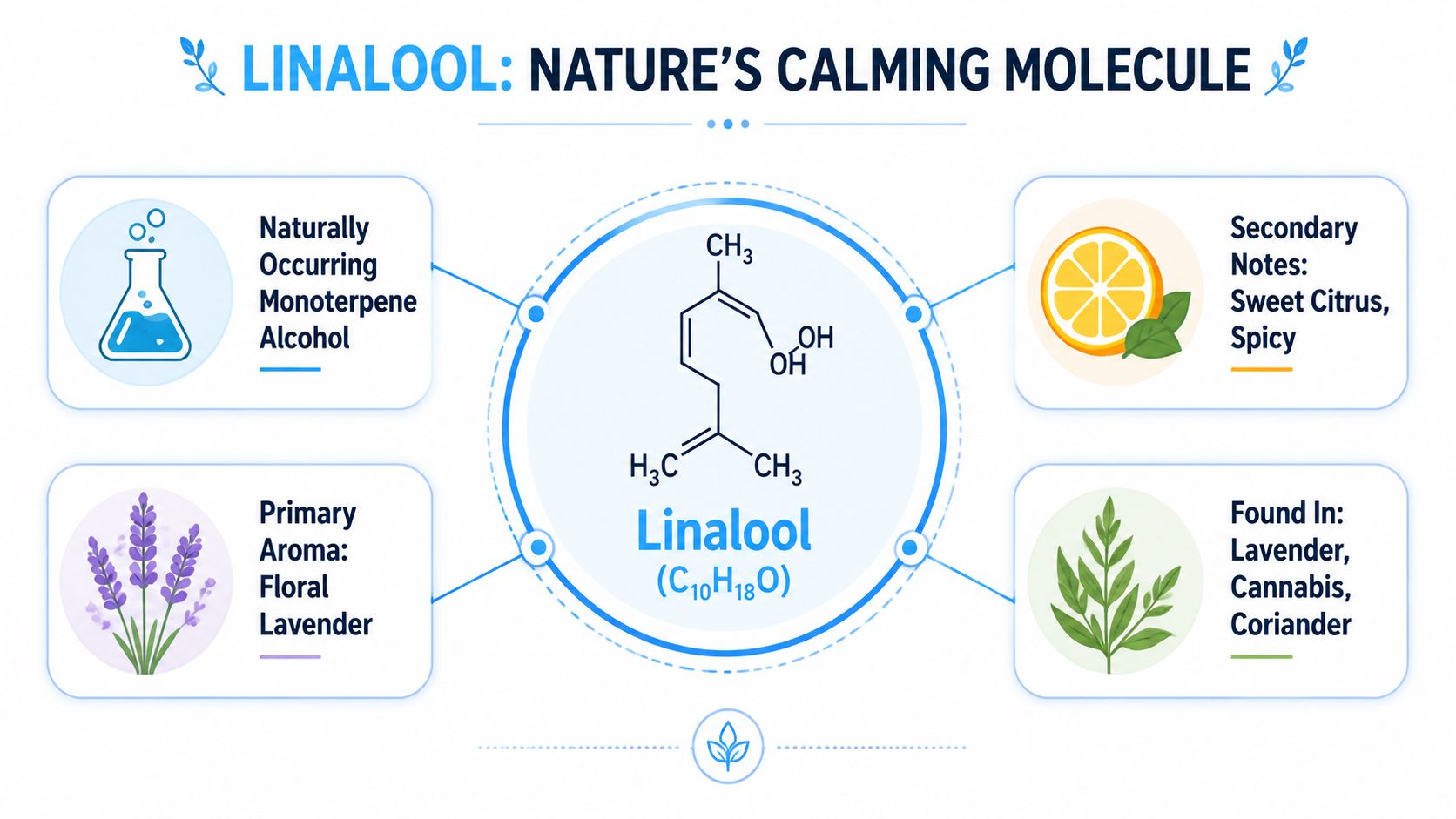
Linalool is a naturally occurring monoterpene alcohol with the chemical formula C10H18O. Terpenes are aromatic plant compounds, and linalool is especially recognizable for a floral, lavender-like scent with sweet citrus, soft spice, and woody undertones. That aroma explains its broad use in fragrance and household products, but scent alone doesn't tell you how a cannabis product will feel.
Plants make linalool for their own biological reasons, including interactions with insects, microbes, and pollinators. It appears across more than 200 plant species, including lavender, mint, cinnamon, coriander, citrus, and cannabis. If you're comparing botanical fragrance profiles outside cannabis, a guide to how to choose lavender oil for candles can help explain why source, aroma, and intended use matter.
Cannabis produces linalool in its trichomes alongside cannabinoids and other terpenes. The amount can vary between cultivars and batches because genetics, cultivation conditions, harvesting, curing, storage, and testing all influence the final profile. That's why two products carrying a similar strain name may smell noticeably different or produce different impressions.
Why the molecule has two forms
Linalool exists as two mirror-image forms, called enantiomers, known as (R)-linalool and (S)-linalool. Their structures are closely related, but their scent profiles and pharmacological properties can differ. Researchers continue to study whether those differences affect aroma perception, biological activity, or the way a product feels.
That chemistry is one reason a budtender shouldn't reduce the conversation to “lavender equals sleepy.” The plant matrix, the cannabinoid pairing, the other terpenes, and the route of administration all matter. For a broader foundation on cannabis chemistry, see this explanation of full-spectrum cannabis.
Reported Effects of Linalool on Mind and Body
The strongest linalool story begins with preclinical evidence, not sweeping human claims. Reviews published across 2008, 2015, and 2021 describe repeatedly reported analgesic, anxiolytic, sedative, anti-inflammatory, local anesthetic, antimicrobial, and anticonvulsant effects, while also emphasizing that human trial data remains limited (pharmacology review; 2021 review).
Anxiety and relaxation
Animal studies have reported reduced anxiety-like behavior after linalool exposure. The 100 mg/kg intraperitoneal mouse result is a benchmark in this literature, but it shouldn't be treated as a consumer dosing recommendation (2021 review). Human autonomic research also reported that inhaled linalool promotes parasympathetic nervous system dominance, a physiological pattern associated with rest and recovery rather than simple intoxication (human autonomic study).
Sedation depends on exposure. A review summarized inhalation of 1% and 3% linalool for 60 minutes as producing sedation without significant motor impairment in the studied model (toxicology review). That finding supports a possible calming profile, but it doesn't establish how a cannabis vape, flower, edible, or tincture will affect you.
Pain and inflammation
Linalool has shown antinociceptive and anti-inflammatory activity in animal models. In carrageenan-induced paw edema, a pure enantiomer produced delayed, prolonged edema reduction at 25 mg/kg, while the racemate was significant only at one hour after challenge. Higher doses didn't add benefit, suggesting a ceiling effect rather than a simple “more is better” pattern (anti-inflammatory and antinociceptive study).
Related work describes reduced phosphorylation of IκBα, p38, JNK, and ERK, along with lower TNF-α and IL-6 in macrophage and in vivo models (anti-inflammatory study). Those findings make linalool relevant to inflammation-linked pain research, not proof that a linalool-rich product treats a chronic condition.
| Effect | Evidence level | Proposed mechanism | Key study notes |
|---|---|---|---|
| Anxiety modulation | Preclinical, with limited human physiological evidence | Multiple neurotransmitter and autonomic pathways | Mouse behavior changed after specific exposure; inhalation research reported parasympathetic dominance |
| Sedation and relaxation | Preclinical | Olfactory pathway and broader inhibitory signaling | Inhaled concentrations produced sedation without significant motor impairment in the cited model |
| Pain modulation | Preclinical | Opioidergic, cholinergic, dopaminergic, adenosine, potassium-channel, and nitric oxide pathways | Animal models show antinociceptive activity and a possible ceiling effect |
| Inflammation | Preclinical | Reduced inflammatory signaling and cytokine expression | Paw-edema and macrophage findings support further study |
| Antimicrobial and neuroprotective activity | Early-stage research | Multiple cellular and tissue pathways | Interesting secondary research areas, not established consumer treatments |
A calm home environment may support the same general goal as a carefully selected aroma profile. Readers interested in that broader setting can explore mini plant decor benefits, while keeping environmental relaxation separate from evidence about cannabis pharmacology.
How Linalool Works in the Brain and Body
Linalool interests researchers because of its multi-target activity. It appears to influence several systems involved in excitation, inhibition, inflammation, pain signaling, and autonomic balance. That broad reach may help explain why products with linalool can produce different experiences, depending on the full chemical profile and the route of administration.
Inhibitory and excitatory signaling
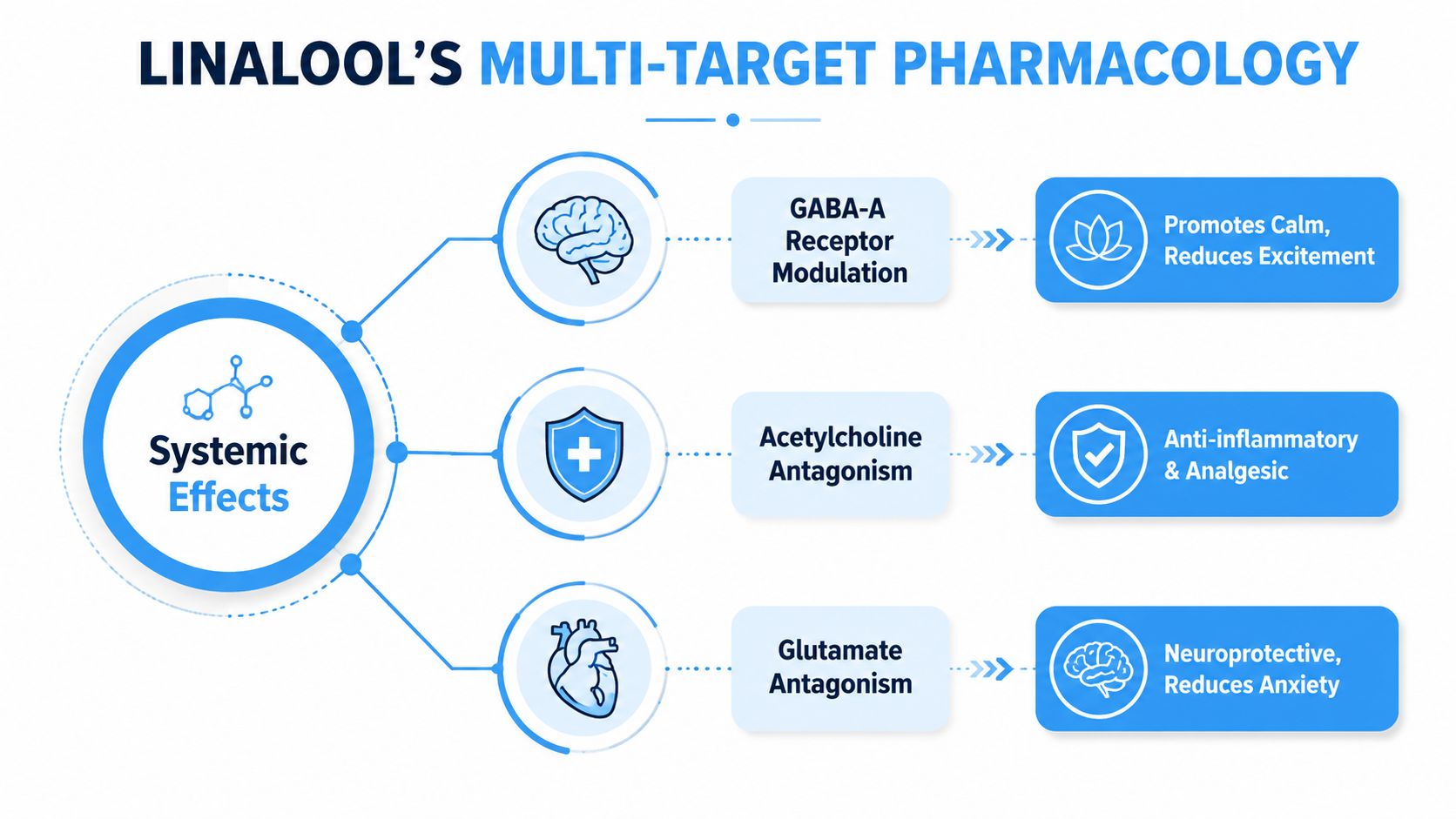
Mechanistic research has examined linalool's relationship with GABAergic signaling. The available evidence does not support treating it as a benzodiazepine or assuming the same risk profile. In a rat study, linalool's sedative effect occurred at least partly through the olfactory pathway, rather than only through GABAA receptor modulation (olfactory pathway study).
Reviews also describe regulatory effects on glutamatergic transmission. Glutamate helps drive excitatory communication in the nervous system, so influencing both inhibitory and excitatory signaling could affect arousal or stress responses. That remains a mechanistic explanation, not proof that a linalool-rich cannabis product will produce a predictable calming effect.
Pain and inflammatory pathways
Pain research connects linalool with several possible routes, including opioid, cholinergic, dopaminergic, and adenosine receptors, along with potassium channels and nitric oxide production (pharmacology review). Separate inflammation studies describe effects involving IκBα, p38, JNK, ERK, TNF-α, and IL-6 (anti-inflammatory study). The useful comparison is a network of signaling routes, rather than one isolated “pain receptor.”
Product format adds another layer. Inhalation brings aroma and active compounds through the respiratory route, while an edible or tincture introduces different absorption and timing variables. A terpene percentage on a certificate of analysis shows what the laboratory measured. It cannot predict the exact response of your nervous system.
Where cannabis synergy fits
Linalool's interaction with THC or CBD remains an active research question. A 2026 preclinical report examined repeated inhalation in female mice and found measurable stress-related behavioral changes. The report also found stronger effects when sub-effective linalool was combined with CBD. The exposure pattern, animal model, and behavioral measures do not establish a consumer-level outcome (discussion of the 2026 preclinical report).
Mechanism isn't a menu guarantee: A plausible interaction between linalool and cannabinoids can guide research, but it can't predict your exact response.
Readers exploring lifestyle factors related to cognition can review brain health for professionals for broader context. That material should not be treated as evidence that linalool treats cognitive impairment, because current human data cannot support that claim.
Cannabis Strains and Products Rich in Linalool
Strain names are useful for conversation, but they're not laboratory guarantees. Lavender, Amnesia Haze, and Do-Si-Dos are often discussed in connection with floral or linalool-forward profiles, yet the actual terpene composition can change by grower, harvest, cure, and batch. A product's current certificate of analysis is more useful than a name printed on a menu.
Compare the format, not just the cultivar
Whole flower can preserve a broader terpene matrix, although heat, air, and light can alter volatile compounds. Concentrates may offer a stronger overall experience, but extraction can change the original balance, and some products reintroduce isolated or blended terpenes after processing. Terpene-enhanced edibles and vapes require extra attention to the ingredient panel because the listed linalool may be reintroduced rather than retained from the plant.
| Strain or product type | Linalool level | Dominant cannabinoid pairing | Best for | Format trade-offs |
|---|---|---|---|---|
| Lavender-style flower | Confirm on current COA | Confirm THC, CBD, or balanced profile on the label | Floral aroma and a potentially softer evening profile | Batch variation and heat-related terpene loss |
| Amnesia Haze | Confirm on current COA | Often discussed as THC-forward, but verify the batch | Customers seeking a brighter profile with floral notes | Strain name doesn't establish linalool abundance |
| Do-Si-Dos | Confirm on current COA | Verify cannabinoid potency and minor cannabinoids | Experienced shoppers comparing earthy and floral profiles | Potency and terpene balance can vary by producer |
| Live resin or other concentrates | Confirm whether native or reintroduced | Usually cannabinoid-forward, verify testing | Strong flavor and concentrated cannabinoid experience | Processing can shift the original terpene matrix |
| Tincture or edible | Check the ingredient and lab documentation | Verify cannabinoid ratio and serving information | Customers who prefer measured, non-inhaled formats | Onset and absorption differ from inhalation |
| Terpene-enhanced vape | Check source and formulation | Verify the cannabinoid base | Shoppers prioritizing a consistent flavor concept | Added linalool isn't identical to a full flower profile |
At a Long Island counter, ask to see the terpene panel, not just the front label. Look for linalool's reported percentage, the test date, and whether the formulation identifies terpenes as cannabis-derived, botanical, or reintroduced. Strong Strains product information, for example, can include linalool in terpene attributes, and one Blue Burst listing reports linalool at 0.04% (Blue Burst strain page). That illustrates why the number belongs to the batch and product, not automatically to every version of a strain.
If your priority is sleep, compare the full cannabinoid and terpene profile rather than choosing by “indica” language alone. This guide to indica strains for sleep can serve as a starting point, but the current COA should make the final call.
Practical Dosing and Safety Tips for Linalool
A cannabis label rarely tells you the exact milligram amount of linalool you'll receive. Start with the terpene percentage, the cannabinoid strength, and the product's route of administration, then pay attention to your own response. Preclinical concentrations are controlled research conditions, not a direct dosing chart for flower or vape products.
A cautious way to test your response
Choose a transparent product. Ask for a current COA showing linalool and the cannabinoid profile. If you want to isolate the terpene's possible contribution, avoid beginning with the most potent cannabinoid product on the shelf.
Change one variable. Try one format and keep the session simple. Don't combine a new linalool-rich product with alcohol, sedative medication, or several unfamiliar products.
Track the experience. Note aroma, onset, relaxation, alertness, discomfort, and unwanted effects. A short record is more useful than assuming every lavender-scented product will behave the same way.
Store it properly. Keep flower and concentrates in airtight packaging in a cool, dark environment. Avoid leaving products exposed to air, light, or heat, and avoid pre-grinding flower long before use.
Oxidation and concentration affect risk. Independent toxicology material reports that unoxidized linalool generally presents low skin-sensitization concern, while oxidized forms can be more irritating. Human assessments found no irritation at 20% linalool in volunteer testing, mild irritation at 32%, and slight skin irritation with moderate eye irritation in broader assessments (linalool safety assessment).
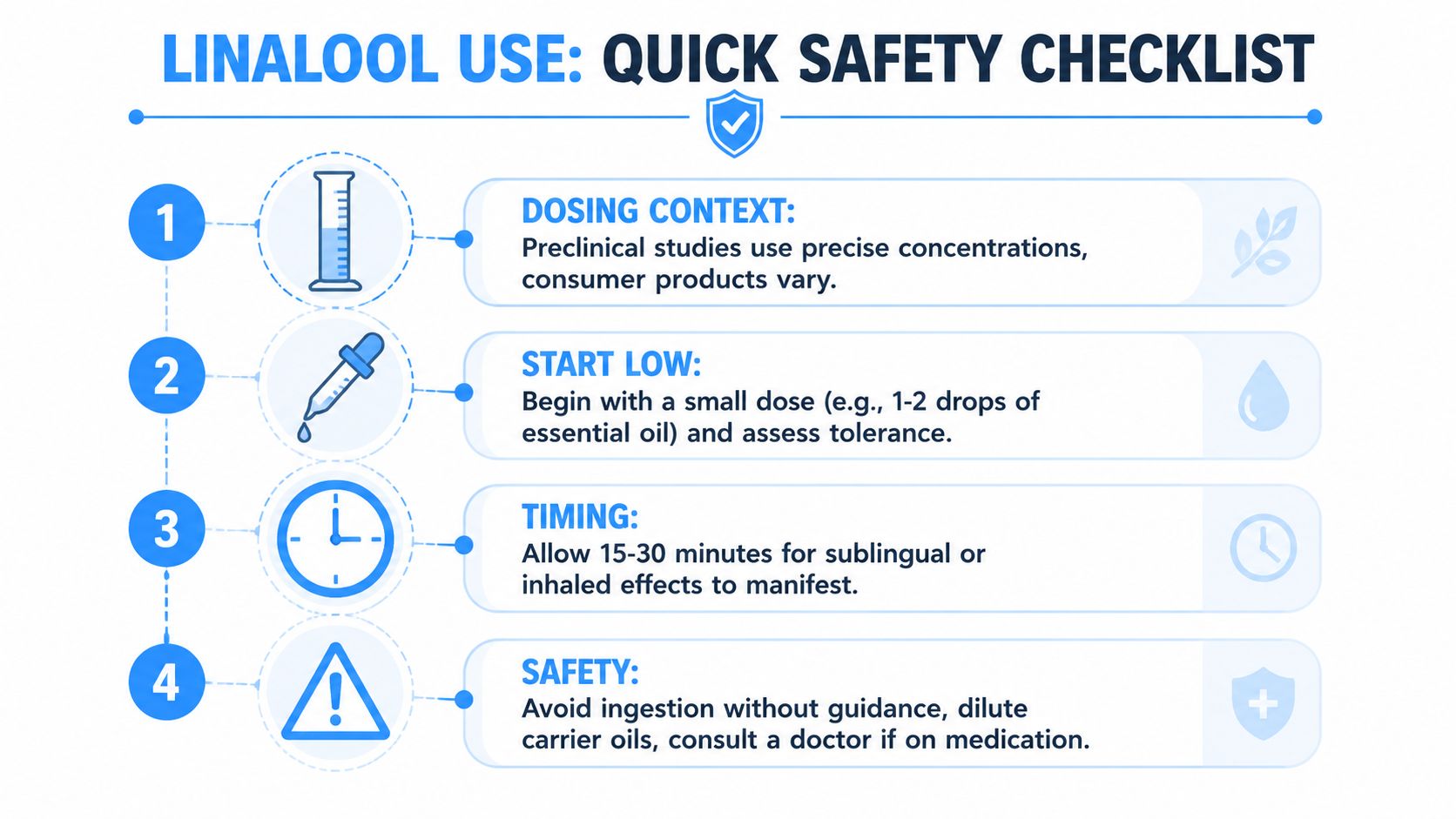
Safety first: Don't ingest essential oil or apply concentrated linalool directly to skin without appropriate formulation and professional guidance.
People taking CNS depressants or other sedating medications should speak with a physician before using products intended to promote relaxation. For shoppers comparing sleep-oriented tinctures, this resource on tinctures for sleep can help frame the product-format conversation, but it isn't a substitute for medical advice.
The Future of Linalool Research and Use
Linalool research is moving toward better questions: which enantiomer matters, which delivery route produces a reliable exposure, how cannabinoids modify its activity, and which outcomes can be reproduced in humans. Researchers continue to face the same central limitation. Much of the strongest evidence remains preclinical, while clinical evidence for anxiety, pain, sleep, and cognition is still comparatively limited (2021 review).
Product development may eventually make terpene use more predictable through standardized blends, nano-emulsified formulas, and precision-dosed inhalables. Those formats could improve consistency, but a polished delivery system won't automatically turn an early-stage molecule into an established therapy.
Consumers can stay grounded by checking peer-reviewed research, reading the full certificate of analysis, and treating phrases such as “calming,” “sleepy,” or “pain relieving” as marketing descriptions unless clinical evidence supports them. Linalool is a compelling, non-intoxicating terpene with genuine research potential, but its story is still being written.
Strong Strains Cannabis Dispensary offers lab-tested flower, vapes, pre-rolls, edibles, concentrates, tinctures, topicals, and accessories, with in-store pickup and local delivery from East Setauket. Visit Strong Strains Cannabis Dispensary and ask the team to compare current terpene panels, cannabinoid ratios, and product formats for the experience you want.