
You're standing in front of a wall of gummies, chocolates, and drinks, and every package seems to shout a different number. One says 100 mg, another says 10 mg, and a third says 5 mg, and you're not sure which one you'll feel. That's exactly the moment an Edibles Dosing Chart is built for. It turns the label into a simple decision about servings, timing, and your own comfort.
Reading an Edibles Dosing Chart Before You Buy
You're 21 or older, you're at Strong Strains on Technology Drive in East Setauket, and you're choosing your first gummy. The package looks small, so it's tempting to think the whole thing is one dose. It usually isn't, and that's the first confusion to clear up before you pay.
An edibles dosing chart answers three questions in order. How many milligrams of THC are in the piece you're about to eat, how long should you wait before judging it, and does that amount match your experience level. If you can answer those three, package size, flavor, and brand become secondary choices.
Who Each Part of the Chart Is For
New users and cautious returning users start at the bottom of the chart. Regular consumers who already know their baseline sit in the middle. High tolerance consumers sit higher, but they still follow the same timing rules because a larger dose doesn't arrive faster just because you're experienced.
Maryland's official consumer guidance recommends a starting serving of 2.5 to 5 mg THC for edibles or liquids and advises waiting 2 hours before taking more, with effects that may last 6 hours or longer, as summarized alongside New York's consumer guidance for adult use cannabis. New York's Office of Cannabis Management likewise advises new edible consumers to begin with that same 2.5 to 5 mg range. Treat that range as a cautious starting level, not a guaranteed standard dose.
The one rule to leave with: Don't decide a dose failed until you've waited the full onset window. You can always take more later, but you can't take less once you've eaten it.
How to Use This Guide at the Counter
- Find your tier first: Match your experience, not your friend's experience, to a milligram range.
- Check the serving second: Confirm the milligrams in one piece before you look at the package total.
- Plan your evening third: Pick a time when a long lasting effect won't collide with driving, work, or childcare.
Skim to your tier if you're in the aisle right now. Read the timing and safety sections too if this is your first purchase, because most rough edible experiences come from redosing too soon, not from picking the wrong flavor. For Suffolk County shoppers ordering for pickup or delivery, the same check applies before you add anything to your cart.
THC, CBD, and What a Serving Actually Means
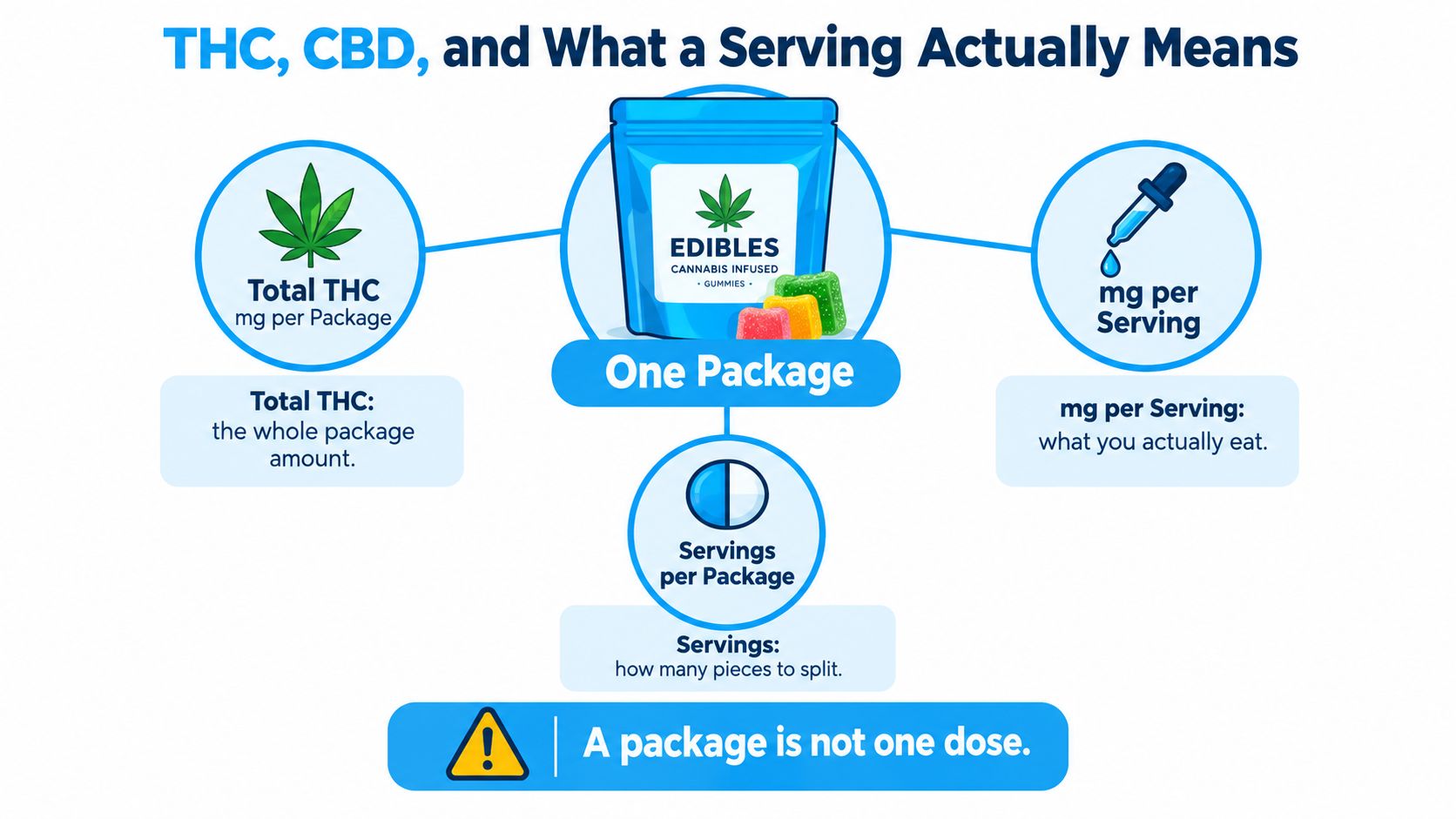
Most accidental overconsumption starts with one mistake. A shopper treats the whole package like a single dose. Once you separate the three numbers on the label, that mistake gets much harder to make.
Look at the relationship between the package and the piece before you read anything else on the label.
The Three Numbers on Every Label
- Total THC per package: The amount in everything in the bag, tin, or bottle combined.
- THC per serving: The amount in the one piece, square, or measured portion you're meant to eat at a time.
- CBD per serving: A separate cannabinoid amount that doesn't replace the THC number when you're estimating intoxication.
For New York adult use products, each serving must be identified or delineated during production, and no single serving may contain more than 10 mg total THC, according to New York's Part 128 packaging and labeling guidance. That cap gives you a clean reference scale you can use in the aisle. 2.5 mg is one quarter of a full serving, 5 mg is one half, and 10 mg is one full regulated serving.
Why the Package Total Misleads People
A 100 mg package labeled as ten 10 mg servings is ten sessions for many people, not one strong night. Read it as a single dose and you've multiplied your intended amount by ten before you've felt anything. Always verify both numbers, the package total and the servings per package, before you open it.
Portioning should follow the product's physical units or clearly marked divisions. Cutting a bar or gummy freehand at home can produce uneven pieces because cannabinoids aren't always distributed perfectly through an edible. If a product isn't scored or separated into pieces, ask a budtender how people portion it accurately, or choose a format that's already divided.
CBD deserves its own line in your decision, but it doesn't cancel the THC math. A product can list meaningful CBD and still deliver the full THC effect of its serving size. For dosing purposes, plan around the THC milligrams first, then consider CBD as a secondary characteristic of that same serving.
The Core mg Tiers for THC Edibles
The tiers below turn milligrams into people and situations. Find the row that sounds like you, then stay at the low end of that row until you've tried it on a calm, obligation free occasion. Screenshot the table and bring it to the counter if that helps the conversation.
Edibles Dosing Chart by mg per Serving
| mg per Serving | User Profile | Typical Effects | Onset | Duration |
|---|---|---|---|---|
| 1 to 2.5 mg | Microdose, very low tolerance | Subtle, minimal impairment | Delayed edible onset | Plan for several hours |
| 2.5 to 5 mg | Beginner, cautious returning user | Noticeable relaxation, still clear headed for many people | Delayed edible onset | Plan for several hours |
| 5 to 10 mg | Consumer with a known baseline | Clearer euphoria and body effects | Delayed edible onset | Plan for an evening |
| 10 to 25 mg | Experienced, higher tolerance | Strong effects, likely impairment | Delayed edible onset | Plan for a long session |
| 25 mg and up | High tolerance only | Intense effects, not a starting point | Delayed edible onset | Plan for the longest duration |
Reading the Lower Tiers
Health Canada recommends that new or infrequent consumers choose a product containing 2.5 mg of THC or less, as noted in Health Canada's lower risk cannabis guidance. That makes the 1 to 2.5 mg row a sensible test dose if you've never used cannabis, you're sensitive to other substances, or you want the smallest noticeable step. If you're curious about that smallest step, our guide to a 1 mg THC edible and what it feels like walks through it in plain language.
The 2.5 to 5 mg tier is where most first time Strong Strains customers start with brands like Wana, Wyld, or Kiva. You can often reach it by taking half of a 10 mg serving or a quarter where the product is clearly divided. Wait the full window before deciding it was too light.
Reading the Middle and Upper Tiers
A practical range for experienced adult consumers is 2.5 to 10 mg of THC, with caution advised throughout that range in Health Canada's consumer cannabis fact sheet. The key mechanic there is cumulative THC, so add servings together instead of judging by package size. A 10 mg package divided into four equal pieces contains 2.5 mg per piece, while eating the entire package is a 10 mg dose.
Doses above one full New York serving mean you're deliberately stacking servings. That can suit a high tolerance consumer who has worked up gradually, but it isn't a shortcut for a beginner who felt nothing after a short wait. The same cumulative math matters for drinks, which is why precision dosing for THC beverages is a useful companion if you're comparing a liquid serving to a gummy.
Between two tiers, pick the lower one. A mild first session teaches you more than an overwhelming one, and it leaves you willing to try again.
Onset, Peak, and Duration by Edible Format
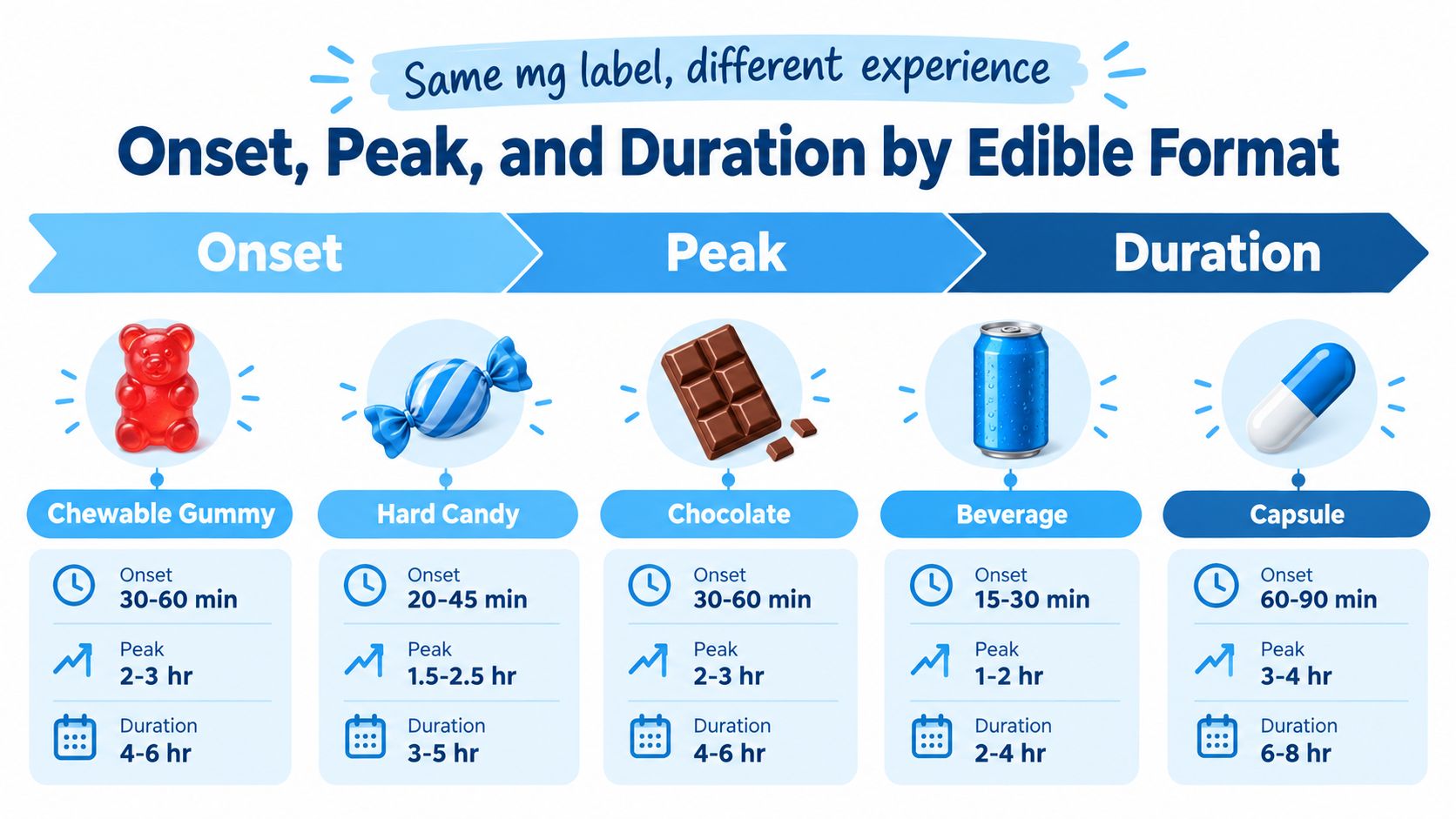
Two products can share the same milligram label and still unfold on different timelines. Format matters because a chew, a chocolate, a beverage, and a capsule don't move through your body in quite the same way. Use the chart for amount, then use format to set your expectations for timing.
The timeline below shows why the same dose can feel early with one product and late with another.
The Timeline Every Format Shares
Edibles have a delayed onset compared with inhaled cannabis, and full effects can take substantially longer to develop than the first noticeable shift. That gap is where premature redosing happens. You feel a little something, assume that's all there is, eat more, and then both servings arrive together.
Health Canada identifies product format, other medications taken orally, and the amount or type of food in the stomach as factors that can affect timing and duration, as explained in Health Canada's cannabis for medical purposes information. Practically, that means your 5 mg gummy after a large dinner may not mirror your 5 mg gummy on a lighter stomach. Keep meal conditions reasonably consistent while you're learning your dose, and change only one variable at a time.
If you're comparing small dose formats across categories, a veteran-founded microdosing comparison can help you see how capsules and edibles differ in portion control. For a deeper timeline once effects begin, see our explainer on how long edibles last and what affects duration.
Watch this short walkthrough before your first session so the waiting period feels planned rather than uncertain.
Picking a Format for Your Schedule
- Gummies and chews: Easy to portion by piece and familiar for beginners.
- Chocolates: Use scored squares and check milligrams per square, not per bar.
- Beverages: Check whether the bottle or can is one serving or several.
- Capsules: Discreet and premeasured, but harder to split into a smaller test dose.
Don't take a first edible late at night if an early alarm matters and you don't yet know your sensitivity. Give the experience room to finish.
Dosing Scenarios for Real Strong Strains Customers
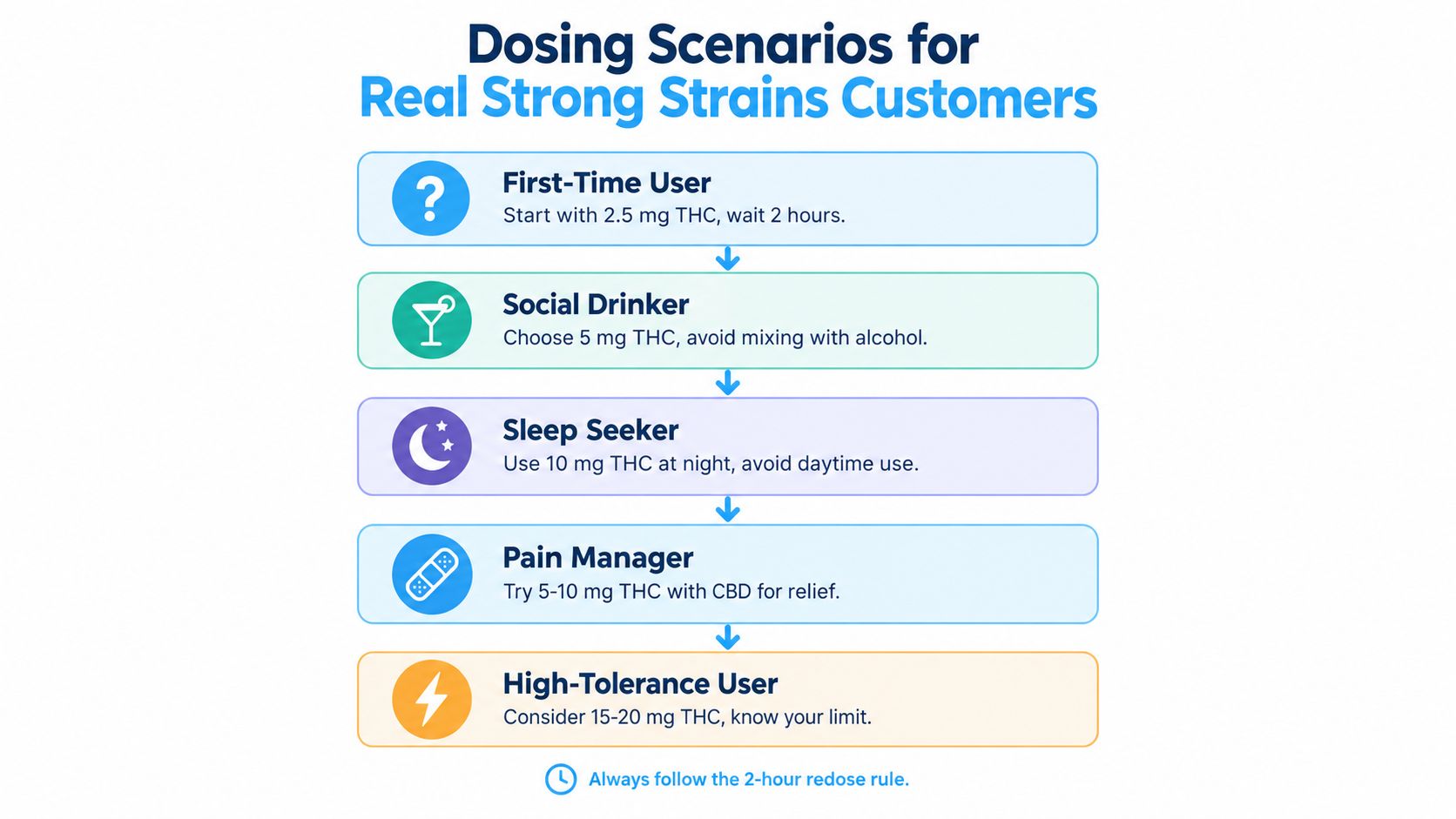
Abstract tiers get useful when they sound like your actual Friday night. The scenarios below assign a starting point, a redose rule, and a format cue for situations budtenders hear every week on Long Island. None of them involve stacking a second serving right behind the first.
These five profiles show how the same chart leads to different baskets depending on the person and the plan.
First Gummy and Weekend Social Plans
The first time edible user has never tried an edible, or hasn't used cannabis in years. Start at 2.5 mg or less if you want the most conservative test, eat at home, and keep the rest of the evening unscheduled. Your planner line is simple, note the time, what you ate, and who else is home.
The weekend social user wants to feel relaxed at a small gathering without checking out of the conversation. Many people in this spot choose the beginner end of the chart, often a 2.5 to 5 mg chew in a style like Camino, and they skip alcohol so they can read the edible's effect. If the setting gets loud or stimulating, a lower dose usually feels easier to manage.
Recovery, Sleep, and High Tolerance Plans
The post workout recovery user is usually focused on winding down after training, not on getting as high as possible. A premeasured low serving after food and hydration makes the timing easier to repeat next time. Don't use a new edible and a new recovery routine on the same night, since you won't know which change did what.
The sleep support user needs to work backward from bedtime because onset is delayed. Taking a serving right as you turn off the light often means the peak arrives well after you've been lying awake wondering why nothing happened. Customers often ask about nighttime gummy styles from Wana for this scenario, but the important part is choosing a known milligram amount and giving it time before bed, not chasing sleep with a second piece an hour later.
The seasoned high tolerance consumer already knows that one New York serving feels mild. Even here, increase in small, deliberate steps and add servings together. Tolerance to smoked flower doesn't always predict edible intensity perfectly, so a veteran smoker trying edibles for the first time still benefits from a lower test session.
Planner line for every scenario: Write down the product, the milligrams, the time you took it, and what you'd eaten. Two lines of notes will make your next purchase far more accurate.
Matching the Chart to the Strong Strains Menu
A chart only helps if you can find your row on the shelf. At the counter, translate your tier into a format first, then into a brand family. That order keeps you from buying a great tasting product in the wrong serving size.
Beginner and Middle Tier Formats
For divided gummies and chews, budtenders commonly walk customers through Wana and Wyld options and compare milligrams per piece side by side. Kiva and Camino come up when someone wants a different chew or chocolate style with clear portioning. The conversation should stay on serving size, piece count, and how cleanly the product divides, not on promises about exactly how you'll feel.
Ask these three questions about any product you're considering:
- Serving clarity: How many milligrams are in one piece, and how many pieces are in the package?
- Division: Is it scored or separated so a half serving is realistic?
- Lab information: Can the team show you the current label and testing details for this lot?
Higher Potency and Experienced Options
Customers with an established baseline sometimes ask about Incredibles or Level when they're comparing format and potency options for experienced use. Those conversations should be even more specific about cumulative milligrams. If you're buying more than one serving for a session, say your intended total out loud so the budtender can sanity check it against your history.
Strong Strains Cannabis Dispensary stocks edibles alongside flower, vapes, tinctures, and other categories at its East Setauket store, with pickup and local delivery options for Long Island customers. Menus and lots change, so confirm the current shelf tag rather than relying on a product you saw last month. If you're ordering online for an evening session, reread the serving line in the product description before checkout, then check the physical label again when it arrives.
Bring your tier, not just a brand name, to the conversation. "I'm looking for a gummy I can take as a 2.5 mg half serving" gets you a better recommendation than "what's strong." You'll leave with something you can repeat, adjust, and evaluate.
Safety Rules and Overconsumption Response
A dosing chart works only if the safety rules travel with it. These aren't fine print for beginners. Experienced users get caught by the same cumulative math when they redose early, mix substances, or misread a new label.
Four Rules for Every Session
- Confirm before you eat: State the milligrams per serving and your intended total before the package opens.
- Wait before more: Don't judge the dose during the onset window, and assess the fuller effect before adding another serving.
- Don't stack sedatives: Avoid mixing edibles with alcohol or other sedating substances, especially while you're learning a product.
- Store it locked down: Keep edibles in their original child resistant packaging, away from kids, pets, and anyone who might mistake them for regular candy.
Never drive after dosing. Plan rides, childcare, and next morning obligations before you eat the edible, not after effects start. To see how a full package amount differs from a serving, read what 100 mg of edible can do and why it is not a single dose before you experiment.
If Effects Feel Too Strong
Move to a calm, familiar space and stay with a sober adult who knows what you took and when. Sip water, rest, and avoid adding caffeine, alcohol, or more cannabis to fix the feeling. Time is the main remedy, even though the wait can feel uncomfortable.
Seek urgent medical help or call Poison Control if someone has severe symptoms, can't be roused, has trouble breathing, or if a child or pet has eaten an edible. Don't let embarrassment delay that call. Tell responders exactly what was taken, the labeled milligrams if you know them, and the time it was eaten.
Cumulative THC is the most common way a chart fails. Two reasonable servings taken too close together become one unreasonable dose.
A rough session is useful data if you record it accurately. Note the product, total milligrams, timing, food, and anything else you consumed. Next time, drop back at least one tier and rebuild slowly rather than trying to prove the last result was a fluke.
Your Printable Edibles Dosing Chart
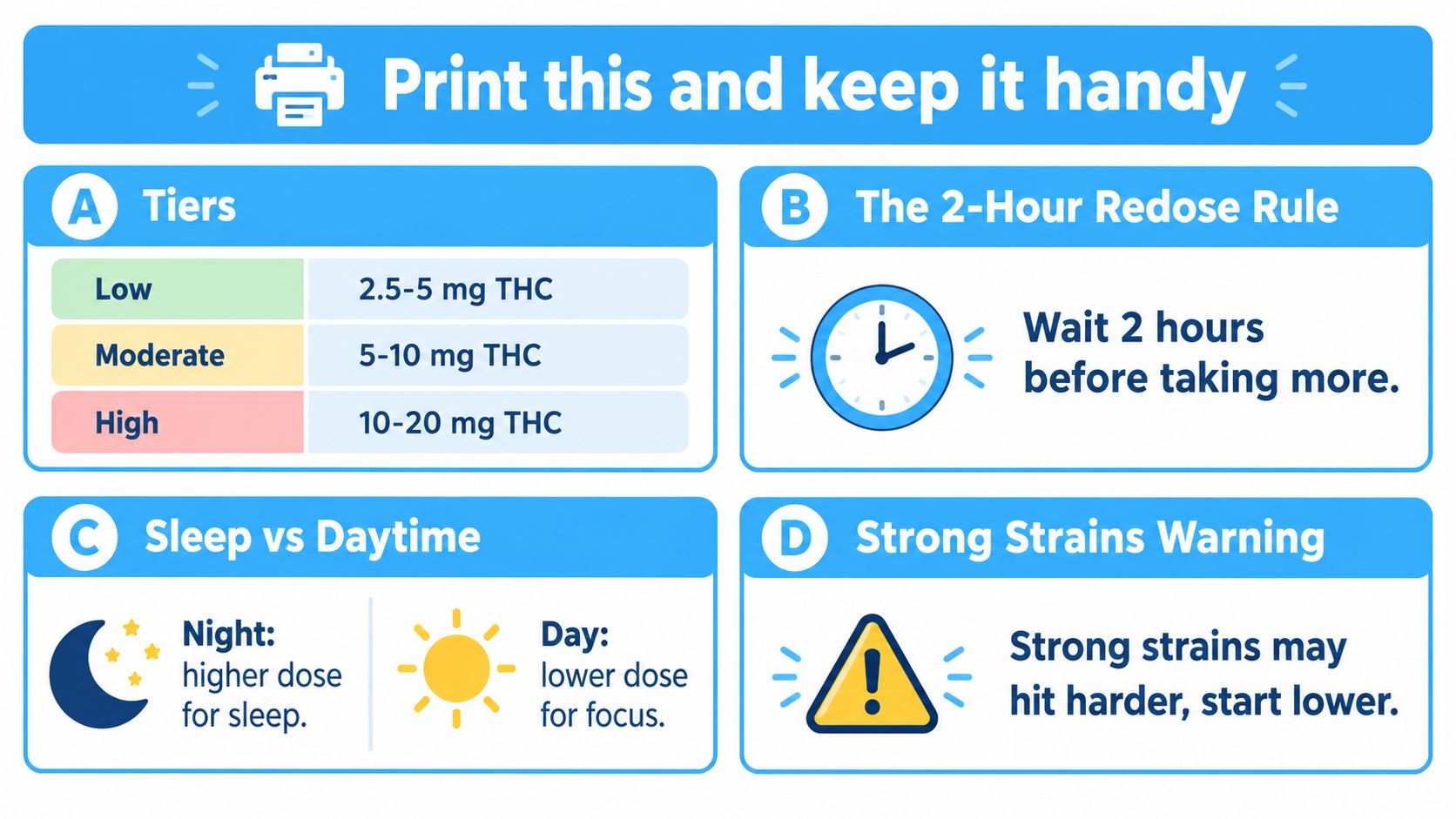
Save the one screen version below to your phone or print it for the kitchen drawer where you store your products. It's designed to work even if you skipped straight here from a search result. Read the tier row, check the clock rule, and confirm you're 21 or older before you use it.
The card condenses tiers, timing, and day versus night planning into a single reference you can check in seconds.
How to Read the Card
- Tier row: Start with the lowest row that matches your experience, then use the low end of that range.
- Clock rule: Wait at least 2 hours before considering more, and remember fuller effects can develop later.
- Day versus night: Choose lower, clearer doses for daytime plans and give nighttime doses enough lead time before sleep.
- Label check: Match the card to milligrams per serving on your package, never to the package total alone.
Write your own notes in the margin after each session. Circle the amount that felt right, cross out the amount that felt like too much, and add the product name next to it. Within a few sessions, the generic chart becomes your personal one.
Bring the card, or a screenshot of it, to the counter at 19 Technology Drive and ask a budtender to translate it to what's on the shelf that day. That two minute check prevents most label mistakes. Keep the card with your products at home too, so anyone dosing from the same package follows the same serving math.
Edibles Dosing Questions Readers Ask Most
These are the follow up questions that come up after the chart itself makes sense. They're about the second and third session, when your real world result doesn't perfectly match the row you picked. That's normal, and it's why notes matter more than bravado.
CBD, Tolerance, and the Session Where Nothing Happens
Does CBD subtract from the THC dose? No, not in a way you can use for arithmetic. Plan intoxication around the labeled THC milligrams, then treat CBD content as a separate product characteristic to discuss with a budtender. A CBD forward product with the same THC serving still starts with that THC serving.
Why did the same dose stop feeling the same? Regular use can build tolerance, and conditions change too, including food, sleep, format, and other oral medications. A short break can help some people reassess, but don't compensate by jumping several tiers at once. Return to a known dose, test it under similar conditions, and move in small steps only if repeated sessions feel consistently mild.
What should I check if I felt nothing? Confirm you read milligrams per serving correctly, that you waited the full window, and that you ate a full intended portion. Check what and when you ate, whether the product was divided evenly, and whether it was stored properly. Change one variable next time, ideally a small milligram increase on a low stakes evening, rather than doubling in frustration.
When You Took Too Much
What do I do if effects feel too strong? Stop dosing, hydrate, rest somewhere calm, and stay with a sober adult until effects fade. Don't drive, don't add alcohol, and seek medical help for severe symptoms or any accidental ingestion by a child or pet. Afterward, record the total cumulative milligrams and drop back a tier for your next session.
If your question is specific to a product on our current menu, bring the package details to the team. Personalized guidance beats guessing from a flavor name. A budtender can help you compare serving sizes across brands and find a cleaner starting point for next time.
Bring your chart tier to Strong Strains Cannabis Dispensary and our East Setauket budtenders will match it to clearly labeled, lab tested gummies, chews, beverages, and capsules on the current menu. Visit us in store or order online for pickup or Long Island delivery, and we'll help you choose a serving you can start low, wait out, and repeat with confidence.