
You're at a dispensary counter, looking at a Guava Punch label and wondering whether it means tropical flavor, a particular kind of high, or a specific THC level. The name sounds clear, but it doesn't tell the whole story. Two products carrying the same strain name can come from different genetics and have different lab results.
A patient budtender would start with a simple rule: treat the name as a clue, then check the package. Understanding the plant's reported lineage can help set expectations, but the batch-specific Certificate of Analysis, or COA, is what tells you more about the product in front of you.
What the Guava Punch Strain Actually Is
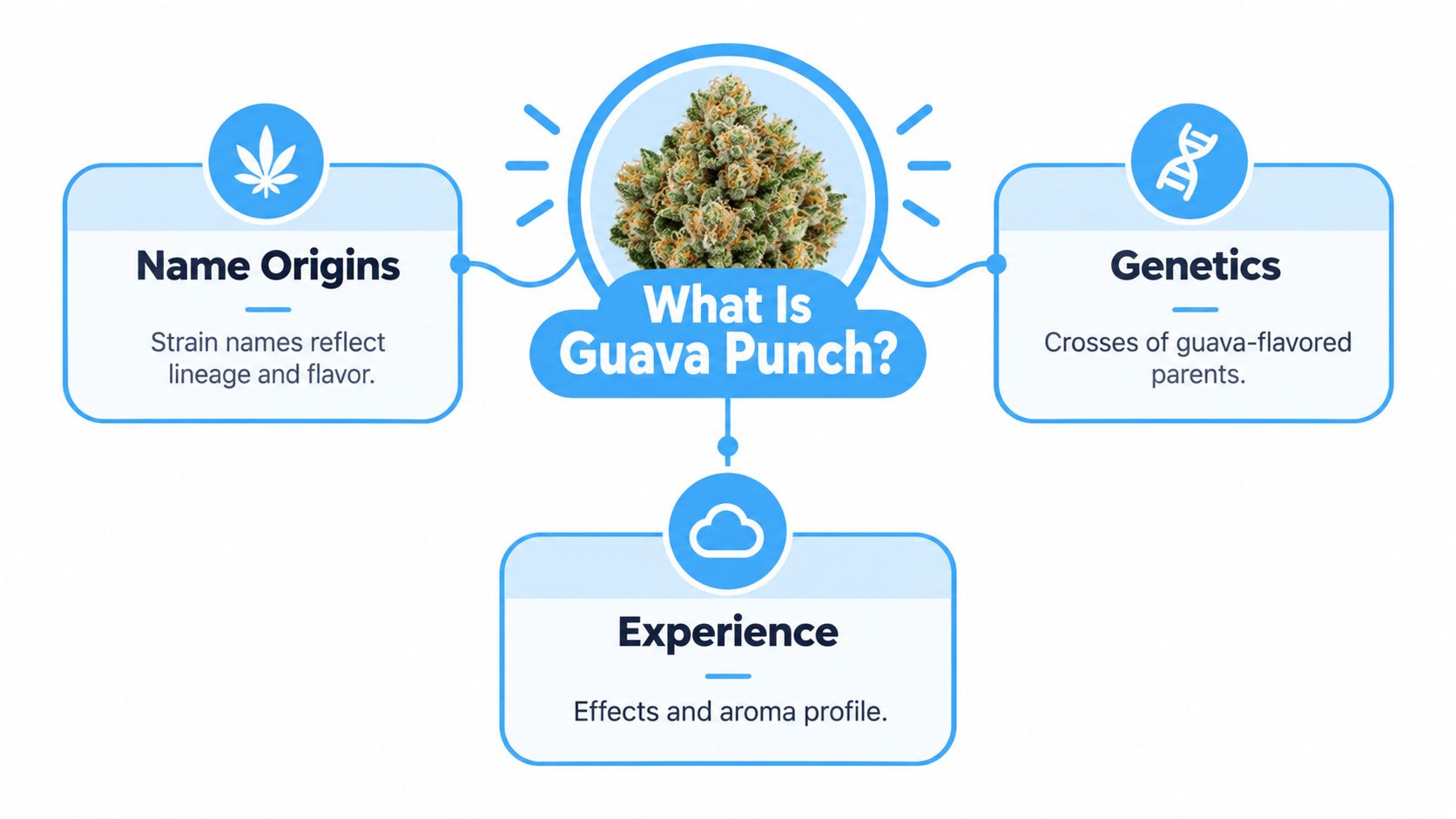
Guava Punch isn't one universally standardized cannabis cultivar. The name can sit on products built from different genetic lineages, so by itself it doesn't guarantee a particular aroma, effect, or chemical profile. Published strain databases document competing origin stories for it, which is why a careful budtender asks which producer's version you mean before describing anything else.
That one fact changes how the label should be read.
Three terms show up often in strain descriptions, and each does a different job:
- Cultivar means a cultivated variety selected and maintained by growers or breeders. Everyday cannabis shopping usually says "strain" for the same idea.
- Lineage is the plant's reported parentage, the genetic cross behind a particular version.
- Phenotype, often shortened to "pheno," is a plant's observed expression. Plants with related genetics can still develop different traits, much like siblings raised in the same house who end up as different people.
The name works like a recipe label rather than a lab result. It suggests where a plant came from without confirming what sits in a particular jar, because the same name can cover different growers' selections and different batches.
This distinction matters before you rely on descriptions like "indica-dominant," "fruity," or "strong." Those are reasonable starting points, yet they can't promise every product called Guava Punch will feel the same. For a specific package, the producer's information and its batch COA carry better evidence than the name alone.
The Two Lineages Behind the Same Name
The name Guava Punch carries at least two reported genetic stories. The more detailed account describes an indica-dominant hybrid bred by G.O.A.T. Genetics in collaboration with Easy Daze, crossing Double Guava with Nancy Marie Punch. A second account gives a different lineage, Afghani crossed with Stardawg, though that origin is described as less well documented. If the naming confusion feels familiar, this look at the Cherry Guava strain shows how easily similar names get mixed up.
A surname works the same way. Two families can share the last name Rivera without sharing grandparents, and a group photo won't tell you which branch is which. In the same way, a breeder's parent plants and selections shape a Guava Punch plant's aroma, growth pattern, and resin production. Lineage gives you the family history. Each generation still grows into its own result.
What cultivation claims can and can't tell you
A commercial seed description for the Double Guava × Nancy Marie Punch line lists a flowering period of 65–70 days, indoor yields of approximately 450–600 grams per square meter, outdoor yields of 4–9 ounces per plant, and a mature height of 4–6 feet. Treat those figures as breeder-reported targets for that seed line; they say nothing about the THC sitting in a jar on a shelf.
Grow specs mainly serve people comparing seeds or planning a cultivation setup. If you're holding a purchase rather than a seed pack, flowering time won't predict the flavor of a vape cart or how a particular batch will feel. The producer's notes supply the context, and the lab report attached to your batch supplies the usable information.
THC, CBD, and What the Lab Numbers Mean
Published Guava Punch potency figures don't all match. One strain database reports THC results from 19.25% to 21.88% and CBD from 0.29% to 0.62%, while summarizing an average THC level of roughly 21–22%. A separate Guava Punch #1 dataset reports THC from 22.7% to 30.7%, CBD at approximately 0.1%, and limonene as its leading terpene. These figures describe different reported datasets, not one fixed chemical profile. The published Guava Punch #1 figures are best treated as reference information, not a promise about a product on a shelf.
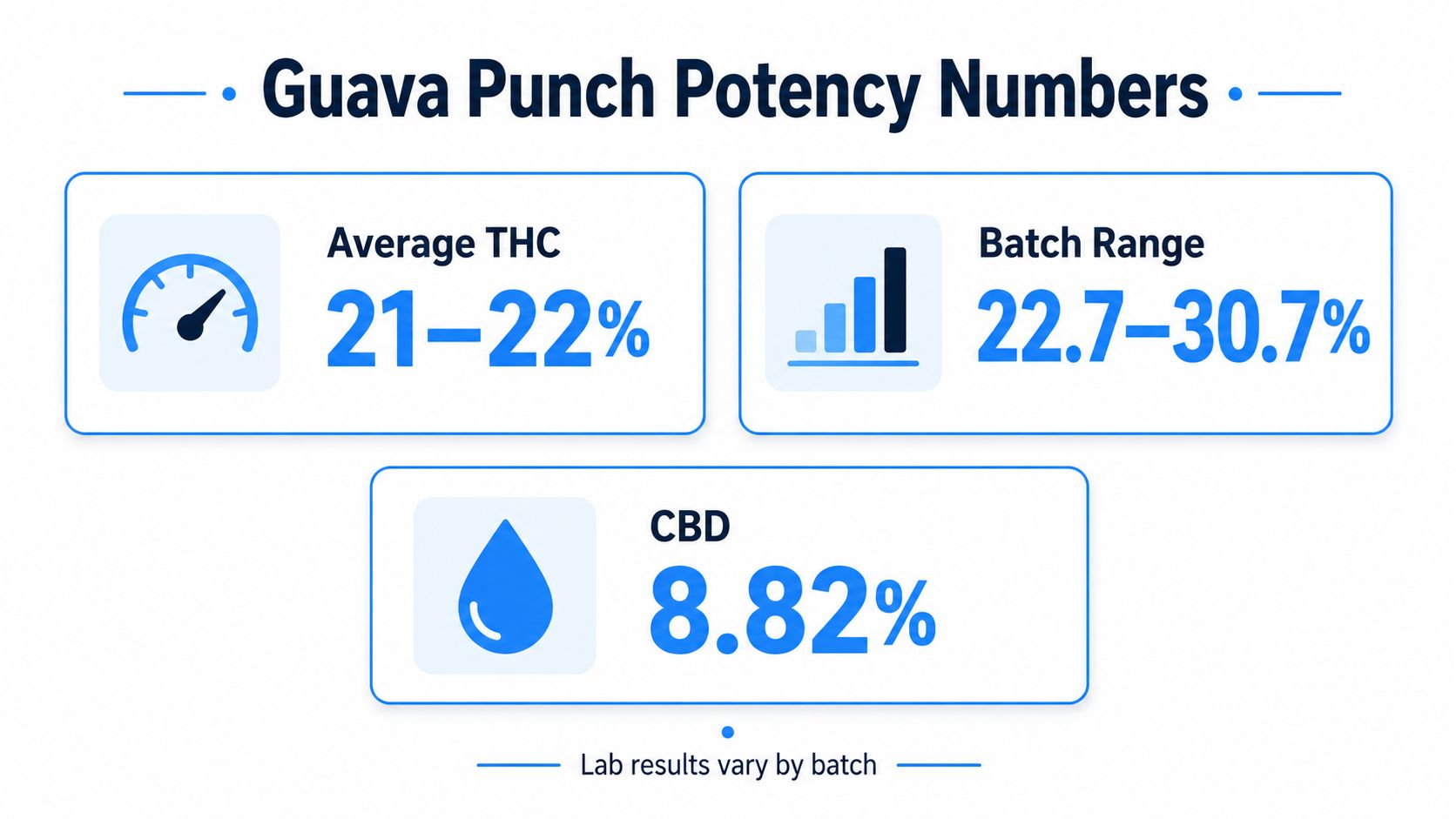
The difference between a reported result topping out near 21.88% THC and another range reaching 30.7% is 8.82 percentage points. That gap can matter when you're deciding how much to use, especially if you're new to cannabis or sensitive to THC. But a higher number alone doesn't mean a product will feel better, suit your preferences, or be appropriate for your experience.
Read the package, not just the strain page
A Certificate of Analysis, or COA, is a laboratory report for a product or batch. It can show cannabinoid results and other test information, helping answer the practical question, “What did the lab find in this package?” For New York adult-use products, regulated items must pass laboratory testing before sale, and the package must provide a QR code or link to the COA. The state's consumer labeling guidance also explains the required THC and CBD information.
For flower, compare the package's total THC and total cannabinoids with the linked report. New York calculates total THC as THC plus THCA multiplied by 0.877. For ingestible products, labels must also give THC amounts per serving and per package. If you'd like a plain-language refresher on what lab reports cover, see this guide to cannabis laboratory testing.
A label number is useful, but it's not a complete prediction of your experience. Dose, tolerance, product format, and the rest of the chemical profile matter too. Start with the package-specific information and choose cautiously rather than treating a strain's reputation as a dosing guide.
Terpene Profile and the Flavor Experience
Terpenes are aromatic compounds found in cannabis and many other plants. They contribute to how flower smells and tastes, which is why one Guava Punch product might suggest sweet fruit while another comes across as more citrus-forward or earthy. The scent can help you describe what you notice, but it won't establish the product's exact effects.
One reported Guava Punch dataset lists limonene at 0.49% as its dominant terpene. Another summary reports 0.98% total terpenes. These are figures from separate published reports, so they shouldn't be combined as though they describe the same batch. The reported Guava Punch profile offers a reference point, while the COA for your package is the place to look for batch-specific results.
At the counter, try describing the aroma in ordinary words: Does it smell bright and citrusy, sweet and fruity, or something else? That kind of observation is more useful than trying to match every scent to a predicted mood. If you're comparing products, look at their actual terpene results where available, then use aroma as another clue rather than proof.
Some consumers use “entourage effect” to describe the idea that cannabinoids and terpenes may contribute together to a cannabis experience. For shoppers, the practical takeaway is modest: THC isn't the only part of a product worth considering, and a terpene label shouldn't be treated as a guarantee. Learn more about how shoppers compare high-terpene cannabis strains, then check the specific product's information.
Effects, Mood, and Who This Strain Suits
Guava Punch is often described as an indica-leaning hybrid, but that label doesn't tell you exactly how you'll feel. One person may find a product relaxing while staying mentally engaged; another may find the same product heavier or less suited to a busy setting. The lineage, batch, dose, tolerance, and format all shape the experience.
If you're considering it for an evening at home, ask whether you want something that feels calming without needing to be completely checked out. For a low-key creative activity or a social visit, consider your own past responses to cannabis rather than relying on a strain label to predict your mood. Some people also look for relaxing products after physical activity, but cannabis isn't a guaranteed recovery aid, and individual responses vary.
Match the product to your comfort level
The most important question isn't “Is this a good strain?” It's “Does this particular product and dose fit me?” If you're early in your cannabis experience or know you're sensitive to THC, a product with a higher listed potency may call for extra caution. Choose a format you can use in a controlled way, and avoid taking more because you don't feel an immediate effect.
A more experienced consumer might be comfortable comparing different flower batches or trying a product with a stronger lab result. That still doesn't make the number a reliable shortcut to a preferred experience. Pay attention to the COA, your own tolerance, and how the product is meant to be consumed.
A practical expectation: Treat “relaxing,” “creative,” and “social” as possible descriptions, not promises. Your own response is the best guide to whether a product suits a particular occasion.
Formats at the Dispensary and How to Pick One
The right format depends on where you'll use it and how much control you want over your session. Flower, pre-rolls, vapes, and concentrates aren't interchangeable, even if they share the Guava Punch name. Compare the product type and lab information before choosing.
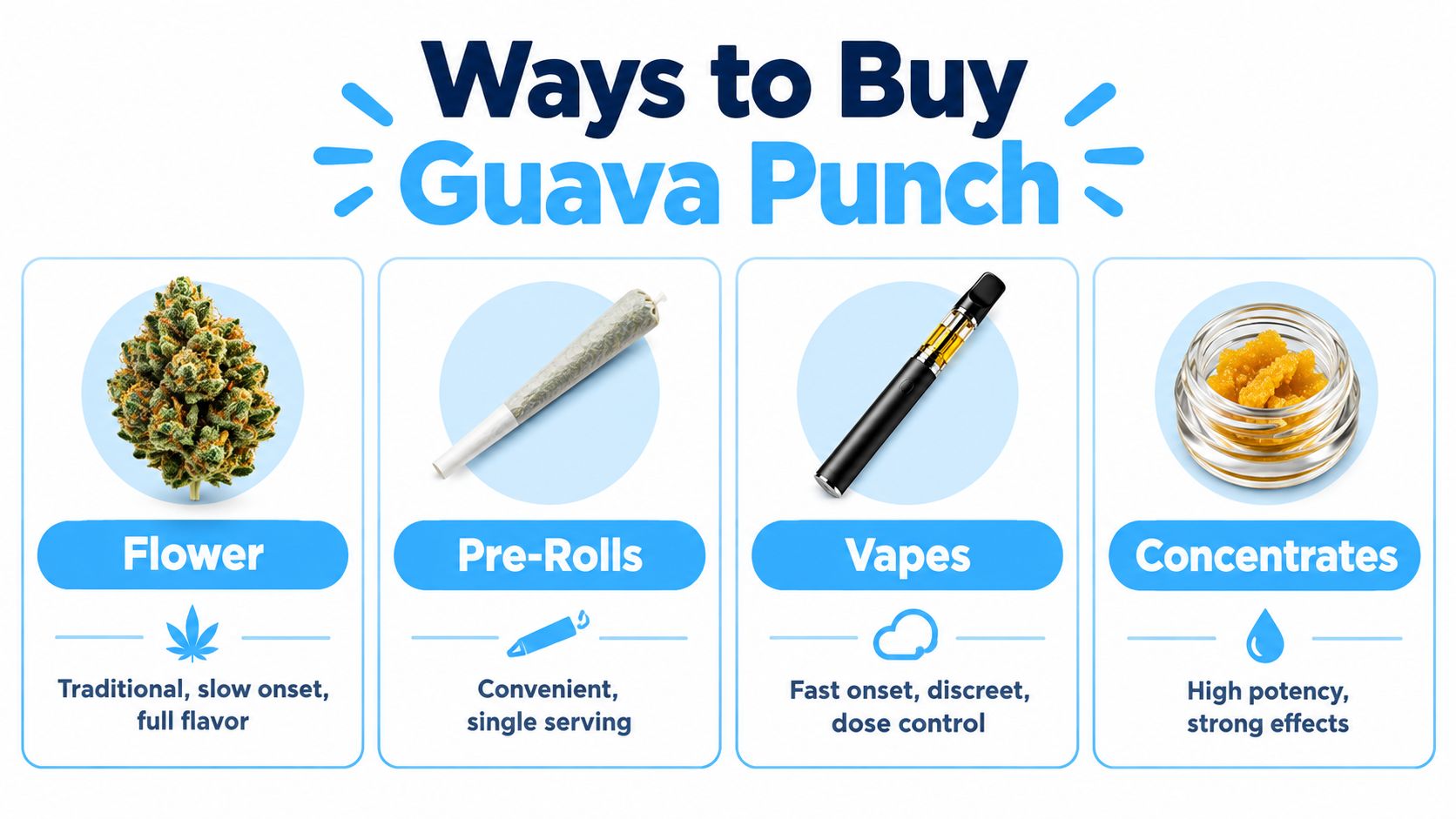
| Format | What to consider |
|---|---|
| Flower | Offers the traditional dried-bud experience and lets you decide how much to use. Check freshness information and the batch report. |
| Pre-roll | Convenient when you don't want to prepare flower. It may offer less control over the amount consumed than using a small portion of loose flower. |
| Vape | A portable option that some customers prefer for discretion. Review the package's potency and ingredients, and take care not to overconsume. |
| Concentrate | An extract, generally intended for people familiar with higher-potency products. Confirm the product type and lab results before use. |
A 2025 analysis of Colorado products found that concentrates were more consistently labeled than flower, although observed concentrate potency still varied widely. The same research reported that flower labeling could be inaccurate, so a printed percentage shouldn't replace the package's linked testing information. The peer-reviewed analysis of tested cannabis products provides context for why format and label verification both matter.
A quick in-store check
Before you choose, confirm that the package has the state universal symbol and a working QR code or COA link. Check the product format, total THC, total cannabinoids, serving information if applicable, and the harvest or packaging date when available. Then ask yourself how much control you want and whether the format fits your experience level.
If you're new, a budtender can help you compare options and read the label, but you should make the final choice based on your comfort and the product's information. Experienced consumers can use the same checklist when comparing batches, rather than assuming a familiar cultivar name means familiar potency.
Buying Guava Punch Locally the Smart Way
A familiar strain name can make a product feel predictable, but the package's COA matters more than the name when you're checking what's in a batch. Treat shopping as a verification step. That means checking the product in your hand rather than relying only on a general strain description or what you remember from another grower.
Use this checklist when comparing Guava Punch products:
- Confirm the state symbol. Look for New York's universal symbol on the package.
- Scan the QR code. Open the linked COA and match it to the product.
- Read the results. Compare total THC, total cannabinoids, and serving-level information for ingestibles.
- Check freshness details. Review the harvest or packaging date when it's provided.
- Choose for your experience. Consider your tolerance, desired format, and serving size rather than chasing the highest number.
If you're comparing flower, pre-rolls, and vapes, read each item's own label and report. A shared strain name doesn't make their chemistry or use identical, so choose the package that best fits your preferences and comfort level.
For lab-tested flower, pre-rolls, vapes, and other cannabis products, visit Strong Strains Cannabis Dispensary in East Setauket. Ask the team for help comparing Guava Punch package labels and COAs, then choose in-store pickup or local delivery for your North Shore Long Island order.