
Chem strain is a family rooted in early-1990s underground breeding, often labeled Chem 91, Chem D, or Chem 4, and it typically falls around 18% to 27% THC, depending on the batch and phenotype. The name points to a lineage and aroma tradition, not one perfectly standardized product.
You're standing at a Long Island dispensary menu, scanning flower jars, vapes, and pre-rolls. One listing says Chem 91, another says Chemdawg, and a third uses “Chem” in a hybrid name. The labels look related, but that doesn't mean they'll smell, taste, or feel identical.
The practical answer is simple: treat Chem as a family resemblance, then inspect the current batch. The certificate of analysis, dominant terpenes, harvest or packaging date, producer, and format will tell you more about today's product than the strain name alone.
Why Scoops of Chem Strain Are Popular on Long Island
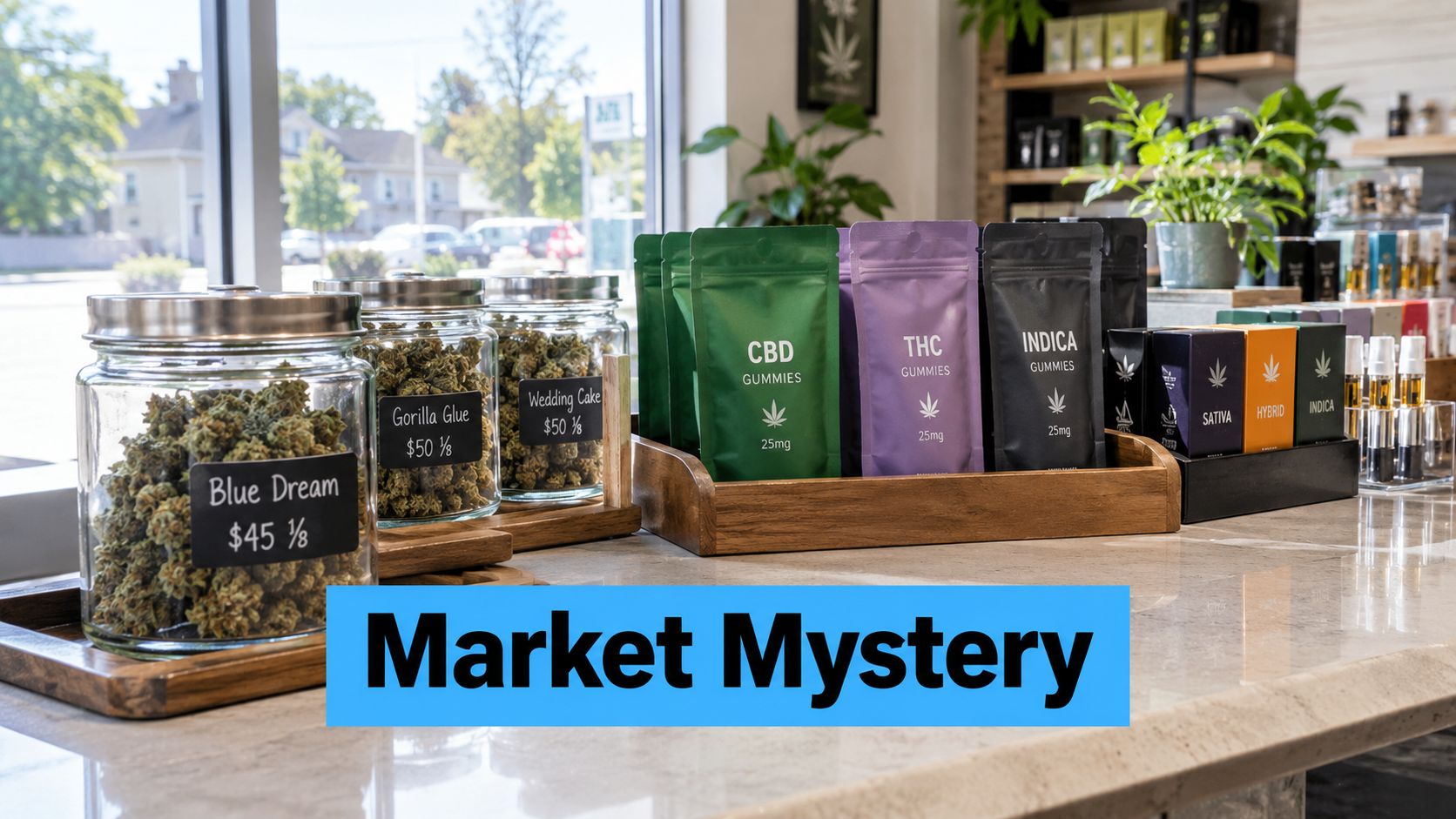
A customer walks into a Long Island dispensary and asks for Chem. That short request can mean several things: a sharp fuel aroma, a strong experience, an old-school reputation, or just a familiar name on a modern hybrid. The budtender's first job is to find out which expectation the shopper has.
Chem attracts attention because its reputation is easy to recognize. Shoppers may associate it with pungent, diesel-like aromas and a forceful experience, while others are drawn to its place in American cannabis breeding. Those expectations can guide a search, but they cannot identify the exact product in front of you.
Why the name catches attention
Chem appeals to experienced shoppers seeking a pronounced aroma and substantial potency. A newer consumer may hear the name and expect an intense product. Someone with a favorite Chem purchase may be looking for that same diesel character again. Either expectation can miss the current batch if the genetics, cultivation, or format differs.
The label may sit beside products from recognizable brands such as Cookies, Connected, MFNY, Rythm, Good Green, Alien Labs, Jetty, Kiva, or Wyld. A brand name identifies the producer or product line. Chem identifies a genetic reference, a marketing label, or a family expression. Those details answer different questions.
A shopper comparing flower, pre-rolls, vapes, or edibles can use these cannabis product guides to review formats, labels, and product details without relying on strain mythology alone.
Practical rule: Use the name to start the conversation, not to finish the purchase.
The better question to ask
Ask, “What does this Chem batch show?” Check the certificate of analysis, or CoA, for the listed cannabinoids and terpene panel. Review the harvest date, producer, and format as well. Terpenes can help explain whether the product may offer the aroma you expect, while the date helps you judge how current the batch is.
Choose according to your tolerance, consumption habits, and intended setting. A lower-intensity option may suit a newer consumer, while an experienced shopper may want a more pronounced expression. The phrase scoops of Chem strain can point people toward a purchase search, but the batch-level details should decide what enters the basket. That approach gives Long Island shoppers a clearer basis for comparing products than the Chem name alone.
The Chem Strain Family and Its Underground Roots
A jar labeled Chem 91 may sit beside another product called Chem D or just Chem. The shared word suggests a relationship, but it does not make the products identical. Chem is better understood as a branching family of cannabis lines, with different selections and crosses carrying parts of that history.
The most repeated origin account traces the family to an early-1990s underground cannabis network. According to that story, a grower known as “Chemdog” obtained high-quality “Dog Bud” at a Grateful Dead concert in Indiana in August 1991. Seeds found in the cannabis were later germinated, creating the starting point for several plants that became important to the family.
The account appears in the Chemdawg strain family history, but its exact parental genetics and original provenance remain unverified. Treat it as cannabis oral history, not as a complete laboratory record.
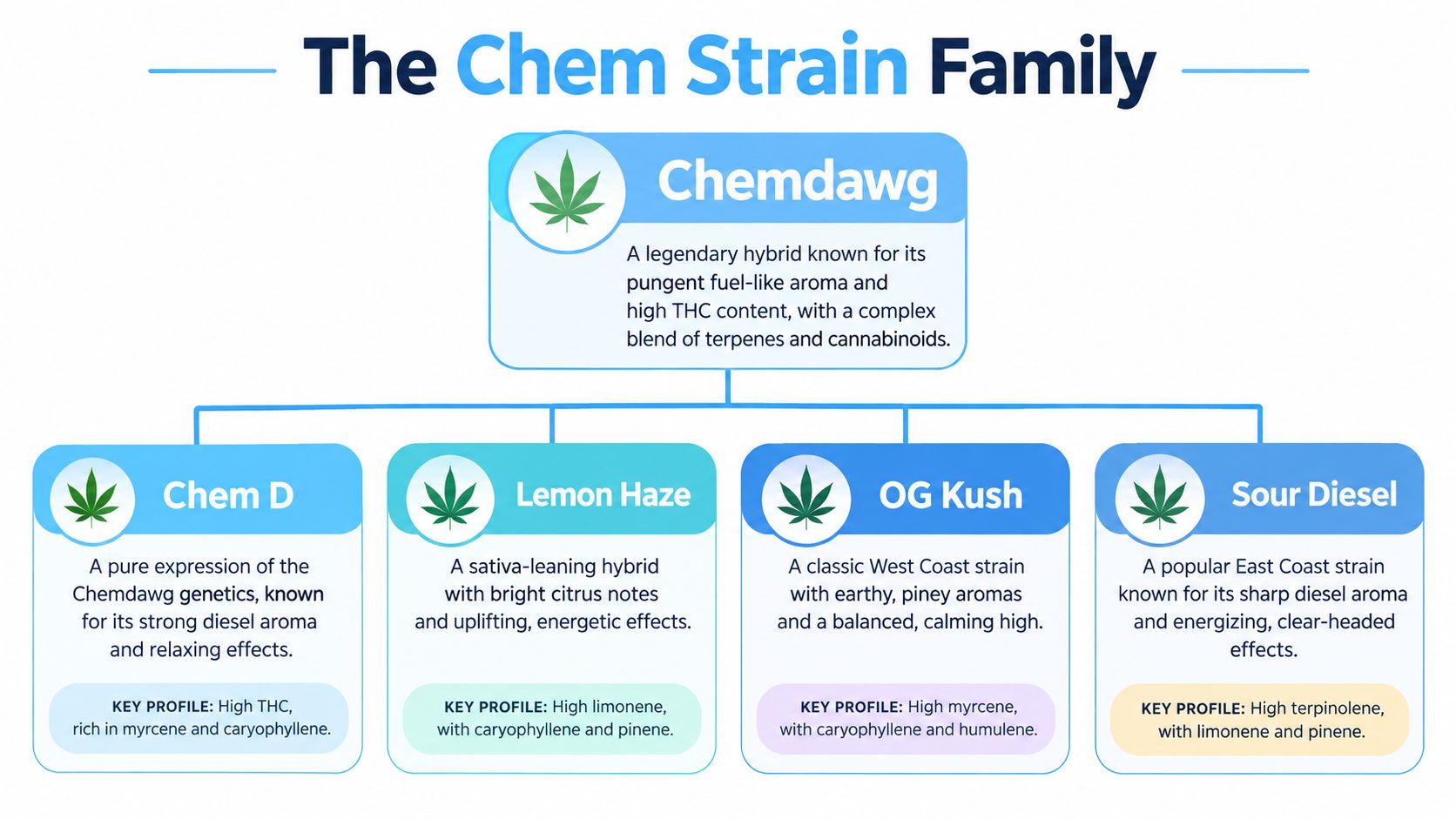
Several keeper plants became especially influential, including Chem 91, Chem D, and Chem 4. These names point to distinct lines or selections associated with the wider family. They should not be read as interchangeable labels. One selection may show a sharp fuel character, while another brings more spice, citrus, earth, or sweetness.
Oral history versus documented lineage
A useful way to read Chem names is to separate reported lineage from breeder descriptions and independently verified information. Cannabis names change as cuttings move between growers, breeders cross plants into new lines, and retailers shorten cultivar names for menus.
As a result, “Chem” may indicate a family connection, a selected aroma, or a marketing description. Those meanings can overlap, but they do not always match. A product described as Chem-related may carry part of the family's traits without being Chem 91, Chem D, or Chem 4.
How the family shaped modern cannabis
Chem-related cuts spread beyond their original underground circles and influenced cultivars such as Sour Diesel, OG Kush, and GG4. They helped bring a pungent, fuel-like profile into mainstream cannabis culture. By the mid-to-late 1990s and early 2000s, Chem-related cuts had circulated beyond the East Coast and influenced breeding in major U.S. cannabis markets, particularly California.
That history explains why Chem references appear in products that do not use “Chem” as their main name. For a Long Island shopper, the family tree is a useful starting map. The current product's exact genetics, cultivation, maturity, curing, and testing still determine what is in the jar.
Typical Chem Strain Effects and THC Range
Chem products are generally associated with high THC potency, but the published figures vary by phenotype, cultivation method, harvest, and laboratory testing. Public-facing strain and certificate summaries commonly place Chem 91 or related Chem batches around 18% to 27% total THC, with many reported samples clustering around 22% to 25%, according to this Chemdawg potency and lineage guide.
Those figures are context, not a promise. Other strain references describe broader typical ranges near 16% to 24%, while exceptional claims have reached approximately 32%. Treat an extreme result cautiously unless the current package has a batch-specific certificate of analysis supporting it.
Why two Chem products can feel different
Consider two jars with nearly identical names. One may come from a Chem 91 selection with a pronounced fuel aroma. Another may be a related cross with softer citrus or earthy notes. Their THC percentages could be close, yet the experience may still differ because of cannabinoid ratios, terpene composition, dose size, tolerance, and route of administration.
Terpenes can influence aroma and preference, but they don't guarantee that a product will feel energizing, creative, calming, or sedating. A menu description may use those words as a helpful starting point, but your response depends on the whole product and your own sensitivity.
| What you're comparing | Why it matters |
|---|---|
| Phenotype or cut | Related Chem selections can express different aromas and overall character. |
| Total THC | A useful potency measure, but not a complete prediction of the experience. |
| CBD level | A different cannabinoid balance may change how the product fits your preferences. |
| Dominant terpenes | Helps describe aroma and flavor, but doesn't guarantee a specific effect. |
| Route of administration | Flower, vape, concentrate, and edible products can behave differently. |
A shopper who is new to cannabis should be especially careful with products at the upper end of the reported range. Start with a small amount, allow the effects to develop, and don't treat a high number as a quality score. The guide to hybrid strain effects can help frame the conversation, but the current batch and your own response remain more useful than a broad category label.
The useful question isn't “How strong is Chem?” It's “What does this specific Chem batch contain, and how much do I actually need?”
How to Read a Chem Batch Like a Smart Shopper
The smartest Chem purchase begins with the package, not the legend. Terpene composition can change with genetics, growing conditions, maturity, season, and analytical methods. Aroma is valuable because it tells you what your senses notice, but it shouldn't replace batch-level information.
New York-regulated products provide a QR code or link to lab results. Those results cover cannabinoids, contaminants, moisture, water activity, and terpenoids, as described in the state's cannabis laboratory testing requirements. The state universal symbol also helps identify tested, regulated products.
Start with the current CoA
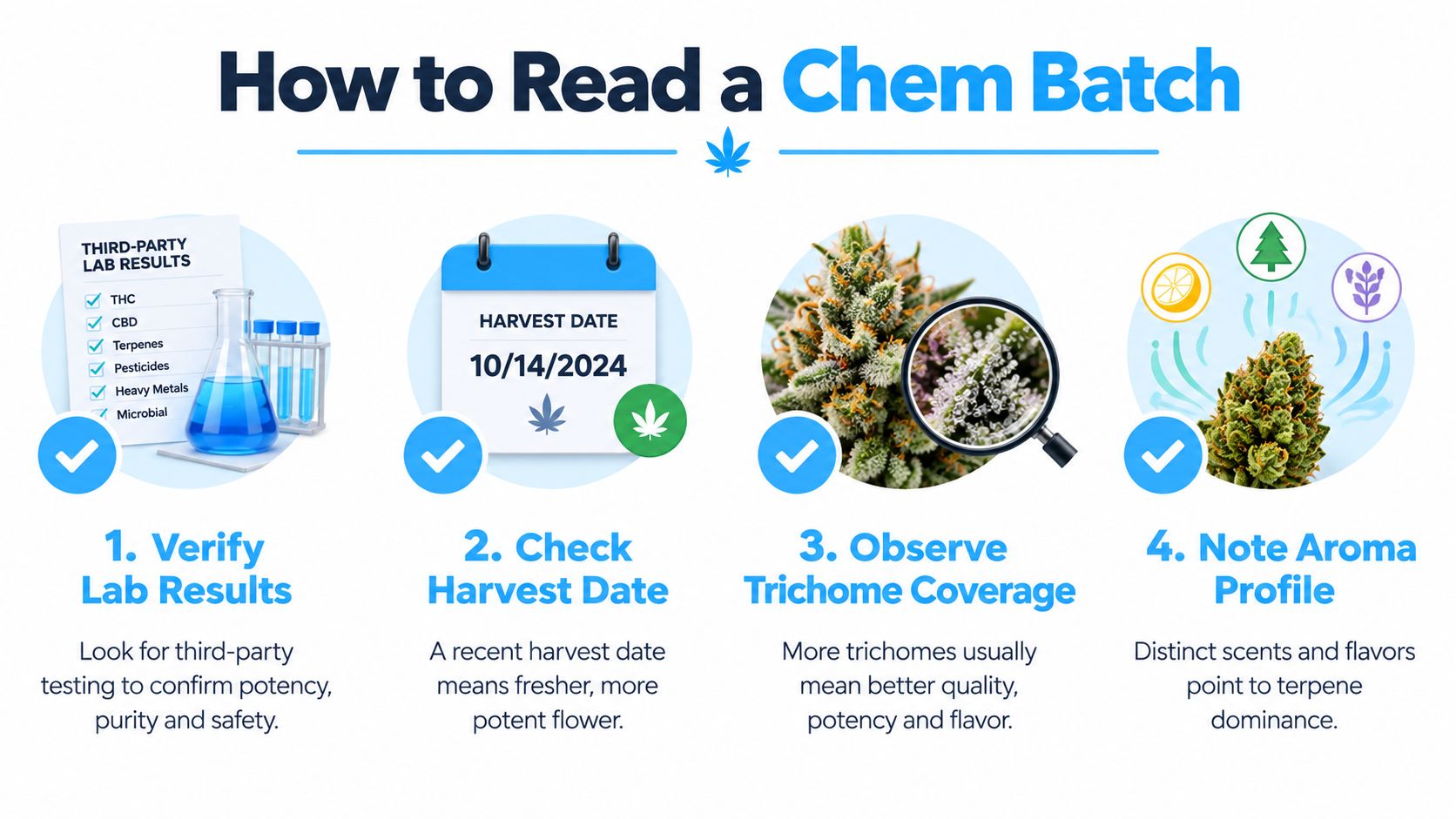
A Certificate of Analysis, or CoA, is the batch-specific record that gives a product more meaning than a strain nickname. Scan the QR code or open the lab-results link, then compare the lot information on the CoA with the package in your hand.
Check these details:
Verify the lot. Confirm that the CoA corresponds to the current product lot, not a generic page for an older run or a different format.
Read THC and CBD together. THC helps you understand labeled potency, while CBD shows another part of the cannabinoid profile. Don't assume that a familiar Chem name gives you a standard ratio.
Look at dominant terpenes. Use the terpene panel to compare aroma direction. A fuel-forward batch may appeal to one shopper, while another may prefer citrus, pine, spice, or a less aggressive profile.
Check harvest or packaging information. Freshness can affect aroma, texture, and overall enjoyment. A date doesn't tell you everything, but it gives you useful context when comparing two jars.
Note the producer. Growing, drying, curing, and testing practices can differ between producers. The producer doesn't replace the lab result, but it helps you understand what you're comparing.
Compare the product in front of you
Suppose one Chem flower has a higher THC label but a muted aroma, while another has a lower THC label and a terpene profile you prefer. The second product may be the better choice for your actual goal, especially if you care about flavor, a manageable experience, or occasional use.
Look at the flower itself too. Trichome coverage, color, texture, and aroma can help you assess presentation, but visual appeal can't confirm potency or safety. Use your senses alongside the CoA, not instead of it.
The same principle applies to pre-rolls and vapes. A product name may appear on multiple formats, but the format changes the experience, and each packaged item should have appropriate current testing information. If you want to understand the role of regulated testing in more detail, review this cannabis lab-testing guide.
Read the CoA before you let the strain name make the decision.
Best Formats and When to Choose Them
You are choosing between several Chem products at a Long Island dispensary. One is flower with a strong aroma, another is a compact vape, and a third is a concentrate with a much higher THC label. The strain name may be similar, but the format changes how quickly effects appear, how much control you have, and how long the experience may last.
Flower gives you the clearest view of the batch. You can inspect the buds, smell the terpenes, and adjust the amount inhaled. A vape is compact and convenient, while a concentrate packs more THC into a smaller amount. Edibles follow a different clock, with delayed effects that can last longer.
The National Institute on Drug Abuse reports that cannabis flower and concentrates sold in dispensaries can contain THC concentrations above 40%. It also connects higher THC concentrations with a greater likelihood that cannabis use will progress to cannabis use disorder. High potency calls for caution, especially for a new or occasional user. Read the NIDA cannabis information for broader health and use considerations.
| Format | Typical onset | Best for | Caution level |
|---|---|---|---|
| Flower | Usually noticed relatively quickly after inhalation | Shoppers who want aroma, visible flower, and adjustable intake | Moderate. Potency and inhaled amount still matter |
| Vape | Usually noticed relatively quickly after inhalation | Discreet, convenient use with a familiar format | Moderate to high. Confirm the product's current testing and potency |
| Concentrate | Usually noticed quickly after inhalation | Experienced consumers seeking a concentrated format | High. Dispensary flower and concentrates can exceed 40% THC |
| Edible | THC reaches peak plasma concentration at a mean of about 1 to 2 hours | People who prefer not to inhale and can plan around delayed effects | High for redosing mistakes. Effects generally last longer |
Match the format to the occasion
Choose flower when aroma, visible quality, and gradual control matter. A smaller purchase lets you assess whether the batch delivers the Chem character you want before buying more. Keep it in a cool, secure place away from children and pets, and close the package between uses.
Vapes and concentrates need more deliberate dosing because a compact product can deliver a substantial amount of THC. A higher percentage does not automatically make a product a better choice. If you are new to Chem or have not used a high-potency format, flower or a clearly labeled lower-potency option may be easier to manage.
Edibles require patience. A CDC report on edible cannabis explains that orally consumed THC reaches peak plasma concentration at a mean of about 1 to 2 hours, compared with roughly 5 to 10 minutes after smoked cannabis. The delayed start can make an edible feel inactive at first, while the effects generally last longer. Taking another serving too soon can lead to greater intoxication and a higher risk of adverse psychological effects.
A delayed edible onset does not mean the product is ineffective. Follow the package serving information, give the first serving time to develop, and avoid combining formats while you are learning your response. Chem may describe a family of related products, but your route of administration still determines the basic timeline.
Responsible Chem Choices for New York Buyers
A high-THC Chem flower may be potently effective, or it may carry a confident label. A 2025 University of Colorado study of Colorado flower found that 44% of products fell outside the state's 15% labeling-accuracy tolerance, and inaccurate samples overclaimed THC more often than they underreported it, according to the University of Colorado report on cannabis label accuracy.
That finding doesn't establish one universally safe THC level. It does show why you shouldn't chase the highest number on a menu. Verify the current lot, compare the CoA, and start with a small amount, particularly if you're a first-time user, a medical user, or someone who is sensitive to anxiety or impairment.
Make the purchase fit your needs
The right amount to buy isn't universal. Connect the purchase size to your tolerance, intended frequency, storage space, and chosen format. Someone who consumes occasionally may prefer a smaller flower purchase that stays fresh, while a regular shopper may prioritize a format and package size that fits an established routine.
Use this decision flow:
- Want to explore Chem aroma? Start with flower and inspect the terpene panel, package information, and current CoA.
- Want less intensity? Compare lower-THC or terpene-forward options instead of selecting the highest displayed percentage.
- Want a longer experience? Consider an edible only if you can wait for delayed effects and avoid rapid redosing.
- Want a concentrated format? Treat it as a high-caution choice, especially if your tolerance is limited.
- Can't verify the lot? Choose a product with accessible, current lab results instead.
New York law sets clear boundaries. Adults 21 and older may possess up to 3 ounces of cannabis and up to 24 grams of cannabis concentrate, including products such as oil and edibles, according to the New York Office of Cannabis Management enforcement guidance. People under 21 can't buy, possess, or use adult-use cannabis.
New York permits adults to use cannabis in a private home and in most places where tobacco may be consumed, but use is prohibited in motor vehicles, restaurants and patios, hookah or cigar bars, federal property, and many public parks and beaches. Possession limits don't make every consumption location lawful, so plan where you'll use the product before you purchase it.
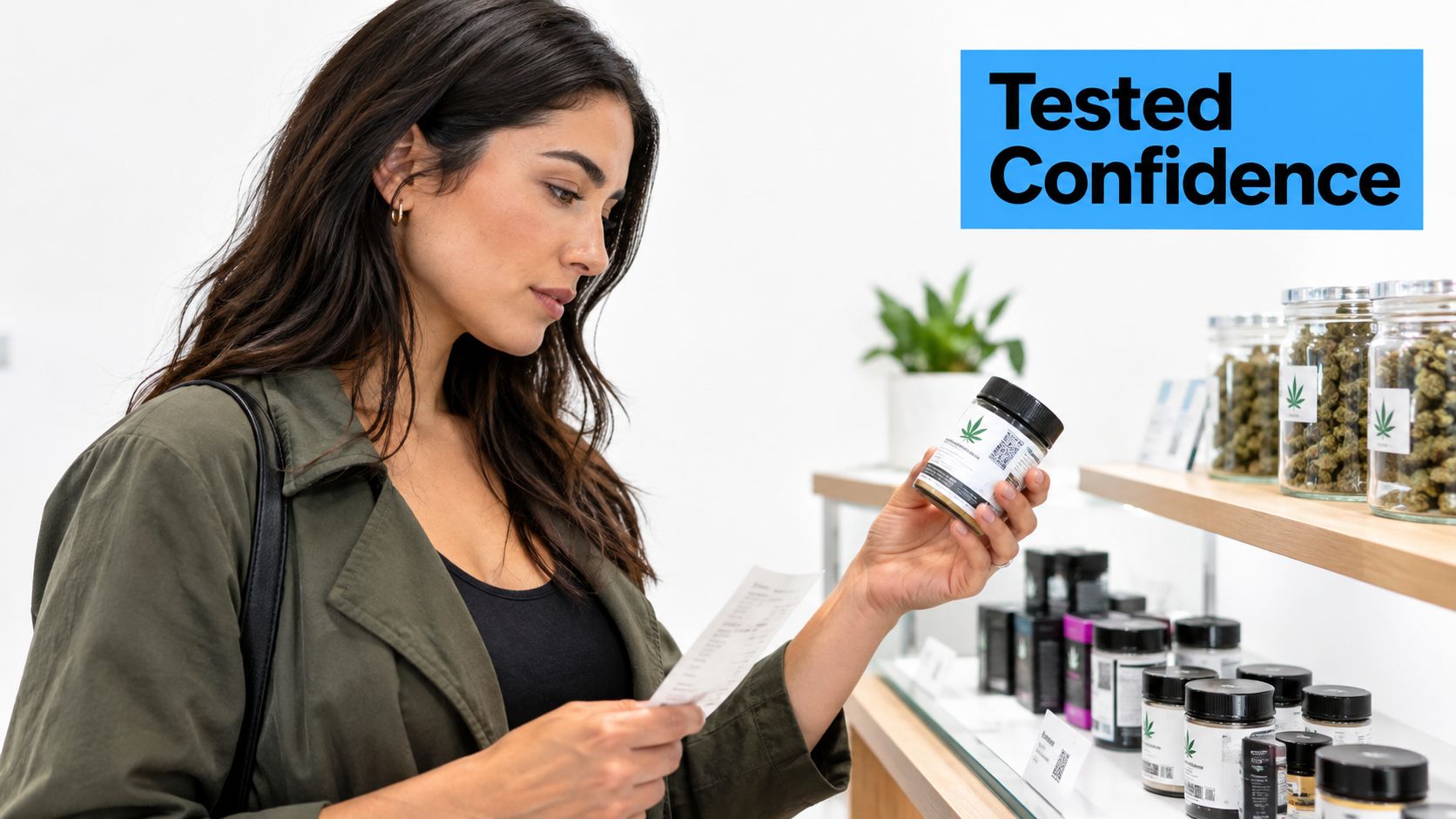
For Long Island shoppers, confidence comes from combining three checks: lineage context, batch evidence, and personal fit. Chem can be a rewarding category for someone who enjoys fuel-forward aromas or wants to explore an influential family, but the strain name can't replace current testing, cautious dosing, or responsible storage. Read the label, scan the CoA, ask focused questions, and let the batch guide the final choice.
Strong Strains Cannabis Dispensary offers lab-tested flower, vapes, pre-rolls, edibles, concentrates, tinctures, topicals, and accessories with knowledgeable guidance for Long Island shoppers. Visit Strong Strains Cannabis Dispensary to compare Chem-style products, review format and potency options, and choose convenient in-store pickup or local delivery.