
You're standing in front of a dispensary display packed with jars, cartridges, and tiny labels that say live resin, wax, rosin, sugar, or diamonds. The names sound familiar, but the questions are harder: Which one preserves the most flavor? Which extraction method creates the product? What does the lab report tell you?
Concentrates are made by separating and concentrating cannabis compounds, especially cannabinoids and terpenes. That process creates a broad family of products with different textures, aromas, handling requirements, and strength profiles. Understanding those differences helps you shop with more confidence, whether you're looking for a terpene-rich experience, a convenient vape, or a traditional solventless product.
Why Choosing the Right Concentrate Matters
A shelf full of concentrates can feel like a wall of unfamiliar vocabulary. One jar may look glossy and fluid, another may resemble amber glass, and a third may have the soft, whipped appearance of butter. The labels describe appearance, texture, or processing, but they don't always explain how those details affect the experience.
At Strong Strains, a useful conversation starts with your priorities rather than a product name. A customer who values aroma may prefer a terpene-forward extract, while someone who wants easy handling may find a softer consistency more practical. Someone new to concentrates may need a different starting point from an experienced consumer seeking a highly refined product.
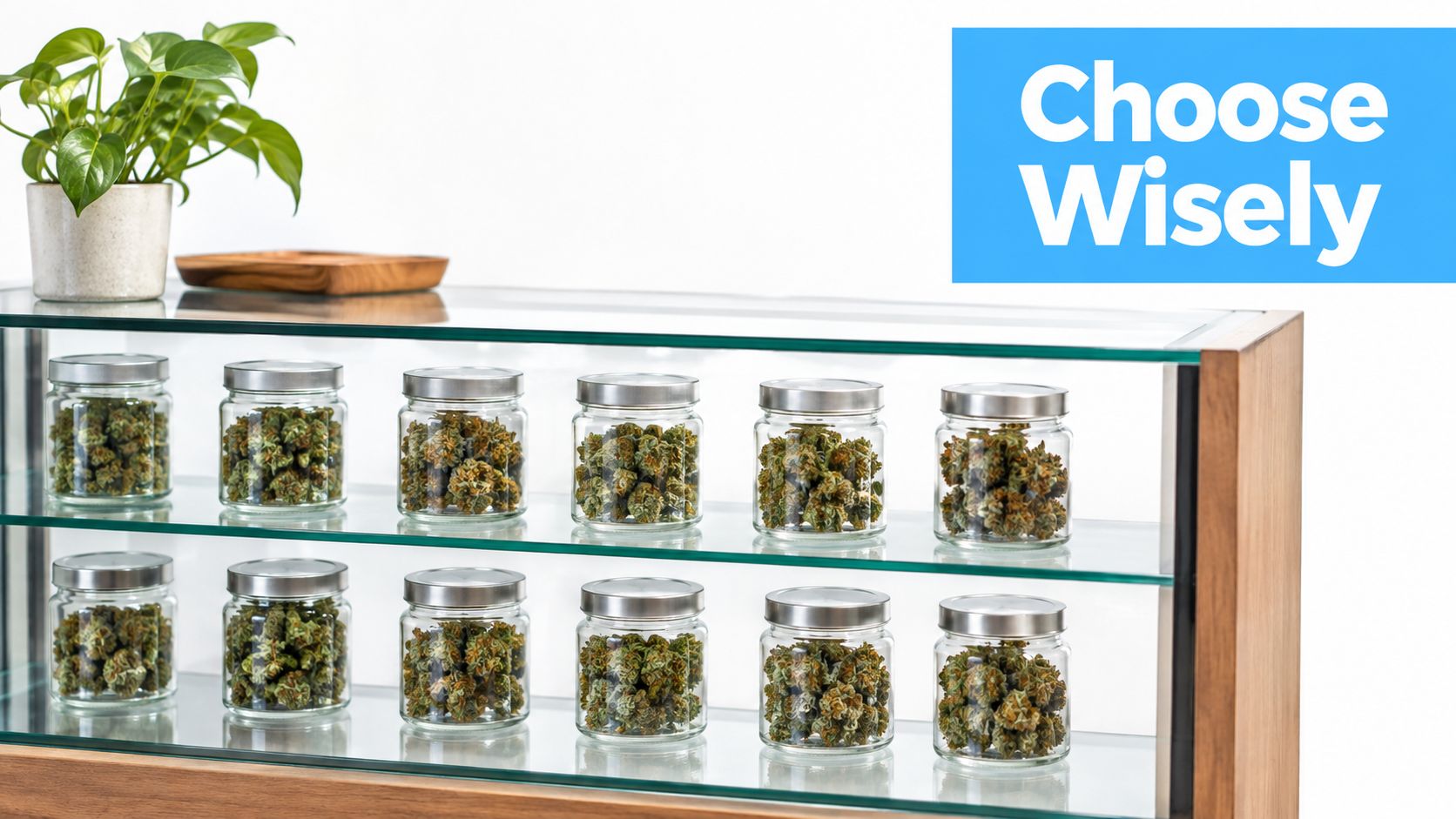
Potency is only one part of the decision
Solvent-based concentrates often contain much more THC than flower. The National Institute on Drug Abuse reports that solvent-based concentrates average about 54% to 69% THC and can exceed 80%, while non-solvent methods generally produce less potent material. NIDA's overview of marijuana concentrates provides useful context, but a high THC figure doesn't automatically mean a better product.
A concentrate can also differ in terpene retention, texture, ease of portioning, and suitability for a particular device. A crystalline product may emphasize refinement and potency, while live resin often appeals to shoppers who want the aroma of fresh cannabis. Hash provides a traditional option with a long history, and rosin offers a solventless path built around heat and pressure.
Practical rule: Choose the experience first, then use the product name and lab report to confirm whether the concentrate fits.
Read the label like a product description
Look for the extraction family, cannabinoid results, terpene information when available, production or packaging details, and contaminant testing. Ask whether the concentrate is designed for dabbing, vaping, incorporation into another product, or another intended use.
The same word can also describe different qualities across brands. “Wax” identifies a broad texture, not a guarantee of flavor or cleanliness. “Live” points to the starting material and preservation approach, but the final product still depends on processing and quality control. That's why a knowledgeable budtender should connect the name on the jar to the method behind it.
Understanding Solvent-Based and Solventless Extraction
The simplest way to understand the different types of concentrates is to begin with how producers separate resin from the plant. Concentrates generally fall into two families: solvent-based and solventless.
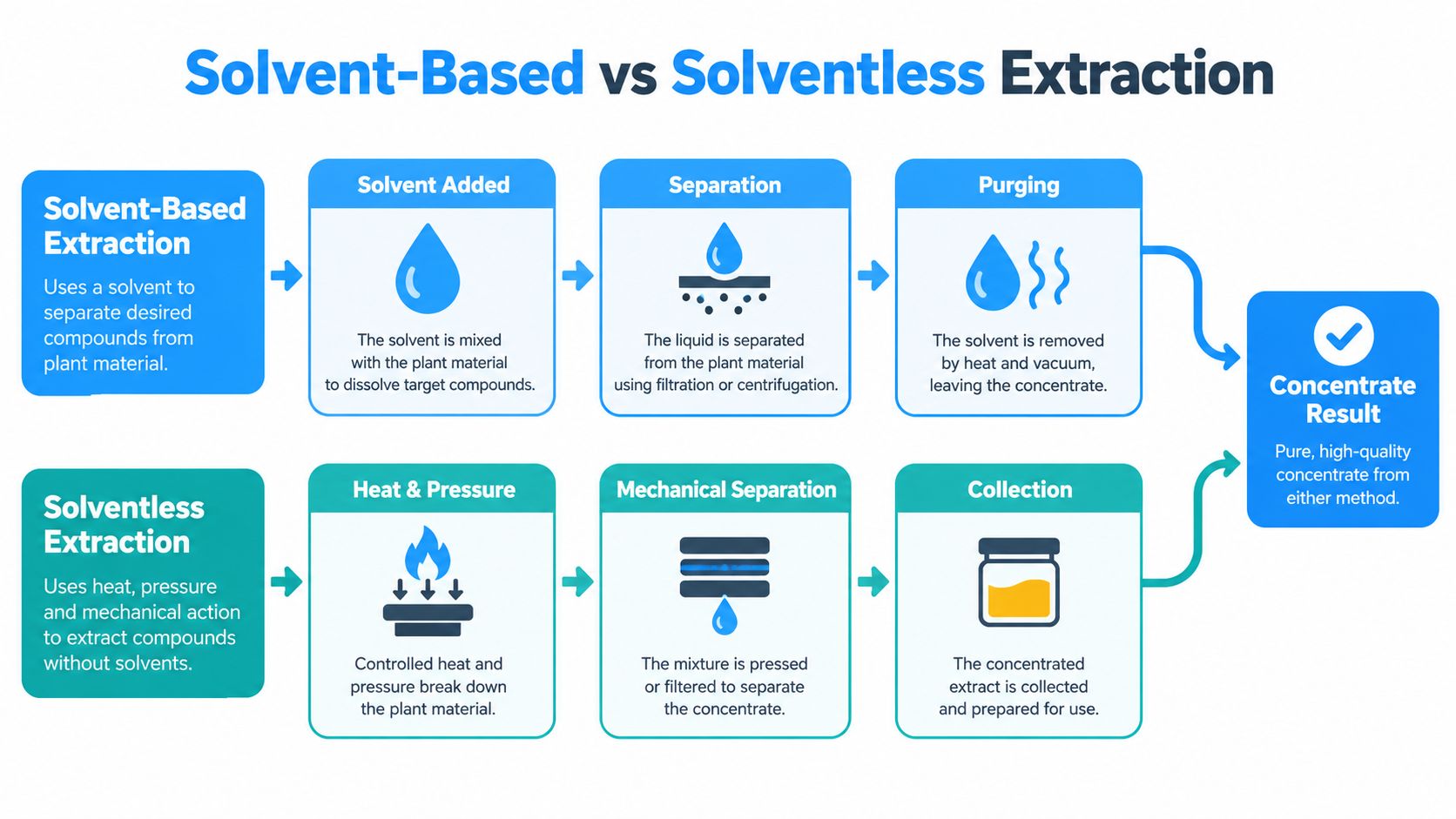
Solvent-based extraction uses a chemical such as butane, propane, ethanol, or CO2 to dissolve cannabinoids and terpenes. The producer then separates the extract from the plant material and removes the solvent through controlled post-processing. The method can produce products such as live resin, wax, shatter, oils, and other textures.
Solventless extraction uses physical forces instead of chemical solvents. Heat, pressure, water, screens, or agitation help separate resin-rich trichomes from the plant. Hash, kief, bubble hash, rosin, and live rosin belong to this broad family.
Follow the production path
Think of a solvent-based method like making tea. A liquid pulls selected compounds from plant material, then the producer removes that liquid from the finished extract. The quality of the result depends on the starting material, equipment, temperature control, purging, and testing.
A solventless method is closer to pressing oil from a seed or separating flour with a screen. The producer uses pressure, temperature, water, or mechanical movement to collect the desired resin without adding a chemical solvent. This doesn't mean every solventless product has identical characteristics. The starting material and processing choices still shape its color, texture, aroma, and cannabinoid profile.
| Extraction family | What separates the resin | Common examples |
|---|---|---|
| Solvent-based | Butane, propane, ethanol, CO2, or another chemical solvent | Live resin, wax, shatter, oil |
| Solventless | Heat, pressure, water, screens, or agitation | Hash, kief, rosin, live rosin |
Why the distinction matters
The extraction family helps you predict certain tradeoffs, but it isn't a substitute for a Certificate of Analysis. A properly produced solvent-based concentrate may offer strong flavor and efficient production, while a solventless concentrate may appeal to shoppers who want to avoid chemical solvents. Neither label alone proves that a product is safe, flavorful, or suitable for your needs.
For a deeper look at the solventless category, read Strong Strains' guide to solventless concentrates. The practical buying question remains the same: How was this made, and does the lab documentation support what the label suggests?
Exploring Major Concentrate Categories
Product names usually describe one of three things: texture, starting material, or refinement level. Shatter and wax mainly describe consistency. Live resin and live rosin describe products made from fresh or flash-frozen material. Distillate, diamonds, and crystalline products point toward a more refined format.
Texture-based products
Shatter is brittle and glass-like. It's commonly produced by running a solvent such as butane over cannabis and then purging the solvent under controlled heat and vacuum, which creates a thin, stable sheet. Its name comes from the way the finished extract can break apart.
Wax, budder, and badder are softer concentrates. Wax may feel sticky or dense, while budder and badder are often whipped or creamy. These textures can be easier to portion than a rigid sheet, although handling still requires a suitable tool and careful temperature control.
Crumble is drier and more porous. Its structure can make it easier to pick up in small pieces, but texture can change with heat, storage, and exposure to air. Sugar and sauce are generally softer or more fluid formats, with sauce often emphasizing a liquid terpene component.
Fresh-material and solventless products
Live resin is typically made from fresh or flash-frozen cannabis using solvent extraction. Freezing the material soon after harvest helps preserve delicate volatile compounds, so live resin is often chosen for aroma and flavor.
Live rosin also starts with fresh or flash-frozen material, but producers make it without solvents by using heat and pressure. Rosin made from dried flower or hash follows the same solventless principle, with the starting material creating an important difference.
Hashish, or hash, is one of the oldest cannabis concentrates and is widely traced to the ancient Middle East and Central Asia. Traditional hash compresses resin-rich trichomes into a solid form. Kief is a loose trichome-rich material that can be used on its own or pressed into hash.
Refined and high-purity formats
Distillate is highly refined oil that emphasizes selected cannabinoids and a consistent format. Because refinement can remove much of the original plant profile, distillate may offer less of the full aroma associated with a terpene-rich extract.
Diamonds are crystalline, high-purity products. Some are paired with sauce to combine a concentrated crystalline component with a more aromatic, fluid portion. High-purity concentrates can approach 99% purity, according to industry coverage of premium concentrates. This overview of premium concentrate demand also distinguishes modern products such as rosin, live resin, wax, shatter, budder, and crystalline extracts.
| Concentrate Type | Texture/Consistency | Extraction Method |
|---|---|---|
| Shatter | Brittle, glass-like sheet | Usually solvent-based |
| Wax | Soft, sticky, opaque | Usually solvent-based |
| Budder or badder | Creamy, whipped, or malleable | Usually solvent-based |
| Live resin | Soft, oily, or saucy | Solvent-based, fresh or flash-frozen material |
| Rosin | Varies from sap-like to firm | Solventless heat and pressure |
| Live rosin | Often sticky, aromatic, and soft | Solventless heat and pressure, fresh or flash-frozen material |
| Hash | Compressed, dense, or pliable | Solventless separation and compression |
| Distillate | Thick oil | Extensive refinement, commonly solvent-assisted |
| Diamonds | Crystalline solids | Refinement and crystallization |
Texture is useful, but it shouldn't be the only shopping filter. Compare different types of weed wax with the same care you'd apply to live resin or rosin. Ask about the starting material, terpene information, intended device, and test results.
The Impact of Extraction on Safety and Flavor
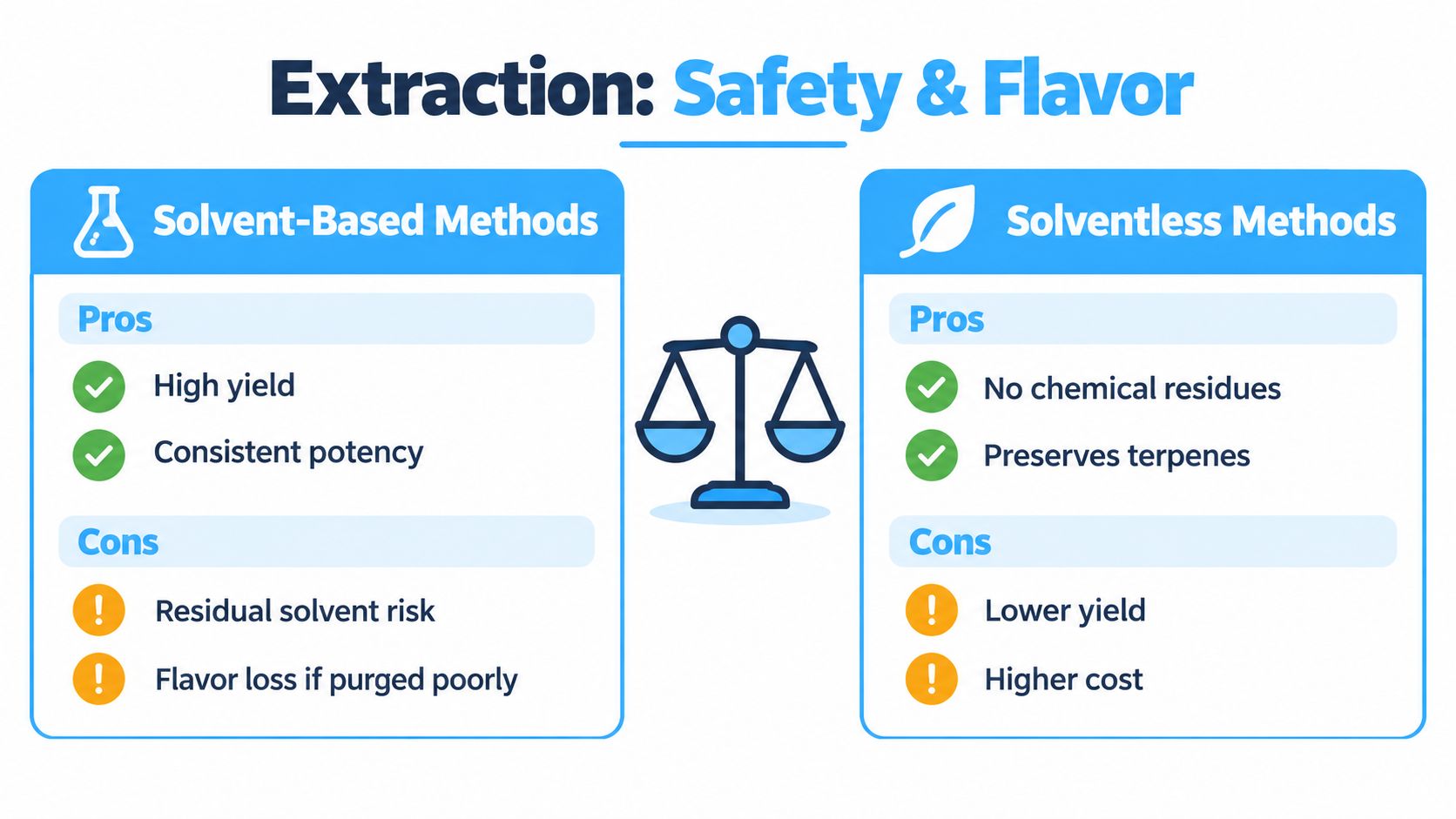
Extraction changes more than appearance. It can affect residual solvent risk, terpene preservation, and the chemical integrity of the finished concentrate. A published comparison found that solvent-extracted concentrates weren't significantly more potent than water-extracted, solventless concentrates, yet over 80% of the solvent-extracted samples contained residual solvents or pesticide residues. Researchers also detected degradation products including methacrolein and benzene. The published comparison shows why potency alone can't answer a safety question.
That finding doesn't mean every solvent-based product is unsafe. It means consumers need evidence about the individual batch. Licensed production, controlled purging, contaminant screening, and transparent lab documentation all matter.
Terpenes are sensitive compounds
Terpenes contribute to cannabis aroma and flavor, but drying and processing can reduce them. A technical review explains that improper drying and processing may cause decarboxylation of acidic cannabinoids and terpene loss. This review of cannabis extraction methods also explains why low-boiling hydrocarbon solvents can preserve delicate volatiles at lower temperatures, while CO2 and other methods may favor cleaner solvent handling and scalable processing.
That creates a practical tradeoff. A live resin may be a strong choice for shoppers who prioritize terpene fidelity. A CO2 product may appeal to someone who values a familiar oil format and controlled processing. A solventless rosin may offer a route that avoids chemical solvents while preserving a pronounced plant character, depending on the material and technique.
The video below adds a visual explanation of how extraction choices can influence the finished product.
Use the COA as your filter
A Certificate of Analysis should identify the batch and report cannabinoid results alongside relevant contaminant testing. Look for residual solvent, pesticide, microbial, and heavy metal results where the applicable testing panel includes them. Check that the label information matches the report and that the document comes from an accessible testing laboratory.
A COA doesn't tell you whether you'll prefer citrus, pine, earth, or fuel notes. It does help you move beyond attractive packaging and a large THC number. Clean processing and documented testing are purchasing features, not technical footnotes.
Storage, Handling, and Choosing Lab-Tested Products
A quality concentrate can lose aroma or change texture if you leave it exposed to heat, light, air, or repeated contamination. Store it in its original sealed container, keep it away from direct sunlight, and follow the product's label guidance. Avoid leaving a concentrate in a hot car or near a heat source.
Use a clean dab tool each time. Don't touch the concentrate with bare fingers, and don't introduce flower, ash, water, or other material into the container. Cross-contamination can alter the product and make the jar harder to evaluate later.
Protect the texture you bought
Consistency often reflects the product's composition and processing. A cool, stable environment can help maintain a firm concentrate, while warmth may soften wax, sauce, or rosin. Repeated temperature swings can also change how the product handles, so take out only what you plan to use and close the container promptly.
Handling habit: Keep the container closed until your tool is ready, then return it to storage immediately after use.
Check the product record
Before buying, inspect the packaging for the product name, batch identifier, cannabinoid results, terpene information when listed, and expiration or packaging details. Then locate the matching COA through the retailer, manufacturer, or testing portal.
A product labeled “solventless” may answer one question about production, but it doesn't replace contaminant testing. A solvent-based concentrate may also be appropriate when the producer uses controlled processing and provides credible results. The right decision comes from combining the extraction label with the documentation.
Strong Strains' guide to lab-tested cannabis products offers a useful framework for evaluating test information. If a staff member can't explain what a label means or where the matching report is, choose a product with clearer documentation.
Elevating Your Cannabis Experience with Concentrates
The different types of concentrates make more sense once you separate the label into three questions: What material started the process? Which extraction family was used? What does the lab report confirm?
That framework prevents a common mistake, choosing by THC percentage alone. Live resin and live rosin may attract flavor-focused shoppers because their processes are designed around preserving volatile compounds. Hash can suit someone who values traditional, solventless preparation. Wax, budder, and crumble offer different handling experiences, while distillate and diamonds emphasize refinement and concentration.
Start with a product that matches your familiarity and intended use. Use a very small amount, especially if concentrates are new to you, and give yourself time to understand the effects before consuming more. Frequent concentrate users may develop tolerance-like patterns and higher overall THC exposure, with increased concern around dependence and withdrawal symptoms, as discussed in the research on cannabis concentrate use.
A thoughtful purchase is more than a search for the strongest jar. It's a choice about flavor, texture, processing, testing, and how the product fits your personal routine.
Visit Strong Strains Cannabis Dispensary in East Setauket for lab-tested concentrates, including live rosin, cured concentrate, solventless products, wax, sugar, and RSO. Ask the budtenders to compare extraction methods, textures, terpene information, and COAs, then choose in-store pickup or local delivery for a product that matches your preferences.