
You're standing at a Long Island dispensary menu, comparing live resin with live rosin. The prices aren't close, the textures look different, and “solventless” sounds like a quality promise, but you're not sure what it guarantees. Does hash rosin taste better? Is bubble hash easier to use? Is live rosin safer, stronger, or more expensive?
Those are smart questions. Solventless concentrates describe a manufacturing method, not an automatic safety rating, potency level, or guarantee that every product will suit you. This guide breaks down how these concentrates are made, how the main formats differ, why premium pricing exists, and what to check before buying or using one.
Introduction to Solventless Concentrates and Why They Matter Now
A shopper comparing hash rosin with live resin is comparing two manufacturing methods, not two names on a menu. Solventless products use physical separation, while live resin uses chemical solvents that producers remove through later processing. Either route can produce flavorful, potent, well-made concentrates. The method alone does not determine the final quality.
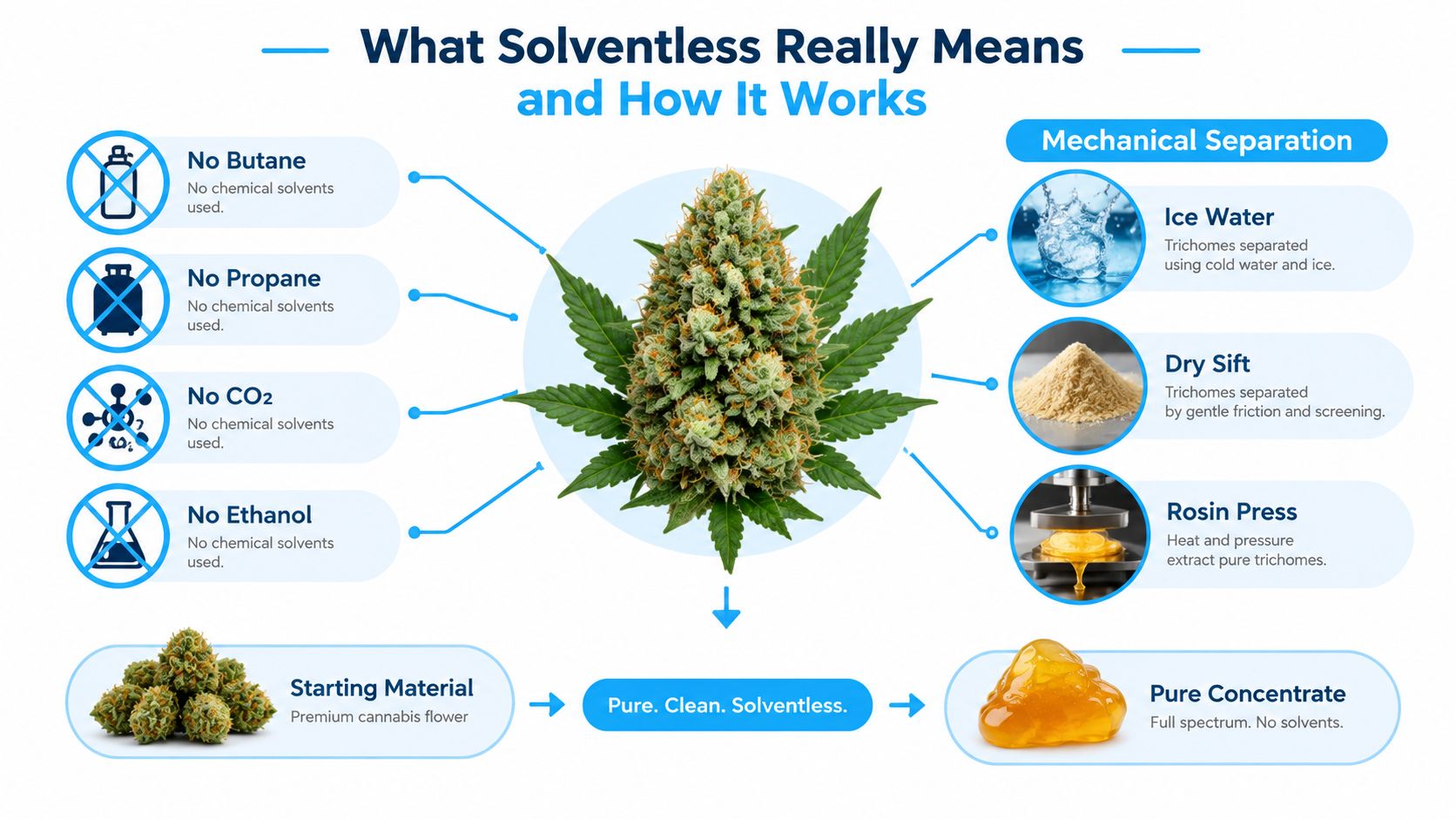
Solventless means the processor does not use chemical solvents such as butane, propane, CO2, or ethanol to separate cannabis compounds. Ice water, agitation, dry screening, heat, and pressure can do that work instead. Careful handling of fresh-frozen material may preserve more of the flower's distinct aroma and flavor.
That tradeoff matters. Mechanical processing can protect terpene character, but it can also produce less usable concentrate from the same starting material, which helps explain higher prices. Fresh, clean input material matters just as much. Solventless describes what happens during extraction, not whether the plant was free from contamination before processing, whether the finished product passed testing, or whether its potency suits your tolerance.
Long Island shoppers are asking about this category as it moves beyond a niche conversation. Industry reporting described solventless products growing about 132% per month from June 2021 to June 2022. Another market analysis projected that the category could reach roughly 25% of U.S. cannabis concentrate sales in 2026, compared with less than 14% three years earlier, and placed solventless products at approximately 34% higher average retail prices than the broader concentrate category. These figures are summarized in a Frontiers review of cannabis extraction methods.
The shopping takeaway: Solventless may justify a premium for flavor, process, and craft appeal, but the label does not guarantee a clean, gentle, or suitable product.
This guide covers flower rosin, bubble hash, hash rosin, live rosin, and solvent-based alternatives, with practical ways to compare flavor, texture, potency, budget, and responsible use.
What Solventless Really Means and How It Works
Think about pressing olives. A producer can use physical force to separate oil from the material, or use a chemical process designed to pull compounds out more aggressively. Cannabis extraction has a similar divide. Solventless concentrates rely on mechanical separation, while solvent-based concentrates use chemical agents to dissolve and collect cannabinoids and terpenes.
The starting material contains trichomes, tiny resin glands that hold much of the plant's cannabinoids and aromatic compounds. A solventless processor tries to separate those resin-rich structures from the surrounding plant material without adding a chemical solvent.
The main physical tools include:
- Ice water: Cold water and mechanical agitation help loosen trichomes, which can then be separated from plant matter through filtration.
- Dry screening: Screens or sieves separate resin glands through controlled mechanical movement.
- Heat and pressure: A rosin press warms the material and applies force until the resin flows out.
- Fresh freezing: Freezing flower immediately after harvest helps preserve fragile aromatic compounds before the material is processed.
What counts as solventless
Bubble hash, dry sift, flower rosin, hash rosin, and live rosin generally fit the solventless category when producers make them through physical methods. Live rosin is not the same as live resin. Both may begin with fresh-frozen cannabis, but live rosin uses ice water, filtration, heat, and pressure, while live resin uses a chemical extraction process.
That distinction matters for consumers concerned about residual hydrocarbons. A properly made solventless concentrate doesn't introduce butane or propane during extraction. It also doesn't mean the product is free from every possible contaminant, because the starting plant material and handling environment still matter.
The mental model to remember
Ask one question first: What did the producer use to separate the resin? If the answer is ice water, screens, heat, pressure, or mechanical agitation, you're looking at a solventless pathway. If the answer includes butane, propane, CO2, or ethanol, you're looking at a solvent-based pathway.
That single distinction makes menu language much easier to understand. After that, you can compare the input material, processing conditions, lab results, texture, price, and intended use.
How Solventless Concentrates Are Made Without Solvents
Solventless production follows several paths, but the objective stays consistent: separate resin-rich trichomes from plant material, then refine or press that resin into a usable concentrate.
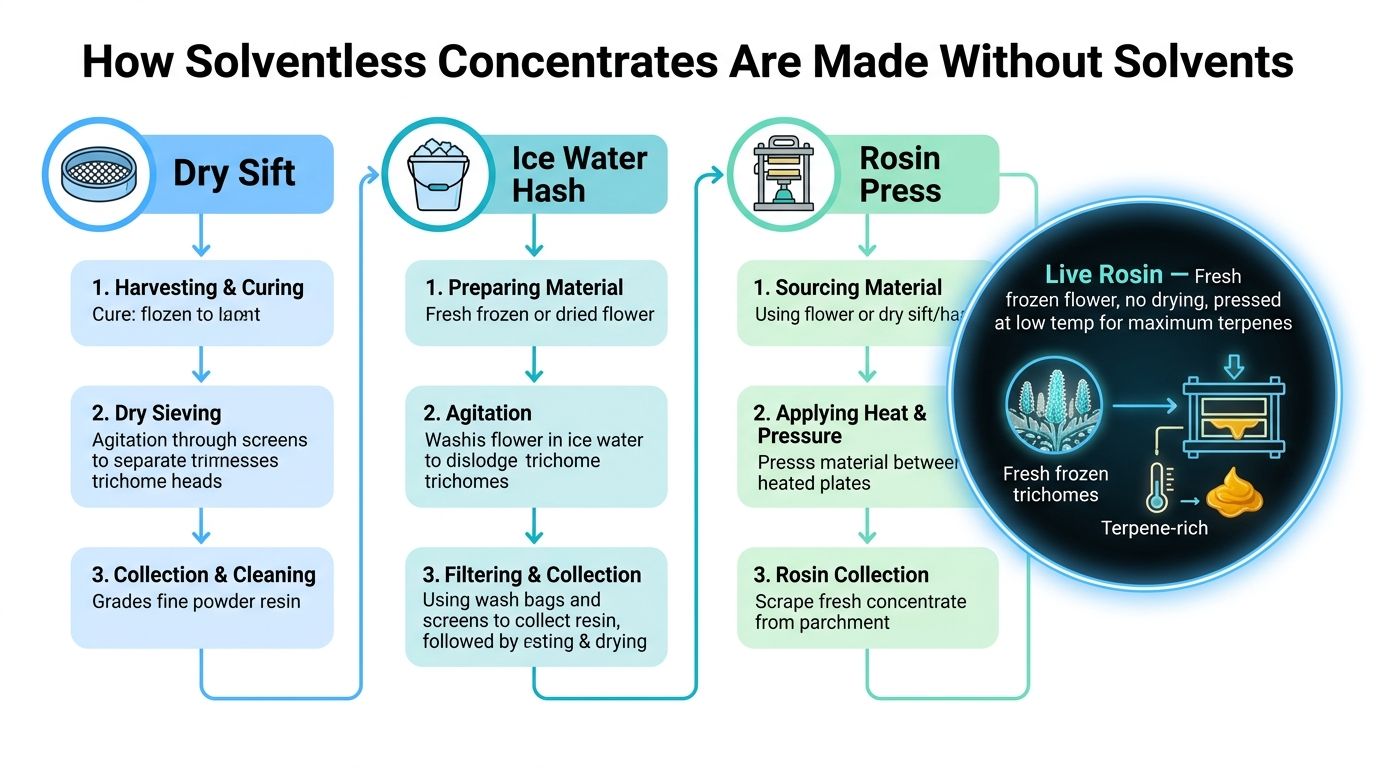
Dry sift uses screens and controlled agitation. The producer moves dried cannabis across a screen so the trichome heads fall through while larger plant particles remain behind. The resulting material can be used as sift, pressed into hash, or treated as an input for rosin production. Its quality depends heavily on the starting flower, screen selection, handling, and separation discipline.
Ice water hash, often called bubble hash, uses cold water and agitation. The cold environment helps make trichomes brittle enough to detach, while filtration bags separate the resin from the water and plant matter. A careful producer then dries the collected hash so moisture doesn't compromise texture or shelf life.
Rosin pressing takes flower, sift, or hash and applies controlled heat and pressure. The press encourages resin to flow from the material without a chemical solvent. The finished consistency can range from sticky and glossy to more whipped or stable, depending on the input and post-processing.
Why live rosin is different
Live rosin starts with fresh-frozen cannabis, not dried and cured flower. The producer first processes that frozen material into bubble hash. The hash is then pressed with heat and pressure into rosin, with no chemical solvent used at any stage. Fresh freezing helps protect volatile monoterpenes that can be lost during conventional drying and curing, which is why live rosin often has a vivid, strain-specific aroma.
Input quality matters more than a fancy press. A strong starting cultivar with healthy resin production can give a processor more useful material to work with, while micron grade influences which trichomes are collected and how the final product behaves.
Yield and terpene preservation pull in opposite directions
Rosin processing always involves a compromise. Lower temperatures usually preserve more aroma, but they can produce less output. Higher temperatures may increase yield while sacrificing more of the volatile compounds that shape flavor.
Industry guidance places flower rosin yields around 10% to 25% by weight, while premium hash rosin can reach roughly 40% to 75%, depending on micron grade and input quality, as described in this technical guide to pressing rosin from flower. The same guidance identifies lower press temperatures around 165°F to 190°F as more terpene-friendly and notes an estimate of about 30% more terpene retention at 165°F than at 200°F.
A separate extraction guide lists flower rosin processing around 180°F to 220°F and ice-water hash rosin around 140°F to 200°F, while warning that temperatures above 200°F, or 93°C, can vaporize significant amounts of monoterpenes such as myrcene and limonene. The details are covered in this explanation of terpene potential in solventless concentrates.
For readers who want a broader overview of traditional methods, Seed Cellar's complete hash making how-to offers useful background. Commercial production involves controlled equipment, testing, sanitation, and compliance, so a high-level understanding is more useful than treating a retail product like a home experiment. You can also read this practical guide to how to use rosin before choosing a format.
Types of Solventless Concentrates and How to Choose Between Them
The finished format changes the shopping experience. Bubble hash can be dry and granular or sticky and pliable. Flower rosin may feel more familiar to someone who wants a pressed product, while live rosin often appeals to shoppers chasing fresh-frozen flavor and a premium texture.
| Type | Input and Texture | Flavor and Best Use |
|---|---|---|
| Bubble hash | Ice-water-separated trichomes, ranging from crumbly to sticky | Full plant expression, useful for topping flower, sprinkling, or dabbing when the texture allows |
| Dry sift | Screen-separated resin, often sandy, powdery, or pressed | Direct, aromatic profile, practical for adding to flower or using as a hash input |
| Flower rosin | Pressed dried and cured flower, usually sticky or oily | Familiar flower-derived flavor, suited to dabbing or concentrate vaporizers |
| Hash rosin | Pressed sift or bubble hash, often glossy, pliable, or cold-cured | More refined flavor and texture, commonly chosen for dabbing |
| Live rosin | Fresh-frozen flower processed into bubble hash, then pressed, often soft or jam-like | Strong terpene expression, best for experienced shoppers who prioritize flavor and refined texture |
Choose by experience goal
If flavor intensity is your priority, live rosin or a well-made hash rosin may fit better than a basic sift. Fresh-frozen inputs can preserve aromatic compounds that would otherwise change during drying and curing. That doesn't mean every live rosin jar tastes better than every other concentrate. Cultivar quality, handling, storage, and production decisions still shape the result.
If you want versatility, bubble hash or dry sift can work across more than one routine. You might top flower with a small amount, use it in a compatible vaporizer, or choose a dab when the product's texture supports it. Before buying, ask whether the specific product is intended for dabbing, vaping, or adding to flower.
If you're focused on value, flower rosin may offer a more approachable entry into solventless concentrates than premium live rosin. Its dried and cured flower input follows a simpler path than fresh-frozen hash production, though the final quality still depends on the flower and pressing conditions.
Hash rosin commands a premium because the producer is refining resin before pressing it, rather than pressing whole flower directly. That extra separation can create a cleaner texture and more concentrated expression, but it also requires careful handling and can reduce the amount of finished product recovered.
For a related look at concentrate textures and formats, Strong Strains readers can review the guide to different types of weed wax. The practical question remains simple: do you want maximum terpene expression, flexible use, or a lower-cost way to explore solventless products?
Solventless vs Solvent Based Concentrates Benefits and Tradeoffs
A shopper comparing rosin with live resin is comparing production methods, not a simple safe-versus-unsafe label. Solventless concentrates use physical separation, while live resin, shatter, and distillate use chemical solvents or later refinement. Each approach affects flavor, consistency, yield, and price.
Flavor and terpene character
Solventless can stay closely connected to the starting flower, especially when fresh-frozen material receives gentle handling. The result may taste broad, fresh, and specific to the cultivar. Live resin can also be highly aromatic when the plant is frozen soon after harvest and processed carefully.
The contrast is closer to two kitchens preparing the same ingredient in different ways. Solventless often suits shoppers seeking a less processed plant expression. Solvent-based products can provide bold, repeatable profiles and a wider selection of textures.
Residual solvent concerns
Solventless extraction does not introduce residual butane, propane, CO2, or ethanol from the extraction step. Solvent-based products require processing and testing designed to control and remove those chemicals. That difference addresses one category of concern, not the entire safety question. Contaminants in the starting material can still carry into a finished concentrate.
Scale, consistency, and price
Solvent-based systems are generally easier to standardize and scale. Producers may therefore offer more uniform textures and steadier supply. Solventless production involves hands-on input selection, sorting, filtration, washing, and pressing, so results and output can vary more from batch to batch.
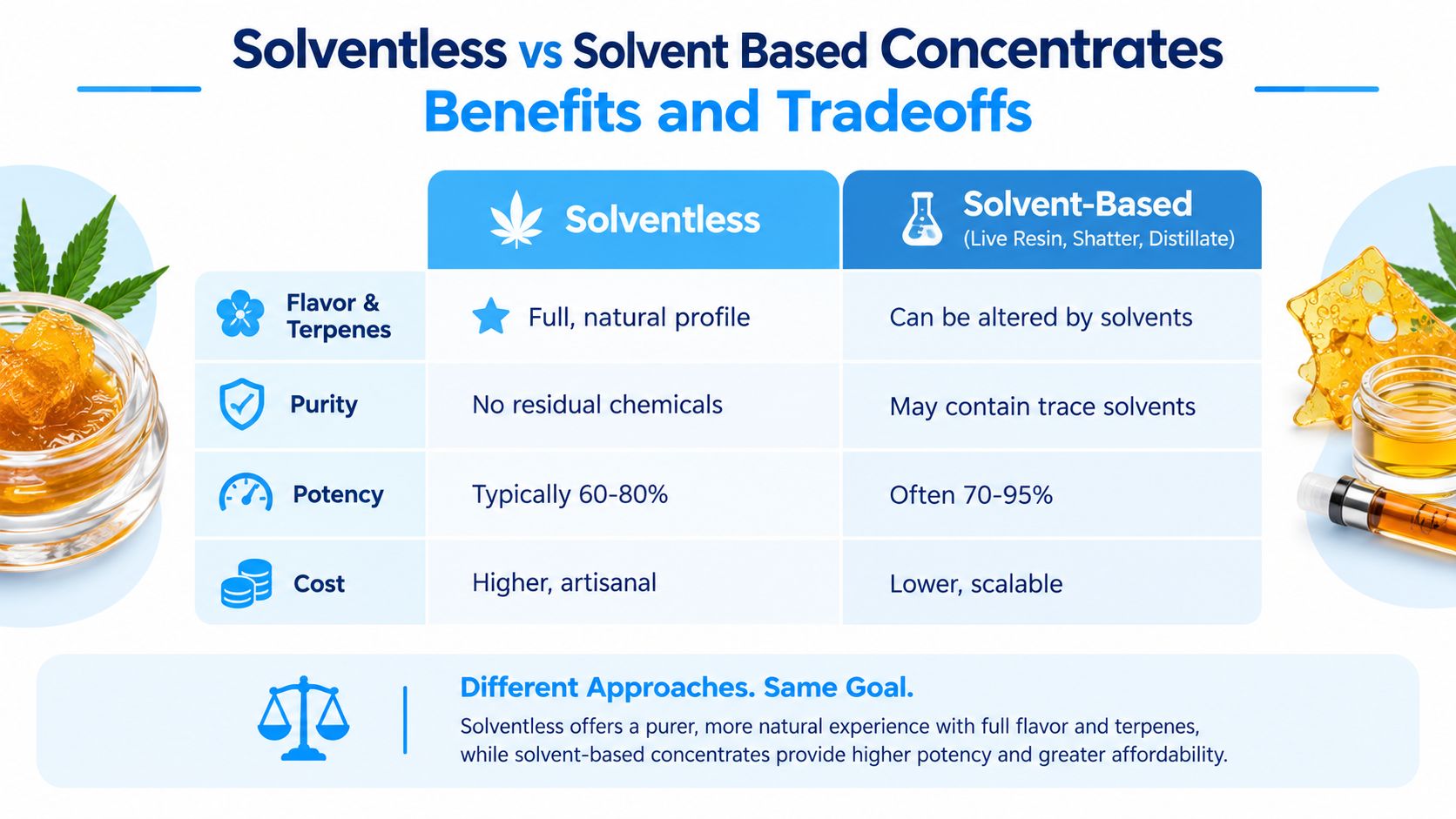
A higher shelf price can reflect the tradeoff between yield and terpene preservation. Fresh-frozen material may retain desirable resin, yet washing and pressing do not recover every part of the input as finished concentrate. Labor, specialized equipment, careful handling, and lower production efficiency can all contribute to the premium. Price signals process and scarcity, not automatically higher potency or better quality.
Potency also needs context. Solventless products can be strong, but a higher THC result does not guarantee richer flavor, cleaner material, or a better fit for a shopper's routine. The manufacturing method describes how the concentrate was made, not whether the flower was grown, stored, or tested well.
The underlying idea is older than modern rosin branding. Hand-rubbed charas techniques were documented in regions now including Afghanistan, Nepal, and northern India by around 800 AD. Ice-water extraction and rosin pressing later expanded modern solventless formats, with rosin becoming widely recognized around 2015. A 2017 academic review counted 8,389 rosin mentions in a dataset of 88,901,647 cannabis-related tweets collected from March 15, 2015, through April 17, 2017, and found that 49.6% of rosin tweets were geolocated in the United States. The historical account appears in this review of solventless concentrate history.
Safety Lab Testing Dosing and Storage Tips You Need to Know
“Solventless” answers one production question: whether chemical solvents were used. It doesn't answer every safety question. Mold, pesticides, heavy metals, and other contaminants can originate in the starting material and carry through into the final concentrate, so solvent-free manufacturing isn't the same as guaranteed clean or risk-free manufacturing.
A major review notes that solventless methods avoid residual solvent contamination, but it also emphasizes upstream contamination concerns and the limited nature of controlled, representative research into concentrate effects, including long-term pulmonary outcomes. That distinction matters because shoppers often ask whether rosin is “safe” as if the answer can be reduced to yes or no. A more accurate answer is that solventless reduces one category of concern while potency, contamination, and inhalation risks remain relevant. See the review of cannabis concentrate health considerations for that broader context.
Read the lab information, not just the front label
At a licensed New York dispensary, look for batch information and testing that addresses more than residual solvents. Useful categories include:
- Contaminants: Check whether the product has been evaluated for mold, pesticides, heavy metals, and other applicable contaminants.
- Potency: Review THC and other cannabinoid results before deciding how much to use.
- Traceability: Verify the batch number and test date so the documentation matches the package.
- Product condition: Look for intact packaging, clear labeling, and storage instructions.
Solventless concentrates still contain high THC levels. Public-health information summarized in the peer-reviewed concentrate study indexed by PubMed reports that non-solvent products average roughly 39% to 60% THC, while solvent-based products average about 54% to 69% THC. Solventless doesn't mean mild.
Start with less than you think you need
Dabbing can deliver a full dose in a single breath, which can raise the chance of acute anxiety, agitation, paranoia, and other unpleasant reactions, according to the same public-health source. Newer consumers and anyone uncertain about tolerance should avoid treating a large dab like a normal flower hit.
A practical approach: Use the smallest amount that lets you evaluate the product, choose a lower-temperature session when appropriate, and wait before deciding whether you need more.
Store solventless concentrates in an airtight container, away from heat and direct light. Minimize unnecessary exposure to air, warmth, and handling because those conditions can flatten aroma and change texture. Refrigeration or freezing may be relevant for longer storage, but follow the product's instructions and let a cold container warm gradually before opening to reduce condensation.
For a deeper explanation of what licensed products should document, review Strong Strains' guide to cannabis testing standards.
Shopping Solventless on Long Island at Strong Strains
A good solventless purchase starts with a conversation, not a color or price comparison. At an East Setauket menu, tell the budtender whether you've used concentrates before, whether flavor or value matters more, and whether you plan to dab, vape, or add a small amount to flower.
Ask direct questions:
- What is the input: Was the product made from dried flower, sift, bubble hash, or fresh-frozen cannabis?
- What texture should I expect: Is it stable, sticky, whipped, saucy, or better suited to a particular device?
- What does the label show: Can you review potency, batch information, test date, and contaminant screening?
- How should I store it: Does the producer recommend a particular container or temperature?
- What's a sensible starting amount: Especially if you're new to concentrates or changing formats.
Strong Strains Cannabis Dispensary in East Setauket lists solventless options that can include RYTHM solventless concentrate products, Jetty solventless live rosin Mini Tank AIO products, and other solventless hash and rosin formats. Availability changes, so the most useful approach is to check the current menu and ask the team to explain the specific batch in front of you rather than relying on a product category alone.
Pickup can work well when you already know the format and want to reserve a selected item. Local delivery in Suffolk County may be more convenient when you want to review options from home before placing an order. Either way, keep the product sealed during transport, store it away from heat and light, and follow the package guidance once you're home.
Solventless concentrates reward attentive shopping. Choose the format that matches your tolerance and routine, confirm the testing information, and treat premium pricing as a reason to evaluate process and quality, not as proof of universal superiority.
Strong Strains Cannabis Dispensary offers lab-tested concentrates, including solventless hash and rosin options, alongside knowledgeable budtender guidance for Long Island shoppers age 21 and older. Visit Strong Strains Cannabis Dispensary in East Setauket to explore current products, arrange pickup or local delivery, and get a recommendation matched to your experience, flavor preferences, and desired potency.