
You're standing in front of a concentrate shelf, comparing jars labeled shatter, live resin, rosin, sauce, and distillate. One package highlights THC, another emphasizes “solventless,” and a third promises a terpene-rich experience. The highest number looks tempting, but it doesn't answer the questions that matter most: How was this made? Can you verify what's in it? Will it suit your goal?
The best cannabis concentrates aren't automatically the strongest products on the menu. They're the products with a clear process, reliable batch information, and a profile that fits the experience you want, whether that means evening relief, creative focus, sleep support, flavor, discretion, or careful low-dose use.
What Best Really Means in the Concentrate World
You are comparing jars marked rosin, live resin, hash, and distillate. One label leads with THC, another highlights “solventless,” and a third promises strong flavor. The clearest way to choose is to treat the label like a product map: follow the extraction method, terpene profile, batch record, and intended use rather than one headline number.
Start with three questions.
- How was it made? Solventless rosin, fresh-frozen live resin, traditional hash, and refined distillate follow different routes from plant to finished concentrate. Those routes affect flavor, texture, stability, and which plant compounds remain.
- Can you verify what's inside? Look for batch-specific testing that covers more than THC. Residual solvents, pesticides, heavy metals, and microbial safety can affect the quality and safety of an extract. A comparative review reported that over 80% of solvent-extracted samples contained residual solvents, pesticides, methacrolein, or benzene-related contaminants, so complete testing gives a clearer picture than a potency claim alone (cannabis contaminant guidance and review).
- Does it fit your goal? A flavor-focused customer may prefer a terpene-rich live extract. Someone seeking discreet, measured use may choose a tested vape or a product divided into clear portions. A very high-THC concentrate can make precise dosing harder for a newer consumer.
Practical rule: THC is the volume knob, not the whole song. The process, terpene profile, and dose shape the experience.
Concentrates contain more cannabinoids by weight than ordinary flower. Washington State education material places many concentrates, including wax, rosin, shatter, and hash oil, in a broad 60% to 90% THC range, while kief and hash generally fall in the 50% to 80% range (Washington Liquor and Cannabis Board potency education). A National Institute on Drug Abuse fact sheet reports solvent-based concentrates averaging about 54% to 69% THC, with some exceeding 80%, compared with seized marijuana plant material averaging just over 15% THC (National Institute on Drug Abuse concentrate fact sheet).
That gap is like comparing a spoonful of syrup with a glass of juice. A small concentrate portion may feel far more intense than a similar-looking amount of flower. “Best” therefore means best matched to your goal, whether that is relief, creativity, sleep, flavor, or careful low-dose control.
How Cannabis Concentrates Are Made
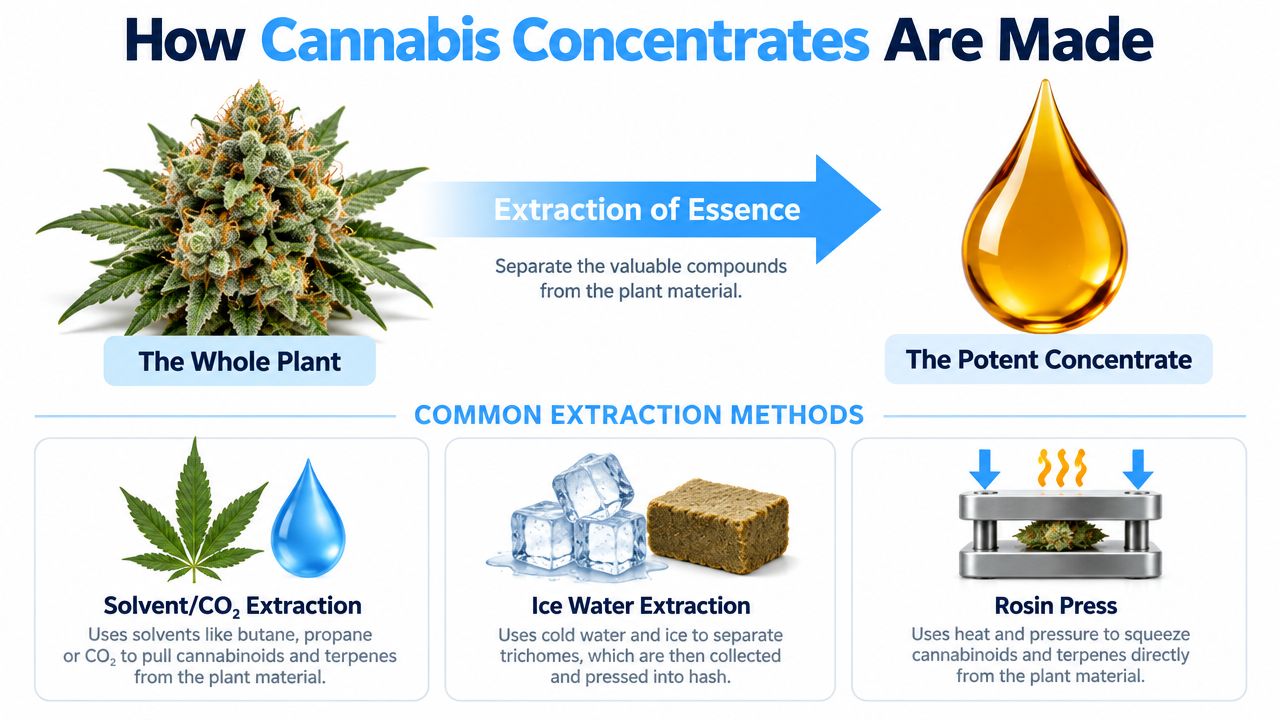
A customer comparing rosin, live resin, and distillate may see three very different textures and aromas. The difference begins before extraction, with the plant material and the method used to separate its resin. Concentrates collect cannabinoids and terpenes while removing much of the surrounding plant matter.
The main split is between solvent-based and solventless extraction.
Solvent-based processors use butane, propane, carbon dioxide, or ethanol to pull compounds from cannabis. The extract is then refined and purged, followed by testing for residual solvents. Hydrocarbon methods, especially butane or propane, can produce aromatic formats such as live resin, badder, wax, sauce, and shatter. Carbon dioxide and ethanol methods can produce more refined oils and cannabinoid-focused products.
Solventless processing separates resin through physical action. Ice-water extraction loosens trichomes from the plant, creating hash that may be dried, pressed, or processed further. A rosin press applies heat and pressure to flower, kief, or hash, squeezing out resin without adding an extraction solvent. This mechanism produces rosin and hash rosin (solventless concentrate methods).
Why the starting material matters
Fresh-frozen cannabis is frozen soon after harvest instead of being dried and cured first. That choice helps retain volatile terpenes that may disappear through drying, heat, and storage. Research on extraction and terpene preservation describes total terpene content often around 5% to 15% in live resin and roughly 13% to 40% in sauce, while cured extracts are generally lower after drying and thermal processing (review of cannabis extraction and terpene preservation).
The label makes more sense when you connect it to the production path. “Live” usually means fresh-frozen input. “Rosin” indicates heat and pressure without added extraction solvents. “Distillate” indicates extensive refinement, often leaving a simpler cannabinoid profile and less of the original plant character.
For a closer look at solventless formats, read this guide to solventless cannabis concentrates.
Shatter, Wax, Resin, Rosin, and Distillate Compared
You are choosing between a brittle slab, a soft scoop, and a glossy oil at the dispensary. The texture gives you a clue about handling and finishing, but it does not decide quality. A well-made shatter can be more useful than a poorly documented sauce. Start with the format, then check the extraction process, terpene profile, batch results, and certificate of analysis, or COA.
| Format | Texture | Extraction Method | Typical Potency | Best For |
|---|---|---|---|---|
| Shatter | Thin, glass-like, brittle | Usually solvent-based, often hydrocarbon or CO2 | Often high | Experienced users who want a firm, easy-to-store concentrate |
| Wax or badder | Soft, creamy, whipped, or pomade-like | Usually hydrocarbon extraction with agitation or whipping | Commonly high | Shoppers who want a manageable dab and strong flavor |
| Sauce | Wet, syrupy, often mixed with crystalline material | Usually fresh-frozen hydrocarbon extraction | Often potent and terpene-rich | Flavor chasers who enjoy bold aroma |
| Live resin | Sticky, glossy, or semi-solid | Solvent extraction from fresh-frozen cannabis | High, depending on the batch | Consumers prioritizing fresh plant character and rich aroma |
| Rosin | Sticky, waxy, or honey-like | Heat and pressure, without added extraction solvent | Often high | Shoppers seeking solventless processing and expressive flavor |
| Traditional hash | Pressed, soft, crumbly, or firm | Sifted or ice-water-separated trichomes, then compressed | Commonly lower than highly refined extracts | Users who want a classic, full-plant style |
| Distillate | Thick, clear, or pale oil | Extensive refinement and distillation | Often very high, depending on the batch | Discreet vapes, edibles, and repeatable cannabinoid content |
Shatter behaves like thin glass. Its stable form can store neatly and deliver a strong experience, but brittle pieces may be awkward to portion. Choose it for convenient storage only if you can handle small, controlled amounts.
Wax and badder work more like softened butter. A scoop is usually easier than breaking a glassy sheet, making these formats practical for regular dab users. Their aroma depends on the starting material, extraction, and finishing steps, not on the texture alone.
Live resin and sauce place aroma at the center. Fresh-frozen cannabis can retain more of its volatile plant compounds. Sauce is wetter because it combines concentrated cannabinoids with a terpene-rich fraction, while live resin usually offers a sticky, glossy consistency and fresh plant character.
Rosin suits shoppers who want a solventless process. Heat and pressure separate resin from flower, kief, or hash without adding an extraction solvent. Live rosin starts with fresh-frozen material. Hash rosin starts with ice-water hash. The two formats can offer expressive flavor, though the batch record still matters more than the name on the jar.
Distillate is the practical workhorse. Extensive refinement removes much of the original plant profile, so it fits vapes, edibles, and other discreet formats where consistent cannabinoid content matters more than strain-specific aroma.
The best choice depends on the goal. Someone seeking relief may value a tested, predictable product and an easy-to-control serving. A shopper chasing creativity or flavor may prefer live resin, sauce, or rosin with a clear terpene profile. For sleep, a familiar product with repeatable effects may be easier to manage than the highest-potency option. Low-dose users often benefit from a format that can be measured or portioned precisely, rather than judging quality by THC percentage alone.
Potency, Terpenes, and Why Strength Isn't Everything
A jar marked with a higher THC percentage can look like the obvious choice, yet the experience depends on more than that number. Cannabinoids drive much of the measurable potency, while terpenes shape aroma, flavor, and sensory character. Myrcene, limonene, pinene, linalool, and caryophyllene can make products with similar THC levels feel noticeably different.
A useful comparison is an orchestra. THC supplies volume, but terpenes help conduct the mood and texture. Highly refined distillate can provide a direct cannabinoid experience with little original plant aroma. A lower-THC live rosin may feel more layered because it preserves a broader aromatic profile.
Terpenes do not guarantee a particular medical result. Research on concentrate effects and potential harms remains incomplete, with important questions about both short-term and long-term use. Treat strain names and terpene descriptions as clues rather than promises.
| Compound Class | What It Does | Common Examples | Typical Range in Concentrates |
|---|---|---|---|
| Major cannabinoids | Contribute most directly to measured potency and core effects | THC, CBD | Concentrates may span 60% to 99% THC in research categories (systematic review) |
| Minor cannabinoids | Add context to the cannabinoid profile and may influence how a product feels | CBG, CBN | Varies by batch and formulation |
| Terpenes | Shape aroma, flavor, and sensory character | Myrcene, limonene, pinene, linalool | Live resin often falls around 5% to 15%, while sauce may range roughly from 13% to 40% |
Compare a 90% distillate with a 65% live rosin by reading the complete labels, not just the headline number. Distillate may suit someone seeking a simple, discreet cannabinoid format. Rosin may appeal to someone who prioritizes fresh-frozen flavor and a fuller profile. Neither percentage predicts personal preference on its own.
Batch transparency adds another layer. Look for current potency results, terpene totals, listed minor cannabinoids, and the extraction method. A clear record helps you connect what is in the container with the experience you want.
Read the label in this order:
- Potency: Identify THC, CBD, and listed minor cannabinoids.
- Total terpenes: Prefer a batch result over a vague flavor description.
- Dominant terpenes: Use them to anticipate aroma and sensory character.
- Method: Decide whether refined, fresh-frozen, cured, solvent-based, or solventless processing matches your priorities.
How to Use Concentrates Safely and Effectively
A concentrate session can feel manageable until a small-looking portion delivers far more THC than the same amount of flower. Start below your usual flower routine, then give the first dose time to settle before deciding whether to add more. The goal is repeatable control, not the biggest cloud.
Dabbing with a rig or e-rig
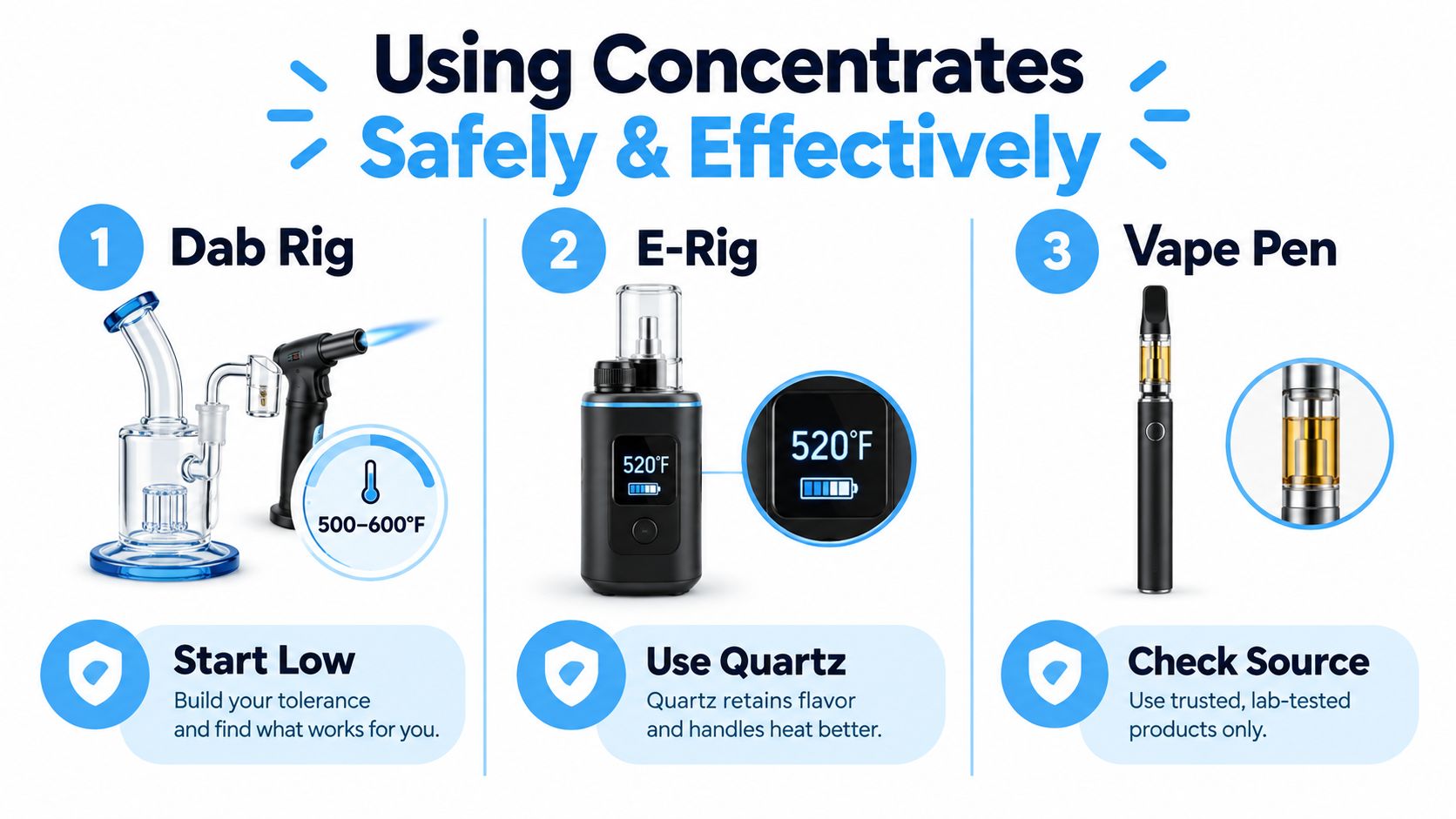
A traditional rig uses a torch to heat quartz or another compatible surface. An e-rig regulates heat electronically, making the process easier to repeat. Flavor-focused users often begin around 500 to 600 degrees Fahrenheit. Lower temperatures can preserve more terpenes and feel smoother, while excessive heat may produce a harsher draw and a burnt taste.
A cold start puts the concentrate in a cool chamber before heating. Like warming a pan gradually instead of dropping food onto a scorching surface, this approach gives beginners more control over the material. Do not heat the chamber until it glows red, and do not treat a large scoop as a normal first dose.
Start with a rice-grain-size dab, wait 10 to 15 minutes, and only then decide whether you need more.
Clean the chamber after each use. Reclaim buildup can change flavor, restrict airflow, and affect device performance. Use tools made for the device, keep the torch away from flammable materials, and allow hot parts to cool before touching them.
Vapes and simpler formats
A 510-thread cartridge or disposable pod offers a discreet, portable format. Set the battery to the level recommended for the hardware, and avoid repeated, extended pulls that can overheat the oil. A lower setting is generally gentler on flavor and hardware than treating every cartridge like a high-temperature dab.
Infused pre-rolls provide a familiar entry point because the concentrate is already distributed through the flower. Topping a bowl with a very small amount can work too, although the material may burn unevenly and offer less dose control than vaporization.
For practical device guidance, read this walkthrough of the best ways to use cannabis concentrates.
A short demonstration can clarify how a rig, e-rig, and vape pen differ.
Never drive after using cannabis. Keep concentrates away from children and pets, and store them sealed in a cool, dark place. If you are pregnant, taking medication, or considering cannabis for a medical condition, speak with a qualified healthcare professional.
Matching the Right Concentrate to Your Goal
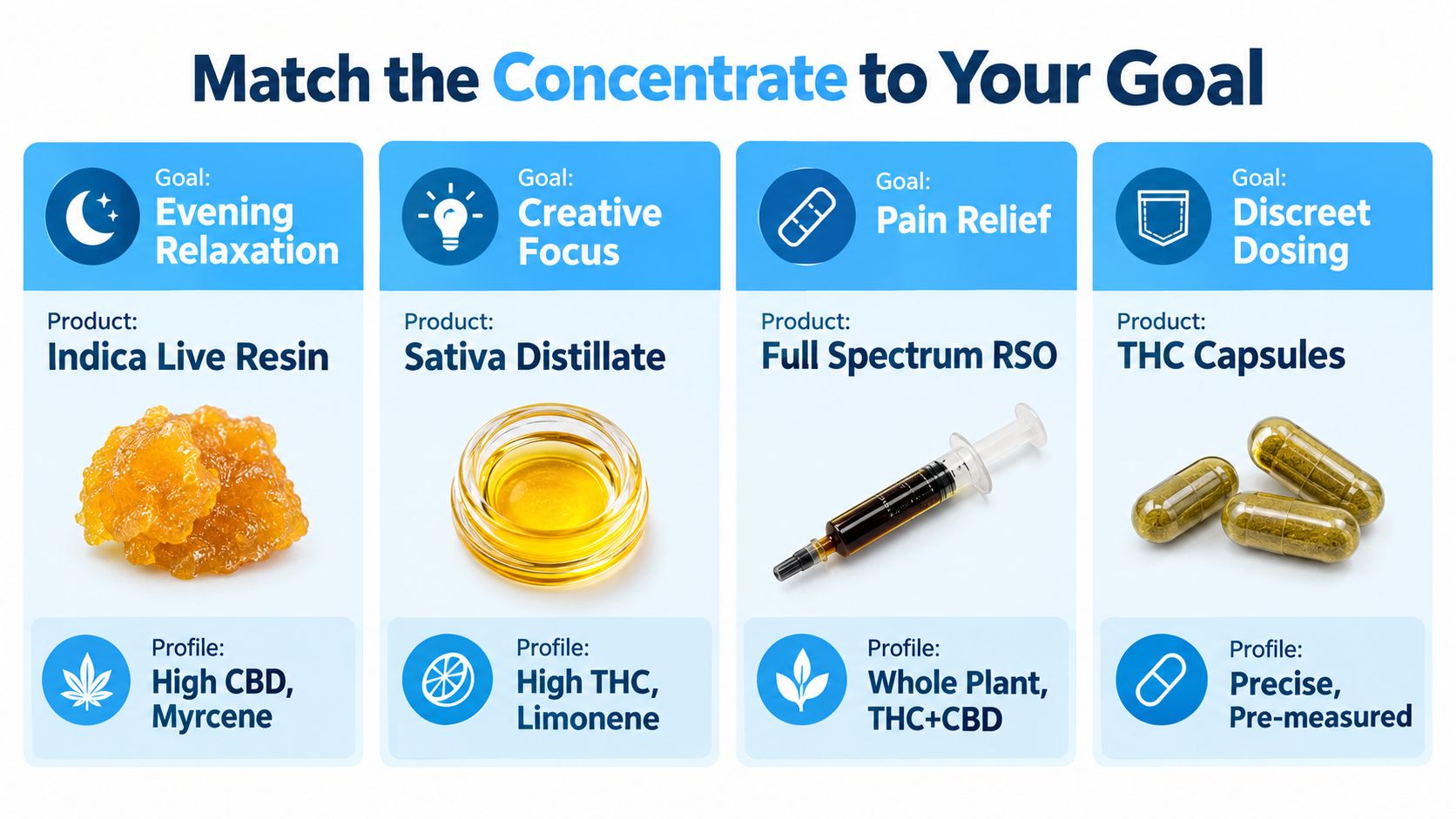
The right concentrate starts with your goal, not the highest THC percentage. Match the experience you want with the product's extraction method, terpene or cannabinoid profile, and the amount of batch information available.
Evening relief
An experienced consumer seeking a fuller evening experience might choose terpene-rich live resin or a heavier, indica-leaning rosin. High-CBD hash offers another route for shoppers who want cannabinoids beyond THC. Myrcene and caryophyllene can help identify earthy, herbal, or peppery aromas, though those compounds do not guarantee pain relief or sedation.
Process also shapes the experience. Live resin preserves characteristics from fresh-frozen flower, while rosin uses heat and pressure without solvents. A transparent producer should explain the process and provide batch records, so the product can be judged on more than a strain name or potency claim.
Creativity and daytime focus
A bright live resin sauce with a limonene-forward aroma may suit someone who prefers an energetic, citrus-like profile. Balanced hybrid rosin or a low-dose cartridge can offer finer control than a highly refined, very potent dab. Keep the first serving modest, especially when you need to stay attentive.
Sleep support
Some consumers choose CBN-forward distillate blends, heavier indica hash rosin, or an edible-compatible distillate within a relaxing nighttime routine. Effects vary, and cannabis is not a guaranteed sleep treatment. Try one format at a time before combining products, so you can tell how each one affects you.
Low-dose precision
A measured distillate cartridge, lower-potency live resin, or rosin syringe can make small servings easier to repeat. Check the package for cannabinoid content per serving, then confirm that the batch COA matches the label. Clear serving information matters more here than an impressive total THC figure.
Before buying, ask:
- Goal: Do I want flavor, relief, sleep support, creativity, discretion, or precise dosing?
- Tolerance: How familiar am I with concentrated THC?
- Profile: Do the cannabinoids and terpenes fit my preferred experience?
- Process: Do I prefer solventless, fresh-frozen, cured, or highly refined extraction?
- Proof: Can I verify the batch-specific COA?
Lab Testing, Safety, and the New York Standard
A high THC result cannot confirm that a concentrate is clean or well made. Start with the paperwork. A batch-specific COA should identify the product and report cannabinoid potency, terpene results when available, residual solvents, pesticides, heavy metals, and microbial testing. This evidence matters especially for solvent-extracted products, where processing chemicals require their own review.
A QR code or product-page link should open results for the same batch, not a general brand page. Match the package's batch identifier to the COA, then read each panel:
- Potency: Reports THC, CBD, and minor cannabinoids.
- Terpenes: Describes compounds linked to aroma and flavor.
- Residual solvents: Shows whether processing chemicals remain within permitted limits.
- Pesticides and heavy metals: Screens for contaminants absorbed during cultivation or introduced during processing.
- Microbial testing: Checks for unsafe biological contamination.
New York shoppers can use this cannabis lab-testing guide to become more comfortable with COA terms and batch verification. Words such as “clean,” “full panel,” and “premium” describe marketing unless the matching laboratory results support them.
The safer premium choice is the product you can verify, not the product with the loudest THC claim.
Put products back if the batch information is missing, the potency label is vague, the tamper seal is damaged, or testing cannot be accessed. Store concentrates in their child-resistant packaging, sealed and away from heat and light. Follow the package directions to protect freshness and reduce accidental access. The label and COA work together: one explains what you bought, while the other shows whether that specific batch was tested.
Finding the Best Concentrates Near You
Start with the goal, then compare products that fit it. Online menus can narrow the options, while a dispensary team can explain how texture, extraction, terpene character, and batch information affect the experience. At Strong Strains Cannabis Dispensary in East Setauket, Long Island shoppers can review cured concentrate, live rosin, hash rosin, and other formats.
Use this buying sequence:
- Choose a format: Compare rosin, live resin, cured concentrate, hash, and distillate by process and intended use.
- Match your goal: Seek terpene-rich flavor for creativity, balanced daytime effects, heavier evening options for sleep, or distillate for discreet, precise dosing.
- Verify the batch: Ask for the COA that matches the package identifier, rather than relying on a general brand page.
- Confirm availability: Check current pickup or Suffolk County delivery options, then follow the store's age-verification and payment process.
- Call first: Fresh cold-cure rosin and solventless hash may arrive in limited drops.
A budtender should discuss tolerance and starting amounts without steering you toward the highest THC percentage.
Strong Strains offers lab-tested concentrates, vapes, edibles, and other formats. Visit Strong Strains Cannabis Dispensary to review current options and product details.