
There's no universal number of sleep gummies every adult should take. For a new cannabis edible consumer in New York, the suggested starting range is 2.5 to 5 mg of THC, which may mean half a gummy or less; for melatonin, follow the lowest labeled serving rather than automatically taking multiple gummies.
So, how many sleep gummies should you take? Start by checking what's inside, then find the milligrams per gummy and the serving size. A gummy's name or shape can't tell you its dose, and taking more isn't a reliable shortcut to better sleep.
Why the Number of Gummies Is the Wrong Question
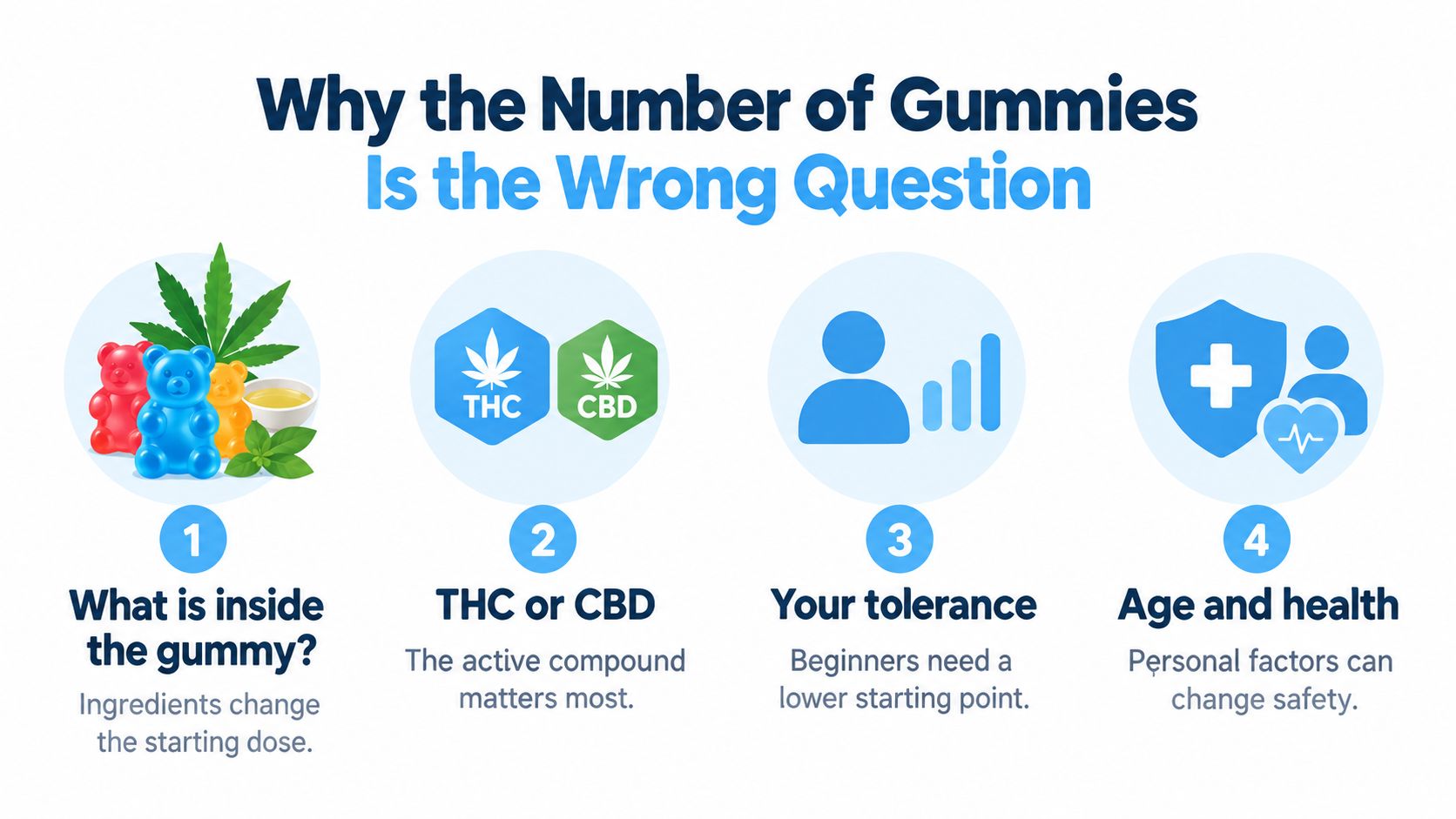
How many milligrams are in one gummy? Until you can answer that, the number of pieces in your hand means very little. A "sleep gummy" may contain melatonin, THC, CBD, or a combination, and each ingredient follows a different dosing logic. Two gummies from two different bottles can hold wildly different amounts, so the unit that matters is the milligram.
A label works like a recipe card: it tells you what goes into each piece and how many pieces make a serving. Three details do most of the work:
- Milligrams per gummy: how much active ingredient is in each piece.
- Serving size: a serving may be one gummy or more than one.
- Total milligrams per package: how the active ingredient is divided across the whole package.
Run that math once and the counting question answers itself. Say a label lists a serving as two gummies: taking one is half a serving. Say a cannabis gummy lists 5 mg of THC per piece and your target is half that amount: you cut the gummy, and a kitchen knife becomes dosing equipment. In New York, state rules for orally ingested cannabis products require labels to spell out serving information clearly, which makes this kind of math possible.
Melatonin labels come with their own catch. An analysis of 31 melatonin supplements found the actual melatonin content ranged from 83% below to 478% above the labeled amount, according to clinical information on melatonin. That gap is why products with credible third-party testing matter when you rely on a specific dose.
Read the milligrams first. A gummy count only means something once you know what each gummy contains.
What Changes Your Starting Dose
Two people can take the same gummy and reasonably need different amounts. Your history with the active ingredient, the strength per piece, and what else is already in your system all shift where a cautious starting point sits. For cannabis edibles, New York guidance emphasizes "start low and go slow" and identifies 2.5 to 5 mg THC as a possible starting amount for someone new to edibles. New York's consumer cannabis guidance is a useful point of reference.
Your experience and the product strength
Think of tolerance the way a budtender would: a regular consumer and a first-timer are buying different products even when they pick up the same jar. If you're new to cannabis edibles or use them infrequently, a lower starting amount is the more cautious choice. In New York, a regulated edible serving may contain up to 10 mg of THC, but that's a legal ceiling, not a recommended starting dose. A gummy carrying that full amount can be far stronger than a portion suited to a new consumer, so check the milligrams per piece rather than judging by gummy size.
Your health and other substances
Alcohol and sedating substances add to impairment, so don't combine them with THC sleep gummies. Prescription medicines and health conditions can also change what's appropriate.
Melatonin has its own interaction picture. Other sleep aids and sedating products can stack drowsiness that lingers into the next morning, and ongoing health conditions or medications can change whether melatonin is a good fit at all. Because labeled amounts can be off, as noted earlier, the milligrams you intend to take may not match what the gummy delivers. If you take medication, have a chronic condition, or aren't sure a product suits you, ask a clinician or pharmacist before trying it. If melatonin isn't right for you, non-gummy options exist too, including herbal approaches such as using lemon balm before bed.
How to Choose Your First Dose
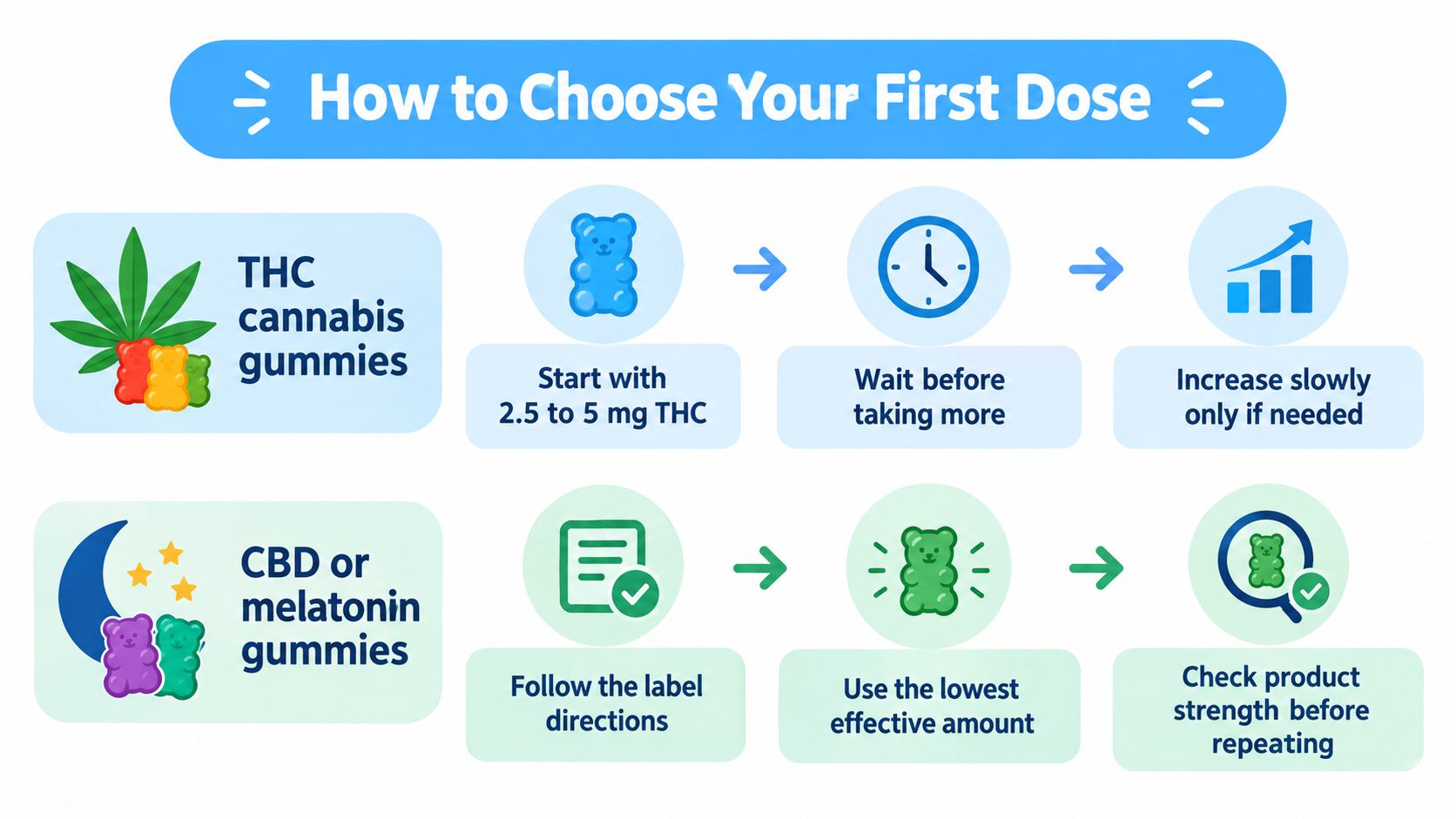
Treat melatonin and THC gummies as different products, not interchangeable versions of a sleep aid. The label gives you the product's serving instructions, while the active ingredient determines which safety guidance applies.
For THC cannabis gummies
If you're new to cannabis edibles, New York identifies 2.5 to 5 mg THC as a possible starting amount. A more cautious baseline for a new or infrequent consumer is no more than 2.5 mg THC. That may mean taking only part of a gummy, but only divide it if its label and design make the portion reliable. Check the milligrams per piece before choosing an amount.
Edibles don't necessarily take effect right away. Don't take another gummy just because you haven't noticed anything yet. Keep the product away from children and pets, and don't combine it with alcohol or other sedating substances.
For melatonin gummies
Use the lowest labeled serving rather than assuming that one gummy is the right amount. Some products define a serving as multiple gummies, so check the package directions and milligrams of melatonin per piece before taking any.
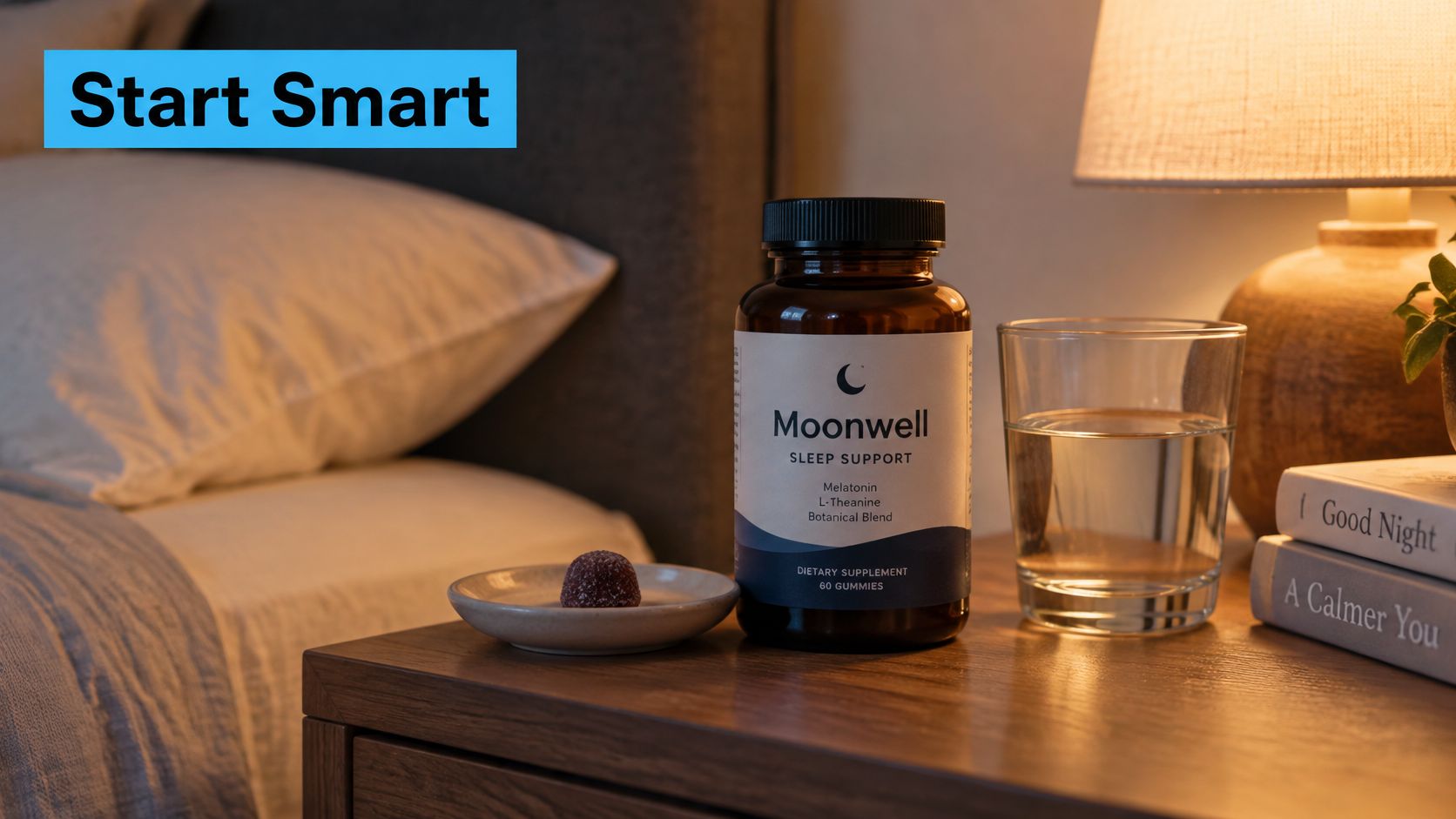
A label can also list a gummy's ingredients without making that product's serving size obvious at first glance. This vegan addition to your sleep routine is an example of why it's useful to look for the stated ingredient strength and serving directions rather than choosing by gummy count. For more on calculating edible amounts, see this edibles dosing chart.
How to Adjust Your Dose Over Several Nights
If you try a THC gummy, give the effects time to develop before making any decision about taking more. Health Canada says edible effects can begin after 30 minutes to 2 hours and take up to 4 hours to reach full intensity. Its advice is to start with 2.5 mg THC or less, wait until effects are felt, and avoid redosing during the first several hours. See Health Canada's lower-risk cannabis guidance.
Keep notes instead of adjusting by memory. Record the product, how many milligrams you took, when you took it, when you noticed effects, whether you woke during the night, and how you felt the next morning. A simple log can help you notice whether the product is helping, causing unwanted drowsiness, or not suiting you.
Don't change the dose mid-wait. Delayed effects can make early redosing a common route to taking more than intended.
If you consider a change on a later night, keep the product the same and adjust only one thing at a time. Don't increase the amount and switch products at once, or you won't know which change made a difference. You can also read about how long edibles last before deciding whether a product's timing works for you.
Melatonin, THC, and CBD Gummies Compared
The words “sleep gummy” don't tell you which dosing framework to use. Check the active ingredient first, then consider onset, potential interactions, and any applicable serving rules.
| Gummy type | Typical onset | Legal serving limit | Key interaction risk |
|---|---|---|---|
| Melatonin | Follow the product directions; timing varies by product. | No universal consumer dose is established. | Age, health conditions, and other medicines can affect what's appropriate. |
| THC | Effects may begin after 30 minutes to 2 hours and can take up to 4 hours to reach full intensity. | New York allows up to 10 mg THC per serving for regulated edible products. | Alcohol and other sedating substances can add to impairment. |
| CBD | Timing depends on the product; check its label. | The provided guidance doesn't establish a general legal serving limit. | CBD can compete for liver enzymes that metabolize common medicines. |
For melatonin, the American Academy of Sleep Medicine found only weak evidence for treating adult sleep-onset or sleep-maintenance insomnia. Its recommendation was based on trials using 2 mg doses, and it cautions that age, sex, health conditions, and concurrent medicines can affect dosing. The guideline doesn't give a universal consumer dose or endorse melatonin as routine treatment for adult chronic insomnia. Read the AASM insomnia treatment guideline.
CBD and THC aren't interchangeable, either. CBD may interact with medicines through liver enzymes, so talk with a clinician or pharmacist if you take prescriptions. If you're weighing a supplement alongside your routine, this overview of sleep aids and fasting compatibility may help you think through ingredients and timing.
When More Gummies Is the Wrong Answer
A disappointing night doesn't automatically mean you should take more next time. If you're unsure how much active ingredient you took, or the label doesn't clearly state the serving size, don't guess at an increase.
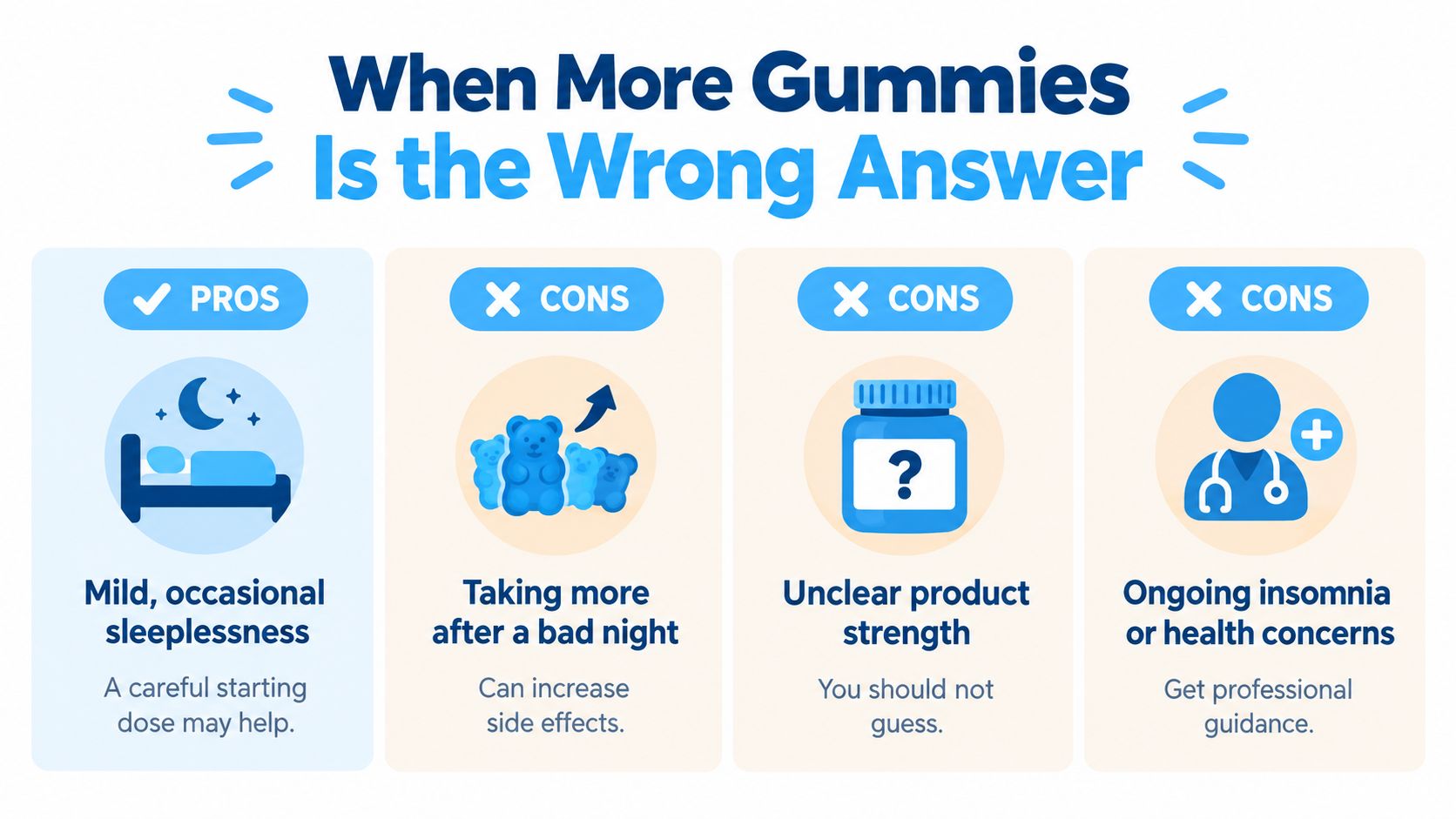
Melatonin may appear safe for most adults in short-term use, but its long-term safety remains unclear. The National Center for Complementary and Integrative Health's melatonin guidance also notes that supplements in the United States are regulated less strictly than prescription or over-the-counter drugs. Excessive intake may cause extreme drowsiness, fragmented sleep, headache, dizziness, or nausea.
Ask a clinician or pharmacist before choosing a dose if you're pregnant, breastfeeding, taking medication, or managing a chronic condition. Persistent insomnia deserves attention, too. A gummy may not address an underlying issue such as sleep apnea, restless legs, a mood disorder, or a medication effect.
Seek urgent medical help if you experience severe confusion, chest pain, difficulty breathing, or extreme sedation after taking a product. For THC products, avoid driving while impaired and don't mix them with alcohol or other sedatives.
Your Next Step Toward Better Sleep
So, how many sleep gummies should you take? By now you know that was never the right question. The dose lives in milligrams, not in gummy count, so run the same label check every time: name the active ingredient, find the milligrams per gummy and the labeled serving size, and start with the lowest serving that fits your situation. For THC edibles, give each dose time to develop before taking more. And as noted earlier, New York's 10 mg THC serving limit is a legal ceiling, not a recommended starting dose, so check both the per-serving amount and total package THC on the label.
If measuring a dose by gummy feels clumsy, ask about tinctures for sleep, which let you measure by the drop. Long Island shoppers can also bring a package to a dispensary counter and have a budtender confirm the milligrams per serving and what the label says about testing. Store gummies somewhere children and pets cannot reach.
Strong Strains Cannabis Dispensary offers lab-tested cannabis products, including edibles and tinctures, with in-store pickup and local delivery for Long Island customers. Visit Strong Strains Cannabis Dispensary and ask the team to help you read a product label and understand its listed serving strength before you choose.