
You're staring at the ceiling, your phone is glowing, and the same question keeps coming back, should you try a tincture tonight or just keep experimenting with tea, gummies, and wishful thinking? That's exactly where a lot of people end up when sleep won't cooperate. Tinctures for sleep sound simple on the shelf, but the difference between a product that helps you wind down and one that just adds more guesswork usually comes down to ingredients, formulation, and dose.
A tincture is a concentrated liquid extract, usually taken under the tongue or mixed into a drink. That liquid format gives people more control than a gummy or a capsule, because you can adjust the amount drop by drop and pay attention to how your body responds. For readers who are also comparing natural approaches, TMJ and sleep resources from Pain and Sleep Therapy Center can be a useful reminder that nighttime routines often work best when they're matched to the cause of the sleep problem.
The big appeal is control. With sublingual use, the liquid can enter the body faster than swallowing it right away, which is one reason tinctures feel more adjustable than many edible products. That flexibility matters at bedtime, where too much can leave you foggy and too little can leave you awake and annoyed. A good tincture routine starts with understanding what's inside the bottle, because not every sleep tincture is built the same.
What Cannabis Tinctures Are and Why They Help You Sleep
A tincture is basically a liquid cannabis extract in a bottle with a dropper. Some are alcohol-based, some use oil carriers, and some are built around one main cannabinoid while others keep more of the plant's natural mix intact. The format appeals to sleep seekers because it gives them a middle ground between a fast-acting inhale and a slower, more committed edible.
Why the liquid format feels easier to manage
People often reach for tinctures when they want a calmer bedtime routine without lighting anything or waiting through a full edible experience. If you place the liquid under your tongue, you can usually feel effects sooner than if you swallow it right away, which gives you more room to adjust the experience before bed. That matters for anyone who doesn't want to wake up guessing whether they took too much or too little.
Practical rule: if the bottle makes big promises but can't clearly explain the formula, treat that as a warning sign, not a selling point.
Tinctures also fit neatly into routines people already have. Some users add a dose to tea or water, others keep the dropper on the nightstand, and some pair it with a wind-down ritual that already includes dim lights and a regular bedtime. If you're comparing formats, the question isn't just “will it work,” it's “which format gives me enough control to use it consistently?”
That's where dispensary conversations help. A good budtender can talk through onset, taste, carrier oil, and cannabinoid balance in plain language instead of pushing you toward the strongest label on the shelf. For a related product angle, the section on best indica strains for sleep also shows how sleep products are often evaluated by the form they take, not just the brand name on the package.
How Cannabinoids and Terpenes Influence Sleep
A tincture can be labeled for sleep and still feel very different from the next bottle on the shelf. The reason is the formula inside. Cannabinoids shape the main effect, while terpenes add nuance to how the experience feels, which means the same “sleep” claim can point to very different nighttime support. The bottle language may sound similar, but the balance of ingredients is what helps determine whether a product feels more calming, more mentally quiet, or just mildly relaxing.
THC, CBD, and CBN each play a different role
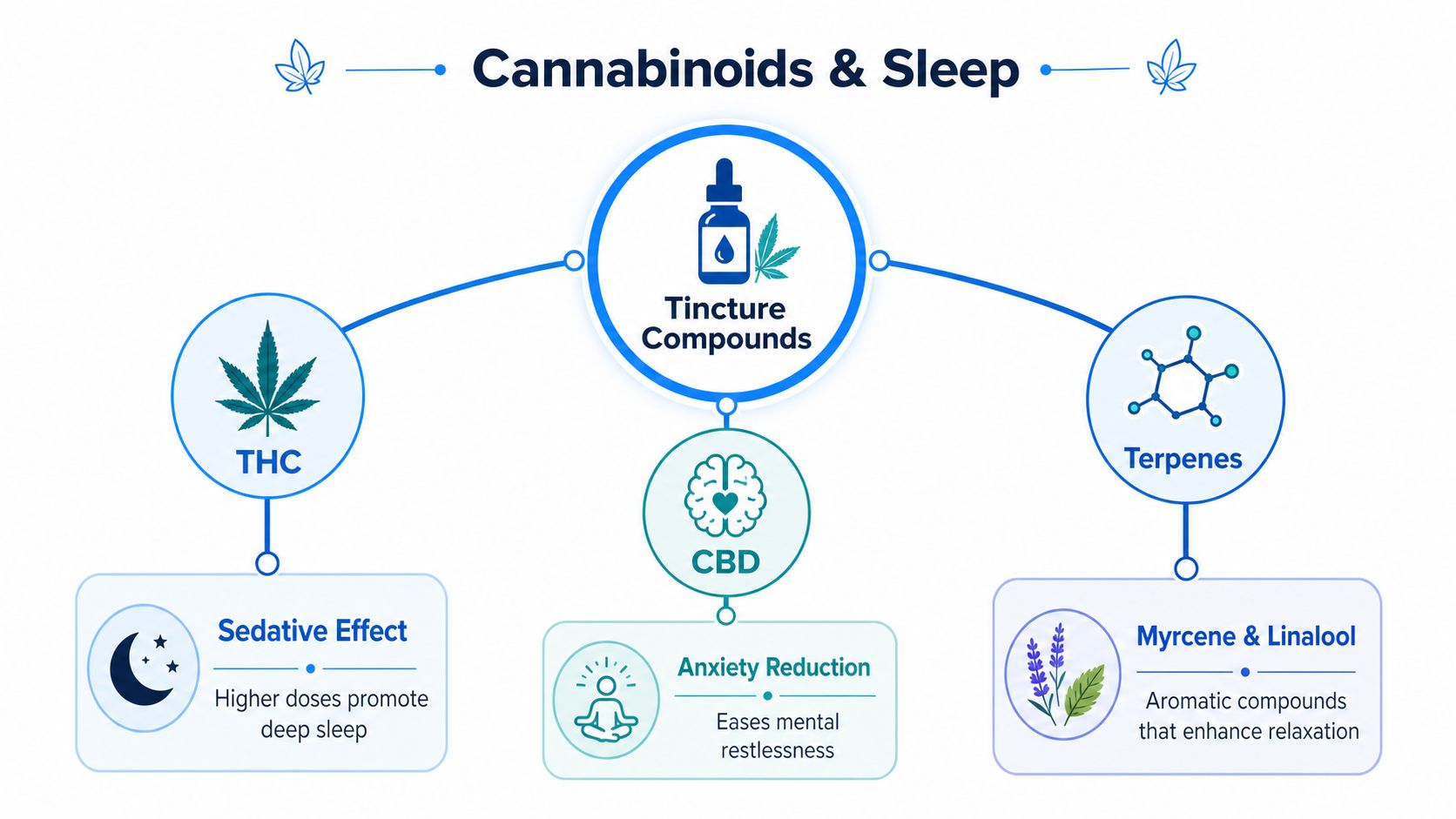
THC is usually the cannabinoid people notice first. In nighttime products, it is often included because many users find it physically relaxing, although the experience still depends on dose and personal tolerance. CBD is more often associated with a quieter mind and less mental restlessness, which is why some people prefer it when anxiety is part of what keeps them awake. CBN has built a reputation for nighttime use, but marketing often moves faster than the clinical evidence, so it makes more sense to treat it as one piece of the formula rather than a stand-alone solution.
The clearest way to read a label is to look at the full balance, not a single trendy compound. A tincture with some THC, some CBD, and supportive terpenes may feel more rounded than a formula built around one headline ingredient. That idea lines up with the entourage effect, the idea that plant compounds can work together in ways that differ from isolated ingredients.
Terpenes shape the feel more than many consumers realize
Sleep-focused tinctures often mention myrcene, linalool, and caryophyllene in the product description. These aromatic compounds do not work like a sedative by themselves, but they can influence whether the formula feels softer, heavier, or more mentally quiet. That is why some nighttime tinctures are described as indica-leaning, even though the actual experience depends on the chemical profile rather than the strain label alone.
Sleep products work best when the label tells a clear story. If the cannabinoids and terpenes point in different directions, the bottle is asking you to guess.
The practical takeaway is simple. Read the whole formula, not just the front of the package. If you want a product for bedtime, look for ingredients that point toward downshifting instead of relying on a sleep claim alone. For a related product angle, the section on best indica strains for sleep shows how sleep products are often evaluated by their form and composition, not just the brand name on the package.
Choosing Between Full-Spectrum and Isolate Tinctures
Full-spectrum and isolate tinctures can both belong in a sleep routine, but they behave differently. Full-spectrum products keep more of the plant's natural mix, while isolate-based tinctures focus on one compound, usually CBD. That difference matters because sleep isn't just about sedation, it's also about whether your nervous system feels settled enough to stay asleep.
Side by side trade-offs
| Tincture Format Comparison | Sleep Benefits | Onset Speed | Best For |
|---|---|---|---|
| Full-spectrum tincture | More layered effect, better fit for people who want the plant's natural mix | Usually feels quicker when used under the tongue | Users who want a more rounded nighttime formula |
| Isolate tincture | Simpler formula, easier for people who want one compound only | Depends on how it's taken, not the cannabinoid alone | People who prefer a minimal ingredient list |
| Alcohol-based carrier | Traditional tincture style, often thin and easy to measure | Often feels fast when used sublingually | Users who want a classic tincture format |
| MCT or hemp seed oil carrier | Usually milder tasting, often easier for sensitive palates | Can be gentler, especially when swallowed | People avoiding alcohol or wanting a softer taste |
A full-spectrum tincture often makes sense for someone who wants a broader effect and doesn't mind a more complex label. An isolate tincture can work better for people who want a very simple starting point or need to avoid other plant compounds. The right choice depends on whether your biggest issue is falling asleep, relaxing mentally, or waking up at 3 AM and not being able to settle back down.
Carrier oil matters too. Alcohol-based tinctures usually have a sharper taste, while MCT or hemp seed oil versions can feel smoother and more approachable. If you're avoiding alcohol for personal or recovery reasons, that detail matters more than most advertising copy admits.
Step-by-Step Dosing and Titration for Better Sleep
The safest way to use a sleep tincture is to treat dose-finding like a careful test, not a one-night challenge. Start with the smallest amount the product allows, then keep track of how long it takes to feel anything, how restful the night feels, and whether you wake up clear-headed the next morning. Sleep tinctures are easiest to judge when you change one variable at a time.
A simple two-week approach
- Start with a low dose. Take the smallest amount that makes sense for the product and your experience level.
- Use the same timing. Take it at the same point in your bedtime routine so you can compare nights fairly.
- Wait before changing anything. Give your body time to tell you whether the amount was too little, enough, or too much.
- Adjust gradually. Move up in small steps only if the current dose isn't doing enough.
- Track the morning after. Grogginess, dry mouth, and a heavy feeling on waking all matter, not just whether you fell asleep.
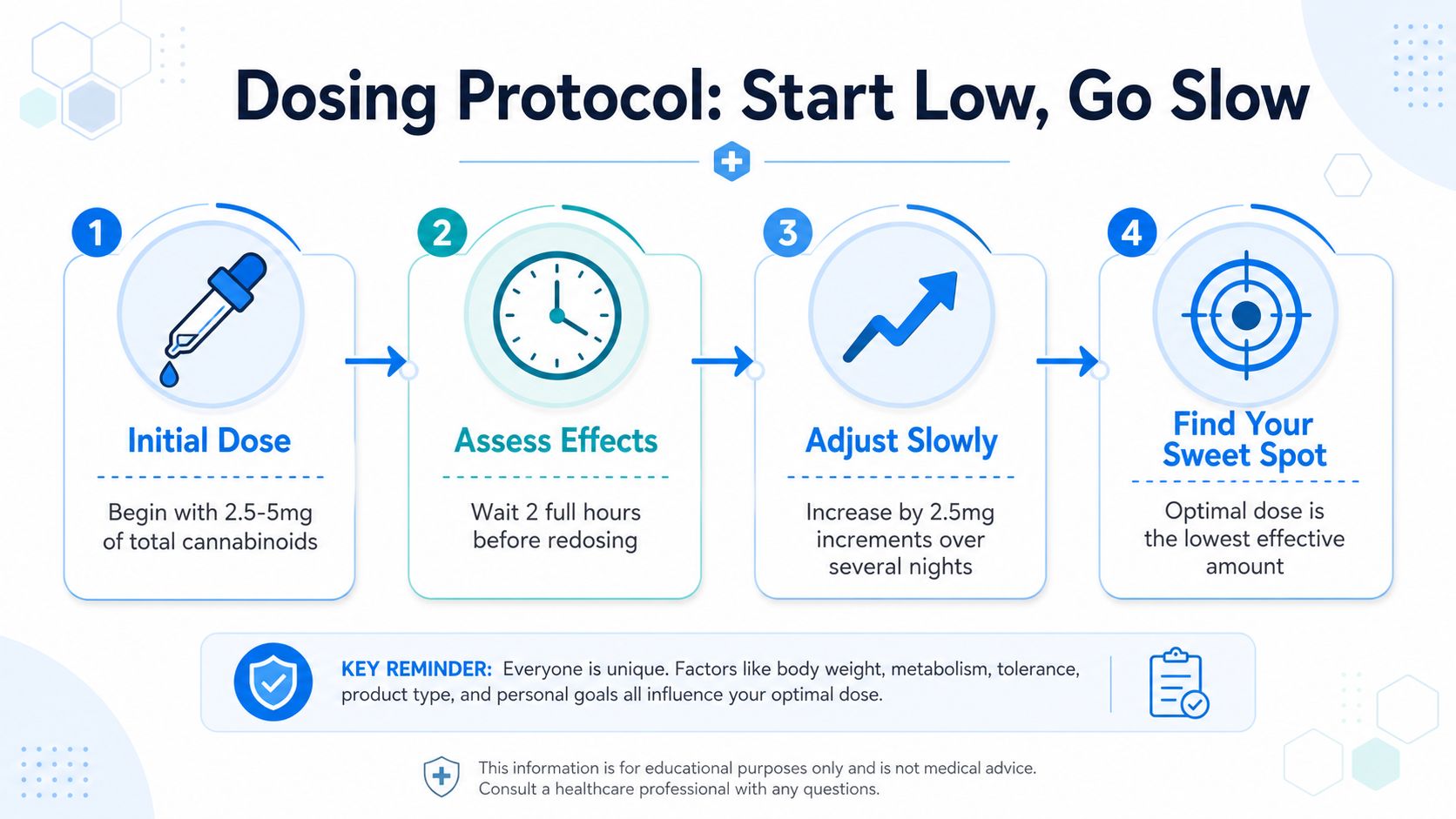
The most common mistake is thinking more will automatically mean better sleep. That can backfire, especially with THC-containing tinctures, because a dose that's too heavy can leave you foggy or make sleep feel less natural. A careful journal helps you spot your sweet spot faster than memory alone.
Keep the notes boring. Time taken, how long it took to kick in, how restful the night felt, and whether you felt sharp or sluggish the next day.
If you're using the dropper under the tongue, hold it there briefly before swallowing. That gives the body a better chance to absorb it in a way that feels more direct than eating it right away. For a closer product example, the discussion around THC tincture 1000 mg shows how important the actual concentration is when people are trying to dose responsibly.
What the Research Says About Sleep Tinctures
The research on sleep tinctures is uneven, and being clear about that helps more than leaning on glossy claims. A systematic review of herbal medicine for insomnia found no statistically significant difference between herbal medicines and placebo or active control across 13 measures of clinical efficacy in the reviewed literature, and a valerian review concluded that current evidence does not support efficacy for improving sleep outcomes. At the same time, the EMA's assessment of valerian root says aqueous-ethanolic extracts have a clinical effect in sleep disturbances based on subjective ratings, psychometric scales, and EEG recordings, so the picture is not one-sided. The PubMed review on herbal insomnia evidence captures that tension clearly.
Valerian sits at the center of the debate
Valerian is the most discussed botanical in the sleep-tincture world because it has been studied more than many other herbs. A 2020 meta-analysis reported that studies commonly used about 160 to 600 mg/day, and one review found a relative risk of improved sleep of 1.8 with a 95% CI of 1.2-2.9, although publication bias reduced confidence in the estimate. That means the number sounds encouraging, but it should not be read as settled proof. The valerian review article is a good example of why careful readers should separate interest from certainty.
A separate systematic review also found that scientific evidence was sparse or absent for many common sleep herbs, including chamomile, hops alone, hawthorn, St. John's wort, and rosemary. That gap matters because a lot of content marketing still describes sleep tinctures as if every herbal bottle works the same way. It does not.
The smart read is not “herbal sleep tinctures don't work.” It is “some ingredients have more support than others, and the label should tell you which one you're buying.”
For anyone comparing tinctures to other sleep products, the bigger lesson is about expectations. Traditional use can be a useful starting point, but consumers should still ask whether a product is likely to help with falling asleep, staying asleep, or making bedtime feel calmer. Sleep quality also depends on factors beyond the tincture ingredients, including room setup and sleep posture, and the motorized bed frame explained guide is a practical reminder of that. The same ingredient can feel very different depending on the rest of the sleep routine.
The marketing around sleep tinctures often sounds more certain than the evidence behind it. A careful buyer reads the bottle the same way a budtender reads a lab panel, with attention to what is supported, what is only traditional use, and what is just branding. That approach helps you choose a tincture for the effect you want, instead of assuming every formula with a sleepy label will do the same job.
Safety Considerations and Reading Lab Test Results
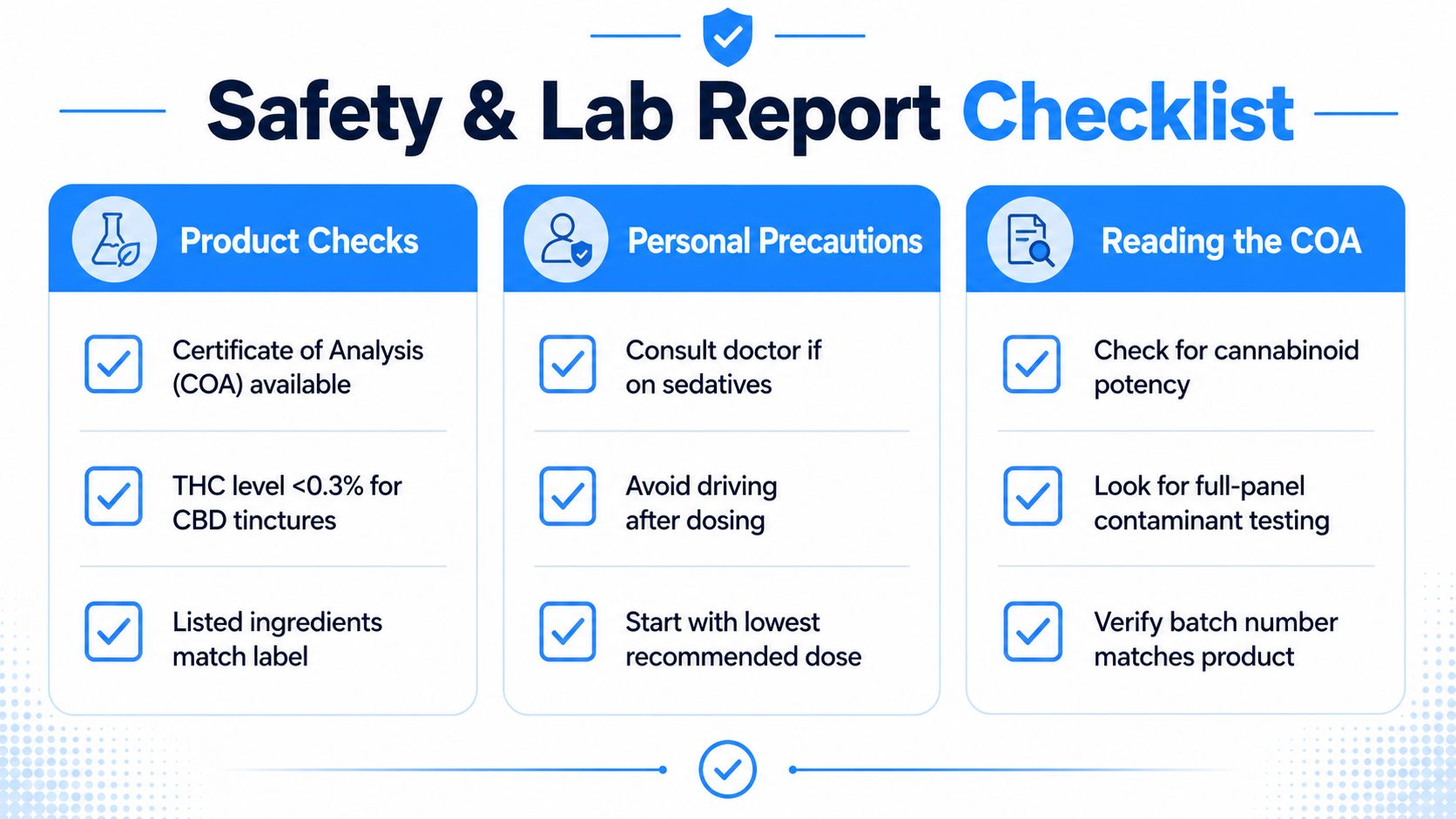
Safety deserves more attention than most bottle labels give it. Sleep tinctures can interact with other sedating products, alcohol-based formulas may not be right for everyone, and a sleepy next morning can turn into a real problem if you have to drive or work early. If you use cannabis alongside alcohol, prescription sleep medicine, or other calming supplements, the combined effect can be stronger than you expect.
What to check before the first dose
- Medication mix: Talk to a clinician if you take sedatives, blood thinners, or medicines processed by the liver.
- Next-day alertness: Don't assume you'll wake up sharp just because you fell asleep faster.
- Alcohol sensitivity: Choose a non-alcohol carrier if you avoid alcohol for health or recovery reasons.
- Timing: Use it early enough that grogginess doesn't spill into the next morning.
The label should also point you toward a real certificate of analysis, not just a marketing claim. A proper COA confirms potency and shows whether the product was screened for contaminants such as pesticides, heavy metals, and residual solvents. If the batch number on the bottle doesn't match the batch on the lab report, that's a reason to pause.
The other issue is practical impairment. A tincture can feel gentle at first and still leave you dull the next day if the dose is too high or the timing is off. That's why a careful first trial matters so much.
If the sleep aid makes you less safe in the morning, it isn't doing its job well.
For a broader product safety lens, the infused pre-rolls guide is useful because it reinforces the same idea from another cannabis category, quality starts with transparency, not just potency.
Finding Quality Tinctures at Strong Strains on Long Island
A good sleep tincture should feel deliberate, not random. At Strong Strains in East Setauket, the focus is on lab-tested, handpicked products and budtender guidance that helps you match the formula to your comfort level, whether you're brand new to tinctures or already know what kind of nighttime effect you prefer. That matters because the right choice for sleep is usually the one you'll use consistently, not the one with the loudest label.
If you're sorting through options and also want a broader wellness perspective, our guide to natural sleep remedies is a useful companion piece because it keeps the attention on habits, environment, and realistic expectations. Strong Strains also offers in-store pickup and local delivery across Suffolk County, which makes it easier to stick with a product that fits your routine instead of chasing whatever's convenient at the moment.
The best questions to ask in the shop are simple. Ask what's in the tincture, how it's carried, how it usually feels, and whether it's a better fit for relaxation, falling asleep, or staying asleep through the night. That kind of conversation saves time and helps you leave with something you can use.
If you're ready to compare sleep tinctures with real guidance instead of guesswork, visit Strong Strains for lab-tested options, helpful budtender recommendations, and convenient pickup or delivery on Long Island. Bring your questions, and we'll help you find a tincture that fits your bedtime routine and your comfort level.