
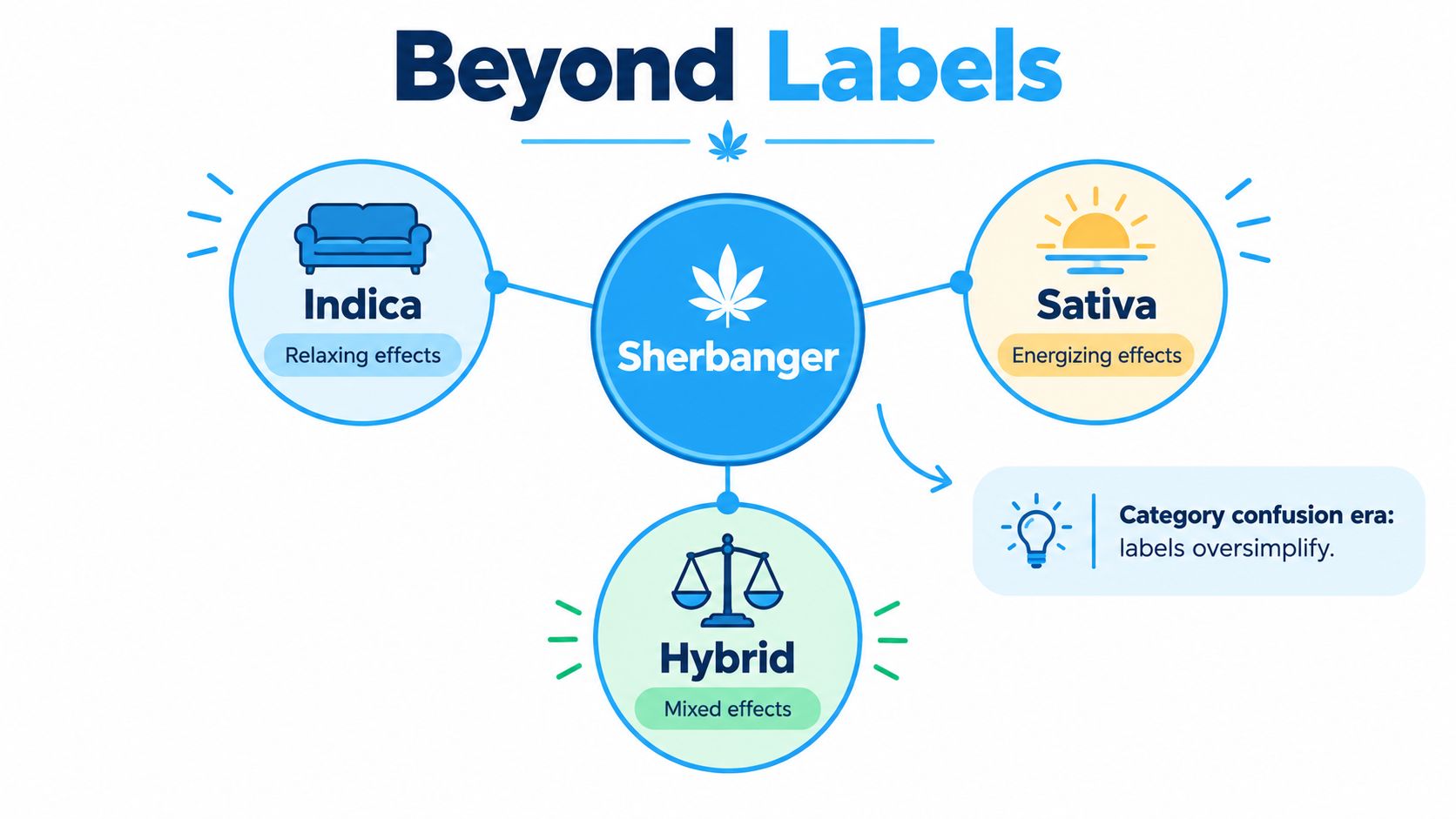
Sherbanger is best described as a modern hybrid, commonly reported as Sunset Sherbet crossed with Headbanger, rather than a purely indica or sativa strain. Calling it “indica” or “sativa” alone oversimplifies a product whose chemistry and reported effects can vary by batch.
If you're looking at Sherbanger on a dispensary menu, the category can offer a rough label, but it won't tell you exactly how that particular flower will feel. The more useful clues are the batch's certificate of analysis, its cannabinoid results, its terpene profile, and how much you plan to use. Here's how to read those clues without treating a strain name as a guarantee.
Why the Indica or Sativa Question Is the Wrong Place to Start
The category printed beside Sherbanger's name is a weak guide to how a particular batch may feel. Two packages can share the strain name and still differ in potency and terpene balance, so a menu label alone can't describe what's inside.
Reported strain records trace Sherbanger to Sunset Sherbet crossed with Headbanger and identify it as a modern hybrid. The strain's reported history and lineage provides context for its name and background, not a prediction for every harvest. That distinction helps prevent a common mix-up: lineage describes reported ancestry, while a batch's lab results describe the tested product.
At the counter, start with the batch's certificate of analysis, or COA. Check the cannabinoid results and terpene list, then consider how much you expect to use. These clues are more useful for comparing the package in front of you than trying to infer its effects from “indica,” “sativa,” or “hybrid.” A COA is a snapshot of that tested batch, not a guarantee of an identical response for every person.
The same approach works when comparing other named strains. Chocolate Mint at Metro Mush offers strain-specific information to consider alongside current product testing. Use the name to identify the product, then read the batch details to make a more informed choice.
What Indica, Sativa, and Hybrid Actually Mean Today
Dispensary menus often sort cannabis into indica, sativa, and hybrid. Many shoppers use the words as shorthand: indica for winding down, sativa for a livelier mood, and hybrid for something between those two. That shorthand can help you start a conversation, but it isn't a promise about the experience.
The words also have botanical history. They've been used to describe plant traits such as shape and leaf width, as well as classifications tied to geography. In everyday retail, though, they often work more like broad labels than precise descriptions of a product's chemistry.
That distinction matters because a label doesn't tell you which compounds are present or how much of each is in a particular batch. Research summarized by National Geographic reports that indica-versus-sativa labels don't reliably predict THC levels or overall chemical composition. Botanical scholarship also argues that Cannabis sativa and Cannabis indica shouldn't be treated as separate species. A research discussion of cannabis classification and labels offers context for why the categories can be less informative than shoppers expect.
A practical way to use the labels: Treat the category as a loose orientation, then check the product's lab results and consider your own response to dose and format.
For Sherbanger, that means the word “hybrid” describes its general classification, not a guaranteed midpoint between sedation and stimulation. A shopper comparing hybrid effects can use this guide to hybrid strain effects as a starting point, then look at the specific product's test information before choosing.
Sherbanger's Genetics and Where the Strain Comes From
Sherbanger's reported parents, Sunset Sherbet and Headbanger, help explain its dessert-and-fuel character. Sunset Sherbet is associated with sweet, creamy, fruit notes, while Headbanger is linked with a sharper, fuel-like aroma. Together, those traits offer a useful starting point for understanding why Sherbanger descriptions often mention sweetness, citrus, berries, and diesel.
A family tree describes ancestry, not a fixed recipe. Plants with related genetics can develop different expressions, much as siblings can share features without looking or behaving exactly alike. Growing conditions and the particular plant selected for cultivation can influence which aromas stand out in a batch.
That variation helps explain why one jar may smell more like creamy fruit, while another brings the fuel notes forward. The name Sherbanger points to a genetic relationship, but it cannot tell you the exact aroma of the flower in front of you. For that, compare the batch's terpene list and certificate of analysis, or COA, rather than relying on the strain label alone.
Here's a closer look at the reported dessert-and-fuel identity:
Genetics can help you form an expectation, then the batch details can confirm whether that expectation fits. A Sherbanger label is a starting point, not a guarantee that every jar will smell or feel the same.
Potency, THCA, and Why Two Sherbanger Numbers Can Both Be True
The Sherbanger name can't predict the potency of the flower in a specific package. Directory listings commonly cite 20% to 22% THC, while cultivation reports describe harvests in the 24% to 27% range or as high as 29% to 32%. These figures refer to different kinds of reporting, so compare them with the batch's own certificate of analysis, or COA. A strain-directory description of Sherbanger potency provides a general reference, not a test result for every product.
One publicly described 2024 Sherbanger 22 flower sample reported 31.7% THCA, 1.8% delta-9 THC, 0.2% CBG, 35.07% total cannabinoids, and 2.85% total terpenes. Each figure describes that tested sample only. It is not a fixed specification for Sherbanger.
| Source type | Sample scope | Key figures |
|---|---|---|
| General strain description | Sherbanger descriptions | Approximately 20% to 22% THC |
| Cultivation reports | Reported Sherbanger harvests | 24% to 27%, or 29% to 32% |
| Publicly described lab result | Sherbanger 22 flower sample from 2024 | 31.7% THCA, 1.8% delta-9 THC, 0.2% CBG, 35.07% total cannabinoids, 2.85% total terpenes |
THCA is the acidic precursor that converts into intoxicating THC when cannabis is heated. A higher THCA reading does not guarantee a particular experience or tell you how much to use. It also measures something different from delta-9 THC or total cannabinoids, so those label figures are not interchangeable.
Read the label as a set of measurements, not a score. Check which figure the package reports, then compare it with the batch's COA and the amount you plan to use.
The same cultivar can produce different reported results across harvests. For example, moisture content affects how much of a flower's measured weight comes from water, while curing changes that moisture. Laboratory methods and label conventions also affect which figures appear and how they are presented. A lower general THC estimate and a higher THCA result from one tested sample can both be accurate, because neither describes every Sherbanger product.
Terpene Profile and What the Aroma Tells You
Terpenes are compounds associated with a plant's aroma. On Sherbanger, commonly reported terpenes include beta-caryophyllene, limonene, myrcene, humulene, linalool, and pinene. The order can change across batches, so the terpene panel on the package is more useful than assuming every Sherbanger has a fixed profile.
A reported laboratory profile measured 2.491% total terpenes. In that sample, the listed amounts included 10.45 mg beta-caryophyllene, 5.58 mg limonene, 2.24 mg linalool, 2.21 mg alpha-humulene, and 1.11 mg beta-myrcene. A reported Sherbanger terpene profile gives one concrete example, not a standard for every batch.
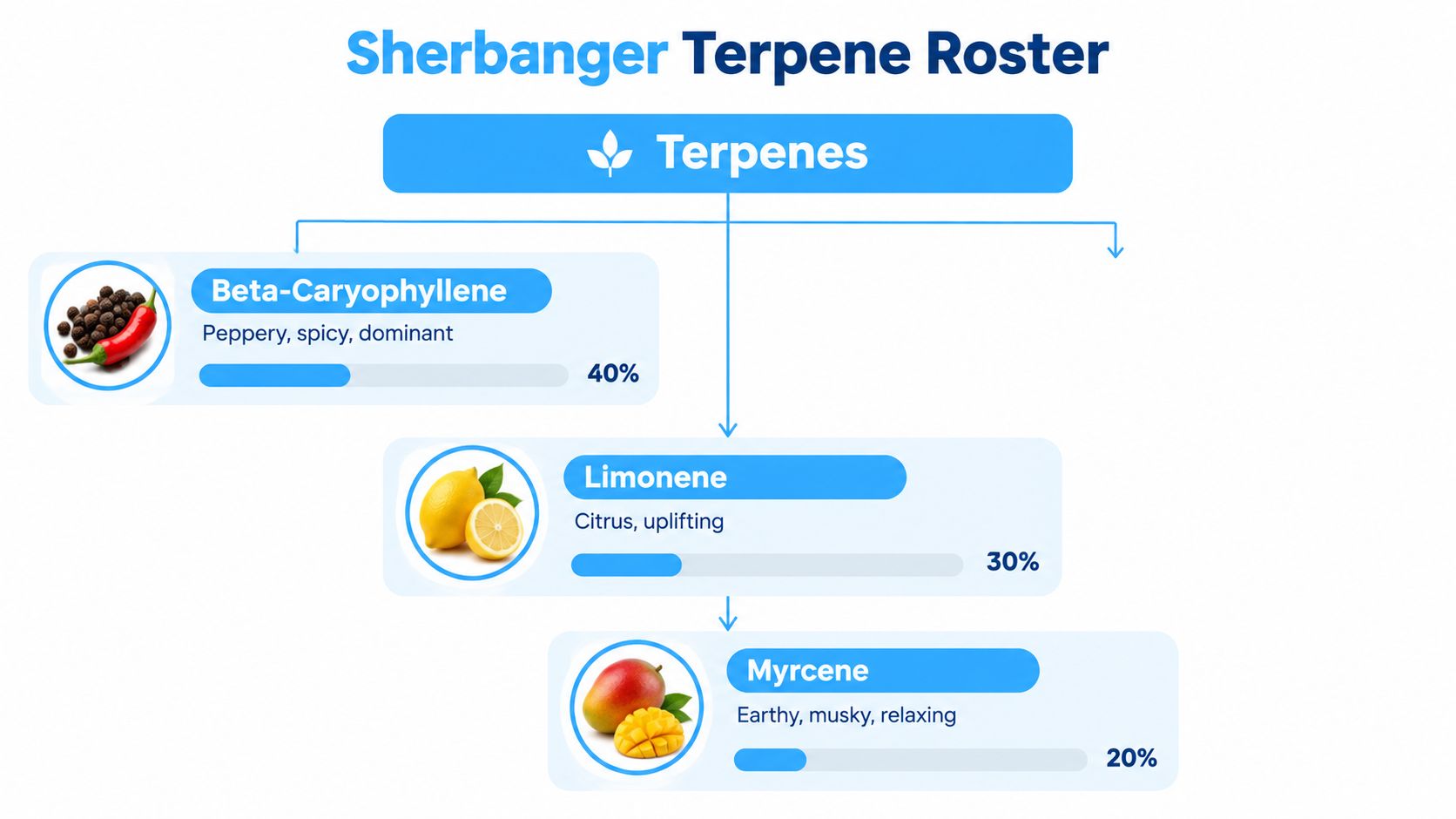
Aroma can make those names easier to remember. Beta-caryophyllene is often associated with a peppery, spicy note; limonene can suggest citrus peel; and pinene calls to mind fresh pine. Myrcene may come across as earthy or musky, while humulene can evoke herbal hops and linalool a softer floral quality. Those are sensory descriptions, not guarantees of a specific effect.
Some Sherbanger descriptions place limonene first; other profiles put beta-caryophyllene at the top. That variation is a reason to check the current package rather than relying on a generic strain page. For more context on reading aroma-forward cannabis profiles, see this guide to high-terpene strains.
Typical Effects and When Sherbanger Tends to Shine
Descriptions of Sherbanger commonly mention relaxation, happiness, and an uplifted feeling. The reported combination of dessert-like sweetness and diesel character fits its Sunset Sherbet and Headbanger lineage. A Sherbanger strain description reflects those commonly reported aromas and effects.
That may sound like a good fit for a relaxed evening with friends, when you want to unwind without choosing a product based only on a “sleepy indica” label. Someone planning a creative afternoon might be interested in an uplifting profile, but the category alone can't establish whether a particular batch will support focus or feel too intense.
There's a difference between a commonly described experience and a guarantee. Your response can depend on dose, tolerance, product chemistry, and how you consume it. The same strain name won't ensure the same result for every person or every package.
The useful question isn't “What should Sherbanger always feel like?” It's “How does this batch's profile line up with my experience and the amount I intend to use?”
Use the reported effects as a conversation starter with a budtender, not as a promise. If you're looking for an experience you can describe clearly, name your goal, ask to see the product's current test information, and choose a modest amount that suits your familiarity with cannabis.
Matching a Sherbanger to Your Goal at the Dispensary
It's easier to shop for Sherbanger when you lead with what you want from the session, then compare the available batch details. The aim isn't to find a universal “right” phenotype. It's to find a product whose test results and potency make sense for your comfort level and plans.
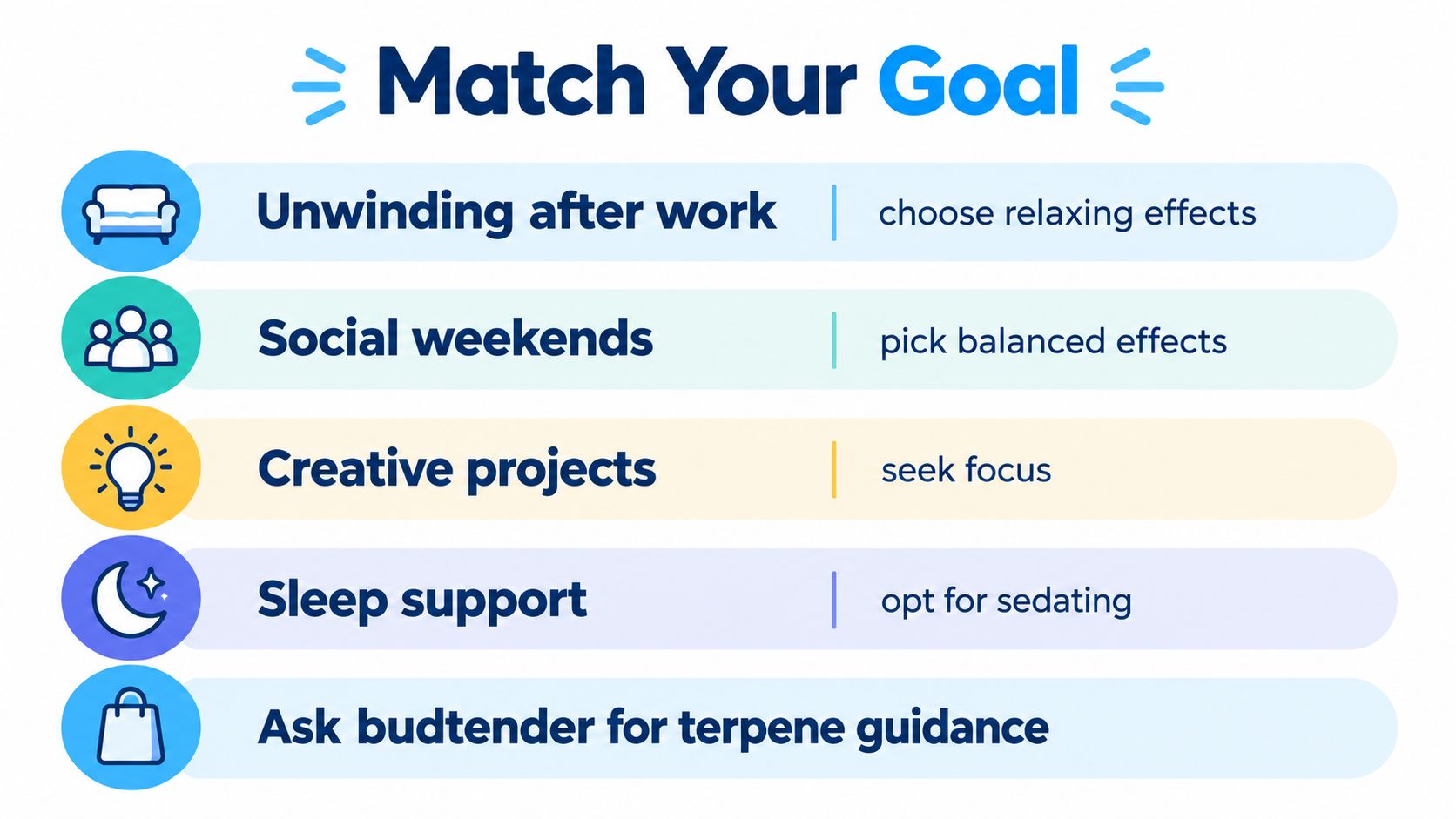
- Unwinding after work: Ask to see the terpene profile and describe the kind of relaxation you're seeking. A label alone can't confirm that the flower will feel calming.
- Social weekends: If you prefer a balanced-feeling experience, tell the budtender that and ask about the current batch's chemistry. Keep the amount in mind, especially if you're trying the product for the first time.
- Creative projects: Explain that you're looking for an uplifting or clear-headed experience, then ask what the lab report can tell you. No terpene or category guarantees focus.
- Sleep support: Don't assume that Sherbanger will be sedating because someone describes a particular phenotype as indica-leaning. Ask about the product and consider whether its potency suits your needs.
- First-time curiosity: Tell the budtender that you're new to the strain or have low tolerance. Ask for a modest-potency option and guidance on a cautious starting amount.
A useful counter question is, “Can I compare the COA for this Sherbanger batch with another option?” If the available product's profile doesn't match your goal, it's reasonable to ask about a different batch or a different strain. That keeps the conversation focused on the product, not just the name printed on the menu.
How to Read a Sherbanger Package Before You Buy
The batch number is your starting point. Match it to the certificate of analysis, or COA, before comparing results. A COA works like a product's inspection report: it describes the tested sample, while an indica or sativa label offers little detail about the package in your hand.
A Sherbanger potency listing provides general context, but use the matching batch report for your purchase.
At the counter, check these details:
- Find the cannabinoid results. Separate THCA, delta-9 THC, total THC, and total cannabinoids. Look for a calculation such as “Total THC = THCA × 0.877 + delta-9 THC.” Total cannabinoids is a broader measurement, so it isn't interchangeable with total THC.
- Look at the terpene panel. Read the named terpenes and their reported amounts. Use that profile alongside the aroma to compare batches, without treating any terpene as a guarantee of a particular effect.
- Check the sample information. Confirm that the report identifies the batch being sold. If the identifiers don't match, ask for the correct COA.
- Ask about the format and amount. Flower and vapes require different guidance. Review cannabis lab testing and COAs if the report's terms are unfamiliar.
New or low-tolerance adults should start cautiously. For inhaled products, take a small inhalation and wait before deciding whether to continue.
At Strong Strains Cannabis Dispensary in East Setauket, budtenders can help compare batches and explain results. Visit Strong Strains Cannabis Dispensary for in-store guidance on available lab-tested products.