
Brown flower usually isn't a distinct strain name. Heat above 70°F and humidity outside 55–62% can accelerate the oxidation and storage problems that turn green cannabis brown.
So what are you looking at when a dispensary menu, online search, or old container leads you to “brown weed strain”? Usually, you're not discovering a special cultivar. You're trying to identify whether flower has aged, oxidized, been stored poorly, or developed a more serious problem such as bud rot.
Color gives you a useful first clue, but it can't answer the whole question. A uniform brown fade may point to age, while a soft brown patch hidden inside a dense bud deserves a much more cautious response. The practical difference comes from combining appearance, smell, texture, and interior inspection, then checking the product's lab-testing information when it came from a regulated New York retailer.
Understanding What Brown Weed Actually Is
Could “brown weed strain” describe genetics, or is it a clue about what happened after harvest? Searches for the phrase usually point to a visible color change, not a cultivar bred to produce brown flower. Brown cannabis can reflect oxidation, age, curing, or storage, so the color needs context. Mood explains how oxidation, age, and storage affect cannabis color and quality.
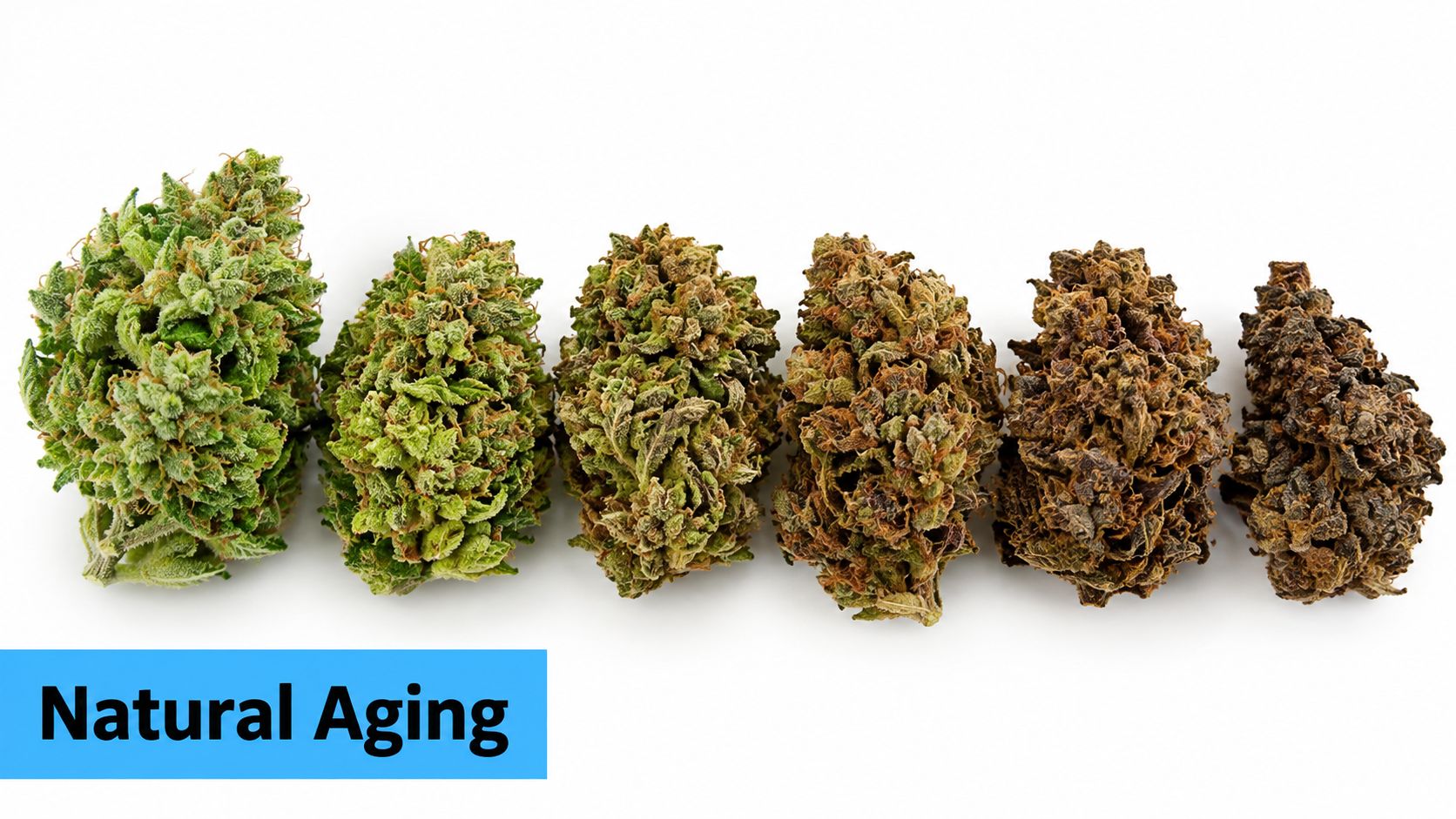
A sliced apple provides a useful comparison. Air exposure changes its color without creating a new variety. Cannabis flower can shift in a similar way as chlorophyll breaks down, moving from green toward brown or yellow-brown after exposure to heat, light, oxygen, or unsuitable humidity.
Practical rule: Treat color as a quality-control signal, not as a strain description.
Use a simple sensory decision matrix before judging the flower:
- Look: An even fade across the bud fits aging more closely than a sharply defined brown patch. Inspect dense flowers inside as well as on the surface.
- Smell: A familiar cannabis aroma supports ordinary aging or storage change. A musty or abnormal odor calls for caution.
- Touch: Dry, crumbly flower may have lost quality. Soft, damp, or decayed material should not be treated as merely old.
These clues answer the practical question behind the search: Is this flower fresh, stale, or unsafe? They do not replace testing. If the product came from a regulated New York retailer, compare its package details with the available lab-testing information. That verification can confirm what was tested and reported, while sensory warning signs still warrant rejecting visibly questionable flower.
The Three Main Causes of Brown Discoloration
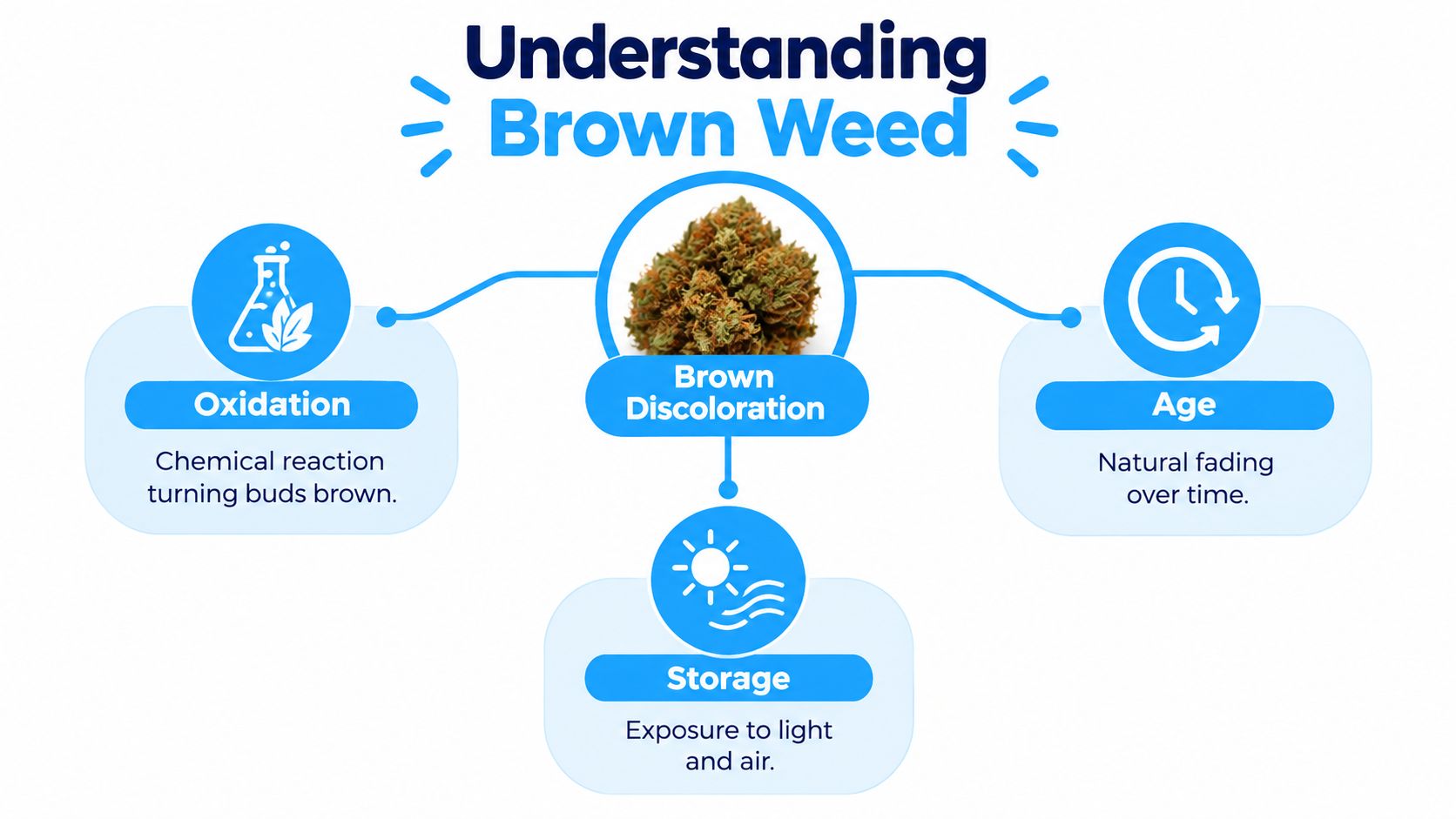
Brown coloration in cannabis flower usually comes from three broad causes: aging and oxidation, storage stress, or plant disease and fungal contamination. These causes can overlap. A bud may have aged during storage while also becoming unusually dry, so color alone cannot identify one explanation.
Aging and oxidation produce a gradual chemical change. As chlorophyll breaks down, older plant material can lose its vivid green appearance and shift toward brown or yellow-brown. Oxygen, light, and heat can speed that process while also reducing cannabinoids and terpenes. The flower may then have a flatter aroma, altered flavor, and weaker overall experience. Point of View describes brown cannabis as a visual sign of oxidation and aging.
Storage errors accelerate aging by exposing flower to conditions it cannot tolerate well. Excessive heat, direct light, too much oxygen, or humidity outside the 55–62% range can leave cannabis drier and less aromatic. A container that stays warm or does not seal properly may change the flower's color and texture over time. Poor storage can also create conditions that make contamination more likely. The storage history therefore matters alongside the visible discoloration.
Plant disease calls for a different explanation. Bud rot, commonly associated with the fungus Botrytis cinerea, may begin deep inside a dense flower rather than on its outer surface. A small brown sugar leaf or dark area can be an early sign before the interior tissue changes. High humidity, still air, and cool conditions can increase mold risk, while natural darkening near harvest may be mistaken for disease. Leaves & Soul's guide to leaf spot problems explained provides background for comparing ordinary discoloration with plant-health problems.
The key causal distinction is how the change developed. Aging and storage affect the flower through time and environment, while disease involves damaged plant tissue and fungal growth. That distinction gives the flower's appearance, aroma, and texture a practical role during inspection.
Distinguishing Safe Aging from Dangerous Mold
The safest way to evaluate brown flower is to compare several sensory clues instead of relying on color alone. Older, oxidized cannabis may look dull and brown throughout, feel dry or crumbly, and give off a faint herbal or stale aroma. That can indicate declining quality, but brown color by itself doesn't prove that mold is present.
Mold or bud rot tends to be more irregular. You may see gray or brown patches, fuzzy or dusty material, or tissue that looks wet and collapsed rather than dry. The smell can shift toward musty, damp, or unpleasant. Inside a dense bud, affected tissue may feel soft, mushy, or decomposed. GrowWeedEasy describes how fungal colonization can cause browning and tissue decay inside cannabis flowers.
| Finding | More consistent with aging | More concerning for mold or rot |
|---|---|---|
| Appearance | Color change is fairly uniform | Brown or gray areas are patchy or concentrated |
| Aroma | Weak, dry, or familiar cannabis smell | Musty, damp, dusty, or distinctly abnormal odor |
| Texture | Dry, brittle, and crumbly | Soft, wet, slimy, or decaying tissue |
| Location | Visible across older outer material | Affected area begins or continues inside the bud |
| Decision | Quality may be reduced | Don't smoke it, and discard the affected flower |
Rot often starts in an interior site, which means a clean-looking surface can create false confidence. Open dense buds carefully rather than judging only the outside. If you find suspicious internal discoloration or a damp, musty center, trimming away the visible portion isn't a reliable solution. Guidance on identifying mold and its visible characteristics can help readers understand why surface removal may not address an underlying problem.
When the texture is soft and the smell is musty, the question isn't whether the brown color looks attractive. Don't use the flower.
Safe aging still isn't the same as premium freshness. Uniformly brown, dry flower may lack the aroma and flavor you expect, and oxidation can reduce the retention of cannabinoids and terpenes. Dangerous mold is a safety issue, while aging is primarily a quality issue. The inspection should separate those two judgments.
A Practical Inspection Routine for Your Flower
A repeatable inspection takes only a few deliberate checks. Don't squeeze, smell, or break apart questionable flower in a way that spreads suspicious material across other products. Use a clean surface, wash your hands afterward, and keep questionable flower separate until you've made a decision.
Look at the outside first. Hold the bud under good light and check whether the color shift is consistent. Brown or yellow-brown fading spread across the flower suggests age or oxidation. Isolated dark spots, gray areas, fuzzy material, or visibly wet tissue deserve caution.
Smell without heating it. Fresh cannabis should have a recognizable plant aroma, whether it leans earthy, citrusy, floral, or fuel-like. Old flower may smell weak or flat. A damp, dusty, or musty smell is a warning sign, not a flavor profile to work around.
Feel the structure gently. Aged flower may crumble because it has dried out. That's a quality problem, but it's different from a bud that feels soft, slimy, or internally collapsed. If the exterior feels normal while one section gives way unusually easily, inspect that area rather than assuming the entire bud is fine.
Open dense buds. Break apart a suspicious or tightly packed flower and inspect the center. Look for brown or gray tissue, web-like or dusty material, and decay that wasn't visible from the surface. If the interior smells musty or feels mushy, discard the flower rather than trimming around it.
A home check can reveal obvious problems, but it can't replace regulated product testing. For general household mold awareness, this homeowner's guide to mold testing provides broader context about why odor, moisture, and visible growth need to be considered together.
Use the decision matrix, not one clue: uniform color plus dry texture may indicate age; patchy color plus abnormal smell or soft interior means toss it.
How New York Lab Testing Protects Consumers
Sensory inspection helps you catch visible deterioration, but it has limits. You can't confirm every contaminant by looking at a bud, and a product that seems attractive on the outside still needs a trustworthy chain of production, testing, packaging, and storage.
New York adds a regulatory layer before adult-use cannabis reaches a licensed retail shelf. The Office of Cannabis Management states that each lot of adult-use and medical cannabis products must undergo testing, and regulated products must pass lab testing before sale. New York's cannabis laboratory guidance explains the state testing requirement. That makes “lab-tested” more meaningful than a casual claim printed in an unverified online listing.
Check the package, not just the flower
New York consumer guidance says adult-use products should carry the state's universal symbol. The package can also provide a QR code or package URL that lets you view the certificate of analysis, or COA, showing the product's laboratory results. This gives you a way to verify information about the specific packaged product rather than relying only on a strain name or a seller's description. The New York City cannabis rights guide explains the universal symbol and COA access.
The same guidance states that adults 21 and older may possess up to 3 ounces of cannabis flower and up to 24 grams of concentrated cannabis outside the home. Those possession rules don't determine whether a particular bud is fresh, but they belong to the same consumer-safety picture as buying through a regulated channel and checking the package information.
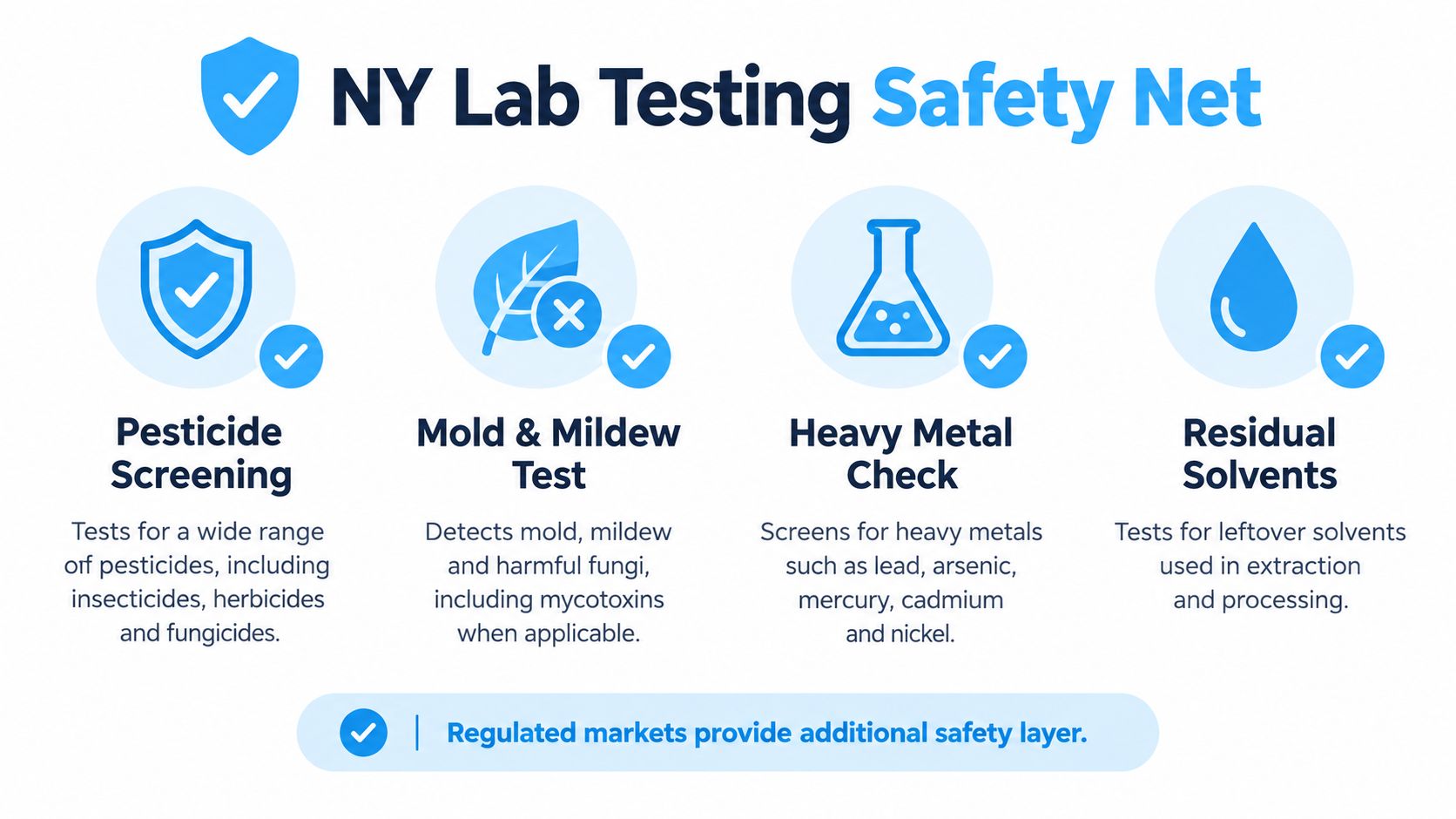
A COA doesn't make old-looking flower desirable, and it doesn't eliminate the need to notice poor storage after purchase. It does give shoppers a stronger verification point than color, branding, or a seller's promise. Combine the package check with the four-part inspection routine, and you have both a regulatory safeguard and a practical quality screen.
Finding Premium, Fresh Flower at Strong Strains
Avoiding the brown weed trap starts with choosing a product based on more than the name on the label. A strain name can help you compare products, but it won't tell you whether the flower was stored well, whether the aroma survived packaging, or whether the interior has developed a problem. Look for a clear package, current testing information, intact flower, and a retailer that can answer direct questions about handling and quality.
A useful conversation with a budtender should cover the product's harvest or packaging context when available, aroma profile, texture, and lab-testing access. You can ask whether the flower is naturally dark throughout or whether staff have noticed isolated discoloration. You can also ask how to find the COA before purchasing, rather than treating testing as a vague badge of quality.
Brand names such as Rove, Wana, and Airo may appear in a New York shopping conversation, but the label alone shouldn't settle your decision. Evaluate the specific product in front of you. Freshness, storage, packaging integrity, and verified testing matter more than whether a name is familiar or fashionable.
For shoppers who prefer a wider menu, the same principle applies across flower, pre-rolls, vapes, edibles, concentrates, tinctures, topicals, and accessories. Choose the format that matches your experience and comfort level, then start with the information you can verify. If flower looks uniformly brown and smells flat, it may be past its best. If it has patchy discoloration, an abnormal odor, or a soft interior, don't try to rescue it because the package carries an appealing strain name.
Strong Strains serves East Setauket and the wider Long Island community with lab-tested cannabis products, knowledgeable budtender guidance, in-store pickup, and local delivery. Visit the shop at 19 Technology Drive, East Setauket, NY 11733, or contact the team with questions about fresh flower, product formats, and COA verification.
Strong Strains Cannabis Dispensary offers lab-tested flower, vapes, pre-rolls, edibles, concentrates, tinctures, topicals, and accessories with friendly guidance for Long Island shoppers. Visit Strong Strains Cannabis Dispensary in East Setauket for in-store pickup or local delivery, and use the inspection checklist to choose fresh, verified cannabis with confidence.