
You hand over your driver's license at the dispensary entrance, hear the scanner beep, and wonder what just happened. Is the store checking only your age? Did it save your name? Is this required, or is it a store preference?
Those are reasonable questions, especially if it's your first visit. Dispensaries scan IDs to create a reliable compliance checkpoint, not to make customers feel watched. The scan can confirm that you're old enough, check whether the document is valid, help staff identify altered IDs, support purchase-limit controls, and create the records a regulated cannabis business may need.
The details vary by state, and privacy practices can vary by retailer and system. New York shoppers may encounter an ID inspection or transaction scan, including before a delivery handoff. Once you understand what the scanner reads, what it helps staff do, and what you can ask about retention, the moment becomes much less mysterious.
Introduction Why That Quick Scan Happens at the Door
You arrive at a dispensary, pull out your ID, and expect a quick visual check. Instead, the budtender places it on a reader, waits for the result, and gives it back. The interaction may feel more formal than buying an ordinary retail product, but cannabis sales happen inside a tightly controlled adult-use market.
The scan has several practical jobs. First, it helps verify that the customer is at least 21 years old, the age standard used for adult-use cannabis in the rules described by the California Department of Cannabis Control's retail guidance. Second, it checks whether the document appears valid rather than relying only on appearance or a quick glance. Third, it gives staff a consistent way to screen every customer.
There's also an operational reason. A licensed retailer may need to confirm purchase eligibility, follow transaction controls, and maintain compliance records. A machine-readable check gives employees a repeatable pass-or-fail process during a busy shift, instead of asking each budtender to make a different judgment from the same card.
The simplest explanation: the scanner verifies the customer and the document before the sale moves forward.
That doesn't mean every store keeps the same information forever. Some systems can read a customer's name, date of birth, and expiration status, while privacy-focused setups may retain only proof that verification happened and a timestamp. State requirements and retailer policies matter, so it's fair to ask what the system stores and how long it keeps it.
By the end of this guide, you'll know what happens behind the counter, why rules differ between states, how scans support purchase controls and product accountability, and what a first visit to Strong Strains in East Setauket can feel like.
How Age Verification Really Works Behind the Counter
An ID scanner works like a bouncer with better information. A bouncer can look at your face, compare it with the photograph, and read your birth date. A scanner can also read the machine-readable data built into the document, compare fields, and flag problems that a human might miss.
Most state IDs include a PDF417 barcode, and some documents use a magnetic stripe. The scanner reads that encoded information and can automatically check the date of birth, expiration status, and document validity. That process helps staff identify an ID that is expired, altered, or inconsistent with its visible information, as described in guidance on ID scanning for dispensaries.
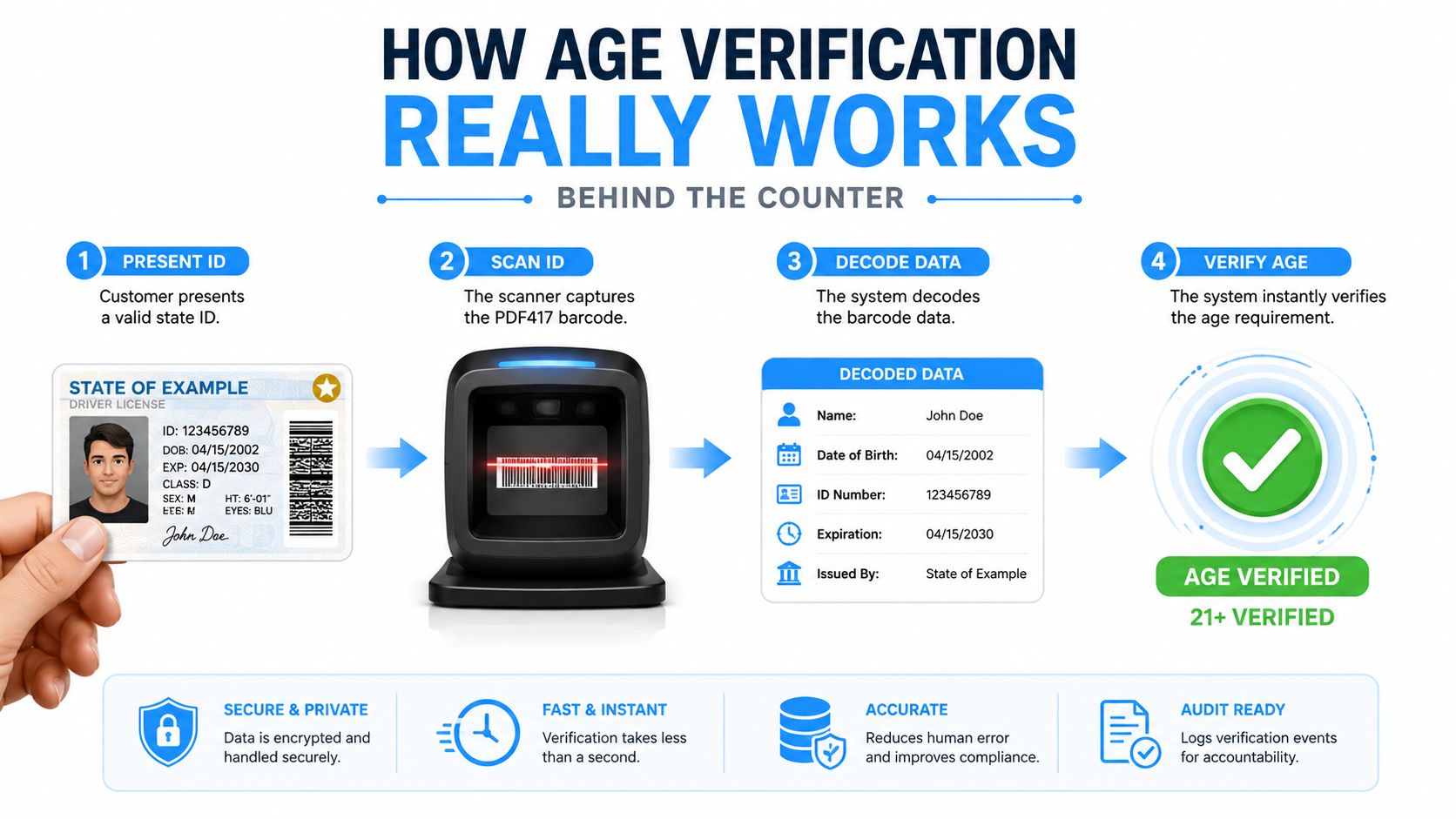
What the scanner checks
The basic sequence is straightforward:
- Read the document. The device captures information from the barcode or magnetic data.
- Decode the fields. The software identifies details such as the birth date and expiration status.
- Compare information. The system can compare encoded fields with what appears on the front of the ID.
- Return a result. Staff receive a quick indication that the document meets the store's verification requirements or needs closer review.
Some systems can complete this check in under two seconds, according to information about dispensary ID scanning. That speed matters when several customers arrive together, but speed isn't the main point. Consistency is.
A customer may look clearly older than the legal minimum, yet appearance doesn't prove age or document validity. The compliance question is whether the retailer verified the customer using acceptable documentation. The scanner helps staff avoid mistakes such as misreading a birth date or overlooking an expired card.
For a first-time visitor: keep your physical government-issued ID ready, let the budtender place it on the reader, and wait for the verification result. The scan is normally a brief checkpoint, not an interrogation.
If you're ordering online, the same principle applies before fulfillment. Strong Strains' online ordering process connects account details with age verification, so the information used for an order needs to match the government-issued ID presented during the required check.
Regulatory Compliance and Why Rules Vary by State
A dispensary's ID policy starts with its state's cannabis rules. One state may require electronic scanning, while another may require staff to inspect a government-issued ID and allow scanning as part of the sale. The checkpoint can look different from one market to the next, even when the purpose is similar: confirming that a restricted purchase is lawful.
Illinois, Missouri, New Jersey, Nevada, and Virginia are listed as states requiring dispensary ID scanning in this state-by-state overview of dispensary ID scanning laws. California's retail guidance, by comparison, requires a purchaser to present government-issued identification showing the purchaser is 21 or older. The legal standard stays clear, while each store's workflow may vary.
New Jersey illustrates how these controls fit into a regulated market. Its legalization framework took effect in 2021, and age-check systems became part of the retail process after legalization. The larger change was from informal, difficult-to-document sales toward recorded age verification and transaction controls.
New York's approach
Under New York's official retail guidance, staff may inspect identification, confirm that a customer is at least 21, and perform a transaction scan as a condition of sale. For delivery, age and identity must also be checked before the product is handed over, according to the New York cannabis age-gating guidance.
That explains why a New York retailer might scan an ID at the entrance, checkout, or delivery handoff. Each location serves the same basic role, like a checkpoint on a trail. Staff verify eligibility before the customer receives access to a restricted product.
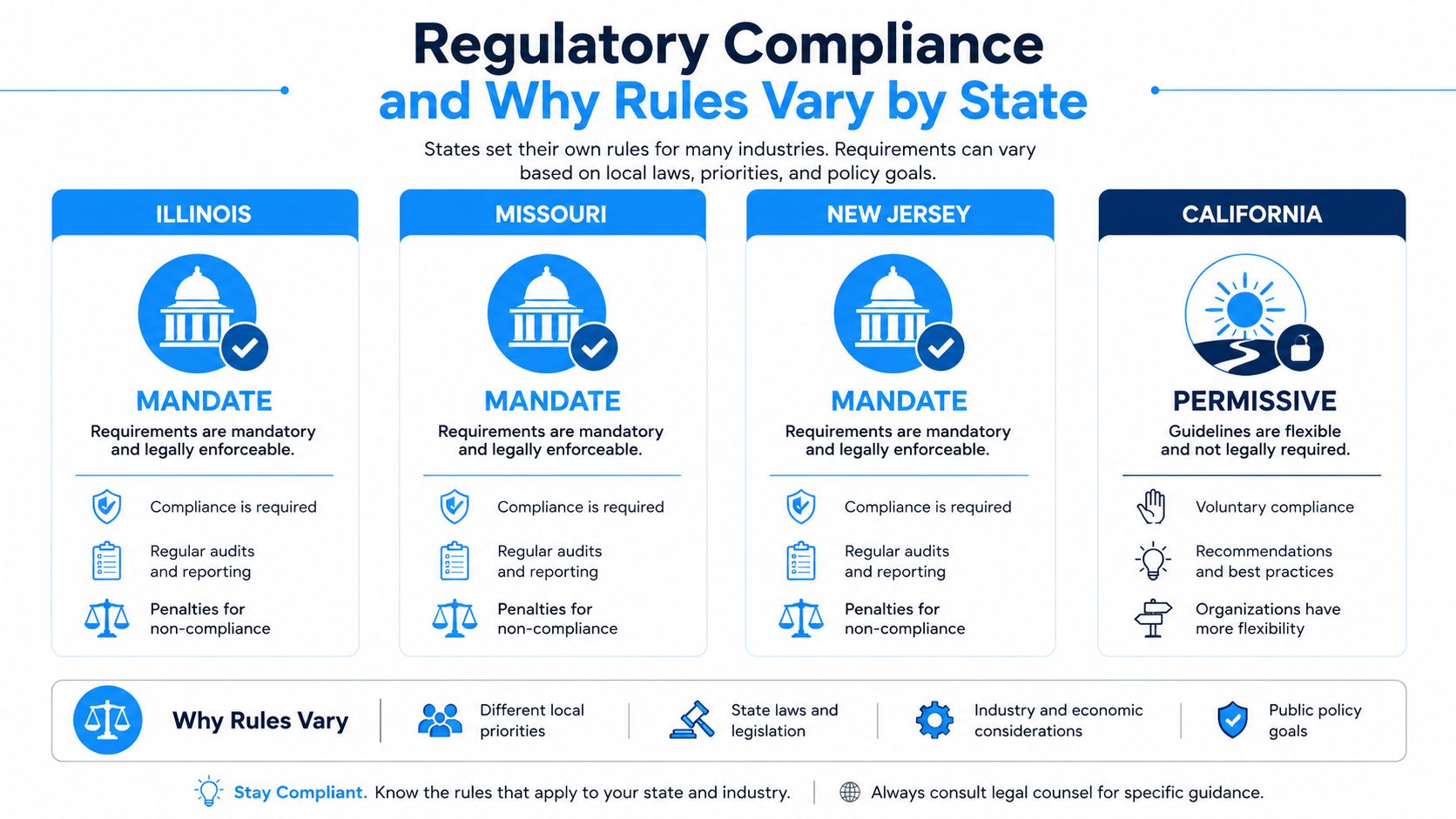
A visual inspection may still be part of the process. Scanning adds a consistent way to read the document, reduce birth-date mistakes, identify questionable or expired identification, and create verification records when regulators require documented procedures. It does not automatically mean the store is collecting every detail printed on the card.
For New York shoppers at Strong Strains, the scan is best understood as a consumer protection checkpoint, not a privacy scare. It helps the budtender apply the same eligibility rule to each customer. Policies differ across states because their cannabis programs were written differently, so a visitor who shops in multiple markets may encounter different procedures.
Beyond Age Checks How Scanning Supports Safety and Inventory
Age verification is the front door, but regulated retail systems often use the verified transaction for more than an entry decision. Where state rules allow, dispensaries can connect the check with purchase controls, transaction logs, and customer profiles. That helps employees determine whether a sale is eligible under the market's purchase rules.
A practical example is a customer buying several product types during one visit. The system may help staff account for the transaction rather than treating each item as an unrelated sale. That supports daily purchase-limit enforcement and gives the retailer a clearer record of what left the store.
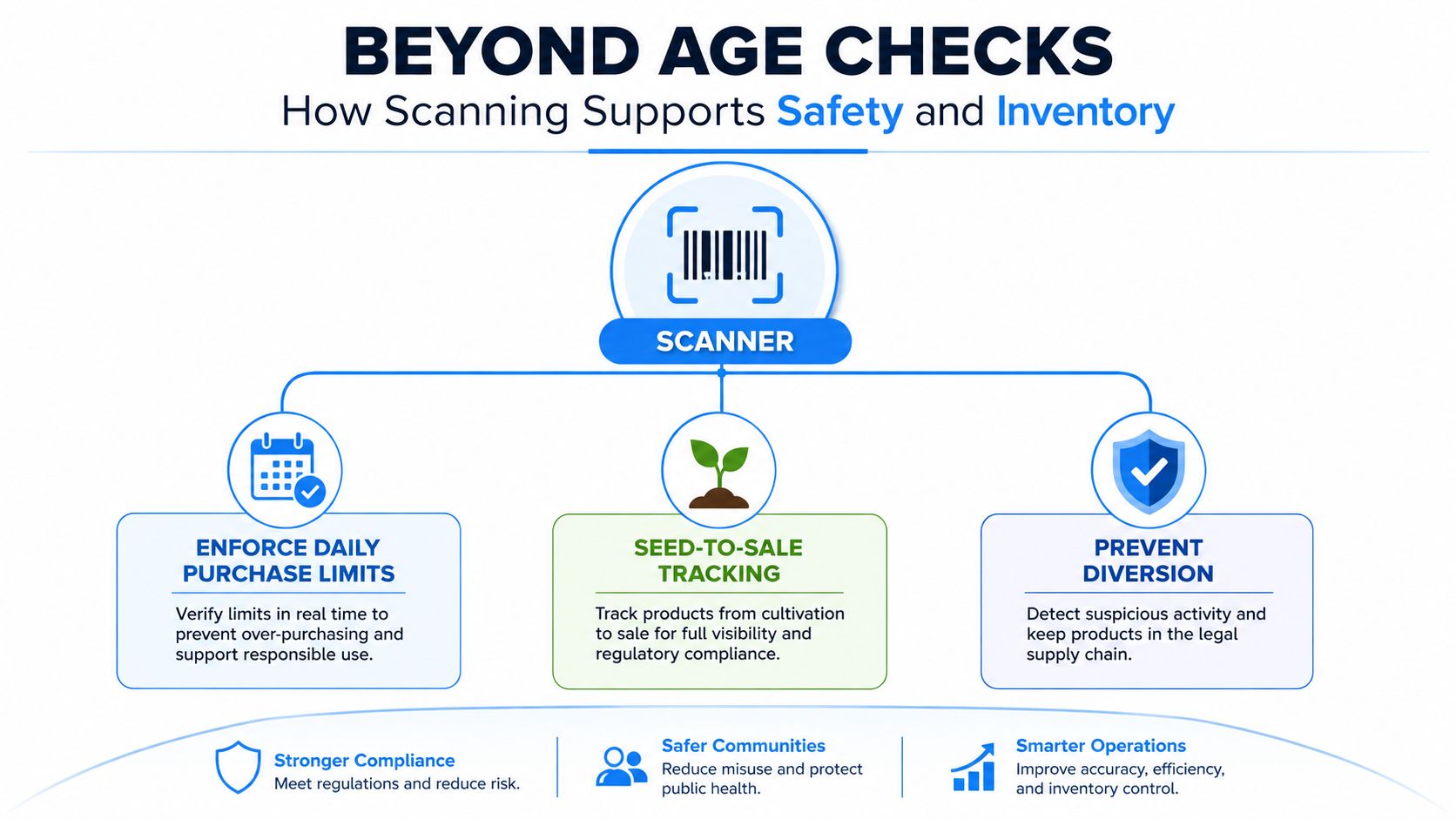
One scan, several operational connections
The scanner can support a chain of responsibilities:
- Purchase controls: Staff can use transaction information to help enforce applicable product caps.
- Inventory records: The sale becomes part of the retailer's documented movement of products.
- Traffic management: A fast pass-or-fail result helps the team serve customers without replacing compliance with guesswork.
- Diversion prevention: Documented eligibility and purchase history can make it harder to move regulated cannabis outside the legal system.
This is why the scan can matter to you even when you're buying a single item. Accurate records help connect the customer interaction to the store's inventory and compliance process. That system supports the same regulated environment that makes product information, lab documentation, and responsible sales possible.
Businesses in other regulated industries use similar visitor-management ideas. If you're interested in how organizations structure check-in, identity verification, and compliance records, Overton Security's compliance tools provide useful context without treating cannabis retail as an isolated technology problem.
Product accountability also matters after the ID check. For a closer look at how cannabis products are evaluated before sale, read Strong Strains' guide to cannabis lab testing. The ID scan doesn't test the product itself, but it operates alongside the documented controls that distinguish licensed retail from an unregulated purchase.
What Happens to Your Data Privacy and Recordkeeping Explained
The most important privacy question isn't only what the scanner can read. It's what the retailer chooses or is required to retain afterward.
A scanner may capture a name, date of birth, expiration status, and the fact that verification occurred. Some systems can also compare the barcode data with visible fields and check document features such as holograms or ultraviolet elements, helping staff identify mismatches and suspicious IDs, as described in California's retail compliance guidance.
That doesn't mean every field becomes a permanent customer profile. Privacy-focused systems may be designed to retain only a verification flag and timestamp rather than an image of the ID, according to cannabis retail ID-verification guidance.
Captured information versus retained information
These are different stages:
| Stage | What it means |
|---|---|
| Captured | The scanner reads available fields to evaluate age, expiration, and document validity. |
| Compared | The system may check whether encoded information matches visible information and security indicators. |
| Recorded | The retailer may keep a verification result, timestamp, transaction detail, or other record allowed by its rules and policy. |
| Retained | The business keeps selected information for a stated period, or avoids retaining personal fields beyond the immediate check. |
The idea that every dispensary automatically stores a full ID image is too broad. The opposite assumption, that no information can ever be recorded, is also too broad. Some systems can log purchase totals, support loyalty programs, and create auditable records, while local privacy rules may limit retention practices. This overview of what happens when an ID is scanned at a dispensary explains why shoppers should ask whether the scan is a one-time verification or part of a longer-term record.
A useful question to ask: “Do you retain the ID image, or only a verification result and timestamp?”
Loyalty programs and communication preferences
A compliance scan and an optional marketing relationship aren't the same thing. A loyalty program may connect a name or contact detail with purchases when a customer chooses to enroll, while a standard age check may exist solely to confirm eligibility.
The same privacy principle applies to text messaging. If you sign up for promotional communications, review the retailer's consent and opt-out practices alongside general guidance on privacy for SMS campaigns. Asking before enrolling keeps the choice with you.
What to Expect When You Visit Strong Strains in East Setauket
A visit to Strong Strains in East Setauket starts with a straightforward check-in. Bring a valid government-issued photo ID, present it to the staff member, and allow the scanner to confirm your age and document information before you enter fully or complete a purchase.
The process is designed to be respectful. A budtender may answer questions about formats, potency, effects, and responsible use rather than treating the scan as a reason to challenge you. For a first-time customer, that brief interaction is the point where the store confirms that the purchase can proceed legally.
A simple visit checklist
- Bring the physical ID: Use a valid government-issued photo ID that staff can inspect and scan.
- Expect verification before handoff: For delivery, age and identity must be checked before the product is given to you under the New York rules described earlier.
- Ask questions freely: If you're unsure about storage, retention, or the difference between a compliance check and a loyalty profile, ask the team.
- Choose your format: The menu can include flower, vapes, pre-rolls, edibles, concentrates, tinctures, topicals, and accessories, subject to current availability.
- Select fulfillment: In-store shopping, pickup, and local delivery provide different ways to complete the order.
Strong Strains offers a premium, lab-tested menu and knowledgeable guidance for adults 21 and older. You might compare a flower option with a vape, ask about an edible's serving information, or look at concentrates and tinctures if you prefer a more measured format. The welcoming Strong Strains cannabis dispensary experience is built around helping customers make an informed choice, not rushing them through unfamiliar products.
The same principle applies online. Your order details need to match the government-issued ID used for verification, so check your information before choosing pickup or delivery. Having your ID ready at the final handoff can prevent an avoidable delay.
Final Takeaways for a Smooth and Confident Dispensary Visit
The short answer to why do dispensaries scan your ID is age verification, but the complete answer is broader. The scan confirms that the customer meets the age requirement, checks document validity, helps staff identify suspicious alterations, and supports the records and transaction controls expected in a regulated market.
Rules differ by state. Illinois, Missouri, New Jersey, Nevada, and Virginia are listed as states requiring ID scanning, while California requires a government-issued ID showing that the purchaser is at least 21. New York permits inspection and transaction scans, including verification before a delivery handoff. Those differences reflect local compliance systems, not necessarily a retailer trying to create extra friction.
Privacy deserves a precise answer rather than a blanket promise. A system may read a name, birth date, or expiration status, but a privacy-focused setup may retain only a verification flag and timestamp. Because retention policies differ, ask whether the retailer stores an image, keeps transaction information, or uses the check only for immediate eligibility.
For your next visit, bring a physical government-issued ID, expect a quick scan, and ask questions if you're unsure what happens afterward. At Strong Strains in East Setauket, the checkpoint supports a welcoming shopping experience where adults can explore tested cannabis products, get practical budtender guidance, and choose in-store pickup or local delivery with the required verification.
Strong Strains Cannabis Dispensary offers lab-tested flower, vapes, pre-rolls, edibles, concentrates, tinctures, topicals, and accessories for adults 21 and older, with in-store pickup and local delivery available. Bring your ID, ask about the verification process, and visit Strong Strains Cannabis Dispensary for clear guidance and a compliant, comfortable cannabis shopping experience.