
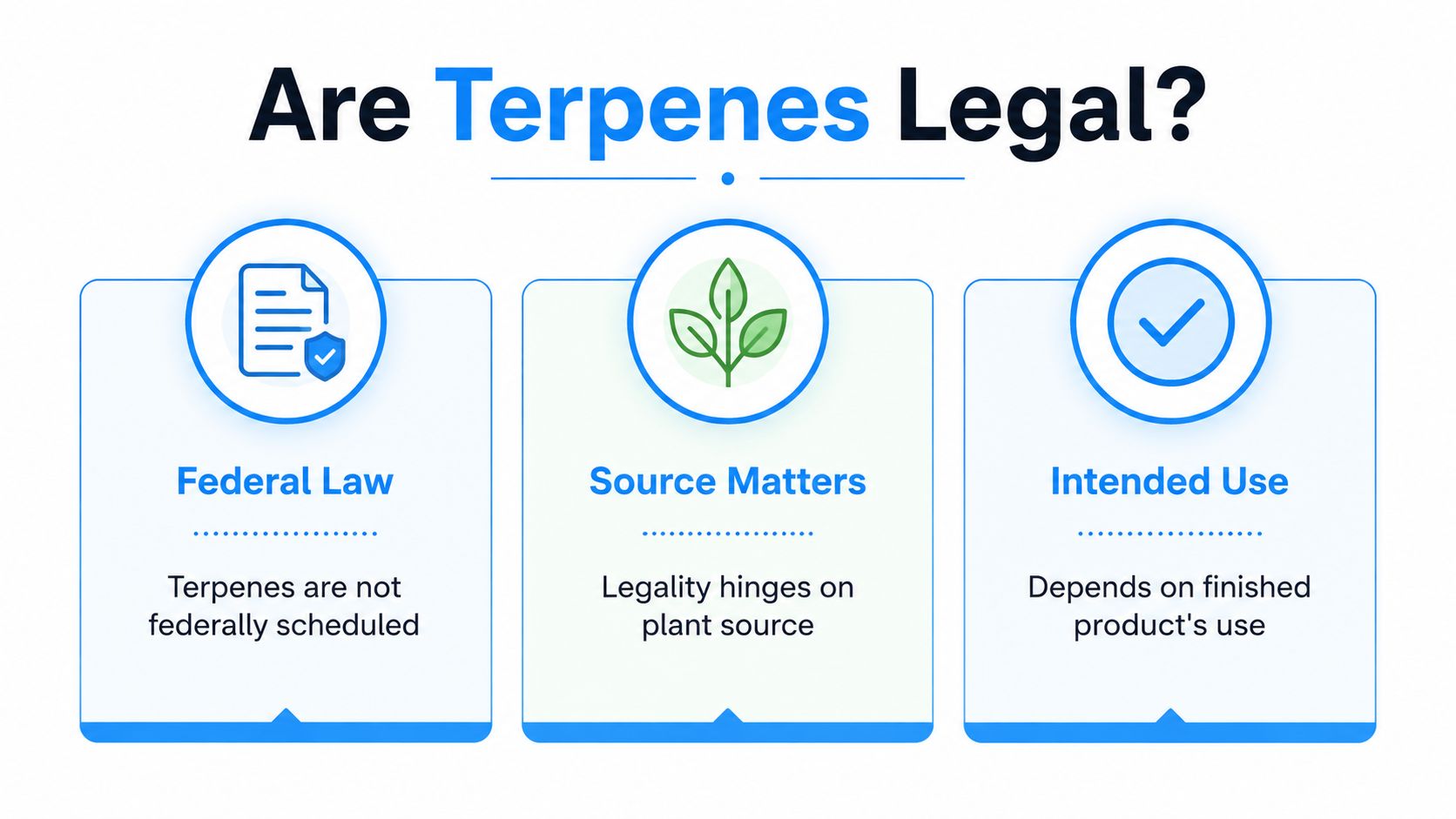
Terpenes themselves are generally not federally controlled, but legality depends on whether they come from hemp under the 0.3% total THC standard or from marijuana, and on whether the finished product is used in food, a vape, or a cosmetic. A terpene can be lawful as an ingredient and still create a compliance problem when placed in an unlicensed cannabis product.
Ask a Long Island shopper what makes a cartridge or flower product legal, and you'll usually hear “the THC percentage” or “whether it came from hemp.” Both answers are incomplete. The core question has two parts: where did the terpene come from, and what will the finished product do?
That distinction matters whether you're comparing a cannabis vape, a botanical flavor blend, or a terpene concentrate sold separately. A compliant source doesn't automatically make every final use lawful, and a familiar botanical molecule doesn't erase packaging, testing, licensing, or inhalation concerns.
Are Terpenes Legal in the U.S.
Are terpenes legal in the United States? It depends on more than the word “terpene” on the label. Terpenes generally are not federally scheduled by themselves, but the product's legal route depends on its plant source, THC classification, and intended use. The Congressional Research Service overview of hemp and cannabis constituents explains that hemp-derived constituents, including terpenes, can fall outside federal controlled-substance rules when the source meets the hemp definition.
Start with the source
The source determines the product's legal pathway.
- Hemp-derived terpenes generally fall within the federal lawful zone when the source qualifies as hemp under the applicable THC limit.
- Marijuana-derived terpenes come from cannabis that remains within the federal marijuana definition, even if state law permits the finished product.
- Botanical or laboratory-made terpenes follow rules tied to the final category, such as food, flavor, fragrance, cosmetic, or inhalation use.
The FDA's explanation of the 2018 Farm Bill also makes clear that a lawful hemp source does not remove other FDA requirements. For example, federal food rules can still restrict adding THC or CBD to food.
Then identify the finished product
A terpene blend for fragrance does not face the same questions as one added to an edible or inhaled through a cartridge. Regulators may examine the complete formulation, label, delivery method, and sales channel.
A compliant ingredient can still be placed in a noncompliant product. Botanical terpenes added to an unlicensed high-THC vape cart do not make that cart lawful for retail sale. The terpene's status and the cannabis product's status must be checked separately.
The federal standard changed in November 2025, shifting from delta-9 THC alone to total THC, including THCA, under P.L. 119-37, as described by the Congressional Research Service. A Long Island shopper should check the product's source and how the label documents total THC, rather than relying only on a delta-9 figure. That quick review helps separate a lawful ingredient from a lawful product.
What Terpenes Are and Why the Law Cares
A terpene is an aromatic compound produced by plants. Lemon peel, pine needles, lavender, and hops all owe part of their recognizable scent to terpene chemistry. Cannabis produces terpenes as well, alongside cannabinoids such as THC and CBD.
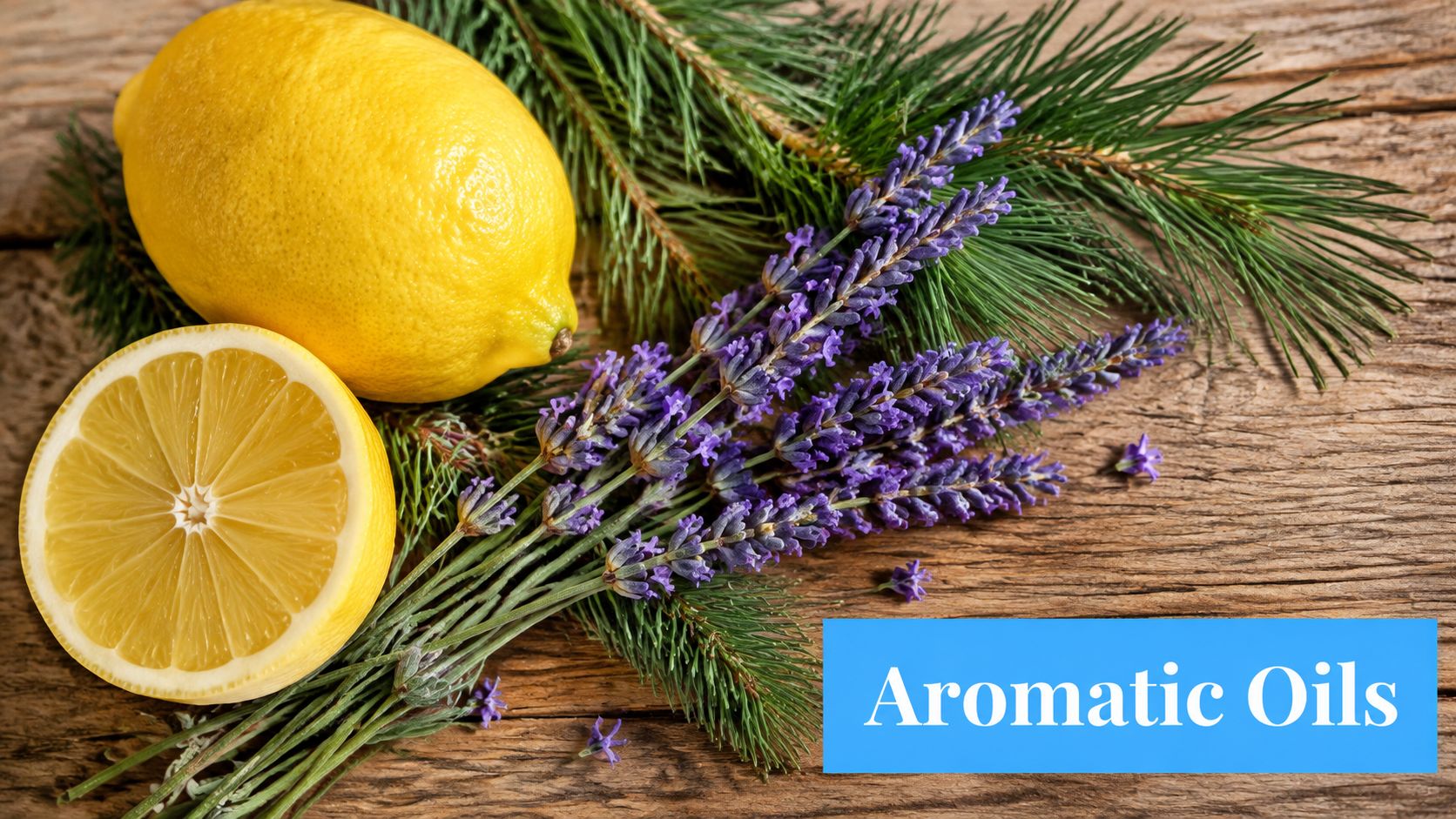
For a first-time buyer, terpenes are best understood as a plant's aromatic signature. Limonene can bring a citrus note, pinene may smell fresh and resinous, linalool can be floral or lavender-like, and caryophyllene often comes across as peppery or spicy. Those names describe chemical compounds and aromas. They do not guarantee a medical result or predict exactly how a cannabis product will feel.
The same compounds appear far beyond cannabis. Menthol in a cough drop, citrus terpenes in flavoring, and aromatic ingredients in cleaning or fragrance products show why the word “terpene” cannot answer a legality question by itself.
Source changes the legal route
A terpene isolated from lemon, pine, or another botanical source follows a different legal path from one extracted from cannabis resin. The molecules may be chemically similar, but regulators still examine origin, processing, concentration, and final use.
That distinction matters at the shelf. “Citrus terpenes” could refer to botanical ingredients, cannabis-derived compounds, or a blend of both. A front label may highlight flavor without clearly identifying the source, so buyers should check the ingredient panel and certificate of analysis before purchasing. The source tells you one part of the story. The finished product and its intended use determine the rest.
Cannabis shoppers who want to examine a commonly listed compound can read this guide to humulene terpene benefits. Aroma information can help explain a label, but it is not a promise about effects.
Why regulators look beyond the molecule
Terpenes may be eaten, applied to skin, inhaled, or used in fragrance. Each route creates different questions about purity, dose, contaminants, heat-related changes, labeling, and consumer exposure.
A flavoring used in food may be evaluated under food requirements. A cosmetic ingredient may raise questions about the formula and where it is applied. A vape additive is heated and enters the respiratory system, so a history of use as a flavoring does not automatically establish that it is appropriate for inhalation.
For a New York shopper, the buying checklist is straightforward: identify the terpene's source, read the complete ingredient list, confirm the product's intended route, and review available testing information. Natural describes origin, not universal approval for every use.
Federal Rules on Hemp-Derived vs Marijuana-Derived Terpenes
Are terpenes legal under federal law? The answer starts with their source, then turns to the finished product, its THC content, and how it is used. A terpene is one ingredient in the package, not a legal pass for everything around it.
The federal framework changed with the 2018 Farm Bill. Cannabis sativa L. and its derivatives can fall outside Schedule I when they meet the federal definition of hemp, including the applicable THC limit. Federal hemp treatment also does not remove FDA oversight of products sold in commerce, as the FDA's hemp testimony explains.
The compliance question became more demanding after the November 2025 shift to total THC. The CRS summary of P.L. 119-37 describes a standard that includes THCA and uses a total THC concentration of less than 0.3% on a dry-weight basis. A product therefore cannot always be judged by its delta-9 THC result alone. THCA-rich flower is a useful example, because its format and cannabinoid profile still require separate review. This guide to how to use THCA flower helps explain why product format matters alongside the label.
What the categories mean on a shelf
| Category | Total THC Threshold | Controlling Federal Law | Typical Retail Channel |
|---|---|---|---|
| Hemp-derived terpenes | Less than 0.3% total THC in the qualifying hemp source | Federal hemp framework and applicable FDA requirements | Hemp retailers, compliant ingredient suppliers, and some regulated product channels |
| Marijuana-derived terpenes | Source does not qualify as hemp | Controlled Substances Act, plus applicable state cannabis law | State-licensed cannabis dispensaries where permitted |
| Botanical or synthetic terpenes | No cannabis-source classification by that fact alone | Rules depend on food, cosmetic, fragrance, or inhalation use | Ingredient, flavor, cosmetic, and cannabis product markets subject to product rules |
The table separates source legality from use-case legality. Hemp-derived does not mean every finished vape, edible, or supplement is approved. Marijuana-derived does not mean the product has the same status in every state. The source determines the starting lane, while the product's ingredients, THC result, route of use, and sales channel determine whether it can stay there.
The source document matters
A responsible manufacturer should identify the terpene blend's origin and connect that information to batch documentation. Vague wording such as “strain-inspired” does not tell you whether the blend came from hemp, marijuana, or another botanical source.
The National Institute on Drug Abuse research FAQ explains that hemp-derived plant constituents, including terpenes, are not regulated under the Controlled Substances Act when the source meets the hemp definition. That distinction does not authorize an unlicensed seller to market a marijuana-derived vape outside the applicable state system.
FDA rules still matter. The FDA cannabis guidance distinguishes recognized safety for certain terpene uses from the requirements that apply to cannabis ingredients and food products. Before buying on Long Island, check the source, total THC documentation, intended route, complete ingredient list, and seller's licensing status.
Natural vs Synthetic Terpenes and How Each Is Regulated
The terms natural and synthetic describe a terpene's origin, while the legality of a finished vape, edible, cosmetic, or fragrance product depends on how that ingredient is used.
Natural terpenes may be steam-distilled or otherwise isolated from citrus, lavender, pine, cannabis, and other plants. Synthetic terpenes are produced through chemical processes that reproduce a molecule or create a controlled aromatic profile. Either type may appear as an isolated compound, so regulators and manufacturers must evaluate the finished product, not just the ingredient label.
A terpene's history in food or a recognized safety category can support one use without approving every other use. GRAS is use-specific, not blanket permission to inhale a concentrated ingredient. A compound suitable for a flavoring application still needs appropriate review when placed in a vape formulation.
What buyers should look for
A cartridge label may list botanical terpenes, natural flavors, artificial flavors, cannabis-derived terpenes, or individual compounds. Those terms provide useful clues, but they leave important questions unanswered. A responsible manufacturer should identify the ingredient source, disclose the formulation, and provide batch-level documentation.
Synthetic does not automatically mean dangerous, and natural does not automatically make an ingredient suitable for vaping. Check whether the finished formulation was evaluated for its intended route of administration, whether all ingredients are disclosed, and whether the product came through a regulated sales channel. The same terpene can sit in a different legal lane depending on whether it is used in a food, topical, fragrance, or inhaled cannabis product.
| Attribute | Natural Terpenes | Synthetic Terpenes |
|---|---|---|
| Origin | Isolated from botanical or cannabis material | Produced through laboratory chemical processes |
| Federal scheduling | Depends on source and finished product, not the word “natural” | Depends on finished product and use, not the word “synthetic” |
| Food use | Some compounds may have GRAS or other food-use status | May rely on specific flavor or safety evaluations |
| Label visibility | May appear as botanical, cannabis-derived, or natural flavor ingredients | May appear as artificial flavor or by individual compound names |
| Vape relevance | Requires formulation and inhalation review | Also requires formulation and inhalation review |
For a Long Island shopper, the practical question is, “What is the source, what is the intended use, and where was this product sold?” A distillate cartridge containing botanical terpenes should still come from a licensed cannabis supply chain when sold as a cannabis product. Check the package and seller together, like matching a vehicle's registration with its license plate.
Terpenes in New York Cannabis Products
Are you looking at the terpene percentage, or checking whether the entire product belongs on a legal New York shelf? Those are separate questions. Federal rules may address where the terpene came from, while New York rules also address the finished cannabis product, its testing, labeling, and sales channel.
The New York Office of Cannabis Management oversees licensed adult-use and medical cannabis products. A compliant dispensary item should move through that regulated system before it reaches the shelf. A terpene's source alone does not make an unlicensed cartridge or infused product lawful.
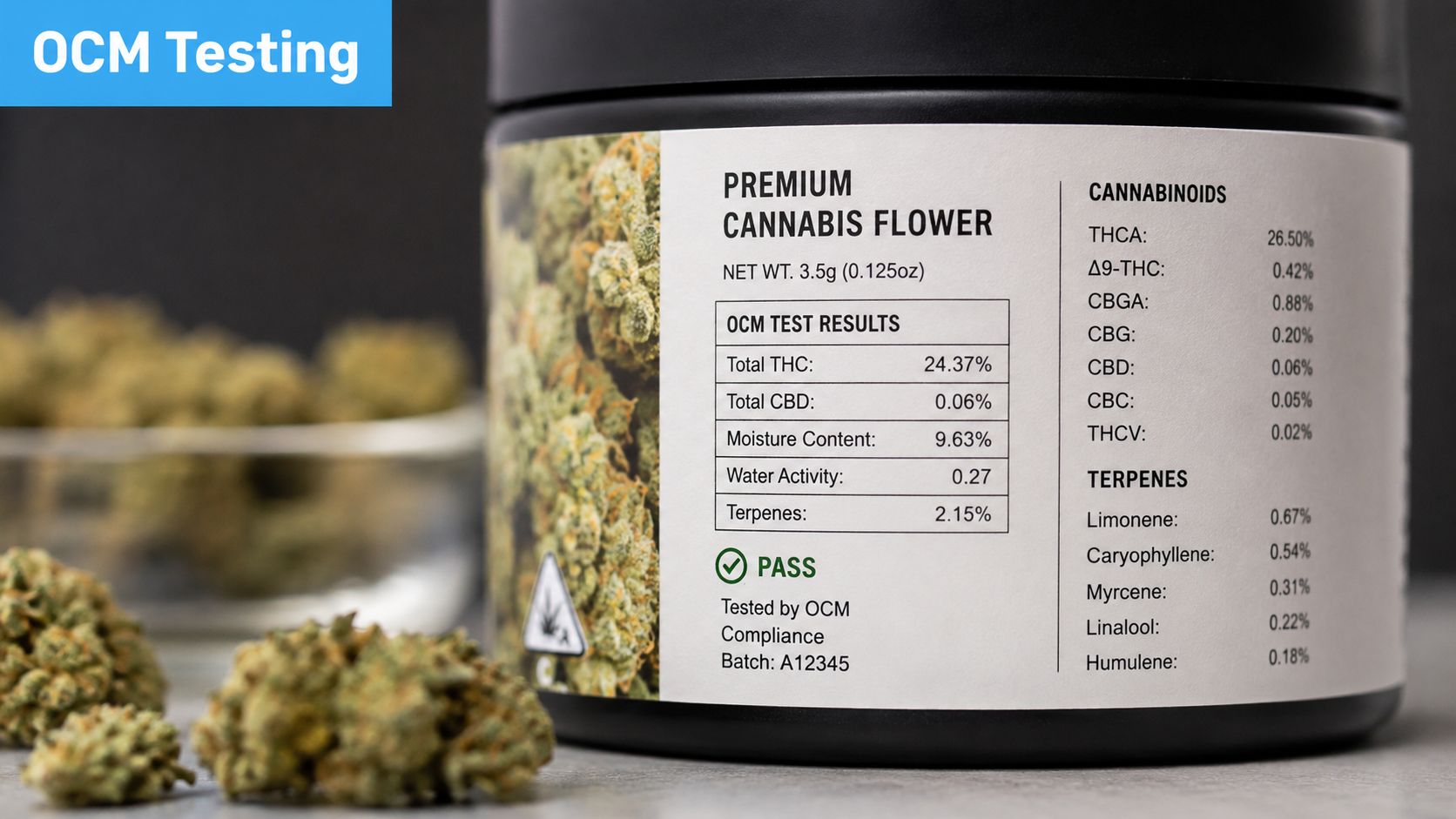
Terpenes help describe aroma and composition, but they do not replace cannabinoid testing or contaminant screening. New York compliance materials and product documentation can include testing for cannabinoid potency, heavy metals, pesticides, microbial contaminants, and residual solvents, along with terpene reporting.
How terpene information appears
On a compliant product, terpene information should connect to a specific batch or lot, rather than appear as an unsupported marketing claim. New York reporting practices identify terpenoids as a percentage by weight, so shoppers can compare the package information with the product menu and available testing documents.
A label may highlight myrcene, limonene, or caryophyllene. Those names can help you choose among earthy, citrus-forward, and peppery aromas. They do not guarantee relaxation, creativity, sleep, or relief. Aroma is a useful guide, not a promised effect.
A high terpene percentage is not an automatic pass, and a lower percentage is not automatically a problem. Accurate reporting, complete labeling, and disclosure of added botanical terpenes give you more useful information than a dramatic number on the front of the package.
What a licensed shelf should show
Check that the product identity, cannabinoid information, batch details, and required packaging elements are clear enough to verify. The label should not leave you guessing whether the blend came from cannabis, another botanical, or a laboratory process.
Ask the budtender to show you the certificate of analysis or explain where the testing information is available. The key check is to match the exact product and batch, like matching a vehicle's registration with its license plate. If the store cannot connect those details, choose a product with clearer documentation.
A terpene profile is a shopping tool, not a substitute for a license, a lab report, or a complete ingredient list.
Safety Testing and Labeling Standards for Terpene Products
Legal and safe are separate questions. A product may be sold through a lawful channel and still require a careful check of its ingredients, testing, storage, and intended use. The exposure route matters especially for concentrated terpene liquids and vape formulas.
Start with the certificate of analysis, or COA. The cannabis lab-testing guide explains why the document should match the specific product batch, not merely the brand.
A practical document check
Before buying, look for:
- Batch connection: The lot or batch identifier on the package should match the identifier on the COA.
- Terpene reporting: If the product makes terpene claims, the report should identify the tested terpene profile.
- Contaminant panels: Cannabis products should include applicable screening for pesticides, heavy metals, microbial contaminants, and residual solvents.
- Ingredient disclosure: The package should identify cannabis oil, botanical terpenes, synthetic flavor compounds, carriers, and other meaningful components.
- Date information: Check the manufacture, packaging, or expiration information shown on the label.
A separate terpene concentrate may include a Safety Data Sheet, or SDS. It can explain hazards, handling, storage, exposure controls, and emergency measures. An SDS is not a consumer COA, so it does not show that the liquid is suitable for inhalation.
Why vape products need extra caution
Heating changes how the ingredients reach your body. A terpene with a history of use as a food flavor may still need separate evaluation for vaping, particularly when the formula contains carriers such as propylene glycol or medium-chain triglyceride oil.
Smooth taste is not proof of an inhalation-ready formula. Ask whether the product was made and tested for vaping, whether every ingredient is disclosed, and whether the manufacturer addresses thermal degradation and inhalation toxicity.
Compliance guidance also separates single-terpene substances from mixtures for hazard communication, SDS, and labeling purposes, as described in this terpene compliance overview. For a New York shopper, the practical takeaway is simple: avoid mystery concentrates, unlabeled refill bottles, and cartridges that do not identify their ingredients or testing source.
A terpene name can help you compare aroma. The label and matching batch documents help you judge what you are buying.
How to Buy Terpenes Legally on Long Island
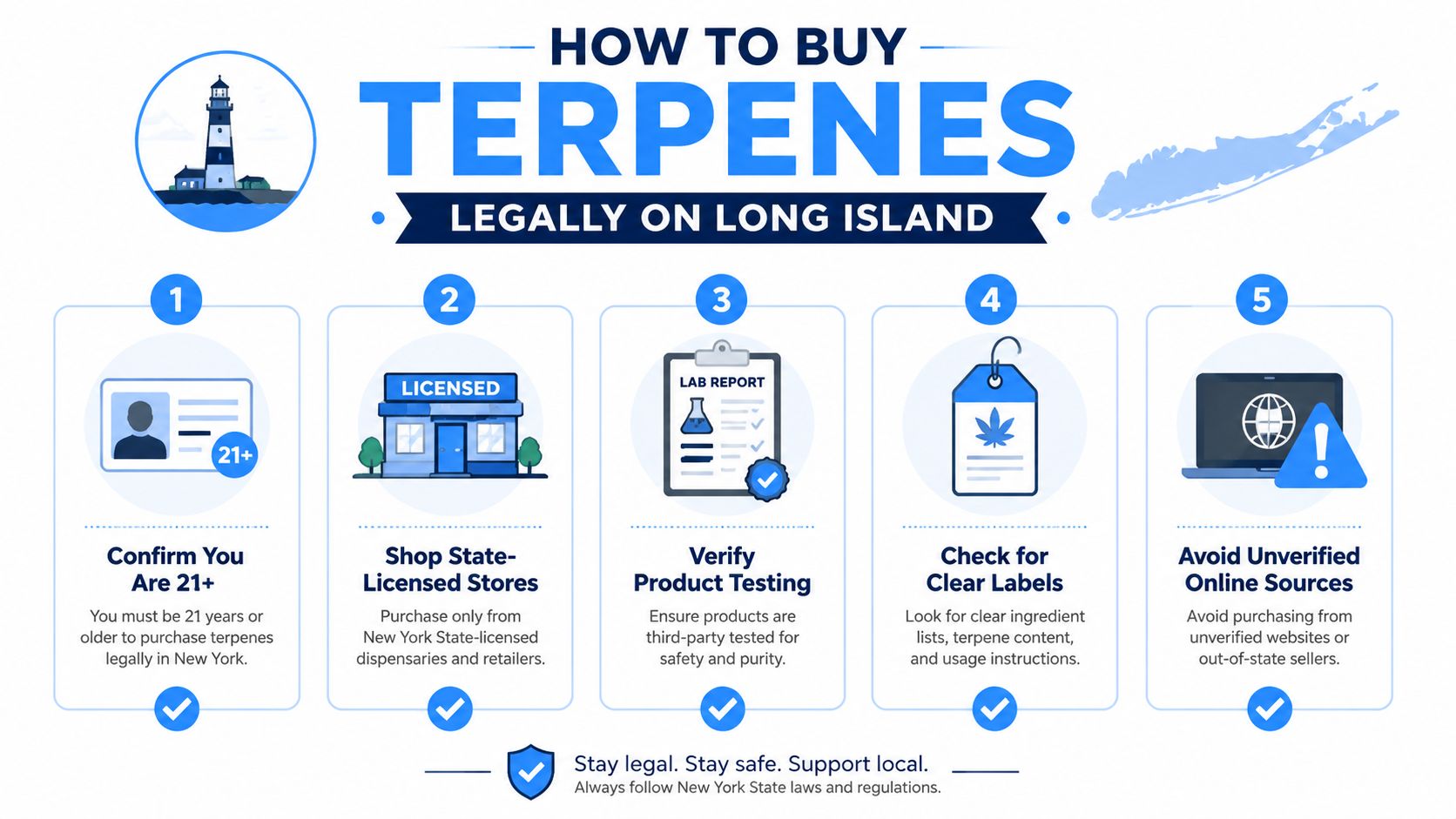
How can you tell whether a terpene-containing cannabis product is legal to buy on Long Island? Start with the seller and the product's intended use, not the terpene name. For flower, vapes, concentrates, or infused products, use a New York Office of Cannabis Management licensed retailer. A polished package or social media listing does not establish lawful sale.
Five checks before you pay
Confirm you're 21 or older. Bring valid identification and buy through the adult-use channel that fits the product.
Shop a state-licensed store. Check the license information posted at the storefront or on the retailer's website. A head shop or hemp boutique may sell botanical terpenes, yet that does not make it a licensed marijuana retailer.
Match the testing documents. Ask for the COA and compare its batch identifier with the package. Review cannabinoid results, terpene details, and contaminant panels. “Lab tested” alone does not tell you what the laboratory tested.
Read the label. Look for the New York universal symbol where required, batch information, terpene percentages, ingredient disclosure, and child-resistant packaging. Ask whether added terpenes are botanical, cannabis-derived, or synthetic if the label leaves the source unclear.
Avoid unverified online sellers. A seller should be able to show its New York license, testing documents, and lawful delivery process. Do not carry marijuana products across state lines, even if the destination has different cannabis rules.
Ask the budtender useful questions
Ask where the terpenes came from, whether they were added after extraction, and whether the product is intended for inhalation, topical use, or another purpose. Ask where the COA is stored and whether the listed profile matches the aroma and format you want. Source legality answers where an ingredient came from. Use-case legality asks whether that finished product is appropriate and permitted for the way you plan to use it.
Strong Strains Cannabis Dispensary in East Setauket offers lab-tested flower, vapes, concentrates, edibles, tinctures, topicals, and accessories, with in-store pickup and local delivery options. Product pages and budtenders can help shoppers review cannabinoid and terpene information before choosing a format.
Keep terpene-containing products away from heat and sunlight, store them in their original child-resistant packaging, and save the receipt. These habits help you identify what you purchased if a quality concern arises.
Visit Strong Strains Cannabis Dispensary in East Setauket to compare regulated cannabis products with cannabinoid and terpene information. Ask the team about a tested flower, vape, concentrate, edible, or topical that matches your intended use.