A customer once pointed at a jar and asked, “What did weed taste like before breeders started mixing everything together?” That question gets to the heart of landrace strains, because the answer lives in the oldest cannabis lineages still standing.
The Ancient Roots of Modern Cannabis
Walk into any dispensary and you'll see a wall of names that feel modern, branded, and highly curated. Cookies, Connected, Runtz, Matter, Botanist, MFNY, Florist Farms, Hudson Cannabis, Stiiizy, Jeeter, Wyld, Kiva, Camino, Pax, Jetty, Airo, Heavy Hitters, Rove, Fernway, Old Pal, Dogwalker, Good Green, &Shine, Jaunty, Ayrloom, OFF Hours, Wana, Gron, Luci, New York Honey, Sapphire, The Plug Pack, Presidential, Platinum Reserve, Sluggers, Pure Vibe, Royal Genetics, Sticky's Weed Farms, The Kaleidoscope Collective, Moonlit Hash Co, DTF Hash Co., Olios, Papa & Barkley, Head & Heal, Greenline Apothecary Cannabis, Harney Brothers Cannabis, High Falls Canna, Route 27, 1937, 40 Tons, 6 Point Cannabis, Aeterna, Alchemy Pure, Alien Labs, Alter, American Hash Makers, Animal House, Battenkilll Buds, Bodega Boyz, Boutiq, Brass Knuckles, Canna Cantina, Canna Clinicals, Canna Cure, Cannabals, Cheech & Chong, CHEF FOR HIGHER, Cheevo, ChocLit, Circle Hill, Claybourne Co., CRU Cannabis, Crispy's, DADA, Dank, Dealer Cannabis CO, Dompen, Doobie Labs, Dubbs, Edie Parker, Eaton Botanicals, ElectraLeaf, ERVA, Eureka, Fela's, Flav, Florette, FOY, FX, Ghost, Golden Garden, Good Tide, Goodlyfe, Gotti, Greens, Harvest, Hashtag Honey, Head Space, Hepworth, HER Highness, Herb, High 5's, High Ambitions, High Garden, High Peaks, Holiday, Holy water, HoneyPot, Hybrid Theory, I AM GOODNESS, INDI, Incredibles, Jacked, Jenny's, Kings & Queens, Knack, Layup, Leal, Left Coast, Level, LivWell, LOBO, Lost Farm, Lowell Herb Co, Mac Pharms, Major, Mark Turk Farms, Mindbender, Moondust, MoonFlower, Moon Shot, Muha Meds, Nama, Nanticoke, No Bad Days, Nova, NYCE, Optimum Performance (Op6), Packs, Pet Drops, Picc, Plug Play, Pot & Head, Preferred Gardens, Puff, Pura, Pure Buds, Pure Potent, Purps, Revival, Revert, Ripped, Rolling Green, Ruby Farms, Rythm, Silly Nice, SmartBud, Smoke, Smoke WRLD, Snoozy, Soft Power Sweets, Space Buds MoonRocks, Space Poppers, SP Farms, Stone Road, Strain Gang, SunDrfit, The Bulk Boys, The Ladies, THE HIGH LIFE, Toast, To The Moon, Trout & Co., Tune | Infused Seltzers, Turn, Umamii, Untitled, UrbanXtracts, Veterans Choice Creations, Waavy, WaaHoo, Weed Water, White Rabbit, WURMZ, Xiaolin, Zizzle, plus accessories like Bic Lighter, Blazy Susan, Brass Screens, Giftcard, Glass Pipes, Grinders, Hand Pipe, PUFFCO, Raw Paper, and Smoke WRLD gear.
That whole shelf is the canopy. Landrace strains are the roots.
Think of cannabis like an old family tree. Every modern hybrid has parents, grandparents, and older ancestors behind it. Before breeders started chasing dessert aromas, punchy bag appeal, or tighter production traits, cannabis grew in relative isolation across specific regions. Over long stretches of time, those plants adapted to where they lived.
A few names still carry that original geography in plain sight. Thai, Colombian Red, and Afghani are classic examples of landrace strains named for their home regions, with stable regional traits and native, isolated genetics, including fully sativa or indica expressions as described by this overview of landrace origins and hybrids.
Why the old names still matter
When you hear Afghani, you're not just hearing a strain name. You're hearing a location, a climate, a set of plant traits, and a chapter of cannabis history. The same goes for Thai and Colombian Red.
That matters at the dispensary counter because modern products don't appear out of nowhere. A fruity vape, a gassy pre-roll, a relaxing flower jar, or a terpene-rich concentrate usually traces some part of its personality back to these older genetic lines.
Cannabis didn't begin as a menu. It began as a plant adapting to mountains, coasts, valleys, and tropical heat.
A simpler way to look at it
If modern strains are playlists, landrace strains are the original recordings. They might not always be the loudest, flashiest, or easiest to market, but they contain the raw material that shaped what came later.
Once you understand that, the dispensary shelf starts to look different. You're not only shopping by flavor or effect anymore. You're reading ancestry.
What Exactly Is a Landrace Strain
A landrace strain is a cannabis variety that developed in a specific place over a very long period, adapting to local weather, soil, altitude, and seasonal patterns. It wasn't built in the modern sense through intentional cross-breeding between separate named strains. Its traits were shaped mostly by geography and natural selection.
The easiest comparison is an heirloom tomato. A true heirloom has a long relationship with a place and a stable identity tied to that place. A supermarket hybrid tomato may be useful, consistent, and appealing, but it was bred for a different set of goals. Cannabis works the same way.
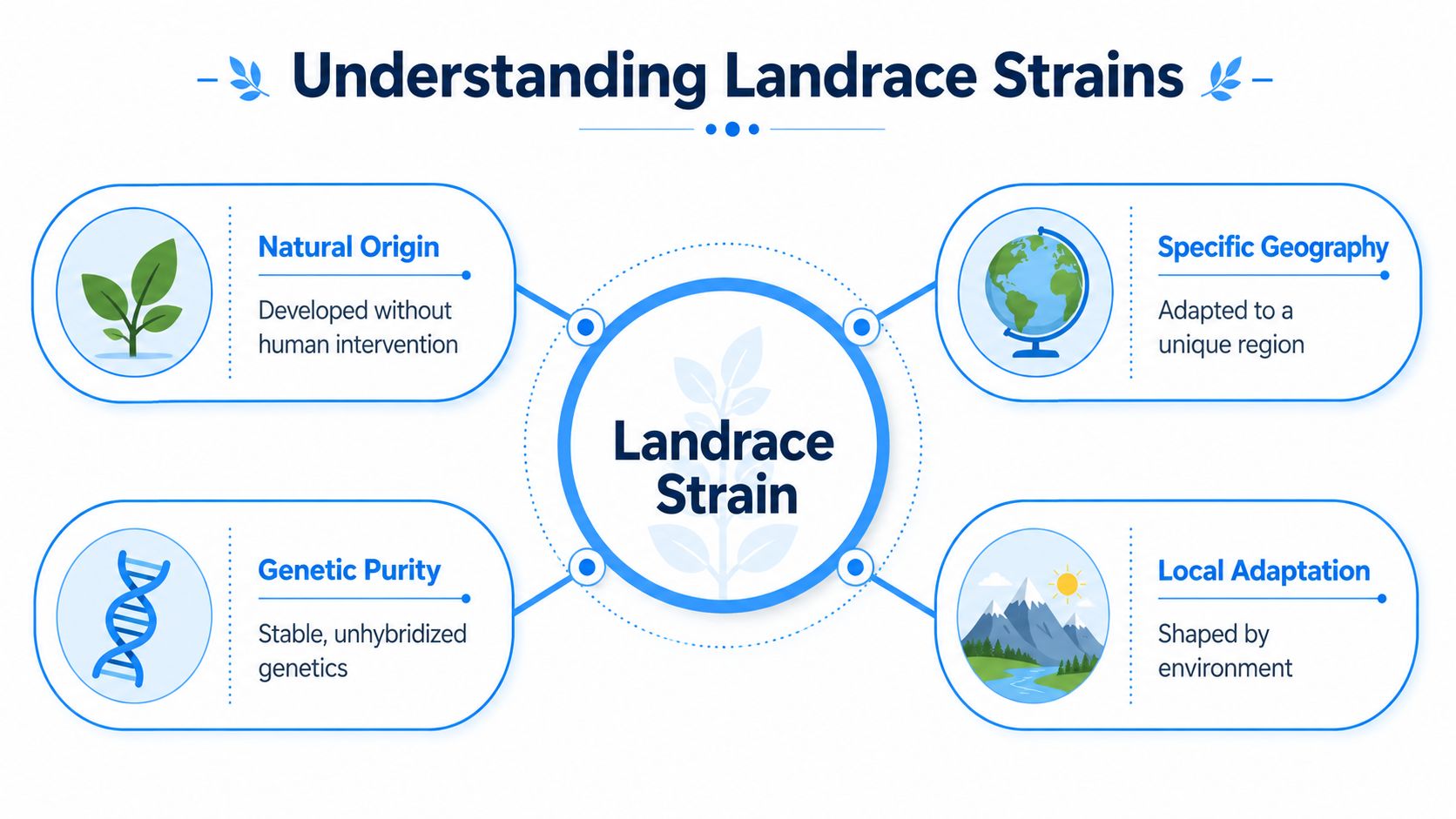
The four parts people usually confuse
A lot of shoppers hear “landrace” and assume it means old, strong, rare, or exotic. Some of that may be true in specific cases, but the term itself means something more precise.
- Natural origin means the strain developed without modern hybrid breeding.
- Specific geography means it's tied to a region, not just a marketing name.
- Genetic purity means its lineage stayed largely uncombined with other varieties.
- Local adaptation means the environment shaped how the plant grows and expresses itself.
Conservative estimates suggest that between 50 and 100 true landrace cannabis varieties still exist, and those remaining lines form the backbone of virtually all modern cannabis cultivars. That scarcity comes from global trade and cross-pollination reducing the number of pure original strains, according to this landrace rarity overview.
For a broader primer on categories and lineage, this guide to different cannabis strains helps connect landraces to the strain labels shoppers see every day.
A short visual explanation helps make the idea click:
What landrace does not mean
It doesn't automatically mean higher potency. It doesn't guarantee a better medical outcome. It doesn't mean every flower marketed with a country name is authentic.
Practical rule: Treat “landrace” as an ancestry term first, not a promise about strength.
That's why budtenders and informed shoppers pay attention to lineage. A strain can be landrace-descended without being a pure landrace. In today's market, that distinction matters.
How Nature Shaped Indica and Sativa
People often talk about indica and sativa like they're just effect categories. Historically, the more useful starting point is plant adaptation. Environment shaped structure first. The familiar differences in height, bud density, resin production, and flowering speed came from survival in very different regions.
Mountain plants had different problems to solve
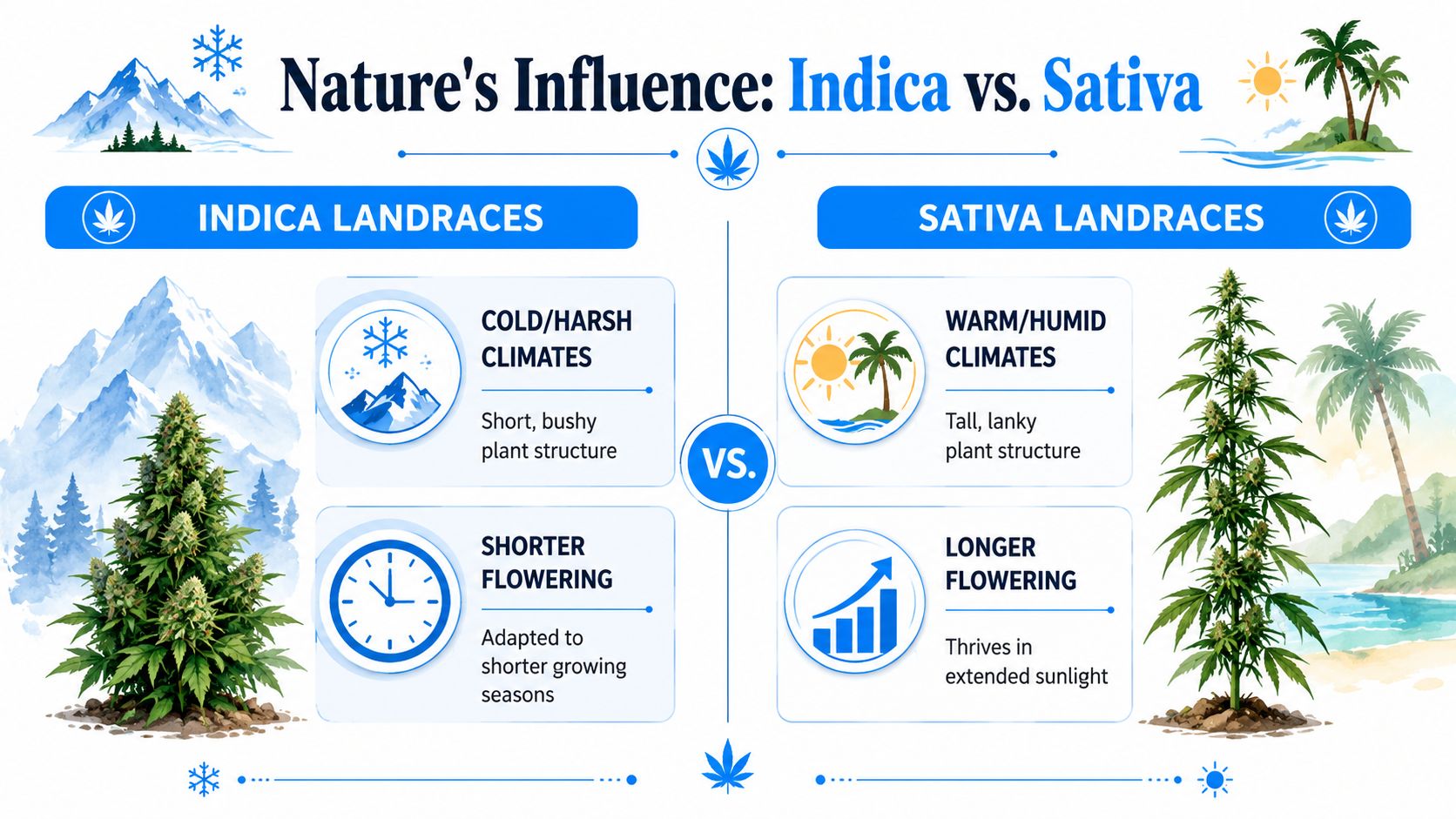
Landrace indica varieties from the Hindu Kush mountains evolved for a cold, high-altitude environment. According to this breakdown of landrace adaptation, these plants developed a compact stature, often under 1 meter, plus heavier resin production and faster blooming cycles of 7 to 8 weeks. Those traits helped the plants handle freezing conditions, intense UV exposure, and shorter seasonal windows.
That compact shape wasn't random. A shorter, denser plant is easier to protect in harsh mountain weather. More resin helps shield the flowers. Faster flowering helps the plant finish before conditions turn hostile.
Tropical plants had more time and more humidity
Landrace sativa varieties from places like Thailand and Colombia evolved under a different set of rules. Warm climates, long seasons, and humid conditions favored taller plants with more open structure. Those plants could take their time. The same source notes that tropical sativa landraces often require 12 to 16 weeks to mature.
That airy structure also makes sense once you stop thinking like a marketer and start thinking like a plant. In a humid environment, looser flowers and taller growth can help with airflow and continued development over a longer season.
A side-by-side view
| Trait | Hindu Kush type landrace indica | Tropical landrace sativa |
|---|---|---|
| Climate pressure | Cold, high-altitude, harsh seasons | Warm, humid, long seasons |
| Typical structure | Compact and bushy | Tall and lanky |
| Bud formation | Dense | More airy |
| Resin output | High | Variable by lineage |
| Maturity window | 7 to 8 weeks | 12 to 16 weeks |
The modern shopper still feels these old adaptations, even if the product is several generations removed from a pure landrace. Dense, resin-heavy flower with old-school earthy depth often points back to mountain ancestry. Long, uplifting, bright expressions often suggest tropical roots.
For shoppers curious about how a current flower lineup can reflect classic plant categories, this look at Botanist products is a useful real-world comparison point.
When a budtender says a strain has “classic Afghan structure” or “Thai-like lift,” they're talking about inherited survival traits, not just vibes.
Why the old morphology still matters
The historical context offers practical insights: plant shape, flower density, resin output, and flowering speed all influenced what breeders later selected for. Modern hybrids may blur the lines, but the architecture didn't appear by accident.
Landrace strains teach you that cannabis traits have a backstory. The plant looks the way it looks because a place forced it to.
A World Tour of Iconic Landrace Strains
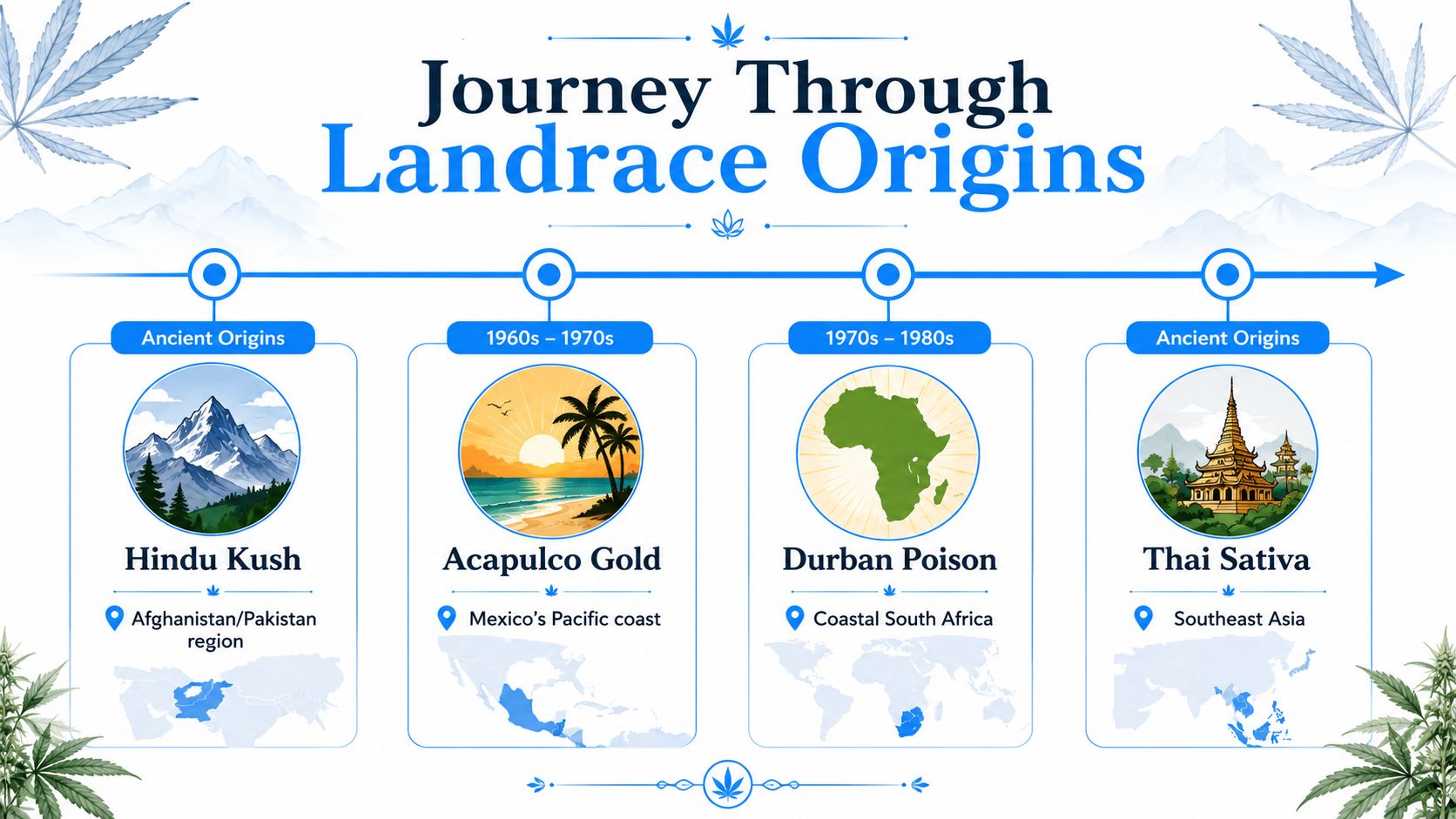
Some landrace names became legendary because people encountered them before the hybrid era washed everything together. In the 1960s and 1970s, strains such as Afghani, Thai Stick, Durban Poison, and Colombian Gold became famous for distinct effects and flavor profiles shaped over thousands of years, while preserving original DNA that hadn't been combined with another variety, as described in this history of landrace significance.
That fame matters because these names didn't spread only through folklore. They spread because people could feel the difference.
Afghani from the Hindu Kush region
Afghani is one of the clearest examples of mountain cannabis. It's associated with broad-leaf indica structure, resin-rich flowers, and the earthy, hash-like profile many old-school smokers still chase. If you've ever opened a jar and caught a dense, grounding aroma that feels heavy before you even light it, you're already in Afghani territory.
This lineage matters far beyond the raw flower itself. Breeders leaned on Afghan genetics for structure, resin, and intensely relaxing character. A lot of modern “indica-leaning” products still carry that family resemblance.
Thai from Southeast Asia
Thai sits on the opposite end of the visual spectrum. This is classic tropical sativa territory. Traditional Thai lines are known for spicy and citrusy character and a more energetic expression. They're part of the reason cannabis developed a reputation for having bright, heady, daytime personalities long before modern branding gave those effects new names.
Thai also became a major building block in later breeding because it brought a very different set of traits into the pool. Height, flowering behavior, and distinctive aromatic signatures all made it influential.
Durban Poison from South Africa
Durban Poison is one of the most recognizable landrace names in modern conversation because it survived in consumer memory better than many others. It's usually associated with a clear, upbeat, lively experience. Even shoppers who've never seen a pure landrace version have seen its descendants or references in modern menus.
Its appeal is easy to understand. Durban shows that “old genetics” doesn't mean dull genetics. Some of the most memorable, mentally active cannabis experiences come from these older regional lines.
Durban Poison reminds people that ancient genetics can still feel sharp, vivid, and deeply distinctive.
Acapulco Gold and Colombian Gold from Latin America
Acapulco Gold and Colombian Gold helped define the mystique of classic imported cannabis. Acapulco Gold is famous for its name, visual romance, and cerebral reputation. Colombian Gold became a key reference point for uplifting, sun-grown sativa character.
These strains weren't famous because of sleek packaging or social media hype. They earned their reputations by being recognizable, place-driven expressions of cannabis.
Notable Landrace Strains and Their Origins
| Strain Name | Region of Origin | Type | Common Aromas | Reported Effects |
|---|---|---|---|---|
| Afghani | Afghanistan and the Hindu Kush region | Indica | Earthy, hash-like | Sedative, relaxing |
| Thai | Thailand | Sativa-dominant | Spicy, citrusy | Energetic, racy |
| Durban Poison | Durban, South Africa | Sativa | Region-specific profile tied to isolation | Uplifting, lively |
| Acapulco Gold | Mexico | Landrace heritage often discussed as uplifting | Distinctive regional expression | Cerebral buzz |
| Colombian Gold | Santa Marta mountains, Colombia | Sativa | Bright classic sativa profile | Uplifting |
Why these names still show up today
You may not see many jars of pure Thai or pure Afghani on a modern retail shelf. You will absolutely see their fingerprints. Anytime a strain delivers a profile that feels unmistakably old-school, regionally grounded, or unusually stable in character, you're often seeing breeders work from those inherited lines.
That's why these names deserve more than nostalgia. They're reference points.
Why These Ancient Genes Matter Today
Modern cannabis breeding depends on diversity. Without older genetic lines, breeding becomes a loop where the same traits keep getting recycled. Landrace strains function like a living library. They preserve traits that breeders can draw from when they want structure, resilience, uncommon terpene combinations, or a more stable phenotype.
That matters whether the final product is a flower eighth, a rosin cart, a gummy, or a pre-roll. The flavors and effects shoppers enjoy in current products didn't appear from nowhere. Breeders selected, preserved, and recombined traits that were first honed in regional populations over very long periods.
Why preservation isn't just nostalgia
One reason landrace strains matter is scarcity. If pure lines disappear, breeders lose access to original source material. A hybrid can carry a trait, but it doesn't replace a true foundational line with all its untangled genetic information still intact.
This also matters culturally. Landrace strains are tied to local cultivation traditions in places such as Afghanistan, South Africa, and Colombia. Preserving them protects more than plant data. It protects human history connected to the plant.
Potency isn't the main point
There's another misconception worth dropping. Landrace status doesn't automatically make a strain stronger, and it also doesn't make it weaker in any simple way. According to this overview from the Cannabis Museum Amsterdam, genetically pure landrace strains such as Durban Poison and Acapulco Gold preserve unique terpene and cannabinoid profiles because they grew in isolation, but that purity does not guarantee higher potency or superior therapeutic effects compared with modern hybrids.
That's a useful correction for shoppers. The value of landrace genetics often lies in distinctiveness and stability, not in winning a THC arms race.
What breeders see in them
Breeders value old lines because they offer:
- Stable expressions that are closer to a consistent blueprint
- Regional terpene signatures that don't always show up in mainstream commercial flower
- Structural traits that can influence density, resin, and growth behavior
- A wider genetic base for future crosses
If you care about variety on the shelf years from now, landrace preservation matters today.
How to Find and Appreciate Landrace Genetics
The first thing to know is simple. You probably won't find many pure landrace strains in a standard dispensary menu. That's not because they're unimportant. It's because they're rare, hard to verify, and often less convenient for commercial production.
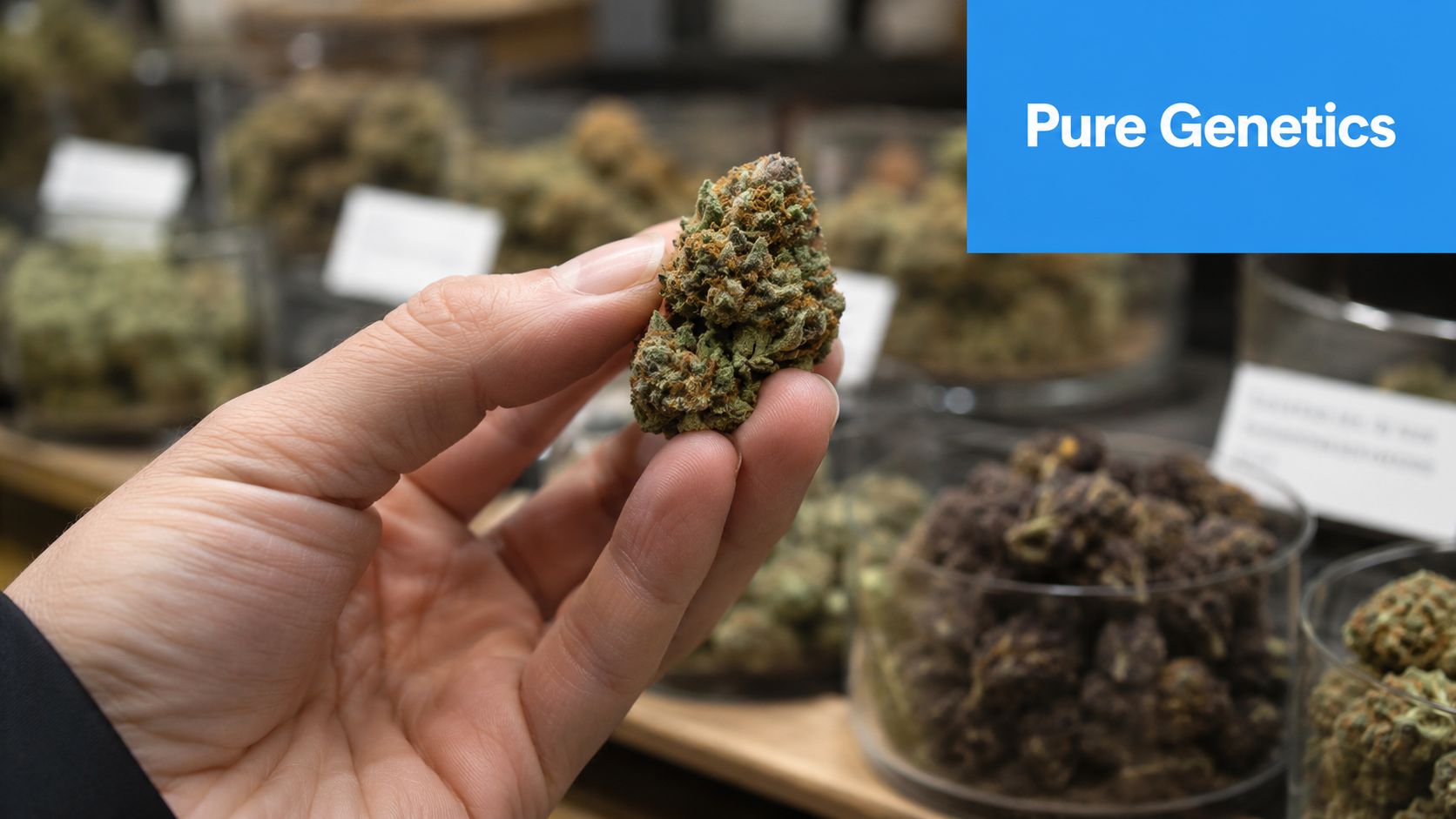
A major consumer challenge is finding authentic examples at retail, since they often underperform commercially due to rarity and low inventory. That's why shoppers may need lineage verification, genetic testing, or specialty growers to identify true-to-type genetics, according to this consumer guide on authentic landrace access.
What to ask when you're shopping
You don't need to become a breeder to shop smarter. You just need better questions.
- Ask about lineage if a strain name references a region like Afghan, Thai, Durban, or Colombian.
- Look for “landrace-descended” language rather than assuming “pure landrace.”
- Pay attention to how the budtender explains it. A good answer includes ancestry, not just effect slang.
- Read the lab details carefully. A product's testing and profile can tell you a lot about what it is and what it isn't.
If you want to understand how testing fits into this process, a practical read on Certificates of Analysis makes it easier to evaluate what's documented.
Why “pure” isn't the only worthwhile goal
Some shoppers get hung up on purity and miss the bigger opportunity. In today's market, landrace-descended strains are often the most realistic way to experience old-world genetics. A modern flower with clear Afghan or Thai lineage can still teach you a lot about what those ancestral traits feel like.
That's true with terpene expression too. Some breeders and preservation-minded growers note that landrace material can show a more uniform dominant phenotype than many hybrids, and certain landrace-linked terpene profiles can deliver very distinctive effects even when THC isn't the only headline feature. This is one reason the “pure equals weak” assumption misses the point, as discussed qualitatively in this piece on global landrace sativas.
If you shop only by the highest THC number, you can miss the most educational flower on the menu.
A useful analogy from another plant world
If you want a non-cannabis comparison, the gardening world handles this issue well. Shoppers looking for older, place-based plant genetics often learn to value provenance, naming, and preservation over flashy marketing. This heirloom seed buying guide is a good parallel because it shows how people think about original plant lines outside cannabis too.
A quick appreciation checklist
| What to look for | Why it helps |
|---|---|
| Regional names in lineage | Can signal landrace ancestry |
| Breeder transparency | Helps separate story from documentation |
| Stable, unusual aroma profiles | May reflect older terpene patterns |
| COA and product details | Gives you something concrete to review |
| Budtender education | The best shortcut to context |
You don't need to find a museum-piece landrace to appreciate landrace genetics. You just need to know what signals to notice.
Explore Cannabis History at Strong Strains
Landrace strains are the oldest surviving roots of modern cannabis. They developed in specific regions, adapted to local conditions, and gave later breeders the raw material for the flower, vapes, concentrates, and edibles people buy today.
That history changes how you shop. A strain name starts to mean more than flavor. Structure, aroma, effect, and even the way a cultivar is described can hint at old mountain indica ancestry or tropical sativa heritage. The shelf becomes easier to read once you understand the family tree behind it.
For adult consumers on Long Island, that knowledge makes the dispensary experience better. You can ask sharper questions, recognize stronger lineage stories, and appreciate why some cultivars feel especially distinctive.
If you want help tracing modern products back to classic cannabis roots, visit Strong Strains. The team can walk you through flower, pre-rolls, vapes, concentrates, edibles, tinctures, topicals, and accessories, explain lineage in plain language, and help you find products that reflect the landrace genetics behind today's best cannabis.