You're at the dispensary comparing two jars of flower. Both look great. Both have a strain name you recognize. Both promise a premium experience. Then you notice a QR code on one package, and someone mentions the COA certificate of analysis.
That's usually the moment people pause.
If you're new to cannabis, the COA can look like a wall of lab language. If you've been shopping for a while, you might only glance at THC and move on. Either way, a COA is one of the best tools you have for choosing cannabis with more confidence.
Think of it as the document that tells the actual story behind a specific batch. Not the marketing story. Not the strain-name story. The tested, recorded, lot-specific story. That matters whether you're buying flower from Cookies, gummies from Wana, or a vape from Rythm.
A good COA helps you answer practical questions. Is this the exact batch in my hand? What was tested? Were contaminants checked? Do the numbers mean anything without the test method and limits? If two products look similar, which one gives me stronger evidence of quality?
This guide is for shoppers who want clarity without the science lecture. You don't need to be a lab tech to read a COA well. You just need to know where to look, what the numbers mean, and which red flags should make you ask a few more questions.
Your Key to Confident Cannabis Shopping
A lot of cannabis shopping comes down to trust.
You trust that the flower in the jar matches the label. You trust that the edible will hit the way the package suggests. You trust that the vape cart was tested for more than just potency. Most shoppers make those decisions quickly, often while comparing products that seem almost identical on the surface.
That's where a COA becomes useful.
A Certificate of Analysis, often shortened to COA or CoA, is the closest thing cannabis has to a decoder ring for product quality. It helps you move past front-label claims and into the details that guide a buying decision. When you know how to read one, you're not just choosing between “this one sounds good” and “that one looks strong.” You're choosing based on traceable test results tied to a specific batch.
A COA is most helpful when two products seem similar. It gives you a way to compare evidence, not just branding.
Say you're deciding between two pre-roll packs. One is from Jeeter, the other from Dogwalker. Both might list similar effects. Both might fit the occasion. But if one product gives you a clear, batch-matched report with potency, contaminants, and proper approval details, and the other only gives you a vague PDF or generic test sheet, that tells you something important before you ever light up.
For newer shoppers, that kind of transparency lowers the guesswork. For experienced consumers, it sharpens your standards.
A significant benefit of the COA certificate of analysis isn't that it makes cannabis feel more technical. It's that it makes shopping feel less confusing. You get a better sense of what you're buying, how carefully it was documented, and whether the brand is treating lab testing like a serious quality step or just a box to check.
What Is a Certificate of Analysis
A Certificate of Analysis is a batch-specific quality document that records the actual test results for a product lot. Industry guidance describing FDA expectations says a COA should include the manufacturer's name, batch number, release date, and each test performed with acceptance limits and numerical results, which supports traceability and verification for the exact batch received (FDA-aligned COA expectations summarized here).
That batch-specific part is the heart of it.
A real COA isn't just saying, “our products are high quality.” It's saying, “this exact lot was tested, here are the results, here are the limits used, and here's the record.” If you're holding a jar of flower, pack of gummies, or vape cart, the report should connect to that specific batch or lot on the label.
Why it matters to shoppers
The easiest way to think about a COA is as a mix of a report card and an identity record for the product batch in your hand.
It tells you:
- What product was tested
- Which batch or lot it came from
- What the lab measured
- What the results were
- Whether the results met the accepted specification
That makes it different from a brand brochure or technical summary sheet. A general product sheet can describe what a strain or formula is supposed to be like. A COA is supposed to show what was found in testing.
If the report doesn't clearly tie to the package in your hand, it's not doing the job shoppers need it to do.
This matters across categories. A Stiiizy vape and a Rythm flower eighth are different products, but the same principle applies. You want evidence that the exact batch was tested, not just a generic assurance that the product line is compliant.
What a strong COA usually includes
In plain language, a solid COA should let you verify identity, testing, and approval at a glance.
Look for:
- Product identification such as product name and manufacturer
- Lot or batch number that matches the packaging
- Dates like issue or release date
- Test entries for the parameters measured
- Acceptance limits and numerical results rather than vague statements
- Authorization details such as a signature or approval mark
If you like digging deeper into how labs document quality records in other regulated categories, this guide on how to verify lab supply quality is a useful comparison point because it shows how much weight buyers place on batch-level evidence.
A good cannabis COA should make you feel informed, not dazzled. If it's doing its job, you can trace the product, understand what was measured, and decide whether the evidence behind the label is strong enough for your standards.
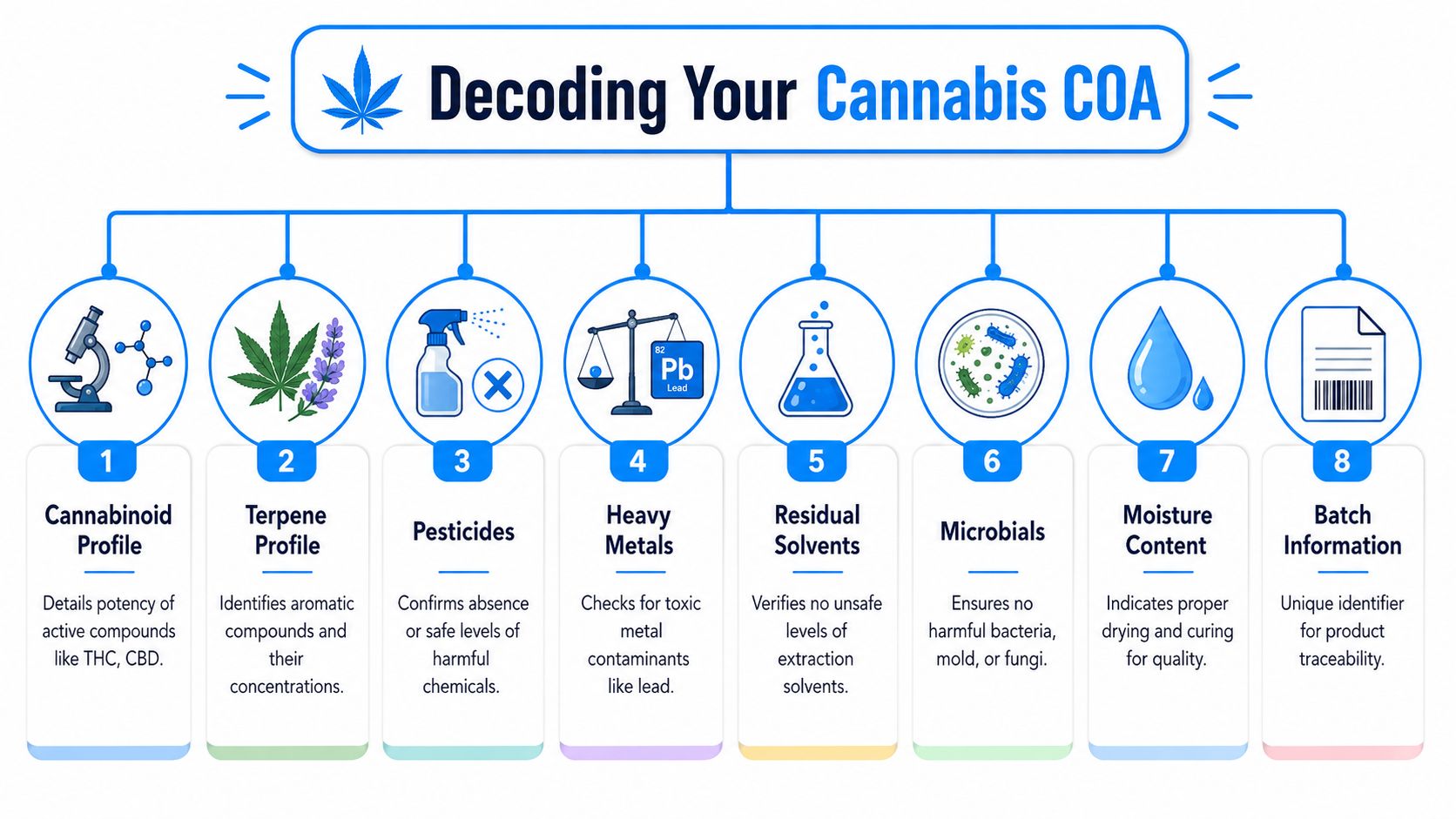
Decoding Each Section of a Cannabis COA
Most cannabis COAs look intimidating for one reason. They pack a lot of information into a lab-style layout. Once you know the main sections, they become much easier to scan.
Start with the header
The header tells you whether the report is tied to the product you're buying.
Check for:
- Lab name
- Product name
- Batch or lot number
- Sample or report ID
- Issue date or approval date
If the package says Alien Labs or Florist Farms, the product name on the COA should match closely enough that there's no confusion. The batch or lot number matters even more. That's the direct link between the report and the item in your hand.
A date also matters. It tells you when the analysis was issued. A COA is a lot-specific record, so the timing should make sense for that product's release.
Potency and cannabinoid profile
This is the section most shoppers look at first.
Cannabinoids are the active compounds in cannabis, including THC, CBD, and other related compounds that influence the product's effects.
A potency panel may list cannabinoids individually, along with totals depending on the product type. For flower, you'll usually see a profile focused on the plant's cannabinoid makeup. For edibles or tinctures, the layout may focus more on the amount delivered in the finished product format.
Don't stop at the biggest number. Look at whether the panel appears complete and whether the document shows how the measurement was evaluated.
Terpene profile
Terpenes are often what give a product its personality.
Terpenes are aromatic compounds that contribute to scent and can shape how a product feels in use, even when two items have similar potency.
A terpene section might list compounds that help explain why one cultivar smells citrusy, gassy, floral, earthy, or sweet. This section can be especially useful when you're deciding between two strains with similar THC but different aromatic profiles, like a fruit-forward option from Hudson Cannabis versus something heavier and funkier from Connected.
For many shoppers, terpenes are where the experience starts making sense. Potency tells you strength. Terpenes often tell you character.
The safety panel
Here, a COA goes from interesting to essential.
Cannabis safety testing commonly includes a group of contaminant checks. Depending on the product and market, the report may include several categories.
Pesticides
This section looks for agricultural chemicals that shouldn't be present above allowed limits. That matters most for inhaled products like flower, vapes, and pre-rolls.
Heavy metals
Cannabis can pick up metals from soil, water, or processing environments. Heavy metal testing checks for contaminants that you don't want in a finished product.
Residual solvents
This matters most for concentrates and vape products made through extraction. If a product was processed with solvents, the report should show whether residual amounts were within accepted limits.
Microbials
Microbial testing looks for unwanted biological contamination such as certain bacteria, mold, or fungi. This matters for product safety and storage quality.
Moisture or related quality indicators
Some COAs also include product-condition measurements that help indicate whether flower was dried and handled properly.
Why methods and limits matter
The most important technical feature of a COA is the pairing of test result + specification limit + method for each parameter, because without the method and acceptance window, a number like potency or a contaminant reading can't be interpreted confidently (quality guidance summary here).
That's the part shoppers often miss.
A number by itself isn't enough. If a vape cart shows a result for a solvent, or a flower sample shows a result for a microbial test, you still need the context that tells you how it was tested and what standard it was judged against.
Approval and signoff
Near the end of the report, look for some form of authorization. That may be a signature, approval mark, or other indication that qualified personnel reviewed the report.
That signoff gives the document more weight. Without it, the report may still look polished, but it doesn't carry the same confidence as a formally approved batch record.
How to Interpret COA Results and Limits
Reading a COA isn't just about finding the right section. It's about understanding what the numbers are trying to tell you.
A lot of confusion starts when shoppers compare products across formats. Flower, edibles, vapes, tinctures, and concentrates won't always present results the same way. A jar of Old Pal flower and a pack of Kiva gummies can both have valid COAs, but the numbers serve different purposes because the products are consumed differently.
Read potency in context
For flower, potency is usually part of the overall plant profile. Shoppers often compare that quickly between brands like Cookies, Matter, or Hudson Cannabis. That's fine as a starting point, but potency doesn't tell the whole story. A product with a strong terpene profile and a clean safety panel may be a better fit than one with a flashy number and weaker documentation.
For edibles, the question is usually more practical. How much is in a serving, and how much is in the whole package? If you're trying to dose carefully, format matters more than chasing the highest figure on the page. If you want help matching lab results to real-world use, a good next step is learning how product strength translates into personal intake with a tincture dosage calculator.
Practical rule: Compare potency within the same product type first. Flower versus flower makes sense. A vape number versus a gummy number usually doesn't.
Understand pass, fail, and ND
Most shoppers eventually run into three common terms:
- Pass means the tested parameter met the acceptance criteria listed on the report.
- Fail means it did not meet that criteria.
- ND usually means non-detect, which indicates the analyte was not detected under that method's conditions.
ND doesn't mean “this substance can never exist in any amount.” It means the lab didn't detect it using that test setup. That's why the testing method and limits matter so much.
Contaminant limits need context
COAs become much more useful when you treat contaminant numbers as part of a system, not as isolated scary-looking decimals. A result only makes sense when you can compare it to the listed action limit or specification window on that same report.
Here's a simple way to think about that:
| Contaminant | Common Action Limit (NY) | What It Means |
|---|---|---|
| Lead | Varies by product and rule set | The number should be judged against the listed limit on the report, not in isolation. |
| Pesticides | Varies by compound | A pass means the result fell within the accepted criteria used for that test. |
| Residual solvents | Varies by solvent and product type | Especially relevant for extracts and vape products. The method and limit tell you how to read the result. |
| Microbials | Varies by organism tested | A compliant result depends on the organism, method, and acceptance criteria shown. |
The key is simple. Don't react to a number before you find the limit that goes with it.
Compare like with like
If you're looking at a Wyld edible from one market and a Camino edible from another, or a vape from Rove tested by one lab and a cart from Pax tested by another, don't assume the reports are directly comparable line for line.
Testing context matters. Product format matters. The report's stated limits matter. A smart shopper uses the COA to ask better questions, not just to hunt for one “best” number.
Spotting Red Flags on a Certificate of Analysis
A COA can look polished and still be weak evidence.
That's why smart cannabis shopping isn't just reading the report. It's checking whether the report deserves your trust in the first place. One of the clearest red flags is when a COA gives placeholder language like “Typical” instead of lot-specific results, because a trustworthy COA should provide lot-specific data tied to the actual batch tested (guidance on red flags and lot-specific evidence).
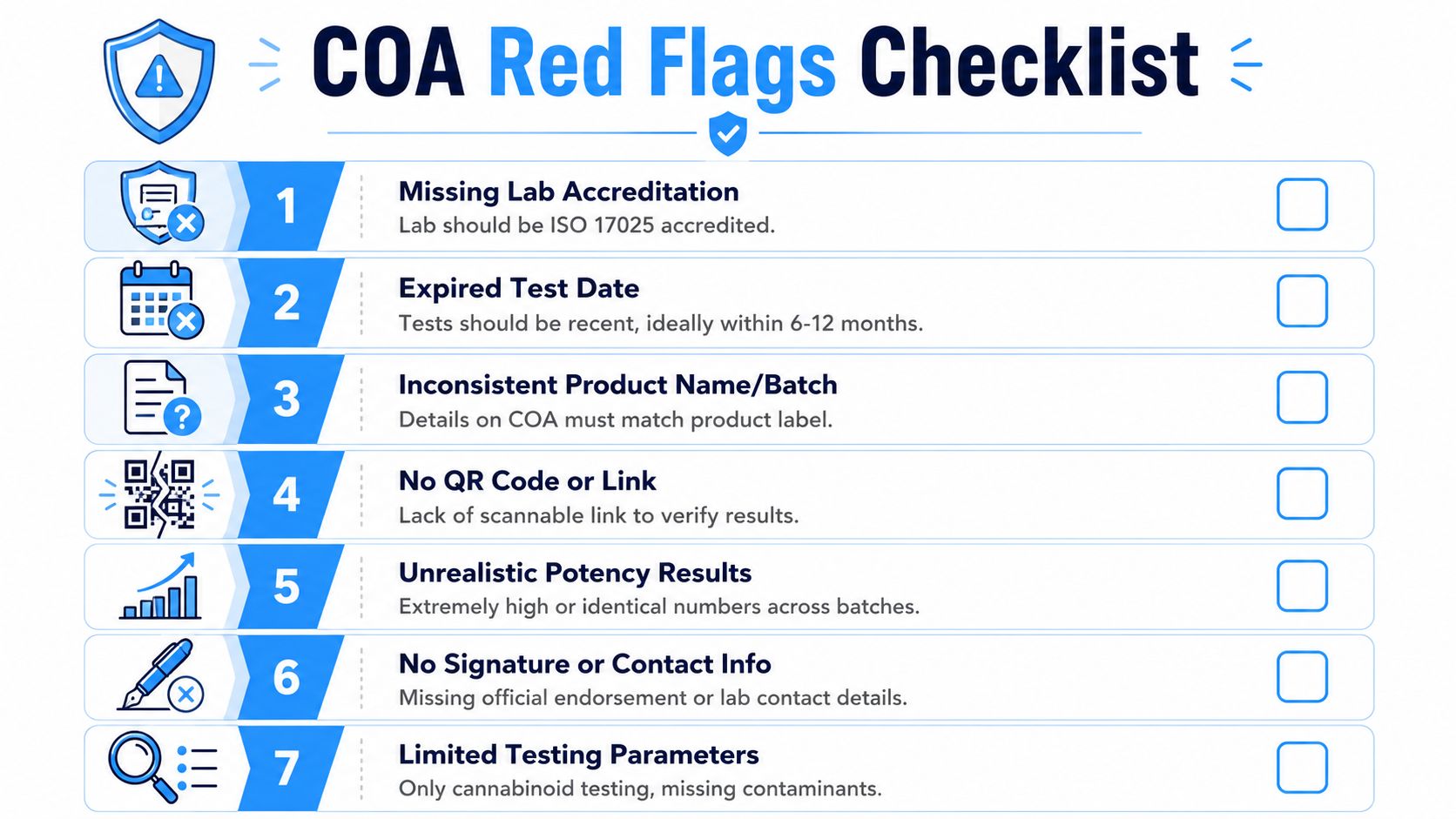
The checklist worth using every time
Some warning signs jump out immediately. Others only become obvious once you know where to look.
- The batch doesn't match. If the lot number on your Jeeter pre-roll tube or MFNY concentrate jar doesn't align with the COA, stop there.
- The QR code goes nowhere useful. A code that lands on a homepage or generic product page isn't the same as a direct batch report.
- The document skips key pages. If you only see cannabinoids and no contaminant panel, you may be looking at an incomplete report.
- The report looks generic. Broad product-line language is not the same as a batch-specific record.
- The signoff is missing. No approval mark, no signature, no clear authorization details. That weakens the document.
- The product name is vague or inconsistent. If the label says one thing and the report uses another unclear name, traceability gets messy.
- The test date feels disconnected from the product. Dates should make sense for the release of that exact lot.
If the COA can't answer “is this the exact batch I'm buying?” it's not giving you the full protection shoppers expect.
Red flags aren't just a cannabis issue
This kind of document checking comes up in other lab-tested product categories too. If you want a non-cannabis example of how buyers evaluate batch documentation and quality signals, these insights from Peptide Warehouse USA are useful because they show how experienced buyers look past packaging and into actual verification evidence.
The same mindset helps when you're comparing vape products. If you've ever wondered why two carts can look similar on the shelf but feel different in trust level, this breakdown of Pillow Talk vapes gives helpful product context to pair with what you see on a lab report.
Trust your questions
A lot of customers think asking about a COA makes them sound picky. It doesn't. It makes them informed.
If a product has a clean, lot-specific, complete COA, a good retailer should be comfortable helping you verify it. If the answers get fuzzy, that fuzziness is part of the shopping decision too.
Our Commitment to Transparency at Strong Strains
Strong cannabis retail starts before the product hits the shelf. It starts with documentation, review, and the discipline to treat lab reports as quality records, not decoration.
A CoA is a batch-specific, contractual record linking a lot to measured results, and when it lacks batch-specific data it behaves more like a technical data sheet, which weakens its value for release decisions, dispute resolution, and traceability (batch-specific CoA guidance here). That standard matters when selecting products from brands across flower, edibles, concentrates, vapes, and wellness formats.
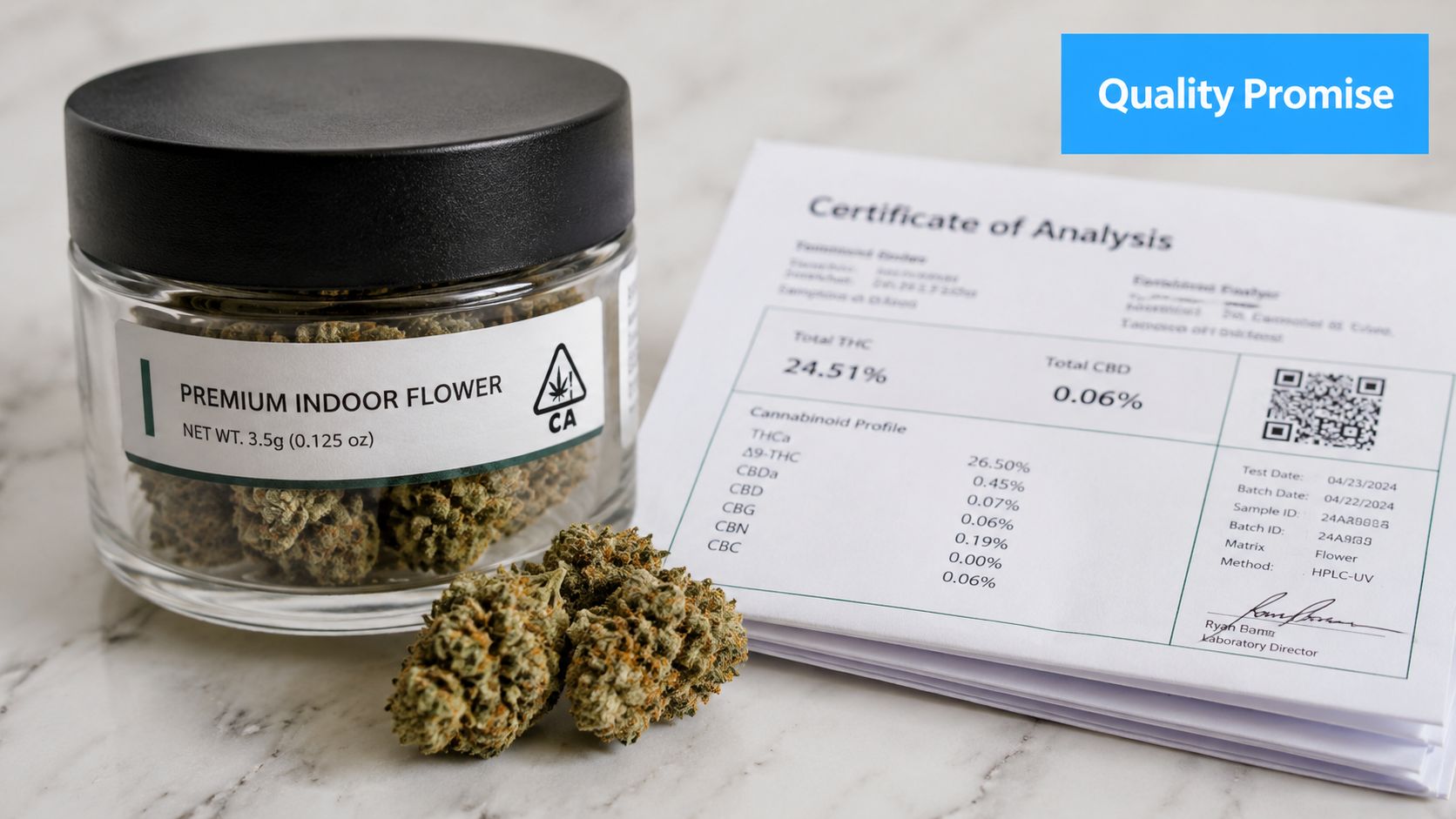
What transparency should look like
For shoppers, transparency should feel practical.
It should mean you can ask about a product from Hudson Cannabis, Rythm, Wyld, Airo, or Florist Farms and get clear guidance on how the batch was documented. It should mean the COA ties back to the product in a way that can be checked, not guessed. It should also mean the staff can explain what the report says in plain language, especially if you're new to cannabis or trying a format you don't usually buy.
Why that matters in a premium dispensary
Luxury in cannabis isn't just nicer packaging or trendier strain names. It's careful curation and the confidence that comes from consistent standards.
That's part of the reason shoppers pay attention to who's doing the vetting behind the scenes. A dispensary that takes batch records seriously is usually approaching the rest of the product experience seriously too. If you want a sense of the broader standards and customer experience behind the shop, the story behind the official reopening of Strong Strains gives useful background.
A good budtender shouldn't just point to a THC number. They should be able to help you think through the report, the batch, the format, and whether the product fits what you prefer.
Frequently Asked Questions About COAs
Is a higher THC number always the better choice
No. A higher potency result doesn't automatically mean a better experience, cleaner product, or better fit for your goals. The full COA matters, including how complete the report is and whether the batch record looks trustworthy.
Why can two similar products have different COA results
COAs can vary by lab and jurisdiction because of differences in testing methods, detection limits, and local contaminant rules, which is why comparing numbers directly without the testing context can be misleading (lab and jurisdiction differences explained here).
That means two flower batches can both be legitimate and still show different-looking reports. The same goes for edibles, concentrates, and vapes.
Is a QR code enough to prove the COA is real
Not by itself. The QR code should take you to a report that clearly matches the product and batch you're buying. If it sends you to a homepage, a menu, or a general brand portal without batch-level detail, keep asking questions.
What if I can't understand the lab language
That's normal. Start with the basics. Match the batch. Check the date. Look for potency, contaminants, and approval details. Then ask a trained budtender to walk you through anything that isn't clear.
The best COA is the one you can actually verify and use in a buying decision.
Should I skip a product if the COA feels incomplete
If the COA is vague, generic, or missing key parts of the safety picture, caution makes sense. Cannabis shopping should feel informed, not uncertain. When documentation is weak, the burden shifts back onto the shopper. That's usually a sign to slow down or choose a product with better transparency.
If you want help reading a COA certificate of analysis before you buy, Strong Strains makes that easy. Our team helps Long Island shoppers compare lab-tested flower, vapes, edibles, concentrates, tinctures, and more with clarity, not pressure. Stop by our East Setauket dispensary or browse online for carefully selected products backed by transparent testing and knowledgeable guidance.