
You're standing at a Long Island dispensary menu, comparing a distillate cart with a live resin disposable. One label highlights potency, another lists a strain name, and a third calls the oil “premium.” The battery format looks different, the prices aren't directly comparable, and you're left wondering what you're buying.
Weed vape pen oil isn't one uniform product. It can mean a refined cannabinoid distillate, a terpene-rich live resin extract, a solventless rosin formulation, or a larger all-in-one device with its own battery and heating system. The useful question isn't only, “How strong is it?” It's also, what's in the oil, how was it tested, and how will the device heat it?
Introduction to Weed Vape Pen Oil and How It Works
A first-time shopper often expects a cartridge to work like a bottled cannabis product. In reality, a cartridge contains a concentrated cannabis extract prepared for vaporization, while the pen supplies the battery and heating hardware. When you draw from the mouthpiece, the battery activates a heating element, the oil moves through the chamber, and the device produces an inhalable aerosol.
A kitchen comparison helps. Plain olive oil, infused olive oil, and a thick cooking reduction are all oils, but they don't pour, taste, or behave the same way. Weed vape pen oil works similarly. Distillate may be highly refined and relatively simple in flavor, while live resin or rosin can preserve a broader aromatic character. Viscosity matters too. Oil that's too thick may move slowly toward the coil, while oil that's too thin can affect airflow or create leakage.
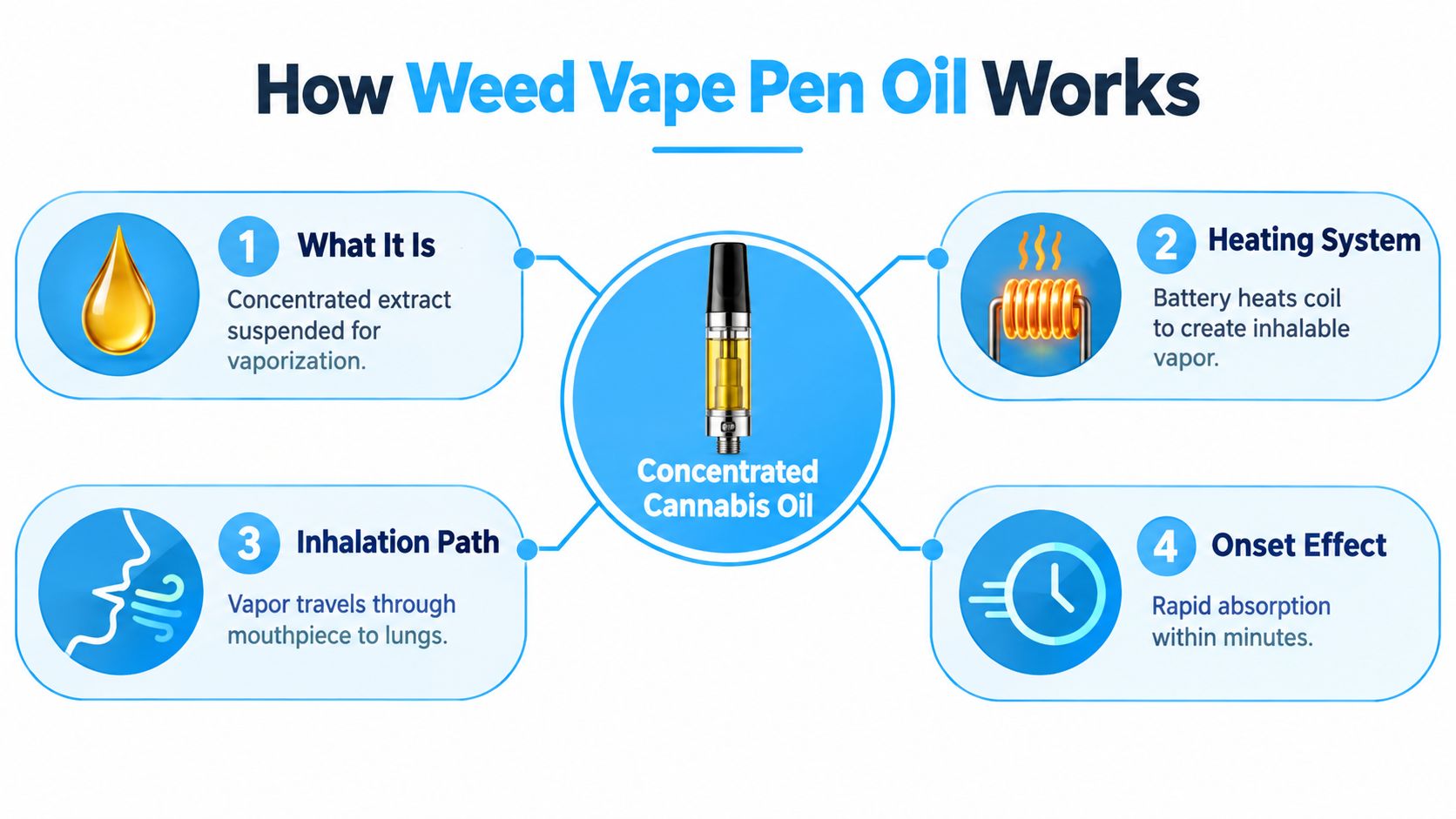
The basic path from oil to aerosol
The oil doesn't “turn into smoke.” The heating element creates an aerosol that carries cannabinoids and aromatic compounds through the mouthpiece. Inhaled cannabis can feel fast-acting, but the experience still develops over time, so taking repeated pulls before the first one has settled can make the session harder to judge.
The device and formulation must also match. A 510-thread cartridge requires a compatible battery, while a proprietary pod may work only with its matching device. A disposable combines the oil chamber, battery, mouthpiece, and controls in one unit, which simplifies setup but gives you less freedom to replace individual parts.
Practical rule: Treat the oil, cartridge, and battery as one system. A good formulation can perform poorly when the hardware supplies too much heat or doesn't feed the oil correctly.
The discreet size and lower odor compared with combustion make vape pens convenient, but discretion doesn't remove the need for responsible use. Adults 21 and older should follow New York rules, use products from regulated channels, and avoid sharing a device. The label's oil type, cannabinoid profile, test information, and device instructions tell you far more than the word “premium” alone.
Common Weed Vape Pen Oil Formulations You Will See
The formulation determines much of the trade-off between potency, flavor, texture, and terpene preservation. A shopper choosing between a distillate product in the style of Heavy Hitters, a live resin cartridge associated with brands such as Jetty, or a proprietary device from Stiiizy isn't choosing only a brand. They're choosing an extraction style and a delivery system.
Distillate undergoes extensive refinement to isolate cannabinoids and create a consistent base. Manufacturers may add cannabis-derived terpenes afterward to create a strain-inspired flavor. It can suit shoppers who prioritize a direct, predictable cannabinoid profile and broad flavor selection, though refinement can produce a less complex plant character.
Live resin starts with cannabis handled to preserve more of its original aromatic material before extraction. The result is often more expressive, earthy, fruity, or gassy than a plain distillate formulation. It's a sensible lane for flavor-focused consumers who want a profile that feels closer to the source plant.
Live rosin is solventless, meaning producers use mechanical and thermal processes rather than chemical extraction solvents. It can offer a rich, layered profile, but the texture is often thicker and the hardware has to be designed for it. CO2 oil uses carbon dioxide extraction and can produce a clean, versatile base, with the final flavor depending on how the producer handles the extract and terpenes.
Liquid diamonds generally refers to a highly refined crystalline cannabinoid component formulated into vape oil, often with terpenes added for flavor and flow. The name suggests intensity, but it doesn't replace a complete ingredient list or a current lab report.
| Formulation | Extraction Method | Terpene and Flavor Profile | Typical Potency and Best For |
|---|---|---|---|
| Distillate | Extensive refinement followed by formulation | Clean, direct, and often strain-inspired | Potency-focused shoppers and straightforward flavor |
| Live resin | Extraction from cannabis preserved to retain aromatic compounds | More plant-forward, layered, and expressive | Flavor seekers and full-profile experiences |
| Live rosin | Solventless mechanical and thermal processing | Rich, fresh, and often especially aromatic | Experienced consumers prioritizing solventless extracts |
| CO2 oil | Carbon dioxide extraction | Versatile, with flavor shaped by post-extraction formulation | Shoppers seeking a flexible, refined oil format |
| Liquid diamonds | Refined crystalline cannabinoid component blended into vape oil | Often bold, concentrated, and terpene-dependent | Consumers seeking an intense formulation, with careful attention to testing |
A product described as “full spectrum,” “high purity,” or “premium” still needs context. Compare the ingredients, extraction description, terpene information, hardware, and certificate of analysis rather than assuming the label tells the whole story. For a deeper look at solventless extracts, see this guide to solventless concentrates.
Cannabinoids Terpenes and What Shapes Your Experience
THC usually drives the intoxicating effect shoppers associate with cannabis, while CBD is non-intoxicating and may change how the overall profile feels. Minor cannabinoids, including CBG and CBN, can add another layer to the formulation, though a label alone can't guarantee how any person will experience them.
Terpenes are aromatic compounds found throughout the plant. They shape scent and taste, and they may influence the character people perceive, but they aren't a simple switch that guarantees a particular outcome. A citrus-forward profile may feel bright to one person, while the same product may feel stimulating or too sharp to another.
Think of the oil as a small music ensemble. THC may be the lead instrument, CBD may change the balance, minor cannabinoids can add quieter harmonies, and terpenes supply the mood and texture. The result depends on the complete composition, not one solo ingredient. That's the practical meaning behind discussions of the entourage effect, although personal response remains highly individual.
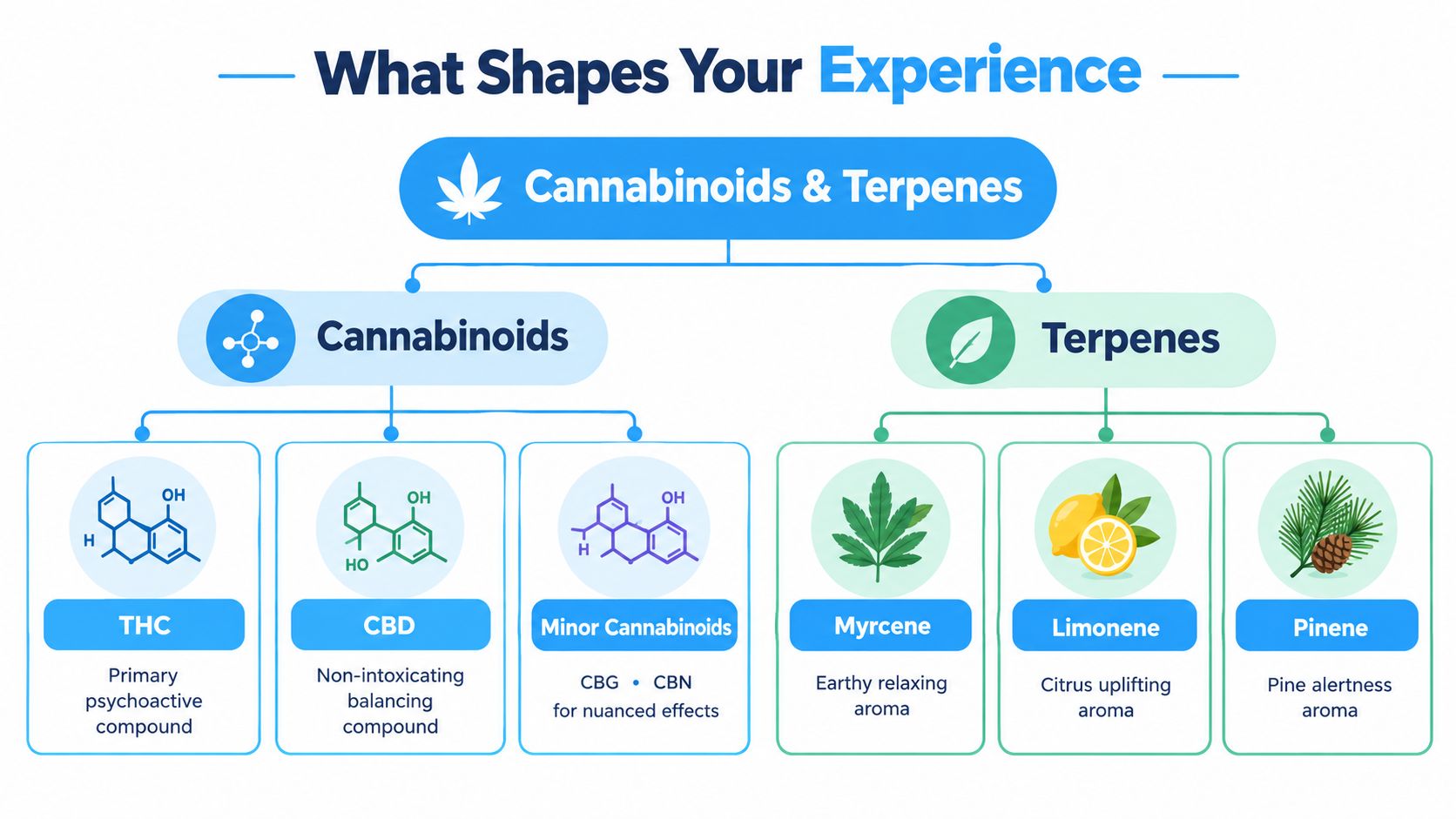
Reading the terpene line
Look for named terpenes and their relative presence, not only a strain title. Myrcene is commonly associated with earthy aromas, limonene with citrus notes, and pinene with pine-like character. Those associations can help you predict flavor, but they aren't promises about your mental or physical response.
Terpene concentration also affects engineering. New York's testing limits require vaporized or inhaled products to remain under 10% total terpenes, with a 15% variance allowance under the state's testing document. That limit reflects a real formulation challenge. Adding more terpene material can change oil fluidity and aerosol output, while increasing the need for contamination control and solvent testing.
A practical label-reading routine looks like this:
- Start with cannabinoids: Identify THC, CBD, and any listed minor cannabinoids.
- Then check terpenes: Use the profile to anticipate aroma and flavor, not to guarantee an effect.
- Compare the formulation: Distillate, resin, and rosin can feel different even when their headline cannabinoid content appears similar.
- Match the device: Thick, terpene-rich oil needs hardware designed to feed and vaporize it consistently.
A high cannabinoid figure may appeal to experienced consumers, but it doesn't automatically mean a better session. Flavor quality, formulation transparency, heating behavior, and your own tolerance matter just as much.
Manufacturing Lab Testing and What Makes Oil Safe to Inhale
“Lab tested” is a starting point, not a complete safety explanation. A responsible review asks what the lab tested, whether the result belongs to that batch, and whether the oil contains ingredients that behave safely when heated.
The 2019 EVALI outbreak changed how consumers and regulators viewed vape oils. By February 18, 2020, the CDC had reported 2,807 hospitalized cases or deaths from all 50 states in its outbreak summary. CDC investigations found vitamin E acetate in lung fluid from 29 of 29 sampled patients from 10 states, and CDC guidance said manufacturers shouldn't add it to vaping products while its relationship to lung health remained uncertain according to the archived CDC guidance.
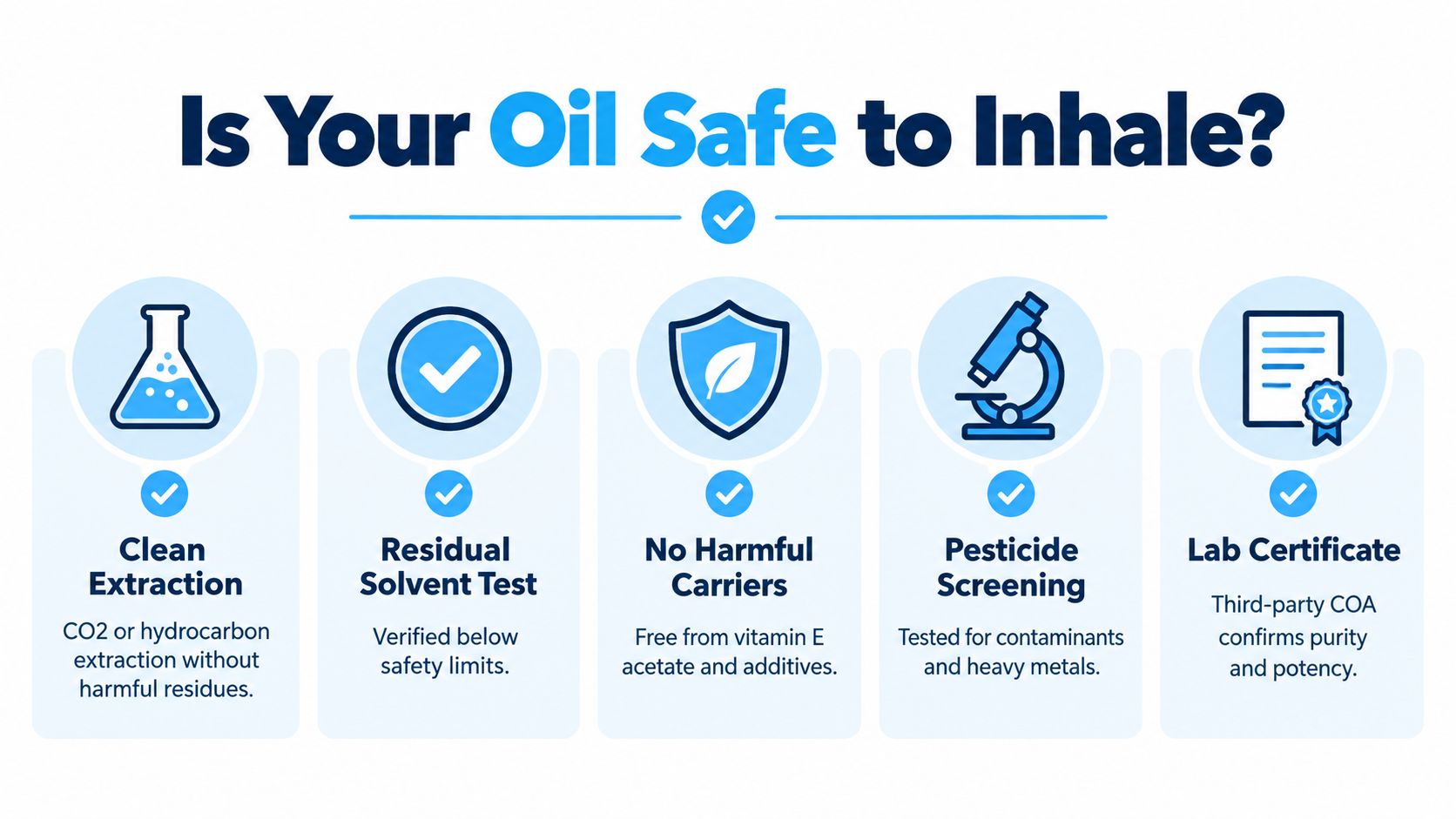
What a useful COA should show
A certificate of analysis, or COA, should connect to the product batch and identify the laboratory. Check the cannabinoid results, terpene information when available, pesticide screening, microbial testing, heavy-metal results, and residual-solvent panel. A product that lists only potency leaves important questions unanswered.
Residual solvents matter because extraction can involve substances that must be reduced before sale. Canadian cannabis rules cap many common solvents, including butane, pentane, acetone, and isopropanol, at 5,000 parts per million for cannabis oil under Health Canada's residual-solvent limits.
The chemistry doesn't stop when the oil enters the cartridge. Research summarized by the University of California, Merced describes how carrier solvents and additives can break down under vaping conditions into compounds including formaldehyde, acetaldehyde, acrolein, methacrolein, and ketene in its discussion of vaping chemistry. That's why “natural,” “clean,” and “premium” aren't substitutes for a formulation and testing record.
A strong COA answers more than “How much THC is here?” It helps answer “What else is present, and what did the lab screen for?”
Hardware deserves attention too. Reviews have reported metals including lead, nickel, copper, chromium, zinc, tin, and aluminum in cannabis vaping systems, and one analysis of cannabis vape liquids from EVALI-response devices reported copper, chromium, nickel, and lead at levels as high as 600 ppm in the published hardware review. If oil tastes metallic, burnt, or chemically unusual, stop using it and contact the retailer or manufacturer.
For a practical guide to interpreting cannabis testing documents, use this resource on cannabis lab testing.
Safe Use Dosing and Device Compatibility Made Simple
Vaping can feel simple because the hardware is compact. Your routine should still be deliberate, especially with concentrated oil.
Build a low-and-slow routine
Begin with a small inhalation, then put the device down. Give the first pull time to register before deciding whether you need more. Inhaled products can feel rapid, but the full experience can continue developing, and repeated pulls taken too quickly can overshoot your comfort level.
Keep your first sessions consistent. Use the same device setting, take similar-sized pulls, and note the oil type, flavor, time of day, and how you felt afterward. This creates a personal reference point without pretending that a label can predict your exact response.
If you feel dizzy, anxious, nauseated, unusually confused, or uncomfortable, stop using the product. Move to a calm setting, sip water, and ask someone you trust to stay nearby. Seek medical help for severe or persistent symptoms.
Match the battery to the cart
A 510-thread cartridge screws onto a compatible battery, but thread compatibility doesn't guarantee ideal heating. Proprietary pods require their matching battery, and all-in-one disposables arrive with the battery already integrated. Don't force a connection or use a charger that the manufacturer didn't approve.
Start with the lowest effective heat setting if the device allows adjustment. Excessive heat can create a harsh taste, consume terpenes quickly, and overheat the coil. Preheat can help move thick oil, but use it sparingly and follow the product's instructions.
- Check the connection: Make sure the cartridge is seated without overtightening.
- Use the right charger: Follow the manufacturer's charging method and don't leave the device charging unattended.
- Pause between pulls: The coil needs time to cool and the oil needs time to feed back toward the heating area.
- Keep it away from children and pets: Store the device and cartridge securely, even when the battery is off.
This vape guide can help compare device styles, but the instruction leaflet inside your specific product remains the controlling reference.
Storage Troubleshooting and Keeping Oil Fresh Longer
Oil changes when it spends too much time in heat, light, or moving air. Terpenes can fade, flavors can shift, and thick formulations can become harder to draw through the chamber. Storage won't repair an already damaged cartridge, but it can preserve a good one.
Keep a cartridge upright in a cool, dark place. Avoid a sunny windowsill, a hot car, or a bag left beside a heater. Don't store it loose with keys, coins, or other objects that can press against the mouthpiece or damage the connection.
Diagnose the symptom first
A clog usually points to thickened oil, condensation, or an airflow path that has become blocked. Let the cartridge return to room temperature naturally, then take a gentle draw without repeatedly pulling hard. Never poke into the mouthpiece with a sharp object, and don't apply an open flame.
A burnt taste usually means the heating area isn't receiving enough oil or the setting is too aggressive. Stop taking consecutive pulls, lower the heat if possible, and let the cartridge rest. If the taste remains harsh after a pause, the coil may be damaged, or the cartridge may be nearly empty.
Weak vapor can come from a low battery, blocked airflow, a poor connection, or oil that has thickened. Charge the device according to its instructions, clean the external connection with a suitable dry method, and check whether the cartridge sits correctly.
Leaking oil requires caution. Keep the device upright, avoid touching leaked oil to your eyes or mouth, and don't use a cartridge that has oil inside the battery area. A cracked chamber, overheated oil, or manufacturing defect can all cause leakage, so contact the retailer rather than trying to rebuild a sealed product.
Storage habit: Upright, cool, dark, and protected beats a pocket, glove box, or windowsill.
Don't try to rescue oil that smells rancid, looks contaminated, has visible debris, or produces a persistent chemical or metallic taste. Replacing the cartridge is safer than troubleshooting a product that may no longer be intact.
Choosing Premium Lab Tested Weed Vape Pen Oil at Strong Strains
A confident purchase starts with a short decision filter. First, choose the experience you're seeking, such as relaxation, creativity, relief, or sleep. Then choose the formulation that fits that goal, review the cannabinoid and terpene profile, confirm the product has batch-specific testing, and select hardware that matches the oil.
The device format changes the buying calculation. A rechargeable 510 setup lets you replace the cartridge while keeping the battery, whereas a disposable combines all components and may be convenient for someone who wants no separate hardware. Larger-format devices can offer more oil in one package, but shoppers should still compare the listed cannabinoid amount, formulation, lab documentation, heating controls, and expected use rather than assuming a larger chamber delivers better value.
The market is shifting toward disposables and premium extracts. BDSA reported that disposables represented more than half of the U.S. vape market in April 2026 and 51.1% in May 2026, while the category generated about $8 billion in retail sales over the prior 12 months and live resin reached 28% share in May 2026 in its cannabis vape trends report. Those figures describe market movement, not a safety endorsement. A disposable still needs sound hardware, transparent ingredients, and credible testing.
New York's regulated adult-use system gives shoppers a reason to favor licensed dispensaries. At Strong Strains Cannabis Dispensary in East Setauket, budtenders can help customers compare vape cartridges and all-in-one products from brands such as Stiiizy, Jetty, Select, Rove, and Ayrloom, while the store also offers in-store pickup and local delivery. The same principle applies wherever you shop: ask to see testing information, verify the product's seal and label, and don't let a strain name substitute for a complete product profile.
Adults 21 and older should use cannabis responsibly, avoid driving after use, keep vape products away from children and pets, and stop using any product that causes unusual irritation or a concerning reaction. The right weed vape pen oil is the one whose formulation, testing, device, and intended experience all make sense together.
Strong Strains Cannabis Dispensary offers lab-tested vape cartridges, live resin options, all-in-one devices, and knowledgeable budtender guidance for Long Island shoppers comparing weed vape pen oil. Visit Strong Strains Cannabis Dispensary to explore the current vape menu, arrange in-store pickup, or check local delivery availability.