
You've just left the dispensary with a small parchment-wrapped piece of rosin, and now you're staring at your rig, torch, vape battery, or grinder wondering which part comes first. That hesitation is healthy. Rosin is a flavor-first concentrate, but it's also potent enough that a rushed first dab can turn smooth, aromatic material into a harsh, uncomfortable session.
The right method depends on what you value. A quartz banger can deliver the clearest flavor, a purpose-built vape offers convenience, and a joint or bowl topper needs almost no specialized equipment. The basics stay the same: use a small amount, control heat, keep your equipment clean, and protect the rosin from unnecessary warmth.
Your First Time With Rosin and Why Method Matters
Rosin has a relatively recent modern history. A widely cited milestone places its emergence in early 2015, when Phil “Soilgrown” Salazar demonstrated the technique and helped popularize solventless extraction. Live rosin has existed for about the same period, with its rise connected to growing interest in solventless products across major North American markets, as outlined in this history of rosin and its evolution.
That short history explains part of rosin's appeal. Makers use heat and pressure rather than chemical solvents, and consumers often choose it because the finished concentrate can retain a pronounced expression of the starting flower. Terpenes are the point, so treating rosin like an old-school high-temperature wax is a mistake.
Heat changes the session
Too much heat can flatten the aroma and make the vapor feel sharp. Too little heat may leave material pooled on the surface, which wastes product and tempts you to keep reheating. Low-temperature dabbing or temperature-controlled vaporization gives you more control over flavor and comfort than a blazing-hot nail.
Clean glass matters just as much. Residue from previous sessions can burn onto the banger, muddying the taste and making it harder to judge whether the rosin itself is flavorful. A fresh dab on clean quartz tells you what you bought.
Your surroundings matter, too. Sit somewhere familiar, keep water nearby, and don't make the first session a test of endurance. Concentrates can contain 60% to 90% THC or more, and that potency can produce paranoia, a rapid heart rate, or dizziness in inexperienced users, according to this consumer guide to live rosin use.
Practical rule: The first successful rosin session should feel controlled, not dramatic. Start with less than you think you need and let the flavor develop.
Core Methods for Consuming Rosin
There are four practical routes: a quartz banger, a compatible vape, a joint or bowl topper, and oral or topical formats. Choose the device before you open the jar, because rosin gets sticky quickly when handled.
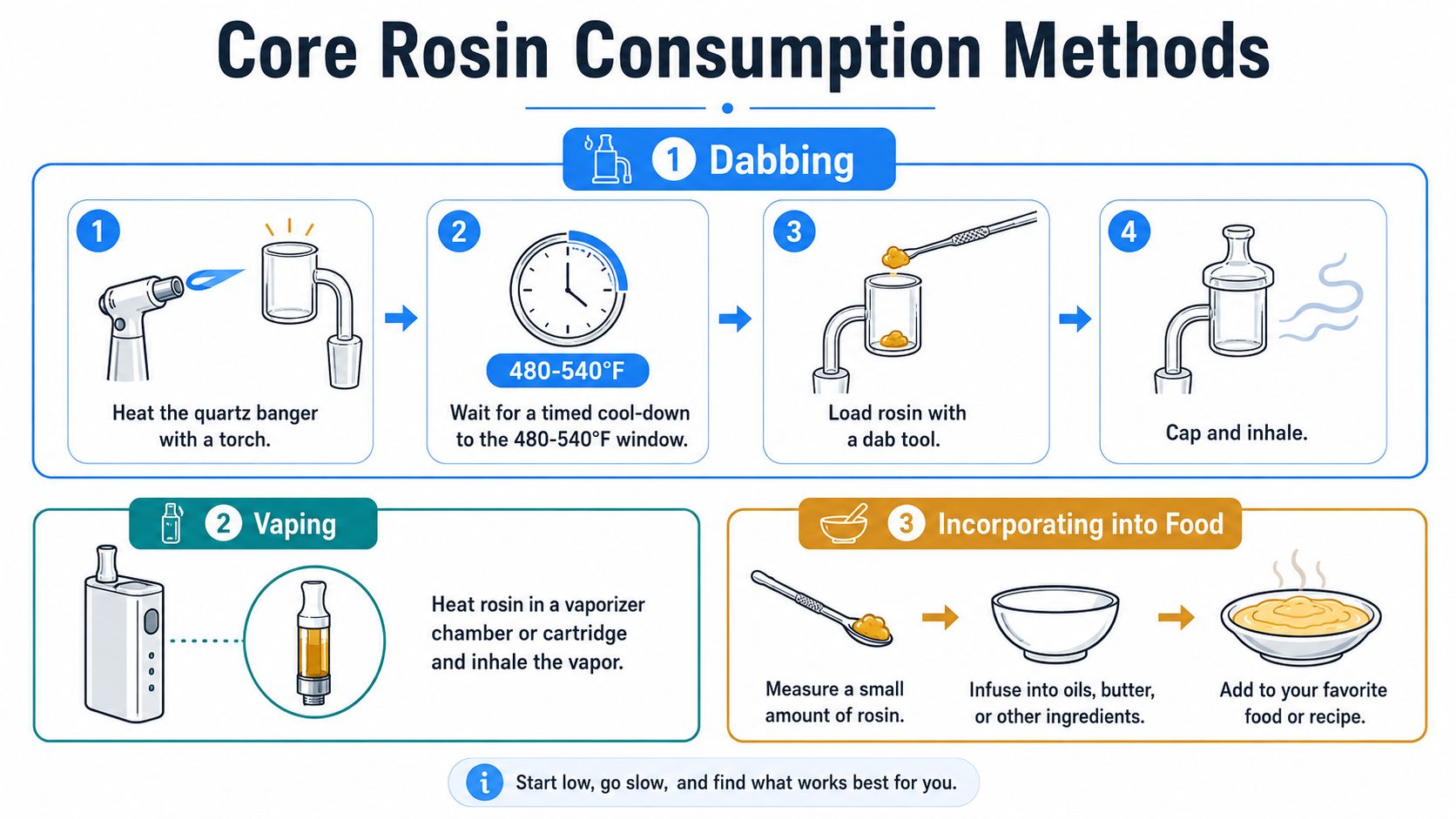
Dabbing with a quartz banger
A quartz banger gives the most direct control over heat and airflow.
- Use a torch to heat the bottom and sides of the banger evenly. One guide recommends heating for roughly 30 to 60 seconds, depending on the banger and torch.
- Let it cool before loading. A practical low-temperature target is the 480 to 540°F range for a flavor-focused session.
- Place a small amount of rosin on a dab tool and touch it to the warm quartz.
- Cover the banger with a carb cap, then inhale slowly. The cap holds heat and helps the concentrate vaporize without forcing you to raise the temperature.
Cold-start dabbing reverses the sequence. Put the rosin into an unheated nail, then apply heat gradually until the concentrate begins to melt and vaporize. This can make it easier for beginners to avoid scorching a small dab. More detail on these heating and cooling approaches appears in this guide to smoking rosin.
Vaping rosin
A 510-thread rosin cartridge needs a compatible battery. Attach the cartridge without overtightening, start at the lowest useful setting, and take a slow, short draw. If the cartridge has a button, preheating briefly can help move thick oil, but repeated long preheats add unnecessary heat.
Purpose-built dab pens use ceramic or quartz chambers rather than a standard cartridge. Load only what the chamber can handle, allow the device to reach its operating temperature, and draw gently. Fast, forceful pulls can flood the chamber and push oil into the airway.
A dry-herb vaporizer isn't automatically suitable for rosin. Use it only if the manufacturer specifically supports concentrates and provides a concentrate insert or compatible chamber. Otherwise, choose a dab pen or cartridge device designed for extracts. Readers comparing concentrate formats can also review different types of weed wax.
Topping a joint or bowl
For a joint, warm the rosin lightly between parchment sheets until it becomes workable. Roll it into a thin snake and lay it along the inside of the wrap, surrounded by flower. A bowl can take a small crumble placed on top, but don't put a large sticky mass in one spot because it may burn unevenly and clog airflow.
Edible and topical routes need separate product guidance. Don't assume a dab intended for inhalation translates directly to an edible serving, and don't treat a topical application as interchangeable with an inhaled dose.
The mechanics are simple. Heat softens the rosin, cooling keeps the surface from burning, and a carb cap manages the vapor path. Flavor improves when you control both sides of the process, not just the torch.
Picking the Right Method for Flavor, Ease, and Safety
If flavor is your priority, use clean quartz and a controlled low-temperature dab. If convenience matters more, choose a compatible cartridge or dab pen at its lowest effective setting. If you're new to concentrates and don't own specialized gear, a light joint or bowl topper is the least complicated entry point, though combustion sacrifices more of the flavor profile than vaporization.
The temperature ranges below are practical starting points, not a challenge to push higher. Low-temperature dabs around 480 to 520°F favor flavor, 520 to 580°F provides a more balanced session, and temperatures above 600°F are better left to experienced users who knowingly prioritize larger clouds over terpene retention. General rosin guidance commonly places consumption around 350 to 450°F, with some cold-cured rosin guidance using 350 to 420°F, so device readings and actual surface temperature won't always match.
| Method | Flavor Quality | Beginner Ease | Product Waste | Ideal Temperature | Best For |
|---|---|---|---|---|---|
| Quartz banger | Highest when quartz is clean and heat is controlled | Moderate | Low when capped and timed well | 480 to 540°F for a flavor-focused session | Flavor chasers and careful first-time users |
| Rosin cartridge or dab pen | Good, especially at a low setting | High | Low when draws stay short | Lowest effective device setting | Portable, discreet sessions |
| Joint topper | Moderate to low because of combustion | High | Moderate if rosin melts unevenly | No separate rosin temperature control | People without concentrate equipment |
| Bowl topper | Moderate to low | High | Moderate | No separate rosin temperature control | Occasional enhancement of flower |
Choose by use case: Start with a small, low-temperature banger hit if you want to learn rosin's flavor. Pick a cartridge if you need portability. Use a topper if you want the simplest setup and already enjoy flower.
A banger offers the cleanest flavor when used correctly, but it demands timing, a torch, and cleaning discipline. A cartridge is easier, yet you surrender some control over the heating surface and hardware. Joint topping costs less in equipment, but it's the least precise way to experience delicate aromatics.
Dosing, Safety, and Responsible Use
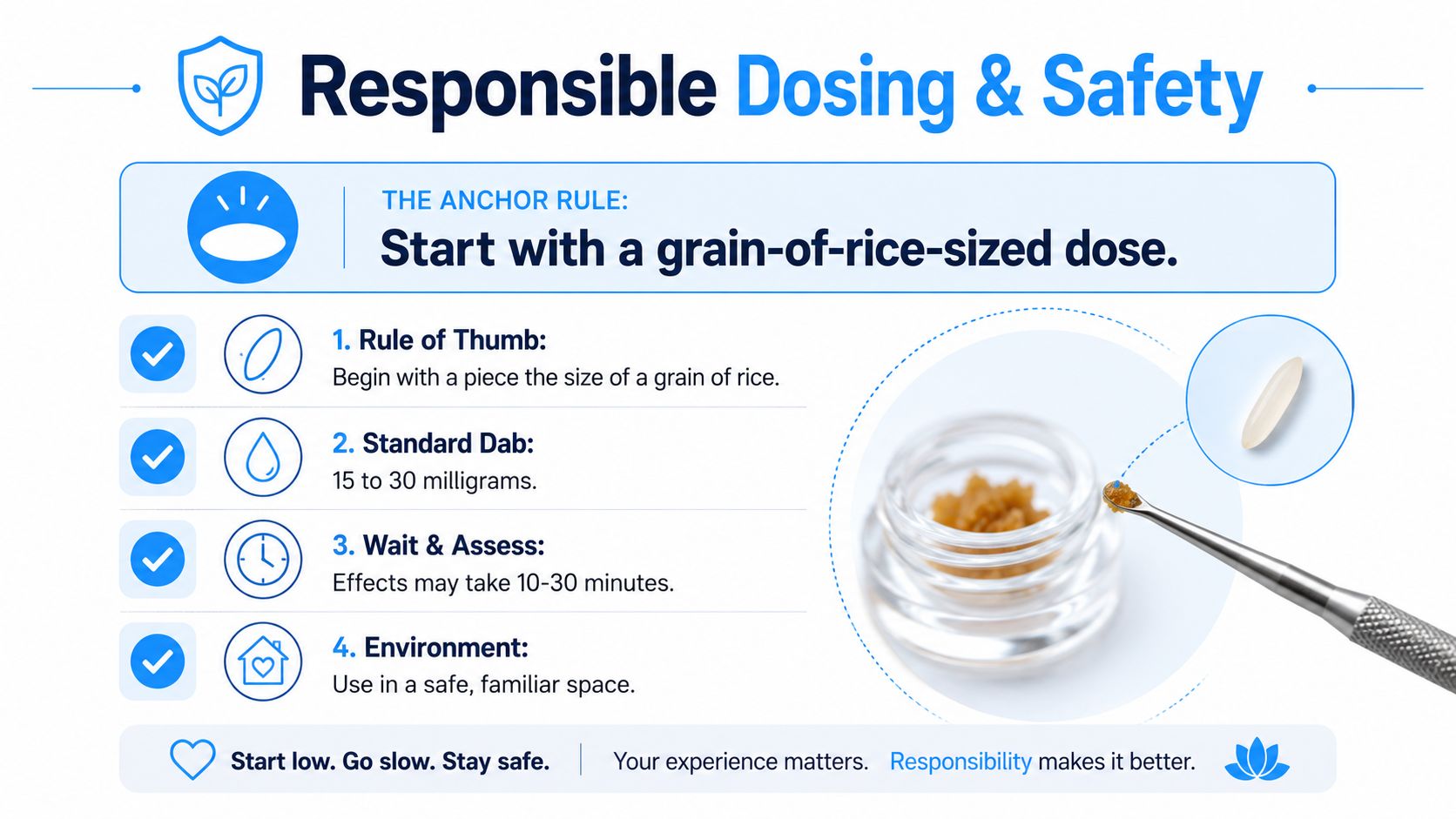
Use one rule until you understand your tolerance: start with a grain-of-rice-sized piece of rosin. Some health-oriented consumer guidance uses a pea-sized starting amount and recommends waiting 30 minutes before taking more, while inhaled-concentrate guidance commonly recommends a piece smaller than a grain of rice, around 0.03 to 0.05 grams, with a 15 to 30 minute wait before redosing. For a first dab, I'd choose the smaller end of that advice.
Inhaled effects can arrive quickly, but they can still develop after the first pull. Edibles and other oral products follow a slower timeline, often one to two hours before you can judge the full effect. Don't stack doses because the first one feels mild after a few minutes.
If the session feels too strong
Overconsumption can bring a racing heart, anxiety, nausea, dizziness, or disorientation. The response is practical, not heroic:
- Sit down: Move somewhere quiet and familiar.
- Hydrate: Sip water, but don't force large amounts.
- Breathe slowly: Relax your shoulders and take steady breaths.
- Wait it out: Effects pass with time. Don't add more cannabis.
- Stay put: Never drive, cycle in traffic, or operate equipment while impaired.
Buy from a verified, state-licensed retailer where product labeling and lab testing help you assess potency and contaminants. In New York, adult-use cannabis is for people 21 and older, and public use and driving under the influence aren't permitted. Store concentrates sealed and out of reach of children and pets.
Storage, Cleaning, and Equipment Care
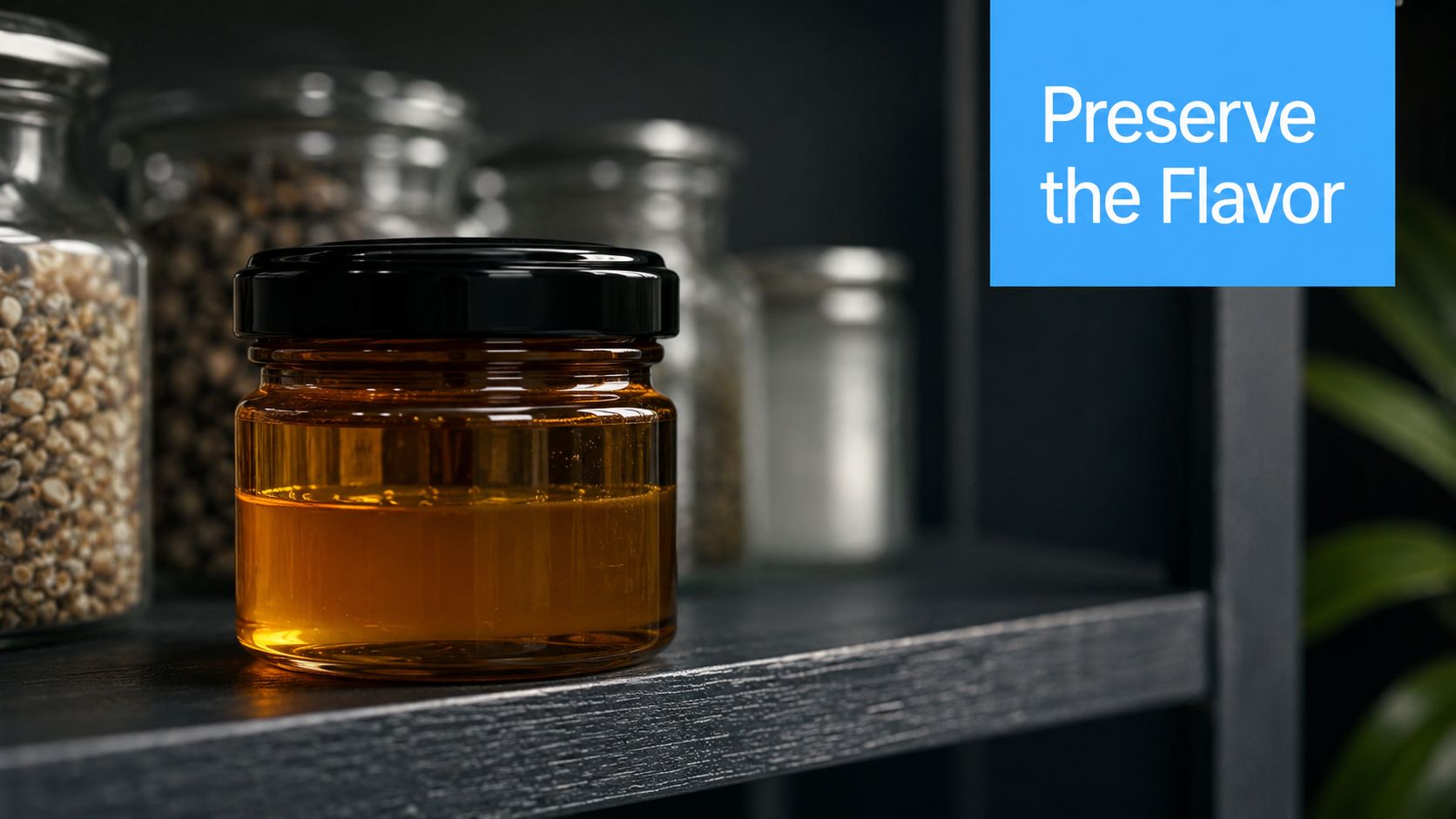
Rosin belongs in a cool, dark, airtight environment. A commonly recommended storage target is 60 to 70°F, which helps protect the volatile compounds responsible for aroma. Keep the jar away from sunlight, radiators, hot cars, and warm electronics.
For a short hold, parchment can work if the rosin is handled carefully and kept cool. Glass is a better choice for longer storage because it provides a stable, airtight container and doesn't absorb the concentrate. Silicone jars are convenient for sticky material, but they're better treated as a practical short-term option than a default for preserving delicate flavor.
Clean the surface after every dab
After the banger cools slightly, use a cotton swab to remove remaining oil while it's still soft. Rotate the swab through the bottom and corners, then use a fresh swab if residue remains. Periodically, soak removable quartz components in isopropyl alcohol or use a dedicated quartz cleaner, following the cleaner's safety directions.
A permanently cloudy or heavily darkened banger should be replaced. Torching a damaged surface harder won't restore clean quartz, and it can make the next session harsher.
Keep dab tools free of old residue. Wipe cartridge threads before attaching them to a battery, store batteries away from heat and metal objects, and avoid leaving a cartridge connected when it isn't in use. Clean hand pipes and other glass with an appropriate soak, then rinse and dry fully. For broader glass-maintenance ideas, this guide on how to use bottle cleaning tablets offers a useful cleaning reference, though you should confirm that any product is suitable for your specific cannabis accessory.
A compatible chamber can simplify routine maintenance. Strong Strains lists accessories such as the Puffco Peak Pro 3D XL Chamber, but always verify device compatibility before ordering.
When Solventless Does Not Mean Risk Free
“Solventless” tells you how the rosin was made. It doesn't promise that every inhalation method is harmless. Heat can create unwanted byproducts, and cartridge hardware, additives, contaminants, or poor manufacturing can add separate concerns.
A 2025 toxicology study examined harmful aerosol toxicants from cannabis concentrate vaping. At only 1% pine rosin concentration, the study estimated that about 0.6 g/m³ could transfer into aerosol per inhalation, roughly 3,500 times the 15-minute time-weighted average exposure limit. That finding is a reason to reject the idea that solventless automatically means risk-free, especially for heated cartridges. Read the study's findings in this research on toxicants from cannabis concentrate vaping.
Keep heat moderate. Independent and technical rosin guidance places terpene-preserving pressing in lower ranges, and consumer dabbing guidance commonly recommends staying below 450°F for flavor. For inhalation, the practical lesson is to avoid deliberately scorching the material or chasing extreme heat. A source on high-temperature dabbing describes 350°F as a useful starting point and recommends staying under 450°F, while other guidance uses higher device ranges because measured surface temperature varies by setup.
| Temp Range (°F) | Experience | Flavor | Vapor Risk |
|---|---|---|---|
| 350 to 450 | Gentle, flavor-forward vapor | Strong terpene expression | Lower heat stress than hotter sessions |
| 480 to 550 | Controlled, fuller vapor | Good balance when quartz is clean | Keep draws measured and avoid reheating repeatedly |
| Above 600 | Larger, harsher clouds | Terpenes are more likely to degrade | Higher concern for irritating heat-generated byproducts |
Look for a Certificate of Analysis, a licensed dispensary label, and clear product information. Discoloration, unusually dark oil, or a harsh chemical smell should make you stop and ask questions rather than vape through it. For a deeper explanation of what testing can reveal, review this guide to cannabis lab testing.
Quick Reference Before Your Next Session
Pick the route that matches your equipment and tolerance, then make the first session smaller than your ambition.
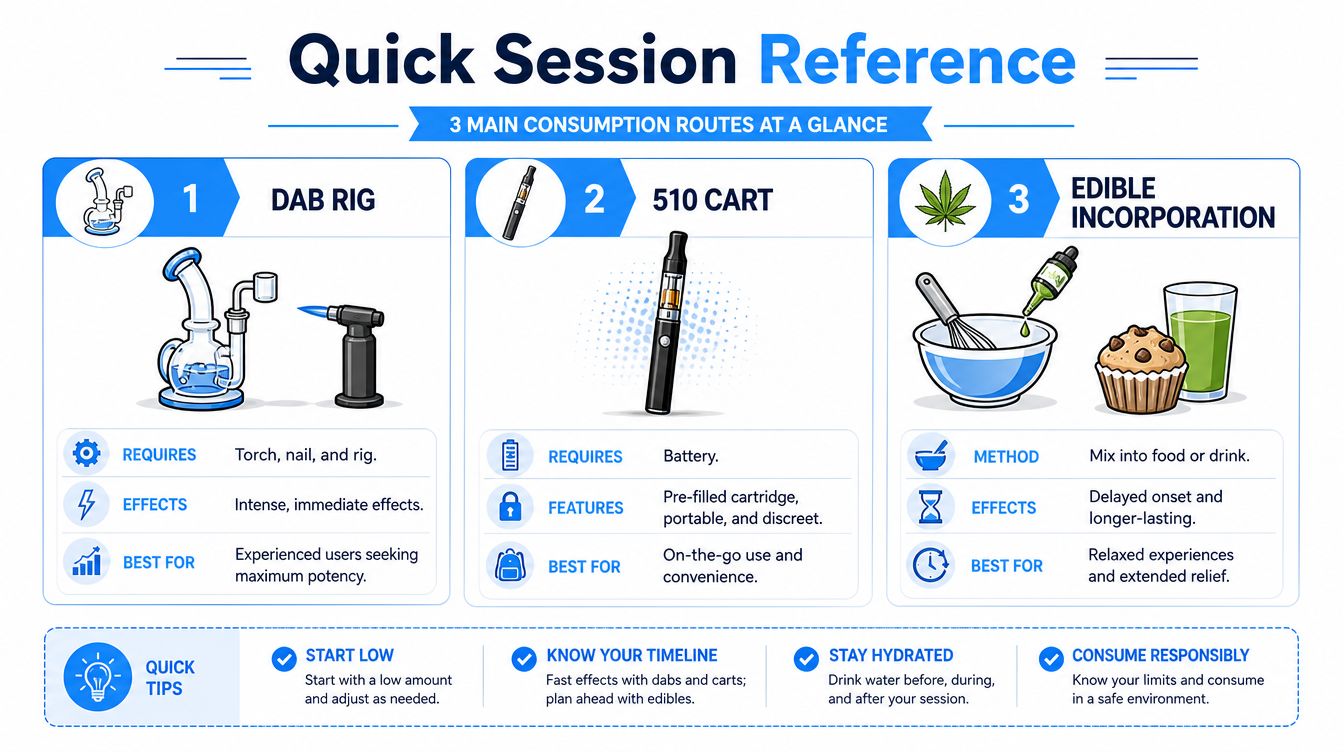
A dab rig gives you the clearest path to rosin flavor. Use clean quartz, begin around 480 to 540°F, load a rice-grain-sized amount, cap the banger, and inhale slowly. Cool the banger before reloading, and don't keep reheating a dry surface.
A 510 cartridge or compatible pod is the portable choice. Use the lowest effective setting and take one short pull. Strong Strains' product guidance describes rosin vape products as designed for 2 to 3 second puffs, so beginners should start with one short draw, then pace any follow-up instead of taking repeated hits.
A joint or bowl topper requires less equipment. A small, pea-sized crumble sprinkle is enough to start, and it should be distributed through or across the flower rather than left as one heavy lump. Never torch a topper directly, because direct flame burns the rosin instead of giving you controlled vapor.
Edibles are different. Effects are delayed and longer-lasting, so don't use the inhaled timing rule to judge an oral serving. Follow the product label and wait until the full onset window has passed before considering more.
Screenshot checklist
Choose method: Rig, cartridge, topper, or labeled oral product.
Set temperature or dose: Start low and keep the first serving small.
Store cool and dark: Seal the rosin and keep it away from heat, light, children, and pets.
Use cannabis only where permitted, buy from licensed retailers, and never drive impaired. Adult-use products are for adults 21 and older in applicable jurisdictions.
Strong Strains Cannabis Dispensary offers lab-tested concentrates, rosin vape products, flower, edibles, accessories, and practical guidance for choosing a format that fits your session. Visit Strong Strains Cannabis Dispensary in East Setauket for knowledgeable help, in-store pickup, or local delivery across Long Island.