
Maui Wowie is historically and predominantly classified as a sativa-dominant cultivar, with some modern references describing it as roughly 80% sativa and 20% indica, while others call it effectively 100% sativa. That label is only a starting point, because the experience depends more reliably on the product's terpene profile, cannabinoid content, cultivation, and batch-specific lab results.
The popular advice is simple: “Maui Wowie is a sativa, so it'll feel energetic.” The useful advice is more nuanced. Maui Wowie is a heritage Hawaiian lineage associated with tropical, pineapple-like aromas and an uplifting reputation, but the name doesn't guarantee the same genetics, potency, or effects from one product to the next. If you're shopping at a Long Island dispensary, read the COA and terpene panel before trusting the front label.
The Truth About Maui Wowie Genetics
Maui Wowie's traditional identity traces back to Maui, Hawaii, during the late 1960s and early 1970s, when growers worked with Hawaiian landrace sativa genetics. Its precise breeder and original parentage were never firmly documented, so the name represents a recognized heritage lineage rather than a scientifically fixed formula. Historical accounts also place its spread to the U.S. mainland during the 1970s, helping establish it as one of the better-known Hawaiian cultivars (historical Maui Wowie strain background).
That history explains why most dispensary menus describe Maui Wowie as sativa-dominant. Some contemporary references use an approximate 80% sativa and 20% indica ratio, while others describe it as effectively 100% sativa, but neither figure should be treated as a universal genetic measurement. Modern cuts can vary, and commercial breeders may use the Maui Wowie name for plants with different parentage or phenotype expression.
Why the label can mislead
Cannabis taxonomy doesn't work like a dependable product specification. A cited 2015 PLOS ONE study that genotyped 81 marijuana samples found only a moderate relationship between strain names and reported sativa or indica ancestry, showing why commercial labels often fail to identify a consistent genetic profile (research on cannabis strain naming and genetics).
A larger analysis of 297 samples found that labeled indica and sativa plants were genetically indistinct at the genome-wide level. The labels tracked a small number of terpene-related traits more closely than a consistent overall chemical identity, and samples with the same strain name could be genetically and chemically different (peer-reviewed analysis of cannabis labels and chemistry).
Practical rule: Treat “sativa-dominant” as a useful historical and retail shorthand, not a promise of energy, creativity, or a particular body feel.
That doesn't make Maui Wowie fake or meaningless. It means you should think of the name like a family name, not a complete medical chart. A specific Maui Wowie product may lean bright and citrusy, earthy and herbal, or notably stronger than an older example. For a flavor-focused look at its tropical identity, see this guide to the Maui Pineapple strain.
Terpenes and Cannabinoids That Drive the Experience
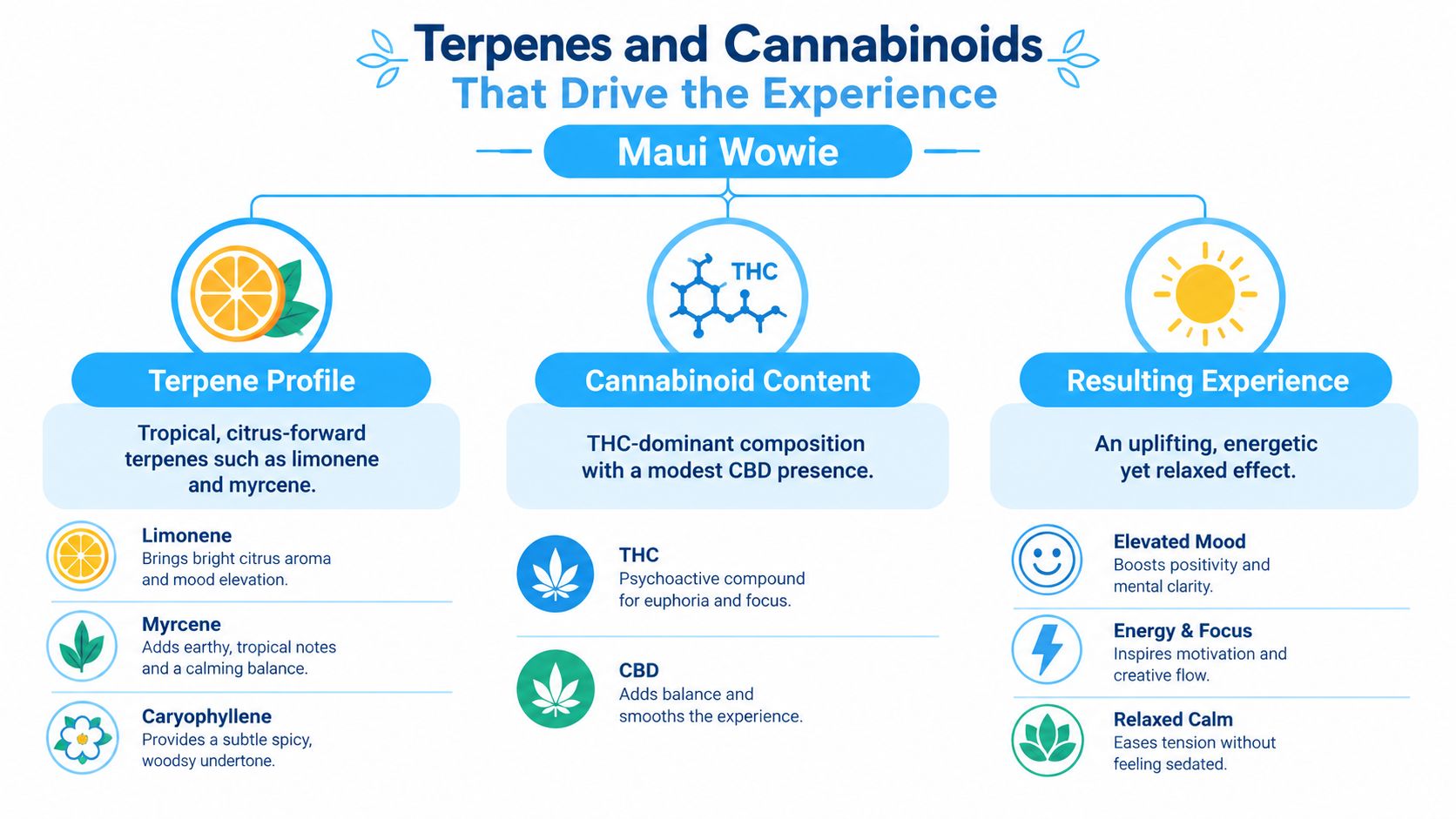
Maui Wowie makes more sense when you read it through terpenes and cannabinoids, not through old indica versus sativa expectations. The name points you toward a flavor family, but the actual experience comes from the batch's chemistry. Reported Maui Wowie examples often show a tropical, citrus-leaning profile built around limonene, pinene, and myrcene (Maui Wowie terpene and potency overview).
What each terpene adds
A simple way to read those aromas is to treat them like the top, middle, and base notes in a fragrance. Limonene usually brings the bright citrus edge people notice first. Pinene adds a cleaner pine note. Myrcene often fills in the background with a softer herbal or fruit-toned depth. In one batch, limonene may lead and the profile smells sharper and more pineapple-citrus forward. In another, myrcene may sit higher and the same strain name comes across earthier or more mellow on the nose.
Smell still has limits. Terpenes shape flavor and may influence the overall character of the session, but they do not guarantee a specific psychoactive result by themselves. THC level, minor cannabinoids, and the product format all change how a Maui Wowie product feels. If scent is part of your ritual, creating a calming aromatic atmosphere can pair nicely with cannabis use without turning aroma into a medical promise.
Cannabinoids provide the other half of the picture. A dataset covering 31 Maui Wowie flower laboratory tests conducted from 2013 through 2015 reported a median THC concentration of 14.9%, with the middle 50% ranging from 12.9% to 16.9%. The same dataset reported median CBD of 0.20%, with the middle 50% ranging from 0.09% to 0.24% (Maui Wowie cannabinoid test data).
That spread matters. A Maui Wowie label may suggest a familiar lane, yet the chemistry can vary enough to change intensity and balance. If you want the clearest picture, read both sides together: the terpene profile for flavor and the cannabinoid panel for strength. For a closer look at how those compounds may interact, see this explanation of the entourage effect. Aroma helps narrow the choice. Lab results confirm what is in the jar.
Reading the Lab Results Before You Buy
A Maui Wowie label can point you in a general direction. The batch-specific certificate of analysis shows what is actually in the jar, cart, pre-roll, or edible you are about to buy. If you want a reliable sense of how a product may feel, read the current lab label first and treat the strain name as background.
Start with the parts that affect the experience most directly:
- Total THC, which gives you a rough sense of potential intensity.
- Total CBD, especially if you are comparing a classic low-CBD version with a newer formula.
- Minor cannabinoids, if listed, because they add useful context around the main THC number.
- Terpene composition, which helps explain whether the batch leans brighter, sharper, sweeter, or heavier in aroma.
- Testing date and package information, so you know the result matches the batch in front of you.
The earlier lab figures discussed above show why this matters. Maui Wowie can vary from batch to batch, so the numbers on the package in your hand matter more than older averages or a familiar name.
A simple side-by-side comparison makes the point. Two products can both say Maui Wowie, yet one may show a moderate THC level with a terpene profile that suggests a lighter, more citrus-forward session, while another may test stronger or include a different balance of supporting compounds. Same name, different chemistry. That is why shopping by label alone often leads to surprises.
Use the numbers to match your tolerance
New consumers usually do better with products that make portion control easy. More experienced shoppers may prefer stronger flower, vapes, or concentrates, but they still benefit from checking the panel instead of assuming every Maui Wowie product will land the same way.
The math also helps. A flower labeled 20% THC works like a quick conversion: one gram contains about 200 milligrams of THC before combustion losses, and 0.25 grams contains about 50 milligrams on paper. Your body does not absorb all of that, and inhalation technique changes the actual result, but the calculation explains why finishing a whole joint too quickly can hit harder than expected.
Read the cannabinoid panel. Check the terpene profile. Confirm the test date and the exact product type.
The COA is the product identity. The strain name is context.
Choosing the Right Consumption Format
Maui Wowie can feel very different depending on how you consume it. Flower gives you the clearest expression of the raw aroma, while a vape may concentrate the cannabinoids and terpenes into a more immediate experience. Pre-rolls offer convenience, and edibles create a different timeline altogether.
| Format | What to check | Why it matters |
|---|---|---|
| Flower | Total THC, terpene profile, package date | Lets you evaluate the plant material and aroma directly |
| Pre-roll | Total THC, whether it's infused, package date | Infusion can change intensity compared with plain flower |
| Vape | Oil potency, ingredients, hardware, terpene panel | Concentrated oil may feel stronger than flower |
| Edible | THC per serving, total package THC, serving instructions | Effects develop more slowly and can last longer |
| Concentrate | Total THC, product type, recommended amount | Small physical amounts can contain substantial cannabinoid content |
Inhaled products generally develop effects faster than edibles, which makes flower and vapes easier to adjust in small increments. That speed can also encourage overconsumption if you take repeated hits before assessing the first one. Start with a small inhalation, wait several minutes, and decide whether you need more.
Vapes deserve extra care because a Maui Wowie cartridge labeled “sativa” may contain a very different cannabinoid concentration from a flower product carrying the same name. A flavorful cartridge can feel smooth and approachable while still delivering a concentrated dose. Read the label and ask a budtender to explain the serving guidance.
Edibles require patience. Their delayed onset makes it tempting to take more too soon, especially when the first serving hasn't produced an obvious effect. Follow the package directions, choose a controlled serving, and avoid combining cannabis with alcohol or driving afterward.
Dose is a format decision, not just a strain decision. The same Maui Wowie name can describe a gentle flower experience or a much more concentrated vape experience.
Best Times and Settings for Enjoyment
Maui Wowie's tropical aroma and sativa-leaning reputation make it a natural fit for daytime activities, creative projects, and relaxed social settings. A citrus-forward flower may suit a sunny afternoon on the patio, while a more herbal batch could pair better with a quiet music session or an easy household project.

Consider a new consumer visiting friends for an afternoon. A small inhaled dose in a familiar setting gives that person time to notice the flavor, gauge the mental lift, and decide whether the product suits the occasion. A high-THC batch can still feel overwhelming, even when the label and marketing suggest brightness or daytime functionality.
Keep water nearby, avoid driving, and choose a comfortable place where you can sit down if the experience becomes stronger than expected. New consumers should be especially cautious with products that have high THC or concentrated oil.
Sleep and cannabis also deserve separate consideration. If you're wondering how psychedelic substances can affect sleep architecture, read about what happens to REM on shrooms, but don't treat information about another substance as a guide to Maui Wowie dosing or effects.
A creative session can work well when the goal is brainstorming rather than precision-critical work. A casual outdoor gathering may suit a lower-dose flower with a bright terpene profile. For evening use, pay attention to your personal response, because a sativa-associated product may feel mentally active when you're trying to wind down.
This video offers another sensory perspective on Maui Wowie and its cultural reputation:
The best setting is one where you can take your time. Choose the batch, format, dose, and environment together, rather than assuming the strain name will decide the experience for you.
Finding Premium Cannabis on Long Island
Finding a reliable Maui Wowie product starts with the same questions you should ask about any heritage cultivar. Is the product sold through a licensed retailer? Does the package show current testing information? Can you review the cannabinoid and terpene results before purchasing?
A knowledgeable budtender can help compare a Maui Wowie flower with a vape, pre-roll, or concentrate without reducing the conversation to “indica versus sativa.” Ask for the total THC and CBD, dominant terpenes, testing date, package date, and serving guidance. If you already know that limonene-forward products appeal to you, say so. If THC tends to feel intense, mention that before choosing a format.
Strong Strains Cannabis Dispensary in East Setauket offers lab-tested flower, vapes, pre-rolls, edibles, concentrates, tinctures, topicals, and accessories, with in-store pickup and local delivery. Its catalog includes a Maui Wowie product explicitly labeled sativa, including the Heavy Hitters Maui Wowie vape cartridge, so shoppers can use the menu as a starting point and confirm the product-specific details before buying.
The key takeaway is straightforward. Call it sativa-dominant or sativa-associated for historical context, then make your purchase based on the batch's chemistry, terpene profile, format, and your own tolerance. That approach respects Maui Wowie's heritage without turning an imperfect retail label into a guarantee.
Visit Strong Strains Cannabis Dispensary in East Setauket to compare lab-tested Maui Wowie flower, vapes, and other formats with help from knowledgeable budtenders. Ask the team to walk you through THC, CBD, terpenes, and serving guidance so you can choose a product that fits your experience and plans.