You get home with a premium edible, toss it into a kitchen cabinet, and assume it'll be fine until next weekend. Then you open it and find stuck-together gummies, chalky chocolate, or a brownie that feels one day away from the trash. That's usually not a product problem. It's a storage problem.
Good edibles are built for flavor, consistency, and a reliable effect. Brands like Wyld, Wana, Kiva, Camino, Gron, Good Tide, Incredibles, Lost Farm, Ayrloom, Level, OFF Hours, Snoozy, ChocLit, Soft Power Sweets, and Tune | Infused Seltzers all benefit from the same thing. Stable handling after you bring them home. The same applies to baked goods from CHEF FOR HIGHER, tinctures from Head & Heal, and premium chocolate formats from Kiva or Camino.
Most advice on how to store edibles stops at “keep them in a cool, dark place.” That's not wrong. It's just incomplete. Gummies need different care than chocolates. Baked goods need more attention than hard candies. Tinctures and beverages have their own rules. Luxury products also deserve better humidity control than the usual vague pantry advice.
Protecting Your Premium Edibles
If you bought a pack of artisan gummies from Wyld or a rich chocolate bar from Kiva, you paid for more than THC or CBD. You paid for texture, flavor, dosing consistency, and a clean finish. Bad storage chips away at all of that.
The first thing I tell customers is simple. Treat edibles like premium food with active ingredients. They're not as forgiving as flower in a jar or a lighter from Bic Lighter tossed in a drawer. Gummies can absorb moisture. Chocolate can bloom after temperature swings. Baked goods can spoil faster than people expect. A tincture might remain usable longer, but it still suffers when it sits in heat and light.
What customers usually get wrong
A lot of people make one of these moves:
- Kitchen cabinet near the stove: Heat creeps in every time you cook.
- Bathroom drawer: Moisture works against texture and freshness.
- Car glove box: Temperature swings are rough on almost every edible format.
- Loose transfer into a sandwich bag: That's weak protection against air, smell transfer, and light.
Those shortcuts don't always ruin a product overnight, but they make the last serving less reliable than the first.
Practical rule: If the storage spot would be bad for fine chocolate or fresh candy, it's probably bad for cannabis edibles too.
Protect the experience, not just the package
Storage is really about preserving the experience you wanted when you bought it. If you're using lower-dose products and want steadier expectations, dosage consistency matters even more. Anyone comparing formats like mints, gummies, or higher-dose products should also understand the serving side of the equation, especially with products discussed in this 100 mg THC edible guide.
A properly stored edible keeps its shape, aroma, and intended effect far better than one that's been rattling around in a warm, bright room. That's what makes the difference between “this hit exactly how I expected” and “why does this feel off?”
The Foundations of Freshness and Potency
Three things wear down edibles faster than anything else. Heat, light, and air. If you control those, you solve most storage problems before they start.
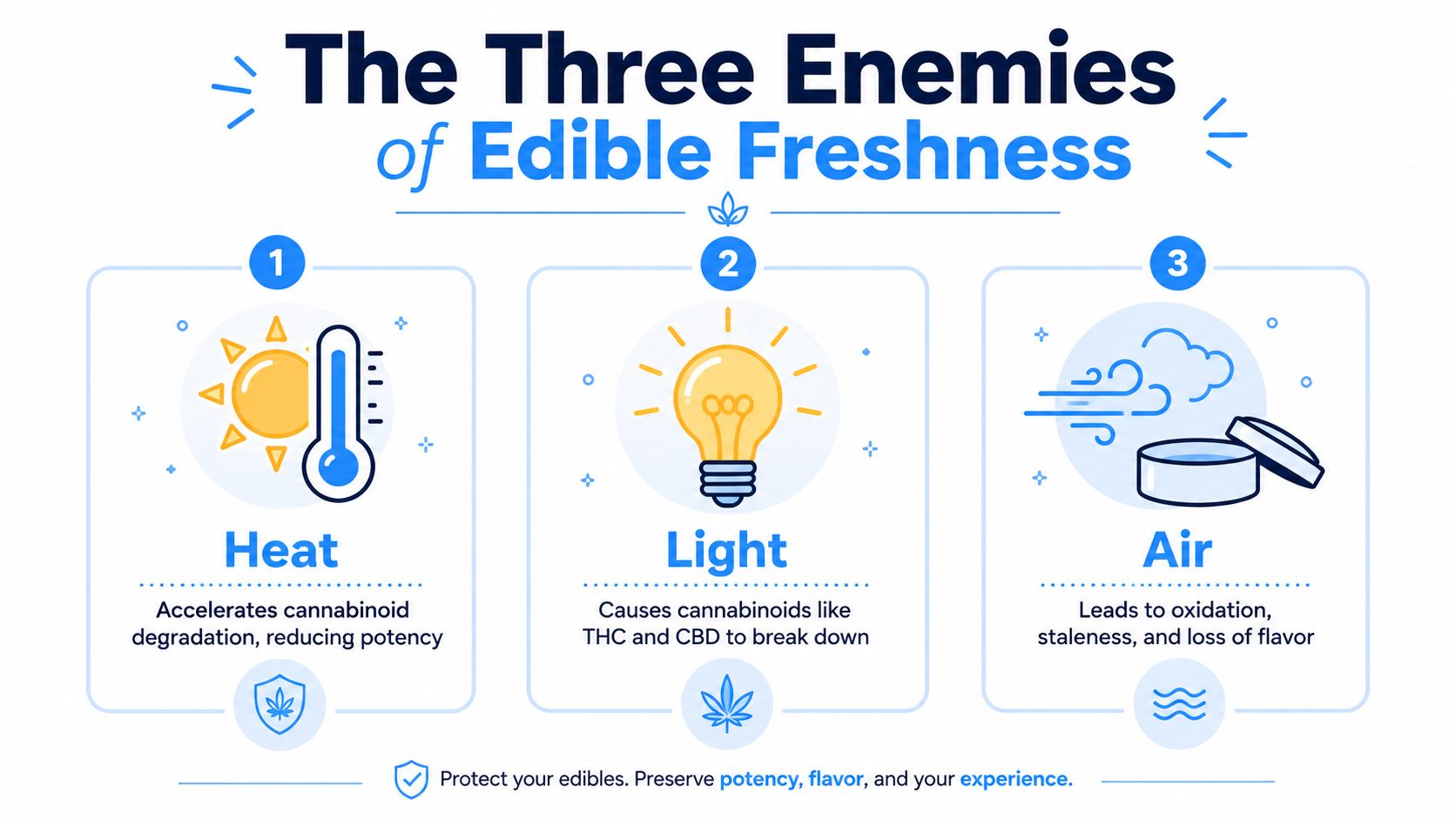
Proper storage of cannabis edibles at a consistent temperature between 60–70°F (15–21°C) and relative humidity of 55–62% preserves potency and extends shelf life to 6–12 months for shelf-stable products, whereas exposure to heat, light, or moisture accelerates degradation of cannabinoids like THC and CBD according to this edible potency and storage reference.
What each enemy does
Here's the practical version.
| Enemy | What it does | What you'll notice |
|---|---|---|
| Heat | Speeds up breakdown and softens or melts products | Gummies clump, chocolate softens, flavors flatten |
| Light | Pushes cannabinoids toward degradation | Potency drifts, color changes, product ages faster |
| Air | Drives oxidation and staleness | Off aromas, dry texture, less satisfying finish |
The target is stability. Not “cold at all costs.” Not “hide it anywhere.” Stable.
The best home setup
The best general setup is boring in the best way. Put the product in its original package, then place that package inside an airtight, opaque container. A sealed glass jar works especially well if the original pouch no longer closes properly.
Use a cabinet or closet shelf that stays consistently temperate and doesn't get blasted by sunlight. Avoid the top of the fridge, the cabinet above the oven, and any window ledge. If you already think carefully about protecting fragile household items in storage, the same logic applies here. A resource like this guide to Medford storage for movers is useful because it reinforces the same principle. Stable conditions matter more than improvising with whatever space is available.
Keep the package sealed, keep the light out, and keep the environment steady. Most edible mistakes start when one of those three slips.
Why humidity deserves more attention
Humidity gets overlooked, especially with premium gummies and baked products. Too much moisture can leave gummies sticky and unstable. Too little can harden certain textures and make the eating experience worse. For luxury edibles, humidity control packs can help maintain a more even environment inside a storage container, especially when your home swings between dry air and summer humidity.
A Tailored Approach for Every Edible Type
Not all edibles want the same treatment. A gummy from Wana, a chocolate from Kiva, a brownie from CHEF FOR HIGHER, and a drink from Tune | Infused Seltzers shouldn't all end up in the same container or the same room.
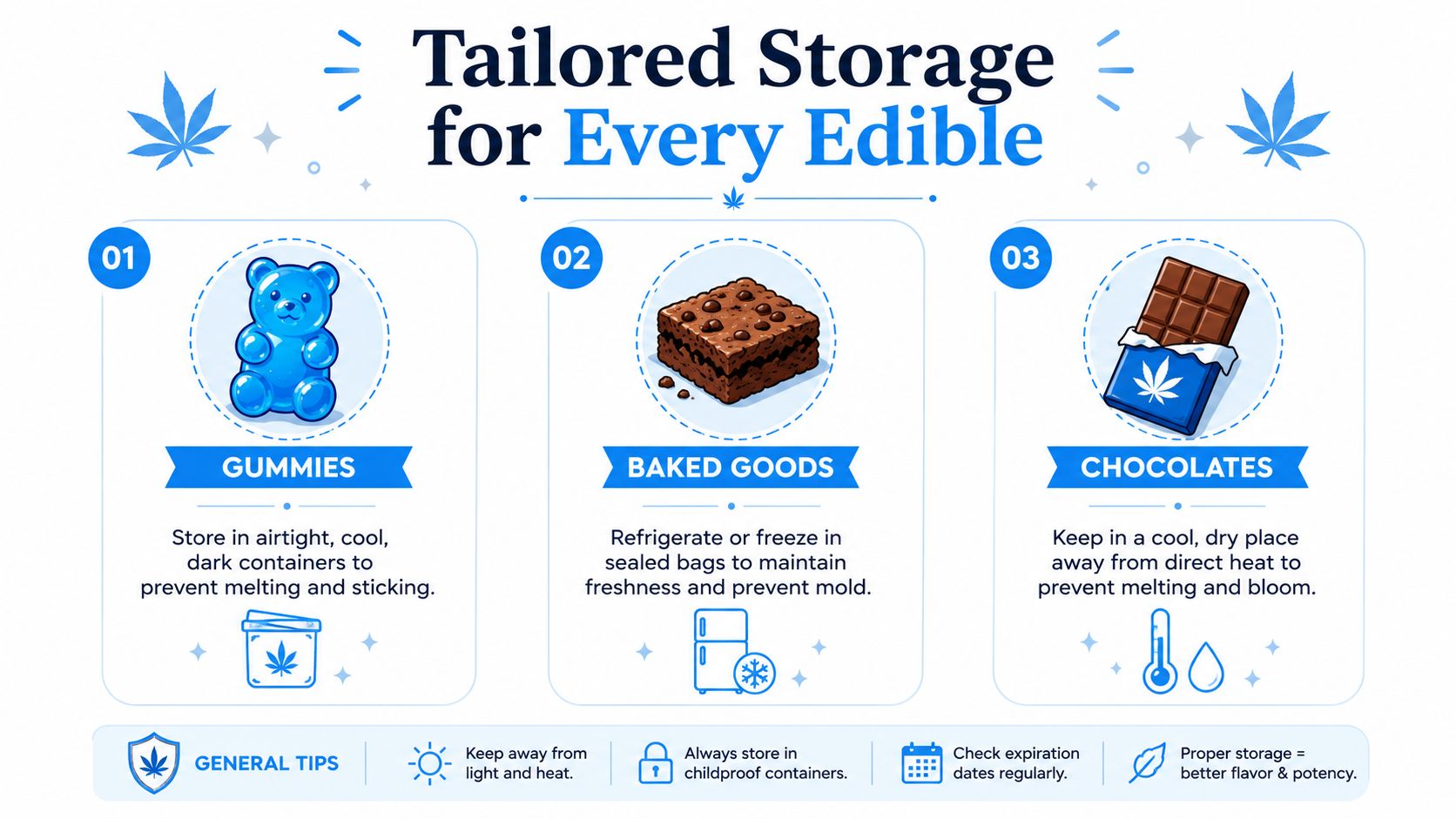
To preserve potency and prevent texture degradation, cannabis edibles should be stored at a consistent temperature between 60–70°F (15–21°C), with refrigeration (35–40°F) specifically recommended for perishable items like drinks and moisture-rich baked goods to prevent microbial growth in this storage guide for cannabis edibles.
Gummies and hard candies
Gummies from brands like Wyld, Wana, Camino, Gron, Good Tide, and WURMZ do best in a cool, dark cabinet inside a tightly sealed container. The main enemies here are stickiness, melting, and moisture absorption.
If you live in a humid home, a humidity control pack can be worth it inside the outer storage container, especially for premium gummy textures. That extra step is one of the easiest ways to keep fruit chews from turning tacky or fusing together.
- Best setup: Original pouch inside an airtight opaque jar
- What to avoid: Warm windowsills, sunny counters, loose storage with other candy
- Good habit: Keep different edible types separated so flavors and moisture don't mix
If you're browsing fruit chews and candy-style products, this guide to weed edibles candy helps clarify which formats tend to be more shelf-stable.
Chocolates and caramels
Chocolate needs a steadier hand. Kiva, Camino, ChocLit, and similar bars or bites can develop a pale, chalky coating after temperature swings. That doesn't always mean the product is unsafe, but it does mean the texture has taken a hit.
Store chocolates in their original wrapper or tray, then place them inside a sealed container in a cool, dry spot. Don't keep moving them from warm pantry to cold fridge and back again. That cycle is what causes trouble.
If you refrigerate chocolate, do it because the room is too warm, not because refrigeration is automatically better.
Baked goods and soft treats
Brownies, cookies, and other moisture-rich products are generally the shortest-hold category. These are the products that need actual planning. If you'll eat them soon, refrigerate them in a sealed container. If you won't, freeze them.
For freezing, wrap individual portions well, place them in a freezer-safe airtight bag or container, and thaw slowly in the refrigerator rather than rushing the process. That's the cleaner way to protect texture and dosing consistency. It's similar to the logic behind protecting fresh food in transit and storage, and even packaging discussions around eco-friendly takeaway packaging point back to the same basics. Barrier protection and moisture control matter.
Drinks and tinctures
Ayrloom beverages, Weed Water, Tune | Infused Seltzers, and other infused drinks need more care once opened. Tinctures are simpler, but they still shouldn't live on a sunny counter.
Store tinctures upright in a cool, dark place with the cap closed tightly. For beverages, refrigeration matters after opening, and the cap should go back on firmly to reduce oxygen exposure. Don't let opened infused drinks linger in the door of a busy fridge where they're constantly warming up and cooling down.
Safe Storage for Peace of Mind
Edibles can look almost identical to everyday snacks. That's what makes safe storage absolutely essential, especially in a home with kids, pets, roommates, or frequent guests.
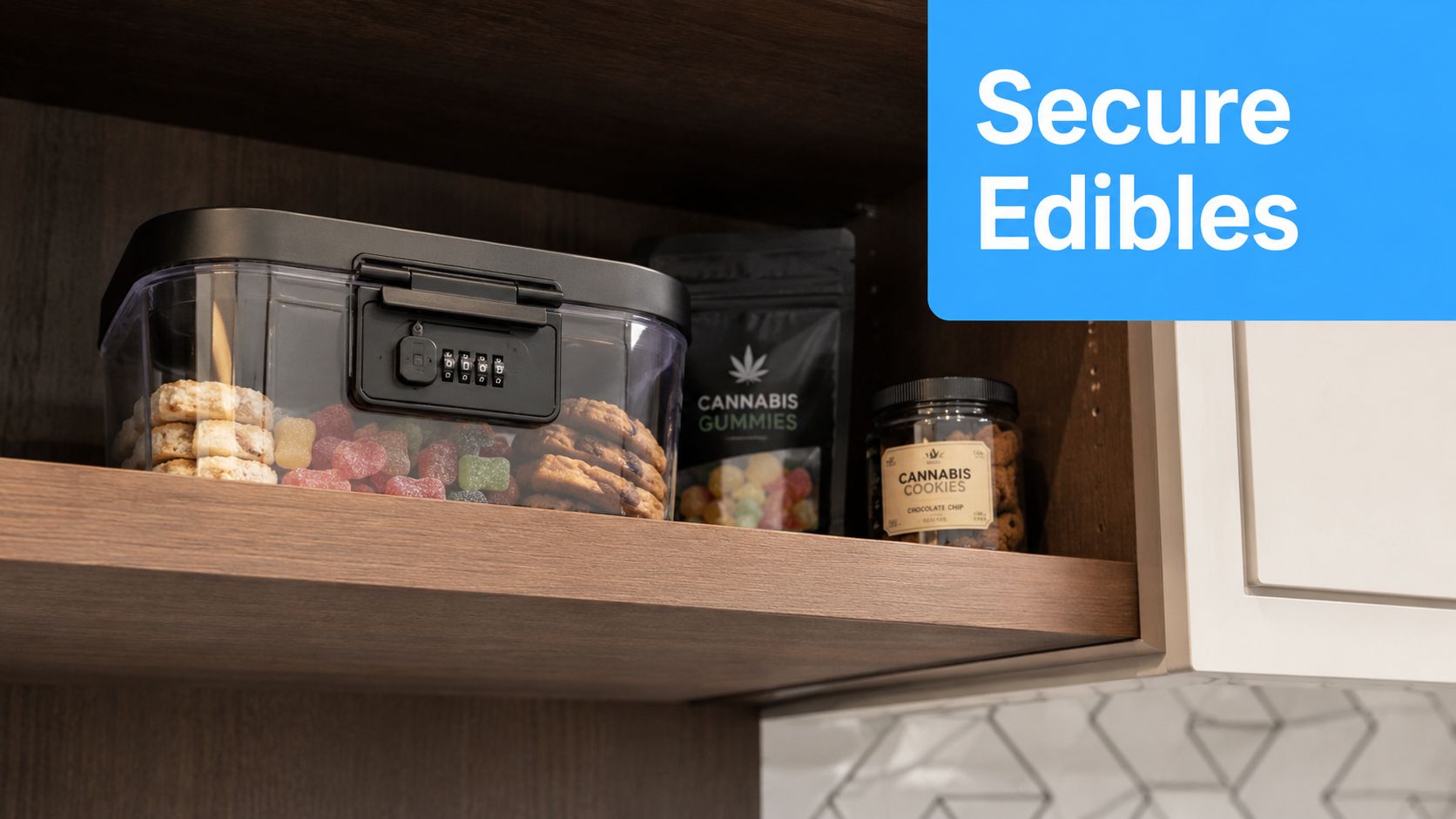
In New York, where Strong Strains operates, adult-use cannabis regulations (21+) explicitly require edibles to be stored separately from regular food and in locked, child-resistant containers to comply with state safety standards, as noted in this New York edible storage overview.
Store high and locked
The best routine is simple. Keep cannabis edibles separate from regular snacks, in their original labeled packaging, inside a locked container or cabinet. High shelf. Locked drawer. Small lockbox. Any of those is better than “I'll just remember where I put them.”
That matters even more for products that resemble ordinary candy or fruit chews, including items from brands like Lost Farm, Cookies, Camino, Wyld, and Wana.
- Use original packaging: It keeps the label, serving information, and child-resistant features intact.
- Separate from food: Don't store edibles beside regular gummies, brownies, or chocolates.
- Choose one dedicated spot: A single secure location prevents absent-minded mistakes.
- Think beyond children: Pets can be just as vulnerable to accidental ingestion.
Opaque and organized beats clever hiding
People often try to “hide” edibles in plain sight. That usually means a snack drawer, a cereal box, or a pantry bin. Those are bad ideas because they mix cannabis products into normal food routines.
A better approach is using a dedicated, nontransparent container with a latch or lock. The same mindset applies in other consumable categories too. If you've ever handled wellness products or homemade food preparations, careful storage makes the difference between controlled use and unnecessary risk. Even a practical guide on how to prepare sea moss gel like a pro points back to the same core habit. Label it, seal it, and store it deliberately.
Before choosing anything from the shelf to consume, it's also worth understanding quality control and contamination risk. This overview of microbial testing in cannabis gives useful context for why storage and product integrity go hand in hand.
A quick visual walkthrough helps make these safety habits easier to remember.
The best edible storage setup is the one nobody can mistake for a snack stash.
How to Spot a Spoiled Edible
Even well-stored edibles don't last forever. Knowing when to throw something out matters just as much as knowing how to store edibles in the first place.
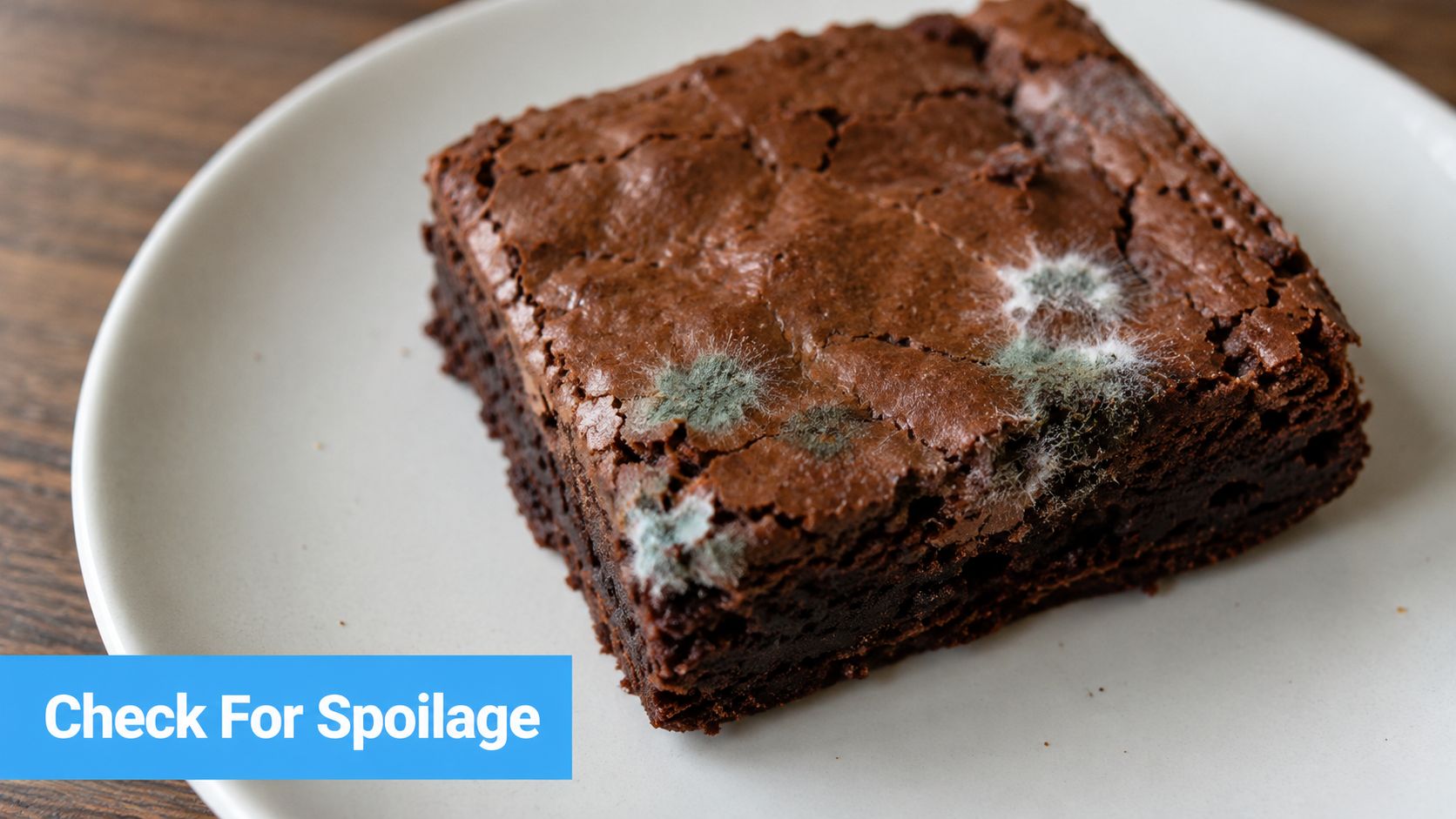
The fastest check is your senses. Look first. Smell second. Then think about texture and whether the product has obviously changed shape or stability.
What spoilage looks like by format
Here's the practical breakdown.
| Edible type | Watch for | What it usually means |
|---|---|---|
| Baked goods | Fuzzy spots, discoloration, stale or sour smell | Spoilage. Discard it. |
| Gummies | Slimy surface, fermented smell, severe stickiness, color change | Moisture damage or breakdown |
| Chocolates | White bloom, odor changes, rancid taste | Bloom may be cosmetic, odor issues are not |
| Beverages | Unexpected cloudiness, sour smell, strange fizz behavior | It's past its safe or best condition |
| Tinctures | Leaks, off smell, cloudy appearance that seems abnormal | Time to stop and inspect before use |
Chocolate bloom versus actual spoilage
Chocolate confuses people because bloom can look alarming. That pale white or chalky film often comes from temperature fluctuation. It can hurt texture, but it doesn't automatically mean the product is unsafe.
What matters more is smell and taste. If chocolate smells stale, oily in a bad way, or clearly off, don't talk yourself into saving it.
When an edible makes you hesitate, that hesitation is useful information.
When texture ruins dosing confidence
Sometimes the issue isn't spoilage. It's usability. A pack of gummies that melted into one fused mass may still contain cannabinoids, but the serving size becomes hard to judge. The same goes for a brownie that dried out unevenly or crumbled apart after poor storage.
That's where people make avoidable mistakes. They eyeball a portion, guess wrong, and end up taking more or less than intended. If the edible no longer lets you estimate a serving with confidence, it may not be worth keeping.
A simple rule works well here:
- Visible mold: Throw it out.
- Off smell: Throw it out.
- Unclear dosing after melting or breakdown: Usually better to throw it out.
- Minor chocolate bloom only: Texture may suffer, but inspect the rest before deciding.
Your Edible Freshness Checklist
The best storage routine is the one you'll follow every time. Keep it simple, repeatable, and specific to the product in your hand.
The short version
- Choose the right spot: Use a cool, dark, dry area for shelf-stable products.
- Keep the seal tight: Original packaging plus an airtight outer container works best.
- Match the method to the edible: Gummies, chocolates, baked goods, tinctures, and drinks don't all behave the same way.
- Store securely: Keep cannabis separate from normal food and locked away from children and pets.
- Check before consuming: If smell, texture, or appearance seems off, trust that signal.
What works versus what doesn't
A few trade-offs are worth remembering.
Pantry storage works for many gummies, hard candies, and some chocolates, as long as the spot stays steady and shaded. Pantry storage fails when the cabinet sits near heat, sunlight, or steam.
Refrigeration works for moisture-rich baked goods and opened beverages. Refrigeration backfires when people put gummies or chocolate into a damp environment without proper sealing.
Freezing works for longer-term storage of baked goods and some other formats when they're wrapped well and thawed slowly. Freezing works poorly when products are tossed in loosely, pick up freezer odors, or get reheated too aggressively.
A final note on beverages
One rule deserves special attention because people miss it all the time. Cannabis beverages require immediate refrigeration after opening and should be consumed within a few days to prevent oxidation and loss of carbonation, while the cap must be screwed back tightly to minimize oxygen exposure that degrades potency, according to this opened cannabis beverage storage guide.
If you remember nothing else, remember this. The more premium the edible, the less sense it makes to treat storage as an afterthought. Good handling protects flavor, texture, safety, and the consistency you paid for.
Whether you prefer Incredibles gummies, Good Tide fruit chews, Camino chews, Kiva chocolate, Wana gummies, Wyld fruit-forward formats, Ayrloom drinks, or a tincture from Head & Heal, smart storage keeps the product closer to the condition it was in when you bought it.
If you want help choosing premium edibles and storing them the right way from day one, visit Strong Strains. Our East Setauket team can help you compare gummies, chocolates, beverages, tinctures, and baked formats, then point you toward the storage setup that fits your lifestyle, your home, and your preferred experience.