You're standing at the menu, trying to solve a familiar problem. You want something that won't flatten your evening, but you also don't want a strain that sends your thoughts sprinting in five directions. You want a flower that can lift the mood, soften the shoulders, and still feel polished.
That's where Clockwork Orange gets interesting.
A lot of shoppers hear two totally different descriptions of the same strain. One person calls it creative and bright. Another swears it's best saved for the couch. Both can sound confident, and both can leave you more confused than when you started. The Clockwork Orange strain has a reputation for balance, but balance doesn't mean every batch feels identical.
That's the part many strain guides skip. They give you one fixed description for a flower that's better understood through its chemistry, not just its name. If you've ever bought a hybrid expecting focus and got heavy eyelids instead, you already know why this matters. If you want a broader foundation before dialing in specific cultivars, this guide on understanding the different strains of cannabis is a helpful companion.
Your Guide to the Clockwork Orange Experience
Clockwork Orange tends to attract the same kind of customer. They're not looking for chaos. They're looking for a strain with range.
Maybe it's the end of the day and you still want to talk, cook, listen to music, or watch something great without feeling pinned to the cushions. Maybe you want body ease, but you don't want your head to go foggy. That's the lane where this cultivar usually enters the conversation.
What makes it stand out is the way people describe two effects at once. They talk about uplift and grounding together. They mention mood lift without harsh raciness, or body relaxation without total shutdown. That sounds contradictory until you start looking at the strain the way a good budtender does. Through genetics, terpenes, and the specific batch in front of you.
Why shoppers get mixed messages
A lot of the confusion comes from the label hybrid. For some people, hybrid means middle-of-the-road and predictable. In practice, hybrid only tells you that the strain draws from both indica and sativa lineages. It doesn't tell you which aromas are leading, how a specific batch was grown, or whether the experience will lean calmer or brighter.
Practical rule: Don't buy Clockwork Orange for the name alone. Buy it for the batch profile.
That's especially true with a strain like this one, because its appeal comes from a push-pull effect. In the right setting, that can feel refined and versatile. In the wrong setting, it can feel mismatched to your plans.
Who usually likes it
Clockwork Orange often appeals to adult consumers who want:
- A balanced session that doesn't feel too sleepy or too speedy
- Distinct flavor with citrus, musk, spice, and earth in the mix
- A premium flower experience that rewards slower, more intentional use
If that sounds like you, this strain is worth understanding before you buy. The details matter.
The Origins and Genetics of Clockwork Orange
A shopper asks a fair question at the counter. If Clockwork Orange can feel bright in one jar and heavier in another, is the strain itself inconsistent? Usually, no. The better answer starts with genetics, then gets refined by batch chemistry.
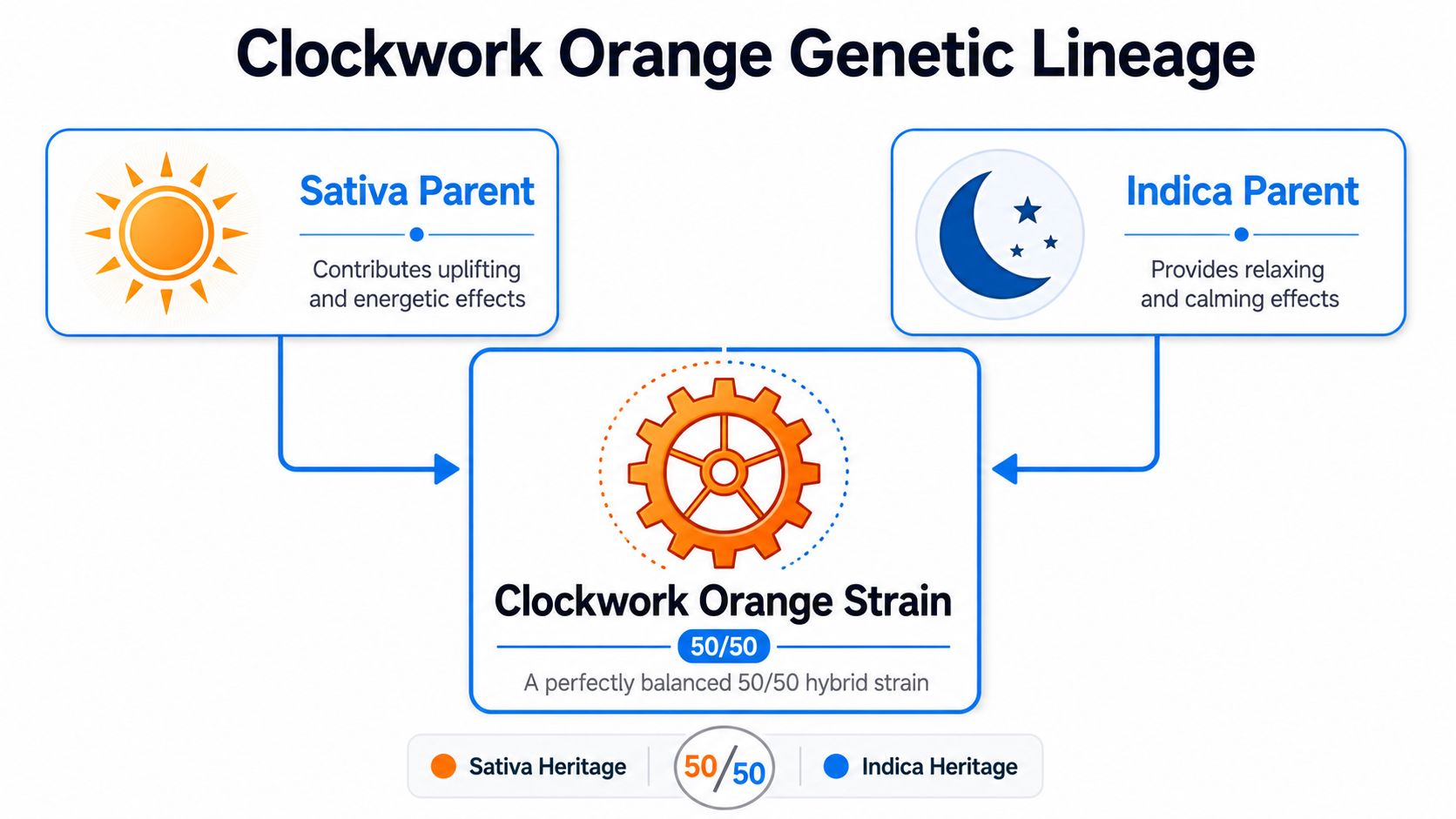
AllBud's Clockwork Orange strain profile describes Clockwork Orange as an evenly balanced hybrid, commonly listed as a likely cross of G13 and Black Widow. That pairing helps explain why the strain developed a reputation for two lanes at once. One side tends to support mental stimulation. The other adds body weight and composure.
Why the lineage matters in real life
Strain family names can sound abstract until you connect them to the actual session.
G13 is often associated with dense, grounding physical effects. Black Widow is better known for a sharper cerebral edge. Put those tendencies together in a balanced hybrid, and you get the framework for the Clockwork Orange paradox people keep talking about. The genetics create the possibility of both uplift and ease. The terpene profile determines which side speaks louder in the batch you buy.
That point matters more here than it does with many one-note cultivars. A myrcene-forward batch often lands softer and more settling. A limonene-forward batch usually reads brighter, more alert, and more social. Same strain family. Different lead instrument.
A strain with a worked-over pedigree
Clockwork Orange also carries some breeder mystique. It is often described as a selection that circulated through clone culture before becoming more widely available through stabilized seed work. For shoppers, that history matters for a simple reason. Better stabilization usually means the flower keeps a recognizable identity from grow to grow, even when one harvest leans calmer and another leans livelier.
That is also why genetics should guide your expectations, not lock them in place. A balanced hybrid is more like a well-built chassis than a finished driving experience. The frame stays familiar. The ride still changes with the terpene mix, cultivation choices, and cure.
If you like tracing modern cultivars back through older cannabis families, this guide to how landrace strains shaped today's hybrids adds useful background.
Clockwork Orange makes more sense once you separate two questions: what the plant is bred to do, and what this specific batch is expressing today.
Appearance Smell and Flavor Profile
If you're the kind of shopper who decides with your nose first, Clockwork Orange has a strong first impression. It doesn't smell shy, and it usually doesn't look ordinary either.
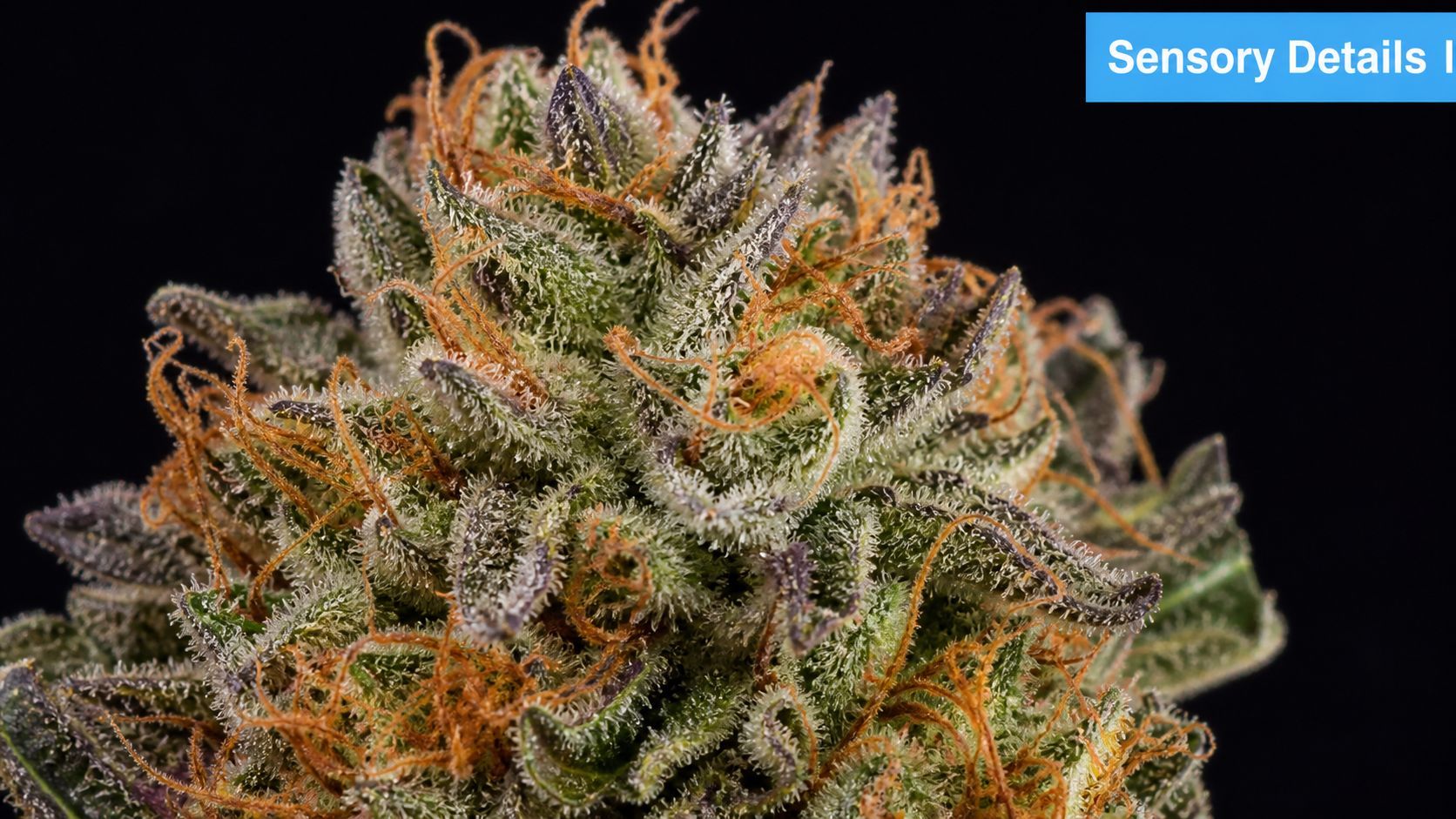
The flower is known for bright orange coloration, with abundant neon orange pistils threading through dense buds and a noticeable coat of trichomes, a combination described in the earlier THC Farmer strain listing. Visually, that orange-forward look is part of the strain's identity. Even before the jar opens, the name starts to make sense.
What to look for in the jar
A well-presented batch of Clockwork Orange often shows a few telltale signs:
- Orange pistils that stand out clearly against the bud
- Heavy frost from resin-rich trichomes
- Dense flower structure with a premium, hand-finished look
Some batches may also show color variation beyond green, including darker accents. What matters most is that the flower looks healthy, aromatic, and properly handled, not dry and flattened.
Aroma that explains the name
The aromatic profile is one of its strongest selling points. Clockwork Orange is commonly described as having a sharp citrus-and-musk flavor profile with a spicy, earthy finish, again based on the earlier THC Farmer description of its terpene architecture.
That means the first sniff can come off bright and zesty, but not in a candy-sweet way. There's usually a deeper base underneath it. Musk, earth, and spice keep it from smelling one-dimensional.
Think of the nose this way:
| Sensory note | What it feels like |
|---|---|
| Citrus | Bright, sharp, lively |
| Musk | Dense, slightly funky, grounded |
| Spice | Warm, peppery edge |
| Earth | Dry, natural finish |
How it tends to smoke or taste
On inhale, many shoppers notice the citrus first. On exhale, the profile often settles into something more herbal, spicy, and earthy. That layered finish is one reason the strain appeals to people who enjoy top-shelf flower from brands known for strong flavor identity, such as Cookies or Connected.
A premium strain should change as you work through it. Clockwork Orange often opens bright and finishes deeper.
If you like flower that keeps revealing itself from jar to grind to exhale, this cultivar has that kind of personality. It doesn't just smell loud. It smells structured.
Understanding the Cannabinoid and Terpene Profile
Clockwork Orange makes more sense once you stop treating the strain name like a promise and start reading it like a recipe. The ingredients stay broadly familiar. The proportions can change.
Start with cannabinoids, then use terpenes to predict the mood
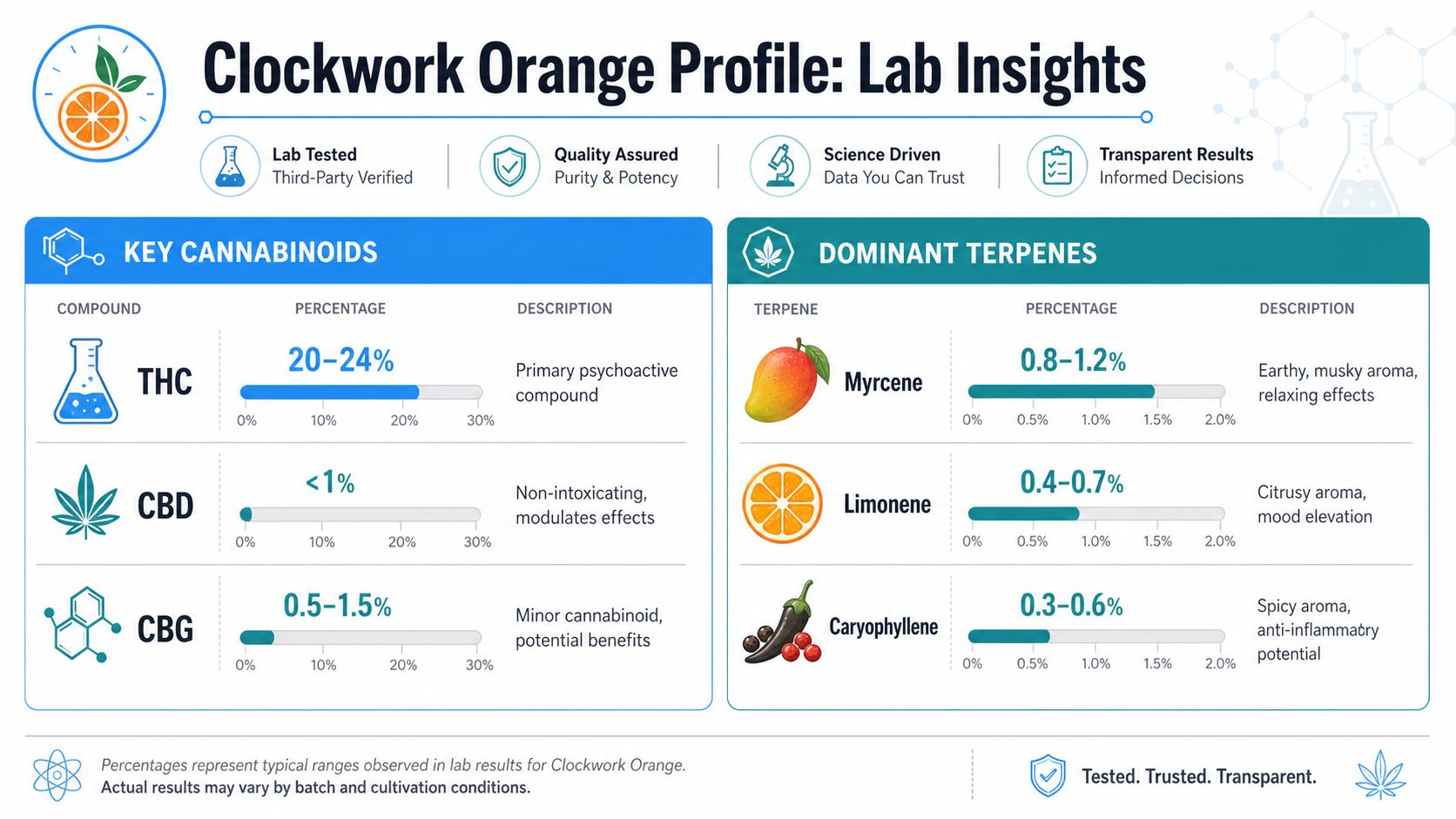
Clockwork Orange usually sits in a THC-forward range with very little CBD, as noted earlier. For a shopper, that means the strain often feels clear in its intent. It was bred for a strong psychoactive experience, not for a soft, evenly balanced cannabinoid profile.
That still leaves a common question. If THC is fairly strong across batches, why do some jars feel bright and social while others feel heavier and quieter?
The answer is terpenes.
The terpene profile explains the Clockwork Orange paradox
This strain gets described in two ways because both descriptions can be true. A limonene-led batch can feel more mentally active. A myrcene-led batch can feel more body-centered and settling. Beta-caryophyllene often sits in the middle and adds that peppery structure that keeps the profile from reading as only citrus or only earth.
A good comparison is a playlist played at different volumes. The same songs are there, but whichever one comes through strongest changes the whole mood of the room.
The three terpenes to pay attention to
Limonene
Limonene usually shows up first as citrus zest, orange peel, or a clean bright top note. When that terpene leads, Clockwork Orange often comes across as more upbeat, conversational, and suitable for earlier use.
Myrcene
Myrcene brings the grounded side of the strain. It tends to read as musk, herb, or damp earth. When it takes the lead, the experience often feels slower, softer in the body, and better matched to winding down.
Beta-caryophyllene
Beta-caryophyllene adds spice and a little grip. It helps explain why Clockwork Orange rarely smells flat. Even in a brighter batch, that peppery note can keep the aroma structured instead of sweet and simple.
How to read a batch without overcomplicating it
A lab report helps, but your nose is usually the first practical tool. If the jar opens with orange peel and sharp citrus, expect a more alert version of Clockwork Orange. If the first impression is musk, earth, and spice, expect a calmer, weightier lane.
That is the piece many strain roundups skip. They give one fixed description for a cultivar that clearly has two common expressions.
Here is a simple shop-floor approach:
- Choose citrus-first batches for daytime curiosity, music, errands, or low-pressure creative time
- Choose myrcene-heavier batches for evenings, quiet hangs, or body ease
- Use beta-caryophyllene as a clue that the batch may carry a peppery finish and a more grounded overall feel
Growers and experienced flower buyers have followed that kind of terpene-first thinking for years. If you like learning how old-school cultivar families express themselves in the garden, this classic Kush cultivation guide is a useful reference point for how aroma, structure, and effect often travel together.
One quick tip before you buy. Ask to smell the jar if your dispensary allows it. For Clockwork Orange, that single step often tells you more about the likely experience than the strain name alone.
Effects Medical Uses and Consumption Guidance
You buy Clockwork Orange for a Friday evening, expecting a bright social hybrid. Two pulls in, your shoulders drop and the couch starts looking better than your plans. Another shopper buys the same strain name from a different batch and gets the opposite result. That split is why Clockwork Orange confuses people, and why strain names alone are not enough.
The better way to read this cultivar is by terpene direction. Limonene-leaning batches usually steer the experience toward alertness, conversation, and a lighter mental lift. Myrcene-leaning batches often bring more body ease, a slower pace, and a softer landing. Same cultivar. Different chemical emphasis.
That is the Clockwork Orange paradox in plain English. The strain can feel energizing and sedating because different batches highlight different parts of its profile. Strong Strains pays attention to that batch-level difference, while plenty of strain roundups flatten it into one fixed description that does not match what shoppers experience.
What the effects usually feel like
Clockwork Orange often starts in the head before it settles into the body. For some people, that means a quick mood shift, more interest in music or conversation, and a clearer sense of engagement. For others, especially with muskier, myrcene-forward flower, the body relaxation arrives early and changes the whole tone of the session.
A simple way to picture it is a dimmer switch, not an on-off button. Limonene turns the brightness up. Myrcene lowers the lights and softens the room.
Here is a practical way to choose:
| If your goal is | Look for aromas like | Better timing |
|---|---|---|
| Staying engaged, chatting, light creative time | Orange peel, zest, bright citrus | Late morning, afternoon, early evening |
| Unwinding, loosening up, quieter downtime | Earth, musk, spice, deeper sweetness | Evening, later night |
Smell matters because it gives you a fast real-world clue before you buy. If you are shopping at a Long Island dispensary with a strong flower selection, ask whether the current batch leans citrus or earthy. That question is often more useful than asking whether the strain is "uppy" or "sleepy."
Reported wellness use
Consumers commonly reach for Clockwork Orange when they want help settling tension without jumping straight to a heavy knockout strain. The usual conversation around this cultivar centers on stress, mood, and day-end physical discomfort.
That does not make it a medical treatment, and it is not equally comfortable for everyone. If you are sensitive to racing thoughts, a brighter limonene-heavy batch may feel too active. If you are trying to stay productive, a myrcene-heavy batch may feel too heavy. The fit depends on your goal, your tolerance, and the batch in front of you.
For readers who like comparing balanced hybrids with classic heavier cultivars, this classic Kush cultivation guide offers a useful contrast in how genetics can shape a more sedating profile.
How to consume it without overshooting
Start lower than your confidence tells you to. Clockwork Orange has a way of seeming mild in the first minute, then filling in across the next several.
If you are smoking or vaping, take one or two pulls and wait. Inhaled cannabis usually shows its direction quickly, but the full shape can take a little longer to reveal itself. That pause helps you catch whether the batch is heading toward uplift or body weight before you add more.
A few simple rules help:
- Start with a small inhaled dose, especially if the jar smells loud, dense, or very resinous
- Wait several minutes before deciding the first dose was too light
- Save myrcene-forward batches for later in the day if body heaviness tends to hit you hard
- Be extra careful with edibles made from this cultivar, because the slower onset makes it easier to take more before the first dose peaks
People usually misread Clockwork Orange when they hear "balanced" and assume "gentle." Balanced only means it can travel in more than one direction. Intensity is a separate question.
Finding Clockwork Orange on Long Island
You walk into a Long Island dispensary after work, ask for Clockwork Orange, and get two very different descriptions. One budtender calls it bright and social. Another says it settles into the body. Both can be right. The better question is which batch is in the jar.
That is the easiest way to shop this strain well on Long Island. Don't buy Clockwork Orange by name alone. Buy it by format, freshness, and terpene direction. With this cultivar, a limonene-forward batch can feel more upbeat and citrus-led, while a myrcene-forward batch often lands with more body softness and a calmer finish. That “Clockwork Orange paradox” confuses a lot of shoppers because many strain guides flatten it into one description.
If you want the clearest read on what the batch is likely to do, start with flower. Flower lets you smell the full profile before you commit. A brighter orange-peel and lemon nose often points you toward the more energizing side. An earthier, muskier, slightly herbal jar can hint at the heavier side.

Which format fits your goal
Product type shapes the experience almost as much as the cultivar itself.
- Flower from brands like Rythm gives you the best access to aroma, texture, and batch-specific character.
- Vapes from names like MFNY or Pax work well for convenience and quick feedback, though they can present a narrower version of the strain than whole flower.
- Concentrates from producers such as Olios are better suited to experienced consumers who already know they enjoy this strain's citrus-to-earth range.
Inhaled formats are usually the easiest place to begin because the effects show up quickly enough for you to read the batch before taking more. That matters here. Clockwork Orange can open with mental lift, then settle into the body, and that arc feels more obvious when onset is easy to track in real time.
What to ask before you buy
A good dispensary conversation can save you from choosing the wrong version of this strain for your plans.
Ask questions like these:
- Does this batch test or smell more limonene-forward or more myrcene-forward?
- Is the flower fresh, or is this an older lot that may have lost some of its brighter top notes?
- Is it offered as flower, pre-roll, vape, or concentrate?
- Based on customer feedback and the lab profile, does this lot lean more social or more settling?
Those questions get you closer to the outcome you want. If you are heading to dinner, a brighter batch may fit better. If you want to loosen up and stay in for the night, the softer, heavier expression may be the smarter buy.
If you're comparing stores and formats, this guide to a Long Island dispensary shopping experience is a useful starting point for seeing what local menus often carry.
Similar Strains and Concluding Thoughts
You stop at the menu, see Clockwork Orange again, and hesitate. One description says upbeat and creative. Another suggests a softer, end-of-night hybrid. The strain itself is not the problem. Batch expression is.
That is the Clockwork Orange paradox, and it gets easier to understand once you treat terpene balance like seasoning in the same recipe. A limonene-forward batch often reads brighter, more talkative, and more mentally active. A myrcene-forward batch usually lands warmer, looser, and more body-centered. Same cultivar family. Different emphasis. That is why a single fixed description can feel incomplete.
This also helps when you compare Clockwork Orange to similar strains. If you enjoy the orange-citrus side first, look toward other citrus-led hybrids that keep the nose lively and the mood lifted. If what you remember most is the steady body ease underneath the flavor, you will probably connect more with balanced hybrids or slightly heavier flowers that settle in without turning dull.
If you like this, you may also like
- Citrus-forward hybrids if aroma and a brighter mental tone matter most
- Balanced hybrid cultivars if you want a clearer split between head effects and body comfort
- Myrcene-leaning flower if you want a calmer, fuller-body version of the experience
- Limonene-leaning daytime hybrids if you want more zip and less physical weight
The name points you toward the flavor family. The terpene profile points you toward the likely feel.
That distinction matters at the counter. Two jars labeled Clockwork Orange can lead to noticeably different sessions, especially if one batch holds onto its brighter citrus top notes and the other leans earthy, soft, and grounding. Good dispensary guidance fills in that gap.
Clockwork Orange stays memorable because it has range. It can begin with mental lift, then settle into the body in a way that feels layered rather than scattered. For Long Island shoppers, that makes it less of a mystery strain and more of a smart buy, as long as you shop by batch, not just by name.
If you want help finding the right version of Clockwork Orange or a similar terpene profile, Strong Strains is a trusted place to start. Their team in East Setauket focuses on lab-tested products, clear guidance, and thoughtful recommendations for Long Island adults who want premium flower, vapes, concentrates, edibles, and more without guesswork.