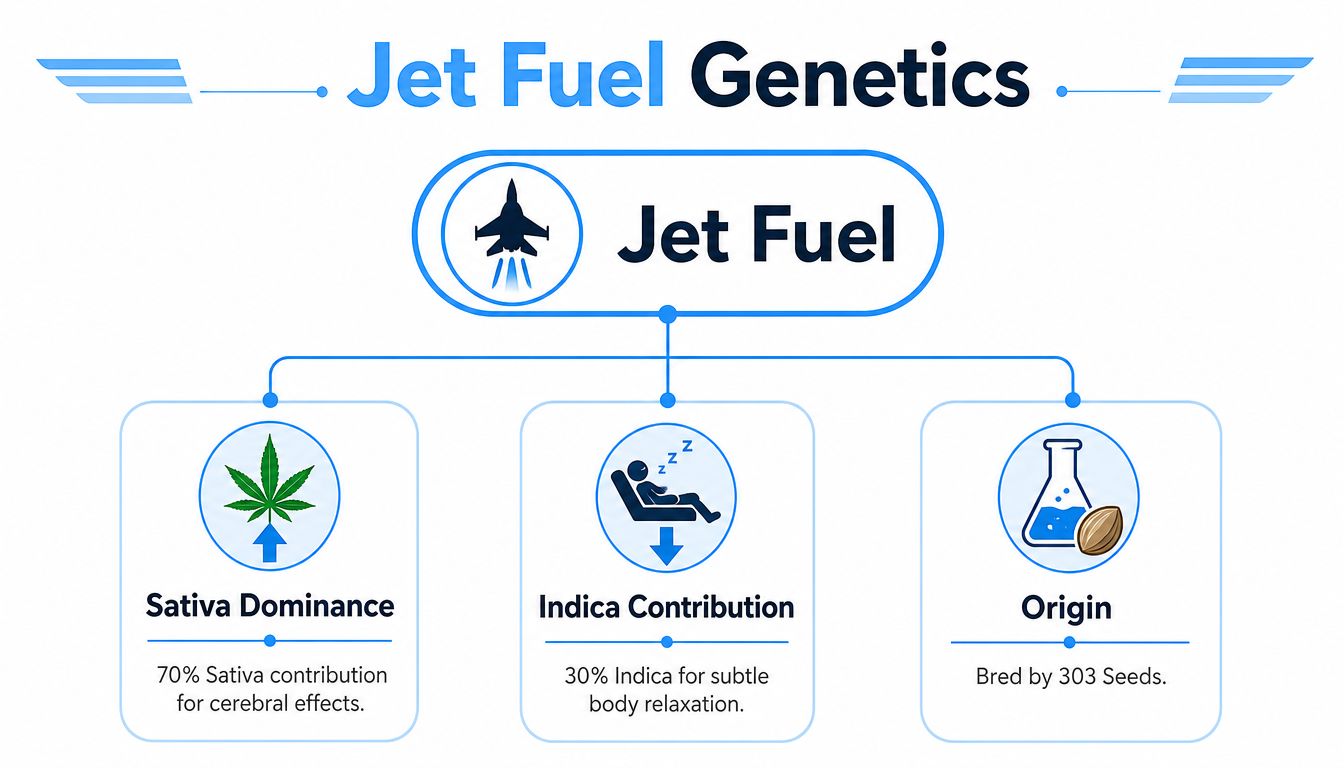
Jet Fuel is a sativa-dominant hybrid, not a pure indica or pure sativa, and it's most often listed as 70% sativa and 30% indica. In plain terms, that means you can expect more energetic, head-forward effects with a lighter layer of body relaxation instead of the heavier, sleepy feel people usually associate with indica-leaning strains.
If you're searching Jet Fuel strain indica or sativa right now, you're probably trying to solve a practical problem, not win a cannabis trivia contest. Maybe you want something for a busy Saturday, a creative project, a social hang, or a daytime reset, and you don't want to end up glued to the couch. That's where the label matters, but the label alone doesn't tell the full story.
Jet Fuel has built a reputation as a high-energy, diesel-forward strain. But the smarter question isn't just “is it indica or sativa?” It's “how is it likely to feel, why does it feel that way, and who should be cautious?” That last part gets skipped too often. Jet Fuel can be a great fit for the right person and the wrong fit for someone who wants a mellow, low-key ride.
Jet Fuel A Sativa Dominant Powerhouse
Jet Fuel sits firmly in the sativa-dominant camp. If you've heard mixed answers, the confusion usually comes from the word hybrid. People see “hybrid” and assume the effects land right in the middle. That's not how it works.
A hybrid can still lean strongly one way. Jet Fuel does. Its profile is commonly described as energetic, cerebral, and motivating rather than strongly sedating. If your goal is to stay alert, talkative, mentally engaged, or creatively switched on, that's why this strain keeps coming up in conversation.
What Hybrid Means In Real Life
Think of hybrid cannabis like a playlist with two genres in it. One style clearly leads, but the second still shapes the mood. With Jet Fuel, the sativa side drives the experience, while the indica side softens the edges just enough that it doesn't feel like a pure race-to-the-ceiling strain for everyone.
That's useful for people who want movement without total chaos. It's less useful for people shopping for nighttime calm.
Practical rule: If you usually ask for something to help you slow down, sink in, or get sleepy, Jet Fuel probably isn't the first strain to reach for.
Why People Ask About This One So Often
Jet Fuel has a name that sounds intense, and it tends to deliver on that image. It's one of those strains people hear about from a friend, see on a menu, or notice in a vape or flower lineup and immediately wonder whether it's going to lift them up or knock them out.
The short answer is uplift. The longer answer is that the experience often starts in the head first. That's where the “powerhouse” reputation comes from. People aren't usually talking about a lazy, heavy unwind when they mention Jet Fuel. They're talking about momentum.
For newer shoppers, that's the key distinction. If you're asking Jet Fuel strain indica or sativa, the answer matters because it helps you match the strain to the moment. Daytime plans, social events, creative work, and active weekends make more sense here than bedtime routines.
Unpacking The Genetics Behind The Name
The best way to understand Jet Fuel is to look at its family tree. Strain labels can feel abstract until you connect them to genetics. Once you do that, the way a strain behaves starts making more sense.
Jet Fuel is identified as a 70% sativa and 30% indica hybrid bred by 303 Seeds, and its lineage comes from crossing Aspen OG with High Country Diesel, with roots tied to New York Diesel genetics according to Cannaconnection's Jet Fuel strain profile.
The Family Tree Matters
Aspen OG brings OG influence into the mix. High Country Diesel brings the fuel-forward side that gives Jet Fuel much of its identity. When those lines come together, you get a hybrid that still has a clear direction. It doesn't sit neutrally in the center.
That's why “hybrid” isn't a dodge or a vague label here. It's a real blend with a strong lead characteristic. Jet Fuel isn't random. It's built.
If you've ever compared strain lineages the same way you'd compare wine grapes or coffee origins, you're already thinking in the right direction. Parent genetics don't guarantee an identical experience for every batch, but they do explain why a strain usually leans a certain way.
Why The Sativa Side Shows Up So Clearly
Jet Fuel's sativa-heavy build is the reason so many people associate it with a buzzy, clear-headed, get-moving kind of high. That doesn't mean every person will feel identical effects. It means the strain's structure points toward stimulation rather than sedation.
A helpful way to understand this is:
| Genetic piece | What it helps explain |
|---|---|
| Sativa dominance | Why the strain often feels more cerebral and active |
| Indica contribution | Why some users still notice a modest body ease |
| Diesel lineage | Why the aroma and personality feel sharp, loud, and assertive |
For shoppers who like learning the “why” behind a strain, genetics are a better guide than marketing adjectives. If you enjoy exploring cultivars with distinct heritage, it also helps to compare how different brands present flower quality and selection. A broad menu like Botanist product coverage can make those lineage differences easier to spot across categories.
Good cannabis education starts with the plant, not the hype.
Aroma and Flavor The Signature Diesel Experience
Before Jet Fuel even hits, it usually announces itself through aroma. This isn't a soft, dessert-style strain. It doesn't present itself with subtle candy sweetness or creamy fruit notes. It comes across sharper, louder, and more mechanical in the best possible way for diesel fans.
Its flavor is described with gassy pine notes and a tangy sour lemon backdrop, while the aroma is described as pungent diesel layered with sweet skunk and pine, a profile that Hey Abby's Jet Fuel strain writeup likens to an airport tarmac.
What You'll Notice First
The first impression is usually fuel. Not subtle fuel. The kind that hits your nose fast and leaves no doubt what family this strain belongs to.
Then the profile starts to widen out. Pine cuts through the gas. Sour lemon brightens the edges. Sweet skunk sits underneath and keeps it from feeling one-note. That combination is part of why Jet Fuel has such a loyal following among people who want flower with personality.
Why Diesel Fans Keep Coming Back
Some strains smell pleasant. Jet Fuel smells distinctive. There's a difference.
If you like classic diesel lines, the appeal is easy to understand. The aroma has tension in it. It's pungent, acidic, resinous, and a little unruly. That gives the whole experience a premium feel when the flower is well handled.
A simple way to frame the flavor journey:
- On the nose: pungent diesel, sweet skunk, pine
- On the palate: gas first, then pine, then sour lemon lifting the finish
- Overall character: bold, not sugary; sharp, not sleepy
Jet Fuel tastes the way its name sounds. Fast, loud, and unmistakably fuel-forward.
For customers who usually buy based on smell alone, Jet Fuel often sells itself. You crack the jar, and the profile tells you exactly what kind of ride you're stepping into.
Effects From Creative Liftoff To Potential Turbulence
Jet Fuel gets praised for energy, mood lift, and heady momentum, and that reputation isn't accidental. This is the kind of strain people often reach for when they want to feel switched on. Creative tasks, conversation, errands, music, cleaning, or an afternoon reset all make more sense than a quiet attempt to fall asleep early.
That said, a balanced guide becomes important. The upside is real, but so is the caution.
The Lift Off Side
Many people choose Jet Fuel because it feels mentally active rather than physically heavy. The experience is often described as euphoric and buzzy, with a fast-arriving cerebral presence. For some, that feels motivating. For others, it feels intensely social. For the right shopper, it can turn a sluggish afternoon into a productive one.
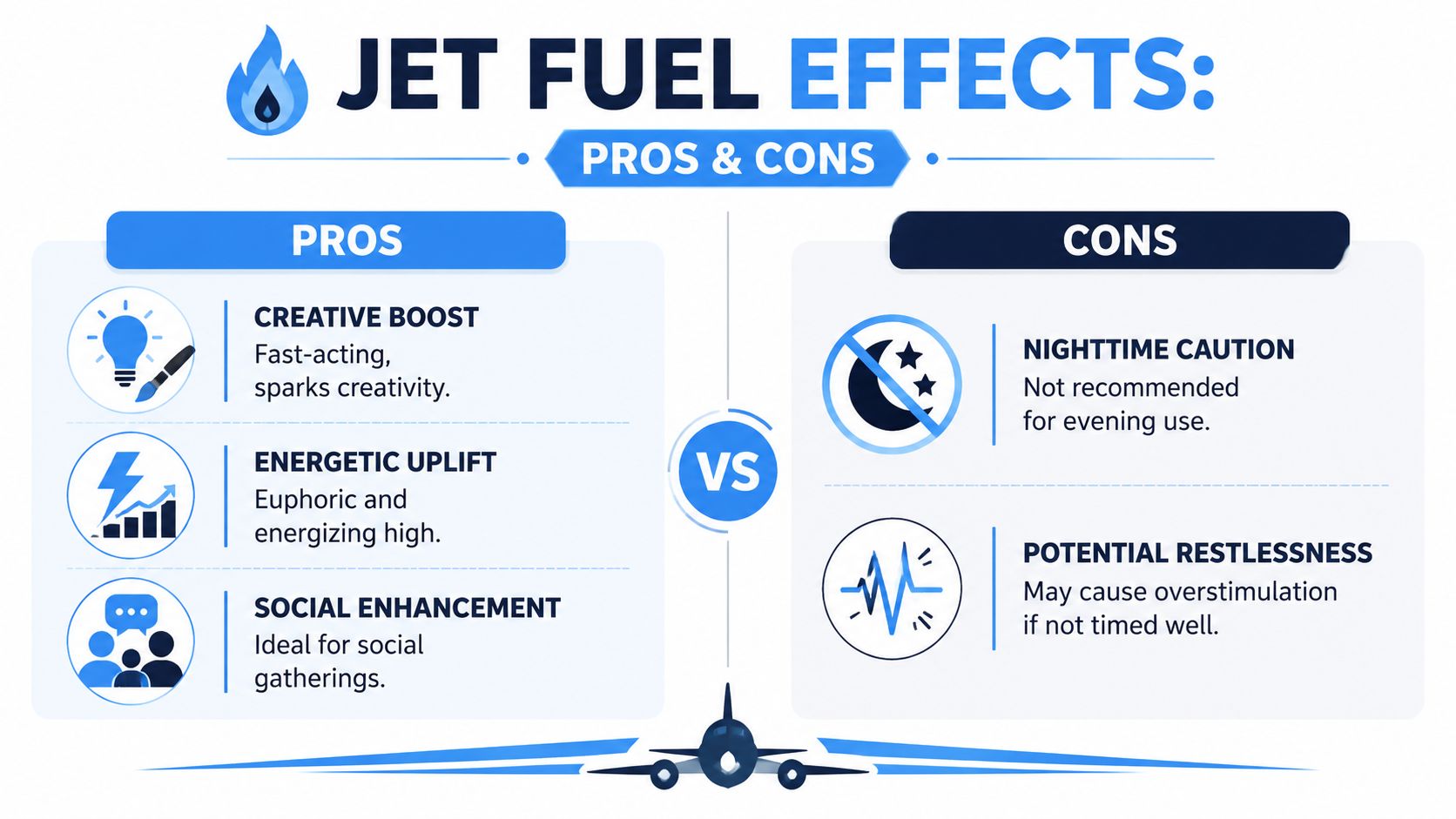
A few common situations where this style of strain makes sense:
- Creative work: brainstorming, sketching, music, journaling
- Social settings: small gatherings, long conversations, event energy
- Solo motivation: chores, organizing, getting out of a mental slump
If you want the cannabis equivalent of “let's get moving,” Jet Fuel fits that lane better than strains known for couchlock.
The Part Many Guides Skip
Most broad strain summaries stay on the upbeat side. They mention euphoria and stop there. A more honest read is that Jet Fuel can also bring paranoia for some users. Cannaflower's Jet Fuel strain review specifically notes that many guides leave out this warning and ties that risk to the strain's buzzy head-rush and chemical profile.
That matters because people often assume a strain only becomes risky when the THC number looks extreme. In practice, some strains hit “louder” than their number suggests because of how the whole profile comes together.
If you're sensitive to racy sativas, Jet Fuel isn't the place to be casual with dosing.
How To Read The Early Signals
Not everyone who tries Jet Fuel will feel anxious. But if you're someone who's prone to overstimulation, the earliest cues matter. A strong head rush can feel exciting at first, then a little too electric if you stack on more too quickly.
Watch for signs like:
- Temple pressure or tingles: some people notice this before the high fully settles
- Thought acceleration: your mind starts jumping faster than you want
- Social overawareness: conversation suddenly feels more intense than fun
- Restlessness: your body isn't sedated, but you're not fully comfortable either
That doesn't mean the strain is “bad.” It means Jet Fuel deserves respect. Plenty of high-energy strains are enjoyable when used deliberately and less enjoyable when someone treats them like a mild all-purpose hybrid.
Who Should Be Extra Careful
Jet Fuel isn't the best blind buy for everyone. Caution makes sense if you're brand new to cannabis, if you know limber daytime highs can turn edgy for you, or if you're shopping specifically for calm nighttime use.
A smarter approach is to pair the strain to the setting. Good lighting, familiar people, a light schedule, and nowhere urgent to be all help. Trying a stimulating strain in a stressful environment rarely improves the outcome.
Potency Terpenes and The Chemical Engine
Jet Fuel's intensity makes more sense when you look at the lab-facing side of the strain. Potency isn't just about whether something is “strong.” It's about how the cannabinoids and aroma compounds work together.
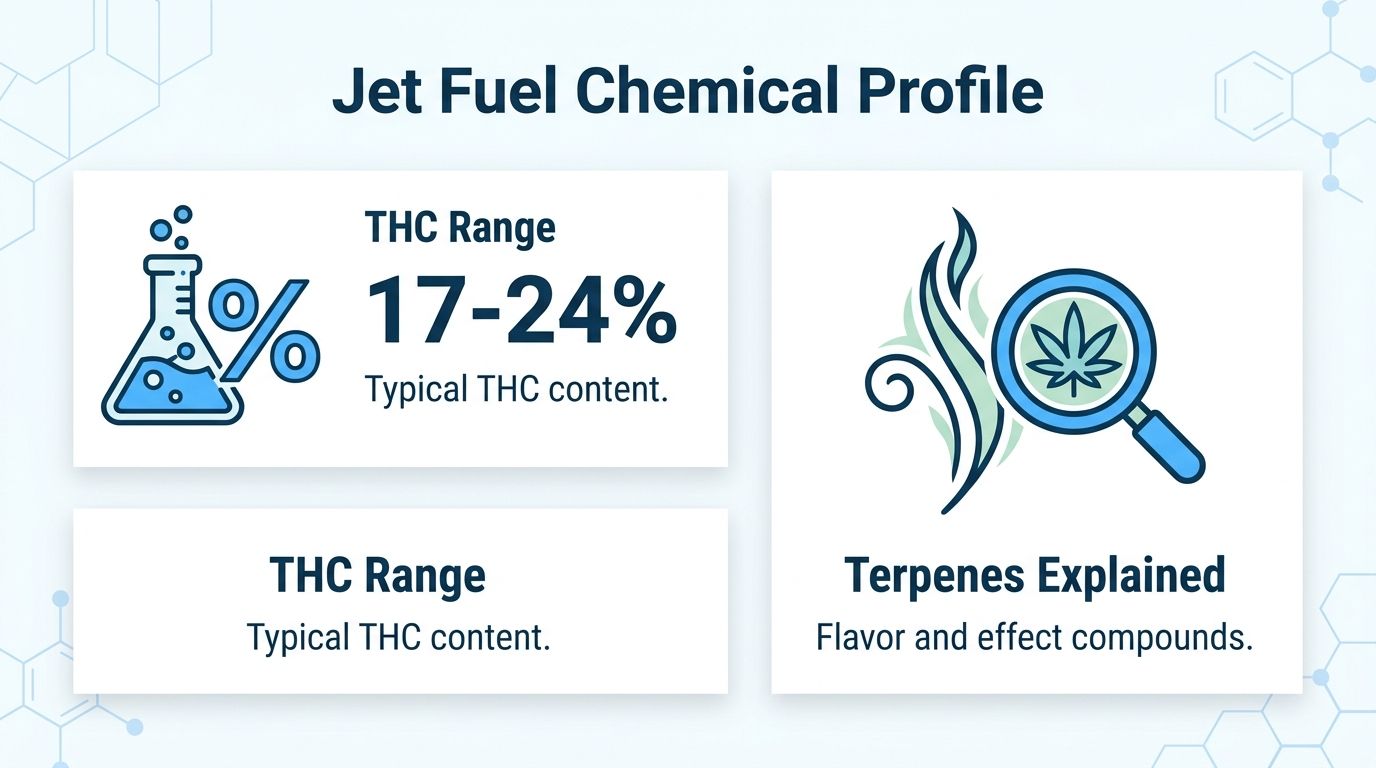
Jet Fuel typically tests between 17% and 24% THC, and its primary terpenes include myrcene, limonene, and beta-caryophyllene according to Mango Cannabis on the Jet Fuel strain.
What The THC Range Actually Means
A lot of shoppers fixate on THC and stop there. That number matters, but it doesn't tell you the whole story. A strain in this range can still feel punchy, especially when the rest of the profile pushes toward stimulation.
That's why Jet Fuel often surprises people who expect anything outside the very highest THC category to feel easygoing. It can be forceful, quick, and mentally active. If you want a deeper read on how to interpret labels, this guide on what THC percentage means helps put those numbers into plain language.
The Terpenes Doing The Heavy Lifting
Terpenes shape both aroma and overall feel. In Jet Fuel, the core trio gives you a pretty clear map of why the strain smells and behaves the way it does.
| Compound | Often associated with |
|---|---|
| Limonene | Citrus brightness and an uplifting edge |
| Myrcene | Earthy depth and some body presence |
| Beta-caryophyllene | Spicy, peppery undertones |
Limonene helps explain the strain's sharp citrus side. Caryophyllene adds that spicy, grounded undertone under the gas and pine. Myrcene rounds things out so the profile doesn't feel thin or flat.
Why Chemistry Beats Simple Labels
“Indica or sativa” is a useful starting point. It's not the finish line.
Two strains can both be called sativa-dominant and still feel different because their chemical makeup differs. Jet Fuel is a perfect example of why the details matter. It doesn't just carry a sativa label. It carries a set of compounds that support an energetic, aromatic, fast-moving experience.
Key takeaway: THC tells you how much power may be in the engine. Terpenes tell you how that engine tends to drive.
Your Flight Plan Using and Finding Jet Fuel on Long Island
The best use case for Jet Fuel is usually daytime or earlier evening when you want lift, movement, or engagement. This isn't the strain typically chosen for pajamas, a blackout curtain, and a full night reset. It fits better with a notebook, a playlist, a walk, a conversation, or a project you've been putting off.

Best Times To Use It
Jet Fuel tends to make the most sense when you want to stay mentally online. It can suit:
- A creative afternoon: writing, ideation, visual work, music
- A social window: relaxed gatherings where energy helps
- A reset session: when you feel flat and want a more active headspace
It usually makes less sense late at night, before bed, or when your environment already feels overstimulating.
Safer Dosing For A Strain Like This
The best advice here is simple. Start low and go slow. That matters even more with strains that can come on buzzy and fast.
A practical approach looks like this:
- Take a small initial amount. Give yourself time to read the first wave.
- Pause before adding more. Jet Fuel can announce itself quickly, but the full shape may still develop after the first few minutes.
- Check your setting. Loud environments, crowds, and stress can make a stimulating strain feel sharper.
- Don't chase the peak. If you already feel that bright mental lift, more isn't always better.
What To Look For On A Menu
When shopping Jet Fuel, pay attention to the category and the brand behind it. Flower, pre-rolls, and vapes can all express the strain a little differently depending on extraction style, freshness, and terpene preservation. If Jet Fuel isn't available, shoppers often look for other diesel-forward, energetic options from respected names such as MFNY, Rythm, and Cookies. Across the wider market, you'll also see many recognizable cannabis brands including 1937, 40 Tons, 6 Point Cannabis, &Shine, Aeterna, Airo, Alchemy Pure, Alien Labs, Alter, American Hash Makers, Animal House, Ayrloom, Botanist, Brass Knuckles, Camino, Cheech & Chong, Claybourne Co., Connected, Florist Farms, Good Green, Heavy Hitters, Hudson Cannabis, Jeeter, Jetty, Kiva, Matter, New York Honey, Old Pal, Pax, Plug Play, Rove, Stiiizy, Wana, Wyld, and more.
For local adults exploring options in person or online, it helps to start with a trusted Long Island dispensary guide so you can compare formats, ask better questions, and shop by effect instead of guesswork.
Jet Fuel can be a great match when you want a bold, daytime-leaning strain with strong personality. It's just not the strain to underestimate.
If you want help finding premium, lab-tested flower, vapes, pre-rolls, edibles, concentrates, tinctures, topicals, or accessories on Long Island, visit Strong Strains. Our East Setauket team helps adult shoppers choose the right strain, format, and potency for creativity, relaxation, relief, or sleep, with in-store pickup and local delivery available.