Live resin is a high-potency cannabis concentrate made from flash-frozen, freshly harvested plants to preserve the full flavor and aroma profile. It typically tests in the 70% to 90% THC range, compared with 15% to 25% THC in flower, which is why so many shoppers notice it feels like a major step up in intensity and flavor.
You're probably here because you've seen live resin on a menu, maybe in a vape, maybe in a jar, and wondered whether it's just a fancy label or something different. It is different. The big appeal isn't only strength. It's that live resin aims to capture the plant when it still smells vivid, loud, and fresh, before the usual drying and curing process changes that profile.
Welcome to the Freshest Form of Cannabis
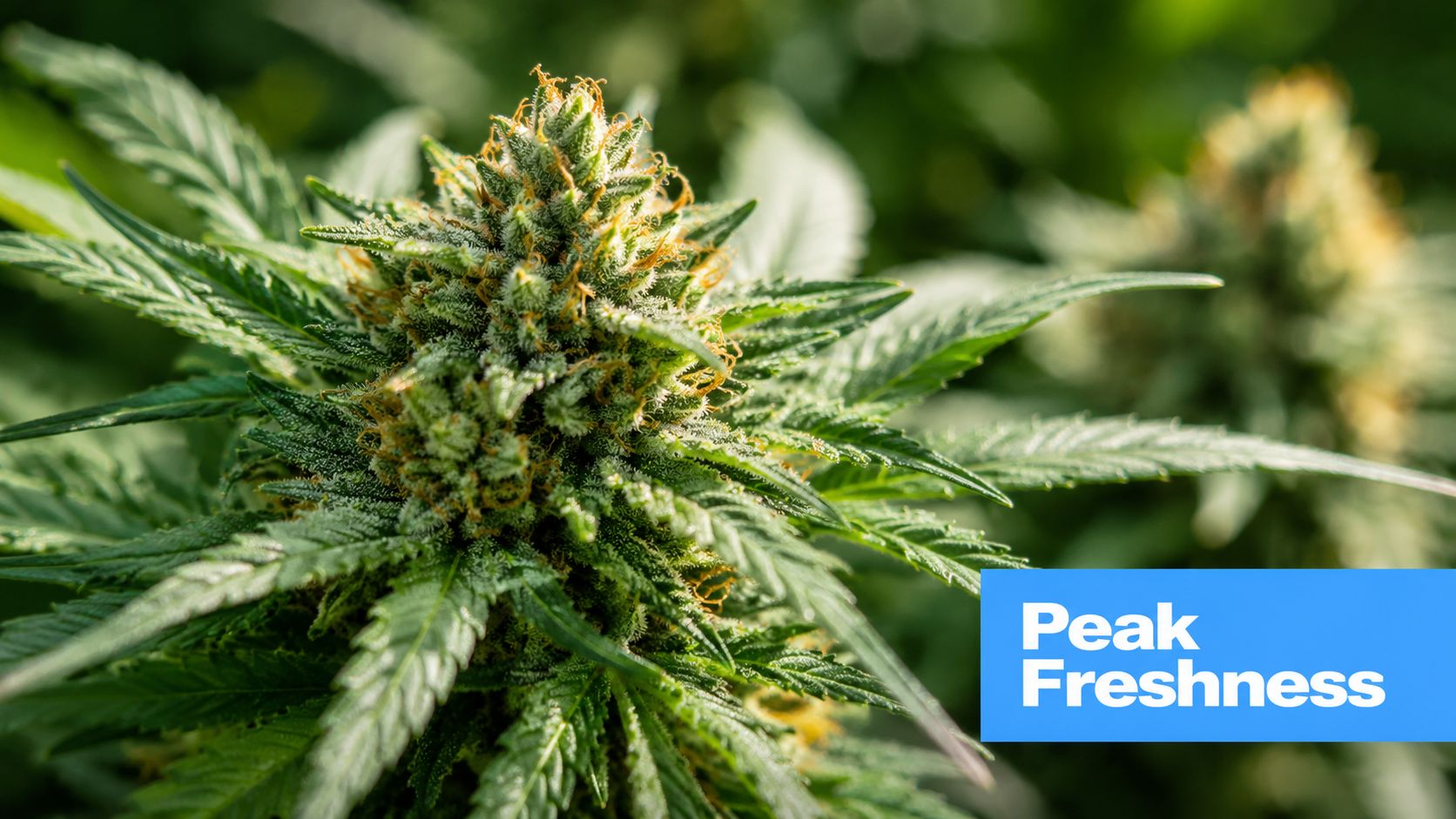
A good way to understand live resin is to think about the moment a cannabis plant is at its most expressive. The flower is sticky. The aroma is bright. The scent has that fresh-cut punch that can feel sharper and more layered than what you notice later in cured flower.
That “just harvested” character is what live resin is trying to hold onto.
For a lot of Long Island shoppers, the confusion often begins. The label says resin. Another says rosin. Another says distillate. One vape claims flavor. Another claims potency. If you've ever stood at the counter trying to decode all of that, you're not alone.
Why shoppers pay attention to live resin
Live resin has earned its top-shelf reputation because it's built around freshness first. Instead of letting the plant dry and cure in the usual way, processors freeze it right after harvest so more of the plant's original character makes it into the final concentrate.
That matters if you care about:
- Aroma: You want a product that smells closer to the living plant.
- Flavor: You notice the difference between a generic cart and a strain-forward one.
- Experience: You're looking for something fuller than straight THC alone.
- Product variety: You may see live resin in jars, dabs, vapes, and even gummies.
Live resin makes the most sense for people who want cannabis to feel more like a complete plant experience, not just a high number on the package.
Shoppers interested in premium brands often start noticing live resin offerings from names such as MFNY, Alien Labs, Rove, Connected, Heavy Hitters, Jetty, and Airo, alongside a much wider shelf of cannabis brands you'll see across New York menus, from 1937 and 40 Tons to Wyld, Wana, Pax, Rythm, Florist Farms, Hudson Cannabis, Old Pal, Stiiizy, Plug Play, Kiva, Camino, Jeeter, Good Green, Matter, Ayrloom, and many more.
The Flash Freeze That Defines Live Resin
A lot of confusion around live resin starts with one word: live. It does not mean the product is raw, unsafe, or somehow still active like a fresh plant on the branch. It means the cannabis was frozen right after harvest, before the usual drying and curing process could change its aroma and chemical profile.
That timing is the whole point.
Fresh cannabis contains volatile compounds, especially terpenes, that can fade or shift with heat, oxygen, and time. By freezing the plant material right away, processors aim to hold onto more of what made that cultivar smell and feel distinct in the first place, as explained in this breakdown of cured resin versus live resin.
Why freezing changes the starting material
The easiest way to understand live resin is to focus on the ingredient, not the final jar or vape. Standard concentrates usually begin with dried and cured flower. Live resin begins with fresh-frozen flower.
That difference may sound small, but it shapes everything downstream. Drying and curing are useful steps for many cannabis products, yet they also expose the plant to conditions that can alter delicate aromatic compounds. Freezing presses pause much earlier.
What happens during production
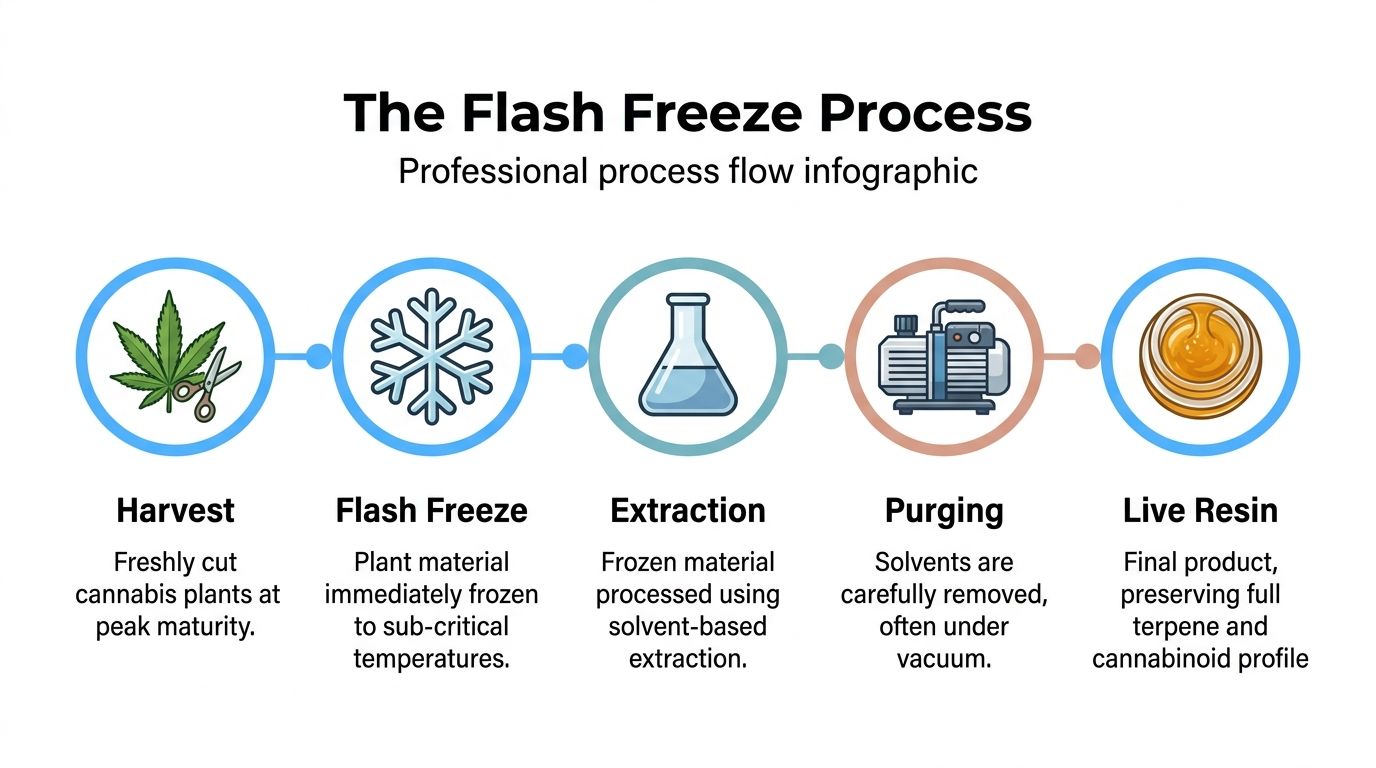
Here is the simple version:
- Harvest at peak maturity: The grower cuts the plant when its cannabinoid and terpene profile is where they want it.
- Freeze immediately: The flower goes into very cold storage instead of a drying room.
- Extract from fresh-frozen material: Processors use solvents, commonly hydrocarbons, to separate desirable compounds from the plant.
- Purge and test the extract: The concentrate is cleaned of residual solvents and sent through compliance testing before it reaches dispensary shelves.
That last step matters for shoppers in New York. Some people hear “solvent extraction” and assume the final product still contains harsh chemicals. In regulated products, the solvents are part of the manufacturing method, not something that should remain in unsafe amounts in the finished concentrate. Lab testing is what separates a properly made live resin from something you should never buy off-market.
Why the cold step matters so much
Freezing works like hitting pause on a fragile aroma profile. The plant is preserved closer to harvest condition, which is why live resin often appeals to shoppers chasing strain expression, not just THC content.
If you enjoy the science behind that, a foundational guide to cryogenics for labs gives useful background on why extreme cold is used as a preservation tool in technical settings.
For Long Island shoppers, the practical takeaway is simple. If a brand says live resin, ask one question first: was it made from fresh-frozen cannabis? If the answer is yes, you are looking at the process that gives live resin its top-shelf identity, and helps explain why options at Strong Strains can smell more vivid and more cultivar-specific than many standard extracts.
Unlocking Superior Flavor and Potency
People often ask what matters more with live resin: the THC or the flavor. The honest answer is both, but not equally for every shopper.
Live resin consistently tests within a 70% to 90% THC range, while standard flower typically falls around 15% to 25% THC. It also commands 33% of all concentrate sales in the US, according to this overview of live rosin, distillate, and live resin. That's a strong sign that consumers aren't treating it like a niche novelty.
Why it can feel more nuanced than a pure THC product
THC gets the headline, but live resin's appeal usually shows up in the details. Because it preserves a broader collection of plant compounds, many shoppers describe the experience as more layered than what they get from a stripped-down oil.
You'll hear this discussed as the entourage effect, which is a simple way of saying the plant's compounds may work together in a way that feels different from THC on its own. In everyday terms, that can mean a strain feels more expressive, more specific, and less one-note.
For example, a terpene-rich live resin vape may come across as:
- More strain-specific: One cart smells piney and sharp, another sweet and citrusy.
- More aromatic on exhale: The flavor lingers in a way distillate sometimes doesn't.
- More rounded in effect: Some shoppers say the experience feels fuller, not just stronger.
Potency is real, but flavor is the luxury
If you only want the highest number possible, you might end up shopping differently. But if you want a concentrate that carries more of the original plant identity, live resin starts to make sense fast.
That's why terpene-forward brands get attention in this category. A shopper looking at MFNY or Alien Labs, for example, is often chasing a profile, not just a percentage. The same goes for people who gravitate toward flavorful vape lines from Rove, Jetty, Airo, or Heavy Hitters.
The smartest way to read a live resin label is to treat THC as one data point, then ask what kind of aroma and strain character the extract is preserving.
Who tends to enjoy it most
Live resin usually clicks with three types of shoppers:
- Flavor-first consumers: They want cannabis that tastes like a cultivar, not generic vapor.
- Experienced users: They're comfortable with concentrates and want something expressive.
- Curious flower lovers: They like strain nuance and want a concentrate that still feels connected to the plant.
If that sounds like you, live resin isn't just stronger weed. It's a more complete concentrate.
Live Resin vs Other Cannabis Concentrates
Most menu confusion happens because concentrate names sound similar while the products behave very differently. The easiest way to sort them out is by looking at three things: starting material, extraction style, and what the final product emphasizes.
One useful place to branch out if you're comparing textures and forms is this guide to types of weed wax, which helps decode the bigger concentrate family.
Concentrate comparison at a glance
| Concentrate | Starting Material | Extraction | Key Feature |
|---|---|---|---|
| Live Resin | Fresh, flash-frozen cannabis | Solvent-based hydrocarbon extraction | Preserves fresh-plant flavor and aroma |
| Cured Resin, Wax, Shatter | Dried and cured cannabis | Usually solvent-based extraction | More traditional concentrate profile |
| Distillate | Cannabis oil refined for THC focus | Heavily refined extraction process | Potency-forward, often less strain-specific |
| Live Rosin | Fresh frozen flower or hash | Solventless heat and pressure | Fresh material plus solventless extraction |
| Rosin | Usually cured flower or hash | Solventless heat and pressure | Solventless concentrate with varied flavor depth |
Live resin versus cured concentrates
Wax, shatter, and other cured concentrates usually start with dried and cured flower. That doesn't make them low quality. It just means they're preserving a different stage of the plant.
Cured concentrates often feel familiar to long-time concentrate users. They can be potent and satisfying, but they usually won't aim for that same fresh-harvest expression live resin is known for.
If you're asking, “Why does this live resin smell louder than this wax?” the answer usually comes back to the starting material.
Live resin versus distillate
Distillate is the clean, simple option many people first encounter in vapes. It's common, convenient, and often chosen by shoppers who want a straightforward THC-forward effect.
Live resin vapes are different. They're usually selected by people who care more about cultivar character and richer flavor. If you compare a standard distillate cart to a live resin cart from Rove, the live resin version is typically the one chosen for a more plant-like, full-spectrum experience rather than a stripped-down oil profile.
Live resin versus live rosin
This is the comparison that confuses shoppers most.
Live resin is made from flash-frozen plants using solvent-based hydrocarbon extraction, while live rosin is made from fresh frozen flower or hash using only heat and pressure, as detailed in this guide to live resin extraction methods. The starting material can be similarly fresh, but the extraction method is the key divider.
Here's the simple shorthand:
- Live resin: Fresh-frozen plus solvents
- Live rosin: Fresh-frozen plus no solvents
That's why live rosin often attracts shoppers who specifically want solventless products, while live resin attracts shoppers chasing a premium balance of flavor, potency, and broader availability.
Which one should you choose
Your best fit depends on what you value most.
- Choose live resin if you want vivid flavor, strong potency, and lots of options in jars and vapes.
- Choose cured wax or shatter if you want a more familiar concentrate at a different price tier.
- Choose distillate if convenience and a simple THC-forward profile matter most.
- Choose live rosin if solventless extraction is your priority.
- Choose rosin if you like solventless concentrates but don't need the fresh-frozen angle.
If two products look similar on the shelf, ask the budtender what the extractor started with first. Fresh-frozen versus cured tells you a lot before you even get to the rest of the label.
How to Enjoy Live Resin Safely
The best first session with live resin is usually the one you barely overdo. This concentrate can hit hard, especially if you're used to flower and decide to treat a dab like a bowl pack. Don't do that.
Start small. Then give it time to show you what it does.
Dabbing for full flavor
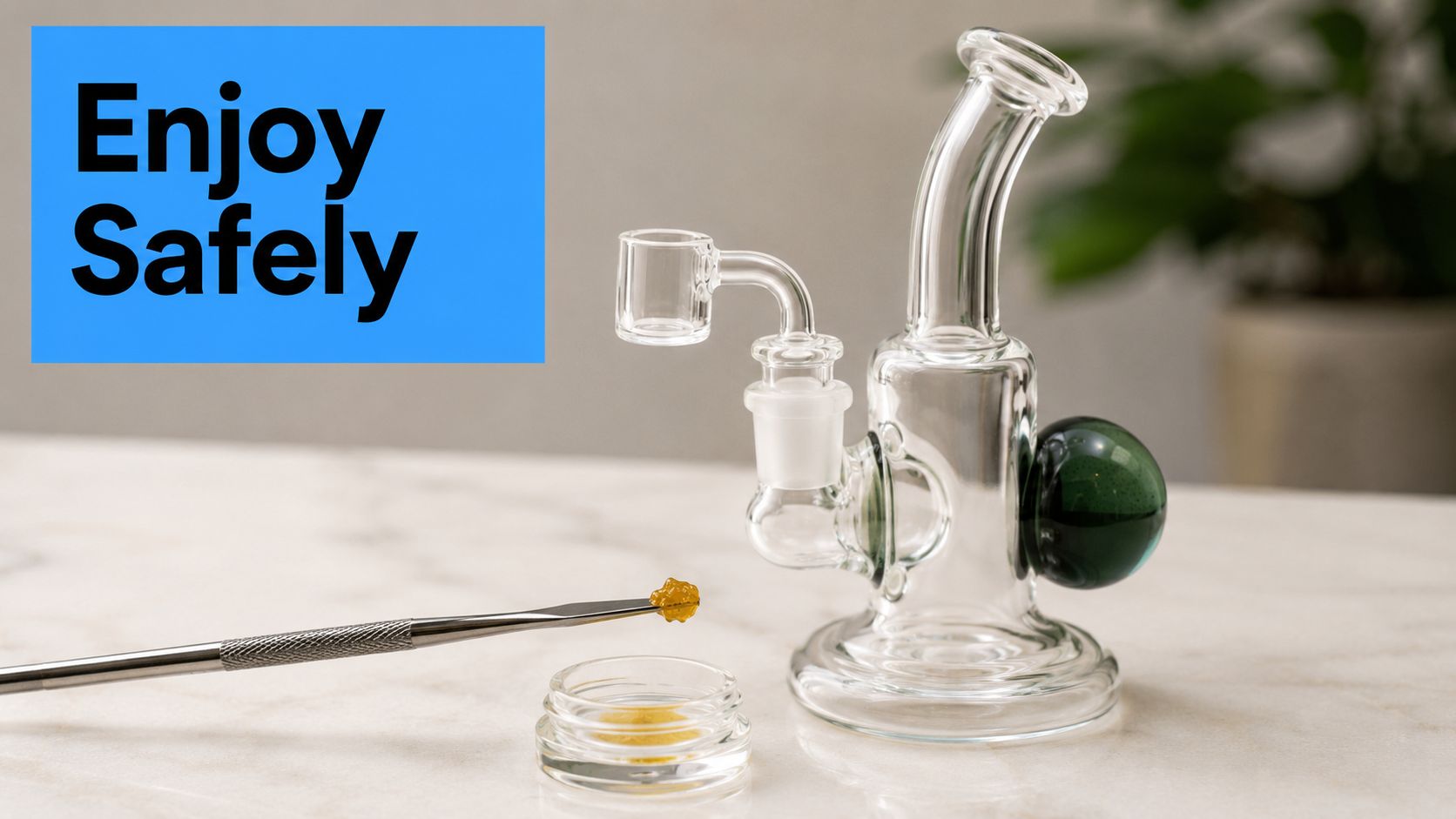
Dabbing is the classic way to enjoy live resin in concentrate form. You use a dab rig or e-rig, heat the surface, and vaporize a very small amount.
If you're new, think tiny. A little on the tip of a tool is enough to learn how your body responds. Devices from PUFFCO and similar e-rig brands are popular because they simplify the process and help users stay more consistent.
A smart beginner routine looks like this:
- Use a very small amount: Don't eyeball a big scoop.
- Inhale gently: You're sampling, not trying to prove anything.
- Wait before repeating: Concentrates can build quickly.
- Stay seated and hydrated: It helps keep the session comfortable.
Vape carts for convenience
Live resin cartridges are the easiest entry point for many adults. They're portable, cleaner to use, and less intimidating than a rig.
Shoppers comparing batteries can use this guide to box mod 510 setups to understand compatibility and hardware basics before picking up a cart. This is also where product examples matter. A live resin vape from Jetty, Airo, or Rove is usually chosen for convenience plus stronger flavor than a standard distillate cart.
Topping flower and low-pressure experimenting
Some people enjoy adding a small amount of live resin to flower in a bowl. That can deepen the session, but it can also raise intensity fast. If you're trying this for the first time, use less than you think you need.
This short video helps show the general format and handling style many shoppers are curious about before they buy:
Beginner advice: If you normally take one or two puffs of flower, treat live resin like a separate category. Smaller starting amounts lead to better first experiences.
One local option shoppers may encounter is Strong Strains, which carries products such as Rove Melted Diamond Live Resin Vaporizer selections and live resin gummies, alongside other concentrate formats and accessories for adults shopping in East Setauket.
Your Guide to Buying Quality Live Resin
You can feel the difference between an average concentrate and a well-made live resin the moment the jar opens. One gives off a clear, strain-specific aroma and looks fresh in the container. The other feels muted, generic, or poorly stored. That gap matters more when you are shopping in the premium tier, where live resin often ranges from $35–$100 per gram, according to this guide on live resin pricing and value.
A useful way to shop is to treat live resin like fresh food or fine fragrance. Freshness, handling, and packaging all shape the final experience. High THC alone does not tell you whether a product will taste expressive, feel balanced, or hold up after you bring it home.
What quality looks and smells like
Start with the product itself, then move to the label.
A strong live resin should have a distinct aroma that suggests the cultivar behind it. Citrus, gas, pine, fruit, or earth notes should smell intentional rather than vague. If the product seems flat or tired before you even use it, that is a sign to slow down and look closer.
Texture should match the format. Some live resin is saucy. Some looks sugary or crystalline. Some has a whipped, badder-like consistency. Variety here is normal. What you want to avoid is a product that looks dried out, badly separated, or carelessly handled.
Color can help too, but it is not a scorecard by itself. Clean-looking golden or amber tones are common, though shade can vary by strain and format. The safer move is to judge the whole picture: aroma, texture, packaging, and brand transparency together.
Then check the label. A regulated product should clearly identify the brand, product type, cannabinoid content, batch details, and testing information. If you want help reading those details, this guide to how a COA certificate of analysis works makes the label much easier to understand.
Shoppers in East Setauket may also want to compare how established brands present their live resin across categories. Names like Connected, Heavy Hitters, MFNY, Alien Labs, Rove, and Jetty often come up in this part of the shelf. Depending on format, you may also see Cookies, Botanist, Hudson Cannabis, Florist Farms, Good Green, Matter, Pax, Jaunty, Fernway, Plug Play, Stiiizy, and Ayrloom.
Is the premium worth it
That depends on what you want from cannabis.
If your goal is a simple, low-fuss THC product, another format may fit better. If you care about flavor, cultivar character, and a fuller expression of the plant, live resin often justifies the higher price. Craft beer is a useful comparison. A lighter domestic can do the job, but a carefully made craft pour gives you more aroma, more nuance, and more personality.
That is usually what Long Island shoppers are paying for here. Not only strength. Character.
Storage matters more than people think
Good storage protects the parts of live resin that make it special.
- Keep it cool: Heat can thin the texture and fade aroma.
- Seal it tightly: Air exposure gradually weakens terpene intensity.
- Store it in the dark: Light can wear down freshness over time.
- Use clean tools: A clean dab tool helps keep the jar uncontaminated.
If you buy a cart, storing it upright can help it perform more consistently. If you buy a jar, close it soon after each session. Small habits make a noticeable difference, especially with a concentrate built around fresh terpene expression.
Licensed retail also gives you a better chance of getting a product that has been stored, labeled, and tested properly before it ever reaches the shelf. For helpful context on the professional side of that process, this article on furnishing cannabis oil testing labs shows the kind of lab environment that supports careful cannabis testing.
For shoppers visiting Strong Strains, the smartest approach is simple. Smell profile, texture, label clarity, and testing information should all line up. When they do, live resin feels less mysterious and more like what it is. A top-shelf cannabis experience chosen with confidence, right here in East Setauket.
Lab Testing and Responsible Use on Long Island
A lot of first-time shoppers hear “butane” or “propane” and worry the final product must still be full of solvent. That's the wrong way to think about legal, regulated live resin.
Lab-tested products from licensed dispensaries use closed-loop systems and vacuum purging to remove solvents to compliant levels, which is why reputable live resin products are considered safe for consumption, as explained in this article on live resin safety and solvent removal.
Why licensed retail matters
The difference isn't just branding. It's process, testing, and accountability. Licensed dispensaries work within rules that require product verification before items reach the shelf.
If you want a better sense of the physical infrastructure behind professional testing environments, this piece on furnishing cannabis oil testing labs gives useful context for how serious lab spaces are built to support compliant workflows.
For shoppers who want to read labels with more confidence, this guide to the COA certificate of analysis can help you understand what you're looking at when you review test results.
Buy live resin from licensed dispensaries, check the lab information, and remember that cannabis in New York is for adults 21+. Quality starts long before the first hit.
If you're shopping for live resin on Long Island and want help comparing jars, carts, or other terpene-forward products, browse Strong Strains or stop by the East Setauket dispensary for guidance on lab-tested options, pickup, and local delivery.