You're probably here because weed in New York feels easier to access than ever, but also harder to understand. You walk into a dispensary menu and suddenly you're staring at flower, vapes, gummies, concentrates, tinctures, THC percentages, CBD ratios, and strain names that sound like band names, dessert menus, or both.
That confusion is normal.
Cannabis has moved from whispered recommendations and guesswork into a legal retail world where adults can shop with more transparency, more product formats, and more choice. It also carries real responsibility. Cannabis is the most commonly used federally illegal drug in the United States, with 52.5 million people, about 19% of Americans, reporting use in 2021, and the World Health Organization estimates 147 million people consume it annually worldwide in its global cannabis overview.
If you live on Long Island, that bigger picture matters in a very local way. Legal access means you can be choosy. You can ask better questions. You can stop treating weed like a mystery and start treating it like any other adult purchase where quality, labeling, and fit matter.
Welcome to the New World of Cannabis
For a lot of adults, legal cannabis feels like stepping into a category they've heard about for years but never learned in a clear, practical way. Some people used weed years ago and are surprised by how many formats now exist. Others are brand new and just want something approachable that won't turn the evening sideways.
That's why the smartest way to shop is to slow down and build a basic framework first.
Why weed feels different now
The old way of talking about cannabis was loose and informal. People mostly traded in stories. “This one's strong.” “That one's mellow.” “Try this at night.” That's not enough anymore when shelves may include brands like Ayrloom, Camino, Wyld, Wana, MFNY, Pax, Stiiizy, Rove, Jaunty, Kiva, Jetty, Botanist, Florist Farms, Hudson Cannabis, Rythm, Matter, OFF Hours, Heavy Hitters, Jeeter, Alien Labs, Connected, Cookies, Dogwalker, Old Pal, The Botanist, Airo, Turn, Brass Knuckles, Presidential, Runtz, 1937, 40 Tons, 6 Point Cannabis, Alchemy Pure, American Hash Makers, Blazy Susan, Bic Lighter, PUFFCO, Raw Paper, Puff, Glass Pipes, Hand Pipe, Grinders, and many more.
More choice is good. More choice also means more decision points.
Practical rule: Don't start by asking what's “best.” Start by asking what experience you want.
The local New York angle
On Long Island, legal cannabis isn't just about convenience. It's about moving away from vague potency, uncertain sourcing, and unclear dosing. In a licensed market, you can compare product formats, look at testing information, and ask for guidance that matches your tolerance and goals.
That changes the role of the buyer. You're not just picking up weed. You're choosing a format, a potency range, and a style of experience.
A simple way to consider this is:
- If you want ritual and aroma, flower may appeal to you.
- If you want discretion, a vape might fit better.
- If you want longer-lasting effects, edibles often enter the conversation.
- If you want precision, tinctures can be useful.
- If you want a non-inhaled body-focused option, topicals may make more sense.
That's the new world of cannabis. Better access, better information, and higher expectations.
Understanding Cannabinoids THC and CBD
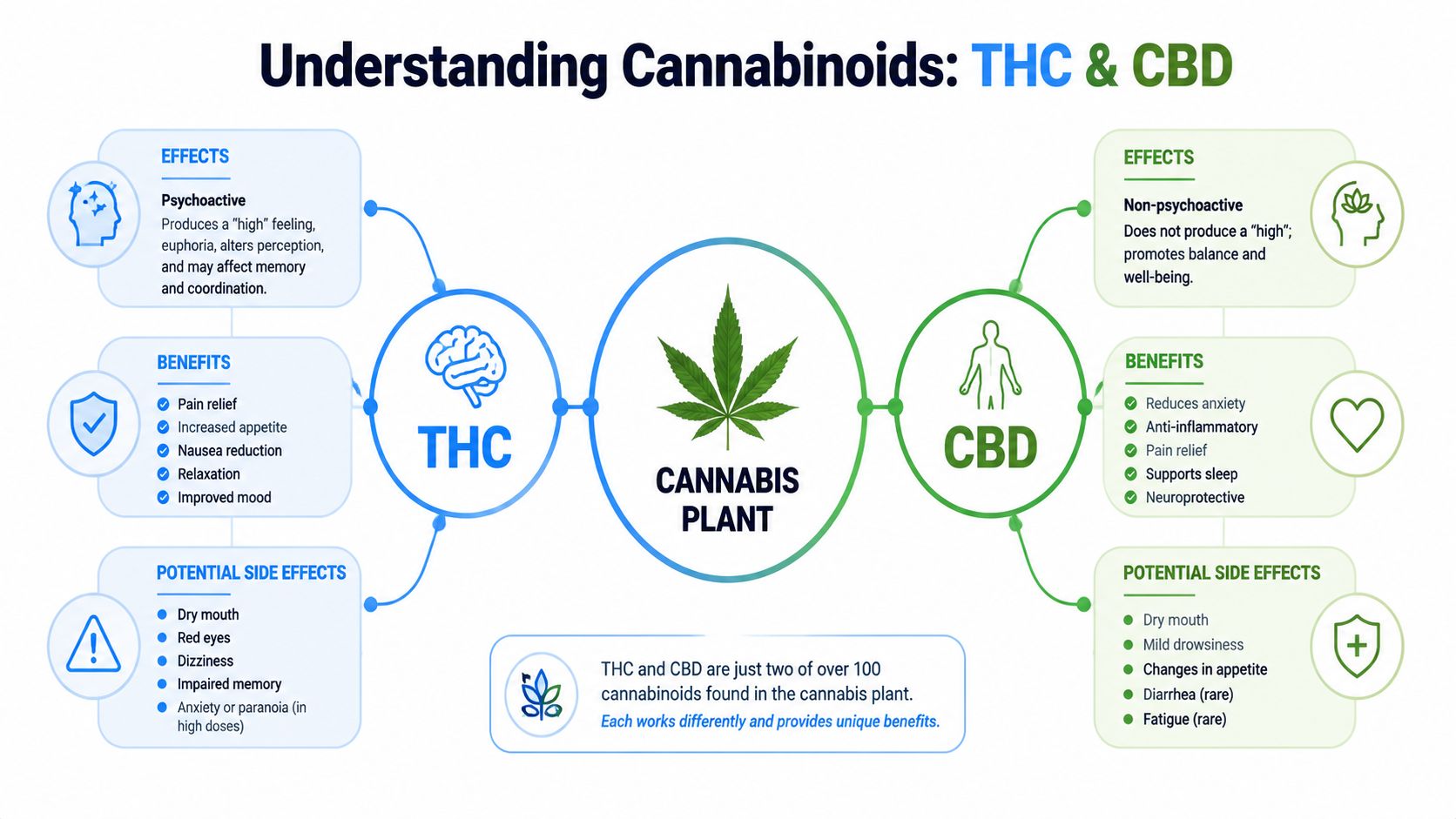
If cannabis products feel confusing, cannabinoids are usually the missing piece. They're the active compounds in the plant that shape how a product feels. The two names you'll see most often are THC and CBD.
THC is the part most people mean when they say weed
THC is the cannabinoid most closely linked with the classic cannabis high. Depending on the product and the person, that can mean euphoria, sensory enhancement, mood shift, appetite changes, or deep relaxation.
A simple analogy helps. THC is often the main driver. It tends to push the experience forward.
CBD behaves differently.
CBD usually plays a different role
CBD doesn't create the same intoxicating effect people associate with THC. Some shoppers look for it because they want a product that feels more balanced, gentler, or less heady. Others prefer THC-forward products and treat CBD as optional.
That's why labels matter. A product with strong THC and little CBD may feel very different from one that includes a more balanced cannabinoid profile, even when the package looks similar at first glance.
Potency now requires more respect
Modern cannabis isn't the same category many adults remember from years ago. The CDC notes that modern cannabis concentrates can reach THC concentrations of 90 to 95%, compared with the 15 to 20% average in historical studies, and its cannabis facts and stats page also notes that higher potency raises the risk of cannabis use disorder, especially for people who start before age 18.
That doesn't mean every high-potency product is automatically wrong for every adult consumer. It does mean you shouldn't treat all cannabis products as interchangeable.
Potency tells you how concentrated a product is. It doesn't tell you whether that product is the right fit for your body, your plans, or your experience level.
What to look for on a label
When you're scanning a menu or package, focus on a few basics first:
| Label element | What it helps you understand |
|---|---|
| THC content | How potent the psychoactive side may be |
| CBD content | Whether the formula may feel more balanced |
| Product format | How you'll consume it |
| Serving information | How to avoid taking too much too fast |
If you only remember one thing, make it this: THC answers “how strong might this be,” while CBD helps answer “what kind of balance does this formula aim for.”
Once that clicks, product labels stop looking like technical clutter and start becoming useful shopping tools.
Beyond Indica and Sativa The Role of Terpenes
A lot of people still shop by one shortcut. Indica for relaxing. Sativa for uplifting. Hybrid for somewhere in the middle.
It's not useless as casual language, but it's far too simple if you want a reliable read on how a product may feel.
Why the old labels can mislead you
Those labels often blur together in real retail settings. Two products both called hybrids can feel very different. Two products labeled indica can produce very different body and mental effects. Genetics, cannabinoid content, terpene profile, and product format all matter.
That's where terpenes enter the conversation. Terpenes are aromatic compounds that contribute scent and flavor. They're part of why one flower smells citrusy, another earthy, and another floral or gassy.
Common examples shoppers hear about include:
- Myrcene, often described in earthy or musky profiles
- Limonene, commonly associated with citrus aromas
- Linalool, often linked with floral notes
Brands like Alien Labs, Cookies, Connected, Florist Farms, Hudson Cannabis, and Rythm may all feature products where aroma becomes part of the selection process, not just an afterthought.
Terpenes matter, but not in the oversimplified way people claim
Here's where cannabis education needs more honesty. A lot of marketing suggests terpenes alone determine the high. That claim goes too far. Research discussed in this PubMed record on terpenes and cannabinoid receptor activity indicates terpenes do not significantly alter how THC binds to cannabinoid receptors, which means the “entourage effect” is more complex than many menus suggest.
So what should you do with terpene info?
Use it as one clue, not the whole answer.
Smell and terpene profile can help you narrow preferences. They can't replace cannabinoid content, dose, format, or your own body's response.
A better shopping approach looks like this:
- Start with the effect you want
- Check the cannabinoid profile
- Notice the terpene notes
- Choose the format that matches your pace and setting
That's a more adult, more accurate way to buy weed than relying on old category labels alone.
A Guide to Cannabis Product Formats
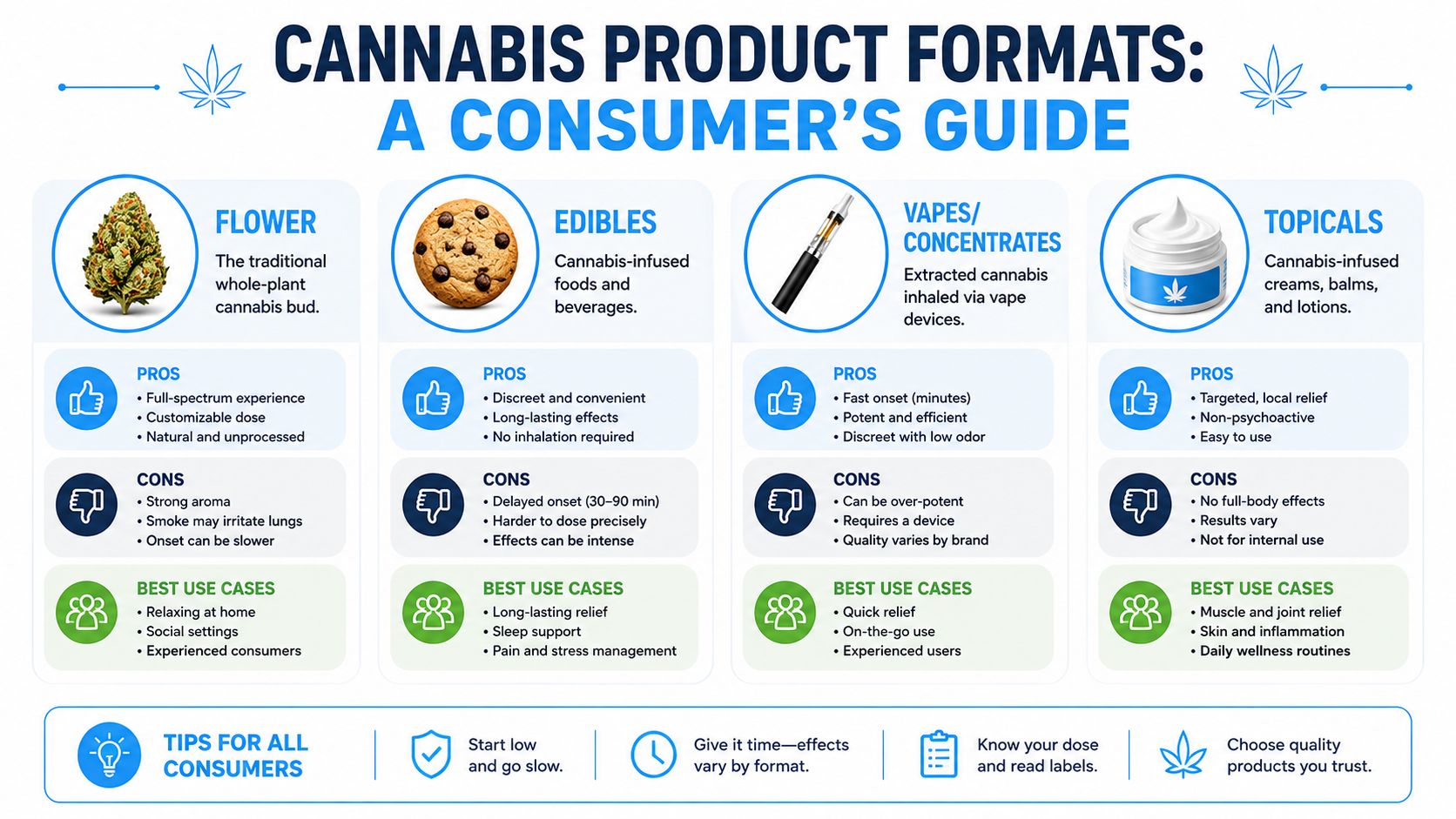
Most shopping mistakes happen before the first puff or bite. They happen when someone buys the wrong format for their comfort level, schedule, or expectations.
Flower
Flower is the classic cannabis bud. You can smoke it in a pre-roll, pack it into a pipe, or use it in a dry herb setup. Many adults like flower because it feels familiar, expressive, and easier to “read” in smaller increments.
Flower also tends to appeal to shoppers who enjoy aroma, ritual, and strain exploration. If you like comparing profiles from brands like Florist Farms, Hudson Cannabis, Matter, or Old Pal, flower is often where those differences feel most tangible.
Good fit for: people who want a traditional weed experience and quick feedback from small amounts.
Vapes
Vapes package cannabis oil into cartridges, disposables, or pod systems. Pax, Stiiizy, Airo, Fernway, Jaunty, Jetty, Rove, Dompen, Brass Knuckles, and Turn are the kinds of names shoppers often recognize in this lane.
The main appeal is convenience. Vapes are portable, discreet, and simple to use. For some adults, that makes them easier to fit into a busy evening than preparing flower.
Tradeoff? They can be easy to overdo if you keep hitting them casually without checking in with yourself.
Edibles
Edibles include gummies, chocolates, beverages, and other infused products from brands such as Wyld, Wana, Camino, Kiva, Gron, Ayrloom, Tune | Infused Seltzers, Weed Water, and Incredibles.
Edibles don't feel like smoking or vaping. The experience comes on later and can last longer. That's exactly why some people love them and why others get into trouble with them.
Best use case: when you want a smoke-free option and you have time to be patient.
Concentrates
Concentrates are more potent extracts such as wax, badder, resin, rosin, or similar forms. Brands shoppers may see in this category include MFNY, American Hash Makers, DTF Hash Co., Olios, Moonlit Hash Co, and UrbanXtracts.
These products generally suit experienced consumers better than first-timers. The effects can arrive fast, and the margin for taking too much can feel smaller if you don't already know your tolerance.
Tinctures and topicals
Tinctures are liquid cannabis products usually taken in measured drops. Many adults like them because they allow more deliberate dosing and don't require inhalation. If you want a slower, more controllable learning curve, tinctures can be a practical entry point. For a deeper look at how measured intake works across products, this cannabis guide is a useful next read.
Topicals include creams, balms, and similar products applied to the body rather than inhaled or eaten. They attract shoppers who want a cannabis product that fits into a body-care routine instead of a classic recreational session.
A quick comparison
| Format | Why people choose it | Common caution |
|---|---|---|
| Flower | Familiar, expressive, flexible | Smell and inhalation aren't for everyone |
| Vapes | Discreet and convenient | Easy to take repeated hits too quickly |
| Edibles | No smoke, longer experience | Delayed onset can lead to overconsumption |
| Concentrates | Very strong, fast-acting | Better suited to experienced users |
| Tinctures | Measured and low-fuss | Requires patience and label reading |
| Topicals | Body-focused routine option | Different goal than a classic high |
The right format isn't the strongest one. It's the one that matches how you want your evening to go.
Dosing Safely and Responsible Consumption
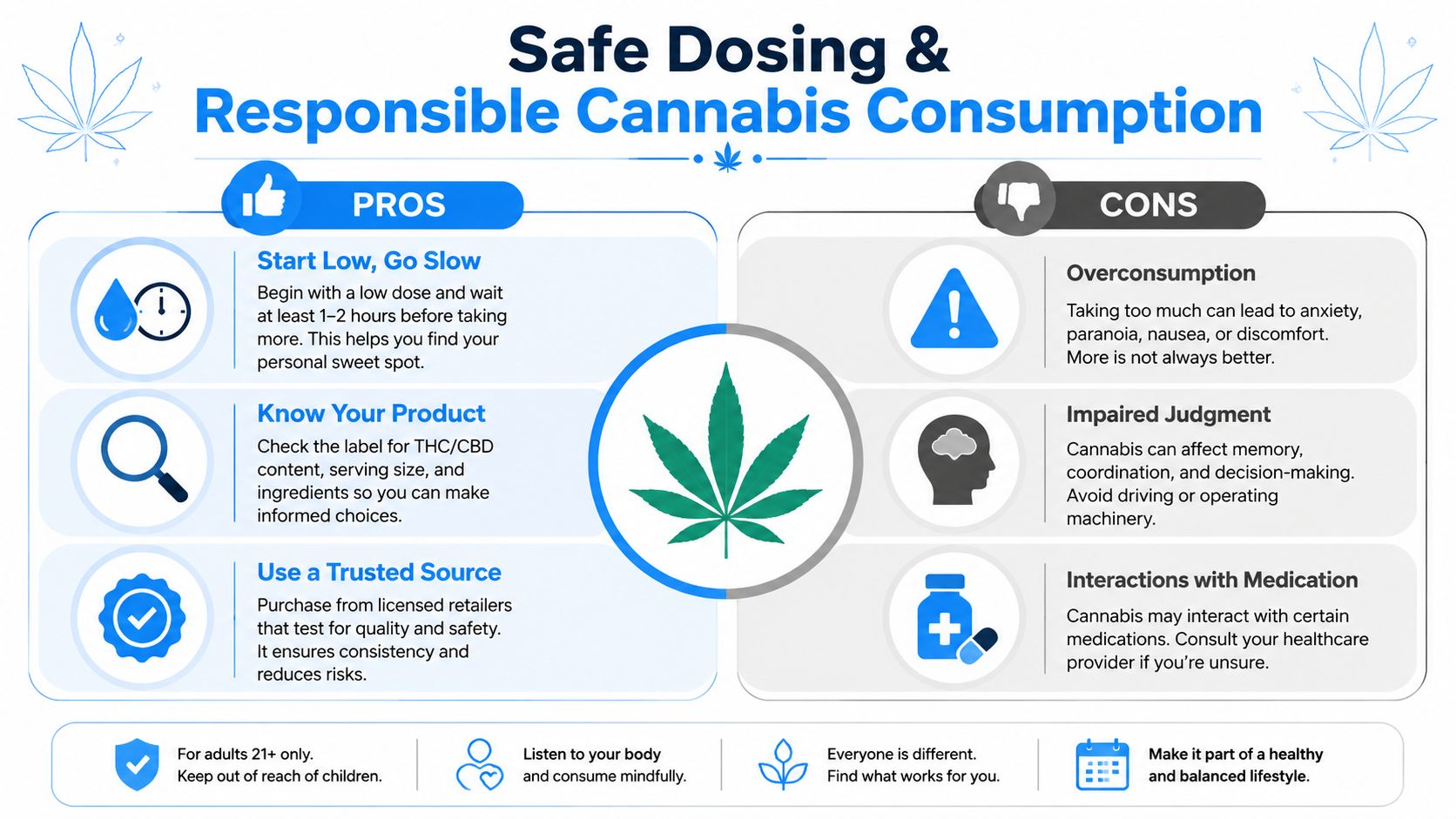
The most common beginner mistake with weed isn't choosing the wrong brand. It's taking more before the first dose has had time to fully land.
That's why the smartest dosing advice is still the simplest. Start low and go slow.
Why caution matters more with some products
Inhaled cannabis tends to give feedback faster. You usually have a better sense of what's happening before you decide whether to take more. Edibles are different. The delay is where people get impatient.
That patience isn't optional. A product can feel mild at first and then become much more noticeable later.
Label accuracy is a real safety issue
This is also why licensed, tested cannabis matters. A study of cannabis edibles found major gaps between labeled and actual THC content, with some products containing up to 5,491 mg more than advertised in the PubMed abstract on edible labeling discrepancies. That isn't a minor packaging issue. It's a consumer safety problem.
If you're buying weed, accurate testing and clear labeling are part of the product. They're not extra perks.
Use this filter: if you can't trust the label, you can't dose responsibly.
A practical way to approach your first session
Try this simple checklist before you use any new cannabis product:
- Pick one format only: Don't combine a vape, edible, and pre-roll the first time you try something.
- Choose a calm setting: Don't test a new product right before a packed social event.
- Read the package fully: Check serving guidance, cannabinoid content, and instructions.
- Pause before redosing: Give the product time to show you what it does.
- Skip mixing with alcohol: If you're still learning your tolerance, keep the experiment cleaner.
For shoppers who prefer measured intake, a tincture dosage calculator can help translate label information into a more practical serving plan.
Responsible use also means knowing your own context
Cannabis affects people differently. Body size, metabolism, experience, what you've eaten, and the product format all change the outcome. So does your environment.
That's why “my friend took this and loved it” isn't useful dosing advice. Your job is to learn your own pace, not borrow someone else's.
Navigating New Yorks Cannabis Laws
Buying weed legally in New York is straightforward once you know the core rules. The key is to focus on the parts that affect real shopping and real day-to-day behavior.
Who can buy and how much
Under New York law, adults 21+ can purchase up to 3 ounces of cannabis flower or 24 grams of concentrated cannabis in a single transaction from a licensed dispensary, according to the New York purchase limit summary from MPP.
That's the headline number most shoppers need to know before placing an order or walking into a store.
What Long Island shoppers should keep in mind
Legal access doesn't mean a free-for-all. You still need to think about where you consume, how you transport products, and whether the product came from a licensed source.
A few practical reminders help:
- Bring valid ID: Retail cannabis is for adults 21 and older.
- Keep purchases sealed when traveling home: Treat it like any other regulated adult product.
- Use common sense about location: Private, appropriate settings are the safest way to avoid problems.
- Buy from licensed operators: That supports tested inventory and legal accountability.
This short explainer gives a helpful visual overview before you head out.
Home cultivation is separate from retail shopping
Some adults also ask whether they can grow at home. New York does allow adult home cultivation under specific rules, including plant limits and security requirements, but retail shopping and home growing are separate issues. If you're mainly trying to buy weed legally on Long Island, your daily concerns are simpler: age, limits, ID, and licensed purchasing.
Buying legally is about more than avoiding risk. It gives you a clearer record of what you bought, what's in it, and how to use it responsibly.
How to Choose Your Perfect Product at Strong Strains
You walk into a Long Island dispensary after work, scan the menu, and suddenly every option starts to blur together. Flower, gummies, vapes, tinctures, pre-rolls. The easiest way to cut through that noise is to shop with a simple filter: your goal first, your product second.
Start with your goal, not the menu
A smart purchase starts with one question: what do you want this product to do for your evening?
If the answer is “help me settle in and relax,” flower with a gentler profile, a low-dose edible, or a carefully measured tincture may fit well. If the answer is “I need something low-key and portable,” a vape might make more sense. If you want a body-focused format without inhaling, topicals deserve a look.
That approach keeps strain names and flashy packaging in their proper place. Helpful, but not the main decision-maker.
Then narrow by experience level
Shopping for cannabis works a lot like ordering a drink. Someone new to wine does not need the boldest bottle on the list. They need something approachable, clearly labeled, and easy to enjoy. Cannabis works the same way.
Use this quick framework:
- New to weed: choose lower-intensity formats, clear dosing, and slower onset expectations
- Occasional user: aim for balance instead of chasing the highest THC number
- Experienced shopper: compare terpene profiles, potency ranges, and format differences more closely
Brand preferences can help once you know your lane. Some Long Island shoppers want classic flower from names like Hudson Cannabis or Florist Farms. Others prefer edible brands such as Wyld, Wana, Camino, or Kiva. Some head straight for vape brands like Pax, Stiiizy, Rove, or Airo, or concentrates from MFNY.
Use the paperwork, not just the package front
The front label gives you the headline. The testing paperwork gives you the full story.
If you want to know what is in a product, how potency is reported, and what safety checks to look for, this guide to the COA certificate of analysis is a useful place to start. It helps turn unfamiliar lab terms into something practical you can use while shopping.
Strong Strains offers lab-tested adult-use cannabis for Long Island shoppers, with in-store pickup and local delivery, plus categories that include flower, vapes, pre-rolls, edibles, concentrates, tinctures, topicals, and accessories.
A concierge mindset beats random trial and error
The best budtender conversations are specific. “I want the strongest thing” does not tell you much. “I want something manageable for a quiet night at home” gives a budtender a real starting point.
Try describing your needs in plain language:
- I want something for a quiet night in
- I don't want to smoke
- I'm new and want something manageable
- I prefer citrusy or earthy profiles
- I want a product I can use in a measured way
That is how shopping starts to feel less like guesswork and more like having a local cannabis concierge.
Your best product is not the one with the loudest name or the highest number on the label. It is the one that matches your goal, your tolerance, your schedule, and the way you want to consume. For Long Island residents learning the legal New York market, that kind of match matters more than hype ever will.
If you're ready to shop more confidently, browse Strong Strains for lab-tested cannabis on Long Island, then visit for pickup or place a local delivery order. If you'd rather talk it through first, stop by and ask questions. A clear recommendation based on your goals will take you further than guesswork ever did.