You're probably here for one of a few reasons. Maybe you've driven past legal dispensaries on Long Island and thought, “Okay, but what do I buy?” Maybe a friend handed you a gummy, a pre-roll, or a vape and you realized the legal market looks nothing like the old guesswork. Or maybe you already know what you like, but you want cleaner products, clearer labels, and less trial and error.
That's where a solid /Cannabis guide matters. The legal market gives you more choice, but choice without context can get frustrating fast. A jar with a high THC number doesn't automatically mean it's right for your night. A gummy isn't the same experience as a pre-roll. A live resin vape from Jetty, Pax, Fernway, or Rove hits differently than a fruit chew from Wana, Kiva, Camino, Wyld, Gron, or Lost Farm.
Long Island shoppers need practical answers, not vague hype. You want to know what works for winding down after the LIE, what travels well for a beach weekend, what feels social without knocking you flat, and what's worth buying from brands like Cookies, Alien Labs, Rythm, MFNY, Jaunty, Florist Farms, Hudson Cannabis, Ayrloom, Stiiizy, Heavy Hitters, Dogwalker, Jeeter, Lowell Herb Co, Presidential, Turn, Plug Play, Botanist, Good Green, Matter, LivWell, and Connected.
Welcome to the World of Cannabis on Long Island
A lot of first visits start the same way. Someone walks in, looks at the flower wall, the pre-rolls, the gummies, the cartridges, and then asks the key question. “What's good if I want to relax, but still function tomorrow?” That's a smart question, and it's a very Long Island question. People here aren't usually shopping for novelty alone. They want something dependable.
Cannabis is mainstream now, but that doesn't mean it's simple. It's still one of the most widely consumed substances in the country. The United Nations reports that about 158.8 million people worldwide use cannabis, and an estimated 52.5 million Americans reported using it in 2021 according to the CDC's cannabis facts and statistics page. Those numbers tell you cannabis isn't niche. They don't tell you how to choose the right product for your body, schedule, or tolerance.
What Long Island shoppers usually want
A lecture on cannabis history isn't what's needed. Help making a good call today is.
- New users usually want something approachable, predictable, and easy to dose.
- Experienced smokers often want stronger flower, cleaner concentrates, or a better terpene profile.
- Wellness-focused shoppers tend to ask about tinctures, low-dose edibles, topicals, or balanced products.
- Busy adults want convenience. That usually means pre-rolls, vapes, or gummies they can fit into a routine.
There's also a big trust issue. Legal cannabis should feel clearer than the old market, not more confusing. If a package lists cannabinoids, terpenes, batch testing, and format details, you should know how to use that information.
Cannabis shopping gets easier when you stop asking “What's the strongest?” and start asking “What fits the experience I want?”
Why local context matters
Long Island isn't a generic market. People shop differently here than they do in dense city neighborhoods or resort towns. Many customers are balancing work, family, commute time, and privacy. That changes what they buy. A Dogwalker mini pre-roll for a short evening session serves a different purpose than a Kiva edible for a slow weekend night or an MFNY concentrate for someone who already knows their tolerance.
That's also why broad internet advice often misses the mark. The useful version of a /Cannabis guide connects plant science, product formats, and New York rules to the actual shelf in front of you. That's what makes the difference between a random purchase and one you'd gladly buy again.
The Anatomy of a High Understanding Cannabinoids and Terpenes
The easiest way to understand cannabis is to treat it like a recipe, not a single ingredient. Cannabinoids set the base effect. Terpenes shape the mood, aroma, and character of that effect.
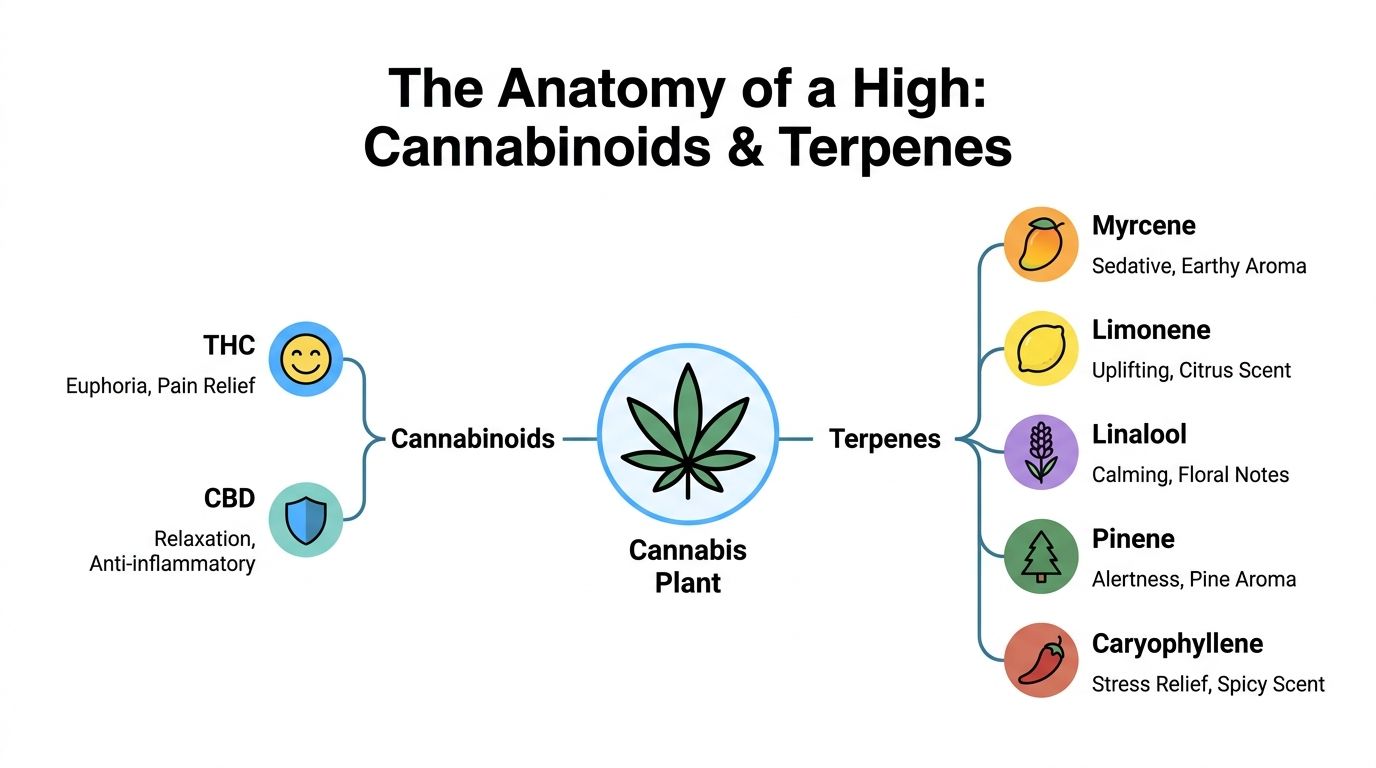
If THC is the main spirit in a cocktail, terpenes are the citrus peel, herbs, smoke, and spice that make one drink feel bright and lively while another feels heavy and grounding. Two products can sit close on THC and still land very differently.
Cannabinoids do the heavy lifting
Most shoppers start with THC and CBD, and that's fine. THC is the cannabinoid most associated with euphoria and intoxication. CBD usually enters the conversation when people want a softer, less heady feel or are looking for balance.
That said, focusing only on THC can steer you wrong. A flower from Cookies or Connected with a rich terpene profile may feel more complete and enjoyable than a higher-number jar that tastes flat and burns harsh. The same goes for vapes. A live resin cart from Alien Labs, Jetty, or Heavy Hitters often feels more strain-specific than a generic distillate pen because more of the plant's character comes through.
Terpenes explain a lot of the difference
Terpenes are aromatic compounds found in cannabis and many other plants. They're a big reason one strain smells like citrus while another leans gassy, piney, floral, earthy, or peppery.
Here's the practical version customers can use:
- Myrcene often shows up in heavier, more relaxing profiles.
- Limonene is commonly associated with bright, citrus-forward strains that many people reach for during the day.
- Linalool tends to appear in calmer, softer aromatic profiles.
- Pinene is often linked to fresh, piney strains that feel more alert.
- Caryophyllene stands out for its spicy, peppery edge and is often sought by customers looking for a grounded effect.
Practical rule: Don't shop flower or vapes by THC alone. Check the terpene profile if you want a better guess at how the product may feel.
Why labels don't tell the whole story
Cultivation and post-harvest choices can affect the final product in ways many shoppers never see. Lighting, nutrients, plant stress, and batch handling can all shift cannabinoid and terpene expression. Research on cultivation conditions shows that environmental decisions can influence potency, terpene content, and consistency, which is one reason batch-specific lab results matter so much for retail products, as discussed in Cannabis Business Times on cultivation data points.
There's also a flavor trade-off. Some growing choices may push potency, but they don't always improve overall quality. A jar that smells alive, burns clean, and tests consistently across batches usually gives people a better experience than one headline number ever could.
A simple way to shop smarter
When you're comparing products, use this quick filter:
| What to check | Why it matters |
|---|---|
| Cannabinoid profile | Gives you the broad effect range |
| Terpenes | Helps predict mood, aroma, and feel |
| Format | Changes onset and duration |
| Brand consistency | Lowers the odds of a disappointing repeat buy |
| Batch testing | Adds transparency and safety |
That's the difference between buying cannabis randomly and choosing with intent.
Finding Your Perfect Format A Guide to Cannabis Products
Formats matter as much as strain. The same general profile can feel very different depending on whether you smoke it, vape it, eat it, or use it under the tongue.
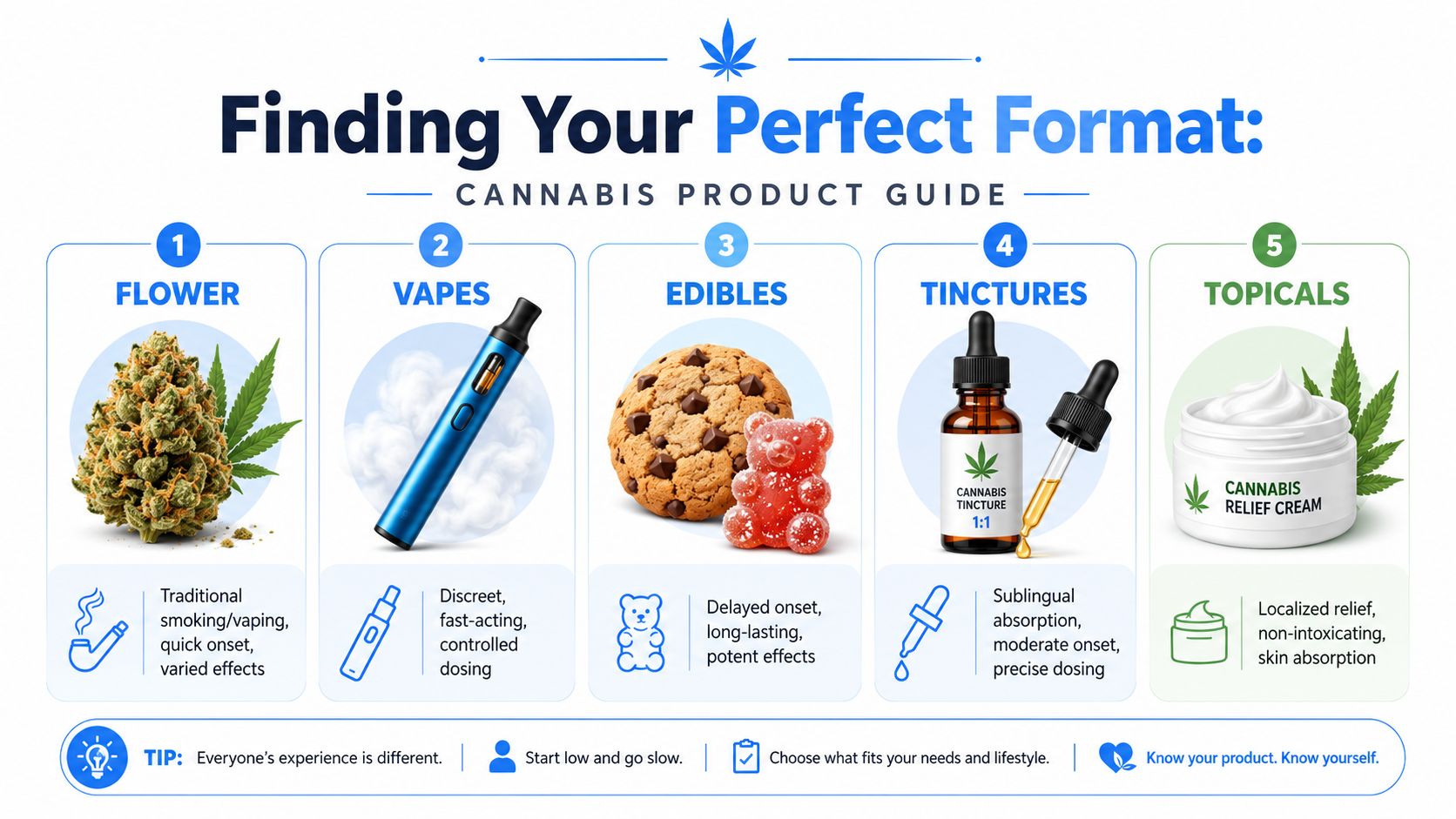
A lot of people discover their ideal cannabis product by accident. They buy gummies when they really wanted something fast-acting, or they choose a vape when they actually wanted a long, slow body effect. It's easier when you compare formats side by side.
The fast read on each format
| Format | Best fit | What to expect |
|---|---|---|
| Flower | Traditional users, flavor chasers, strain explorers | Quick onset, hands-on ritual, wide strain variety |
| Pre-rolls | Convenience-first shoppers | Ready to use, no grinding or rolling |
| Vapes | Discreet, portable use | Fast onset, easy to control pulls |
| Edibles | Longer-lasting sessions | Slower onset, more patience required |
| Tinctures | Precision and flexibility | Measured dosing, easier to titrate |
| Topicals | Localized use | Applied to skin, non-smoking option |
| Concentrates | Experienced users | High potency, stronger effect profile |
The market clearly values convenience. In the U.S., pre-rolls drove over $4.1 billion in revenue and saw nearly 394 million units sold between June 2023 and June 2024, according to industry statistics compiled here. That lines up with what budtenders see every day. People like products that remove friction.
Flower and pre-rolls
Flower is still the benchmark for a lot of shoppers. It gives you the full ritual. You can inspect structure, aroma, moisture, and grind quality. It's a strong choice for people who care about terpene expression and want control over how much they consume in a session.
Pre-rolls are the easier entry point. Dogwalker, Jeeter, Presidential, Lowell Herb Co, Stone Road, and similar brands appeal to people who want the flower experience without the setup. They're also useful if you're trying a strain before committing to a larger jar.
- Good for: trying strains, social sessions, easy evenings
- Less ideal for: shoppers who dislike smoke or want very exact dosing
For customers who want more detail before buying carts or disposable pens, this guide to cannabis vapes is a practical next read.
A quick visual helps if you're deciding between common formats.
Vapes, edibles, and tinctures
Vapes solve different problems than flower. They're more discreet, more portable, and easier for many adults to fit into a routine. A Pax pod, Fernway cart, Jaunty vape, Turn disposable, Plug Play device, or Heavy Hitters cartridge lets you take one draw, pause, and assess. That control is a big reason people keep them in rotation.
Edibles reward patience. Wana, Kiva, Camino, Wyld, Lost Farm, Gron, and Ayrloom all appeal to shoppers who want a smoke-free option and a longer-lasting experience. The mistake people make is taking more before the first dose has fully landed.
If you're new to edibles, impatience causes more rough nights than potency does.
Tinctures sit in the middle. They're quiet, measured, and often underrated. If someone wants a format that feels less like smoking and less like committing to a long edible ride, tinctures usually deserve a serious look.
Concentrates and topicals
Concentrates are for shoppers who already know they like intensity. Rosin, resin, badder, wax, and similar products from brands like MFNY, American Hash Makers, DTF Hash Co., Moonlit Hash Co, Olios, and UrbanXtracts can deliver strong flavor and potency, but they aren't where most beginners should start.
Topicals fill a different lane entirely. They're practical for people who want a cannabis-adjacent routine without smoking or vaping. Balm, lotion, or transdermal-style options don't belong in the same decision bucket as flower or edibles.
That's the broader lesson. Don't ask which product type is “best.” Ask which one fits your night, your tolerance, and how long you want the experience to last.
Decoding the Numbers Potency Dosing and Lab-Verified Safety
A cannabis label can look more scientific than it feels useful. THC percentages, CBD content, batch numbers, and test panels matter, but only if you know what they mean in real life.
Start with the headline number. Modern flower often contains 15 to 25% Δ⁹-THC, while concentrates can exceed 70 to 90%, as outlined in the FDA's overview of cannabis and cannabis-derived products. That tells you the category's strength range. It doesn't guarantee the exact experience you'll have.
What potency numbers actually tell you
THC percentage is a lab measurement, not a promise. It can help you compare products within a format, but it shouldn't be your only filter. A smooth, flavorful flower from Rythm or a terpene-rich concentrate from MFNY may outperform a higher-THC product that feels one-dimensional.
Lab methodology matters too. Potency is measured precisely, and the exact reported value reflects testing conditions and standards. That's one reason licensed retail products rely on batch-specific results instead of vague marketing language.
Hemp, marijuana, and the legal line
One label issue confuses shoppers all the time. Under the 2018 Farm Bill, hemp products are legally distinct from marijuana if they contain no more than 0.3% THC on a dry weight basis, and the FDA still has regulatory authority over products containing cannabis-derived compounds. That legal distinction matters, especially when people compare licensed dispensary items to products sold in less regulated channels.
If you want a deeper breakdown of how testing documents work, this explainer on a certificate of analysis or COA is worth reading before you shop.
A practical dosing approach
For most adults, the safest rule is simple. Start lower than your ego wants, and wait longer than your impatience wants.
- Flower or vapes: take a small puff, then pause before deciding you need more.
- Edibles: don't stack doses quickly. Give the first serving time.
- Concentrates: assume they'll hit harder and build your session accordingly.
- Tinctures: measure carefully and keep notes if you're dialing in a routine.
Buy from licensed channels when you want real testing, clearer labeling, and less guesswork.
What a good cannabis purchase looks like
A solid buy usually checks several boxes at once:
- Clear batch information so you know the product was tracked properly
- Lab verification for potency and safety
- A format that fits your routine instead of forcing you into someone else's
- A dose you can repeat confidently if the first experience goes well
That repeatability matters more than bravado. The best cannabis product for you is the one you can understand, use responsibly, and buy again without surprises.
Choosing Your Experience How to Select Strains for Effects
Walking into a dispensary, customers don't ask for botany. They ask for a feeling. They want to loosen up, get creative, quiet a noisy mind, or settle in for the night. That's the right way to think about strain selection.
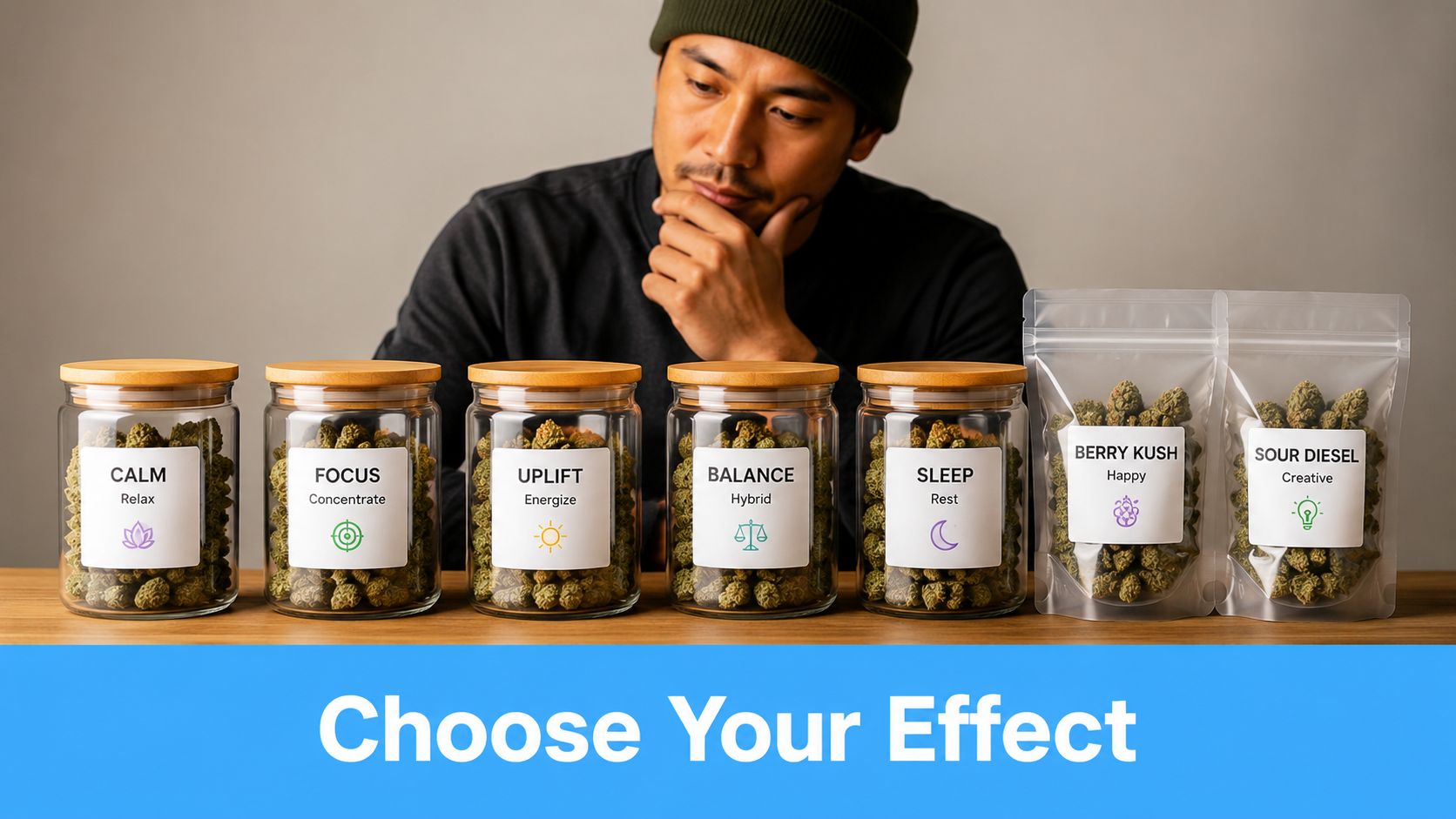
The old indica, sativa, hybrid shorthand still shows up on menus, and it can be directionally helpful. But it doesn't tell the full story. Effects are better predicted by the combination of cannabinoids, terpene profile, and format.
If you want to relax
For relaxation, look for earthy, musky, or peppery profiles and avoid chasing a product just because it posts a huge THC number. Flower can be great here because the ritual itself slows people down. A well-selected pre-roll can do the same thing without any prep.
Shoppers often lean toward flower from brands like Hudson Cannabis, Florist Farms, Matter, Good Green, Botanist, or LivWell when they want a straightforward evening option. If smoking isn't your thing, a gummy from Wana, Camino, or Wyld can suit a slower night, as long as you respect the longer timeline.
If you want creativity or social lift
Creative or social sessions usually call for lighter-feeling profiles. Citrus, pine, and bright aromatic notes tend to attract people looking for daytime energy, conversation, music, or errands with a little extra sparkle.
Vapes fit well here because they're easy to modulate. A few pulls from a cart by Alien Labs, Cookies, Connected, Fernway, Jaunty, Stiiizy, or Turn can be easier to calibrate than an edible if you still want to stay active.
Here's a simple way to match goal to format:
- Relaxation after work: flower, pre-roll, or a patient edible
- Creative focus: a terpene-forward vape or lighter flower
- Physical relief without ritual: tincture or topical
- Sleep support: evening flower, a calming edible, or a measured tincture
For a broader breakdown of cultivar categories and how they're commonly discussed, this guide to different strains of cannabis gives useful background.
If you want sleep or deeper nighttime use
Nighttime shopping calls for honesty. If you need sleep support, don't choose the flashiest daytime strain because the branding looks fun. Many customers do better with products that feel fuller, calmer, and less buzzy.
A good sleep product shouldn't turn bedtime into an experiment.
That may mean a myrcene-leaning flower, a slower edible, or a tincture that's easy to measure. Formats matter here because sleep shoppers usually care about duration, not just onset.
What doesn't work well
A few patterns lead to disappointment:
- Buying only by THC and ignoring terpene profile
- Using edibles for a short window when you really needed a faster format
- Trying concentrates too early without understanding your tolerance
- Assuming one brand's “hybrid” will feel like another's
That's why strain selection is less about memorizing labels and more about matching product style to intention. Once you learn your preferred effect families, shopping gets much more consistent.
Your Guide to Buying Legal Cannabis in New York
New York cannabis shopping gets easier once you separate rumor from actual rules. Long Island customers usually want the same practical answers. Who can buy, where you can buy, what kind of shop matters, and how to avoid a purchase that looks legal but isn't.
What legal shopping looks like
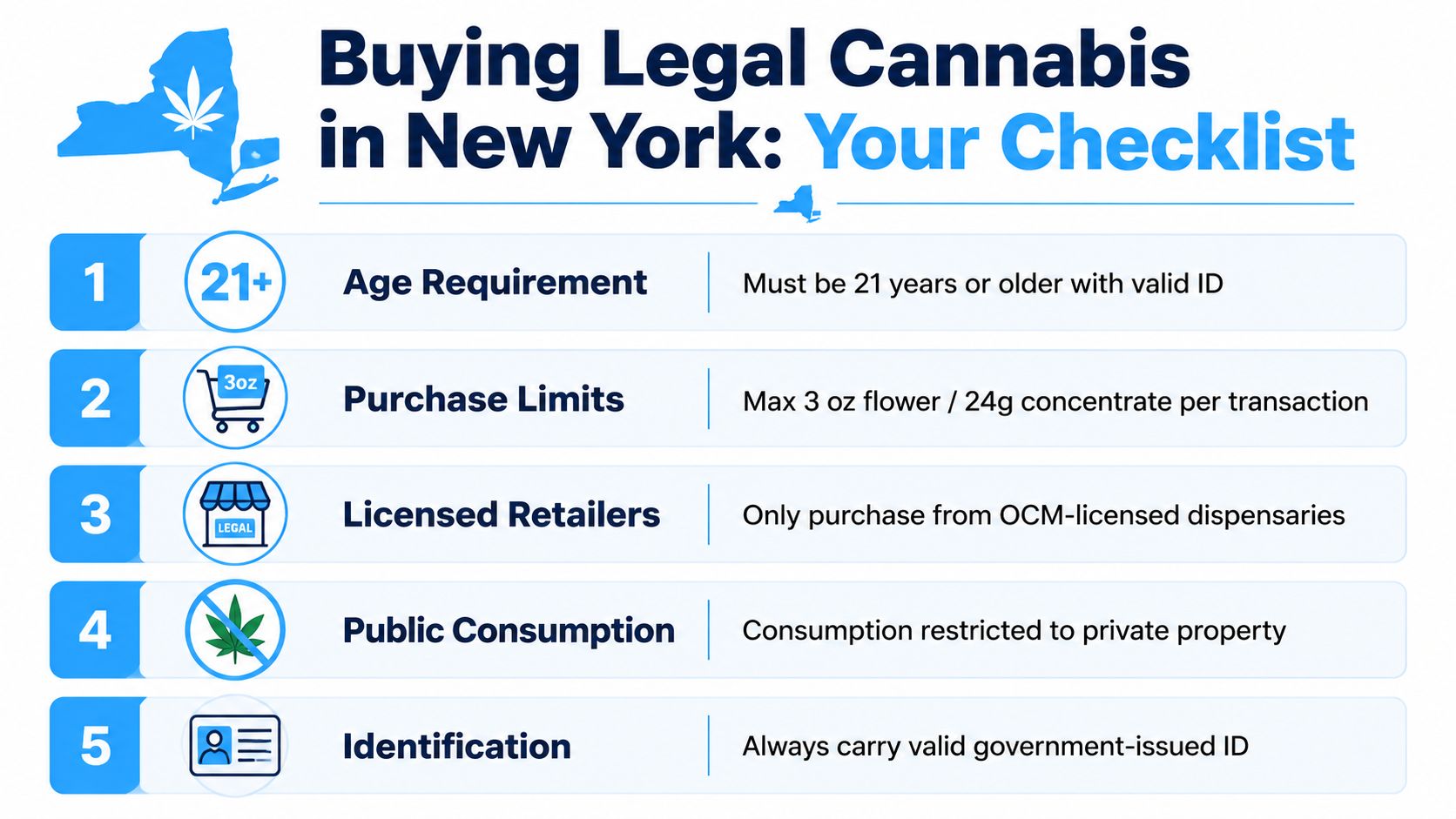
Start with the basics. Adult-use cannabis shopping in New York is for adults 21+, and licensed retail matters. Buying through regulated channels means you're dealing with tested products, ID checks, and packaging standards that are designed to reduce the guesswork.
The legal industry is also part of everyday American commerce now. It supported over 425,000 jobs in the U.S. in 2024, and 79% of Americans lived in a county with at least one dispensary, reflecting how integrated legal retail has become, as summarized in the earlier-cited industry report from Pitt.
The rules that matter most on the ground
Customers don't need a legal seminar. They need a checklist they can remember.
- Bring valid ID: A government-issued ID is part of the process.
- Use licensed retailers: Regulated stores are the safer lane for product quality and compliance.
- Know your setting: Cannabis isn't something to use carelessly in public.
- Shop with a plan: Decide if you want flower, vape, edible, or tincture before you're staring at a menu.
- Ask questions: A good budtender would rather steer you correctly than watch you buy the wrong format.
Why local buying habits matter
Long Island shoppers often prioritize convenience and privacy. That's why pickup and delivery matter so much in this market. Some customers want a quick in-and-out trip after work. Others want to browse a menu carefully and order from home so they can compare brands like Jeeter, Dogwalker, Rove, Jetty, Kiva, Wyld, Camino, Presidential, MFNY, or Pax without feeling rushed.
For people curious about how different states handle emerging plant-based regulated markets, this overview of Colorado natural medicine licensing is an interesting comparison point. It's not about New York cannabis law, but it shows how licensing frameworks shape consumer safety and operator accountability.
What to do before you order
Before placing a first order, it helps to answer three questions:
- Do you want quick onset or a longer ride?
- Do you want a social, functional, or nighttime effect?
- Do you care more about discretion, flavor, or ritual?
Those answers narrow the field fast. One option local adults use is Strong Strains, an East Setauket dispensary with lab-tested flower, pre-rolls, vapes, edibles, concentrates, tinctures, topicals, pickup, and local delivery. That kind of menu breadth is useful because it lets shoppers choose by experience, not just by brand hype.
Cannabis FAQs and Your Next Steps at Strong Strains
A few questions come up right before someone makes their first purchase, or their first legal purchase in New York. These are usually less about cannabis itself and more about confidence.
Do I need a medical card to shop
If you're shopping adult-use cannabis in New York and you're of legal age, a medical card isn't the default requirement for that transaction. What matters most is shopping through a licensed adult-use channel and bringing valid identification.
What's the difference between medical and adult-use products
The biggest difference for most shoppers isn't that one category is “real” cannabis and the other isn't. It's the purchasing framework, product selection, and how the market organizes access. Adult-use shoppers usually care more about format, potency, and desired effect than the label category alone.
What should I bring on my first visit
Bring valid government-issued ID, a clear idea of what kind of experience you want, and enough patience to ask a few questions. If you know whether you prefer smoking, vaping, eating, or a non-inhaled option, you'll make better choices faster.
What if I'm worried about drug testing
That concern is common, especially among shoppers exploring hemp-adjacent wellness products, CBD products, or anything that sounds “non-intoxicating.” If you want a plain-language overview of that issue, this article on whether hemp protein can cause a positive drug test is a useful starting point. It won't replace legal or employment advice, but it helps frame the question correctly.
If drug testing is a concern, don't assume “hemp” means zero risk in every context. Read the label, understand the product type, and stay cautious.
How do I avoid a bad first experience
Most bad first experiences come from one of four mistakes:
- Taking too much too fast
- Choosing the wrong format for the occasion
- Ignoring onset time
- Buying based on hype instead of fit
A better approach is simple. Pick one format. Choose a modest dose. Use it in a comfortable setting. Don't mix your first try with a packed schedule.
What's the smartest next step
If you're still deciding, start narrow. Choose one lane instead of shopping the whole store at once.
- Want classic cannabis? Start with flower or a pre-roll.
- Want discretion? Look at vapes.
- Want a smoke-free option? Edibles or tinctures make more sense.
- Want strong flavor and intensity? Save concentrates for when you know your tolerance.
The legal market rewards shoppers who stay curious and patient. Once you know your preferred format and effect profile, ordering gets much easier, and your results get more consistent.
If you're ready to shop with more confidence, browse Strong Strains for lab-tested flower, pre-rolls, vapes, edibles, concentrates, tinctures, topicals, and accessories, or stop by 19 Technology Drive in East Setauket with your ID and a few questions.