
You're standing at the counter or staring at a tincture bottle at home, and the same question hits almost everyone the first time. How much tincture should I take? The label says total milligrams. The dropper looks simple enough. Then you realize one full dropper from one bottle can be a light dose, while the same amount from another bottle can be far more intense.
That confusion is normal.
Tinctures are one of the best formats for precise cannabis use because you can measure them carefully, adjust slowly, and build a routine that fits your goals. They're also one of the easiest formats to misuse if you guess, eyeball the dropper, or take more before the first dose has had time to land. The people who do best with tinctures aren't the ones who chase a big first experience. They're the ones who learn the bottle, measure the dose, and stay patient.
Decoding Your Tincture Bottle Potency
A customer buys a tincture labeled 1000 mg and assumes one full dropper is the dose. Another picks up a 750 mg bottle and takes the same amount of liquid. Those two people did not take the same dose.
The label only makes sense once you separate the two numbers that control dosing:
- Total cannabinoids in milligrams
- Bottle size in milliliters
If you've ever spent time deciphering supplement facts, the process is familiar. The front label grabs attention. The side panel tells you what each measured amount of liquid contains.
The formula you'll use every time
Total cannabinoids (mg) ÷ total bottle volume (mL) = potency in mg/mL
That mg/mL number is the one to care about. It converts a marketing label into a usable dose.
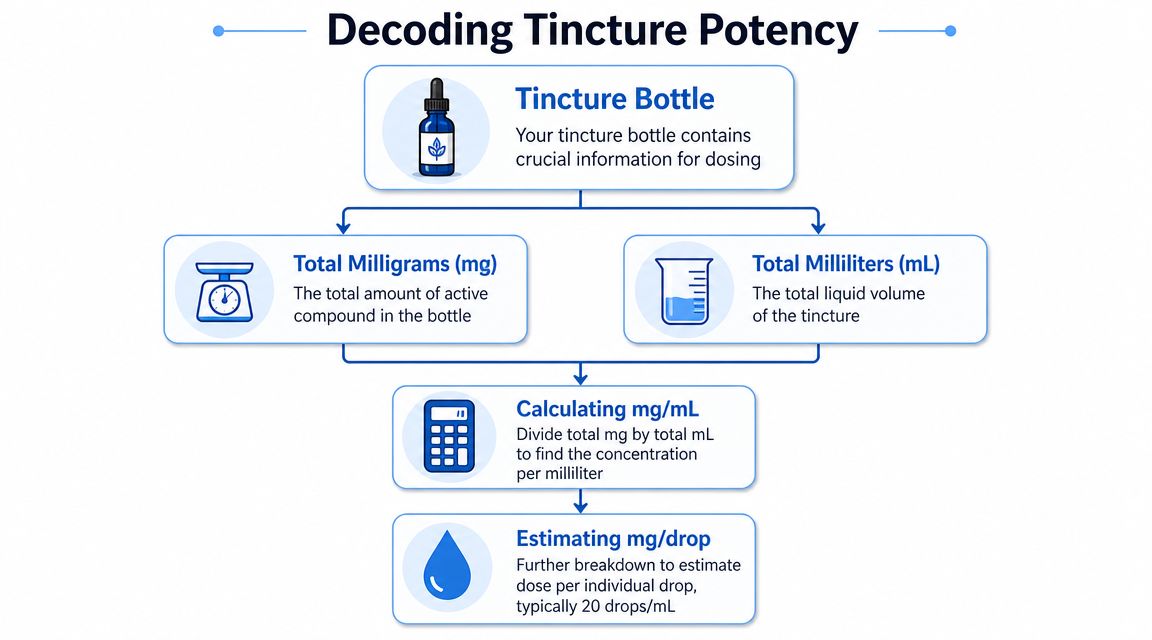
Many tincture droppers are calibrated to 1 mL on a full draw, and droppers commonly dispense liquid in small drops rather than a single fixed dose. The U.S. Food and Drug Administration's dosing guidance for oral syringes and droppers reinforces the bigger point: use the marked volume, not a visual guess, because measured liquid devices vary and accuracy matters (FDA dosing device guidance).
Real bottle math from products people actually buy
At a premium dispensary, common tincture strengths often look like this:
- 900 mg in 30 mL
- 1000 mg in 30 mL
- 750 mg in 30 mL
Here's what those bottles really mean:
| Bottle Label | Math | Potency |
|---|---|---|
| 900 mg / 30 mL | 900 ÷ 30 | 30 mg/mL |
| 1000 mg / 30 mL | 1000 ÷ 30 | 33.3 mg/mL |
| 750 mg / 30 mL | 750 ÷ 30 | 25 mg/mL |
That's why I tell shoppers to stop using “a full dropper” as a dosing term. A full dropper is just a volume. The dose depends on what is dissolved in that volume.
A practical review from Remedy Columbia notes that tincture potency can vary widely by product, and that lower THC amounts are the safer entry point for new users because the same liquid volume can contain very different milligram amounts from one bottle to the next (Remedy Columbia tincture guide). That is the reason bottle math comes first.
Quick calculation examples you can use immediately
Here's how this plays out with realistic dispensary strengths:
- 30 mg/mL tincture: 0.25 mL = 7.5 mg, 0.5 mL = 15 mg
- 25 mg/mL tincture: 0.25 mL = 6.25 mg, 0.5 mL = 12.5 mg
- 33.3 mg/mL tincture: 0.25 mL = a little over 8 mg, 0.5 mL = about 16.7 mg
That gap matters. On a bottle from Papa & Barkley, Head & Heal, Ayrloom, Botanist, Florist Farms, or Alchemy Pure, the difference between 0.25 mL and 0.5 mL can be the difference between a mild trial and a stronger-than-planned experience.
If your dropper has printed measurement marks, use them every time. If it doesn't, use the bottle's stated serving size and work from the mg/mL number before you take anything.
For a quick double-check, use this tincture dosage calculator for converting bottle potency into a measured dose. It saves time when you switch brands and want the same milligram dose from a different bottle strength.
The Start Low and Go Slow Method for Beginners
A new tincture user often does one of two things on day one. They either pour more than intended because the liquid looks small in the dropper, or they redose early because they expected an edible-style wave and did not feel it yet. Both mistakes are avoidable if you treat the first few sessions like calibration.
Start with a measured milligram target, not a casual squeeze of the dropper.
A sensible beginner range
For THC tinctures, a conservative starting point is 1 to 2.5 mg THC. For CBD tinctures, many beginners start around 5 to 10 mg CBD, then increase in small steps after they see how their body responds, as outlined by the Cleveland Clinic's cannabis dosing guidance.
In practice, I usually steer brand-new THC shoppers toward the bottom of that THC range, especially on stronger bottles from Head & Heal, Ayrloom, Papa & Barkley, or Alchemy Pure. Premium tinctures are consistent, which is exactly why they deserve respect. A concentrated bottle makes it easy to overshoot with a pour that looks harmless.
That trade-off is real. Starting too low may feel underwhelming. Starting too high can turn a simple trial into two uncomfortable hours of waiting it out.
What that looks like on an actual bottle
Use the potency math from the bottle, then match it to a true beginner dose.
If your tincture is 30 mg/mL:
- 1 mg THC = about 0.03 mL
- 2.5 mg THC = about 0.08 mL
- 5 mg THC = about 0.17 mL
If your tincture is 25 mg/mL:
- 1 mg THC = 0.04 mL
- 2.5 mg THC = 0.10 mL
- 5 mg THC = 0.20 mL
Those are tiny volumes. That is the point.
A half-dropper from a 30 mg/mL bottle is 15 mg THC, which is far above a cautious beginner trial. New users get into trouble when they measure by how full the dropper looks instead of by milligrams. On stronger tinctures from Florist Farms or Botanist, visual guessing is a fast way to take three to six times the dose you meant to take.
When microdosing makes sense
Microdosing fits shoppers who want control more than intensity. That includes someone testing THC for the first time, someone returning after a long break, or someone who wants a light mood shift without feeling pulled out of the evening.
It also helps people compare products more intelligently. If one shopper takes 2 mg THC from Ayrloom and another night takes 2 mg THC from Papa & Barkley, they can judge flavor, onset, and feel without the noise of an oversized dose.
Common reasons to stay in the microdose range:
- Low tolerance
- Sensitivity to THC
- A goal of subtle effects
- A need to stay socially or mentally sharp
- A first trial with a new bottle or brand
People who do well with tinctures over time usually find their minimum effective dose and stay close to it.
If you are also comparing other extract formats and how people approach them cautiously, this modern guide to mushroom tinctures is a useful reference point for dose discipline and product concentration.
How to Properly Take a Tincture and Time Your Dose
A common first-night mistake looks like this. Someone takes a measured dropper of an Ayrloom or Botanist tincture, swallows it right away, feels nothing after 20 minutes, then takes more. An hour later, both doses arrive together and the night gets heavier than planned.
Technique decides a lot of that.
The best way to take it
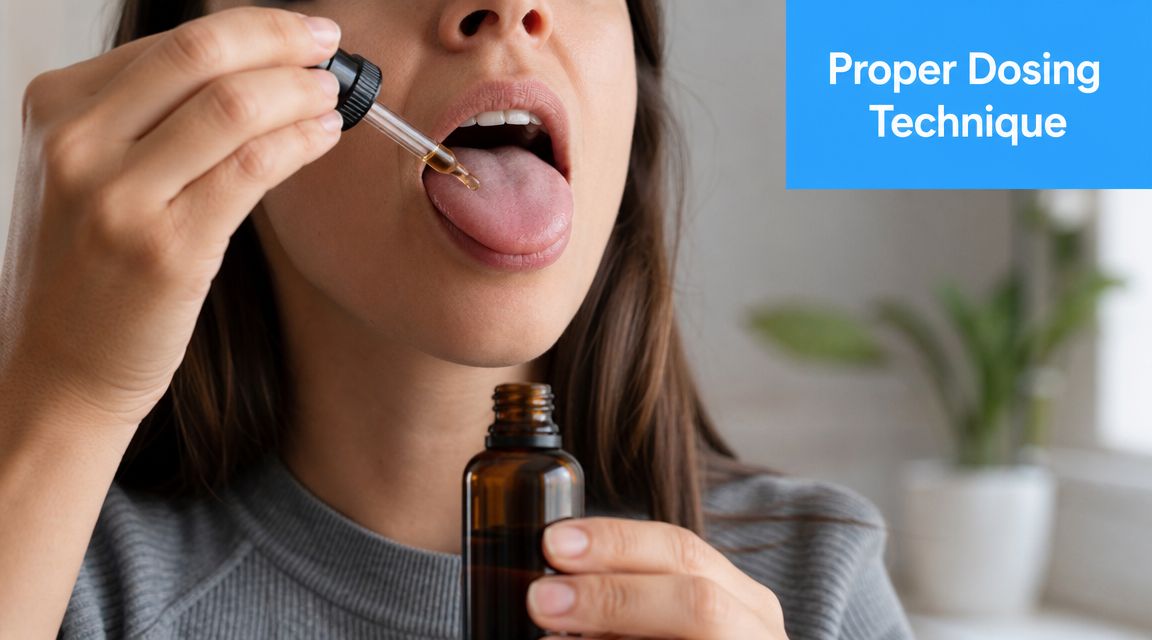
For a typical cannabis tincture, place your measured dose under the tongue, hold it briefly, then swallow. Holding it under the tongue gives some of the cannabinoids a chance to absorb before the rest is swallowed and processed more like an edible. Harvard Health describes tinctures as products that can be taken sublingually for faster effects than standard edibles (Harvard Health on forms of medical cannabis).
A clean routine looks like this:
- Measure the dose in milliliters, not by how full the dropper looks.
- Place the liquid under your tongue.
- Hold it there for about 30 to 60 seconds if the product feels comfortable that way.
- Swallow.
- Wait before making any change.
That hold time matters, but so does realism. If part of the dose moves around your mouth or goes down early, the onset may be slower and less predictable. That is normal.
Timing matters more than new users expect
Most shoppers want one exact answer for onset. Real life is messier. A tincture used sublingually may come on faster than an edible, but the same bottle can feel different depending on whether you took it on an empty stomach, how long you held it, and whether you are using a THC-only formula or a balanced THC:CBD tincture.
The safest dosing habit is simple. Wait a full 2 hours before you decide the first dose was too small. The Centers for Disease Control and Prevention warns that cannabis products can take time to take effect and that taking more too soon raises the risk of overconsumption (CDC on cannabis and public health).
In the store, I usually frame it this way. Judge your tincture at the 90-minute to 2-hour mark, not at 10 or 20 minutes. That advice keeps beginners out of trouble and helps experienced users stay consistent when they switch between stronger bottles from Florist Farms, Head & Heal, or Papa & Barkley style formulations.
If you want a useful comparison of how liquid extracts are handled in another category, this modern guide to mushroom tinctures is interesting for understanding why administration method changes timing and intensity.
A short visual helps here:
What works and what does not
What works
- Measured dosing with the marked dropper
- A short sublingual hold before swallowing
- One clear wait window before redosing
- Taking notes on when effects start for that specific bottle
What does not
- Free-pouring because the bottle seems mild
- Swallowing immediately and expecting the fastest onset
- Adding more at the first sign of impatience
- Comparing tonight's timing to a different tincture with a different potency or cannabinoid ratio
If you are unsure whether to redose, wait longer. That choice prevents most bad tincture experiences.
Your Personal Dosing Titration Schedule
A good tincture routine should answer one simple question: how much gets you the result you want, consistently, without overshooting. Titration is the method I trust for that. You start with a small measured dose, repeat it under similar conditions, and adjust in small steps only after you know how that amount treats you.
For a new THC tincture user, a practical starting range is often 2.5 to 5 mg THC, then a gradual increase if that dose is too light. The point is consistency, not speed. One rushed jump can blur the line between “still not enough” and “too much for tonight.”
Build a repeatable routine
Use one bottle long enough to learn it.
Switching between Ayrloom, Botanist, and Head & Heal while also changing dose size makes your notes much less useful. Stay with one tincture for several sessions. Keep the time of day, meal pattern, and setting as similar as you can. Then write down four things only:
- Dose in mg
- Volume in mL
- Time taken
- Effect after your full wait window
That is enough to spot patterns.
Sample tincture dose calculations
| Tincture Potency | Desired Dose (2.5 mg) | Desired Dose (5 mg) | Desired Dose (10 mg) |
|---|---|---|---|
| 10 mg/mL | 0.25 mL | 0.5 mL | 1 mL |
| 20 mg/mL | 0.125 mL | 0.25 mL | 0.5 mL |
| 30 mg/mL | 0.08 mL | 0.17 mL | 0.33 mL |
| 40 mg/mL | 0.06 mL | 0.125 mL | 0.25 mL |
This table matters because visual guesses fail fast on stronger bottles. A quarter dropper can be light on a 10 mg/mL tincture and fairly assertive on a 40 mg/mL tincture. That is why I tell customers to dose by milligrams first, then confirm the matching mL line on the dropper.
A premium shop will carry both easy-entry tinctures and high-potency options, so this calculation habit pays off. If you want to see how a concentrated bottle changes the math, this 1000 mg THC tincture potency guide gives a useful product-level reference.
A practical titration schedule
For a low-dose THC tincture trial, use a schedule like this:
- Days 1 to 3: Start at 2.5 mg THC
- Days 4 to 6: If 2.5 mg felt too mild, increase to 5 mg THC
- Days 7 to 9: If 5 mg still felt too mild, increase to 7.5 mg THC
- Days 10 to 12: If needed, increase to 10 mg THC
Stay at each step long enough to judge the pattern, not just one random night. If a dose already gives you the effect you want, hold there. There is no prize for climbing higher.
Your best tincture dose is the lowest amount that reliably matches your goal.
That might be 2.5 mg for a beginner using a balanced evening formula, or 10 mg for someone with clear THC experience using a stronger bottle from a line like Botanist or Head & Heal. The cleanest results come from patience, good notes, and small adjustments you can measure.
Factors That Influence Your Ideal Tincture Dose
Two adults can take the same measured amount from the same bottle and walk away with very different experiences. That's normal. Cannabis dosing isn't just bottle math. It's bottle math plus the person taking it.
The variables that change the feel
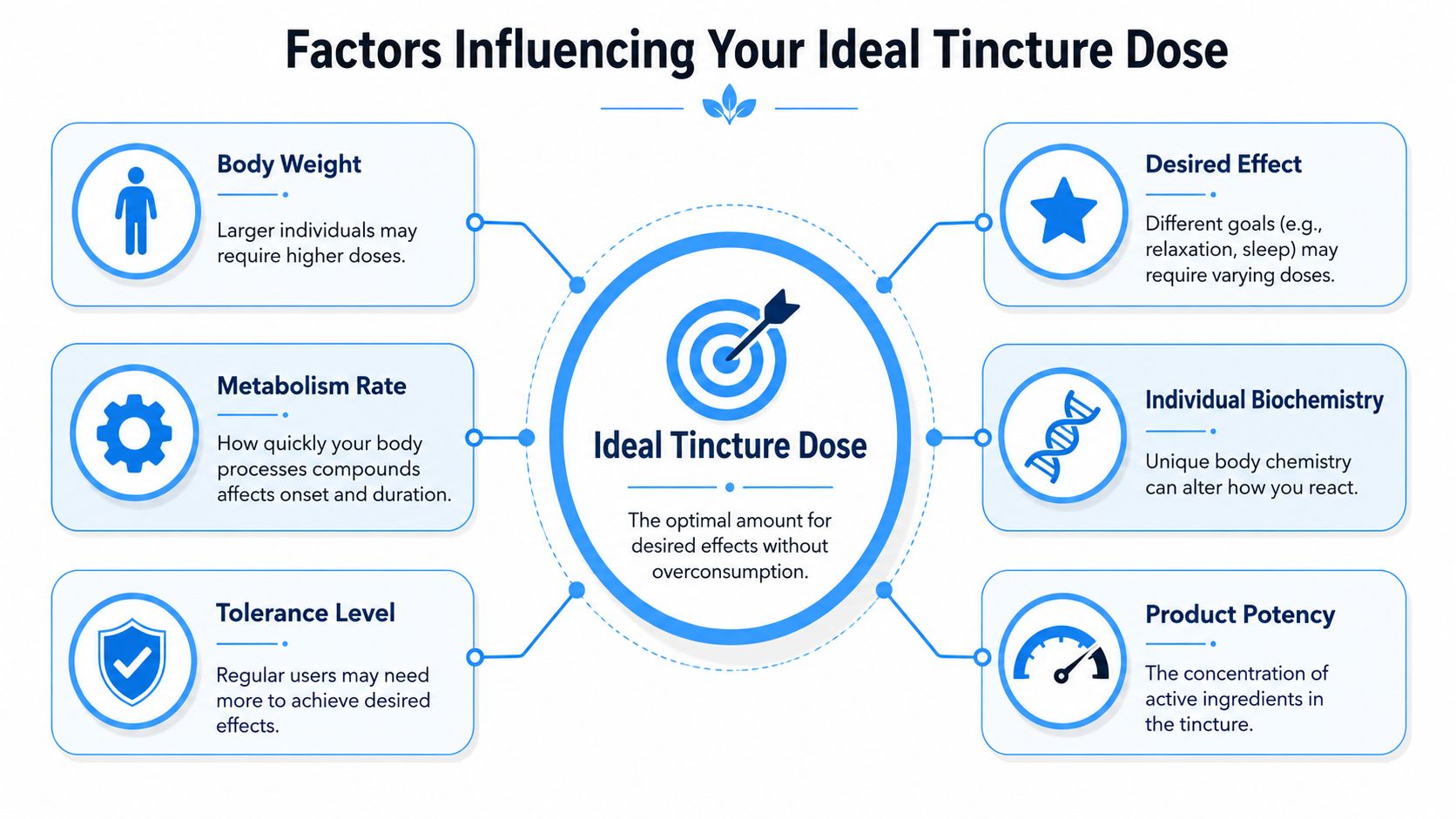
Here are the main ones I'd pay attention to:
- Tolerance: Someone who uses THC regularly may need more than someone coming in fresh.
- Metabolism: Some people feel effects quickly and clearly. Others notice a slower build.
- Food intake: A tincture taken on an empty stomach may feel different from one taken after dinner.
- Your goal: The dose for light relaxation may not be the dose you'd choose for winding down before bed.
- Product profile: Even among premium tinctures from lines like Botanist, Head & Heal, or Papa & Barkley, the concentration and cannabinoid balance can change the experience.
What people often get wrong
People tend to over-focus on body size and under-focus on intent and tolerance. In real use, those two factors often tell you more.
If your goal is a light, functional evening, don't dose the same way you would if your plan is full-body relaxation and no obligations. If you use cannabis rarely, don't borrow the serving size of the friend who uses it all the time.
A useful mental check is this:
| Question | Why it matters |
|---|---|
| Do I use THC often? | Tolerance shapes the dose you'll actually feel |
| Did I eat recently? | Timing and feel may shift |
| What result do I want? | Subtle calm and stronger sedation are different targets |
| How concentrated is this bottle? | Small liquid changes can mean big THC changes |
Mission Dispensaries points out a real content gap here: many guides say to start low and increase slowly, but don't answer practical questions about when to redose, how long sublingual versus swallowed tinctures may take, or how to avoid overconsumption when onset is delayed. Their overview also notes inconsistent guidance around hold times and onset windows, which is exactly why users need a method instead of guesswork (Mission on real-world tincture timing).
Tincture Dosing FAQ and Safety First
A few questions come up at the register all the time, especially from newer shoppers who want control without surprises.
What if I took too much
Don't panic. The main move is to stop dosing, hydrate, get somewhere comfortable, and give it time. Keep the environment quiet, avoid stacking other cannabis products, and don't convince yourself you need to “fix” it by taking more of something else unless a healthcare professional tells you to.
Can I mix tincture into a drink
Yes, you can. But once you do that, you're changing the experience. You lose the precision and speed of a sublingual routine because you're no longer holding it under the tongue in a controlled way. If convenience is the goal, it's fine. If precise onset is the goal, it's not the best method.
For people who already think carefully about interactions and total intake, the mindset is similar to safely planning your supplements. More products in the mix means more reason to slow down and stay intentional.
How should I store a tincture
Keep it sealed, upright, and out of direct light and heat. Consistent storage helps the product stay reliable. Don't leave it in a hot car, and don't treat the cap like an afterthought.
When should I talk to a healthcare professional
Talk to one before using cannabis tinctures if you take prescription medications, have a medical condition, or you're unsure whether cannabinoids fit your situation. That's not being overly cautious. That's smart adult use.
Are tinctures better than edibles
Not always. They're different tools. Tinctures are usually better when you want more control over measurement and timing. If you're deciding between formats, this comparison of THC tinctures vs edibles is a good next read.
If you want help figuring out how much tincture to take without guessing, visit Strong Strains. Our East Setauket team can walk you through potency, dropper math, beginner-friendly options, and premium tinctures from trusted brands so you leave with a dose plan that fits your goals.