You rub your shoulder after a long drive on the Long Island Expressway. Or maybe it's your wrist after a day at the keyboard, your knee after leg day, or your lower back after hauling groceries up the stairs. The pain isn't dramatic enough for an ER trip, but it's distracting, nagging, and starting to wear on you.
That's where many adults start looking into CBD topical pain relief. Creams, balms, roll-ons, and patches promise targeted support exactly where you feel discomfort, without the intoxicating effects people associate with THC. Interest is enormous. GoodRx notes that CBD product sales were projected to reach $4.4 billion in 2024, and about 60% of CBD users say they use it for pain relief in some form, according to GoodRx's overview of CBD cream for pain relief.
The tricky part is separating what sounds good on a label from what makes sense based on how these products work. That's especially important if you're shopping locally and want something that feels premium, tested, and worth your money.
If you're also dealing with neck tension from sleep posture or desk work, it can help to combine topical relief with mechanical support like these solutions for cervical neck pain. And if convenience matters, many Long Island shoppers now prefer licensed options that combine education with convenience, including dispensary delivery near you.
Finding Relief for Localized Aches and Pains
Localized pain has a very specific rhythm. It flares when you raise your arm, twist your back, grip your mouse, or climb a flight of stairs. It isn't "whole-body pain." It's one spot asking for attention.
That distinction matters because topical products are built for targeted use. You're not swallowing anything and hoping it reaches the right place. You're applying a product directly where you want support, whether that's your knuckles, calf, neck, or knee.
Where people often get confused
Many shoppers hear "CBD for pain" and assume all pain is the same. It isn't. A sore elbow from tennis, irritated skin around a joint, post-workout quad tightness, and nerve-like tingling in the feet can feel completely different. Some may be better candidates for a topical than others.
CBD topicals make the most intuitive sense when the discomfort is close to the surface and easy to point to with one finger.
That helps explain why people often reach for a cream after a workout, after repetitive strain, or during periods of mild joint stiffness. If you can trace the problem to a small, defined area, a topical is at least a logical format to consider.
A realistic way to think about relief
A CBD cream isn't magic. It's part of a routine. You might apply it after a shower, before bed, after training, or during your workday when a specific area starts acting up. Some people pair it with stretching, rest, ice or heat, or ergonomic changes.
The best mindset is simple:
- Use it for a defined spot rather than vague full-body discomfort
- Judge it by function like whether it helps you move more comfortably
- Give it a fair test across several uses instead of one rushed application
That approach keeps expectations grounded and helps you notice whether a product is doing something useful for your body.
How CBD Topicals May Work for Pain Relief
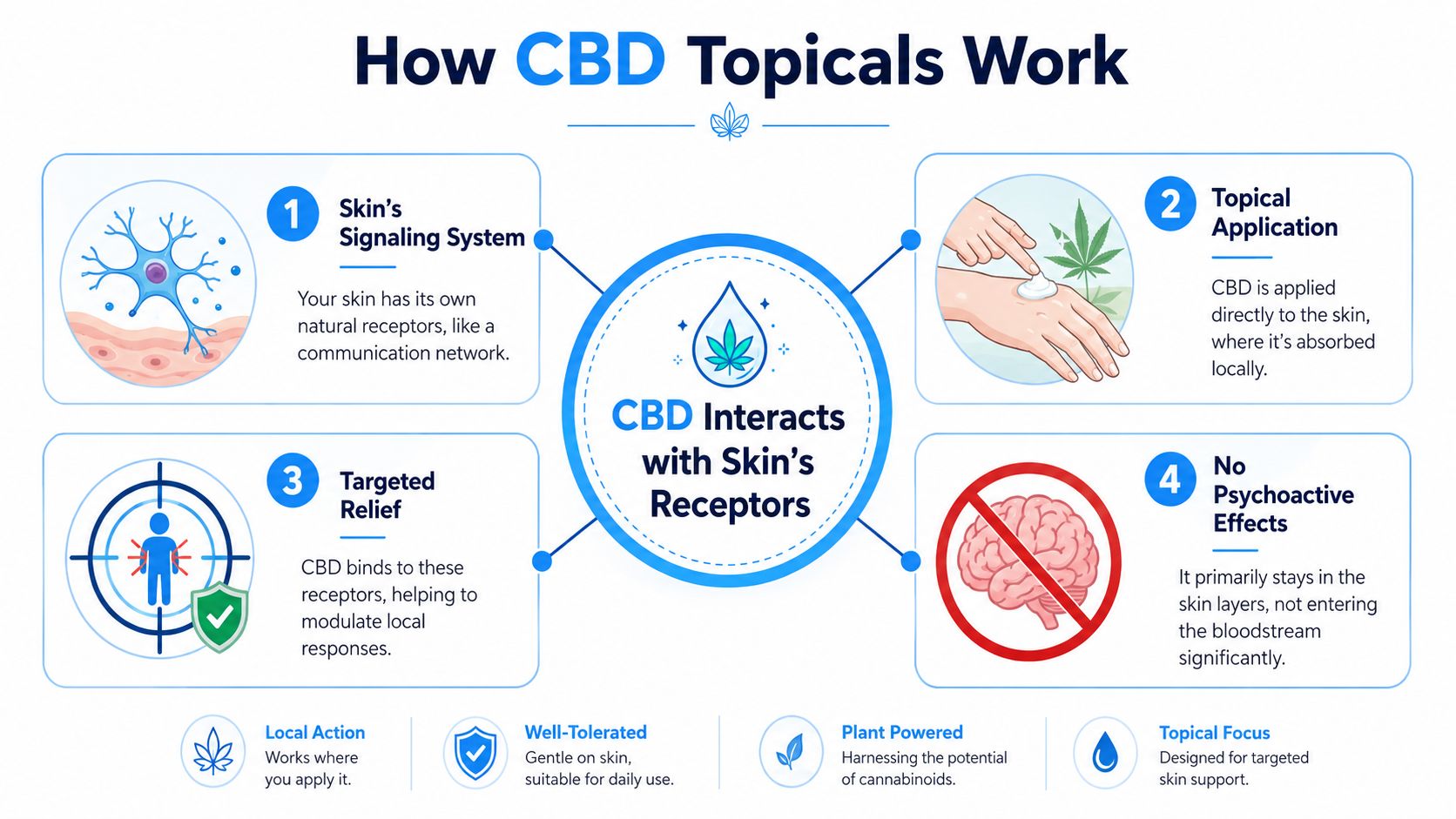
CBD topicals are easiest to understand if you think of your skin as more than a barrier. It's an active tissue with its own signaling network. When you apply CBD to the skin, the goal isn't usually to send it throughout your whole body. The more plausible idea is local activity at the application site.
Preclinical and review literature describe CBD interacting with cannabinoid signaling in the skin and peripheral tissues, especially through CB2-linked pathways that may reduce pro-inflammatory activity and dampen peripheral pain signaling where it's applied, as described in this review discussion of topical cannabinoid action in peripheral tissues.
The simple analogy
Think of a topical like a neighborhood treatment, not a citywide announcement. You're applying it to one block, not the whole map. That helps explain why people usually use it for knees, shoulders, feet, hands, and other easy-to-target areas.
It also helps explain why standard topicals aren't generally expected to create psychoactive effects. The intended action is mostly local, at or near the skin and surrounding tissues.
What the human evidence actually says
Good education is important because the marketing around CBD often sounds more certain than the science is. Human research on CBD alone for pain is still developing, and the strongest signals appear in narrower use cases rather than broad, sweeping claims.
One of the more promising human findings comes from a randomized, double-blind, placebo-controlled peripheral neuropathy study summarized in a peer-reviewed review. That study reported statistically significant reductions in several pain domains versus placebo, including intense pain (p = 0.009), sharp pain (p < 0.001), itchy pain (p = 0.001), and cold pain (p < 0.05), as summarized in this peer-reviewed review on topical CBD in human studies.
That doesn't mean every CBD topical works for every person or every pain type. It means there are early human signals that make topical CBD more plausible in some categories than others.
The pain types that make the most sense
The most nuanced way to look at topical CBD is by pain pattern.
- Inflammatory-feeling joint discomfort may be a reasonable fit because topical action is local.
- Peripheral nerve discomfort has some early human support.
- Post-exercise soreness in a specific area also fits the targeted-use logic.
The Arthritis Foundation highlights an important unanswered question in consumer education: who is most likely to benefit, and for which symptoms? Its discussion points toward localized arthritis, peripheral neuropathy, and lower-extremity pain in athletic populations as areas where small human studies have shown early signals, while still emphasizing that the evidence is preliminary in this overview of CBD and arthritis pain.
Practical rule: If your discomfort is localized, surface-near, and easy to apply to directly, a topical is more plausible than if your pain is diffuse, internal, or systemic.
If you're curious how CBD products begin earlier in the plant pipeline, this guide on how hemp is harvested adds helpful background on sourcing and production.
Exploring the Different Types of CBD Topicals
Walk into a licensed dispensary and you'll see that "topical" isn't one thing. Texture, absorption, portability, and intended use vary a lot. Choosing the right format can make a bigger difference in day-to-day satisfaction than people expect.
A cream that feels great after a shower may be annoying in a gym bag. A balm that's perfect for one knuckle may feel too heavy across your whole shoulder. That's why format matters.
CBD topical product comparison
| Product Type | Best For | Feel & Texture | Typical Use Case |
|---|---|---|---|
| Cream | Larger areas and daily body care | Smooth, lotion-like, usually easy to spread | Knees, shoulders, back, post-shower use |
| Balm | Small areas that need more concentrated application | Thicker, richer, more occlusive | Knuckles, wrists, elbows, targeted spots |
| Roll-on | Quick, mess-free use on the go | Light glide, less hand contact | Neck, calves, forearms, gym bag or office drawer |
| Transdermal patch | People who want steady wear over time | Adhesive patch applied to skin | Longer-lasting wear for a specific area |
Creams and balms
Creams are usually the most approachable starting point. They're easy to spread over broader areas and often include skin-friendly ingredients that make them pleasant for routine use. If your discomfort covers a larger zone, such as your whole knee area or upper trapezius, a cream often feels the most practical.
Balms are more focused. They tend to be thicker and can feel better for small joints or pinpoint application. If you want to work something directly into a wrist, finger joint, or a narrow strip along the Achilles area, a balm can be a better fit.
Roll-ons and patches
Roll-ons appeal to people who want speed and less mess. They're useful if you're at work, in the car, or heading into the gym and don't want product all over your hands. They also make it easier to reapply to spots like the neck or forearm.
Transdermal patches sit in their own category. They aren't just another cream in a different package. They're designed for extended wear and a more controlled delivery experience. If you dislike frequent reapplication, a patch may be worth considering.
The best format is the one you'll actually use consistently. A premium product that stays in a drawer doesn't help anyone.
Matching the format to your routine
Here are a few easy matches shoppers often find useful:
- Desk worker with wrist and neck tension chooses a roll-on for midday use
- Gym-goer with sore quads or shoulders prefers a cream after training
- Gardener with achy finger joints may like a balm for focused rubbing
- Someone who doesn't want to reapply often may ask about a patch
Licensed dispensaries may carry topicals from brands with distinct textures and ingredient philosophies. Depending on availability, shoppers often look for recognizable names such as Papa & Barkley, Ayrloom, Botanist, or Head & Heal when comparing formats and formulas.
How to Choose a Lab-Tested and Effective Product
The CBD category can look polished while still being vague. Attractive packaging doesn't tell you much. "Premium," "soothing," and "high potency" aren't quality controls. If you want a product that earns trust, the first thing to look for is independent lab testing.
That matters even more with topicals because you're judging a product by what's inside the jar, not just by how good the label sounds.
Start with the COA
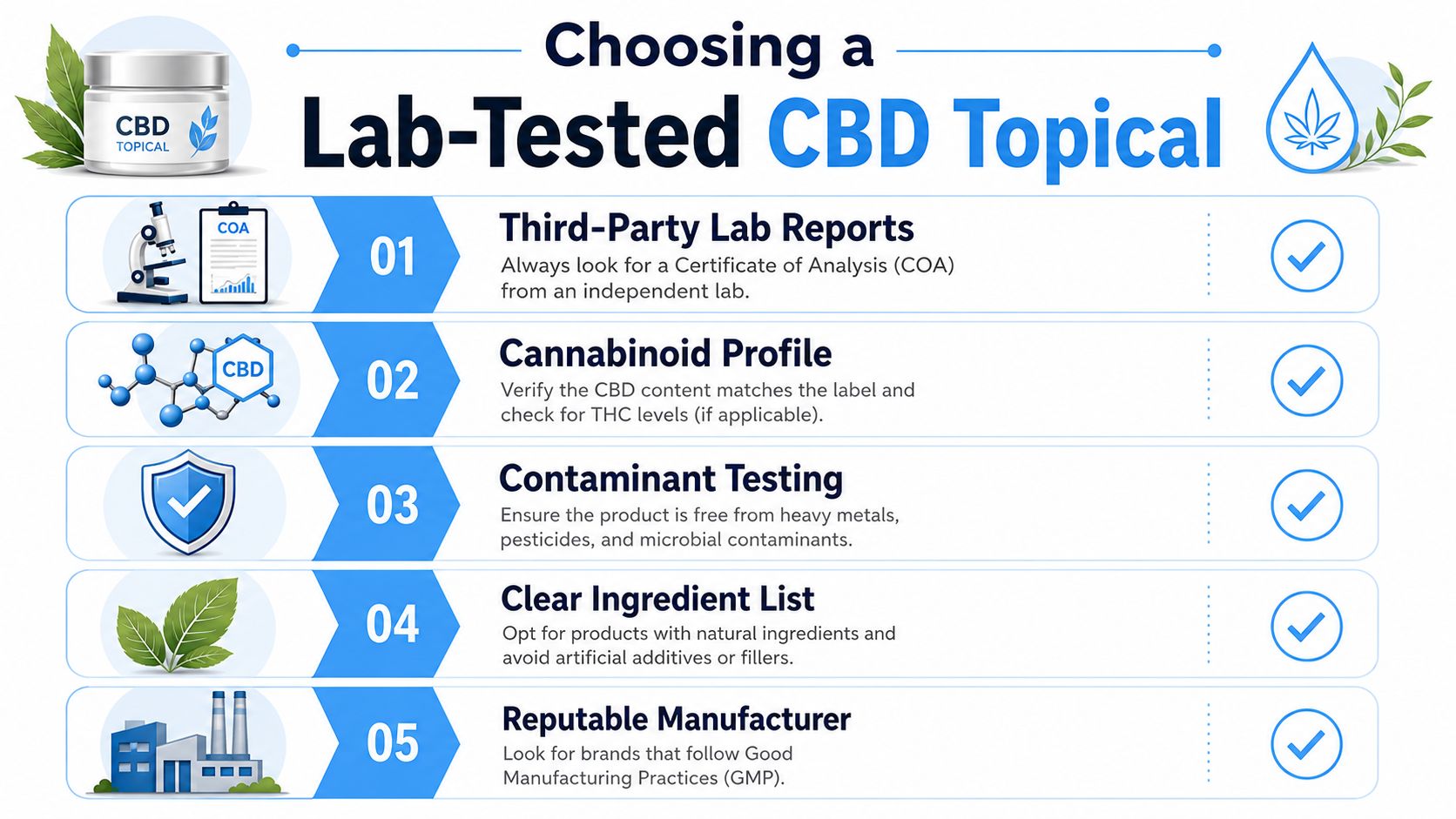
A Certificate of Analysis, often called a COA, is the closest thing you have to a product passport. It should come from a third-party lab, not just the manufacturer making claims about itself.
When you read a COA, focus on a few essentials:
- Cannabinoid content means the CBD listed on the label should match what the lab report shows.
- THC presence matters if you're trying to minimize drug test concerns or avoid THC entirely.
- Contaminant screening should cover issues such as pesticides, heavy metals, and microbial contamination.
- Batch matching means the report should correspond to the exact product lot you're holding.
If a brand can't provide that clearly, move on.
Understand the spectrum terms
The next common point of confusion is the label language around full-spectrum, broad-spectrum, and isolate.
Full-spectrum products include CBD plus other cannabinoids and plant compounds, and may include THC depending on the formula and legal category.
Broad-spectrum usually keeps multiple cannabinoids and terpenes but aims to remove THC.
CBD isolate focuses on CBD alone, with fewer additional cannabis compounds.
None of these is automatically "best." The right choice depends on your goals, your sensitivity, and how cautious you want to be about THC exposure.
Some shoppers want the simplest possible formula. Others prefer a fuller cannabinoid profile. The smart move is matching the product to your risk tolerance, not chasing buzzwords.
Read the ingredient deck like a skincare label
A good topical isn't just about CBD. The base matters. Texture, scent, and supporting ingredients affect whether you'll enjoy using it and whether your skin tolerates it.
Look for:
- Clear ingredient lists instead of proprietary mystery blends
- Skin-friendly bases that don't feel harsh or overly fragranced
- Consistent manufacturing from brands that present themselves transparently
If you like comparing other approaches to targeted relief products, this roundup of effective muscle and joint pain solutions is a useful reference point for thinking about texture, format, and application style.
A quick buyer checklist
Before you buy any CBD topical, ask these questions:
- Can I see a recent third-party COA?
- Does the cannabinoid profile match my goals?
- Is the ingredient list clear and skin-friendly?
- Is this product sold through a licensed, reputable channel?
- Do I like the format enough to use it consistently?
That short checklist will protect you from most low-quality buys.
A Guide to Safe Application and Dosing
You get home with a new CBD balm, your shoulder is barking after a long day, and the label gives you milligrams but not a clear answer to the question you have. How much do I put on, where exactly do I put it, and what should I expect?
That confusion is normal. Topicals are less like measuring cough syrup and more like applying sunscreen to one sore spot. The goal is even coverage over the area that hurts, followed by a little observation.
Start with clean, dry skin
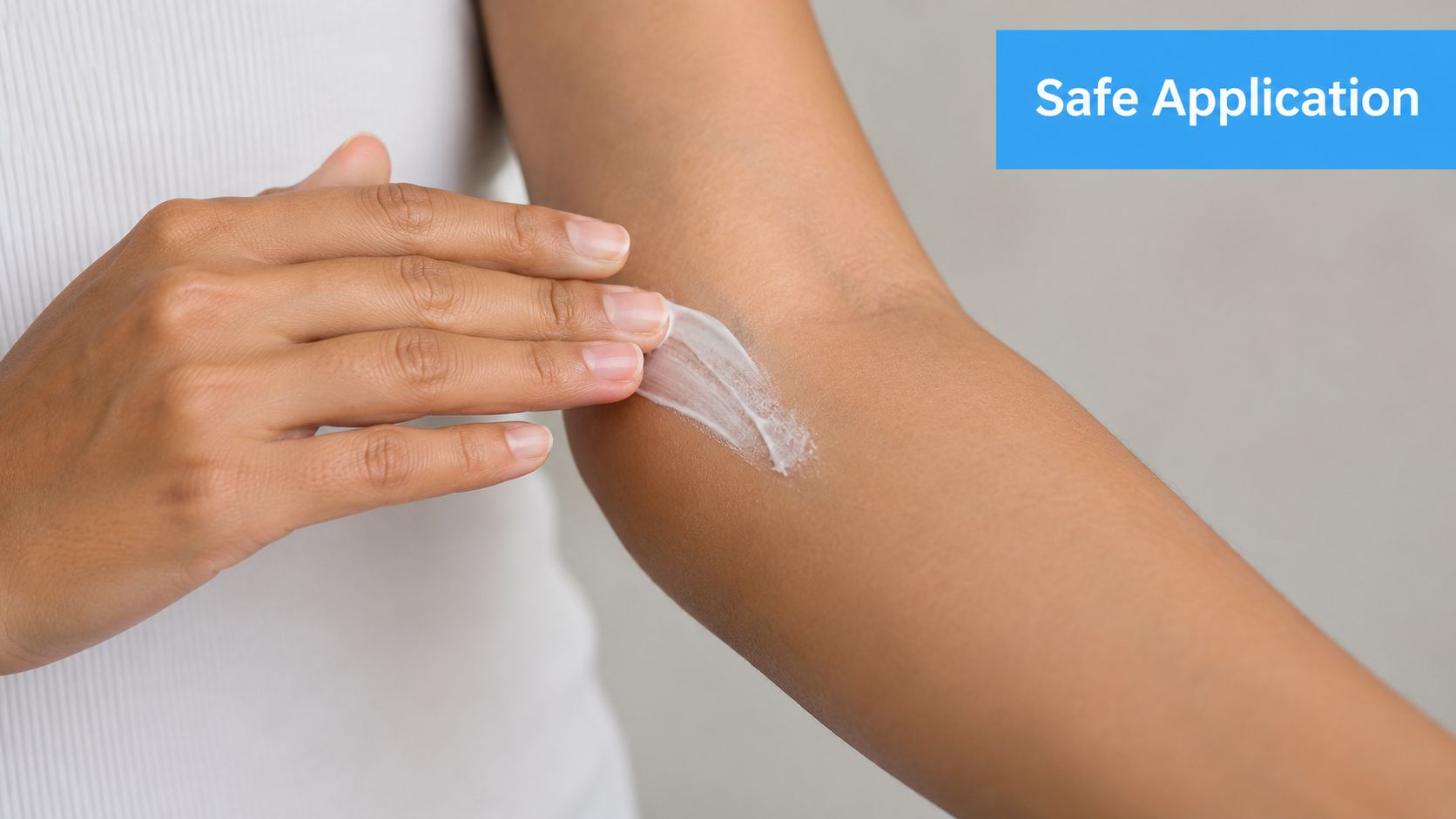
Clean, dry skin gives you a clearer read on the product. It spreads more evenly, and you are less likely to confuse sweat, lotion, or dirt with the way the topical itself feels.
Before wider use, do a patch test on a small area. Then wait and watch for redness, itching, or stinging. This matters even more with formulas that include menthol, essential oils, arnica, camphor, or added fragrance, because many reactions come from the supporting ingredients rather than the CBD.
Dose by area covered
Topical dosing is practical, not exact. A jar may say 500 mg or 1000 mg of CBD, but that number describes the whole container, not the amount your knee or wrist gets in one application.
A better first rule is simple. Use enough to create a thin, even layer over the sore area, then massage it in completely.
Try this the first few times:
- Apply a small amount to the exact spot that feels sore, tight, or irritated
- Rub it in thoroughly so the skin is lightly coated rather than thickly covered
- Wait before adding more so you can judge the effect of that first application
- Reapply only if needed based on comfort, skin response, and the product directions
That measured approach helps you tell whether the product is doing anything useful for your kind of pain. It also prevents a common mistake. Applying a large amount right away and then having no idea whether a smaller amount would have worked just as well.
Give it a fair trial
Some people notice the cooling or warming ingredients first. Others are trying to judge whether the area feels less tender, less stiff, or easier to move after a little time has passed.
The safest approach is to check in with the same area after a short waiting period, then decide if you need more. Labels differ, and so do formulas. A lotion, a waxy balm, and a roll-on do not spread or absorb in the same way.
Research on topical cannabinoids is still limited, but a small randomized trial of topical CBD for peripheral neuropathy reported improvement in some pain and discomfort measures compared with placebo, according to the study published in the European Journal of Pain. That does not prove every cream will help every kind of pain. It does support a careful, localized trial for the kinds of symptoms topicals are most plausibly used for.
For people who like visual instruction, this quick walkthrough can help with technique and placement:
Keep a few habits consistent
Good technique makes your results easier to judge.
- Wash your hands after application unless your hands are the treatment area
- Keep the product away from eyes and mucous membranes
- Avoid broken or irritated skin unless the label specifically says the product is meant for that use
- Use the same amount and same area for a few tries so your comparison is more meaningful
- Track what changes such as tenderness, stiffness, skin comfort, and ease of movement
One more point trips people up. The milligram logic used for tinctures does not translate neatly to creams and balms. If you are also learning how to measure non-topical cannabis products, this tincture dosage calculator guide can help you keep those dosing frameworks separate.
Potential Side Effects and Legal Notes for New York
CBD topicals are generally approached as low-risk products, but "low risk" doesn't mean "no thought required." The most likely issue is simple skin irritation from the formula itself, especially if a product contains fragrance, menthol, essential oils, or plant extracts that don't agree with your skin.
If you have sensitive skin, a patch test is your best first move. If you take prescription medications or have a condition that makes you cautious about cannabis-derived products, talk with your clinician before using them regularly.
Keep expectations grounded
The biggest safety issue is often unrealistic marketing, not the cream itself. Harvard notes that CBD alone is not approved for pain treatment in the United States, and highlights that there is no high-quality human research supporting CBD alone for chronic pain. It also cites a 2023 review in which 10 of 11 trials found little or no pain relief and no statistically or clinically significant difference versus placebo or comparators, as discussed in Harvard Health's review of CBD for chronic pain.
That doesn't mean all topical use is pointless. It means broad claims should make you skeptical. Specific, localized use with realistic expectations is the more sensible frame.
Buy the product for what it plausibly might do in one area of your body, not for what marketing claims it will do for your whole life.
Why licensed New York dispensaries matter
For New York adults, legality and product quality go hand in hand. Licensed dispensaries operate within state rules and are the best place to look for products that have gone through regulated channels. That's very different from buying mystery CBD from a gas station shelf or a random online seller with no clear testing documentation.
If purity, labeling, and compliance matter to you, regulated retail is the safer lane. That applies whether you're buying flower, edibles, tinctures, or topicals.
Your CBD Topical Questions Answered
Will a CBD topical make me fail a drug test
It might be low risk, but it isn't a zero-risk situation. The answer depends on the formula. A product with THC raises more concern than a CBD isolate product. If drug testing is a serious issue for your job or sport, choose carefully, review the COA, and avoid assumptions based on front-label language alone.
How is a CBD topical different from a THC topical for pain
The shopping experience is different because the cannabinoid profile is different. A CBD topical is usually chosen by people who want a non-intoxicating option aimed at local support. A THC topical may appeal to shoppers interested in a broader cannabinoid formula. In both cases, the intended use is typically localized rather than psychoactive, but the exact formula still matters.
Can I use CBD cream for a headache or migraine
A topical may help if the discomfort is tied to muscle tension in places like the neck, jaw, or temples. It makes less sense to expect a standard cream to address a migraine as a whole-body neurological event. That's one of the most common misunderstandings with CBD topical pain relief. A cream can be a targeted tool, not a universal answer.
What pain types are the best fit for a topical
The most plausible candidates are discomforts that are localized and easy to apply to directly, such as a sore knee, tender wrist, irritated foot area, or post-workout shoulder tightness. Diffuse pain, deep internal pain, and symptoms that aren't tied to one spot are less intuitive matches for a standard topical.
How do I know which product to start with
Start with the most practical format for your routine. Cream for larger areas. Balm for small targeted spots. Roll-on for convenience. Patch for longer wear. Then check the lab report, ingredient list, and cannabinoid profile before you buy.
If you want guidance suited to your routine, tolerance, and goals, the team at Strong Strains can help you compare lab-tested topicals, explain the differences between formulas, and find a premium product that makes sense for your needs on Long Island.