
You're standing in a Long Island dispensary, comparing a Heavy Hitters vape with an Airo cartridge. Both packages carry a lab-tested label, both promise a consistent experience, and both list cannabinoid information. The natural question is simple: what does that label guarantee?
Product testing standards are the answer, but they aren't just paperwork behind the counter. They define how cannabis is sampled, which contaminants a lab must screen for, how potency is measured, and whether the result can support the claims printed on the package. Once you understand that process, a Certificate of Analysis, or COA, becomes much easier to read.
Why Product Testing Standards Matter for Cannabis Consumers
A cannabis product can look polished and still require careful verification. A vape cartridge, edible, tincture, or jar of flower may pass through cultivators, processors, distributors, laboratories, and retailers before it reaches you. Each handoff creates opportunities for a batch mix-up, an inaccurate label, or a testing gap.
Product testing standards create a common process for catching those problems. They help laboratories measure cannabinoids consistently, identify unwanted substances, and document which batch produced the result. That evidence supports safer purchasing decisions for adults choosing flower, concentrates, pre-rolls, or infused products.
The stakes are visible in broader product enforcement. The UK Office for Product Safety and Standards reported that its Product Testing Sampling Protocol Programme has operated since 2018 and collected consistent data since 2020. In its 2024 to 2025 program, 583 products were tested and 464 were found non-compliant, representing 80% non-compliance (OPSS Product Safety Testing Sampling Protocol Programme). Cannabis rules differ from general product rules, but the lesson carries over: testing standards matter because real products can fail real checks.
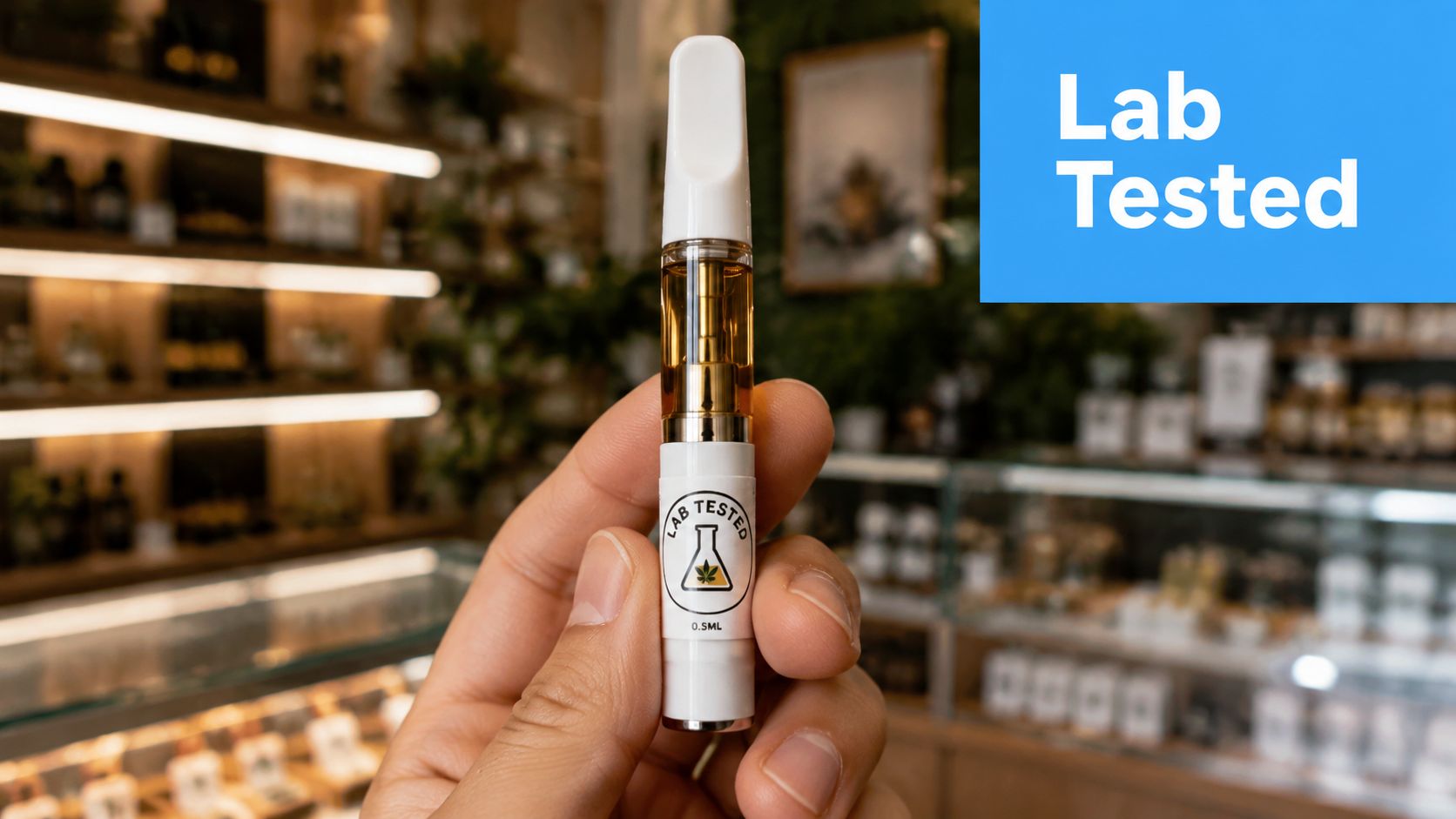
What a lab-tested label should mean
A useful label should connect to a specific batch and a verifiable report. It should support more than a broad statement that a product is “safe.” The underlying COA should show the sample identity, testing date, laboratory information, cannabinoid results, and contaminant findings relevant to that product.
That matters with familiar names such as Cookies, Jeeter, or Muha Meds, just as it does with smaller brands. Brand recognition doesn't replace batch-level evidence. A product can have a strong reputation while a particular formulation, supplier, or production run still needs independent review.
Practical rule: Treat the lab sticker as an invitation to verify the report, not as a substitute for reading it.
Product testing also protects label accuracy. Potency affects how much someone consumes, particularly with edibles and concentrated vapes. Contaminant screening helps identify hazards that you can't detect by appearance, aroma, or taste. A responsible cannabis purchase starts with the same question a careful budtender asks: does the test result belong to this exact product and batch?
The Five Core Tests Every Cannabis Product Must Pass
California's Department of Cannabis Control provides a useful picture of a broad cannabis testing panel. Before sale, all batches of cannabis goods must be tested for cannabinoids and terpenes, residual solvents and processing chemicals, residual pesticides, heavy metals, microbial impurities, mycotoxins, moisture content and water activity, and foreign material (California Department of Cannabis Control testing laboratory requirements).
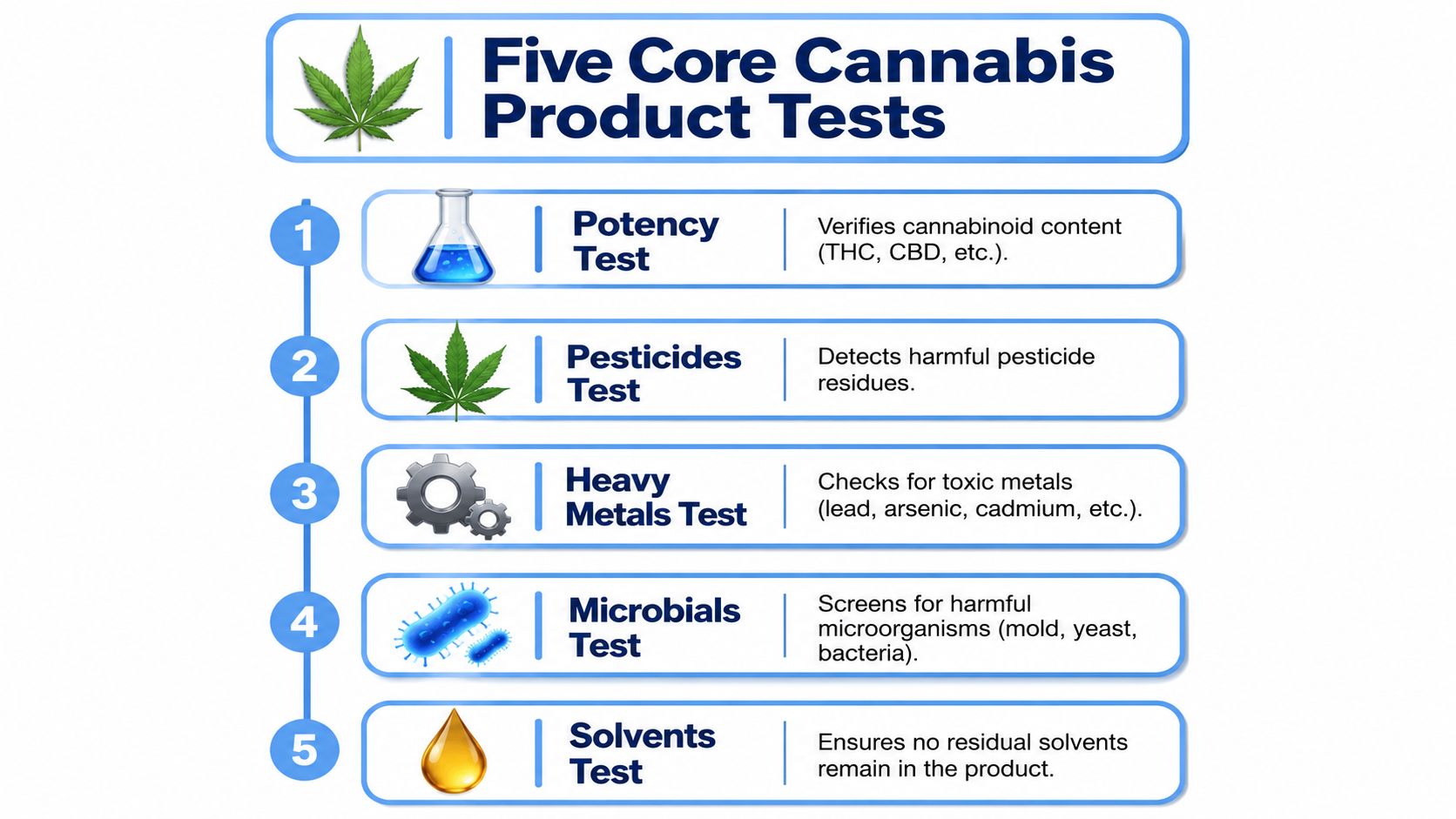
The five categories below give shoppers a practical starting point.
Potency analysis
Potency testing measures cannabinoids such as THC, THCA, CBD, and CBDA. Think of it as the product's nutrition panel, except the relevant question is how much active cannabinoid the package contains and how that amount is distributed across a serving or unit.
For flower, the report may present cannabinoid concentrations as percentages. For edibles, tinctures, and other measured formats, the serving amount is especially important. A high number on the front of a package doesn't tell you how the product will feel by itself, and a lower number isn't automatically inferior. The useful comparison is between the label, the COA, and your own tolerance.
Pesticide screening
Pesticide testing looks for agricultural chemicals that may remain on the plant or enter the finished product. The comparison to produce is helpful: washing or trimming cannabis doesn't provide the same assurance as a laboratory screen performed against the applicable regulatory limits.
A passing result means the tested sample didn't exceed the relevant limits for the substances included in the panel. It doesn't mean every possible chemical was tested under every jurisdiction's rules, so the panel and reporting format still matter.
Heavy metal detection
Cannabis plants can absorb metals from soil, water, equipment, or other environmental sources. Heavy metal analysis checks for substances such as lead, arsenic, cadmium, and mercury when included in the applicable panel.
This test is particularly relevant because heavy metals aren't something you can identify by looking at a cartridge or smelling flower. A clean appearance tells you very little about an invisible contaminant profile.
Microbial testing
Microbial analysis checks for biological contamination, including unwanted molds, yeasts, bacteria, or other organisms covered by the jurisdiction's requirements. California's panel also includes mycotoxins, which are toxic compounds that some fungi can produce.
A passing microbial result supports the product's release under the relevant rules. It doesn't turn every product into a universal fit for every person, especially someone with a medical condition or unusual sensitivity, but it does provide an important quality-control checkpoint.
Residual solvents and processing chemicals
Extracts may involve solvents or other processing chemicals. Residual-solvent testing checks whether those substances remain at levels allowed by the applicable rules.
The report can look technical because it may list individual compounds, detection limits, and pass or fail outcomes. If you want to understand the physical setup behind controlled laboratory workflows, lab facility planning resources offer useful background on how facilities organize testing environments and material movement.
For a broader explanation of cannabinoid profiles and extraction language, Strong Strains also provides an introduction to full-spectrum cannabis. The key buyer habit is straightforward: don't focus only on THC. Read the complete contaminant panel and confirm the report matches the product in your hand.
Regulatory Frameworks and Lab Accreditation Explained
At a Long Island dispensary, a COA can reference several rulebooks and laboratory standards. That does not mean each reference carries the same weight. Regulatory requirements determine whether a product may be sold in a specific market, while laboratory competence standards indicate whether the lab has the systems and skills to produce dependable results. Cannabis testing commonly draws on state rules, the separate federal framework for hemp, and technical methods such as ISO/IEC 17025, AOAC methods, ASTM D37, and USP compendial work (CASRAI guide to cannabis testing requirements).
Why ISO/IEC 17025 matters
ISO/IEC 17025 is an international benchmark for testing and calibration laboratories. ISO identifies November 2017 as the publication date of the current version, which replaced ISO/IEC 17025:2005 as laboratory technology and operating conditions changed (ISO/IEC 17025 testing and calibration laboratories).
The standard covers more than the instrument used for a potency test. It addresses impartiality, consistent procedures, technical competence, and the quality controls that support defensible results. For a buyer, accreditation cannot predict whether a strain will feel energizing or relaxing. It can support confidence that the reported potency and contaminant findings came from a lab with an established quality system.
New York adds specific requirements for cannabis laboratories. Labs must hold ISO/IEC 17025 accreditation, or an equivalent accreditation approved by the Office. They must also take part in proficiency testing through an ISO/IEC 17043-approved provider and successfully pass two of the most recent three proficiency tests (New York cannabis laboratory regulations).
Comparing accreditation requirements
| Jurisdiction | Core Accreditation | Proficiency Testing | Key Standard |
|---|---|---|---|
| New York | ISO/IEC 17025, or an approved equivalent | ISO/IEC 17043-approved provider, with successful performance in two of the most recent three tests | New York cannabis laboratory rules |
| Canada | Testing must use validated methods on representative samples for each lot or batch | Requirements depend on the applicable licensed testing framework | Cannabis Regulations |
| California | State-licensed cannabis testing laboratory framework | Requirements follow California's laboratory rules | Department of Cannabis Control testing requirements |
Canada's Cannabis Regulations require each lot or batch to be tested for THC, THCA, CBD, and CBDA quantities or concentrations. The testing must use validated methods and a representative sample (Health Canada guidance for licensed cannabis producers).
The practical takeaway for a Long Island shopper is simple: credible testing depends on qualified labs, validated methods, and traceable samples. Those conditions help turn a COA from a polished PDF into useful evidence about the product in the package.
How to Read a Certificate of Analysis Like a Pro
A COA becomes much easier to use when you follow the same order each time. Begin with the product's identity, then review potency, contaminants, dates, and laboratory credentials. The largest THC figure deserves attention, but it should not be your first or only check.
Start with the sample information
Find the product name, product type, batch or lot number, sample identification, and report date. Match each detail with the package in front of you. A COA for a different batch of Jeeter pre-rolls does not verify the Jeeter package you are holding, even when the brand and strain names match.
The laboratory's name and relevant accreditation should also appear clearly. A polished PDF is not enough if it leaves out the lab identity, testing method, or date. For a Long Island shopper, these fields connect the document to a specific product rather than to a general marketing claim.
Read the cannabinoid results carefully
For flower, cannabinoid results read like a nutrition panel. They show what is in the product and how the active compounds are distributed. Compare THC and CBD results with the package label, while checking the units. Flower may use percentages, whereas edibles and tinctures often list milligrams per serving or package.
Terpene information can help explain aroma and possible product differences, but it does not replace the potency or contaminant sections. A strain description, such as Strong Strains' educational page on the Ice Cream Mintz strain, provides context. The COA supplies the laboratory results you can verify.
Check the contaminant profile
Review pesticide, heavy metal, microbial, mycotoxin, residual solvent, and foreign-material results when those categories apply. “ND” commonly means not detected. Check the reporting limit and the report's pass or fail interpretation too, because “ND” without that context is incomplete.
A useful COA should let you connect the result to the package without guessing. Missing test dates, absent batch information, incomplete test panels, or unclear laboratory credentials are practical reasons to pause before buying.
Read the COA from left to right, then compare it against the package. The label and the report should tell the same story.
For terminology, the Herbilabs Labware CoA en certificaten gids explains how a certificate of analysis differs from other conformity documents. That distinction helps you avoid treating a general compliance document as proof of the specific batch in your hand.
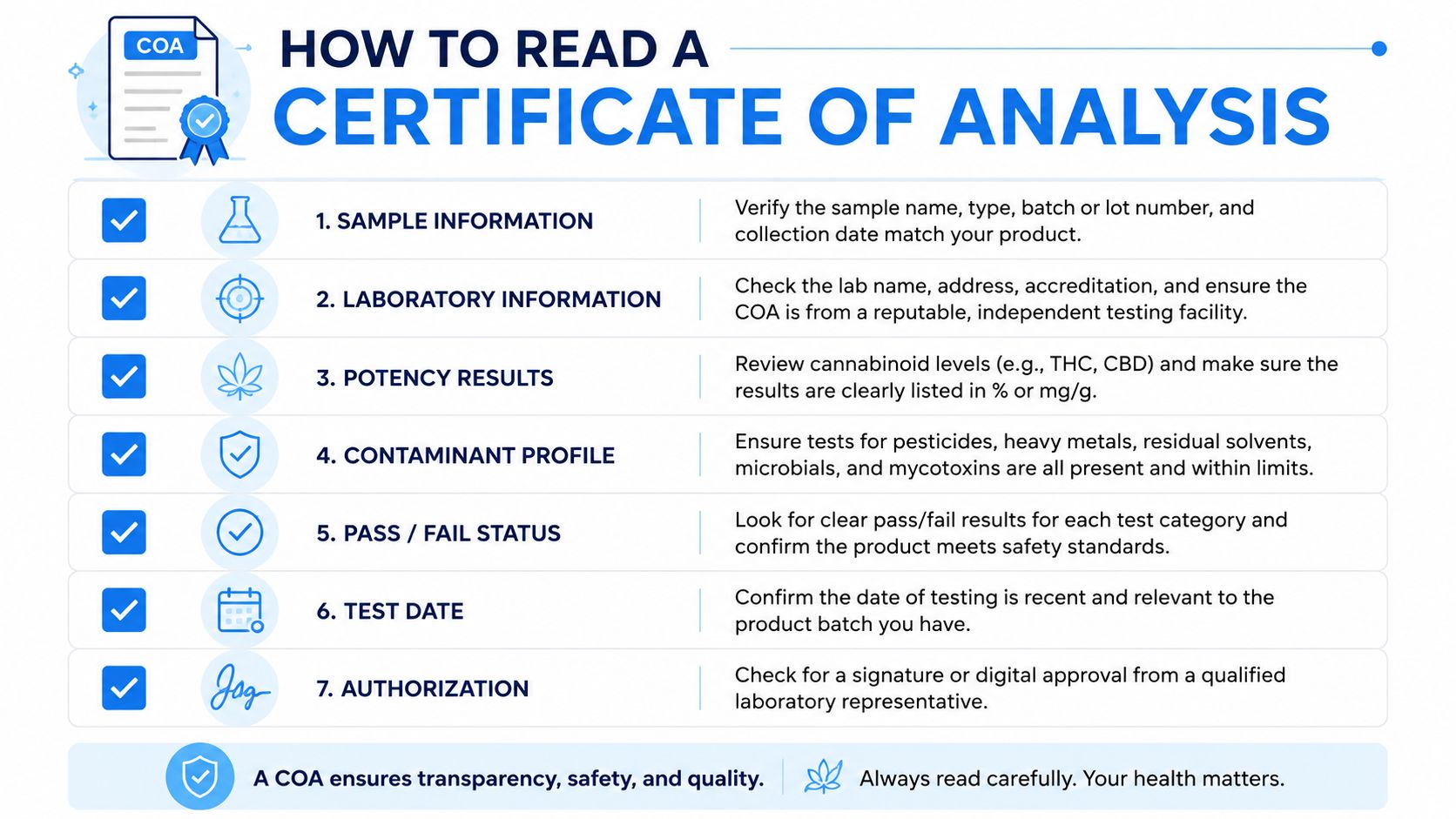
A short video can help visual learners connect the document's sections with the product label:
Sample Collection and Chain of Custody Protocols
A lab can analyze only the sample it receives. If that sample does not represent the batch, or its origin cannot be verified, an accurate result may still tell you little about the package on the shelf. For a Long Island shopper, the practical question is simple: does the report connect clearly to this batch?
New York's testing process depends on representative sampling, documented handling, and a traceable path to the lab. Sampling errors can affect potency claims, dose consistency, and the decision to release a batch. The sample should work like a labeled handoff, with each person and step recorded.
The sample's documented journey
A reliable chain of custody records who selected the sample, how it was sealed, which batch identifier it received, how it traveled, and when the laboratory logged it upon arrival. Those details connect the production lot to the COA rather than leaving the report as a detached laboratory document.
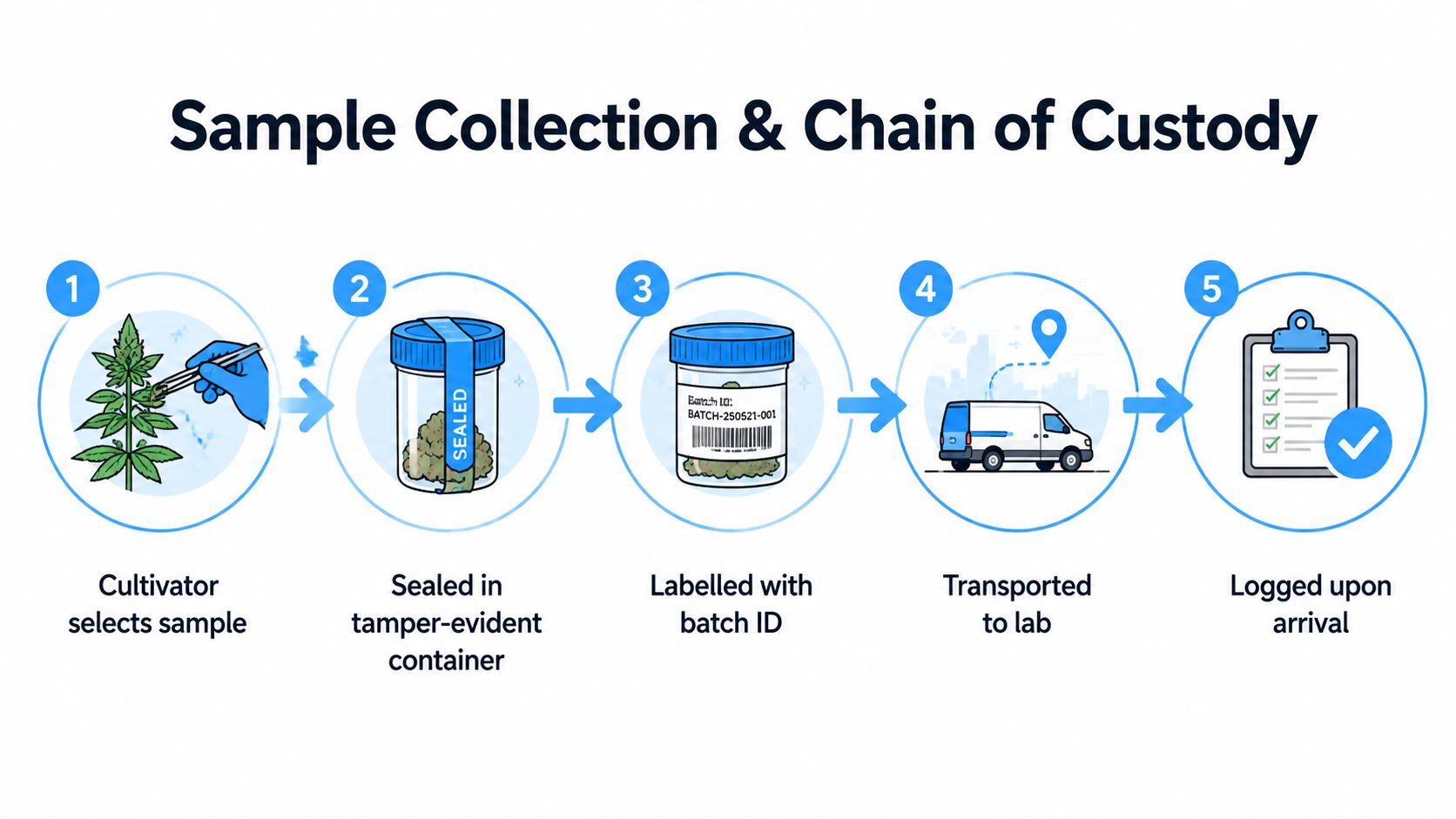
Seals and shipping records help reduce substitution, tampering, and accidental mix-ups. Teams handling regulated shipments can also review tamper evident bags for logistics when choosing packaging that shows whether a parcel was opened during transport.
At the dispensary, compare the batch or lot identifier on the package with the identifier on the COA. A mismatch is a reason to ask questions before purchasing.
Why one old pass isn't enough
A product may change after its first test. A supplier can change, a formula can be adjusted, a component replaced, or a manufacturing process altered. The product name may remain the same while the material reaching consumers differs.
CPSC guidance for general-use products recommends periodic retesting, typically yearly, and retesting after a material product change (CPSC general use products certification and testing guidance). Cannabis programs may set their own requirements, but the practical lesson remains: compliance isn't a one-time event. A current, batch-matched COA gives Strong Strains staff and Long Island buyers a more dependable basis for evaluating the product in hand.
How Strong Strains Ensures Compliance and Transparency
Strong Strains Cannabis Dispensary applies a compliance-first approach to product curation in East Setauket. The team reviews COAs, checks laboratory credentials, and looks for batch-level documentation before products reach the menu. That process gives shoppers a clearer path from a package on the shelf to the test data supporting it.
The review applies across product types, including flower, vapes, pre-rolls, edibles, concentrates, tinctures, topicals, and accessories. It also matters across brands, whether a customer is comparing 1937, Alien Labs, Stiiizy, Wyld, or another listed option. The brand name helps identify the product, but the COA supplies the evidence for that specific batch.
What transparency looks like at the counter
A knowledgeable budtender shouldn't push you toward the biggest THC number and stop there. They should help you compare format, serving information, cannabinoid results, terpene data when available, and contaminant panels in language that makes sense.
Strong Strains describes its products as lab-tested for potency, purity, and safety, with COAs that can show cannabinoid profiles, terpene profiles, pesticides, heavy metals, microbes, and residual solvents. Customers can ask questions before purchasing instead of treating testing information as something reserved for laboratories.
The dispensary operates at 19 Technology Drive in East Setauket and offers in-store pickup and local delivery across Suffolk County. Its position on compliance and consumer education is also discussed in Strong Strains' response to Brookhaven cease-and-desist coverage, where transparency remains part of the broader customer conversation.
Your Long Island Buyer Checklist for Lab-Tested Cannabis
Use this quick checklist before you buy:
- Confirm the current COA: Make sure the report is available and connected to the product's present batch.
- Match the batch number: Compare the package identifier with the COA exactly.
- Review potency: Check THC, CBD, serving information, and units rather than relying on a front-label headline.
- Scan contaminants: Look for pesticide, heavy metal, microbial, solvent, and other applicable panel results.
- Check laboratory credentials: Look for ISO/IEC 17025 accreditation or the applicable approved equivalent.
- Ask questions: If the testing information is missing or unclear, ask the dispensary staff before purchasing.
- Choose licensed retail: Buy from a licensed dispensary that makes product documentation available and treats safety as part of the service.
If a product lacks visible testing information, pause and ask for the COA. A retailer should be able to explain what the report covers, which batch it represents, and where the laboratory information appears. For adults on Long Island, product testing standards turn an uncertain purchase into a more informed one.
Strong Strains Cannabis Dispensary offers lab-tested flower, vapes, pre-rolls, edibles, concentrates, tinctures, topicals, and accessories with in-store pickup and local Suffolk County delivery. Visit Strong Strains Cannabis Dispensary to review current products, ask about COAs, and choose cannabis with clearer testing information behind the label.