
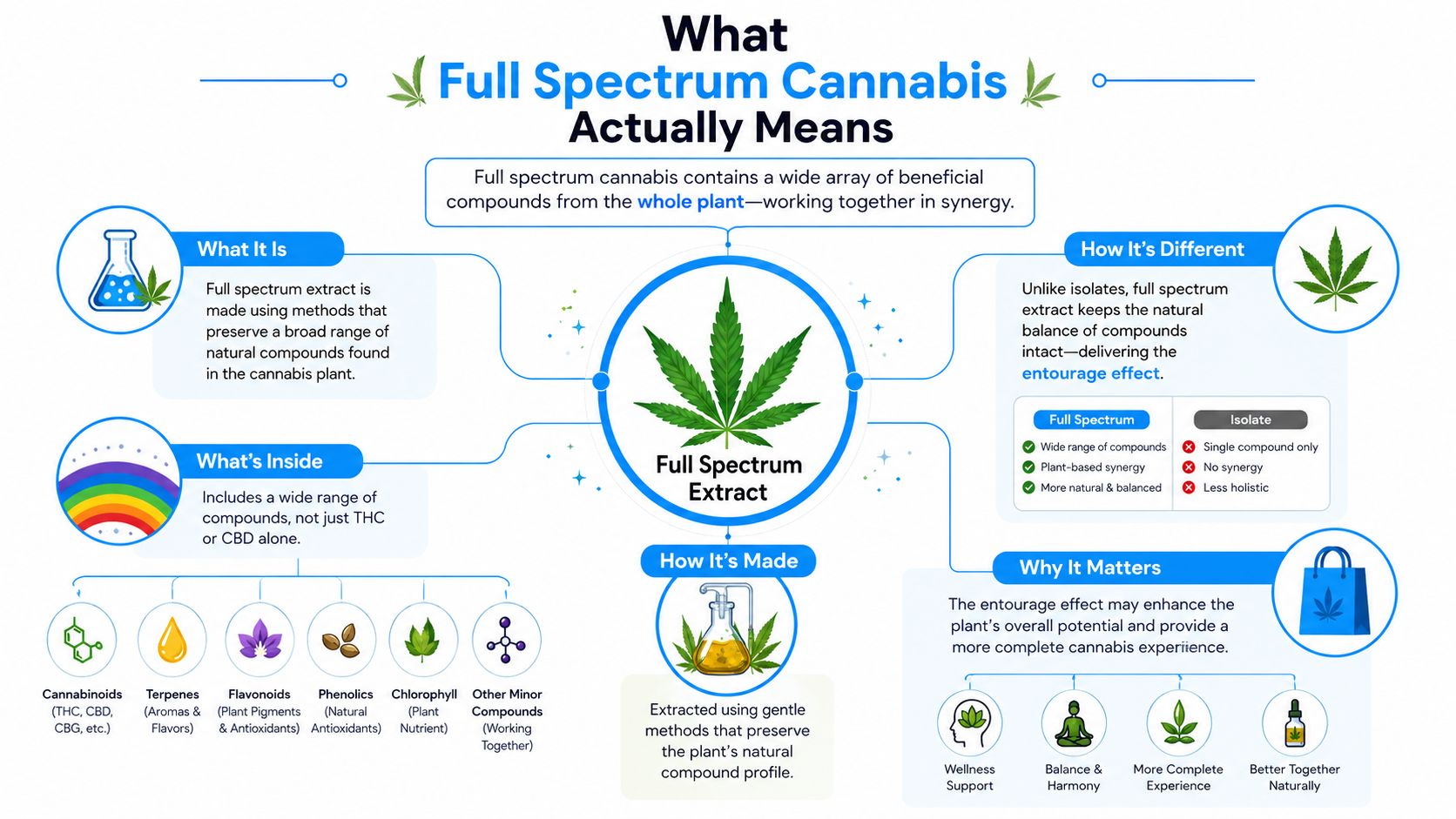
Full-spectrum cannabis is an extract or product that keeps the plant's full mix of THC, CBD, minor cannabinoids, terpenes, flavonoids, and other compounds instead of isolating one molecule. In hemp-derived products, that usually means staying at or below the 0.3% THC dry-weight limit while keeping the broader plant profile intact.
So when a shopper asks what is full spectrum cannabis, the answer isn't “everything in the plant,” it's “as much of the plant's natural chemical matrix as the final product can reasonably preserve.” That distinction matters at the dispensary counter, because two tinctures can look similar and behave very differently once you check what was kept, what was removed, and how the product was tested.
What Full Spectrum Cannabis Actually Means
A lot of shoppers hear full spectrum and assume it just means “stronger” or “more natural.” The better working definition is simpler, a full-spectrum product is made to preserve the plant's broad chemical profile instead of stripping it down to a single cannabinoid.
A smoothie keeps more of the original mix than single-fruit juice, which is filtered down to one note. With cannabis, that mix can include major cannabinoids like THC and CBD, minor cannabinoids, terpenes, flavonoids, and other plant compounds that came out of the flower or hemp material during extraction.
What counts as full spectrum on a menu
In real product categories, the label can show up on tinctures, topicals, edibles, concentrates, and other non-flower formats. A darker oil often signals that more of the plant's natural pigments and aromatic compounds stayed in the mix, although color alone doesn't prove quality.
Practical rule: if the package says full spectrum, ask what was preserved, what the THC level is, and whether the batch has a lab report to match the label.
That's the key shopper habit. Don't stop at the front-of-pack claim, because full spectrum is a formulation style, not a guarantee that every desirable compound survived extraction in the same amount. In plain English, the label tells you the manufacturer tried to keep the plant's broader profile intact. The COA tells you whether they did.
The Compounds Inside a Full Spectrum Product
What sits inside a full spectrum product? The short answer is a mixed chemical profile, not a single isolated ingredient. That mix is part of what gives cannabis its smell, texture, and overall character.
Cannabinoids, terpenes, and flavonoids
The first group is cannabinoids. These include familiar names like CBD and THC, along with smaller players such as CBG, CBN, CBC, and CBDV. In one documented full-spectrum extract, the material contained more than 50 wt% CBD and at least five other phytocannabinoids, each above 0.5 wt%, which shows how much chemical variety can remain in a single full-spectrum preparation (PMC study on full-spectrum extract composition).
The second group is terpenes, the aroma molecules that shape scent and flavor. Published analyses of cannabis inflorescences report total terpene contents ranging from 0.4% to 2.3%, with terpene-to-cannabinoid ratios between 2.1 and 12.2 mg total terpenes per 100 mg total cannabinoids. That ratio matters because a product can still fall short of the full-spectrum idea if the aromatic side of the plant is mostly gone. For shoppers comparing labels, a product such as this full-spectrum rosin at Strong Strains gives a concrete example of how that broader profile may show up in a finished item.
The third group is flavonoids and other phytochemicals. These help shape color and chemical character, and they are one reason a full-spectrum oil can feel different from a purified isolate even when the cannabinoid panel looks similar.
Why the chemistry matters
A full-spectrum product does not need to read like a chemistry lab report to be real. It just needs measurable multi-compound retention. That is why a careful shopper looks for lab results that list more than one cannabinoid and, when available, a terpene panel too.
A fuller extract is defined by what is still present, not by one big number on the front of the package.
If you want the plain-English version, this is the difference between a simple CBD oil and a product that still carries more of the plant's wider fingerprint. That fingerprint is what many people are pointing to when they describe a more complete cannabis experience, whether they are buying a tincture, a vape, or a concentrate.
The Entourage Effect and What the Evidence Really Shows
The entourage effect is the main reason full-spectrum products get so much attention. The idea is straightforward, cannabinoids, terpenes, and flavonoids may interact in ways that shape the overall effect more than a single isolated compound would on its own.
Why shoppers hear about it so often
That idea makes intuitive sense. Different compounds interact with the body in different ways, so a product that preserves more of the plant's chemistry has more moving parts than an isolate. That's why full-spectrum products are often described as preserving the plant's “whole” effect rather than a single headline ingredient.
Still, the science isn't settled in the way marketing sometimes suggests. A review in the scientific literature notes that the biological mechanisms are still being worked out, and policy and science discussions remain cautious about safety, efficacy, and how to interpret lab results for full-spectrum hemp extracts (review of cannabis entourage evidence). That matters because “more compounds” does not automatically mean “better results for everybody.”
The careful reading
The strongest version of the claim is not “full spectrum wins every time.” It's more accurate to say that a broader cannabinoid-terpene profile may be useful in specific, symptom-targeted contexts, while blanket superiority claims still go beyond the evidence. That's the gap between a good formulation theory and a universal promise.
If you're comparing products, one useful question is whether the seller explains the spectrum clearly or just leans on buzzwords. A product like UrbanXtracts Full Spectrum Lunchbox Rosin may fit a shopper looking for a more complete extract, but the test is still the same: what compounds are present, how much THC is in the batch, and what the lab shows.
Bottom line: the entourage effect is a plausible reason to choose full spectrum, but it's not a blank check for superiority.
That's a more honest way to shop. It gives full-spectrum cannabis credit for what it can offer without turning it into a cure-all label.
Full Spectrum vs Broad Spectrum vs Isolate
These three terms get mixed up constantly because they sound similar and often sit on the same shelf. The easiest way to separate them is to ask one question, what gets kept, and what gets removed?
| Extract Type | Compounds Retained | THC Content | Best-Fit Use Case |
|---|---|---|---|
| Full Spectrum | Broad cannabinoid profile, terpenes, flavonoids, and other plant compounds | Trace THC in hemp-derived products, or the full legal cannabis profile in adult-use products | Shoppers who want the plant's broader profile and are comfortable with THC exposure |
| Broad Spectrum | Similar plant compounds, with THC removed | Typically none or non-detectable | THC-averse shoppers who still want multiple cannabinoids and terpenes |
| Isolate | A single purified compound | None, unless the isolate itself is THC | Users who want one molecule only, usually CBD or THC by itself |
Why the label changes the experience
Full spectrum keeps the broadest profile, so it's the most plant-like of the three. Broad spectrum keeps many of the same supporting compounds but removes THC, which appeals to people who want to avoid intoxication or workplace concerns. Isolate strips the product down to one ingredient, which gives you the cleanest, most predictable single-compound product but the least chemical complexity.
The format also helps explain why people shop differently. A wellness customer who doesn't want THC may lean broad spectrum or isolate. A recreational shopper or someone who wants the fuller plant profile may lean full spectrum. A medical user who values precision may choose the option that matches the exact compound they want to track.
The important thing is that none of these labels says everything by itself. You still need to look at dose, route of use, and the lab report behind the product. A shelf label can point you in the right direction, but it can't tell you how the product was made or whether it was tested well.
Product Formats, Dosing, and Safety Basics
Full spectrum shows up in a lot of forms, and the format changes the experience more than most shoppers expect. A tincture, a vape, and an edible can all say full spectrum and still feel completely different.
How the format changes onset
Inhaled products work fast because they enter the body through the lungs. Sublingual tinctures sit under the tongue first, then absorb through the mouth before the rest gets swallowed. Edibles take longer because they have to move through digestion first. That's why a small edible dose and a small inhaled dose are not equivalent, even if the milligrams look similar on paper.
For a practical comparison, a shopper might use a tincture when they want more control, a vape when they want speed, or a topical when they want a localized routine. The product doesn't become full spectrum just because it's in one of those formats, it still needs the broader compound profile to earn the label.
If you want an example of a full-spectrum hemp-based beverage ingredient in a separate format, the VitzAi.com hemp coffee blend is a useful reminder that hemp-derived ingredients now show up far beyond oils and gummies.
Dosing and basic safety
A beginner-friendly approach is simple, start low and go slow. Use the smallest practical amount, wait long enough to feel the onset for that format, then adjust carefully next time if needed. That matters more with edibles and tinctures than with inhalation, because the timing is slower and the effects can build.
Don't stack doses early just because you don't feel anything yet. With edibles and tinctures, patience prevents most bad experiences.
Keep full-spectrum products away from children and pets, and don't drive under the influence. If you take other medications or use alcohol or other substances, be straight with your budtender or medical professional, because interactions and sensitivity can vary. A good product still needs responsible use.
For shoppers comparing formats, WannaJive | Nighttime Tincture | Full Spectrum is the kind of product name that tells you both the spectrum and the intended use, which helps narrow the choice before you even open the bottle.
Reading a Certificate of Analysis Like a Pro
A full-spectrum product earns trust when the lab report backs up the label. That report is the Certificate of Analysis, or COA, and it's the fastest way to separate real product detail from packaging language.
What a good COA should show
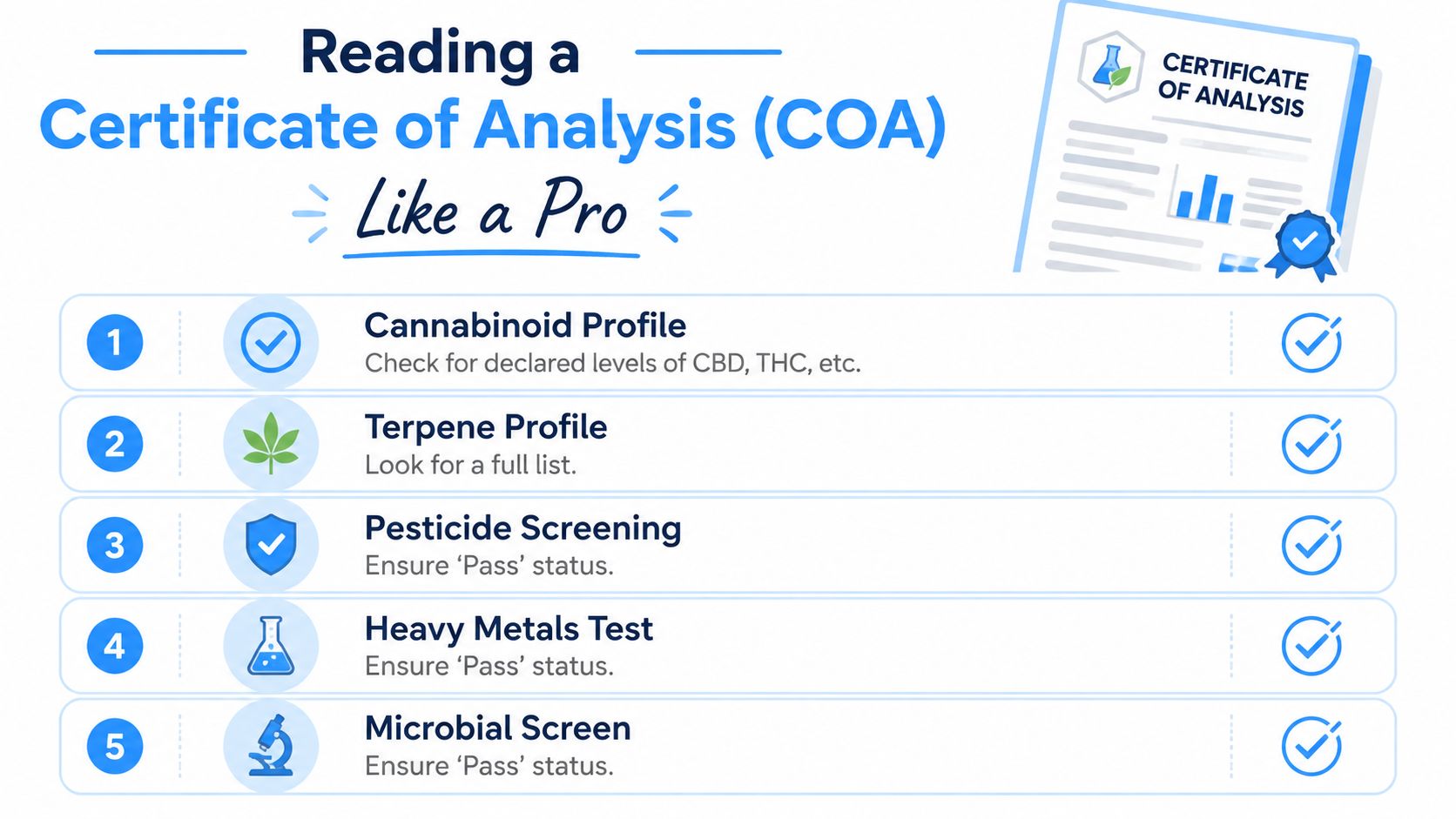
Start with the cannabinoid profile. You want the actual measured percentages by weight, not just a marketing claim about potency. A full-spectrum product should also show a terpene profile when the producer is transparent about preserving aroma and plant character.
Then check the contaminant panels. A serious COA should address pesticides, heavy metals, microbes, and residual solvents. If the report skips those, or the result doesn't match the label, that's a problem.
Red flags and green flags
A COA with no batch date is hard to trust. So is a report from a lab that isn't properly accredited or a product page that offers no test results at all. Matching batch IDs matter because they connect the bottle in your hand to the exact lab sample.
For a plain-language breakdown of warning signs, the guide on spotting red flags in COAs is a solid reference point.
Green flag: the batch number on the package matches the batch number on the report, and the cannabinoid profile lines up with the label.
A good full-spectrum product doesn't just say it's fuller. It proves it with testing. That's the standard that protects the shopper, especially when a product claims to keep more of the plant's natural chemistry intact.
Common Myths Worth Clearing Up
Full spectrum has picked up a lot of mythology, and most of it comes from marketing that outruns the product label.
Stronger doesn't always mean better
The first myth is that full spectrum is always stronger. That's not how this works. Potency depends on dose, route of use, and the actual cannabinoid content of the batch, not just the spectrum category. A well-made isolate can still be the right fit if someone wants a single compound with minimal extras.
The second myth is that full spectrum is always safer. Also not true. Safety depends on extraction quality, contaminant testing, product freshness, and the consumer's own health context. A broad-spectrum or isolate product can still be a poor choice if it's badly made or poorly labeled.
Legal and hemp-specific confusion
The third myth is that full spectrum means legal everywhere. It doesn't. Hemp-derived full-spectrum products in the United States are tied to the 0.3% THC threshold by dry weight, while adult-use cannabis in New York sits under a separate state regulatory system. A product can be full spectrum and still fall on the wrong side of the legal line if the THC content or product category doesn't match the rules that apply to it.
That's why shoppers in Long Island need to read the label with more care than the buzzwords on the front. Full spectrum describes a formulation philosophy, not a guarantee of strength, safety, or legality.
A cleaner way to think about it is this, the label tells you what the maker tried to preserve, and the COA tells you how well they succeeded. That's the difference between a marketing phrase and a product you can trust.
Choosing Full Spectrum at Strong Strains
If you're shopping full spectrum on Long Island, the smartest move is to shop by goal, not by hype. If you want relaxation, focus, or a nighttime routine, ask for the lab report first, then match the terpene profile to the effect you're after.
A simple checklist for the counter
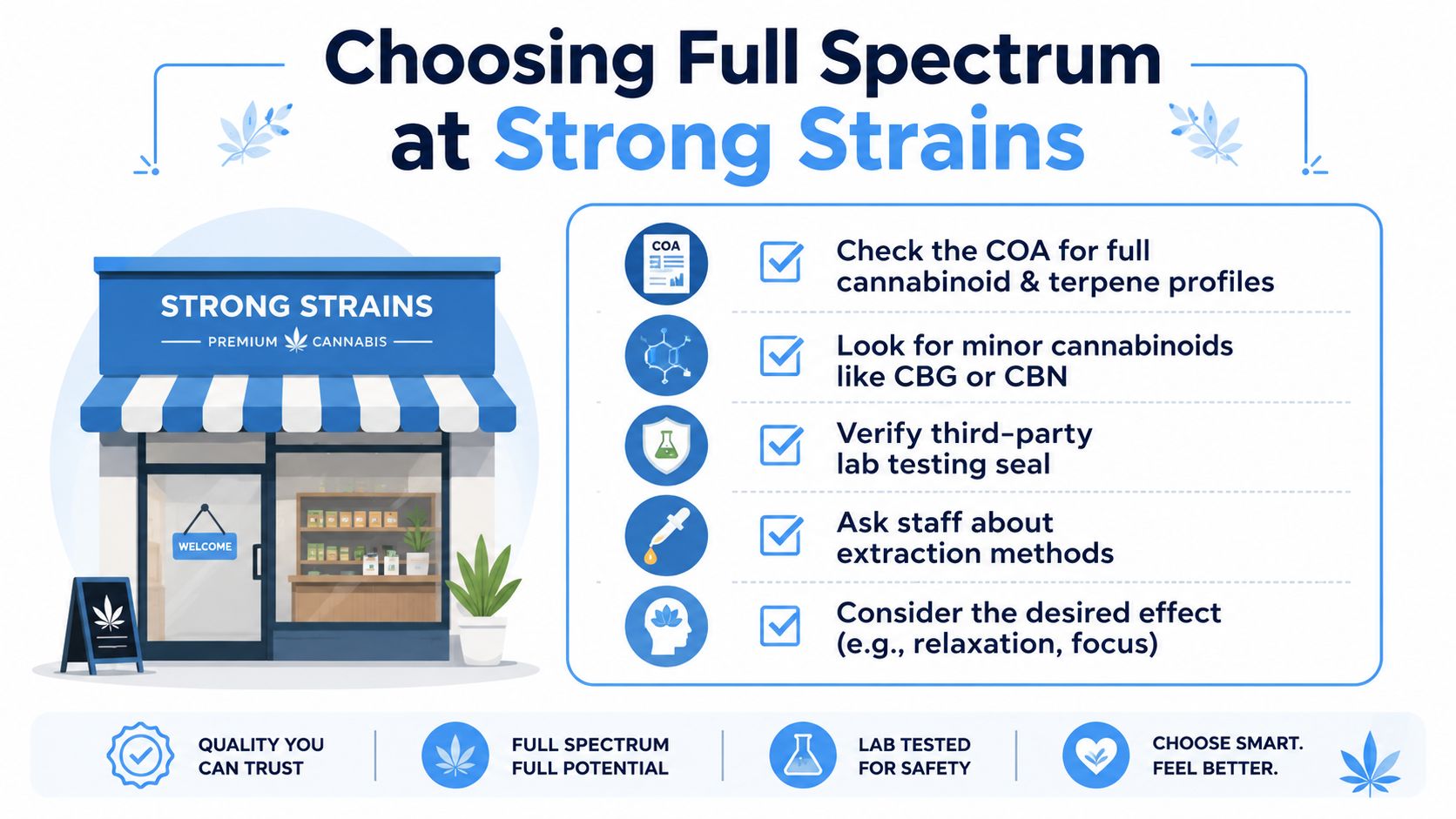
- Check the COA first. Make sure the cannabinoid profile and terpene data match the label.
- Look for minor cannabinoids. Products that list compounds like CBG or CBN usually give you more useful detail than a generic “full spectrum” stamp.
- Ask how it was made. Extraction method affects how much of the original plant profile survives.
- Pick the format that fits your routine. Tinctures suit controlled dosing, while other formats suit faster or more familiar use.
- Choose for the effect you want. A terpene profile gives you a better clue than the product name alone.
If you want a practical place to start, the tinctures selection at Strong Strains is a straightforward way to compare full-spectrum options in one format before branching out.
What to ask a budtender
Ask what the product keeps, what it removes, and how the batch was tested. That gets you past vague language and into the details that matter. The right answer should be specific, not slippery.
Strong Strains is located at 19 Technology Drive, East Setauket, NY 11733, with daily hours and extended evening hours, plus in-store pickup and local delivery across the North Shore. That makes it easier to shop by schedule, not just by product type.
If you want lab-tested full-spectrum cannabis with clear product details and real human guidance, visit Strong Strains and compare tinctures, vapes, edibles, concentrates, topicals, and accessories with a budtender who can walk you through the COA and the differences between formats. You can shop in East Setauket or use pickup and delivery to make the process easier.