
You're standing in front of a menu, trying to decide between something that'll keep your brain moving and something that won't flatten your afternoon. That's where Pineapple Trainwreck earns attention, especially if you want a strain with a real lab-tested reputation, not just a catchy name. It sits in that sweet spot between tropical flavor and functional lift, which is exactly why it keeps showing up on shelves and in conversations about daytime cannabis.
Why Pineapple Trainwreck Deserves a Spot on Your Shelf
A lot of shoppers want the same thing from a sativa-leaning flower. They want to stay clear, stay engaged, and avoid the heavy, couch-locked feel that can derail a workday or a social plan. Pineapple Trainwreck is built for that kind of customer, because its documented profile points toward a bright, head-forward experience with tropical character and a potency range that gives it real presence on the shelf. Browse strain references if you want to compare how it fits among other recognized flower categories.

The reason this strain stands out isn't mystery, it's consistency. Grower-facing and consumer guides describe it as a sativa-dominant hybrid with genetics tied to Trainwreck and Pineapple Express, and the lab ranges place THC anywhere from the mid-to-high teens into the low-to-mid 20s depending on the cut and cultivation conditions, with one detailed source reporting 20% to 24% THC and another listing 14% to 22%. That puts it in a stronger lane than some mainstream flower, which is why experienced shoppers often treat it as a “know your dose” strain rather than a casual all-day option. Royal King Seeds' Pineapple Trainwreck profile supports that potency picture.
Practical rule: if you're choosing between a softer daytime hybrid and something with a sharper ceiling, Pineapple Trainwreck usually belongs in the second group.
What makes it useful for a guide like this is that it bridges two worlds. One side is the grower data, flowering windows, yield potential, terpene profile. The other is the dispensary question, what does it feel like once you buy it, open the jar, and use it in a normal day? That's the gap many menus don't explain well, and this strain is a good example of why both lab testing and user experience matter.
The Genetic Lineage Behind Pineapple Trainwreck
Pineapple Trainwreck sits inside a family tree that already told cannabis buyers what to expect before the first jar hit a shelf. The core story is straightforward, it's commonly described as Trainwreck × Pineapple Express, and Pineapple Express itself is widely documented as Trainwreck × Hawaiian. That means Pineapple Trainwreck isn't just a fruity name, it's a cultivar coming out of an established line of tropical, energetic hybrids that breeders refined as the market pushed harder toward stronger THC and more distinctive flavor.
The Trainwreck side matters because it brings the classic sativa energy that people remember from that lineage. The Pineapple Express side matters because it adds the fruit-forward, tropical identity that made pineapple-flavored hybrids so popular in the first place. Put those together and you get a strain that reads like a blended inheritance, one branch built for acceleration, the other for sweetness and aroma. This deeper breeding project) is a useful example of how careful genetic pairing can shape a final cultivar's expression, even when the plant category is very different.
Why the family tree matters
Genetics don't guarantee identical effects, but they do help explain patterns. A strain with strong Trainwreck ancestry is more likely to lean bright, active, and mentally stimulating, while the Pineapple Express connection helps account for the fruitier terpene impression. That's why Pineapple Trainwreck usually feels like part of a recognizable category rather than an isolated novelty.
The name tells you more than marketing does. If you know Trainwreck, you already know the strain is likely to show up with speed and edge, not sleepy weight.
Published cultivation references also reinforce that it's a real breeding line with practical traits, not just a dispensary label. One source places its flowering time at 9 to 10 weeks indoors and outdoor harvest around mid-October, while another gives a 60 to 70 day flowering window. Those timelines fit a modern sativa-dominant hybrid that's been selected for market viability as well as flavor. ILGM's Pineapple Trainwreck grow guide lays out those production details clearly.
Cannabinoid and Terpene Breakdown
A strain's reputation only matters if the lab numbers support it. With Pineapple Trainwreck, they do. Multiple independent databases place it in the high-teens to low-20s THC range, and one grower-facing source lists 20% to 24% THC, while another guide reports 14% to 22% and notes an 80% sativa / 20% indica split. In plain language, that means the strain can feel moderate in one batch and noticeably assertive in another, depending on phenotype, cultivation, and lab sample. Joint Commerce's strain guide is one of the sources that shows that variance plainly.
What the numbers tell you
THC is the main driver of intoxication, but Pineapple Trainwreck isn't just THC in a vacuum. One source reports CBG at 0.1% to 0.8% and CBC at 0.1% to 0.3%, which tells you this flower can carry measurable minor cannabinoids alongside the primary intoxicating compound. Those compounds don't make the strain into something else, but they do add to the broader chemistry that shapes how the experience lands. Hemp Well Limited's endocannabinoid system overview is a useful background resource if you want to understand why cannabinoid interaction matters at all.
| Compound | Reported Range | Role in Experience |
|---|---|---|
| THC | 14% to 24% | Main intoxicating driver, affects intensity and onset |
| CBG | 0.1% to 0.8% | Minor cannabinoid, may support the overall chemistry profile |
| CBC | 0.1% to 0.3% | Minor cannabinoid, part of the full-plant effect picture |
| Myrcene | Low-percent range | Often associated with a rounder, softer aromatic base |
| Limonene | Low-percent range | Helps shape citrus brightness and a more lifted nose |
| Alpha-pinene | Low-percent range | Adds a crisp, pine-like finish and clarity in aroma |
The terpene profile is especially important here because it helps explain why the strain reads as energizing rather than heavy. Myrcene, limonene, and alpha-pinene are the most commonly reported terpenes in consumer guides, and that combination usually points to fruit, citrus, and pine instead of gas or dessert-like heaviness. For shoppers, the takeaway is simple, Pineapple Trainwreck usually smells like a strain built to wake up the senses, not slow them down.
Aroma, Flavor, and Sensory Experience
Open a jar of Pineapple Trainwreck and the first impression usually lands fast. The aroma tends to come off as tropical, citrus-bright, and piney, with the pineapple note showing up first and the Trainwreck side surfacing as a sharper herbal finish. That combination makes it easy to understand why people keep describing this strain as fruit-forward without being sugary.
What the nose and palate usually pick up
The reported terpene mix explains the sequence. Limonene supports a citrus lift, myrcene rounds the profile with a softer, fruit-adjacent base, and alpha-pinene adds that clean pine edge that keeps the strain from becoming cloying. When those pieces are present together, the inhale often reads as sweet and juicy at first, then more herbal and crisp on the exhale.
The sensory experience can feel familiar even to shoppers who don't think in terpene terms. You get tropical fruit on the front end, then a cleaner, forest-like finish that keeps the profile balanced. That's part of what separates Pineapple Trainwreck from strains that smell fruity but fade into one-dimensional sweetness once you light them.
A good cure matters here. If delicate terpenes are preserved, the pineapple and pine notes stay vivid instead of flattening into generic sweetness.
Storage changes the experience more than many buyers realize. Heat, light, and too much air can dull the bright top notes that make this cultivar distinctive, so a properly sealed jar and careful curing help preserve the character people are buying it for. That's especially important with a strain like this, where the aroma is a major part of the appeal before the first puff even happens.
By the time the flavor settles, Pineapple Trainwreck usually feels like a clean, layered smoke or vapor rather than a heavy one. The best samples don't just taste fruity, they keep the citrus and pine in balance all the way through.
Typical Effects and How They Compare to Similar Strains
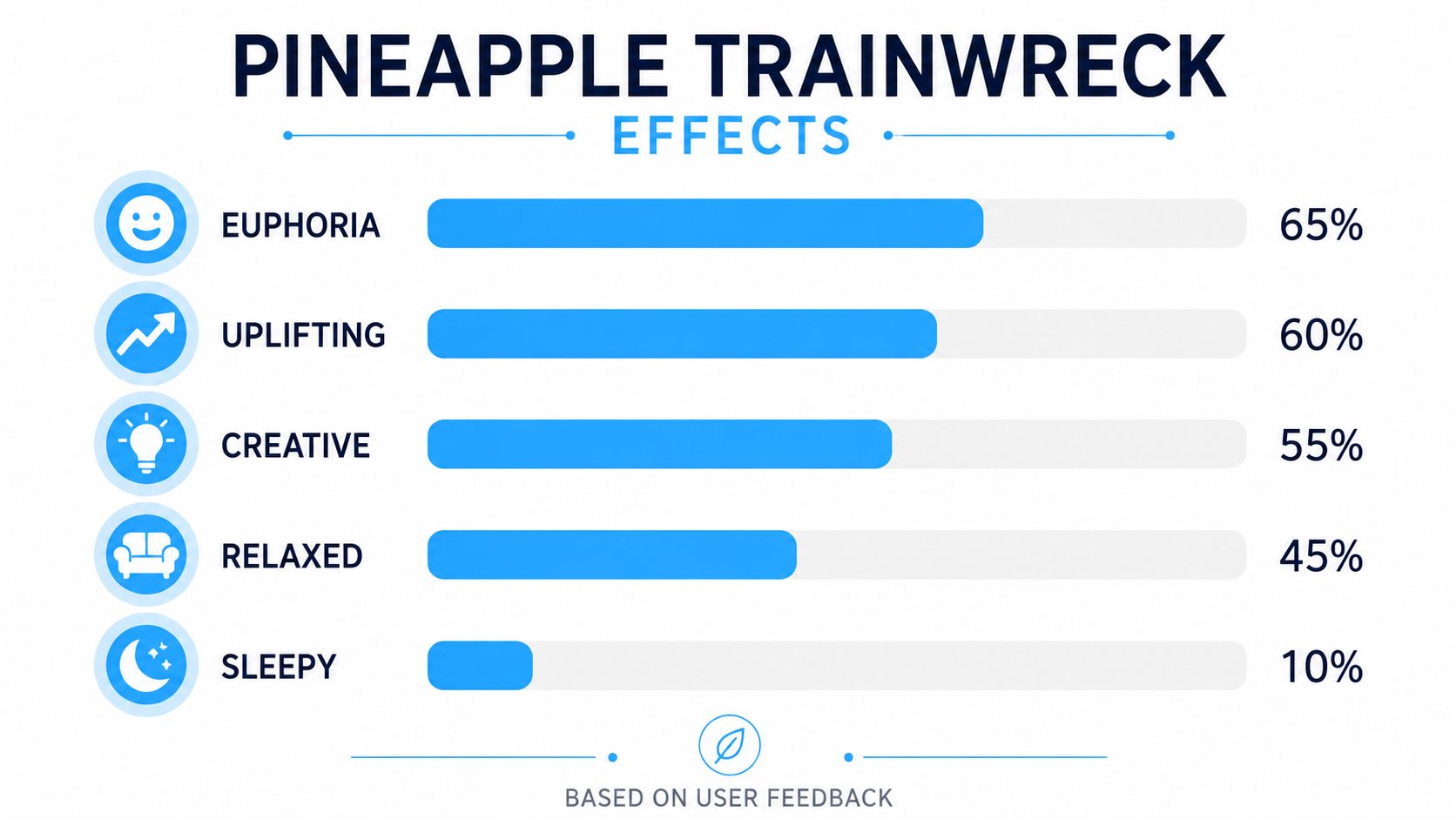
The clearest effect data attached to Pineapple Trainwreck points in one direction, energizing, creative, and focused. Leafly describes it as “mostly energizing,” and Weedmaps' user-reported breakdown lists 56% focused, 33% creative, and 11% energetic. That doesn't sound like a strain made for winding down, it sounds like one made for getting something done while staying mentally engaged. Leafly's Pineapple Trainwreck page is one of the clearest public references for that effect profile.
How it compares in real life
Compared with heavier hybrids, Pineapple Trainwreck usually feels more cerebral and less body-dominant. That means it tends to suit creative work, errands, daytime walks, music sessions, and social situations where you want a little spark without getting foggy. Compared with strains that lean more sedating, it has a cleaner landing and a more active headspace.
The closest comparison many shoppers recognize is another energetic sativa-leaning hybrid with a bright nose and functional mood lift. Pineapple Trainwreck generally fits that same use case, but the pineapple and pine notes give it a more tropical personality. It's the kind of flower a customer may choose when they want the Trainwreck style of momentum without the harsher edge some users feel from straight-up high-octane sativas.
If your goal is a quiet night on the couch, this probably isn't your first pick. If your goal is a clear-headed afternoon, it's much more in range.
One important detail is dose. Even a strain with a friendly, upbeat reputation can feel sharper at higher intake, especially when THC runs into the 20s. For shoppers who want to stay functional, the sweet spot is usually about pacing the session instead of chasing the full effect all at once. This Trainwreck-infused reference product is a reminder that the Trainwreck family can show up in much more intense formats too, so format choice really matters.
Medical Applications and Potential Side Effects
Pineapple Trainwreck gets attention from wellness-focused consumers because its effect profile leans toward mood lift, mental clarity, and daytime function. That makes it a strain some people consider for fatigue, stress, mild pain, and mood-related concerns, especially when they want relief without the heavy pull of a sedating flower. It's not a cure, and it shouldn't be treated like one, but its bright character can fit a few practical use cases for adults who tolerate THC well.
Common reasons people reach for it
Some shoppers choose strains like this when they want help starting the day, getting through routine tasks, or staying socially present. Others look for a strain that feels uplifting enough to interrupt a low-energy mood without fully knocking them off balance. Because Pineapple Trainwreck is sativa-dominant and often potent, it tends to make more sense for people who already know how THC affects them.
Potential side effects stay in the familiar cannabis range. Dry mouth and dry eyes are common complaints with many THC-forward strains, and Pineapple Trainwreck can also feel too stimulating for users who are prone to anxiety or racing thoughts, especially at higher doses. That's not unusual for a lively sativa-dominant hybrid, it just means dose control matters.
Start smaller than you think you need, then wait. A strain that feels smooth at one puff can feel very different if you keep stacking hits too quickly.
For medical-minded consumers, the safest approach is simple. Use the lowest effective amount, note how fast the onset comes on for you personally, and stop if the effect shifts from clear to edgy. If you're using cannabis for a health concern, especially alongside other medications, a healthcare professional should still be part of the conversation.
Consumption Methods and Dosing Guidance
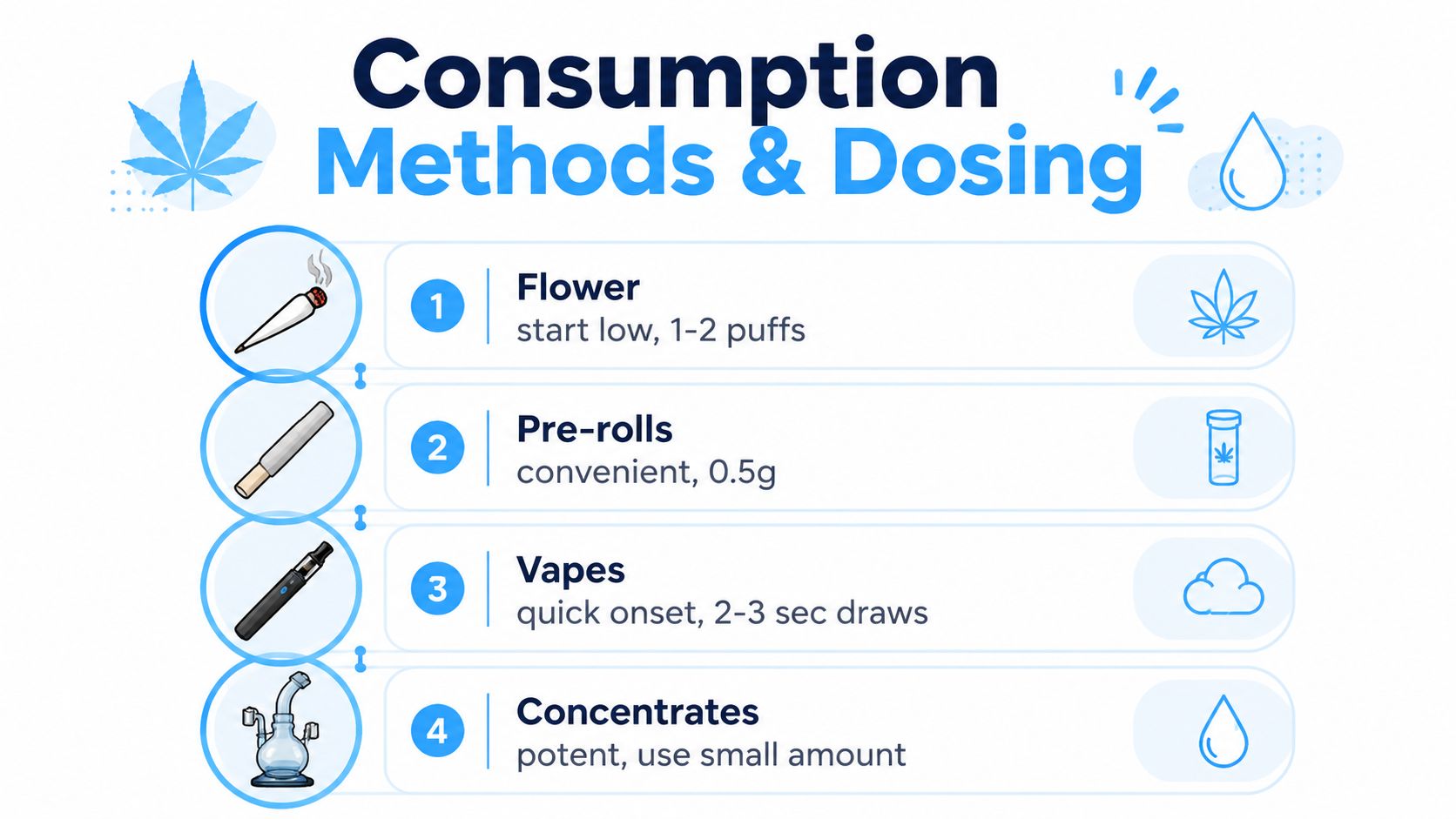
How you consume Pineapple Trainwreck changes the experience as much as the strain itself. Flower gives you the most direct read on aroma and flavor. Pre-rolls make it easy to share or keep the session simple. Vapes tend to deliver a faster, cleaner onset. Concentrates raise the intensity quickly, which is why they demand the most caution.
Matching the format to the moment
If you're new to this strain, start with flower or a low-dose vape session rather than jumping straight into a concentrate. A few controlled inhalations let you learn how your body handles the energizing side of the high without overcommitting. If you already know your tolerance, you can use the format to fine-tune the session, with flower giving you the most nuance and concentrates giving you the most punch.
- Flower: Best for taste and pacing, take 1 to 2 puffs and wait before adding more.
- Pre-rolls: Good for convenience and sharing, especially when you want a simple, ready-to-go session.
- Vapes: Useful when you want a quicker onset and a lighter smell profile.
- Concentrates: Best for experienced users who want strong potency in a very small amount.
The most practical rule is still the one budtenders repeat every day, start low and go slow. That matters even more with a strain whose THC can land in the 20s, because the difference between “uplifting” and “too much” can come down to one extra draw. If the high feels sharper than you want, pairing it with a CBD-rich product can help some users smooth out the edge, though each person's response is different.
This Pineapple Trainwreck vape cart is a good example of how the strain can be adapted into a fast, portable format for people who prefer measured pulls over a full flower session.
Cultivation Notes for Home Growers
Growers tend to like Pineapple Trainwreck for one simple reason, it finishes fast enough to stay practical while still offering meaningful yield potential. Published grow data puts flowering at 9 to 10 weeks indoors, or 60 to 70 days, with outdoor harvest around mid-October. One source lists indoor yields of 16 to 20 ounces per square meter, while another gives 400 to 500 g/m² and some vendor claims push outdoor production as high as 700 g per plant. ILGM's cultivation reference is a good starting point for those numbers.
What growers should expect
This is a sativa-dominant plant, so it typically stretches more than a compact indica. That means early training matters, especially if you're running a small tent and want to keep the canopy even. Medium height and a relatively fast finish make it manageable, but it still asks for structure, airflow, and attention during flower.
A few practical habits make a real difference.
- Train early: Use topping or training before stretch gets away from you.
- Watch airflow: Sativa-leaning canopies trap humidity more easily.
- Feed carefully: Strong growth doesn't mean it likes heavy-handed inputs.
- Plan harvest timing: Outdoor growers should watch weather as mid-October approaches.
If you're buying rather than growing, the key takeaway is that good cultivation shows up in the jar. A well-grown Pineapple Trainwreck sample should smell lively, cure cleanly, and reflect the terpene profile the lab suggests. That's exactly why lab testing and knowledgeable staff matter when you're choosing flower locally.
For Long Island shoppers, the smartest move is to buy from a dispensary that can walk you through batch specifics, not just the strain name. Strong Strains offers that kind of guidance, along with lab-tested flower, vapes, pre-rolls, and concentrates that make it easier to choose the right version of Pineapple Trainwreck for your tolerance and your day. If you want a premium, straight-answer shopping experience, visit Strong Strains and talk with a team that understands how to match potency, flavor, and format to your goal.