
You just finished a bowl, the chamber water looks like iced tea, and the next pull tastes like last week's resin instead of the flower you ground. The downstem gurgles slower than it did a few nights ago. That's the usual moment someone decides to figure out how to clean a bong, usually standing over a sink with a piece that's already overdue.
Resin, tar, and stale water collect in the chamber, the downstem, and the bowl. They dull flavor, pinch airflow, and give residue a place to cling. A periodic clean is basic maintenance, the same habit as rinsing a coffee carafe before the next pot. It improves taste and hygiene. It does not make smoking harmless, and the steps below stay honest about that line.
What You Need to Clean a Bong
Say you're clearing a small beaker after a week of nightly sessions. You don't need a specialty kit from a lab. You need a solvent that cuts resin, a grit that won't dissolve in that solvent, and tools skinny enough for slits you can't see.
| Supply | What it does | Notes |
|---|---|---|
| Dedicated bong cleaner | Pre-mixed resin solvent | Follow the label; often easier on printed finishes |
| Coarse salt or uncooked rice | Abrasive that scrubs while you shake | Kosher or rock salt works better than fine table salt |
| Mild dish soap + warm water | Routine wash and pre-clean | Safe for silicone, acrylic and glass |
| Bong brush, pipe cleaners and cotton swabs | Reach the chamber, downstem slits and bowl | Nonabrasive bristles only; never metal |
| Large zip-top bag or rubber stoppers | Seal the piece or parts for shaking and soaking | Pick a bag that fits the whole piece |
| Nitrile gloves and microfiber towel | Protect hands, then dry and polish | Nitrile holds up to alcohol better than latex |
Isopropyl alcohol at 91% to 99% is the solvent most glass can handle, and a labeled bong cleaner is the gentler swap when a logo is printed on the tube. Coarse salt or a spoon of uncooked rice stays solid in alcohol, so the grains scrub while you shake. Fine table salt dissolves too fast and mostly wastes the shake. Mild dish soap and warm water handle the everyday film before any solvent goes in.
A nonabrasive bong brush, pipe cleaners, and cotton swabs reach the chamber wall, the downstem slits, and the bowl. Metal scrubbers scratch glass, and those scratches hold the next layer of resin. A large zip-top bag, or rubber stoppers in the joint and mouthpiece, lets you shake without spraying alcohol across the counter. Nitrile gloves and a microfiber towel finish the setup: nitrile stands up to alcohol better than latex, and the towel is for polishing dry glass, not for stuffing moisture into a joint.
Glass and ceramic tolerate a solvent soak. Silicone and acrylic do not. Alcohol can cloud acrylic and soften silicone, so those pieces stay on soap and warm water with a soft brush. Set up at the sink with a window cracked or a fan running. With this list on the counter, a full clean takes about 15 to 30 minutes. Once the piece is dry and you're loading fresh flower, how to pack a bowl keeps the next session from starting in a half-cleared stem.
Cleaning Chemicals to Avoid and How to Dispose of Them
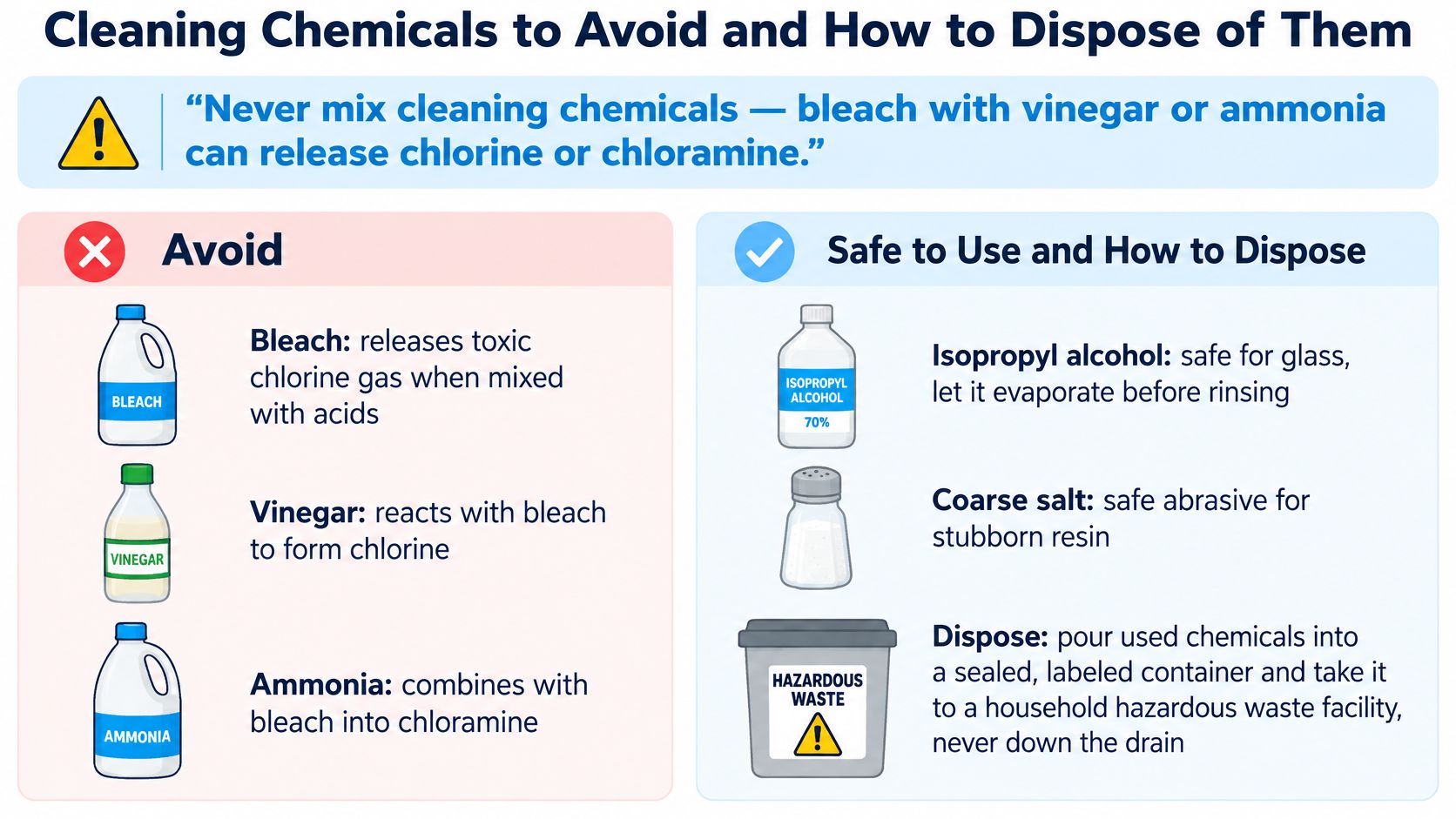
Never mix cleaning chemicals. Bleach with vinegar or ammonia can release chlorine or chloramine gases capable of severe lung injury.
That rule outranks every hack video. A "stronger" mix just makes a new gas in a small, unventilated bathroom, and your lungs become the filter. One product, used alone, always beats a cocktail.
Keep these out of the smoking path:
- Bleach: It doesn't belong in a water pipe, and it reacts with acids and ammonia.
- Ammonia: Mixed with bleach, it can form chloramine.
- Fragranced multi-purpose sprays: Perfume and surfactants cling inside joints and percolators.
- Anything unlabeled for glass water pipes: If the bottle doesn't say the residue can be fully rinsed from something you'll inhale through, leave it in the cabinet.
The bigger hazard after a clean is leftover cleaner, not a faint ring of resin. Rinse each part under running water until three checks pass: you can't smell the product, you can't see foam, and you can't feel a slippery film when you run a finger along the glass. Then let every part air-dry completely before you refill. A slightly stained piece you rinsed clear beats a shinier one still holding solvent in the joint.
Work with the window open and the nitrile gloves on. Keep alcohol away from the stove, a lighter, and a space heater, because the vapor ignites at room temperature. A bottle labeled as a disinfectant still isn't a bong soak. Cleaning removes soil. Disinfection is a different job, and it belongs on surfaces you won't breathe through.
Where the used alcohol goes
Treat spent isopropyl alcohol as household hazardous waste. Ignitable liquids and their vapors can create fire or explosion hazards inside plumbing and sewer systems, so the drain, the toilet, and the yard are all off the list.
Pour the used solvent into a sealed, clearly labeled jar and keep it away from heat and open flame. Then check your local household-hazardous-waste program for drop-off rules, since accepted lists differ by town. The resin-flecked liquid looks harmless. It isn't.
Step-by-Step Cleaning Routine and Water Schedule
Run the clean in two stages. Strip the loose film with soap and warm water first, then use a glass-safe solvent. The CDC facility-cleaning guidance recommends soap or detergent and water before a disinfectant because organic residue can reduce how well a later product works. The same order helps a bong: alcohol cuts hardened resin better once the slime is gone. Stick to one cleaner at a time, because mixing products can release toxic gases, and only use something you can rinse fully out of the smoking path.
The eight steps
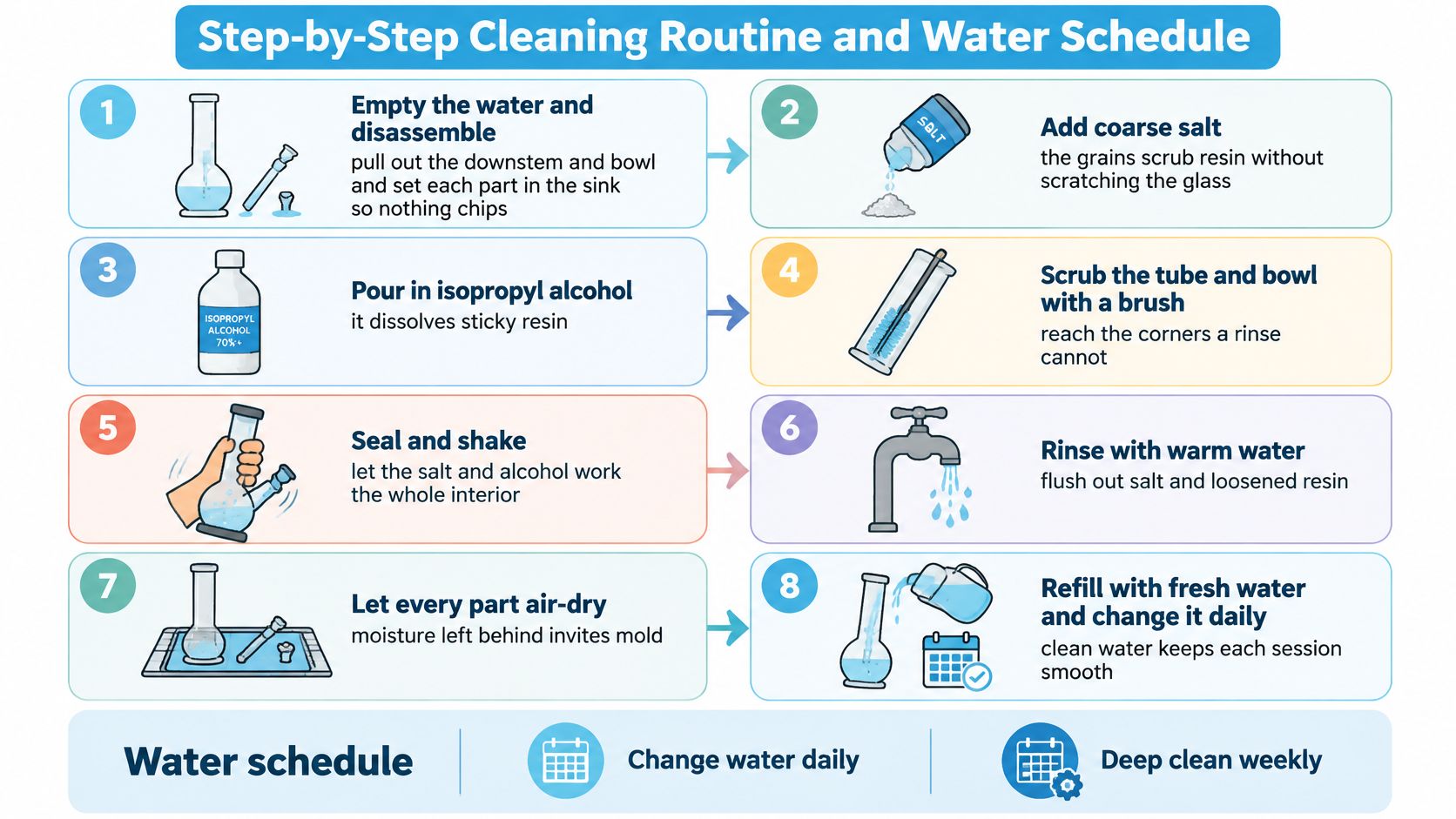
- Empty and take it apart. Dump the water. Pull the downstem and bowl, and set each part in the sink basin so a wet joint doesn't roll onto the floor and chip.
- Pre-rinse with warm water, never boiling. A sudden temperature jump can crack cold glass. Let a piece that came in from a cold car sit until it feels like the room.
- Wash with dish soap and a soft brush. This strips the loose organic film so the solvent isn't fighting slime. Skip this and you'll shake for longer with worse results.
- Add the cleaning mix. Pour isopropyl alcohol into the chamber, or bag the parts with alcohol and a handful of coarse salt, then plug the openings. A labeled bong cleaner follows its own bottle instead of this mix.
- Shake for one to three minutes. Heavy resin can soak 30 to 60 minutes, or overnight if the piece has been ignored for months. Shake again before you dump it.
- Scrub the tight spots. Pipe cleaners and cotton swabs go through percolator slits, downstem diffusers, and the bowl. If a swab comes out brown, that channel wasn't done.
- Rinse until the water runs clear. Warm water, three or four passes at minimum, more for a big chamber or a heavy soak. Keep going until there's no alcohol smell, no foam, and no slippery film on the glass. Clear, odorless rinse water is the success check, not a count of rinses.
- Air-dry on a towel before you reassemble. Trapped moisture in a capped piece is how odor comes back. Joints and percolator arms need to feel dry, not just look dry.
How often to change the water
A clear chamber is not a clean chamber. Coverage of waterpipe hardware in Cannabis Industry Journal notes that bubbling through water did not significantly reduce several important toxicants, including carbon monoxide, nitric oxide, polycyclic aromatic hydrocarbons, and dry particulate matter. The same coverage points out that stagnant, warm, resin-containing water can support microbial growth and biofilm in percolator spaces, though that evidence is still limited and shouldn't be overstated.
Water rule: Dump and replace the water after every session, even when it still looks clear. Don't cap or store a wet piece.
| Task | How often | Why it matters |
|---|---|---|
| Empty and replace the water | After every session | Stagnant resin water breeds biofilm and odor |
| Warm-water rinse of chamber and parts | After every session | Stops fresh residue from hardening |
| Wipe the exterior and mouthpiece | Daily or each use | Removes dust, fingerprints and lip residue |
| Soap-and-water brush wash | Weekly for frequent users | Removes light film without solvents |
| Full solvent clean (alcohol + salt or bong cleaner) | Weekly for daily use, monthly for occasional use | Dissolves hardened resin in the chamber and downstem |
| Deep-clean percolator slits and hidden channels | When airflow, taste or clarity drops | Hidden pathways trap resin and biofilm first |
If the bong is shared, wash the mouthpiece between people. Bump the deep clean up as soon as airflow, taste, or water clarity drops rather than waiting for the calendar. Cleaning cuts built-up residue and keeps the water fresher between sessions. It doesn't pull every smoke toxicant out of the bubble, and it doesn't make inhalation risk-free.
Fixing Stubborn Resin, Lingering Smells and Delicate Pieces
If the piece still looks hazy or smells off, you're usually dealing with trapped residue, a hidden channel, or a cleaner that doesn't match the material. Reaching for a harsher bottle is the wrong next move. A CDC survey of cleaning habits found that 39% of U.S. adults reported at least one unsafe cleaning or disinfection practice, including inhaling cleaner vapors, and 6% reported breathing problems they attributed to cleaners or disinfectants. The same warning covers mixing bleach with vinegar or ammonia, which can generate chlorine or chloramine gases capable of severe lung injury. Stronger chemicals don't automatically mean cleaner glass. Leftover residue becomes a new inhalation risk.
| Symptom | Likely cause | Fix |
|---|---|---|
| Hazy film that returns after rinsing | Cleaner or salt residue left in the piece | Rinse three to four more times with warm water until there is no odor, foam or slip |
| Sour or musty smell that survives cleaning | Biofilm in percolator slits or the downstem | Soak overnight in bong cleaner, scrub channels with a pipe cleaner and air-dry fully |
| Resin that will not budge | Soak too short or too cool | Re-soak 30 to 60 minutes, or overnight, then shake again with fresh coarse salt |
| Scratched or cloudy glass | Abrasive pads or metal tools | Switch to nonabrasive brushes, cotton swabs and coarse salt only |
| Chipped or cracked joint | Boiling water or sudden temperature change | Use warm water only and let cold glass reach room temperature first |
| Faded or peeling printed design | Alcohol or hard scrubbing on the print | Spot-test first and wash printed areas with mild soap only |
| Musty smell after storage | Piece was capped or stored while wet | Air-dry completely and store uncovered in a dry place |
Materials that hate a solvent soak
Silicone and acrylic skip alcohol and salt. Warm water, dish soap, and a soft brush are the whole routine. Solvent can cloud acrylic and degrade silicone, and you can't polish that haze back out.
Printed or painted glass gets a spot test on a small patch first. Wash the artwork with mild soap. Don't soak the logo in alcohol, and don't scrub it. Alcohol and hard pressure lift ink.
Percolator-heavy pieces need a pipe cleaner through every slit, then extra rinses until the water draining out matches the water going in. A sour or musty smell that survives a normal clean is usually biofilm in those channels. The fix is a longer soak and a full air-dry, not a stronger chemical. If you're also running a rig, the best way to smoke concentrates is a separate routine from this water-pipe clean, and the glass still needs the same rinse-until-clear finish.
Keep Your Bong Fresh and Your Sessions Safe
A clean bong protects the glass, the flavor, and the hygiene of the mouthpiece. It does not make smoke harmless. The CDC's lung-health guidance states that smoked cannabis can damage lung tissue and cause scarring and damage to small blood vessels, whether it's smoked through a joint, a pipe, or a bong. Cannabis smoke contains many of the same toxins, irritants, and carcinogens as tobacco smoke, and smoking it can raise the risk of bronchitis, coughing, and mucus production. A cleaner water pipe cuts built-up residue. It doesn't establish that a bong is the safer way to consume.
Health Canada's guidance on inhalation accessories makes a related point: water pipes may cool smoke and filter some harmful substances, but they don't remove the health risks of smoking, including bronchitis, lung infections, chronic cough, and increased chest mucus. The agency recommends glass or ceramic rather than plastic or other materials that may release harmful chemicals when heated, and a different mouthpiece if the piece is shared, because sharing can spread infections. Wiping the piece down and replacing the water is part of that advice. It is maintenance, not a safety upgrade for combustion.
The routine in three lines
- Fresh water after every session, even when the chamber still looks clear.
- A full clean weekly if you use the piece most days, and monthly if you don't.
- Complete air-drying before you put it away, uncovered, in a dry spot.
Flower you plan to load later stays in better shape in a cool, dark, dry place, in a sealed airtight container, the same storage habit we use for Strong Strains flower. Humidity swings that dry a jar out or leave it damp are covered in cannabis humidity levels.
If you need a bong brush, a residue-free cleaner, a replacement downstem, or a new piece, visit us at 19 Technology Drive in East Setauket. Budtenders can match the brush and the cleaner to the glass you own. Orders can be placed for in-store pickup or local delivery across Long Island. Clean gear, fresh hits, no guesswork. Cannabis products are for adults 21 and older, and everything here is meant for responsible adult use.
Strong Strains Cannabis Dispensary carries the brushes, cleaners, and glass that make this rinse-until-clear routine easy to keep up, plus lab-tested flower and accessories for adults 21 and older. If your piece needs a new downstem or you're ready to replace a cloudy tube, our budtenders at the East Setauket shop can walk you through the fit. Visit Strong Strains Cannabis Dispensary for in-store pickup or local delivery across Long Island.