
You're probably here because shaving has turned into a chore. The smoothness barely lasts, the stubble comes back fast, and the irritation can feel worse than the hair itself. Traditional waxing can solve one problem and create another, especially if your skin gets angry every time something sticky touches it.
Sugaring sits in a different category. It's less about brute force and more about technique. If you want to learn how to use sugar wax well, the biggest shift is this: stop thinking of it like a product you slap on and rip off. It works best when you treat it like a craft. The feel of the paste, the dryness of the skin, the angle of your hand, and the speed of your flick matter more than most beginner guides admit.
The Sweet Path to Smoother Skin
Sugaring has staying power for a reason. It's a historically ancient hair-removal method, often traced to ancient Egypt, and modern sugar paste is typically made from sugar, water, and lemon juice. The method itself is also what makes it different: you apply the paste against hair growth and remove it with the direction of growth, which is why many people describe it as gentler than traditional waxing. Results are commonly said to last about 3 to 5 weeks according to this sugaring market overview.
That timing changes your mindset. Sugaring isn't daily upkeep. It's a grooming rhythm. You do it, enjoy the smoothness, then leave your skin alone for a while instead of fighting regrowth every few days.
For people comparing methods before they commit, this guide to London, Ontario hair removal solutions is a useful read because it helps frame where waxing-based methods fit compared with longer-term options.
There's also a useful mental crossover between beauty products and cannabis concentrates. If you've ever read about sticky, heat-sensitive textures in types of weed wax, you already understand the basic principle: temperature changes texture, and texture changes control. Sugar wax is the same way. A paste that's too warm behaves like syrup. A paste that's too cool fights your hands.
Practical rule: Good sugaring feels controlled, not rushed. If the paste is sliding, stringing, or smearing everywhere, the issue usually isn't your courage. It's your prep or your temperature.
Why beginners often do better with sugaring
A lot of at-home hair removal goes wrong because people mistake discomfort for effectiveness. They pull upward, overload the product, or work on damp skin. Sugaring punishes those habits quickly.
What tends to work better is a lighter touch:
- Thin application: You want coverage, not a thick blanket.
- Directional removal: Pulling with the hair growth helps reduce breakage.
- Washable residue: If you leave a little behind, cleanup is straightforward.
What smooth results actually depend on
You don't need perfect hands. You need repeatable habits.
The sessions that go well usually have the same ingredients:
- Dry skin
- Controlled paste temperature
- Small sections
- Fast, low flicks instead of big dramatic pulls
That's where flawless at-home results come from. Not luck, and not force.
Preparing Your Skin and Your Sugaring Space
The session usually goes wrong before the first piece of paste leaves the jar. You step into a warm bathroom, your skin is clean but still a little humid, the counter is crowded, and your hands start getting tacky before you even begin. Sugar paste reacts to all of that.
Start with skin that feels right
Good prep is tactile. The skin should feel clean, soft, and completely dry, with no slip from lotion, oil, deodorant, or sweat. If your fingertips glide over the area instead of catching slightly, the surface is usually too moisturized for clean adhesion.
Beginners often miss the humidity factor. Skin can look dry and still hold enough moisture to make the paste smear or lose grip, especially after a shower. Give the skin time to cool and air out first.
A lot of people also benefit from learning more about proper exfoliation for healthy skin, because over-exfoliated skin can feel reactive and thin, while a rough buildup of dead skin can keep the paste from catching short hairs cleanly.
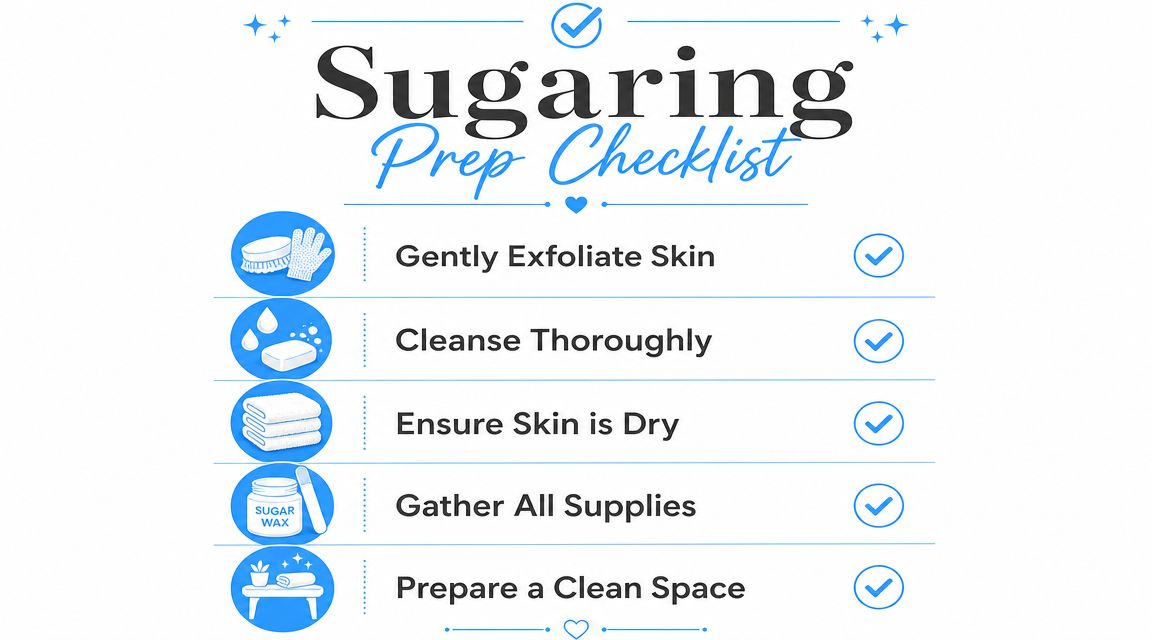
Prep checklist that actually changes your results
Use this standard before every sugaring session:
- Exfoliate in advance: Do it before the day of sugaring or earlier in the day if your skin tolerates it well. Freshly scrubbed, irritated skin is harder to work on.
- Wash off residue: Remove sunscreen, lotion, body oil, and deodorant fully.
- Dry the area completely: Pat dry, then wait if the room is warm or steamy.
- Use a small amount of powder: The goal is to remove surface moisture, not coat the skin.
- Set out your tools first: Keep paste, powder, a towel, and warm water within reach so you are not searching one-handed with sticky fingers.
The finish you want is almost velvety. If the skin feels slick, damp, or overheated, pause and fix that before you start.
Set up a space that helps your hands stay consistent
Sugaring asks a lot from your fingers. They need to feel the paste clearly, keep a steady grip, and work without rushing. A cramped setup makes all of that harder.
A simple station works best:
| Area detail | What works better |
|---|---|
| Surface | Clean counter or tray with tools laid out in order |
| Lighting | Bright light so you can spot hair direction and missed patches |
| Body position | A stance or seat that lets you hold skin taut without twisting |
| Room temperature | A cooler room where your hands stay dry and the paste stays controllable |
I always tell beginners to choose a room that does not make them sweat. Heat changes the feel of the paste quickly. What starts out firm and workable can turn loose in your fingers if the room is too warm, and then people blame their technique when temperature is to blame.
Small adjustments that save a session
These details look minor on paper and matter a lot in practice:
- Brush away excess powder: Too much creates a dusty barrier and dulls the paste's grip.
- Work one area at a time: Prep a small section, sugar it, then move on.
- Keep a dry towel nearby: Wipe your fingertips as soon as they feel tacky.
- Check skin temperature with your hand: If the area feels warm from clothing, exercise, or a recent shower, wait a few minutes.
- Start on easier ground: Legs and forearms let you learn pressure, angle, and skin tension without fighting curves and folds.
The best home sugaring results come from treating prep like part of the craft. When the skin is dry, the room is workable, and your setup supports your hands, the paste feels more predictable from the first touch.
Mastering the Sugar Wax Application Technique
A beginner usually blames the recipe first. In practice, the session is won or lost by feel. Sugar paste has a narrow working range, and your hands need to learn that range the way a cook learns dough.
Get the texture right before you touch your skin
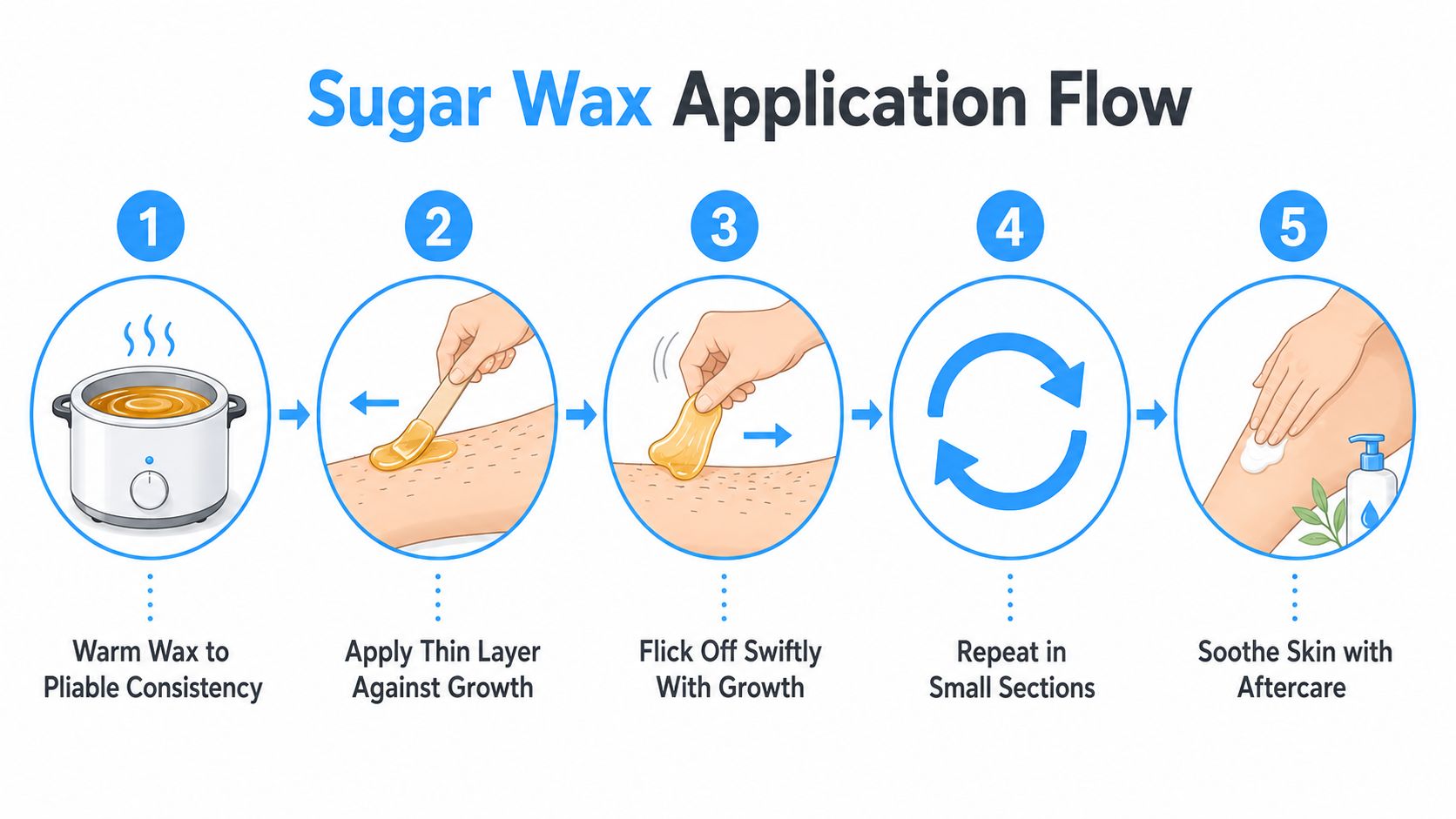
Start with a small piece of paste and work it in your fingers until it turns opaque and pliable. It should stretch with a little resistance, hold its shape for a moment, and soften from body heat without turning runny. If it droops between your fingers, it is too warm. If it fights you and cracks at the edges, it is too cool or overworked.
This is the part DIY tutorials often rush. Temperature control is not a side note. It is the craft.
On the skin, the paste should spread into a thin layer against hair growth. Thin matters. You should still be able to make out the hair underneath. A thick coat looks reassuring to beginners, but it usually creates drag, wastes paste, and leaves more cleanup behind.
What the hand motion should feel like
The motion is a firm press and short mold, done with purpose. You are not painting product across the skin. You are guiding the paste around the base of the hair so it can grip cleanly on the removal.
Use this sequence:
- Pinch off a small piece of paste.
- Knead it until it feels soft, opaque, and controllable.
- Press it onto the skin against the direction of growth.
- Mold the same patch a few short times with steady pressure.
- Anchor the skin taut with your free hand.
- Flick the paste off quickly in the direction of growth, staying low and close to the skin.
Keep the removal compact. A long, dramatic pull usually means the angle is wrong.
Pull across the skin, not upward. Upward pulling increases breakage, stings more, and makes bruising more likely.
A shin example that teaches the right rhythm
The shin is one of the best places to learn because the surface is simple and the hair pattern is usually easy to read. Use a patch small enough that you can fully control it with one hand stretching and one hand working.
Press the paste upward against growth with your fingertips, using enough pressure to mold it thinly without smearing it far beyond the patch. You should feel the paste catch slightly as it settles around the hair. Then hold the skin firm and flick the paste back in the direction of growth without lifting away from the surface.
The cleanest removal feels quick, low, and almost understated.
If your elbow flies up or your whole arm swings, scale it down.
What works well, and what causes trouble fast
Real results come from small decisions repeated well.
| If you do this | You'll usually get this result |
|---|---|
| Use a small ball of paste | Better control and cleaner passes |
| Apply a thin layer | Stronger grip and less residue |
| Keep the skin firmly taut | Cleaner extraction and less irritation |
| Flick parallel to the skin | Better removal with less bruising |
| Use too much paste | Smearing, sticking, and wasted product |
| Pause during the flick | Incomplete removal and more residue |
There is a trade-off here. Cooler, firmer paste gives you more control, but if it is too firm you will struggle to spread it thinly. Warmer paste molds more easily, but it can lose structure in seconds, especially on warm skin or in hot hands. Beginners usually do better with slightly firmer paste because control matters more than speed.
Sensory checkpoints for beginners
Pay attention to what your fingers and the paste tell you during each pass.
- Too soft: It spreads before you mean it to and feels slippery instead of tacky.
- Too hard: It resists pressure and skips across the skin instead of molding.
- Too thick on the skin: The hair disappears under the paste and the flick feels heavy.
- Ready to use: It holds a thin edge, molds neatly, and releases in one controlled motion.
A good pass leaves the area mostly clear with only light residue. If the paste keeps collapsing, smearing, or forcing you to rework the same spot, stop and adjust the temperature or amount in your hand before you continue.
That is how to use sugar wax well. Learn the feel first, and the technique becomes much more reliable.
Sugaring Different Body Areas Safely
Technique doesn't stay identical from one body area to another. Legs give you room to work. Underarms challenge your angle. The bikini line demands patience and restraint. If you try to use one speed and one amount of pressure everywhere, you'll get mixed results.
Legs and arms are your training ground
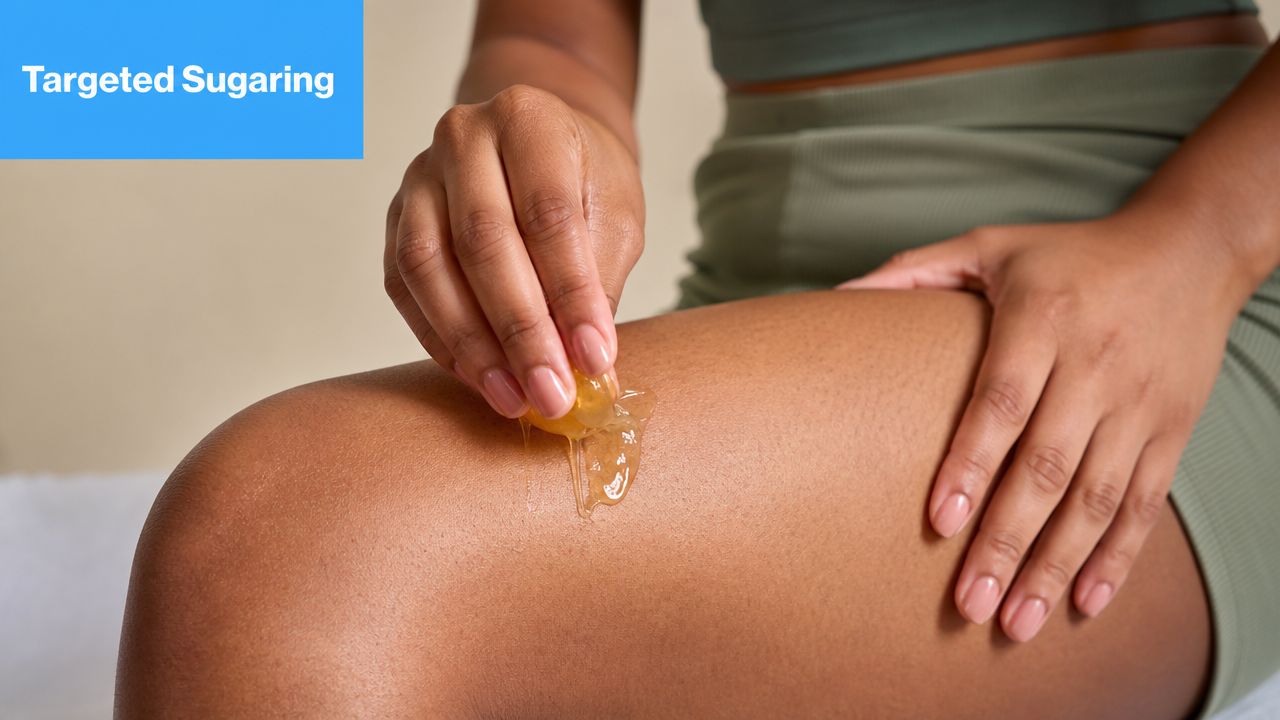
These areas are the most forgiving. The surface is broader, you can usually see the growth pattern more clearly, and it's easier to keep the skin taut with one hand while working with the other.
Use them to learn:
- How thin the layer should be
- How fast your flick needs to be
- How warm the paste can get before it becomes annoying
If you can get smooth, clean passes on your lower legs, your hands are building the right habits.
Underarms require more control
Underarms are trickier because the shape changes as you move and the area tends to hold moisture. That means your prep has to be more deliberate. Dryness matters more here than almost anywhere else.
The other challenge is hair direction. It can grow in more than one pattern, so don't assume one swipe will suit the whole underarm. Break it into smaller sections and adjust your angle as needed.
On underarms, the person who slows down usually gets the better result.
Bikini line and sensitive zones need smaller sections
Many beginners often overreach. They use too much paste, cover too large an area, and then panic halfway through the pull. For the bikini line, less is better. Smaller sections give you more control and make it easier to keep excellent skin tension.
A firmer paste often feels easier to manage in these areas because it doesn't slump as quickly in warm hands. Precision matters more than speed.
Face needs a light hand
Facial sugaring should feel meticulous. Small sections, clear hair direction, and gentle control are essential. Don't chase every tiny hair in repeated passes. Clean work beats aggressive work.
This comparison helps:
| Body area | Best beginner approach |
|---|---|
| Legs | Practice full technique in small patches |
| Arms | Similar to legs, but use less paste |
| Underarms | Focus on dryness and changing hair direction |
| Bikini line | Work in very small sections with firm control |
| Face | Use the smallest application area and the gentlest hand |
The safest full-body sugaring routine starts with the easiest terrain. Earn your way into the complicated zones.
Post-Wax Aftercare and Maintenance
Once the hair is gone, your job changes. Now you're protecting the skin you just worked on. Good aftercare keeps a clean session from turning into redness, friction, or stubborn ingrowns later.
What to do right away
Sugar residue is one of the easier cleanup issues in hair removal because it can be removed with warm water. If a little paste remains on the skin, rinse it off gently instead of scrubbing.
Then keep things simple:
- Rinse off residue with warm water
- Pat dry instead of rubbing
- Apply a gentle, soothing product such as aloe vera
- Leave the area alone
What to avoid after a session
Freshly sugared skin doesn't love heat, friction, or heavy products. Tight waistbands, sweaty workouts, and steamy showers can all make recently treated skin feel more reactive.
A practical rule is to keep the area cool, clean, and unbothered. Loose clothing helps, especially on the legs, bikini line, and underarms.
Freshly sugared skin responds best to less. Less heat, less rubbing, less product, less touching.
How to maintain smooth skin between sessions
Maintenance is mostly about preventing congestion around the follicle. Once the skin has settled, gentle exfoliation can help reduce the chance of trapped hairs. Don't rush this while the area still feels tender.
Moisturized skin also tends to behave better over time, but save richer products for after the skin has calmed. Smoothness lasts longer when the skin barrier stays comfortable, not overworked.
If you want better long-term results, don't judge the whole method by the first hour after sugaring. Judge it by how your skin looks and feels in the days that follow.
Troubleshooting Common Sugaring Mistakes
The usual beginner pattern goes like this: the paste looks right in the pot, then turns slippery in the hand, smears on the skin, or refuses to pick up hair. That does not mean you are bad at sugaring. It means the paste is giving you feedback.
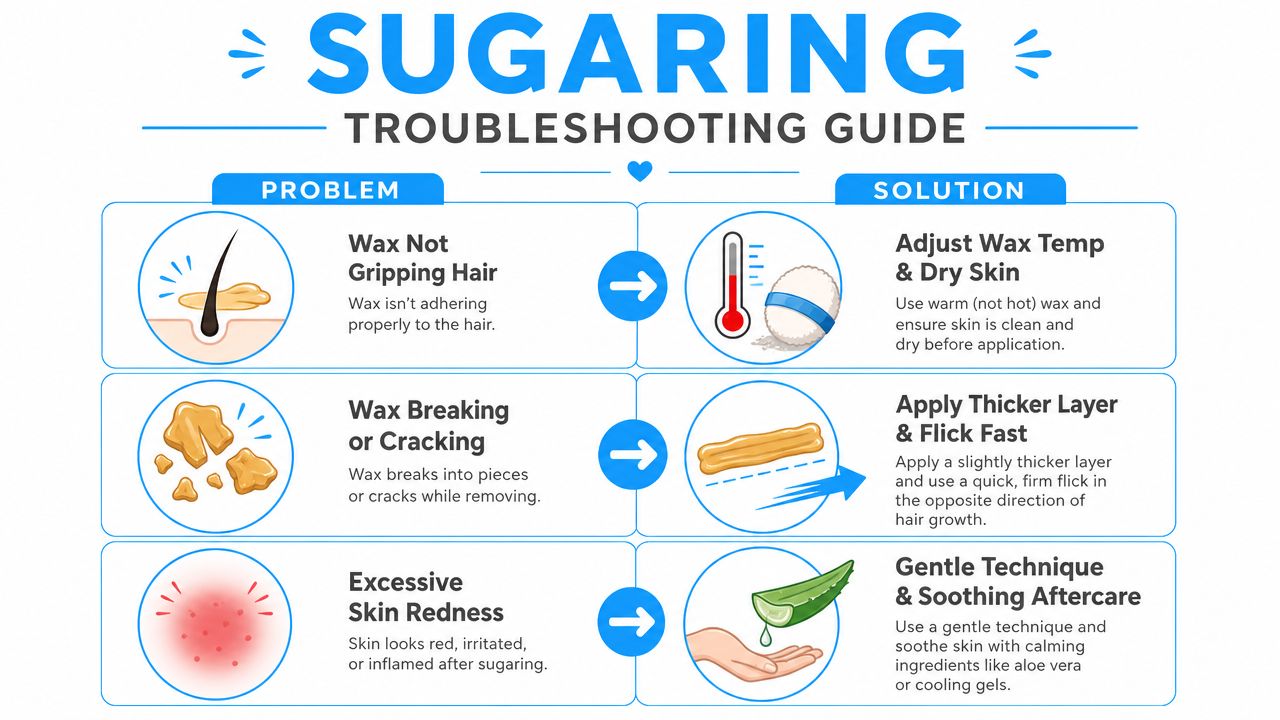
Most sugaring problems come back to four variables. Temperature, moisture, thickness, and pull direction. Learn how each one feels, and troubleshooting gets much easier.
As noted in earlier guidance on troubleshooting sugar waxing, temperature control matters more than many DIY tutorials suggest. If the paste hardens too much, a very brief reheat can bring it back to a workable texture. Starting with a small ball also gives you better control, especially while you are still learning how firm or soft the paste should feel in your fingers.
The paste won't grip the hair
Start by checking the skin, not the recipe. If the area feels damp, humid, lotiony, or warm, the paste often slides instead of gripping. If the paste feels loose and glossy, it is usually too warm.
Make these corrections:
- Dry the area again
- Use a light dusting of powder
- Switch to a smaller piece of paste
- Apply a thinner layer
A good layer looks translucent enough that you can still see the hair underneath. If the paste sits on top like a thick patch, it is too much product.
The paste is too sticky or turns to goo
This is usually a heat problem. Warm hands, a hot bathroom, or overworking the same piece of paste can soften it fast.
Pay attention to the feel. Good sugar paste should be pliable and tacky. Once it starts feeling slippery, stringy, or overly shiny, it has gone past the sweet spot.
| Problem | Likely cause | Better move |
|---|---|---|
| Paste smears everywhere | Too warm or too soft | Pause, let it cool, use less |
| Paste strings between fingers | Overworked or overheated | Change to a fresh small ball |
| Paste won't stay in place | Thick application or heat | Apply less and work faster |
The paste is too hard to spread
Cold paste resists you. It feels dense, stiff, and hard to press into a thin layer. Many beginners keep forcing it, which usually leads to tugging and uneven removal.
Warm it slightly, then test it with your fingertips before putting it back on the skin. The texture should give a little under pressure and hold its shape. If it starts flowing instead of molding, you went too far.
Hair breaks or stays behind
This is often a technique issue more than a formula issue. If the pull goes up and away from the skin, or if the paste was not molded firmly enough first, the hair can snap instead of releasing from the root.
Use these adjustments:
- Mold the paste firmly before removal
- Hold the skin taut
- Flick quickly
- Pull parallel to the skin
This is one of those details that feels small until you try both ways. A low, quick flick removes hair more cleanly and is usually easier on the skin.
You're getting bruising or strong irritation
Bruising points to too much drag on unsupported skin. Repeated passes in the same spot can also turn mild redness into a much angrier reaction.
Stop before the area gets overworked. Leaving a few hairs behind is better than chasing a perfectly bare patch and ending up with skin that stays sore for days.
If sugaring feels worse with each pass, pause and reassess the paste in your hand. Check whether it feels too warm, too soft, or too stiff before you continue.
Mistakes are part of learning how to use sugar wax. The people who improve fastest are the ones who learn to read the paste by feel and make small temperature adjustments before things go wrong.
If you appreciate practical, no-hype guidance, Strong Strains is worth a look. Their education-first approach helps Long Island adults find premium, lab-tested cannabis with clear recommendations, whether you're shopping for flower, vapes, edibles, concentrates, tinctures, topicals, or accessories through pickup or local delivery.