
You're standing at the accessory wall, maybe reaching for your usual pack of papers from Raw Paper or Blazy Susan, when something catches your eye. Off to the side are wraps and cones made from actual leaves. They look more tactile, more crafted, a little more serious. And if you're newer to them, they can also feel confusing fast.
That confusion makes sense. “Natural” gets thrown around so loosely in this category that a lot of shoppers end up buying based on packaging instead of performance. One wrap says palm. Another says hemp. Another says “natural leaf” but is still tobacco. If you care about flavor, burn pace, nicotine, ease of rolling, or just whether the thing will crack in your hands, those details matter.
A good wrap doesn't just hold your flower. It changes the whole session. The vessel affects airflow, flavor expression, how evenly the roll burns, and whether the session feels solo, social, quick, or drawn out. That's why experienced smokers don't treat papers, cones, and wraps like interchangeable accessories. They treat them like gear.
Beyond the Paper An Introduction to Natural Leaf Wraps
A customer walks in wanting “something smoother than a blunt but more substantial than paper.” That's usually the doorway into natural leaf wraps.
They're popular with people who've already figured out that flower quality is only part of the equation. You can load excellent bud into the wrong format and flatten the whole experience. A wrap that burns too fast, tastes too loud, or fights you during the roll can waste a great grind.
Natural leaf wraps sit in a different lane from standard papers. They feel more material-forward. You notice the texture, the body, and the way the leaf contributes something of its own to the session. Sometimes that contribution is subtle. Sometimes it's the main event.
Why people get curious about them
Individuals often don't start with technical questions. They start with practical ones.
- Better flavor? They want to know if the wrap adds taste or gets out of the way.
- Slower burn? They want something that won't disappear in a few pulls.
- No tobacco? They assume “natural” means tobacco-free, and that's where a lot of confusion begins.
- Easier group smoke? They want a format that feels built for passing, not babysitting.
Natural leaf wraps aren't automatically “better” than paper. They're better when they match the kind of session you actually want.
That's the inside scoop most packaging won't give you. The best wrap choice depends on what you're prioritizing. Flavor purity. Session length. Ease of use. Nicotine avoidance. Rolling feel. Once you look at wraps through that lens, the category gets much easier to understand.
What Exactly is a Natural Leaf Wrap
A natural leaf wrap is a smoking wrap made from botanical leaf material rather than standard rolling paper. That material might be a whole leaf, a processed plant-based sheet, or a molded cone format derived from a botanical source.
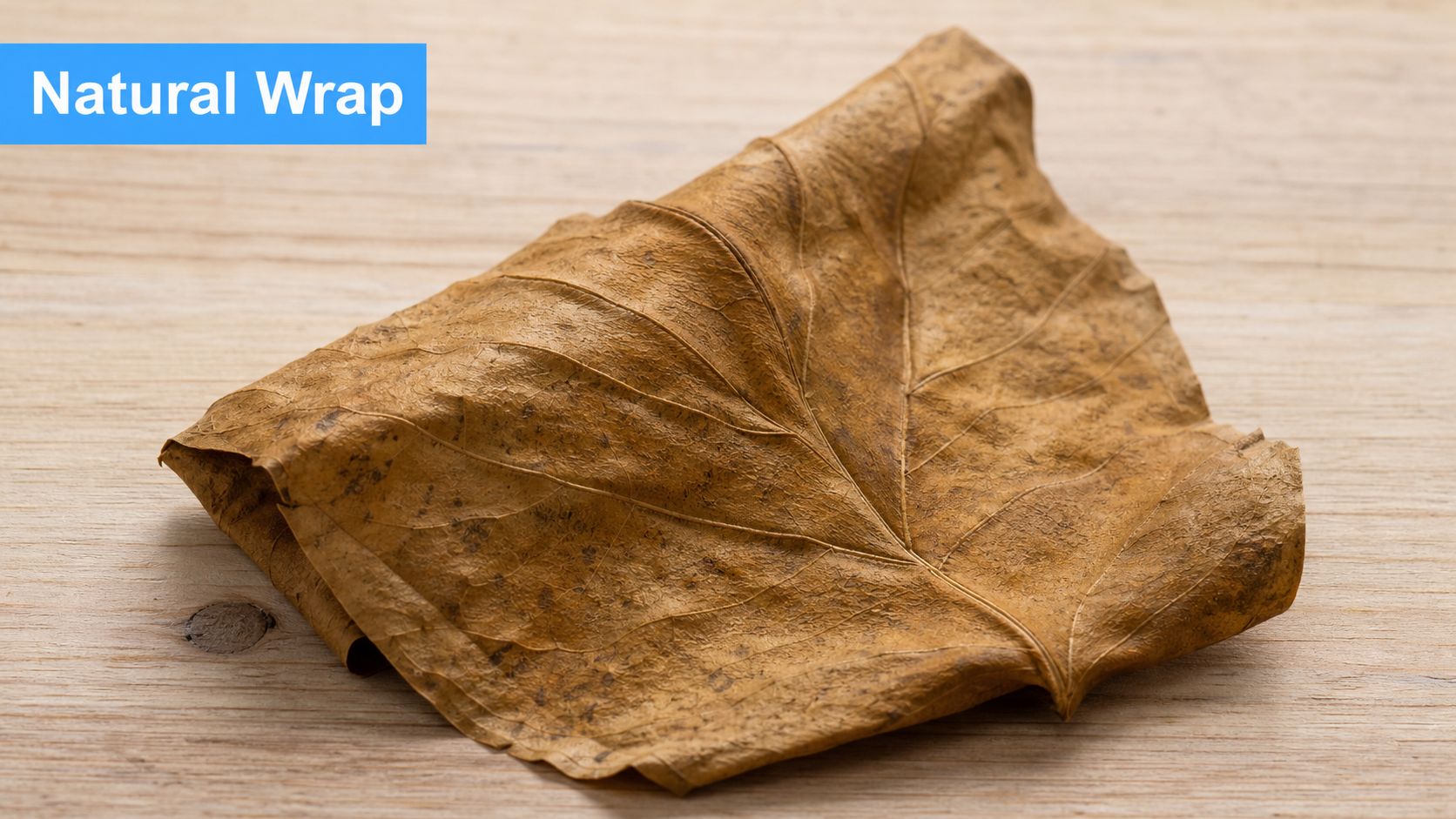
The key distinction is simple. Papers are paper. Leaf wraps are leaf-based. That one difference changes texture, handling, burn behavior, and flavor impact.
Not a trend, an old method
Leaf-wrapped smoking isn't some modern branding trick. Histories of palm-leaf wraps trace leaf-wrapped cylinders back to the 10th century among ancient Mayan civilizations in Central America, with modern versions now using materials such as palm leaves, banana leaves, hemp, and rose petals. That gives the category a recorded history of roughly 1,000 years.
That matters because it changes how you think about the product. You're not looking at a novelty accessory. You're looking at a modern retail version of a very old consumption method.
What “natural” does and doesn't mean
Shoppers often get tripped up. “Natural” describes the source or style, but it doesn't answer every meaningful question.
A wrap can be called natural and still vary on all of these points:
- Botanical source such as palm, hemp, banana, or tobacco leaf
- Processing style such as whole-leaf, blended, pressed, or pre-formed
- Session behavior like airflow, pliability, and burn consistency
A natural leaf wrap also isn't the same thing as a traditional blunt. Some wraps are tobacco-free. Some are tobacco leaf. Both can appear in the same display case, and both may use similar language on the pack.
How to define it in plain language
If you want the cleanest working definition, use this:
A natural leaf wrap is a cannabis smoking wrap made from botanical leaf material, chosen not just for appearance but for how it changes flavor, burn, and feel.
That's the definition worth remembering in the shop. It keeps your attention on performance, not slogans.
The Botanical Spectrum Palm Hemp and Beyond
Once you know what category you're looking at, the next question is the main one. What plant is this made from?
That's the first thing I'd check every single time. The source material tells you more than the front-of-pack marketing usually will.
The line that matters most
The biggest technical split in this category is between tobacco-free botanical wraps and tobacco leaf wraps. Some tobacco-free options are made from plant blends such as chamomile and mate, or from whole palm leaves, and are nicotine-free. By contrast, natural tobacco-leaf wraps are made from cured tobacco leaf and contain tobacco-derived material.
If you only remember one thing from this guide, make it that.
Common materials and how they tend to feel
Palm leaf wraps often appeal to smokers who want a sturdier, slower-feeling format. They usually feel more structured in the hand and often show up as pre-rolled cones for a reason. That format helps control consistency.
Hemp wraps usually attract people who want a more familiar transition from papers. They tend to feel conceptually easier for shoppers because hemp already lives in the cannabis vocabulary. If you want more context on the plant itself, this overview of how hemp is harvested is a useful background read.
Banana leaf and rose petal formats sit in the more boutique end of the shelf. They're often chosen as much for sensory novelty and flavor styling as for function. That doesn't make them gimmicky. It just means the botanical identity is part of the appeal.
Sunflower and other specialty botanicals also show up in this space, especially as brands try to separate themselves from generic “natural” messaging.
Natural Leaf Wrap Material Comparison
| Material | Flavor Profile | Typical Burn Rate | Tobacco/Nicotine-Free? |
|---|---|---|---|
| Palm leaf | Earthy, plant-forward, usually more noticeable than paper | Often slower | Usually tobacco-free in palm-based formats |
| Hemp | More familiar and generally lighter in flavor than heavier leaf options | Moderate to slower, depending on processing | Often tobacco-free |
| Banana leaf | Soft vegetal character, can feel more distinctive | Variable | Often tobacco-free |
| Rose petal | Floral and aromatic | Variable | Often tobacco-free |
| Tobacco leaf | Rich, bold, traditional blunt-style taste | Variable | No, it contains tobacco-derived material |
What to ask before you buy
A smart buyer doesn't ask, “Is it natural?” A smart buyer asks:
- Is this tobacco-free? That clears up the nicotine question immediately.
- What plant is the wrap made from? Palm and tobacco leaf are not the same experience.
- Is it a flat wrap or a pre-rolled cone? That tells you how much rolling skill you'll need.
- Does the leaf feel consistent from pack to pack? Some formats are less forgiving than others.
Shop-floor rule: If the package says “natural” but doesn't clearly tell you whether it contains tobacco, keep asking.
That one habit will save you from most bad wrap purchases.
How a Leaf Shapes the Flavor and Burn
A wrap changes the session the same way cookware changes a meal. A cast-iron pan and a thin steel pan both apply heat, but they do it differently. Leaf wraps work the same way. Material changes outcome.
Flavor is coming from the leaf too
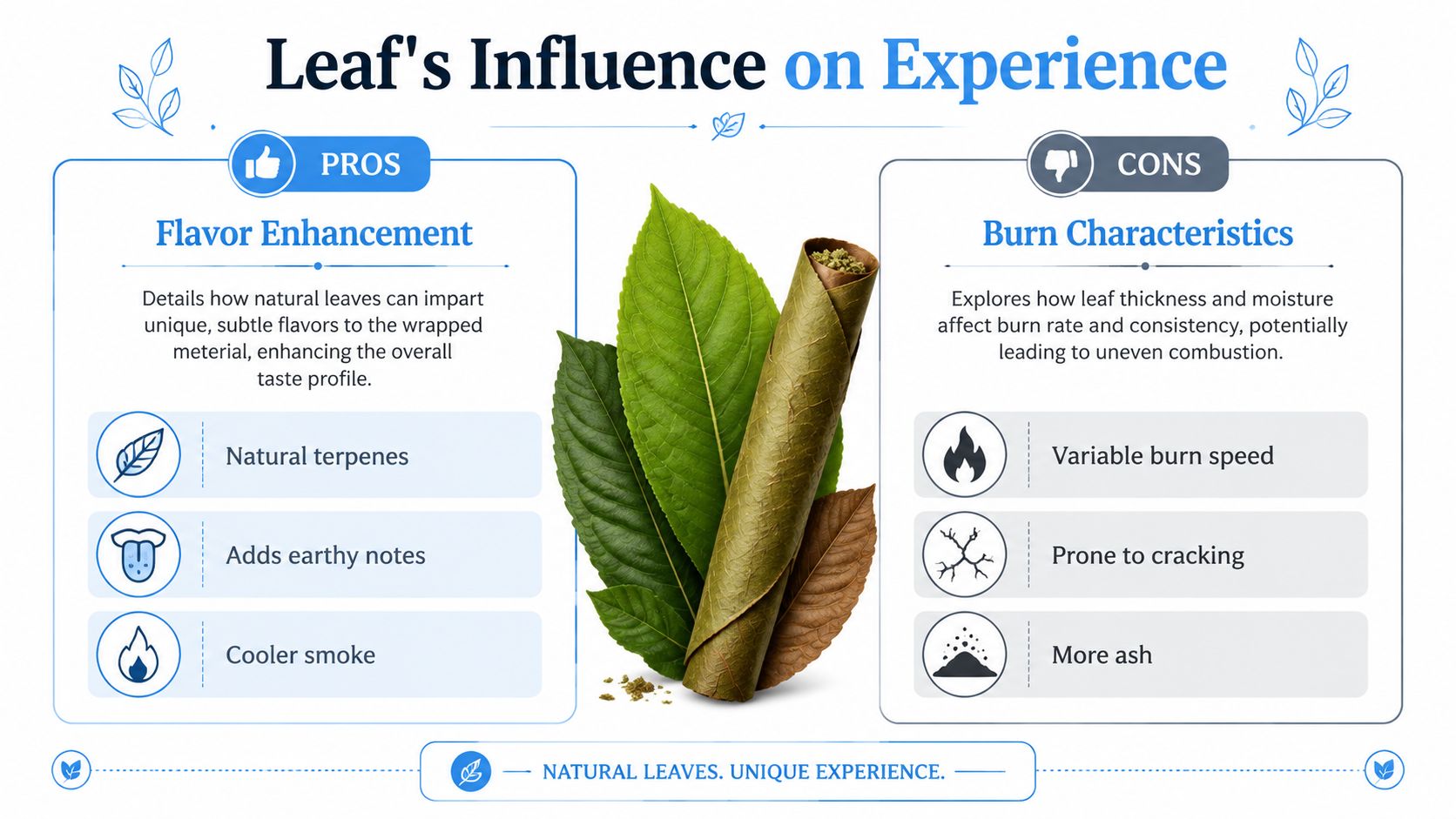
People often act like the flower is doing all the talking. It isn't. The wrap contributes its own voice.
A more neutral format lets the strain speak with less interference. A more expressive botanical adds its own earthy, floral, or fuller plant note. Whether that's a plus depends on what you're smoking. If you've got a terpene-rich strain, a loud wrap can either complement it or cover it up.
That's why “all-natural” is not enough information. You want to know how the leaf was processed and how strongly it shows up in the smoke.
Burn behavior comes from structure
Thickness, moisture, texture, and uniformity all affect how a wrap burns. That's the operational side shoppers care about, even if they don't phrase it that way.
Here's what usually changes the session:
- Leaf thickness affects how quickly heat moves through the wrap.
- Moisture level affects flexibility before the roll and behavior during the burn.
- Surface consistency affects whether the cherry travels evenly.
- Packing pressure interacts with airflow, especially in pre-rolled leaf cones.
If a wrap is too dry, it may crack while you're working with it. If the fill is too tight, airflow suffers. If the leaf varies across the surface, the burn can wander.
Some leaf wraps feel luxurious right up until the moment poor moisture control turns them brittle.
Performance matters more than the marketing copy
A lot of wrap branding leans on words like smooth, clean, pure, and natural. Those words don't tell you what your hands will deal with. What matters in practice is whether the wrap stays pliable, rolls without tearing, draws without clogging, and burns in a way that matches your pace.
That's also why pre-rolled and ready-to-fill leaf formats have become so appealing. They reduce some of the variability that comes with loose wraps. For many smokers, especially newer ones, consistency beats romance.
Leaf Wraps vs Papers and Tobacco Blunts
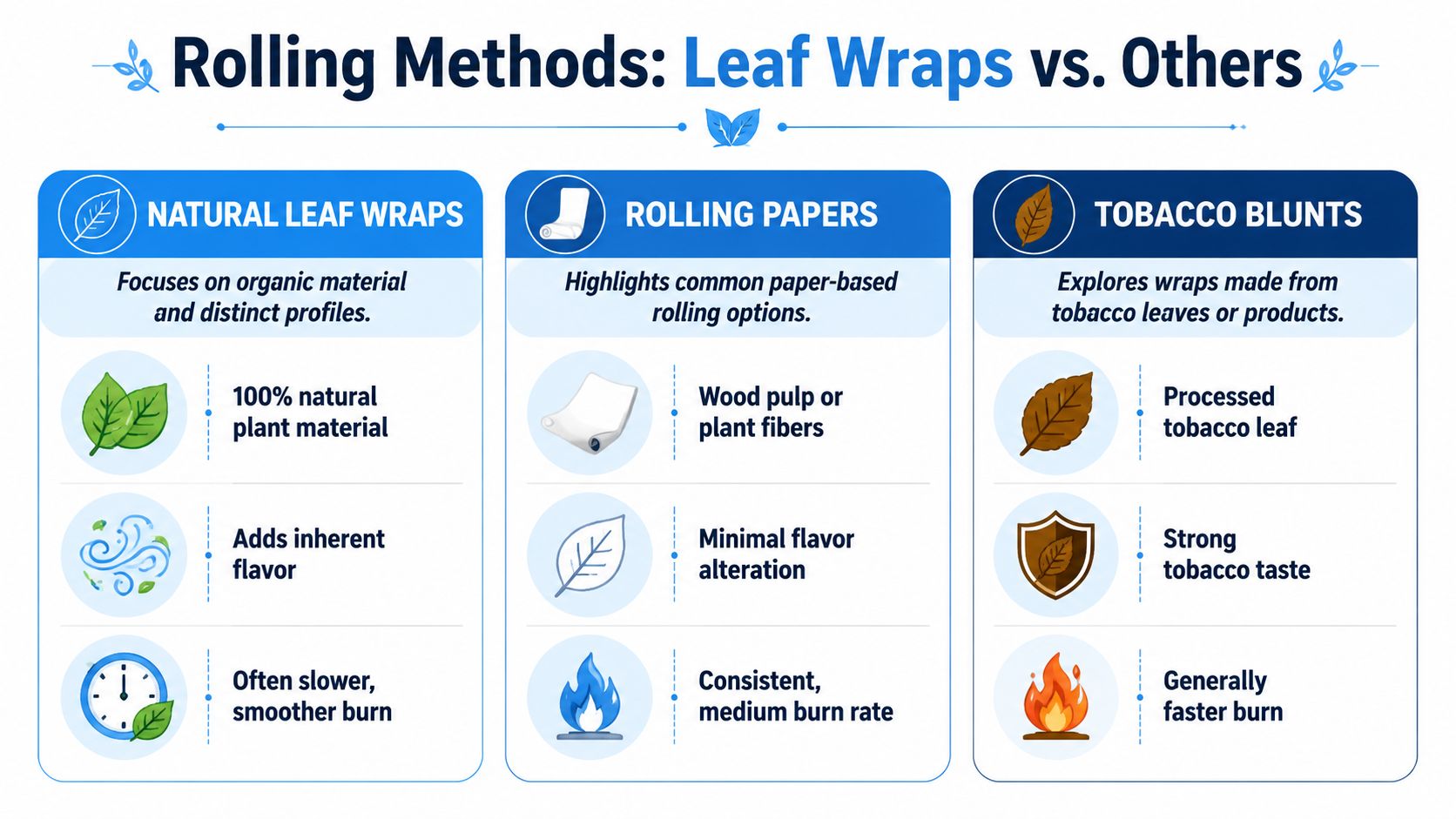
If you're deciding between leaf wraps, rolling papers, and tobacco blunts, don't think in terms of status. Think in terms of use case.
Capacity and session style
One practical difference is size. Natural leaf wraps are generally larger than king-size rolling papers, with one cited comparison listing 110 × 65 mm for a wrap versus 100 × 53 mm for king-size papers, which allows more filling capacity and supports a longer, slower-burning session often suited to group use.
That's not just trivia. It changes the social function of the product. Papers often suit tighter, smaller rolls. Leaf wraps often lean toward a fuller pack and a longer pass-around.
Head-to-head differences
Rolling papers
Papers from brands like Raw Paper or Blazy Susan usually win on familiarity and control. They're a strong choice when you want a more neutral taste contribution and a format that's easier to calibrate for smaller personal sessions.
They also tend to ask less of the material. You're not wrestling with a thick leaf or managing a brittle wrap edge.
Natural leaf wraps
Natural leaf wraps sit in the middle ground between neutrality and richness. They add more character than paper, but tobacco-free versions can avoid the defining tobacco note of a blunt.
They also tend to feel more ceremonial. Not in a mystical sense. In a tactile sense. More prep, more body, more intention.
Tobacco blunts
Traditional tobacco blunts give a bold, unmistakable tobacco presence. For some smokers, that's the point. For others, it overwhelms the flower.
If you're trying to avoid nicotine or tobacco-derived material, paying attention is of utmost importance.
Quick decision guide
- Choose papers if you want a lighter-touch format and easier small-roll control.
- Choose a natural leaf wrap if you want more body, more botanical character, and a session that feels slower.
- Choose a tobacco blunt if you specifically want the classic tobacco-forward blunt profile.
The best format isn't the fanciest one. It's the one that matches the flower, the company, and your tolerance for prep.
Proper Use and Storage to Preserve Freshness
Leaf wraps reward good handling. They also punish lazy storage faster than papers do.
If you've ever opened a wrap that felt crisp, cracked at the edge, or refused to fold cleanly, the issue usually wasn't the concept. It was freshness.
How to handle them without ruining them
Start by opening the package slowly. Don't yank the wrap out by a corner. Support it with both hands so you can feel whether it's pliable or brittle.
If it feels dry, pause before rolling. Forcing a dry wrap almost always ends with a split.
A simple rescue routine
- Check flexibility first. Bend the edge gently. If it resists sharply, it needs a little humidity.
- Use light moisture, not saturation. You want the wrap more supple, not wet.
- Let it rest briefly. Give the material a moment to relax before handling again.
- Pack with restraint. Overfilling creates tension points that can reopen weak spots.
Storage matters more than people think
For storage logic, it helps to borrow from other delicate dried plant products. Good tea storage principles apply surprisingly well here. This guide on Jeeves & Jericho storage advice is useful because it centers the basics that matter: protection from excess air, light, heat, and moisture swings.
Those same enemies wreck leaf wraps.
What works best at home
- Keep them sealed well. Air exposure dries the leaf and changes handling.
- Avoid sunny spots. Heat and light can make wraps brittle faster.
- Store away from steam. A bathroom cabinet or near-stove shelf is a bad idea.
- Buy the right prep level. If you prefer speed and consistency, pre-ground weed options can pair well with ready-to-fill wraps because they reduce fiddly prep.
Rolling technique matters too
Flat leaf wraps usually need a softer touch than papers. Use less force when shaping the cylinder. Let the wrap settle around the material instead of trying to muscle it shut.
A lot of beginners think they need stronger fingers. Usually they need less pressure.
Your Perfect Pairing Finding Wraps at Strong Strains
Wrap pairing gets fun once you stop shopping by hype words and start matching format to flower.
Dense, sticky flower often works beautifully in a sturdier, slower-burning leaf format because the wrap can keep up with a fuller pack. A terpene-rich, highly aromatic strain may shine better in a wrap that doesn't dominate the flavor. That's where your choice becomes less about category and more about balance.
Pair by session goal
If you're smoking with a group, a larger leaf format often makes sense because the session has more staying power and less fragility. If you're chasing flavor clarity, a lighter botanical or a more restrained leaf profile may serve the flower better.
A few practical examples:
- For dense flower from brands like Connected or Hudson Cannabis, a palm-style wrap can suit a slower, fuller session.
- For expressive flower from brands like Alien Labs or Rythm, a less intrusive botanical wrap may help preserve the strain's aromatic identity.
- For convenience-first smokers, pre-rolled leaf cones from names like Royal Leaf or Lowell Herb Co can make the category much more approachable.
Why buying from a knowledgeable dispensary matters
There's also a compliance reason to ask questions instead of buying blindly. Tobacco-free natural leaf wraps sit at the intersection of cannabis accessory sales and tobacco-product oversight under the FDA's Deeming Rule. For shoppers, the practical takeaway is simple. Buy from a dispensary that understands the distinction between tobacco-free botanical wraps and tobacco leaf products.
That becomes even more important if you're trying to avoid nicotine and don't want to decode vague packaging on your own.
Pair the wrap with the strain, not the trend
When I'm helping someone choose, I'd rather talk through the flower first. What's the moisture like? Is it fluffy or dense? Is the appeal in the gas, the fruit, the floral notes, or the body effect? If you've been exploring citrus-forward cultivars, these Orange Glaze cultivation details are a great example of how much character can come from genetics and grow style. That kind of strain detail helps you avoid wraps that muffle what makes the flower special.
If you're local and want a curated, compliant place to start, it helps to know the shop behind the shelf. You can learn more about the dispensary experience through this introduction to Strong Strains.
Frequently Asked Questions About Leaf Wraps
Do all natural leaf wraps contain nicotine
No. Some natural leaf wraps are tobacco-free and nicotine-free, while others are made from cured tobacco leaf. The word “natural” alone doesn't answer that question.
Are natural leaf wraps healthier than blunts
I wouldn't frame it as a health shortcut. The more accurate way to think about it is material choice. A tobacco-free wrap removes tobacco and nicotine from the wrap itself. A tobacco leaf wrap does not. That's a composition difference, not a free pass.
How do I fix a wrap that's too dry
Add a little humidity and patience. Don't soak it. Let the wrap become pliable again before you roll. If it's already cracking badly, it may not recover cleanly.
Are leaf wraps easier or harder to roll than papers
Usually harder for beginners, especially flat wraps. That's one reason pre-rolled leaf cones are so popular. They reduce the skill barrier and make the category less frustrating.
Can I use ground flower in a natural leaf wrap
Yes. In fact, a consistent grind often helps with packing and airflow. The main thing is not to overpack.
What's the biggest mistake shoppers make
Assuming “natural” means one specific thing. It doesn't. Always check the plant source, whether it contains tobacco, and whether the format is a flat wrap or a pre-roll cone.
If you want help picking the right wrap for your flower, visit Strong Strains. Our team in East Setauket can walk you through tobacco-free botanicals, classic blunt-style options, and the little performance details that turn a decent smoke into a polished session.