You walk into a dispensary looking for something simple. Maybe you want a mellow evening, help winding down, or a smoke-free option that feels easy to manage. Then you see the edible shelf. Gummies, mints, chocolates, fruit chews, balanced formulas, THC-forward options, CBD-heavy options. It's a lot.
That reaction is normal. Weed edibles candy looks familiar because it resembles everyday sweets, but the experience is very different. The right product can feel approachable and precise. The wrong choice, especially with rushed dosing, can feel confusing fast.
Consumers don't need more hype. They need a clear explanation of what they're buying, how it works, and how to use it responsibly. That's what this guide is for.
Welcome to the World of Cannabis Candy
You step up to the edible case looking for something simple, and the candy options immediately feel familiar. That familiarity is helpful, but it can also blur an important line. Cannabis candy may look like a sweet, yet it should be chosen more like a measured wellness product.
That difference shapes the whole experience.
Candy became a common edible format for practical reasons. It gives adults a smoke-free option that feels discreet, portable, and straightforward to portion. A single gummy, mint, or chew is easier to track than an unmeasured homemade edible, and that built-in structure is part of what makes the category approachable.
Quality still matters at every step. Texture, flavor, ingredients, and consistency all affect whether a product feels polished and predictable. The same way shoppers might compare premium sweets like dark and milk car chocolate, cannabis candy should be judged by craftsmanship and by how clearly the package explains what is inside.
For shoppers, the learning curve usually starts after the purchase. Edibles take time to show up, serving sizes can be misunderstood, and two products that look similar can produce very different effects. A fruit chew meant for a light, balanced experience is not the same as a high-THC gummy designed for experienced consumers.
A few points confuse new buyers again and again:
- Onset: Effects usually take longer than smoking or vaping, so early redosing can lead to taking more than intended.
- Per-piece dose: The number on the front of the package is often the total for the container, not the amount in one candy.
- Cannabinoid profile: THC-heavy, CBD-forward, and balanced formulas can feel very different.
- Product trust: Clear labels and lab testing matter because consistency is what makes dosing repeatable.
Strong Strains helps make this category feel less like guesswork and more like a curated decision. Instead of picking candy by flavor alone, shoppers can use staff guidance, lab-tested products, and clearly labeled options to choose something that fits their comfort level and goals.
Use one simple rule from the start. If a cannabis candy is easy to eat, it is also easy to underestimate. Treat it like a measured product every time.
The Modern Cannabis Candy Aisle
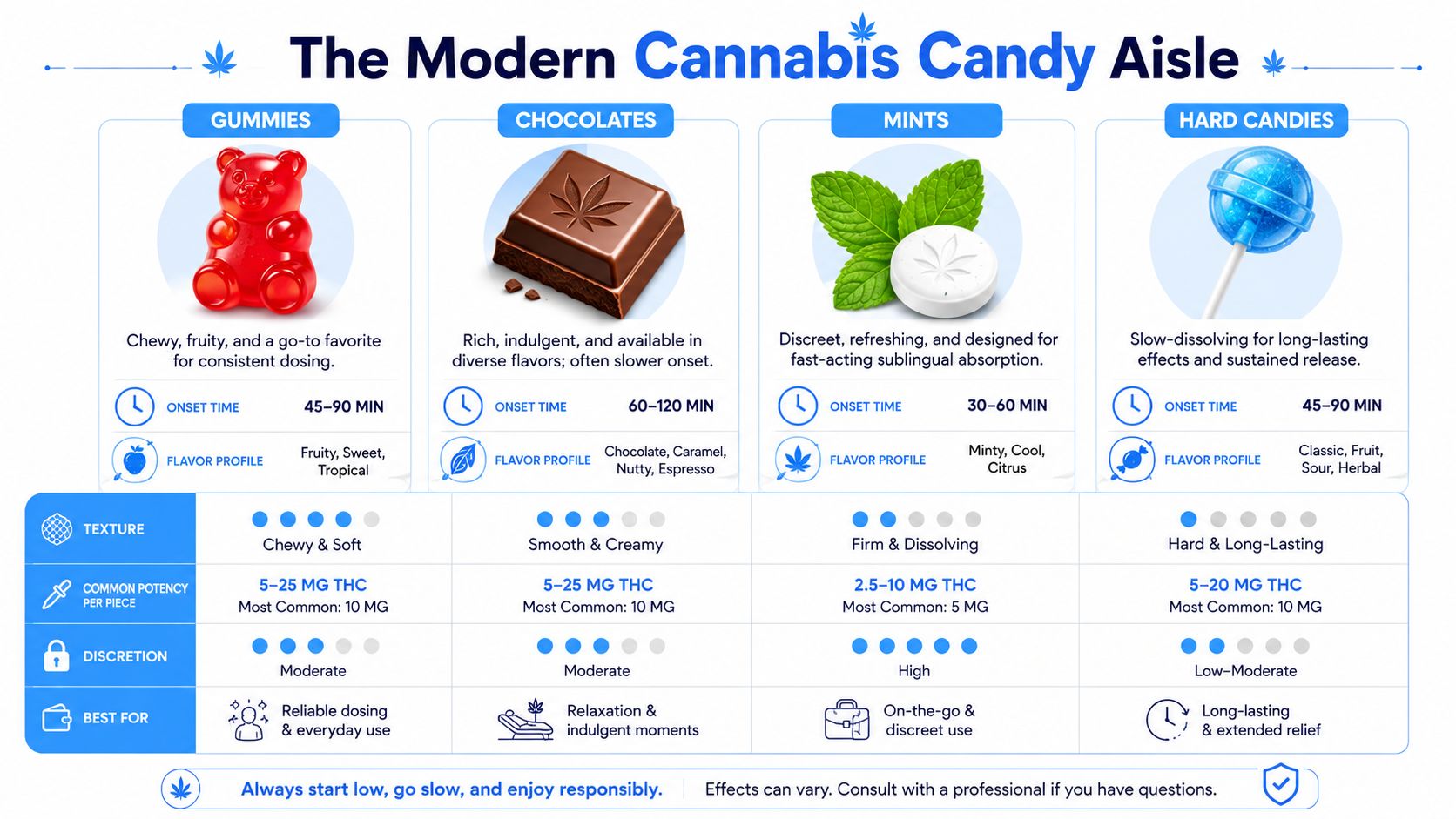
The edible shelf usually makes more sense once you stop thinking of it as one big category. Cannabis candy comes in a few familiar formats, and each one tends to suit a different kind of shopper.
Gummies and fruit chews
Gummies are the format often envisioned first. Brands like Wyld, Wana, Camino, Kiva, Ayrloom, Grön, and Jaunty have helped make the category feel approachable. The appeal is obvious. They're chewy, flavored, easy to split when the product is designed for that, and often packaged in a way that makes per-piece serving straightforward.
For many adults, gummies are the baseline edible. If you want a measured starting point, this is often where you begin.
A helpful non-cannabis comparison is premium confectionery. Texture, flavor balance, and finish all matter. Even if you were comparing something like dark and milk car chocolate, you'd still judge the product by consistency, ingredient quality, and how clearly the experience matches what the package suggests. Cannabis candy should be approached the same way.
Hard candies and lozenges
Hard candies, drops, and lozenges feel different from gummies because they dissolve slowly. Some adults prefer them because the pace of use is naturally slower. You're less likely to absentmindedly eat several in a row.
These products also appeal to shoppers who want something compact and discreet. Think mints, small tablets, or candy drops that are easy to carry and easy to count.
Chocolates and infused sweets
Chocolate isn't always the first thing people mean when they say “weed edibles candy,” but it belongs in the conversation. Brands such as Kiva, Incredibles, ChocLit, and Lost Farm have made chocolate bars, chews, and fruit-forward sweets part of the premium edible offerings.
Some shoppers prefer chocolate because it feels more like dessert than candy. Others like fruit chews because they're lighter and easier to portion mentally.
| Format | What it feels like | Why shoppers choose it |
|---|---|---|
| Gummies | Familiar and chewy | Easy serving logic |
| Hard candies | Slow-dissolving | Discreet and paced |
| Mints or lozenges | Small and portable | Low-profile use |
| Chocolates | Dessert-like | Rich flavor and indulgent feel |
The format doesn't tell you whether a product is mild or strong. The label does.
Understanding Potency and Profiles
Two candies can look almost identical on the shelf and lead to very different experiences. One may feel stronger, another may feel steadier, and a third may be built for shoppers who want little to no intoxication at all. The difference usually starts with the cannabinoid profile, not the flavor or the package design.
That is why experienced shoppers often read cannabis candy the way they read a wine label. The front of the package catches your eye. The details tell you what you are bringing home.
THC-dominant, CBD-dominant, and balanced options
Earlier market research in this article showed that THC products make up the biggest share of edible sales. CBD-focused and balanced formulas still hold an important place, especially for adults who seek a specific kind of experience rather than only selecting the strongest option available.
For shoppers at Strong Strains, that usually breaks into three clear categories:
- THC-dominant products are usually chosen by adults who want more noticeable psychoactive effects.
- CBD-dominant products are often a better fit for shoppers looking for a gentler, non-intoxicating option.
- Balanced THC/CBD products can appeal to people who want a middle ground rather than a heavily one-sided experience.
A package with a high total THC number can confuse first-time edible shoppers. If you want help reading larger formats and dividing them into realistic servings, this guide to 100 mg THC edible labeling and serving sizes gives useful context.
What “indica,” “sativa,” and “hybrid” really mean in edibles
These words can be helpful, but they are not a shortcut for certainty.
With flower, shoppers often use indica, sativa, and hybrid as rough effect language. With edibles, those same terms usually work better as product cues than promises. A candy labeled "indica" may be positioned for evening use or a more relaxed mood. A product labeled "sativa" may be marketed as brighter or more daytime-friendly. Your actual experience still depends more on the cannabinoid blend, the dose, and your own tolerance than on that category name alone.
A good rule is simple. Treat strain-style labels as a hint. Treat the cannabinoid panel as the primary map.
Shop by intention, not by hype
The best edible choice usually starts with the question, "What kind of experience am I trying to have?"
Someone shopping for a quiet evening may look at a THC-forward or balanced candy. A cautious beginner often does better with a lower-dose piece and a straightforward profile. A shopper who wants to avoid intoxication should spend more time in the CBD-focused section than in the products with loud packaging and high THC totals.
At Strong Strains on Long Island, that conversation is part of the service. A premium edible experience is not just buying candy with cannabis in it. It is choosing a lab-tested product with a profile that fits your goals, your comfort level, and the kind of night you want.
Start with the profile, then choose the flavor. Flavor gets your attention. The cannabinoid blend shapes the experience.
Your Guide to Safe and Effective Dosing
Edibles reward patience. They punish impatience.
That's the whole game.
Public health guidance notes that edible cannabis can peak around 2 to 3 hours after ingestion and may last about 6 hours or longer, which is why a standard single edible serving is commonly defined at 10 mg THC. The same guidance also notes that some products should be divided into partial servings, according to Health Canada's edible label guidance.
The rule that matters most
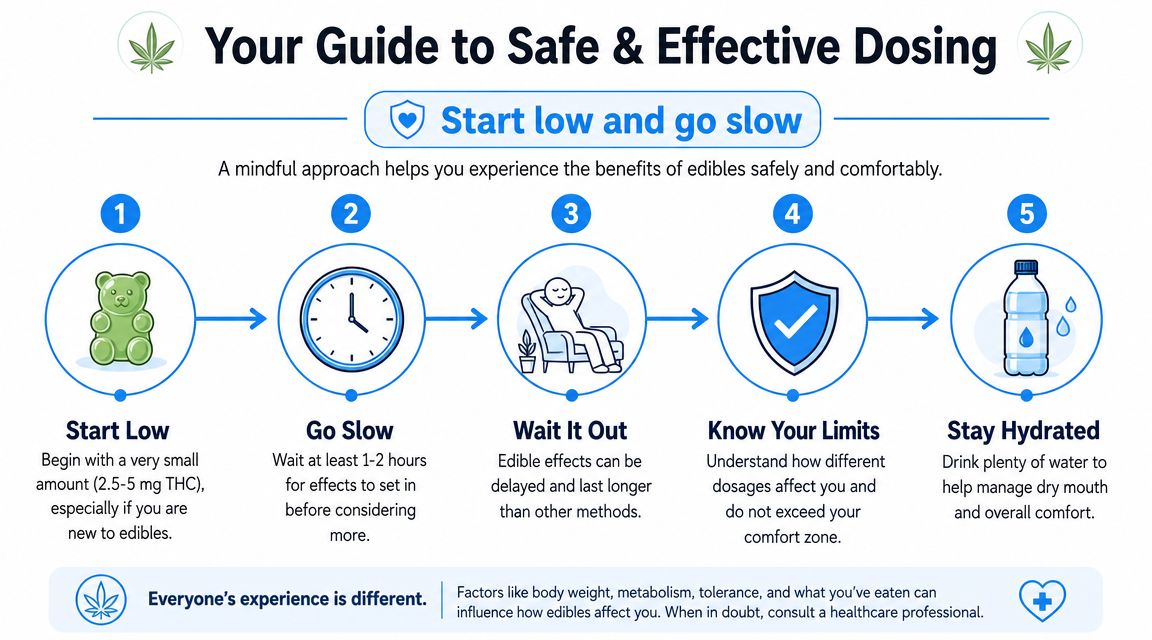
If you remember one sentence, make it this: start low and go slow.
A candy edible doesn't work like inhalation. You don't get instant feedback. You eat it, wait, and then your body processes it over time. That delay is why people get into trouble by taking another piece too early.
A simple timeline to use
Think of edible timing like baking, not flipping a light switch. The result doesn't appear the moment you start.
- Take the labeled serving or less. Many candy edibles are sold in per-piece amounts that often range from 2.5 mg to 10 mg THC.
- Wait through the full onset window. Don't judge the experience too early.
- Notice the peak before changing anything. The strongest effects may arrive well after the first signs.
- Avoid stacking doses. A second piece taken too soon can turn a comfortable experience into an overwhelming one.
Here's a short visual refresher before you buy or try:
Tips that help in real life
A first edible session goes more smoothly when the setup is calm.
- Eat normally: Taking cannabis candy on a completely empty stomach can feel stronger or less predictable.
- Stay hydrated: Water won't cancel the effects, but it can help you stay comfortable.
- Keep your schedule light: Don't test a new edible before a demanding task.
- Skip mixing on your first try: If you're still learning your response, keep the experiment simple.
If you're not sure whether it has kicked in, that is not the moment to take more.
How to Read an Edible Label Like a Pro
The label is not packaging decoration. It's your safety tool.
That matters because the edible market didn't always have the standards shoppers now expect. A major study of 75 edible cannabis products purchased across three metropolitan areas found that only 17% were accurately labeled for THC content, while 23% were underlabeled and 60% were overlabeled, according to the JAMA-related analysis available through PMC. That history is a big reason serious dispensaries and serious shoppers care so much about testing and transparent packaging.
What to check first
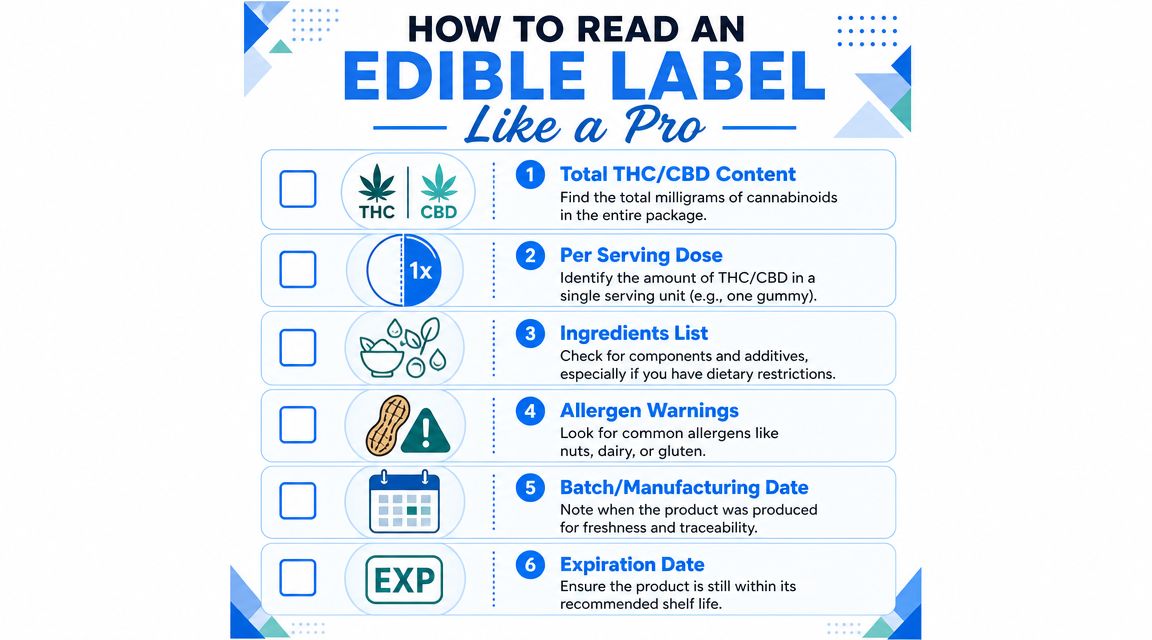
When you pick up weed edibles candy, scan for these items before you think about flavor:
- Total cannabinoids in the package: This tells you the full amount, not the serving.
- Per serving or per piece amount: This is the amount individuals need.
- Ingredient list and allergen info: Candy can contain gelatin, dairy, fruit ingredients, sweeteners, or other additives.
- Batch and date details: These support traceability and freshness.
If dietary preferences matter to you, this overview of vegan THC gummies and what to check on the label can help narrow your options.
Why candy testing is more complex than people think
Candy isn't tested like raw flower. Sugars, gelatin, coatings, and low-moisture textures can interfere with cannabinoid measurement if the sample isn't handled correctly.
Agilent's validated workflow for gummies and hard candies calls for a 1 ±0.005 g subsample, mechanical chopping or crushing, 10 mL ultrapure water, homogenization at 1,500 rpm, then QuEChERS extraction, centrifugation, PTFE filtration, and a final 10x dilution, as detailed in Agilent's cannabis candy analytical method. For shoppers, the takeaway is simple. Reliable candy testing takes real process control.
A clean label is helpful. A label backed by serious testing is better.
Choosing Your Perfect Edible at Strong Strains
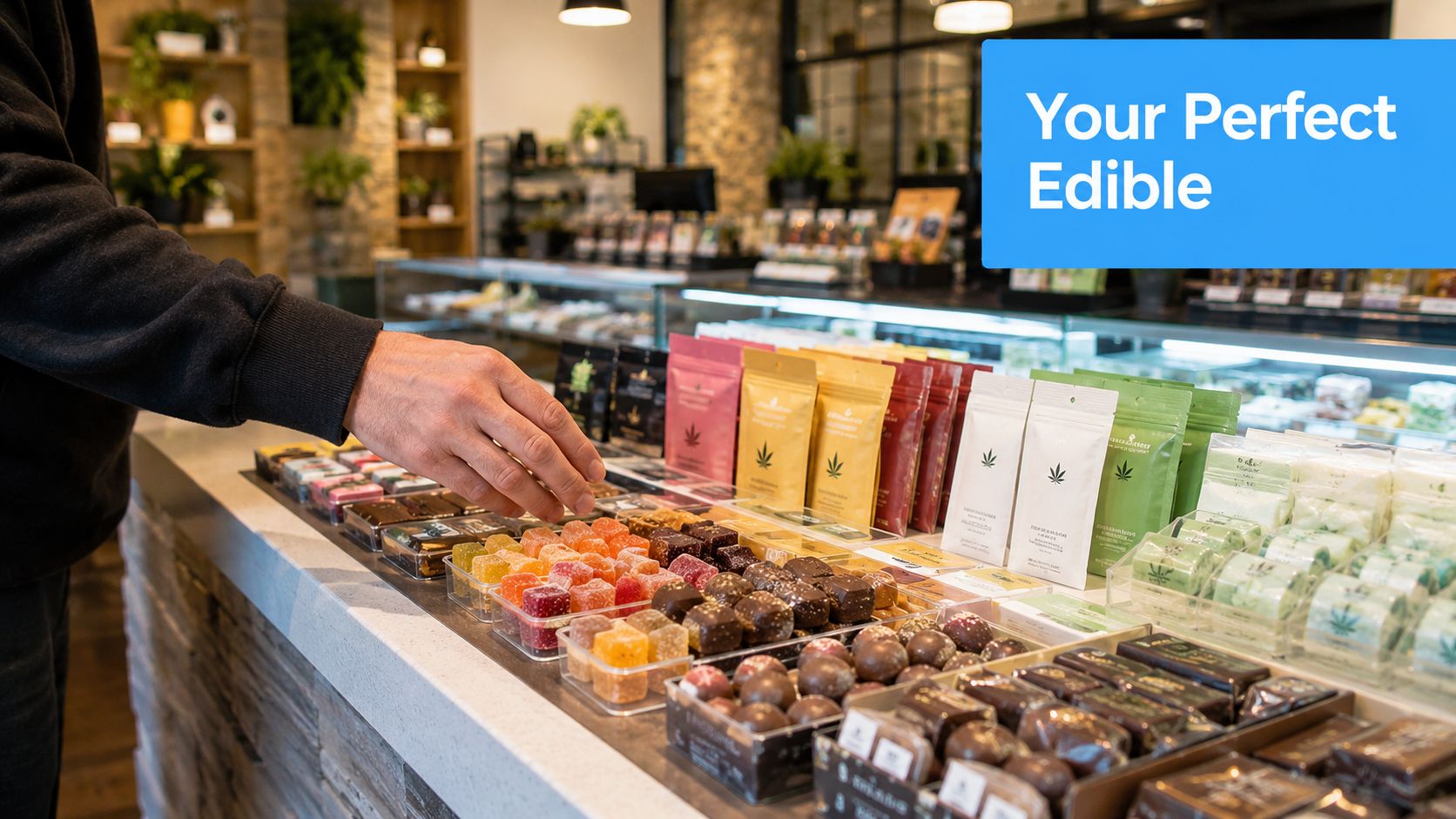
You're standing at the edible case with a clear goal in mind. Maybe you want something gentle for a first try, something measured for a busy afternoon, or something that fits a quiet night at home. The right pick comes from matching the product to the person, not from choosing the sweetest flavor or the flashiest package.
A good edible shelf works like a well-organized menu. Each option serves a different purpose, and the best choice depends on your tolerance, timing, and routine.
Match the product to the person
A cautious beginner usually benefits from a low-per-piece edible that is easy to count and easy to pause. Gummies, mints, and scored pieces tend to make that simpler than products that look like everyday candy you might absentmindedly keep eating.
An evening shopper may prefer a format that fits a slower, more settled experience. In that case, start with the cannabinoid profile and serving size, then decide whether the texture and flavor fit the kind of session you want.
A daytime planner often wants something discreet, portable, and predictable. If that sounds familiar, this guide to sativa gummies for energy and daytime use can help you compare options with a little more focus.
Why curation matters
Packaging shapes expectations before a product is ever opened. For example, this report on youth appeal and cannabis edible packaging explains that bright colors, fruit imagery, and terms such as “vegan” or “locally made” can make cannabis edibles seem more like ordinary snacks or health foods to adolescents.
That matters for adult shoppers too. A carefully curated shelf reduces confusion and makes comparison easier. Clear labeling, mature presentation, and consistent testing standards help you focus on what matters, namely dose, ingredients, cannabinoid profile, and intended use.
For Long Island shoppers, Strong Strains adds a local layer of guidance to that process. The value is not only access to lab-tested gummies, mints, chocolates, and balanced products. It is also the chance to ask questions, compare formats side by side, and choose with more confidence and care.
Frequently Asked Questions About Cannabis Candy
What should I do if I think I took too much
Stay calm first. Find a quiet, comfortable place, sip water, and avoid taking anything else. If you can, rest, lower stimulation, and give it time. Edibles are slow and long-lasting, so the answer is usually patience, not more experimenting.
Can I take a weed edible on an empty stomach
You can, but many adults find that the experience feels less predictable that way. If you're new, having a normal meal or snack beforehand often makes the session feel more manageable.
How should I store cannabis candy safely
Keep it in child-resistant, opaque packaging and away from regular snacks. Store it somewhere cool, dry, and out of reach of children and pets. Cannabis candy can look like ordinary sweets, so separation matters.
If you're shopping for weed edibles candy on Long Island and want a clearer path from curiosity to confident use, visit Strong Strains to browse lab-tested options, compare formats, and get practical guidance before you order for pickup or local delivery.