
Candy Yams gets sold on its name alone, and that name is a decent place to start. The Crop King Seeds Candy Yams listing describes the Candy Yams strain as a balanced Candy Rain × Jealousy hybrid, with THC commonly reported at about 20-25% and CBD below 1%. The trouble starts when the label gets treated like a finished prediction.
The usual advice is to find a strain you liked once and buy it again, expecting the same smell, strength, and feel. That's the shortcut worth questioning. A name can point you toward a family of products, but the jar, cartridge, or edible in front of you carries its own date, potency, and chemistry. Treat the name and the 50/50 label as a starting map. What you smell and feel comes from the batch, the format, and the dose, and the COA on that lot outranks anything the strain name implies.
Candy Yams Strain at a Glance
Most shoppers meet Candy Yams through three short claims, a balanced hybrid label, a dessert sounding name, and a THC number in the twenties. Those claims are useful only if you know what each one can and can't tell you. Read the table as a set of reported starting points, then use the right column as your actual buying check.
| Trait | What listings report | What to trust |
|---|---|---|
| Classification | About 50/50 hybrid | The lot's chemistry, not the hybrid tag |
| Lineage | Candy Rain × Jealousy | Useful background, not proof of identical effects |
| THC | About 20%-25% | Total THC on that batch's COA |
| CBD | Below 1% | The CBD line on the same COA |
| Sample flower potency | 22.99% THCA on one listing | Label or COA total THC, because THCA is not finished THC |
| Aroma | Sweet, earthy, spicy, gassy, or savory | Freshness and that jar, not one menu adjective |
The Crop King Seeds Candy Yams listing describes Candy Yams as a balanced hybrid created by crossing Candy Rain with Jealousy, with THC at approximately 20%-25% and CBD below 1%. That gives you a plain profile, relatively high THC and minimal CBD. It doesn't give you the potency of the package you're holding today.
How to Read the Potency Rows
The Imperial Extraction Candy Yams THCA flower listing records 22.99% THCA potency and identifies sweet, spicy, and earthy notes. Hold that figure separate from finished THC. THCA changes with heat, so a THCA percentage isn't a direct substitute for the total THC value printed for a finished, ready to use product.
That's why the most useful habit is simple. Compare total THC to total THC, and read it from the certificate of analysis, often shortened to COA, for that exact batch. If a menu shows only THCA, ask what the label lists as total THC before you compare it with another flower, pre-roll, or vape.
Practical rule: Treat every range on a strain page as background, and treat the total THC on the batch COA as the number that belongs to your purchase.
Why the Same Name Can Test Differently
Two harvests sold as Candy Yams can test differently for ordinary reasons. Growers may work with different phenotypes, which are plants from the same genetic family that express traits a little differently. Cultivation conditions, harvest timing, curing, storage, and laboratory methodology can also move the final numbers.
That variation doesn't mean one result is fake and the other is real. It means a cultivar range is not a promise for every harvest or retail batch. A jar near the low end of the reported range and a jar near the high end can both carry the Candy Yams name while feeling noticeably different in strength.
You'll also see gaps in the public story. The available documentation doesn't establish a universally recognized breeder, release year, global sales volume, or independently verified population of laboratory tests for this cultivar. Don't fill those gaps with guesses, and don't let a confident strain biography stand in for batch paperwork.
The snapshot still helps you shop. You're looking for a generally balanced hybrid, THC commonly reported in the twenties, very little CBD, and a sensory range that can lean sweet, earthy, and spicy. Once you know that baseline, the COA tells you how close today's lot comes to it.
Candy Rain and Jealousy Lineage
Think of the lineage as a family story, not a chemical ID card. Candy Yams is generally described as Candy Rain crossed with Jealousy. That cross explains the name shoppers see on the menu, but it doesn't lock every plant, harvest, or product into one identical experience.
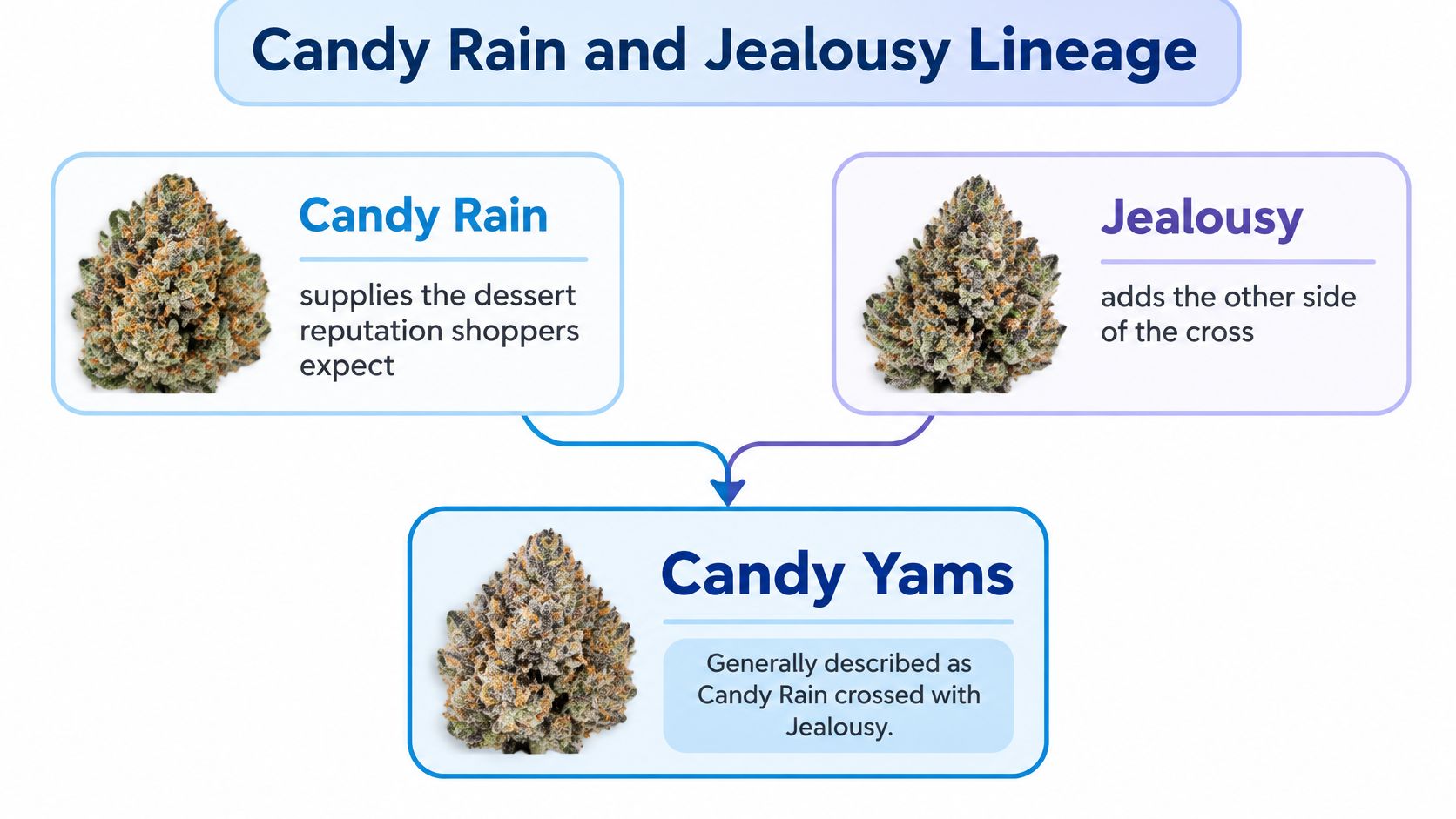
Candy Rain supplies much of the dessert reputation people expect before they open a jar. Jealousy supplies the other side of the reported cross. Naming both parents helps you understand how the cultivar is marketed, but neither parent's name alone proves how a particular eighth will smell or feel.
The Cousin Problem
Cousins can share grandparents and still arrive at dinner with different temperaments. Cannabis phenotypes work in a similar, less social way. Plants connected to the same cross can express aroma, structure, and cannabinoid levels differently, and growers then add their own choices during cultivation and curing.
The 50/50 tag needs the same caution. It describes how the cultivar is commonly classified and sold, not a measured promise that half the experience will feel stimulating and half will feel sedating. Broad indica, sativa, and hybrid labels are too loose to forecast the chemistry inside one package, so don't buy Candy Yams expecting the label to balance the dose for you.
A family tree can explain resemblance. It can't tell you exactly who will show up, or how they'll behave that night.
Grower Numbers Are Reference Points
The Rocket Seeds Candy Yams listing gives the same Candy Rain × Jealousy lineage and reports an 8-9-week flowering period, with indoor plants reaching approximately 5-8 feet and producing around 450-550 grams per square meter. It reports outdoor plants at the same approximate height and about 600-700 grams per plant.
Those figures matter mainly to growers comparing seed listings. They don't predict the THC, aroma, or feel of a finished product on a dispensary shelf, and indoor conditions, training, feeding, and harvest decisions can change plant size and yield. For a shopper, lineage is the beginning of the conversation. The batch certificate is where the purchase decision should land.
Why Candy Yams Aroma Listings Disagree
One menu calls Candy Yams candy like, diesel, earthy, and spicy. Another describes sweet gas on the nose and garlic with peanut on the palate. Read together, they sound like two different strains. Neither has to be wrong.
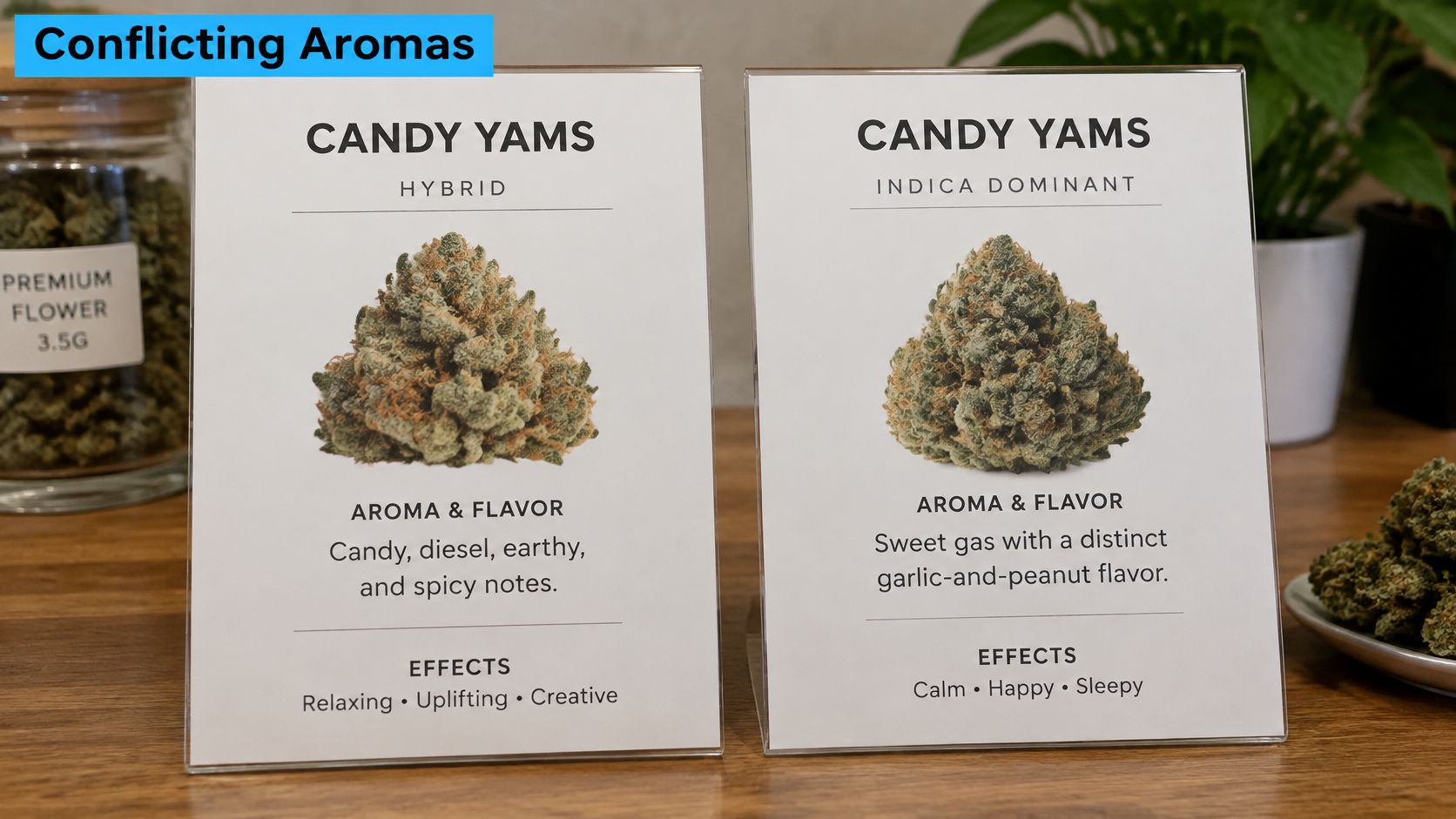
A summary on This Is Why I'm High puts both listings side by side and cites a 2025 Oregon State University study in which a trained sensory panel evaluated 91 flower samples. The panel's aroma descriptions did not line up closely with the chemical clusters in the lab data.
That gives shoppers a calmer way to read conflicting menus. Terpene percentages point toward likely aroma families, and your nose responds to the whole flower in front of you rather than reading a lab table line by line. Two honest listings can describe the same cultivar differently because the writers smelled different batches or reached for different words.
Use a Sensory Range
Expect a range, not one signature smell. Candy Yams descriptions give you several useful words to test at the counter.
- Dessert sweetness: A candy like or sugary first impression.
- Fuel or gas: A sharper diesel edge behind the sweetness.
- Damp earth: A grounded, soil like base.
- Savory notes: Garlic or peanut like impressions in some descriptions.
- Peppery finish: Spice that shows up after the sweeter opening.
Bring those words to a budtender and the conversation improves fast. You can say you want the sweeter side with less fuel, or that savory flower is a turnoff for you. That turns a vague strain search into a preference the staff can match to a jar.
What Changes the Smell
Genetics sets the tendencies, then the process edits what survives to opening day. Cultivation shapes how the plant develops, curing shapes moisture and aroma expression, and storage decides how much character remains by the time you buy. Individual perception finishes the job, which is how two people smell the same jar and choose different first words.
Freshness is easier to check than reputation. Look at the packaging date, confirm the seal looks intact, and smell the flower when store policy allows. A fresh, well cured jar with a clear sweet and earthy impression beats an older jar that merely repeats the adjective you saw online.
Storage continues at home. Keep flower sealed, cool, and away from strong household scents that compete for your attention when you reopen the jar. The same principle of keeping aromatic goods away from stale air and neighboring odors shows up in guides like care tips for rain incense, which covers how scented products hold their character over time.
Keep aroma language separate from promises about mood or duration. Sweet, gassy, earthy, savory, and spicy describe what your nose and palate may notice. They say nothing reliable about positivity, relaxation, or session length, even when a product page stacks all those words in one cheerful paragraph.
Reported Effects and Everyday Use Cases
Say an adult gets home on the North Shore after dinner, puts on music, and tries a small amount of a Candy Yams lot they haven't had before. The useful question isn't whether the cultivar is officially a daytime or nighttime strain. It's whether this person, at this dose, in this setting, notices the session getting lighter, heavier, or just stronger than expected.
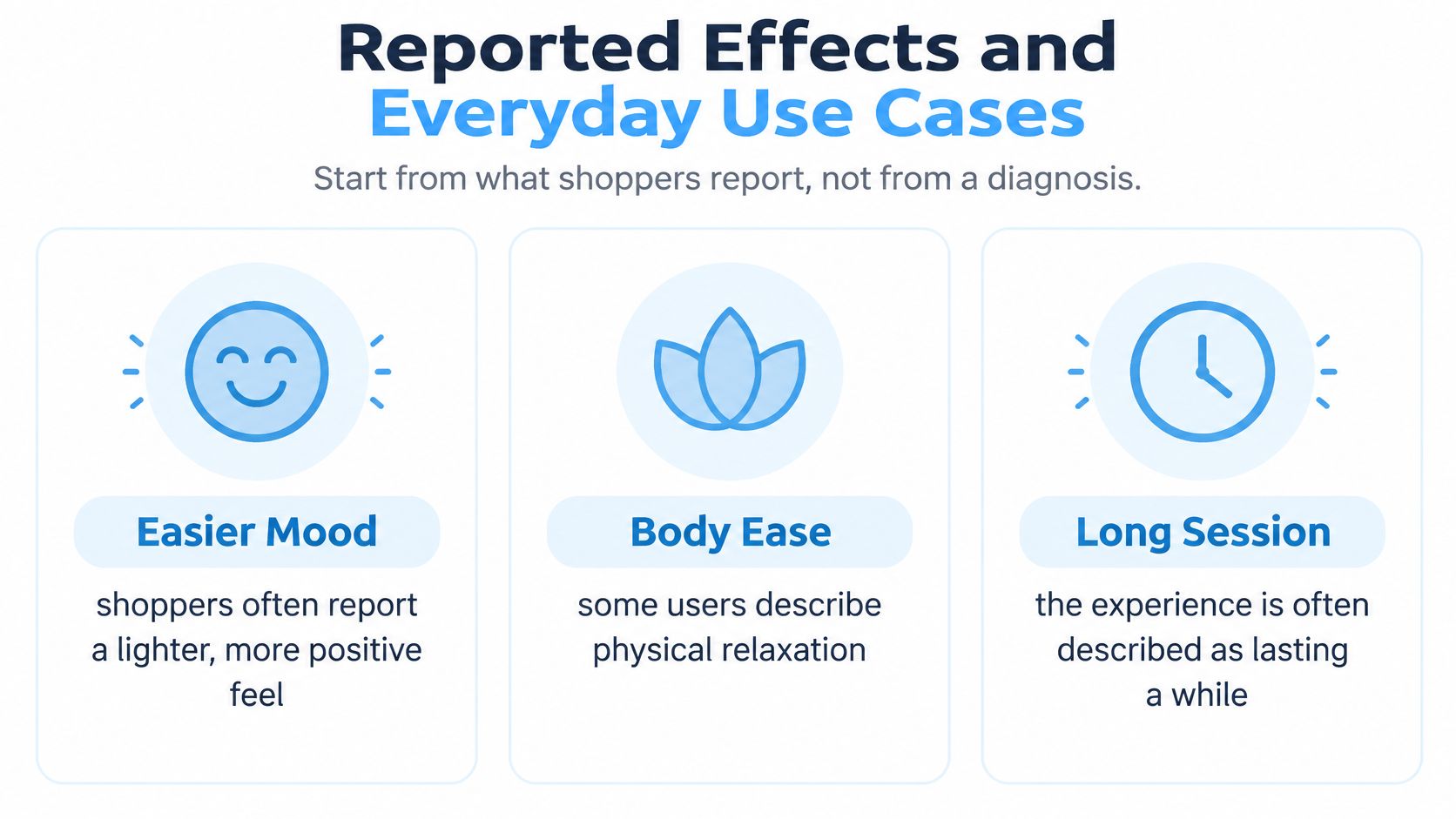
Write ups and shopper descriptions tend to cluster around an easier mood, some body ease, and a session that feels long. Treat those as reported impressions, not menu items you can order with confidence. A lot that feels bright to one experienced consumer can feel distracting or heavy to someone with lower tolerance.
Matching the Setting
A quiet evening at home gives you room to learn how a new lot behaves. If it feels heavier, you're already on the couch with nowhere to drive. If it feels brighter, low key music, cooking a familiar meal, or sorting records can fit better than trying to force sleep.
Use the setting first rule. Decide where you'll be, who will be there, and whether you can stop comfortably, then choose the format and amount. If you're comparing general categories before a purchase, our guide to how hybrid strain effects are commonly described can help you separate broad labels from your own response.
- First try at home: Keep the plan simple and the dose small.
- Social evening: Don't test an unfamiliar high THC lot in a loud group setting.
- Late wind down: Stop early enough that you aren't adding more while already tired.
- Creative project: Choose something low stakes, because focus can drift even when mood lifts.
What Balanced Does Not Mean
A balanced hybrid label doesn't mean balanced impairment. With THC commonly reported in the twenties, even a modest inhaled amount can feel strong, especially if you haven't used cannabis recently. The 50/50 idea won't cancel out potency, and very low CBD shouldn't be treated as a cushion that makes overdoing it unlikely.
Choose the setting first, then the format, then the smallest amount that lets you judge the lot honestly.
Several ordinary factors can matter more than the cultivar name. Tolerance changes with frequency of use, an empty stomach can make an edible feel different from one taken after food, and fatigue can make the same session feel heavier. Inhaled and eaten products also follow different timelines, so liking Candy Yams flower tells you only part of what a Candy Yams edible may do.
Keep medical language out of the decision. Reports of relaxation or positivity don't mean Candy Yams treats pain, insomnia, anxiety, or any other condition. Creativity, sleepiness, or relief are words other people may use after a session, not outcomes a store can promise you in advance.
The most useful record is your own. Note the product format, amount, time, and how you felt after enough time had passed. Next time, that short note will guide you better than a generic claim that a hybrid should land right in the middle.
What a Candy Yams Lab Report Should Show
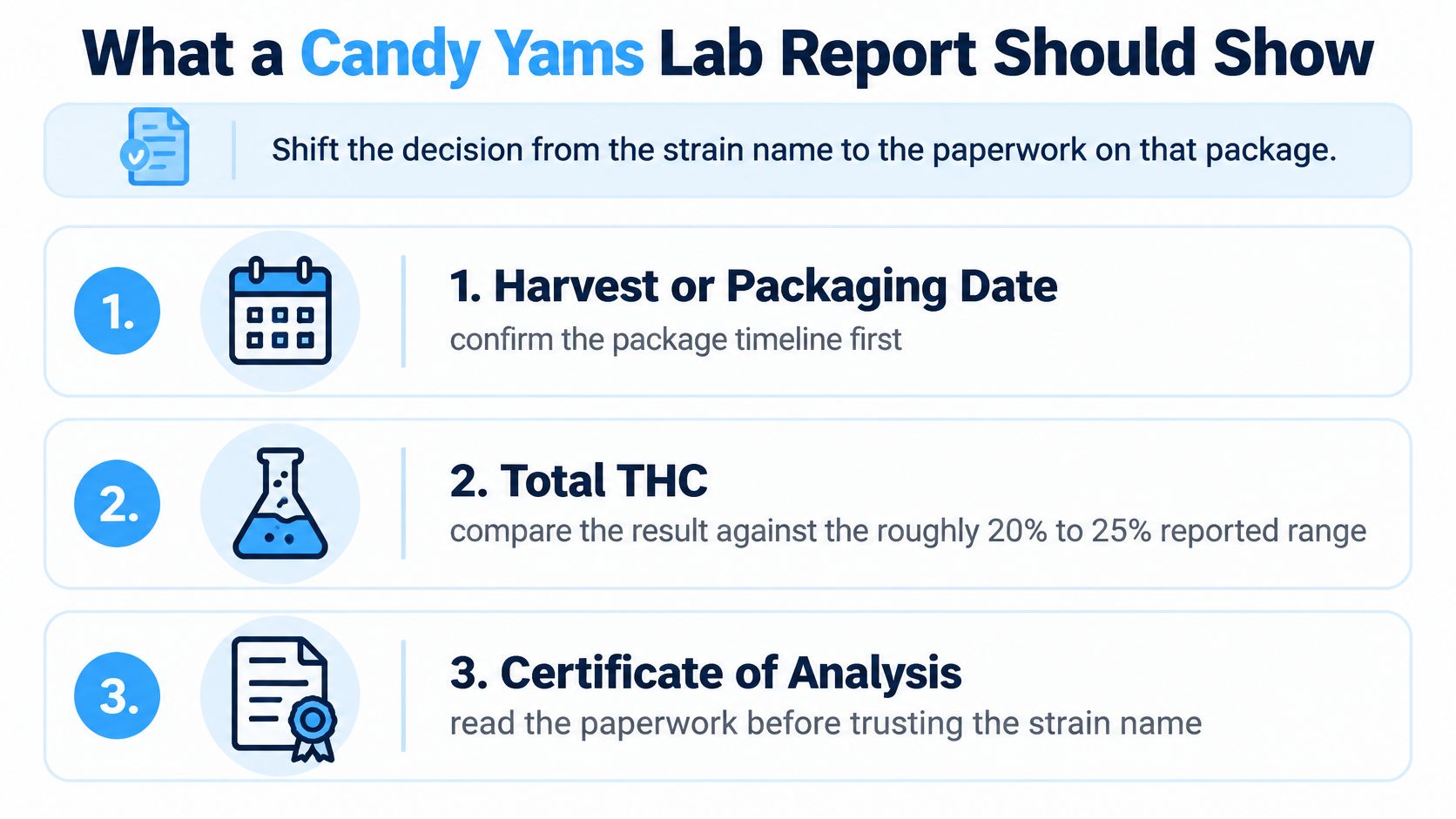
A COA moves the conversation from reputation to evidence for one package. Read it in a steady order, and don't stop at the biggest THC number. Date, cannabinoids, terpenes, and test status each answer a different question.
| Line | What it tells you | Check before buying |
|---|---|---|
| Harvest or packaging date | Freshness, not potency | Recent date on the package |
| Total THC | Finished THC for that batch | Compare with the 20%-25% reported range |
| THCA | Precursor before heat | Do not compare directly with total THC |
| CBD | Cannabidiol content | Expected below 1% |
| Dominant terpenes | Aroma range of sweet, gas, earth, spice | Use as a range, not a promise |
| Contaminant testing | Whether required tests passed | Pass status printed on the certificate |
A Gold Coast Terpenes summary cites a 2025 analysis of 140 medicinal cannabis flowers that found no meaningful relationship between terpene profiles and indica, sativa, or hybrid classifications, with samples instead forming six chemistry-based clusters. That doesn't make labels useless for browsing. It means a hybrid tag is a weak tool for predicting a specific lot's chemistry.
Read in This Order
Start with the harvest or packaging date, because a strong number on stale flower may still disappoint. Next, read total THC and place it against the reported Candy Yams range without treating a higher number as automatically better. Then read CBD, any listed minor cannabinoids, and the dominant terpenes that support the aroma range you're considering.
Finish with the contaminant section and confirm the required tests show a pass status. If any part is hard to interpret, our walkthrough on reading cannabis lab test results explains how to move from the headline number to the details shoppers often skip. New York adult use products are expected to be lab tested, so asking to see the batch paperwork is a normal request, not an accusation.
Order of operations: Check the date, read total THC and CBD, note the top terpenes, confirm testing, then decide whether the lot fits your plan.
Don't let one menu figure do all the work. A single THC percentage can't tell you whether flower is fresh, whether the aroma leans sweet or savory, or whether a vape will feel easier to repeat than a pre-roll. If the menu gives no certificate, ask for it before treating that figure as the whole story.
Format makes the paperwork even more important. Flower, pre-rolls, vapes, and concentrates sold under the Candy Yams name can differ in onset and intensity, and two flower harvests can differ in cannabinoids and terpenes. The COA won't predict your personal response, but it will stop you from assuming that every product with the same name is interchangeable.
Flower Vapes Edibles and Dosing
The format can change Candy Yams more than the strain name does. Flower gives you pauses built into the session. A vape makes repeating a puff almost effortless, a concentrate raises the strength sharply, and an edible asks you to wait long before you know what you've taken.
| Format | Typical onset | How it tends to feel | Start here |
|---|---|---|---|
| Flower | A few minutes | Session length, easiest to pause | One or two small inhales, then wait |
| Pre-roll | A few minutes | Similar to flower, harder to portion if finished | Share or stop well before the end |
| Vape cartridge | Often under a few minutes | Fast and easy to repeat | One puff, wait 10-15 minutes |
| Concentrate or infused flower | Very fast | Much stronger than plain flower | Skip until tolerance is known |
| Edible or drink | 30-120 minutes | Longer and easier to overdo | 2.5 mg THC, then wait a full two hours |
Inhaled Products Need Time, Not Bigger Hits
With flower, take one or two small inhales and set the piece down. You're not trying to dial in milligrams, because an inhaled session doesn't give you that kind of measured control. Your controls are puff size, number of inhales, and the pause between them.
A standard pre-roll follows the same logic, with one catch. It's easy to keep passing or puffing because the product is already lit, and finishing a whole gram is rarely the cautious way to learn a new lot. Share it if that's your plan, or stop well before the end and save the rest for another time if you can store it properly.
A vape cartridge deserves extra patience. Take one puff, then wait 10 to 15 minutes before deciding whether you want another. Cartridges are convenient and repeatable, which is exactly why people stack several hits before the first one has fully registered.
Concentrates and infused flower are poor first formats for a new or low tolerance shopper. They can hit much harder than plain flower, so liking a small bowl doesn't prepare you for a dab or an infused pre-roll. Learn the lot and your tolerance with a simpler format first.
Edibles Reward the Two Hour Wait
Edibles and drinks often take 30 to 120 minutes to arrive and can last several hours. Start with 2.5 mg THC if you're cautious or new, while 5 mg is a common next step for people who already know a lower amount is too mild. Wait a full two hours before taking more, even if the first hour feels quiet.
That waiting rule is the step people skip. A second gummy taken at minute forty five can join the first just as both are getting started, turning a planned mild evening into an uncomfortably strong one. For a broader reference before you choose a product, review our edibles dosing chart for measured starting points and still read the milligrams on the actual package.
The safest edible skill is not finding the perfect number on your first try. It's waiting long enough to learn what the first number did.
A full stomach can slow an edible, fatigue can make the same dose feel heavier, and mixing alcohol makes impairment harder to judge. Don't drive after using cannabis, and keep products secured away from children and pets. If a session feels too strong, stop adding THC, get somewhere comfortable, sip water, and let time pass.
Confirm the total THC on the batch certificate before dosing any Candy Yams lot, especially when you're moving between formats. A familiar strain name doesn't make a concentrate gentle or an edible fast. Products are for adults 21 and older and have not been evaluated by the FDA.
Buy Candy Yams on Long Island
Don't assume Candy Yams is on the shelf every week. Cultivar availability changes, and a store may carry a similar dessert-leaning hybrid while a specific Candy Yams lot is out. Start by asking for the current lot by name, then judge what is in the case.
Strong Strains Cannabis Dispensary is a licensed cannabis dispensary, license number OCM-CAURD-25-000272, and all our cannabis products are lab tested and fully compliant with New York State regulations. You can browse the menu online and order for fast in-store pickup, or choose local delivery across Long Island and Suffolk County.
What to Ask at the Counter
Bring a clear goal and a few concrete checks. Our budtenders can recommend products suited to your needs, whether that means an easy evening at home, a smaller inhaled dose, or a low milligram edible. A specific request gets you a better match than asking only for the strongest hybrid.
- Name the lot: Ask whether Candy Yams is currently in stock.
- Read the certificate: Check total THC, CBD, top terpenes, and package date.
- Choose the format: Pick the smallest format that fits your setting and tolerance.
- Plan the first dose: Decide your starting amount and waiting time before you leave.
If Candy Yams is unavailable, judge another candy gas or dessert leaning hybrid by the same batch first method. A sweet name proves nothing about the jar in front of you, so let the certificate make the case. For a measured alternative to smoking, ask our budtenders about low dose gummies, such as the Wana options we carry, and read each package's milligram count before choosing.
Sign up for the newsletter if you want first word on new drops without checking the menu daily. Then keep the final action simple: check today's menu, read the batch, and pick the smallest format that fits the plan you made before the first puff or gummy.
Check today's menu at Strong Strains Cannabis Dispensary, ask our budtenders to help you compare the current Candy Yams lot or a similar dessert leaning hybrid by its COA, and choose pickup or local delivery when you're ready. We'll help you match format, potency, and starting dose to your plan, so you can buy with clear numbers instead of relying on a strain name alone.