
Some nights you want a safe repeat. Other nights you want a jar that makes you stop, lean back in, and smell it again because it doesn't fit the usual fruit-forward script. That's where Grape Stank earns its place.
For Long Island shoppers who've already worked through the obvious classics, the Grape Stank strain stands out because it delivers character on both sides of the experience. It has the grape appeal that pulls people in fast, but it also carries the funky, savory, fuel-toned depth that keeps seasoned consumers interested. It isn't a one-note dessert strain, and it isn't all brute force either. When it's done well, it feels curated.
A lot of customers come in looking for one of three things. They want stronger flower, more expressive terpenes, or a hybrid that doesn't flatten the session into one predictable lane. Grape Stank usually enters the conversation right there. If you already know the basics of hybrid categories, this quick guide to understanding the different strains of cannabis is a useful refresher before you go deeper.
Your Guide to Long Island's Next Great Strain
You step up to the flower case looking for something with real presence, not another sweet hybrid that smells good for five seconds and disappears in the grinder. Grape Stank earns attention because it keeps its identity from first crack of the jar through the finish of the session.
For Long Island shoppers with a taste for top-shelf flower, that matters. Grape Stank appeals to experienced consumers who are tired of generic fruity hybrids and want a cultivar with tension in the profile. The grape note is there, but it arrives with funk, fuel, and enough savory depth to keep the aroma from going flat. On a premium shelf, that kind of contrast separates a curiosity buy from a repeat purchase.
At Strong Strains, I would put Grape Stank in front of someone who wants flavor with structure. It suits customers who already know that high THC alone does not guarantee a satisfying smoke. The better question is whether the flower carries its character all the way through the grind, the dry pull, and the exhale.
Why it stands out on a premium menu
Grape Stank is generally treated as a hybrid, which already tells seasoned shoppers to expect a more balanced lane than a hard-leaning daytime or knockout pick. If you want a sharper baseline for how hybrid categories function in practice, this guide to understanding the different strains of cannabis is a useful reference.
What makes Grape Stank more interesting at the counter is not the label. It is the way the profile reads. You get a strain that can satisfy the customer chasing grape terps, while still giving enough gas and dankness to appeal to buyers who usually skip anything described as fruity. That wider appeal is useful, but there is a trade-off. Strains with this much aromatic contrast can be polarizing, especially for shoppers who only want candy-sweet flower with no savory edge.
Budtender read: I recommend Grape Stank to customers who want a jar that smells expensive and smokes with definition, not just raw strength.
Who usually enjoys it most
Grape Stank tends to fit best for shoppers who prioritize:
- Aroma that develops in layers: The profile stays engaging instead of peaking at first sniff.
- Potency tied to flavor: Strong flower is common. Strong flower with a clear terpene identity is harder to find.
- Hybrid flexibility: It often appeals to buyers who want options instead of a strictly one-purpose pickup.
It also pairs well with a more intentional basket. If you are buying premium flower for a slower evening session, add a clean glass piece or a solventless option for comparison so you can see how the terpene profile changes across formats. That is usually how customers move from trying Grape Stank to understanding why it earns shelf space in a serious rotation.
The Origin Story Behind Grape Stank
Grape Stank has the kind of lineage experienced shoppers notice right away. Compound Genetics built it from Grape Gasoline and Garlic Grove, and that pairing explains why the strain carries more authority than a simple fruit-forward label suggests.
From a dispensary standpoint, this cross makes sense. Grape Gasoline brings the darker fruit and fuel character that draws in terp chasers looking for a louder jar. Garlic Grove adds the savory, funky backbone that keeps the profile from reading sugary or one-dimensional. For Long Island buyers shopping premium flower, that balance matters. It gives Grape Stank a wider lane than many grape strains, but it also means the batch has to be grown and cured well to show its full range.
Why this lineage matters
A lot of grape cultivars smell attractive in the jar and lose definition in the smoke. Heavy gas strains can have the opposite problem. They hit hard on aroma but flatten into blunt pungency without much character. Grape Stank sits in a better position because its parentage supports contrast.
Here's what that means at the counter:
- Grape Gasoline influence: Brings the richer grape-and-fuel identity that usually reads as top-shelf right away.
- Garlic Grove influence: Adds depth, funk, and a more savory finish that keeps the profile grounded.
- Hybrid genetics: Supports flexibility for shoppers who want flavor, presence, and a less predictable session than a one-note cultivar usually offers.
That breeding logic matters to growers too.
Indoor cultivators often favor genetics with a manageable flowering window and a stable enough structure to justify repeat runs. Grape Stank has earned attention for that reason. It is not just a hype cross built for one flashy drop. It has the kind of production practicality that helps a strain stay relevant on real menus instead of living only in breeder talk.
For shoppers, the takeaway is simple. Better production consistency usually gives you a better chance of finding Grape Stank again in a quality batch, rather than chasing a one-time release that never lands the same way twice.
Strong lineage does not guarantee a premium jar. It does raise the ceiling, and with Grape Stank, good handling makes a visible difference in both aroma clarity and finish.
At Strong Strains, that is the true purchase question. Not whether the genetics sound good on paper, but whether the batch in front of you preserves the tension between grape sweetness and savory funk. If the cure is rushed, the fruit can fade and the funk can turn dull. When the flower is handled properly, Grape Stank feels intentional from first crack of the jar to the last pull.
Decoding the Grape and Gas Aroma Profile
Grape Stank's aroma profile is the reason shoppers stop at the jar twice. On a good batch, you get ripe purple fruit up front, then a dirtier, fuel-heavy finish that keeps it from reading like a simple dessert strain. That push and pull is the whole appeal.
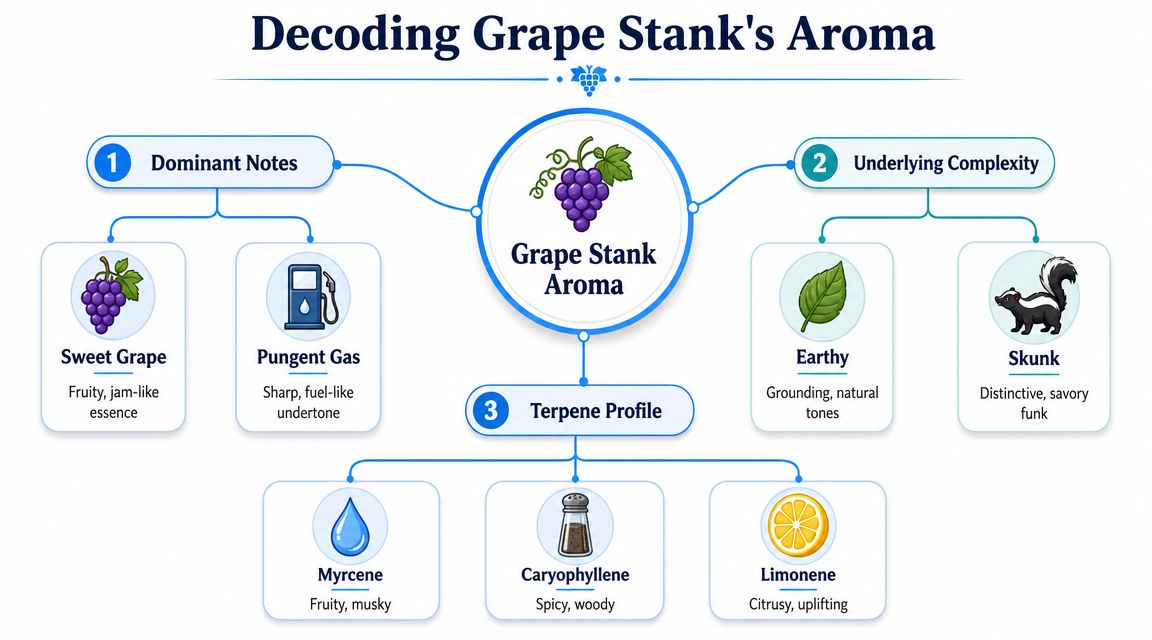
At the counter, this is the kind of flower I ask people to smell in stages. The first pass usually gives dark grape, jam, or crushed berry skin. A second pass often brings out pepper, damp earth, and that sour gas note that serious flavor shoppers usually want. If all you get is generic sweetness, the cure may be flattening the profile.
What your nose should pick up
A strong jar usually unfolds in a clear order:
- Front note: Sweet grape, dark fruit, or grape skin rather than bright candy
- Middle: Citrus peel, herbal lift, or a faint spicy edge
- Base: Earth, pepper, fuel, and savory funk
That last layer matters. It is what separates Grape Stank from fruit-forward flower that smells nice for five seconds and then disappears on the grind.
The terpene side of the story
Reported terpene descriptions around Grape Stank tend to point in the same general direction even when batches read a little differently. Leafly's strain page describes the aroma in terms of grape, skunk, and pungent notes, which fits the jars that show both sweetness and a dirtier gas finish in the same session: Leafly's Grape Stank strain overview.
For shoppers, the practical takeaway is simple. Some phenos and some cures will emphasize fruit first. Others push more pepper, musk, or gas. Neither is automatically better. The better batch is the one that keeps both sides present, because that is where the strain feels complete.
If aroma is your buying priority, choose premium flower first. Vapor can spotlight the brighter top notes, but a well-cured jar gives you the full arc from grape to funk.
Best way to experience the flavor
Method changes the read more than many shoppers expect.
| Format | What usually comes through best |
|---|---|
| Premium flower | The full progression from grape sweetness to savory gas |
| Vape | Brighter top notes, lighter fruit, and faster terpene expression |
| Heavy combustion | More intensity, but less detail and a duller finish |
For a side-by-side comparison, a fruitier cartridge like this Pineapple Express cart review shows how much cleaner and more tropical a terpene profile can feel when gas and funk are not sharing the stage.
At Strong Strains, I usually recommend Grape Stank to the shopper who wants aroma with tension. It should smell expensive, a little loud, and slightly unruly in the best way. Slow pulls, lower-temp vapor, and a fresh grind will show it off far better than rushing through the jar.
Reported Effects and Ideal Experience
Grape Stank delivers a two-stage high. The first stretch usually feels upbeat and mentally bright, then the body side comes in with more weight and staying power. Leafly's strain overview describes that pattern clearly and also notes the common advice for newer consumers to start small with it: Leafly's Grape Stank strain overview.
For shoppers at Strong Strains, that progression matters more than the label. The early lift can read social, chatty, even a little sparkling. If you keep stacking hits because the opening feels easy, the second half of the session can turn much heavier than planned.
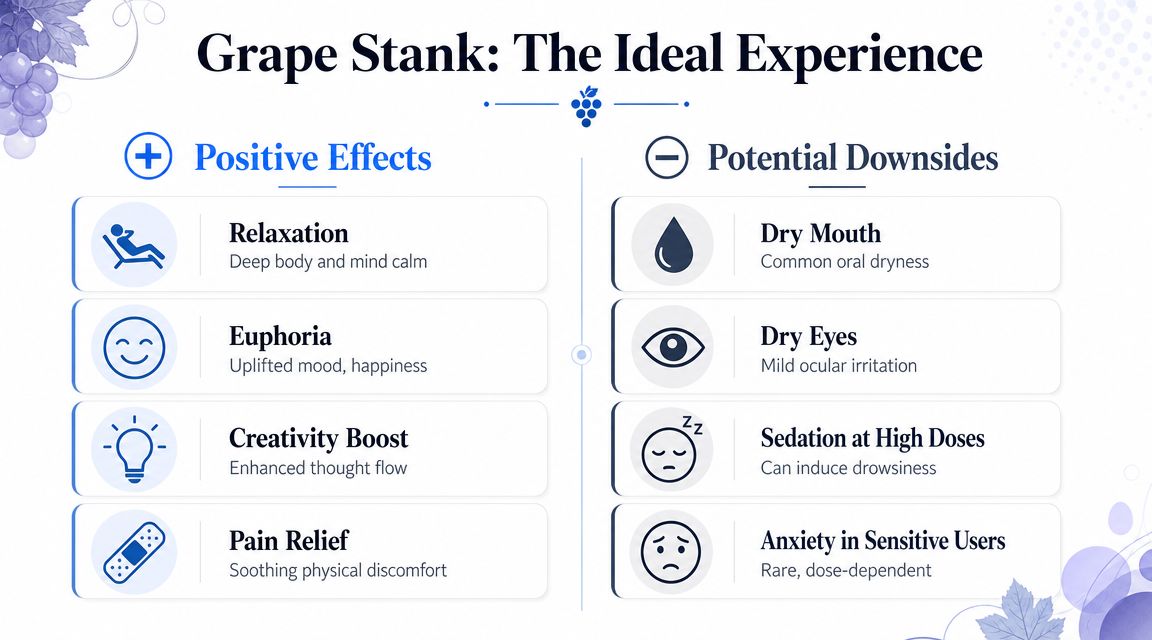
How the session usually unfolds
A familiar Long Island scenario is the shopper who wants one jar for a Friday night. They want flavor, a little mood lift, and enough body relaxation to settle in later. Grape Stank fits that brief well, but only if the dose stays disciplined early.
The opening phase often feels more forgiving than the finish. Expect a quicker mental shift first, then a deeper physical exhale as the session develops. In a good batch, that handoff feels polished rather than abrupt.
My practical rule is simple. Treat the first two pulls as a test round, then wait.
That approach preserves what makes this strain expensive-feeling in use. You get the aromatic complexity, the brighter headspace, and the heavier landing without pushing the whole session into foggy territory.
Best timing and setting
Grape Stank works best when the evening has some room in it. It suits post-work decompression, a slower dinner at home, a film that deserves your full attention, or a music-forward session where flavor and mood both matter.
It is a weaker fit for tightly scheduled daytime use. The issue is not that it lacks uplift. The issue is that the later body effect can pull focus and flatten productivity if you were expecting a cleaner, more linear hybrid ride.
A few settings where it tends to shine:
- After-work reset: Enough mental release up front, with a calmer body finish later.
- Host-at-home sessions: Better for a small circle and a relaxed pace than a crowded night out.
- Flavor-led evenings: A strong choice when aroma is part of the experience, not just a bonus.
A few situations where I usually steer shoppers elsewhere:
- Errands or active plans: The body finish can arrive at the wrong time.
- Low-tolerance buyers chasing big THC numbers: This strain can feel stronger than the first few minutes suggest.
- Fast redosing habits: Repeated hits can turn a balanced session into a sleepy one.
If you want a point of contrast before you buy, our Pineapple Express cart guide is useful because that profile usually feels more direct and fruit-forward, with less of the slow-building body weight that defines Grape Stank.
The video below gives another visual take on how this type of strain is often discussed by enthusiasts.
Start lower than your ego wants to
This is not the jar I hand to a shopper who plans to judge it after one oversized rip. Grape Stank rewards patience. Small pulls, a full pause, and an honest read on how the body is catching up will usually produce the best version of the experience.
That trade-off is the whole appeal. Handled well, it starts lively and finishes lush. Rushed, it can feel heavier than the buyer intended.
Understanding Potency and Lab Data
Potency is where a lot of shoppers make avoidable mistakes with the Grape Stank strain. They hear that it's strong, they glance at a menu number, and they assume every batch will hit the same way. That's not how this cultivar behaves in reality.
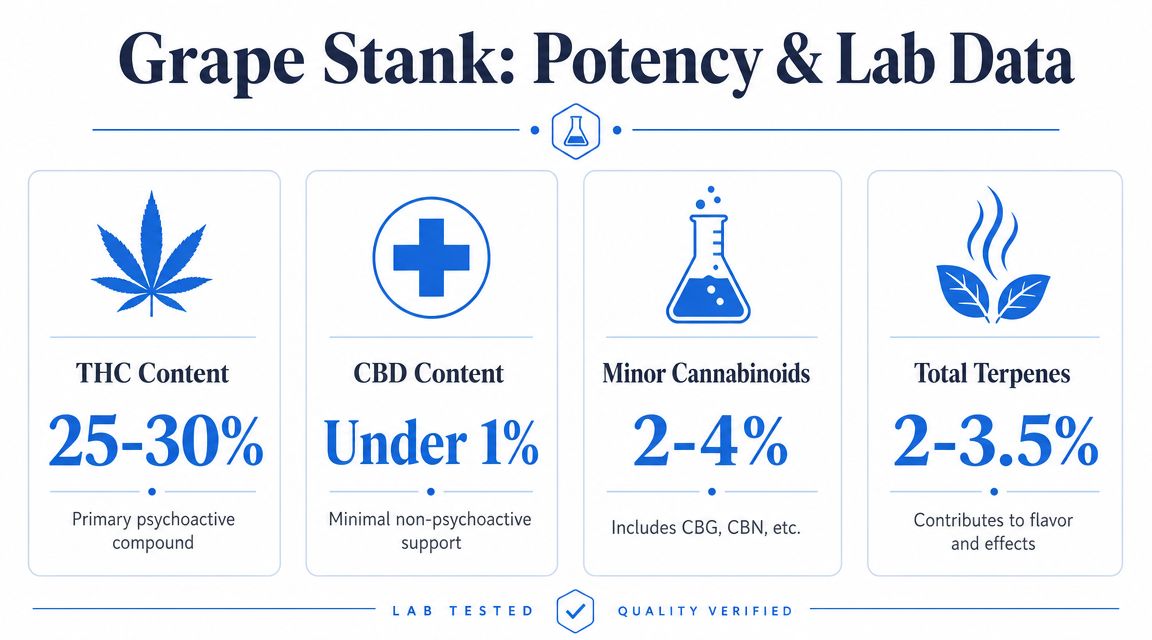
The most useful fact to know is that reported THC can vary a lot by batch and seller. One retail source states that Grape Stank commonly tests between 20% and 27% THC, with some batches reaching as high as 33%, which is exactly why checking batch-specific lab results matters on this Ostara Medical product page.
Why the same strain can feel different
A strain name tells you lineage. It doesn't guarantee identical chemistry every time you buy it.
Differences can come from:
- Grower choices: Cultivation style affects how the flower finishes.
- Harvest timing: Small timing differences can change the feel and expression.
- Cure quality: A good cure can sharpen both flavor and perceived balance.
- Testing by lot: One batch may land in a comfortable high-potency zone, while another pushes into much stronger territory.
That's why experienced buyers don't shop by strain name alone. They shop by strain name plus current lab data.
What to check before you buy
If you're standing at the counter or browsing online, focus on a few practical questions:
| What to check | Why it matters |
|---|---|
| Current THC result | It helps you gauge whether this batch is merely strong or especially heavy |
| Terpene listing | It shows whether the flower is likely to lean brighter, fruitier, or more grounded |
| Product format | Flower, pre-roll, and vape can present the cultivar differently |
| Your own tolerance | The same batch can feel elegant to one shopper and excessive to another |
Lab numbers should guide the purchase, not dominate it. A lower-testing batch with a better terpene profile can smoke better than a hotter but flatter jar.
The practical takeaway
What works is using the COA or menu data as a filter. What doesn't work is assuming that because you handled one Grape Stank batch well, every future batch will match it.
For newer consumers, this is one of the clearest cases where caution pays off. A batch in the lower end of the reported range may feel manageable. A batch pushing the upper end may call for a completely different dose strategy.
Flower Appearance and Grow Notes
A well-grown jar of Grape Stank should announce itself before the first break-up. On the shelf, I look for flower with weight, definition, and a sticky resin coat that still looks alive under the light.
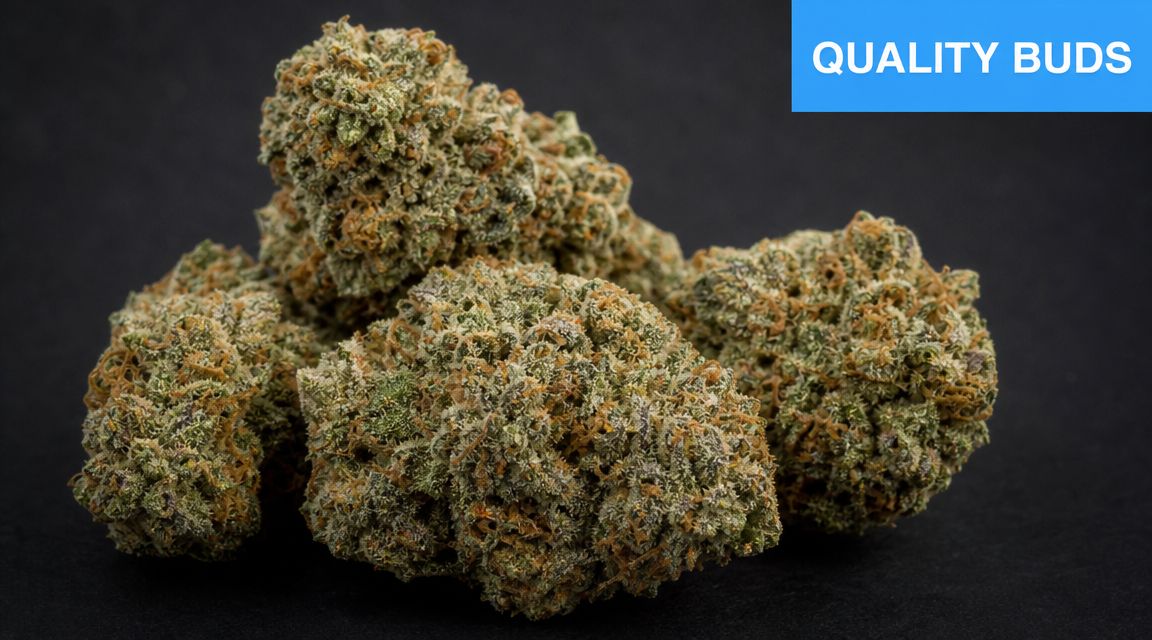
The better batches usually show compact, well-shaped buds with strong color contrast. Dark green is common. Purple tones can show up in the right expression. Bright orange pistils and a frosted finish round out the look. Luxury flower should also feel properly finished in the hand, not brittle, not spongy, and not so overhandled that the trichomes look rubbed away.
Bag appeal matters, but only when it matches the smoke.
What quality usually looks like
A quick visual check still goes a long way at the counter, especially with a cultivar that can lose some of its charm if the post-harvest work is rushed.
Use this checklist:
- Bud structure: Dense, formed flower usually presents this cultivar better than loose or airy nugs.
- Trim quality: A clean trim shows care during finishing. Extra leaf often points to a less polished batch.
- Resin presence: The surface should look generously coated, not flat or dusty.
- Moisture balance: Good flower has a slight give and a tacky feel. Overdry buds burn faster and usually taste thinner.
From a cultivation standpoint, growers tend to value hybrids like this for their manageable structure and their ability to produce striking flower when the environment stays dialed in. The trade-off is that dense, resin-heavy buds can expose every mistake. Push the dry too hard, rush the cure, or handle the flower carelessly, and the jar may still look good from a distance while smoking well below its price point.
For Long Island shoppers, that matters because premium flower is not just about genetics. It is about who grew it well and who stored it correctly after harvest. If you want a good benchmark for what polished warm-weather flower shopping looks like, our guide to the best cannabis products in Long Island for summer 2025 is a useful companion.
The smartest buy here is the batch that still shows freshness, intact trichomes, and careful finishing. That is the version of Grape Stank that earns top-shelf status.
Find Grape Stank at Strong Strains Today
A customer walks in on a Friday evening asking for something grape-forward, polished, and strong enough to feel worth the spend. Grape Stank can fit that brief well, but the right buy depends on the batch, the format, and how you plan to use it.
As noted earlier, this cultivar is usually sold as a high-potency, low-CBD option. In the store, that matters less as a headline number and more as a buying filter. Check the current certificate of analysis, ask for the terpene breakdown, and pay attention to packaging date. A fresh, aromatic batch with balanced lab results often delivers a better session than an older jar that leads with THC alone.
Best pairings for the right session
Start with flower if you want the full character of Grape Stank. That is still the clearest way to judge how the grape sweetness, sour fruit, and fuel notes come together.
A few pairings I recommend at the counter:
- Premium flower eighths: Best for shoppers who want the complete expression of the cultivar and enough volume to assess flavor across a few sessions.
- Dry herb vaporizers such as PAX: A smart choice if preserving aroma matters more than producing the biggest cloud.
- Concentrate hardware such as Puffco: Best reserved for shoppers who already know they enjoy this profile and want a heavier, faster onset.
- Pre-rolls: Convenient for trying the strain without committing to a larger jar, though they rarely show the same nuance as well-packed whole flower.
- Vapes: Useful for portability and discretion, especially if you prefer bright top notes and a quicker session.
Format changes the experience.
The same cultivar can feel more flavorful in a dry herb vape, more forceful in concentrate form, and more casual in a pre-roll. That is why good retail guidance matters. A skilled budtender should ask when you plan to use it, how developed your tolerance is, and whether flavor, intensity, or convenience is the priority.
For Long Island shoppers building a well-rounded rotation, our roundup of the best cannabis products in Long Island for summer 2025 is a useful companion.
If you want help finding the right Grape Stank strain batch, format, or dose, visit Strong Strains, East Setauket's premium cannabis dispensary at 19 Technology Drive. The team can walk you through current lab-tested flower, pre-rolls, vapes, edibles, concentrates, and accessories, with in-store pickup and local delivery available across Suffolk County for adults 21+.